

Cuts will kill, warns Fire Brigade Union, as rural communities rally to fight proposed station closures and loss of engines
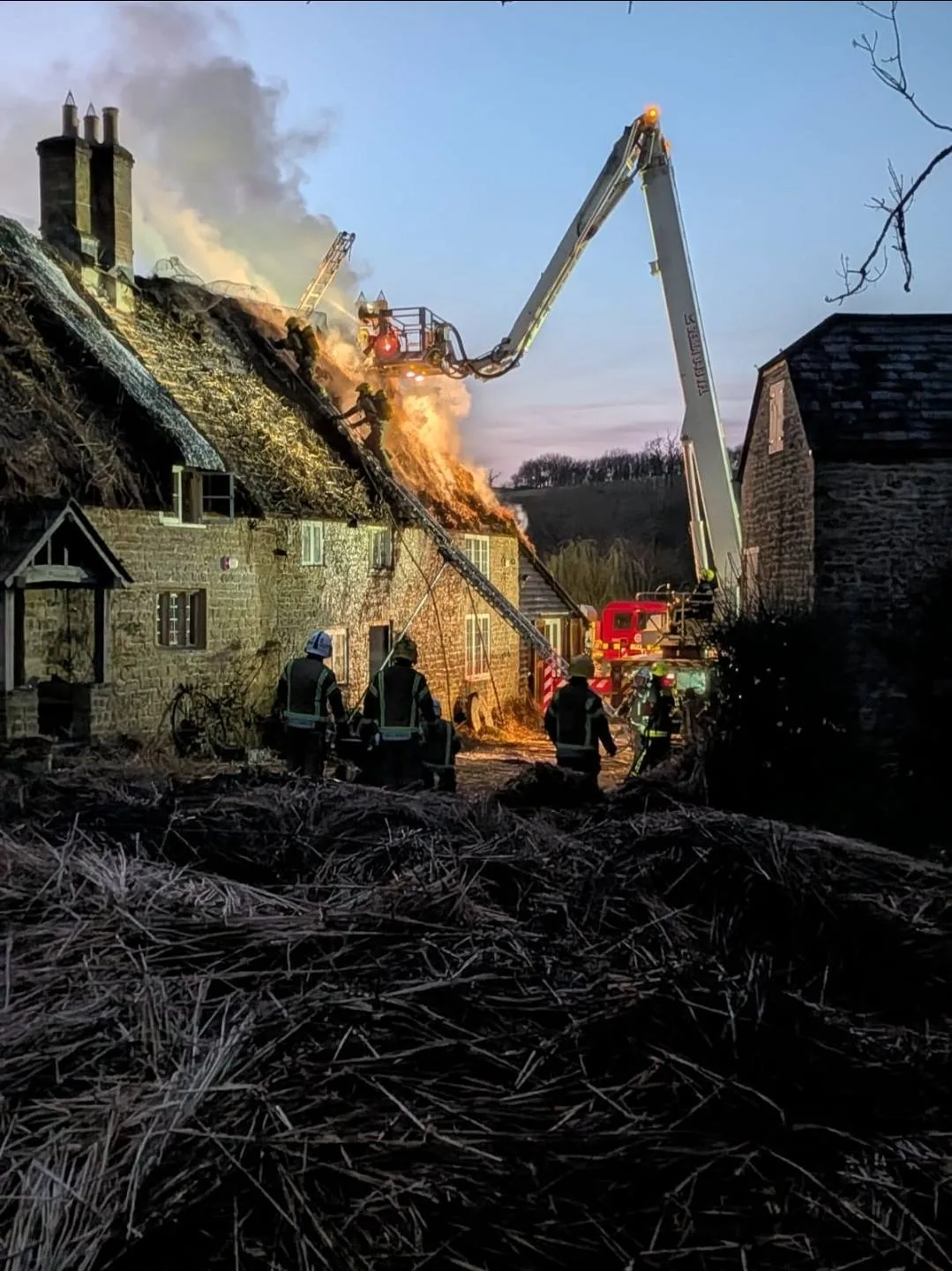
Image courtesy Charmouth Fire Station
The decision to close eight fire stations across Dorset and Wiltshire rests on a risk assessment that the Fire Brigades Union argues no longer reflects the reality of climate, rurality and rising demand.
Dorset and Wiltshire Fire and Rescue Service (DWFRS) has launched a public consultation proposing the closure of eight fire stations across Dorset and Wiltshire, four in each county, Charmouth, Cranborne, Hamworthy and Maiden Newton in Dorset, and in Wiltshire, Bradford-on-Avon, Mere, Wilton and remote Ramsbury in the north of the county. While the fire service naturally has a statutory responsibility to maintain a balanced budget, and has difficult decisions to make, there are widespread concerns about the loss of services due to these closures.
Dorset and Wiltshire currently have more than 70 engines – as well as several specialist support vehicles. Eight of these will be lost through the closures. That would leave 62 engines serving a region experiencing rapid housing growth and increased climate risk.
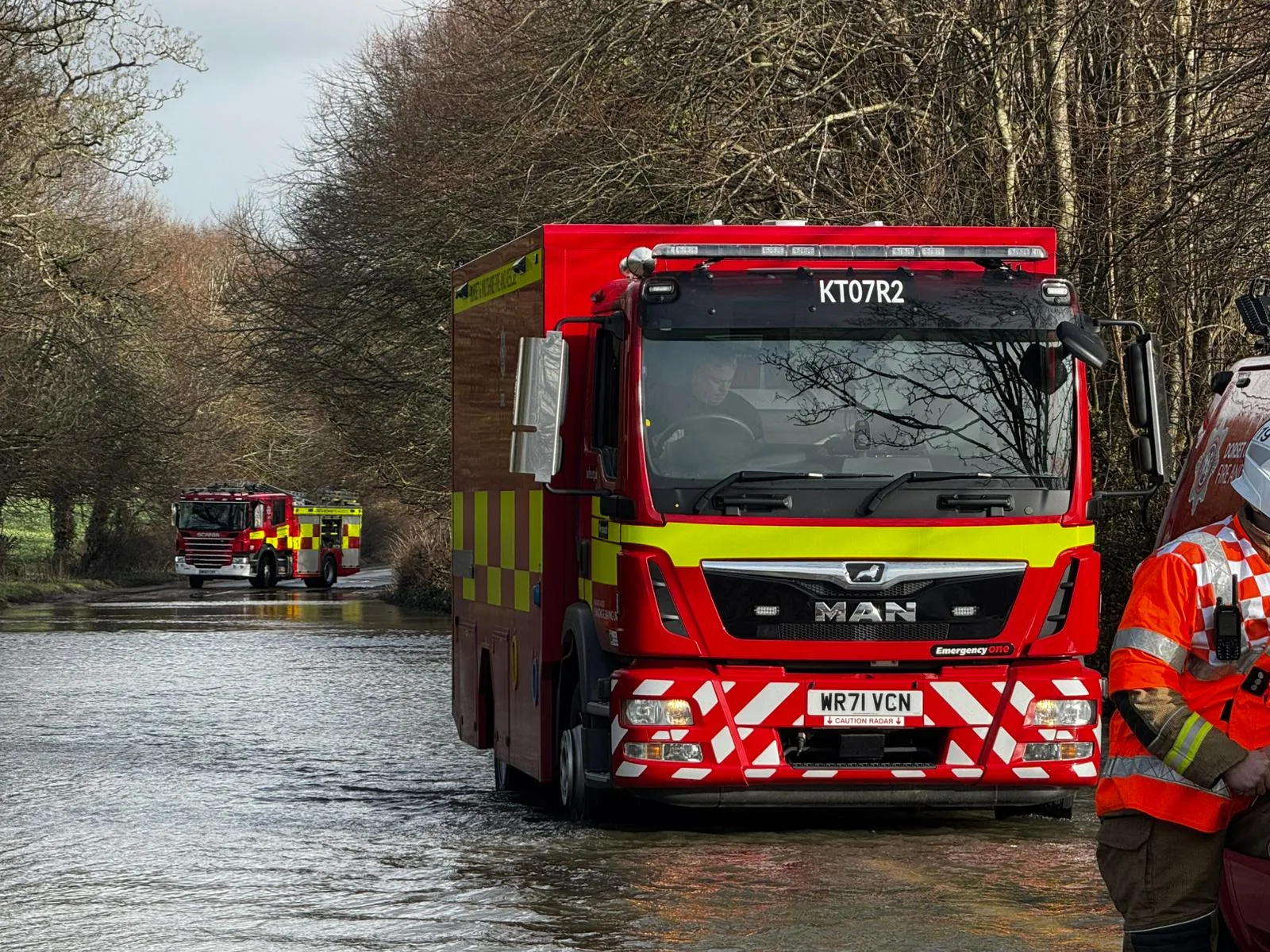
The data used for this decision-making by the DWFRS came from three years prior to April 2025 – despite real-time data being available. Crucially this excluded one of the busiest ever years for the fire service in Dorset. Last summer’s Holt Heath fire was declared a Major Incident, with appliances and teams supporting the county from all over England and Wales. Initially, 100 firefighters from Dorset fought the fire which burned through 72 hectares of heathland, putting homes at risk. Crews from as far away as Manchester and Lincolnshire supported Dorset’s firefighters.
The Fire Brigades Union (FBU) told The BV: ‘The service response is that the data set that was used was the “last full year of data available”. The FBU has specific concerns about this, as 2025-2026 was one of the busiest years for the service in recent times. We believe this would have materially affected the data provided to the public.’
With climate change causing increased summer temperatures, the risk of heathland and crop fires is rising. However, the analysis and risk assessment by the fire service focused on road traffic collisions and fires: flooding and heathland fires were not a prominent feature of the strategic risk assessment, although there are obvious signs of change with floods and climate.
Given that the fire service has access to real-time data and reports on incidents, should the analysis be reviewed again using the latest available figures?
Response times and rural risk
The faster the emergency services get to the scene of an incident, whether it is a serious road traffic collision or a house fire, the sooner lives can be saved. The fire service faces difficult choices with a limited budget, but to what extent was rurality included in the assessment of the stations earmarked for closure? Agricultural fires are as devastating as burning buildings in remote villages.
It takes an average of 50 firefighters to tackle a thatched house blaze. When a home at Mosterton caught fire recently, engines from all over Dorset attended with 19 appliances at the scene when the fire was at its height. 60 fire-fighters from Dorset and Somerset attended the blaze, including from Charmouth station which is earmarked for closure. Dorset is home to ten per cent of England’s thatched buildings – ‘The Dorset Model’ is a widely recognised fire safety standard for constructing thatched buildings.
The FBU said: ‘The risk to thatched properties has been considered and the service’s position is that all residents will be less safe, should the stations close. The arrival-at-incidents time will increase in all areas. One resident with a thatched property described how their insurance requires a fire station to be within 10 minutes of their property – with the incident at Mosterton, firefighters initially came from Bridport, Charmouth and Sherborne as well as crews from Devon & Somerset at Chard, Ilminster and Yeovil. When firefighters cannot conclude an incident safely, we ask for more fire engines and firefighters until we can. This was the case here, where further appliances were called from Beaminster, Dorchester, Lyme Regis, and more from Devon & Somerset at Colyton, Wincanton, Street and Axminster.’
Dorset and Wiltshire Fire and Rescue Service acknowledges these are unpopular decisions: ‘We know that proposing fire station closures will not be a welcome decision for our communities or staff. However, the Fire & Rescue Authority has a statutory duty to set a balanced revenue budget.
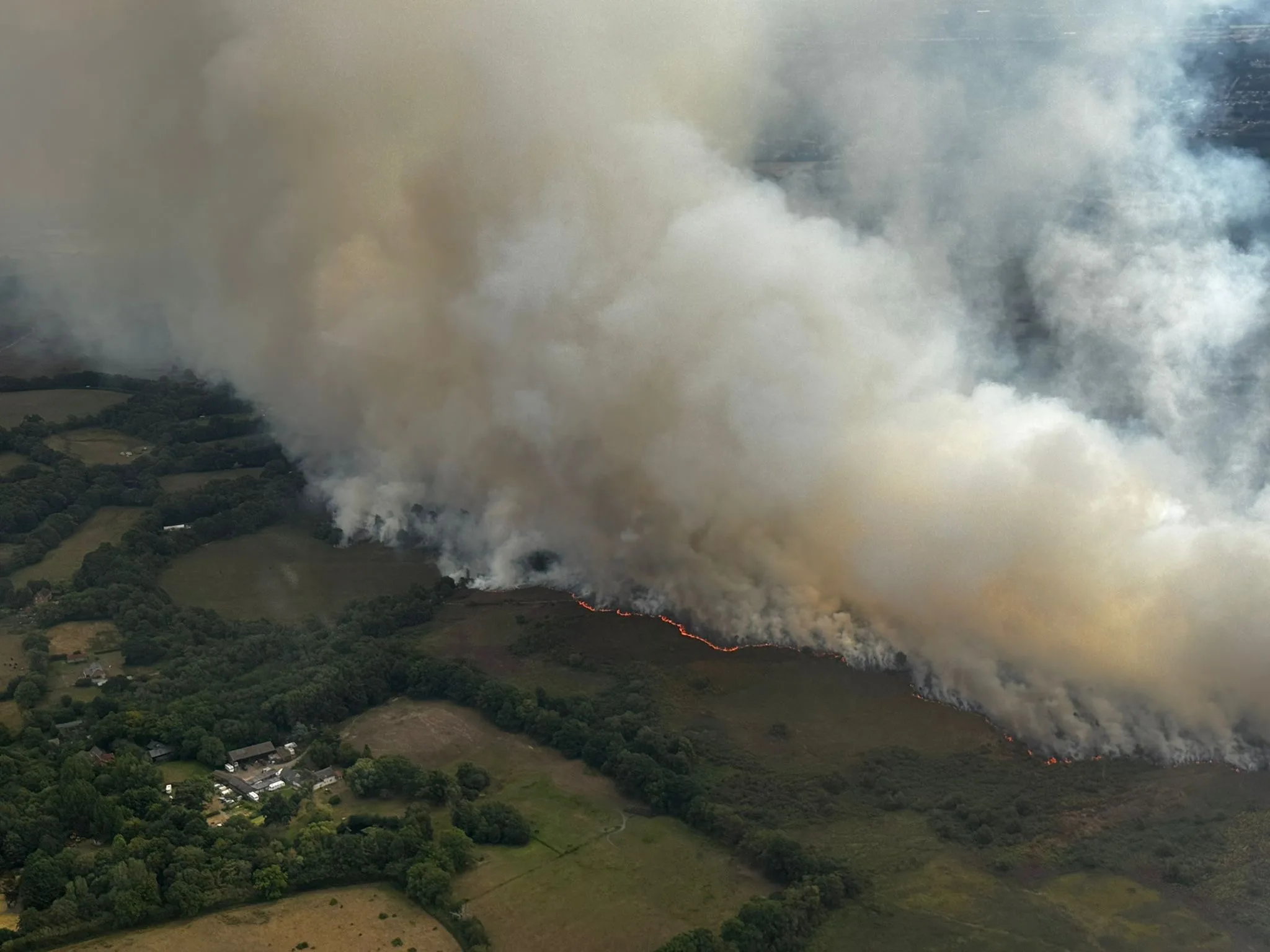
Image courtesy DWFireRescue
© Bliss Aviation
‘Our underlying funding position, specifically the recent finance settlement received from central Government, does not provide a sufficient level of funding for the service to continue to operate as it is. No decisions have been made yet and, before anything happens, we want to hear what you think.’
Meanwhile, the FBU’s position is clear: ‘All fire stations should remain open, as they provide an essential emergency service to otherwise isolated and predominantly rural communities. They provide resilience to DWFRS in spate conditions, but ultimately they should remain open as the Chief Fire Officer has a duty under the Fire Services Act 2004. Sections 7 and 8 require the Authority to secure sufficient personnel, services and equipment to meet all normal requirements. Reducing operational capacity while demand rises, and while mutual aid is also under pressure, leaves the Authority open to challenge on whether it can still meet reasonably foreseeable needs.’
Cuts kill, says the Fire Brigade Union.
A house fire can become lethal in less than two minutes and a residence can become engulfed in flames in five minutes. Regardless of the threat of closing fire stations, there has never been a more critical time to look at your home, get smoke detectors fitted, assess how fires can be prevented and how you would escape in an emergency.