

Years of planning and volunteer effort have turned a corner of a Shillingstone field into a purpose-built Honey Bee Centre, with education firmly at its heart
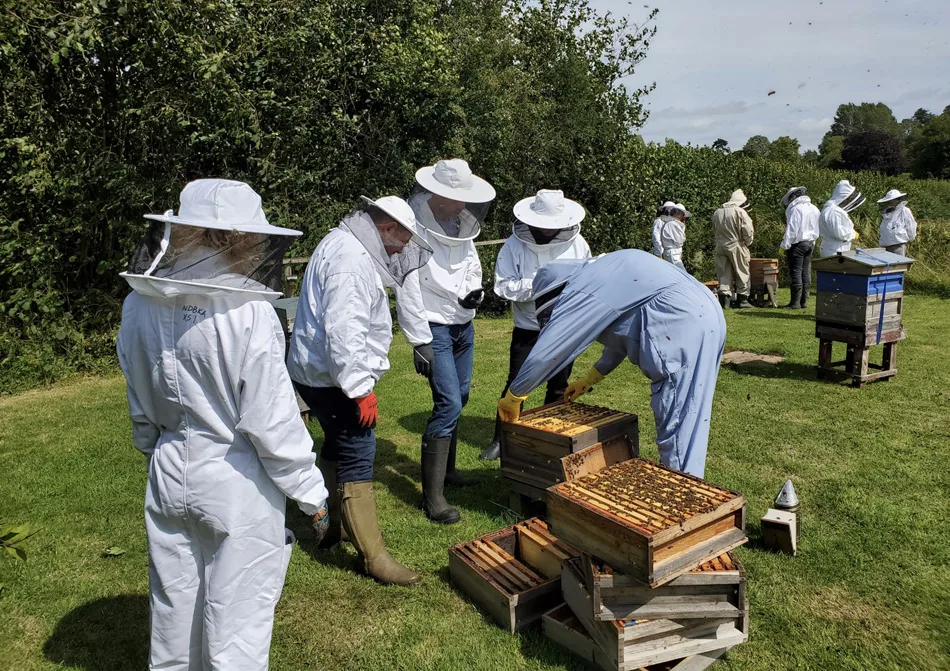
When The BV first spoke to the North Dorset Beekeepers Association in January 2024, the limitations of their exisiting site in Shillingstone were obvious. As spokesman Robbie Baird put it at the time: ‘The site is remote – accessed by crossing a field and two wobbly stiles – and once you’re there, there’s no electricity, running water or any other facilities, just a storage hut and a corner of a field to keep the beehives (the apiary) … It’s better than nothing, but it does mean hosting anyone but the fully able-bodied simply isn’t an option.’ Now, that picture has changed entirely.
A practical space
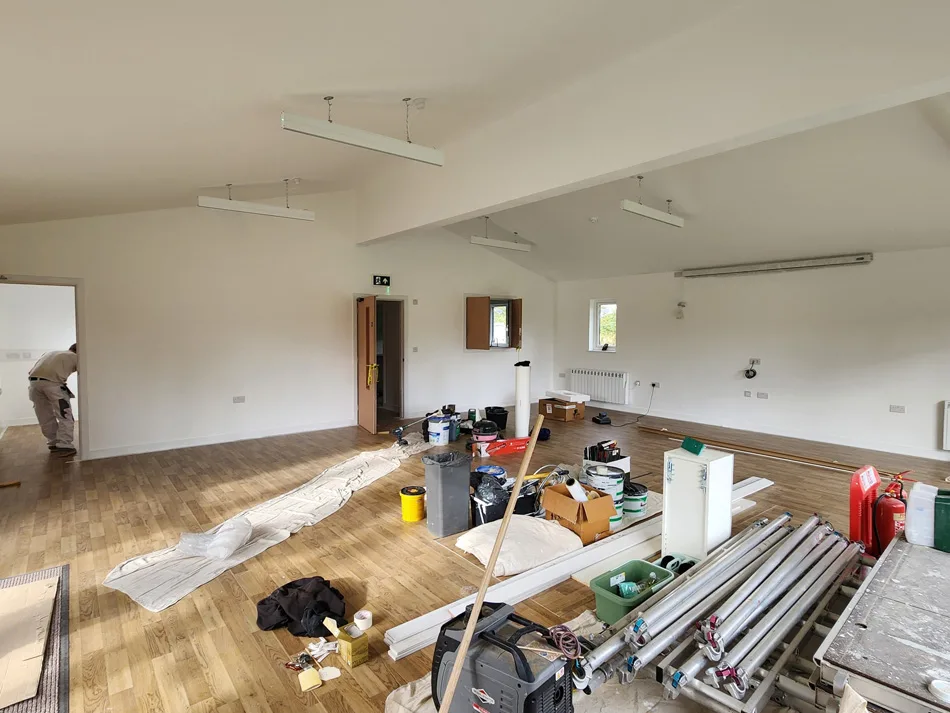
‘It is finished,’ says Ian Condon, a long-standing member of the North Dorset Beekeepers Association. ‘Well – finished in the sense that the building’s there and it’s usable. It’s now just the nitty gritty stuff inside – fire extinguishers, lighting, connecting up the dishwasher … all the boring but essential bits.’
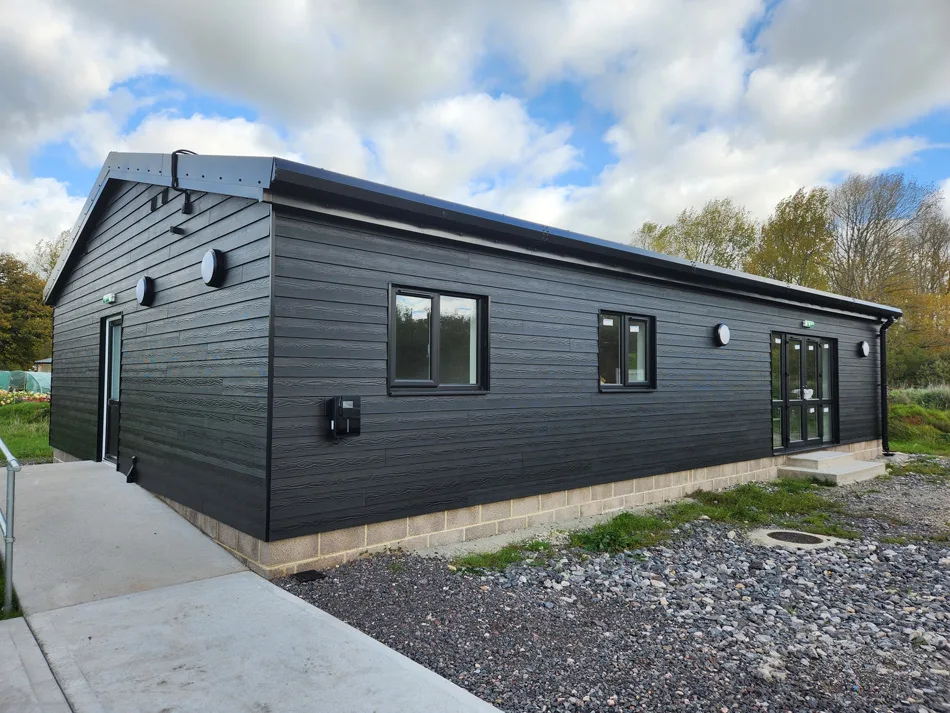
The new North Dorset Honey Bee Centre is the culmination of years of planning, fundraising and volunteer labour. Where once there was a hut and a corner of a field, there is now a purpose-built, eco-friendly teaching facility designed to open beekeeping up to a much wider audience.
Inside, the building is centred around a large main room – roughly nine by ten metres – where meetings, talks and training courses will take place. ‘That’s where people will spend most of their time,’ Ian says. ‘We can sit down, we can teach properly, we can have conversations. That’s something we just couldn’t do before.’
Alongside it is a fully equipped kitchen, toilets, a general store and a bottling/honey room with a dedicated warming cuboard. That last space, Ian explains, is crucial to how honey is handled.
‘People think you just take the honey out of the hive and stick it in a jar,’ he says. ‘But honey crystallises. If you’ve got a solid bucket of honey, you can’t bottle it. At the same time, you can’t just heat it up, because you destroy what makes it honey.’
Instead, the centre includes a warming cupboard where honey can be gently brought back to liquid form over several days. ‘You’re talking about very controlled temperatures,’ Ian says. ‘Slowly does it. That way you keep all the properties of the honey intact.’
New opportunities
Education is at the heart of the project. Training courses restart this month, but the ambition goes much further than that: ‘Our whole plan is to open this up to the wider public,’ Ian says. ‘We’d love to see school parties here, adult learning groups, people who are just curious about bees and how important they are. That’s always been the dream.’
Crucially, the new building removes the accessibility barriers that previously limited opportunities. It is not only fully accessible, but also one end features a large picture window overlooking the apiary.
‘Some people just can’t get out to the hives,’ Ian says. ‘That’s the reality. But now they don’t have to. They can stay inside, warm and safe, and still see what’s going on.’
Hives can be positioned outside the window, and a beekeeper can work with them while wearing a radio microphone. ‘They can hold a frame up to the glass, talk people through what they’re seeing, explain what the bees are doing. You can be fully involved without having to put a suit on or walk across uneven ground.’
That focus on access and inclusion sits at the heart of the project. Environmental considerations have also shaped the build. The centre is well insulated and heated entirely by electricity, producing no direct carbon emissions. Solar panels on the roof generate power, feeding surplus back into the grid when not needed, and an electric vehicle charging point has been installed outside.
‘From that point of view, it’s as eco-friendly as we can reasonably make it,’ Ian says. ‘We wanted the building to reflect the values of the association.’
Outside, work continues. Weeks of heavy rain delayed grass seeding, and around 130 metres of native hedging will be planted to surround the site. Areas near the hives will be kept mown for safety during training sessions, with wildflower planting planned elsewhere.
None of this, Ian is keen to stress, would have happened without volunteers. He singles out Robbie Baird for overseeing much of the project, but repeatedly comes back to the collective effort behind it.
‘It’s been a proper team job,’ he says. ‘People have given their time, their skills, their energy. And the fundraising side has been amazing. We didn’t even realise until mid-summer that we’d actually hit our target – and then the National Lottery came in with the final amount that got us there.’
With landscaping still to finish and an official opening planned for late spring, the North Dorset Honey Bee Centre is not quite the finished article yet. But it has already transformed what the association can offer – turning a remote, limited site into a place of learning, inclusion and connection.
‘It’s going to let us do things we’ve never been able to do before,’ Ian says. ‘And that’s incredibly exciting.’
From wobbly stiles to wide doors, the buzz around Shillingstone is well deserved.
There are still a few places open on this year’s Beekeeping for Beginners Course starting in April: see northdorsetbeekeepers.org.uk