

Rupert Hardy says Dorset’s draft Local Plan could be ruled unsound if it sticks to inflated government housing targets – ONS data says Dorset’s true need is far lower
Dorset Council’s emerging Local Plan risks being found unsound if it continues to rely on the government’s Standard Method figure of 3,246 new homes a year. The latest household projections from the Office for National Statistics (ONS) now cast serious doubt on that target.
Just as Dorset residents thought the Local Plan (LP) Consultation was over – and we agree it was a very time-consuming process for those who got involved – Dorset Council (DC) now needs to consider the latest ONS 2022-based household projections, published in late October. They indicate that Dorset’s true household growth will be between 1,700 and 2,000 per annum, depending on migration assumptions. This stark difference exposes a fundamental conflict within the National Planning Policy Framework (NPPF) itself. On the one hand, the NPPF requires councils to use the government’s Standard Method to calculate housing need. On the other, it requires plans to be effective – that is, demonstrably deliverable over the plan period. In Dorset’s case, these two tests cannot both be met. A plan built around 3,246 homes a year would not be deliverable, so it cannot be considered sound.
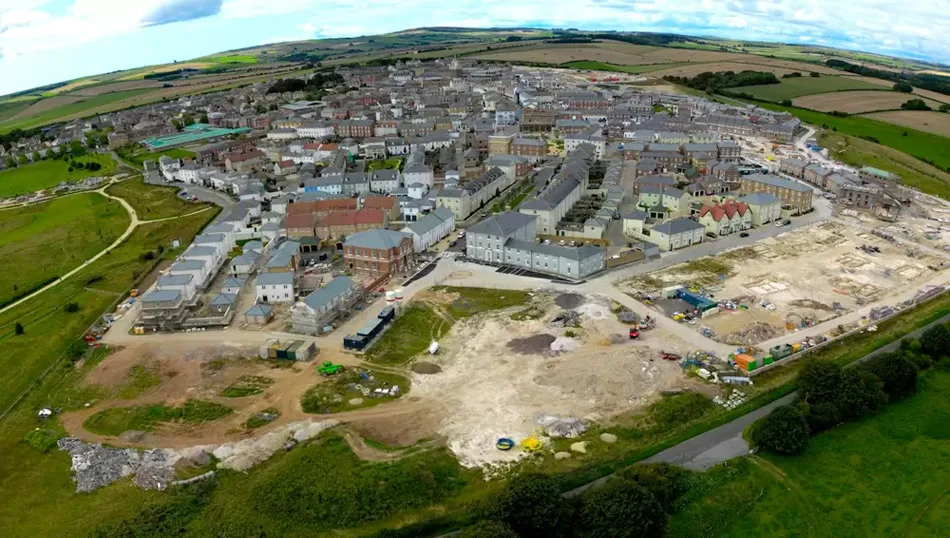
Government housing targets
By way of background, we have consistently argued that the government’s Standard Method produces housing targets that are both unsustainable and undeliverable. The method applies an arbitrary baseline of existing housing stock and then inflates it to reflect assumed affordability pressures. In Dorset, this generates targets of around 3,300 homes a year – figures that bear no relation to reality.
Over the past two decades, delivery has averaged only 1,300 homes a year, and anything close to the government’s target would overwhelm local infrastructure. North Dorset CPRE strongly supports the council in pursuing a locally justified housing figure based on Dorset’s environmental capacity, infrastructure limitations, and genuine housing need, including truly affordable homes for local people.
In support of this, we welcomed Dorset Council’s decision to commission, jointly with Bournemouth, Christchurch and Poole (BCP), an up-to-date assessment of Dorset’s housing need. This work, together with new evidence such as the Green Belt Review and site assessments, should inform a draft Local Plan that is realistic and environmentally responsible. The ONS Household Projections make it even more important.
The evidence from ONS
The ONS projections, which incorporate the latest population and migration data, show that:
Under the recommended migration category variant, Dorset will see growth of 29,430 households (≈1,730 p.a.) between 2026 and 2043.
Even under a high in-migration scenario, growth rises only to 35,349 households (≈2,080 p.a.).
The Standard Method requirement of 55,182 homes is therefore at least 20,000 dwellings higher than any credible demographic projection. Moreover, 88% of Dorset’s projected household growth comes from people aged 70 and over, with almost all of the increase in one- and two-person households as average household size continues to fall. The Local Plan must reflect this reality.
Dorset’s physical constraints
Even if demand were sufficient, Dorset faces severe environmental and infrastructural limitations:
More than 40% of the county lies within National Landscapes (formerly AONBs), protected for their scenic and ecological value.
The county has a dispersed rural settlement pattern, limited public transport and a road network already at or beyond capacity in many areas.
Utilities and public services (sewerage, GP capacity, water supply, schools) are constrained and cannot easily accommodate large-scale dispersed growth particularly re health care for population growth in people over 70 years.
These constraints further limit both the scale and the location of sites that can realistically be delivered. A target of 3,246 homes a year would force development into unsustainable locations, in direct conflict with the NPPF’s environmental and infrastructure principles.
Market realities
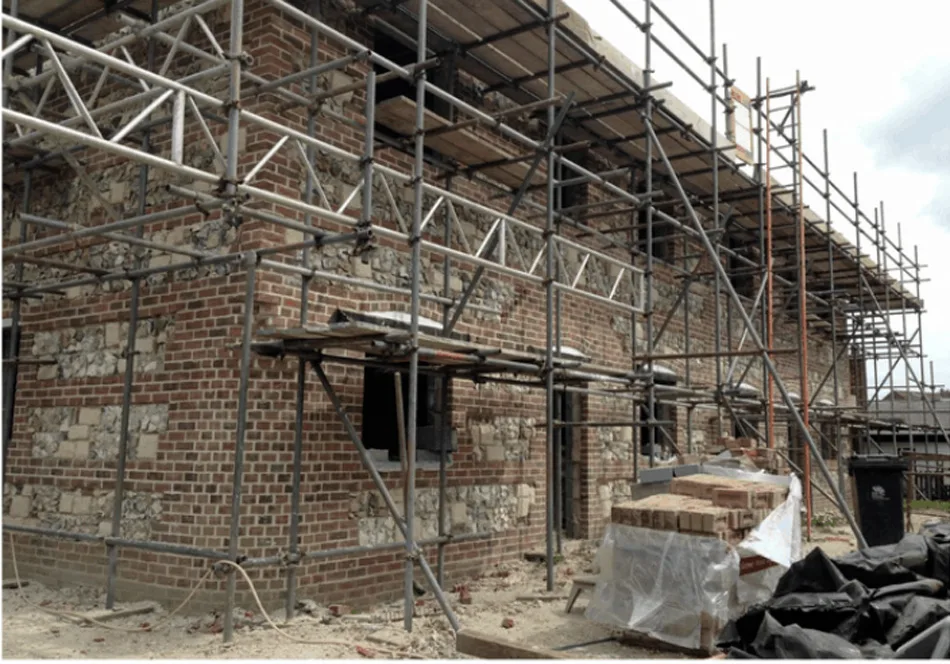
Developers build to meet demand, not targets. Dorset already has 10,000 plots with planning permission that remain undeveloped. Increasing allocations or permissions will not result in faster build-out: it will simply lengthen developer control
of supply.
Demand for housing is not governed by theoretical, over-simplified formulae which purport to reflect “need” or “affordability”. Even IF local incomes rise substantially or major subsidies are introduced, the market cannot absorb the level of construction implied by the Standard Method.
Consequences of the Standard Method
Proceeding with an undeliverable target exposes the Local Plan to two levels of failure. At examination, the Plan risks rejection by the Planning Inspector as unsound, since its housing strategy would fail the NPPF test of deliverability. On the other hand, if adopted, the Plan would inevitably fail to meet its own delivery targets, fuelling speculative development and undermining confidence in the planning system.
A realistic approach
North Dorset CPRE therefore urges the council to:
Base its housing requirement on the ONS 2022-based projections, particularly the migration category variant, implying around 1,700 or so dwellings per annum;
Demonstrate that this level is both deliverable and potentially compatible with Dorset’s landscape and infrastructure capacity;
Highlight the inherent policy conflict within the NPPF as part of its evidence to Government and the Planning Inspectorate and
Ensure that the terms of reference for the forthcoming Housing Needs Assessment make full reference to ONS 2022-based projections and the local need for truly affordable social rent housing.
Such an approach would be consistent with the evidence, faithful to NPPF soundness tests, and sustainable in Dorset’s environmental context.