Home Blog Page 12

Meeting Mr Hardy:Thomas Hardy and music, part 1

0

Monographs from the Toucan Press collection: interviews with people who knew Thomas Hardy, from royalty to his parlour maid

James Stevens Cox

In the early 1960s, there were still many people living in Dorchester and across West Dorset who had known Dorset’s greatest writer, the poet and novelist Thomas Hardy.
James Stevens Cox*, a Bristol-born antiquarian, historian and bookseller, had recently moved from Ilchester in Somerset to a house in Beaminster.
James, a polymath with an insatiable curiosity, realised that the recollections of these now-ageing locals would be invaluable for anyone interested in the writer. His decision to interview many of them was an act of amazing foresight – at that time Thomas Hardy was largely forgotten (outside Dorset). The memories, recorded in a series of monographs published by James’s Toucan Press, have provided a great deal of source material for subsequent biographies.
This is the first of a new series, drawing on James Stevens Cox’s interviews and researches into the life and times of Thomas Hardy. We begin with Thomas Hardy as a musician, recalled by a gifted Dorset-born pianist, Vera Mardon (née Stevens, no relation), who regularly accompanied Hardy at his home, Max Gate, while he played his violin.
Tim Laycock, Dorset’s much-loved musician, actor, historian, singer and Thomas Hardy and William Barnes expert, contributes some thoughts on Hardy’s importance in the revival of West Gallery Music and other Dorset folk songs and dances.
Vera was only 11 when she first met Hardy: ‘I clearly remember the occasion. It was at one of the early rehearsals by the Hardy Players for The Mellstock Quire, in the Town Hall.’ She was introduced by her father, EJ Stevens, who was an active member of the Dorchester Debating Society, of which the great writer was an honorary member. The production featured some old country dances but Hardy was unhappy with the dance: ‘He took a lady as his partner and then, despite his age (77), he nimbly demonstrated to the assembled company the correct steps and positions,’ said Vera.
He wasn’t impressed with the accompanist either: ‘He was displeased with the tempo and, borrowing the violin, he played in a lively manner all the required tunes from memory.’ He was a perfectionist, said Vera: ‘Everything had to be as he wanted it to be – correct to the smallest detail.’

Thomas Webster’s 1847 painting A Village Choir, showing how Hardy’s West Gallery music would have looked and sounded. Image: public domain

‘Gee, Mr Hardy!’
Vera became Hardy’s accompanist after she finished her piano and violin studies at the Royal Academy of Music in 1918. Mrs Hardy (his second wife) invited her to come to Max Gate and Hardy asked her to play the piano while he played old dance tunes on his fiddle.
She recalls the pattern of the music sessions: ‘I arrived about 4.45 and had tea. This consisted of home-made cakes and very small dainty sandwiches. Afterwards I accompanied Hardy for about an hour and then I told him I ought to return home … Tea had been more of a ritual than a meal and at at that time I looked on it as an afternoon custom of the middle-class, not for the purpose of nourishment, but to provide a suitable background for a social chat. At the age I then was I had an appetite which the dainty fare could not satisfy.’
Although Hardy showed no interest in Vera’s classical studies he was interested in her violin, made in 1796 by the renowned Salisbury maker Benjamin Banks. Hardy had an old fiddle which he first saw in a shop window in London while he was a student – he had saved up for months and finally bought it.
While he enjoyed playing music, loved the theatre, adapted many of his stories and some of the novels for the stage and took a keen interest in the productions, he was very shy, and ‘lived in mortal terror of hearty extroverts, especially American ones.’ Vera recalls a visit by the Hardy Players to Glastonbury to see an operatic version of The Queen of Cornwall, Hardy’s verse tragedy based on the medieval legend of Tristan and Iseult. The opera was written by Rutland Boughton, the composer and founder of the original Glastonbury Festival.
At this time, two American ladies were visiting Dorset, keen to meet the famous writer and visit places associated with him. Vera’s father invited them to join the Hardy Players on their Glastonbury visit, but did not tell them that Hardy would be there too. He was concealed in a small room from where he could see the stage. ‘Unfortunately, one of the good ladies was very tall and she spotted him and enthusiastically rushed towards him, quickly followed by her friend, and thrusting out her hand said: ‘Gee, Mr Hardy! May I have the honour of taking you by the hand?’ Oh dear, it was a frightening moment.
‘Hardy was caught in just the situation he always dreaded. He very reluctantly allowed her to shake him momentarily by the hand, quietly muttering “Oh yes” then quickly jerked his hand free and rapidly turned on his heels and shot out of the hall to his hired car, at what, even for him, was a remarkably fast pace. He reminded us of a frightened rabbit scurrying back to its burrow.’
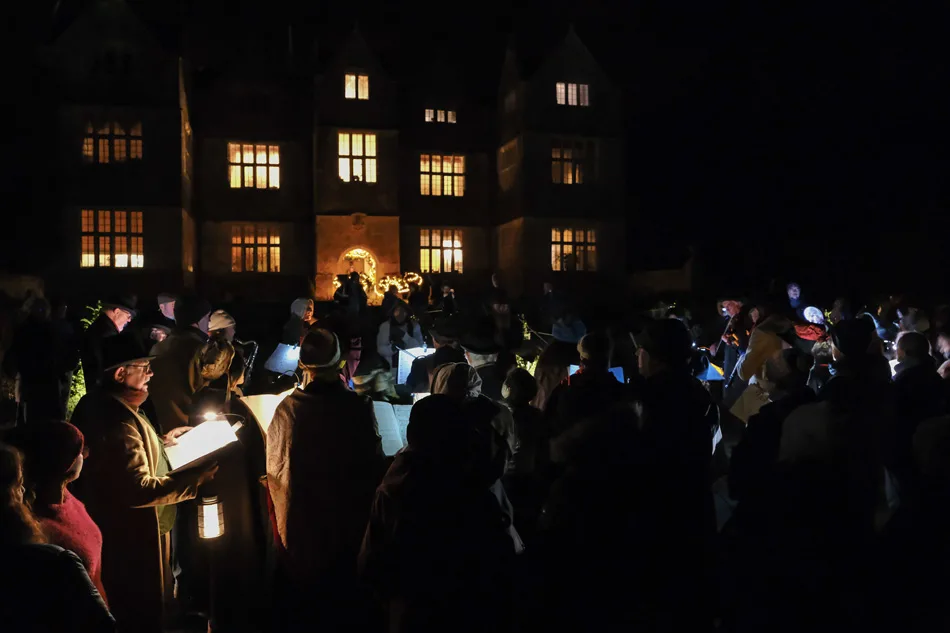
Going the Rounds – singers taking part in the 2025 celebration of this ancient seasonal ritual. Photograph by Tony Gill

Going the rounds
Thomas Hardy grew up with family memories of the West Gallery music which his father and grandfather had played. It was generally metrical psalms, with a few hymns and anthems that were sung and played in Church of England parish churches, as well as nonconformist chapels, from 1700 to around 1850. The galleries where the choir (predominantly male, local amateur musicians and singers) played were 18th century wooden structures at the west end of a church or chapel.
The West Gallery Music Association website
(wgma.org.uk) gives a clear background to West Gallery music and its decline, described so poignantly (and humorously) in Hardy’s Under the Greenwood Tree. It explains ‘the determined Victorian effort of both parliament and the church to gain authority: animal cruelty sports were suppressed; old traditions such as Shrovetide football (seen as, and often truly little more than, riots) were put down; churches were “restored” and in 1861 Hymns, Ancient and Modern replaced the old musicians’ books of psalms and hymns, lovingly copied-out in manuscript.’
Eventually, ‘the old quire played no more’ – organs replaced bands, the historic and often quaint instruments were scrapped and the tune books burned. The Victorian dislike of the Georgian period galleries led to the removal of many, though Dorset has a number of churches that still have west galleries, including St Nicholas at Abbotsbury, St Mary’s at Puddletown, St Michael’s at Stinsford and the tiny ancient St Andrew’s at Winterborne Tomson. Several also retain box pews.
Tim Laycock, well-known for his performances as both Thomas Hardy and William Barnes, and with the Ridgeway Band and Singers, recalls his introduction to this music: ‘The starting point to the world of West Gallery music and the life-affirming world of community music for me and for many others was the opening chapters of Under the Greenwood Tree. Hardy’s masterful preface to the story sets the scene beautifully, and conveys perfectly the pride, dedication and sense of belonging that ‘Going the Rounds’ encapsulated.’
The tradition of Going the Rounds, described with such affection and colour in the novel, was revived by West Gallery and Hardy experts Mike Bailey and Furse Swann and continues as a biennial event in December, organised by folk musician Alastair Braidwood and the Thomas Hardy Society, retracing the carolling of the Mellstock Quire from Hardy’s cottage to the church at Stinsford with input from The New Hardy Players and the Ridgeway Singers and Band.
Old William Dewey instructs the men and boys of the Mellstock Quire: ‘Now mind, neighbours,’ he said, as they all went out one by one at the door, he himself holding it ajar and regarding them with a critical face as they passed, like a shepherd counting out his sheep. ‘You two counter-boys, keep your ears open to Michael’s fingering, and don’t ye go straying into the treble part along o’ Dick and his set, as ye did last year; and mind this especially when we be in “Arise, and hail.” Billy Chimlen, don’t you sing quite so raving mad as you fain would; and, all o’ ye, whatever ye do, keep from making a great scuffle on the ground when we go in at people’s gates; but go quietly, so as to strike up all of a sudden, like spirits.’
As Tim Laycock says: ‘Dorset is unique in having an internationally renowned writer who was also a folk fiddler and a great chronicler of the music, song and dance that inspired his father and his grandfather in their music making … What a fantastic legacy to leave!’
Next month: The revival of the West Gallery tradition, with memories of Tim Laycock and Dave Townsend, leader of the Mellstock Band
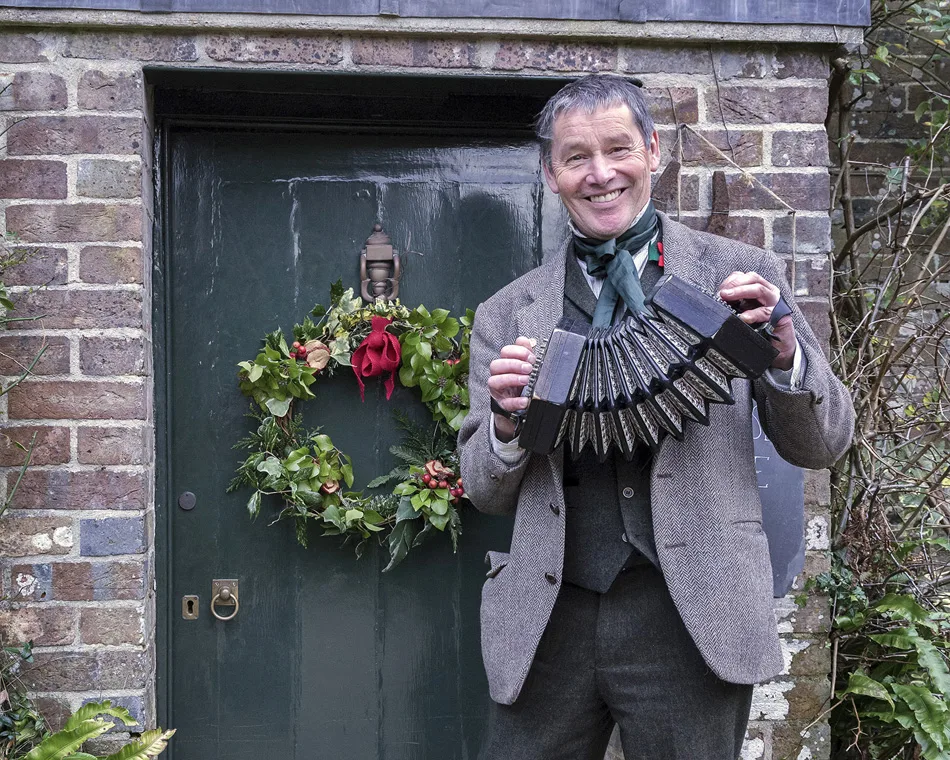
Hardy – Tim Laycock at Hardy’s Cottage Tony Gill

The annual Tea with William Barnes event, with Tim Laycock, Phil Humphries and the Ridgeway Singers and Band, takes place at the Exchange at Sturminster Newton on Sunday 22nd February at 3pm.

  • James Stevens Cox (1910-1997) was my uncle – knowing my love of Hardy from an early age, he sent the monographs as they were published; permission to quote from them has been given by his son, Gregory Stevens Cox © Toucan Press


Hinton Workspace steps into 2026 with a new focus

0

Dorset is entering 2026 with an expanded mission – evolving from a flexible coworking hub into a dynamic space that brings business, wellbeing and lifestyle together under one roof.

Over the past year, the site has grown rapidly into a meeting point for local freelancers, entrepreneurs, small business owners and professional networks. From informal catch-ups to formal events, it’s become a place where work feels more connected. Now, it’s moving up a gear. From 1st February, C Results – a new on-site personal training studio led by Dorset-based trainer Cam Taylor – will open at Hinton. Designed specifically for busy professionals, the gym focuses on long-term resilience and sustainable energy, rather than short-term fixes. Also joining the courtyard community is Gemma Hampton, who now offers massage and therapeutic treatments for those in need of a reset – whether from work stress or daily life. The expansion reflects a clear shift in how people want to work: not just productively, but healthily.
As remote and hybrid working become the norm, Hinton Workspace is positioning itself as more than an office – it’s a base for growth, connection and wellbeing in rural Dorset.
To mark the new year, Hinton is offering 10% off its 10-day coworking pass throughout January. Use code JAN10 online before 31st January. Passes are valid for 90 days.
hintonworkspace.co.uk

Your January plans are sorted – it’s a busy start to the year in Stur

0

As the cheese and mince pies are (mostly) gone, January in Sturminster Newton kicks off with a lively mix of music, theatre, community spirit and business buzz. Whether you’re planning a wedding, looking to give back, or just in need of a night out, there’s plenty happening across the town to ease you into 2026.

Quiz & Curry for Riverside Fest
Friday 23rd January | The Exchange
Warm up a winter’s night with the ever-popular Riverside Fest Curry & Quiz Night. Grab your cleverest friends and enjoy a lively evening of questions, laughs and a hearty curry – all in support of August’s much-loved Riverside Festival.
ticketsource.com/riverside-family-fest

Swish Comes to Stur
Saturday 24th January | The Exchange
For the first time, Dorset Council’s popular clothes-swapping event Swish comes to town.
Bring good-quality clothes you no longer wear and swap them for ‘new-to-you’ pieces. It’s free, fun and sustainable – a great way to refresh your wardrobe while cutting waste.
And during the Swish, don’t forget Stur’s charity shops, who offer so much to all second-hand fashion lovers. The town’s ‘clothes recycling’ shops include Weldmar Hospice, Friends of Blandford Hospital, Vale Family Hub, Community Connections, Dorset Blind and the three SturAction shops – Marketplace, Boutique and Emporium.
Donations are always welcome.

Screenshot

Say “I Do” to Inspiration: Wedding Fair
Saturday 31st January | The Exchange
Planning a wedding this year? The Sturminster Newton Wedding Fair is the perfect place to begin. This free event brings together a curated selection of local wedding suppliers – from florists and photographers to venue stylists and cake makers – all under one roof. Whether you’re newly engaged or just love a bit of wedding day dreaming, it’s a relaxed, inspiring afternoon with plenty to browse and experts to chat to.
sturminsternewtonweddingfair

Screenshot

What’s On at The Exchange – January Highlights
Thursday 8th January – Downton Abbey: The Grand Finale (Cinema)
Saturday 10th January – Copacabana Magic (Barry Manilow tribute)
Saturday 17th January – Beauty & the Beast (by Living Spit – inventive, funny theatre)
Saturday 24th January – Dos Amigos (an intimate acoustic evening with two Los Pacaminos originals)
Thursday 29th January – Cabaret with Balls (quirky music-meets-theatre cabaret)
Book tickets at stur-exchange.co.uk
Don’t forget the Bibbern Café & Gallery is open throughout the month, serving hot drinks and snacks, with local art on display.

Volunteer This Year
As we turn the page on the festive season, now’s the time to think about giving back. Stur thrives on the energy of its volunteers – from festival stewards and library helpers to friendly faces behind the bar at The Exchange. Whatever your time or skill level, there’s a place for you. To find out more or get started, email Jacqui on [email protected] Volunteer roles include:
– Café/bar team at The Exchange
– Hall stewards, technicians, and box office support
– Festival and event helpers
– Library volunteers and befriending schemes
The SturAction shops need volunteers (and a handyman!). Talk to Cheryl on:
[email protected]
Want to help at the Stur LitFest? They’re seeking a secretary, committee members and event helpers: [email protected]

Business Buzz: new openings in town
Sturminster Newton’s independent high street continues to thrive, and the new year brings a flurry of activity:
Pan Thai – a new restaurant and takeaway offering authentic Thai cuisine
Lucky Nails – now open, offering professional nail treatments on the high street
The Swan Inn – due to reopen in February after a major refurbishment. With refreshed interiors, seasonal menus and cosy rooms, it’s set to be a highlight of 2026

Business Awards – nominate now!
The 2026 Sturminster Newton Business Awards, run by Marketing West, are now open for nominations. These awards celebrate the best of local business across customer service, innovation and community contribution.
Nominate your favourite before 2nd February

Whether you’re popping into town for a coffee, taking in a show, swapping clothes, or finally getting round to nominating your favourite café – there’s no shortage of ways to start the year well in Stur.

Christmas tree collections raise more than £53,000 for Dorset charities

0

This year’s local Christmas treecycling efforts have smashed records, raising over £53,000 between them for two Dorset-based charities – Weldmar Hospicecare and Diverse Abilities.

Weldmar volunteers out collecting trees


In Weldmar Hospicecare’s annual Treecycle campaign, more than 1,600 trees were collected in early January from homes across Dorset, raising £18,085 to support adults with life-limiting illnesses and their families. Now a firm fixture in Weldmar’s fundraising calendar, the initiative is as much about community as it is about sustainability: ‘Treecycle has become part of my Christmas tradition,’ said Fiona Hansford, Weldmar’s Fundraising Lead. ‘We’re blown away by the support from residents, local businesses and volunteers – we couldn’t do it without them.’
All trees were disposed of sustainably, with Knighton Countryside Management processing the chippings for biomass fuel. Local support came from Trinity Street Christmas Trees, Bridport Freemasons, Beaminster Motors and several others who lent vehicles, volunteers and drop-off sites.
Meanwhile, Dorset’s disability charity Diverse Abilities saw its own Treecycling scheme break new ground – collecting a staggering 2,488 trees over just one weekend and raising more than £35,000. More than 100 volunteers gave up 840 hours of their time to support the collection, backed by local firms including Wessex Water, Avon Material Supplies, and MATA Construction.
The money raised could fund an entire year of Diverse Abilities’ STARS sibling support service, which provides a safe and understanding space for children growing up alongside a disabled brother or sister.
‘We’re overwhelmed by the support we’ve received,’ said Francesca Potton, Community Fundraiser at Diverse Abilities. ‘A huge thank you to everyone who booked a collection and to all the amazing volunteers and businesses who made this possible.’
Between them, the two charities saved nearly four tonnes of waste from landfill, repurposing the trees into renewable fuel – a perfect blend of community spirit, sustainability and support for two of Dorset’s vital charities. Both organisations hope to grow their schemes even further next year: you can already register your interest in Diverse Abilities’ 2027 campaign at diverseabilities.org.uk/trees

sponsored by Wessex Internet

A look back at 2025 on the allotment

0

Barry Cuff takes a look back through his notes on what happened on his Sturminster Newton plot last year

Images: Barry Cuff

A wet, mild start to December kept us off the soil to avoid causing damage to its structure. Most of the mulching was done from paths and planks laid across the plots. It also meant that annual weeds – especially groundsel, chickweed, red deadnettle and Speedwell – continued to grow, but these can also act as a green manure to be dug in at the end of winter.

There were a few main jobs through the month:

  • manure or compost
  • Removed the old leaves from the brassicas
  • Covered the salad leaves with fleece when frost was forecast
  • Continued harvesting winter crops as required
  • Weeded the strawberry bed and the currant and gooseberry plot
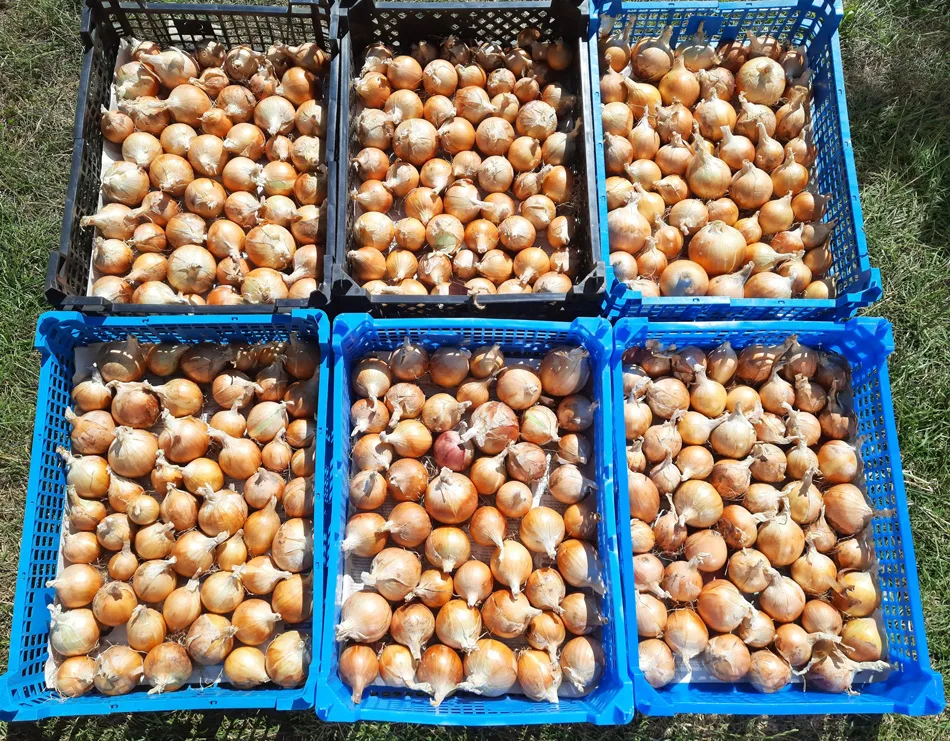
A ‘good yield’ of onions in 2025: Bonus, grown from seed

Our 2025 in review
The long summer drought affected some vegetables more than others, despite being watered daily. We were lucky the alotment has a deep well and good storage containers on site – and even more so that it did not run dry!
BEETROOT – Successional sowings from March to August ensured a constant supply for salads and pickling.
BROAD BEANS – Started in the greenhouse and planted out in February. Two varieties of different maturing times. Average yields, but finished producing earlier than usual due to the drought.
BRUSSELS SPROUT – 2024-sown plants finished cropping in March. Started harvesting 2025-sown plants in mid-December – they were smaller buttons than usual, but tastier.
BROCCOLI (PURPLE SPROUTING) – 2024-sown finished producing spears in March, and we have just started picking the 2025 crop.
CABBAGE – We only grow Red Drumhead for coleslaw and stir frys, and they have done exceptionally well.
CARROT – Successional sowings of Early Nantes from April to September ensures we always have fresh roots. Many will stay in the ground until early spring.
CAULIFLOWER – Three varieties to harvest between October and March this year, with smaller heads of those harvested so far. We cut our first Cendis at the beginning of December, and will have Aureo to cut from March 2026

The drought meant less cobs per plant than usual on the sweetcorn


CALABRESE – It was a good year, with many side shoots after the central head was harvested.
CELERIAC – Poor seedling establishment (possibly diseased) so we had to buy some plants. They have done very well, producing some good roots. Six plants left in ground to lift this year (now protected with straw in case of hard frosts).
CELERY – As with the celeriac we had poor seedling establishment and decided for the first time in many years to give it a miss.
CHICORY (FORCING) – Roots lifted in November. Cut first chicons on 20th December, and will continue cropping until February
COURGETTE – A good year despite the drought.
CUCUMBER – A good year: we grew an outdoor variety (Gergana) seed which we got from from Lidl!
FRENCH BEANS – We did have below normal yields due to the drought
GARLIC – The 2025-planted bulbs were harvested in August, and we had a good yield. This year’s crop was planted in early November, and is looking well.
LEEK – Finished harvesting 2024-sown plants in March. The new crop is looking well, although generally smaller than most years. Will continue cropping until February/March.
LETTUCE – Monthly sowings of Little Gem ensured fresh lettuce to cut from April to October (November in the greenhouse!)
MANGETOUT – Below normal yields, and also finished cropping early due to the drought
ONION – We had a good yield of Bonus, grown from seed. It’s a variety that stores well over Winter. We had fewer lost to white rot.

In the potato beds, all the earlies, second earlies and early maincrop varieties did well: the main crop less so, once the drought hit


PARSNIP – Finished lifting 2024-sown crop in March. 2025 crop established well from sowing in April, and will continue to crop for the next few months.
PEA – Average yields, and finished early due to the summer drought
POTATO – Not a bad year, despite drought. All the earlies, second earlies and early maincrop varieties did well: the main crop less so.
RUNNER BEANS – A fair crop, but another that finished earlier than usual.
SALAD LEAVES and ROOTS (ORIENTAL) – Established well from seed, and we’ve had good pickings.
SQUASH – Both Crown Prince and Butterfly butternut gave a good number of fruits.
SWEETCORN – Slightly less cobs per plant than usual.
GREENHOUSE CROPS – Both tomatoes and peppers did exceptionally well in the summer heat
FRUIT – We had excellent yields of strawberry, currants and gooseberries, though the raspberries were poorer than usual.

January jobs in the flower garden

0

From bare-root planting to winter pruning, January is about thoughtful groundwork for a healthier, happier garden year ahead

Witch hazel – hamamelis – provides a cheerful splash of colour in mid-winter with its fragrant, spidery flowers in shades of red, orange and yellow

While there are generally fewer garden jobs to do in January, it’s a good time to plan for the year ahead. Have a look at your garden and see what worked well … and decide if any areas need re-thinking!
Do you need to create a more wildlife friendly garden? Letting nature take over may reduce some of the work involved in tidying up: leaving piles of leaves in corners and on the flower beds will do no harm, and the worms will do some of the work for you!
Winter is a good time to check on the weeds in the borders – remove them before their spring growth.
Prune your wisteria this month by cutting back the newest thin summer growth, leaving only two or three buds.
Prune your rose bushes while they are still dormant – especially if they are tall and vulnerable, they are liable to wind rock. Cut the branches back to just above a bud, making sure to remove any crossing or dead branches.
Some of the other jobs that can be done this month are sowing this year’s sweet peas, begonias, pelargoniums, basil … a heated propagator will help with the seed sowing and germination temperature requirements.

Hellebores, also called Lenten or Christmas roses, are hardy perennials known for their beautiful, nodding flowers in whites, greens, pinks and purples, blooming from late winter into spring

Planting
If the soil is not too wet or frozen, now’s the time to plant bare root roses, shrubs, hedging and ornamental trees. Bare rooted plants are much less expensive than container-grown plants and can establish very well. Many deciduous and evergreen shrubs, trees and hedging plants can be planted bare rooted as they are dormant between November and March.
Plants and shrubs which flower in January include hellebores (try niger), hamamelis (witch hazel), lonicera (honeysuckle) and, of course, snowdrops! Mahonia are easy to grow and some are scented.
Clematis cirrhosa ‘freckles’ requires very little pruning, just trim it slightly after flowering.
Also viburnum (tinus is evergreen and easy to grow, bodnantense is a very nice scented plant, and another that’s easy to grow), and cornus – not actually in flower, but great for winter colour. For some instant garden cheer, these can all be bought now in garden centres.

Larmer Tree named South West’s best wedding venue

0
Larmer Tree wedding image
© Hollyhock Photography

One of the region’s most distinctive wedding venues has been recognised at the 2026 Wedding Industry Awards – with Larmer Tree named South West Regional Winner for the second year running.
The win now takes the historic venue, on the Dorset–Wiltshire border, to the national finals later this month, and marks a proud milestone for a team long celebrated for its calm professionalism and attention to detail.
Set within Victorian pleasure gardens created in the 1880s, Larmer Tree offers couples a deeply personal setting for their wedding day – with sweeping lawns, ornate garden buildings and a relaxed atmosphere that makes the place feel quietly timeless.
‘Winning this award means the world to all of us,’ said Amy Reid, Larmer Tree’s wedding and events manager. ‘We’re so proud to be heading to the National Finals again, and incredibly grateful to our couples for their support.’

Wedding Showcase – Sunday 25th January
Larmer Tree will be opening its gates this month for a Wedding Showcase, offering couples the chance to explore the venue, meet the team and sample canapés. The event runs from 12 to 3pm and includes a welcome glass of fizz. For more information, visit larmertree.co.uk.

sponsored by Wessex Internet

What is the future for rural pharmacies?

0

As pharmacies close and queues grow, Dorset’s official assessment says provision is ‘sufficient’ – a conclusion many rural patients would dispute

Stock image of two pharmacists

Community pharmacies are a lifeline in towns and villages across the nation – many do significantly more than dispense prescription drugs. Pharmacists give advice on minor health problems, administer flu jabs, and sell health-related items. However, when Jhoots recently closed its doors in Dorset (and other parts of the South West), the gap in service was evident. So why are there issues with the pharmacy service? Are there enough community pharmacies in rural Dorset?
Dorset Council has recently published its Community Pharmaceutical Needs Assessment – the document that decides where pharmacy services are considered viable, and where they are not. Those people who have spent time queuing in their local chemist, especially with the recent issues with Jhoots, are probably curious about provision for their area.
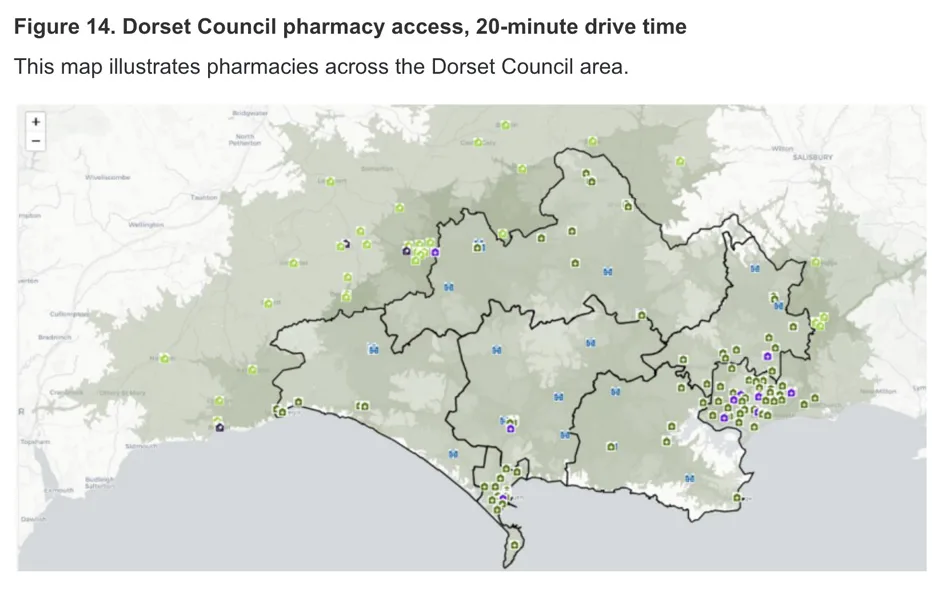
One of the key measures used is travel time. Nationally, the benchmark is that 99 per cent of residents should be able to reach a community pharmacy within 20 minutes by car – a standard Dorset Council has adopted for this assessment.
The report assumes that high levels of car ownership – and the council’s view that areas with lower car ownership are located near pharmacies – mean access is ‘practical and achievable’ for most residents. That assumption would seem laughable to those without transport, or reliant on sporadic rural public transport.
Are there enough pharmacies in the county?
The needs assessment identified 132 pharmacies across Dorset (66 in Bournemouth, Christchurch and Poole, and 66 in the Dorset Council area), with the majority clustered in urban centres alongside GP surgeries.
In North Dorset, seven community pharmacies were mapped, alongside GP dispensing practices which are included in the access calculation. On that basis – using a 20-minute car journey as the defining measure – the council’s steering group concluded that Dorset has ‘sufficient’ pharmacy provision, a finding that is likely to surprise many residents who have recently queued, travelled long distances or gone without their prescription.
A complex business
Richard Brown is the Chief Officer at Community Pharmacy Dorset, the group that works on behalf of pharmacies in the county, negotiating contracts and giving advice on pharmaceutical services.
‘By its very nature, rural areas don’t have many people. So who would pay for more pharmacies? There has to be a level of business thinking in these decisions because a pharmacy is a business, and needs to be viable,’ says Richard Brown.
‘Everyone in a village would love a pharmacy, but that doesn’t mean they would use it regularly. It’s always interesting how they get grocery items – they get them from somewhere, and it isn’t always the village shop.
’Jhoots was a successful business in the Midlands for several years. The owners are not amateurs, and bought their pharmacies in good faith.
‘There is chronic underfunding in the pharmacy service. If two pharmacies in Shaftesbury were struggling, think about what that would be like in a rural village. It costs a minimum of £250k a year to run a pharmacy because of the overheads, alongside staff wages, having secure IT systems … although the Government says there has been an increase in pharmacy funding, most of that has been absorbed in National Insurance increases.’
While it seems a simple process for people to go to pharmacies with their prescriptions, what goes on behind the scenes is revealing. Opening a pharmacy is tightly regulated. A provider must prove there is an unmet ‘need’ – even in communities already struggling to access services. Medication is sourced from suppliers and there is a variable price which can affect profit margins, especially where there are shortages of drugs. Richard gave an example: ‘During the winter of 2024, the price of a single box of penicillin rose to £20 because it was in short supply – that cost had to be absorbed by the pharmacy. For each prescription item dealt with, the NHS pays the pharmacy £1.46. The whole funding structure is chronically insufficient and has not been changed to address rising costs. To get pharmacies funded correctly would probably require an increase of 1% in National Insurance costs from each adult in the country. But if a pharmacy stopped giving out medications where they are making a loss, there would be deaths.’

This map illustrates pharmacies across the Dorset Council area

Heading online
Local Gillingham social media groups have for months been awash with long threads of complaints as the Barn Surgery Pharmacy closed and the town’s remaining chemists have struggled to keep up with the demand. Many residents say they have simply given up and switched to online services – not by choice, but through exhaustion. Derek Day from Okeford Fitzpaine uses Pharmacy2U to help him manage a chronic health condition.
‘My GP automatically sent the prescription to Boots, and I assumed they were dealing with it. But when I went to collect it two or three days later it hadn’t been processed. They said it would be ready in an hour or two, but when I went back they hadn’t got the tablets I needed. I need to keep my blood pressure under control, and need to take tablets on time so I started using Pharmacy2U. I haven’t had an issue since, and the medication is delivered to my door.’
Other pharmacies are providing services, such as free delivery at the NHS pharmacy at Blandford, to support local people who may not drive. Allied Pharmacy will be taking over most of the pharmacies previously owned by Jhoots, including those in Lyme Regis, Bridport, and Shaftesbury, but will the inherited issues be resolved, given the chronic underfunding in the sector?
MP for West Dorset, Edward Morello, comments in The BV this month: ‘I received the fantastic news that Allied Pharmacy had agreed to take over and re-open the pharmacy in Lyme Regis, bringing to an end the long-running Jhoots saga and meaning residents would once again have a local service. The resilience and strength shown by the staff, who have gone months without pay, was a sight to behold.’
Pharmacy services are complex small businesses. One of the key issues to emerge from the recent Jhoots problems in Dorset was the plight of the staff, who worked unpaid for months but continued to support the patients. The recent chaos has exposed a system held together not by funding or policy, but by staff who continued to show up – unpaid, overstretched and deeply committed – because they knew patients were relying on them.

Dorset residents can read the Pharmaceutical Needs Assessment in full here

Why is Guys Marsh one of Britain’s most violent prisons?

0

Behind the rural calm of Guys Marsh prison lies a workforce in crisis and a system stretched so thin that progress remains fragile

From the exterior, HMP Guys Marsh manages to blend gently into the countryside near Shaftesbury. However, appearances can be deceptive. Recent data from HM Inspector of Prisons showed that Guys Marsh is one of the most violent jails in England.

Guys Marsh prison, near Shaftesbury
images: Courtenay Hitchcock


What has led to that problem? And, more importantly, what is being done to improve both staff and offender welfare?
Guys Marsh began life as a 600-bed military hospital during Second World War.
After the war, it served as a rehabilitation centre for ex-prisoners of Japanese war camps. The military hospital role ended in 1952.
It became a borstal in 1960 and a Young Offender Institution in the 1980s. Today, it is a Category C men’s prison with resettlement facilities.
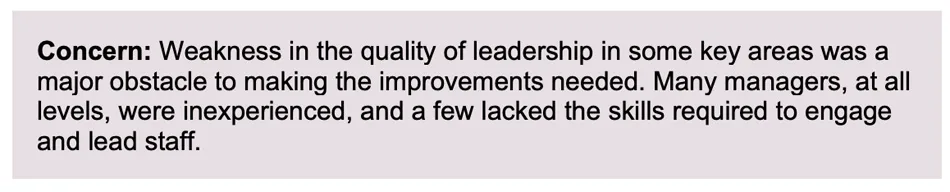
Troubling reports were produced by HM Inspector for Prisons in 2022 and again in January 2025, highlighting the lack of leadership, illicit drug use, inadequate rehabilitation facilities and violence.
The latest inspection report, published in December 2025, found that violence had reduced by a third. However, the number of incidents remained higher than in other UK prisons.
A recent event in Sturminster Newton, hosted by the Friends of Guys Marsh charity, showcased inspirational work by staff and ex-offenders and was well attended by the public.
But significant challenges remain at the prison.

The workforce crisis
Sarah Rigby is the South West representative on the National Executive Committee of the Prison Officers Association. She has many years experience working in the justice service, and has several insights into the situation at Guys Marsh.
‘Over the last 15 years, we have lost an awful lot of experienced prison officers, and recruitment has not kept pace. It’s a job that you learn from experience.
‘When I joined, I was surrounded by officers with anywhere from 15 to 30 years of experience, and there were just two or three of us who were relatively new. Unfortunately, we are now in a position where, as a new member of staff, you’ll be trying to learn your role from someone who has only been in the job for six months themselves. They just don’t have the knowledge or experience.
‘Changes were also made to the role of first-line manager. That was someone on the same wing every day, whom you reported to and could go to for guidance. That role is now gone.
‘A place like Birmingham has a far wider pool to recruit staff – that’s missing at Guys Marsh. It’s a far smaller region to draw candidates from.
‘The nature of the prisoners has also changed: they are far more challenging. There are a lot more issues staff are exposed to, such as self-harm and violence. The prisons are also overcrowded. Healthcare is outsourced to private companies that lack enough mental and physical health nurses.
‘All that leads to frustration. Sometimes there are barely enough staff to unlock the prisoners and establish a regime. Every day feels like carnage.’
Guys Marsh, like many other British prisons, is overcrowded. Data from the Ministry of Justice shows that the baseline standard for occupied cells at uncrowded capacity is 476 – the current total capacity is 507. Overcrowded prisons inevitably lead to frustration and violence.
Sadly, when there is significant pressure inside a prison, this also leads to staff sickness. When the Prison Inspector visited Guys Marsh recently, they found fewer than 60% of operational staff were available to be deployed to their duties. Over the past five years, the average number of annual sick days lost at Guys Marsh is 4,018. With 260 staff on site, that’s an average of 15 days a year, per employee. In England’s prisons, the average sickness rate is 12.6% – at Guys Marsh, it can reach 16%. In 2024, 43% of prison officers at Guys Marsh had taken a mental health break.

Deadly drones and drugs
Drug misuse in prisons has been a significant issue for years and is often controlled by gangs. The problem has increased with the development of drone delivery of illegal substances. Recent data shows there were more than 1,700 drone sightings near prisons in 2024/5. In addition, agricultural drones can carry up to 100kg – technically a potential escape route.
In December, Emma Brown, the area coroner for Birmingham and Solihull, issued a prevention of future deaths notice. This requires the Ministry of Justice to respond within 56 days to their plans to prevent drones from delivering drugs to prisons. It followed the death of 29-year-old Derrion Adams after he took Black Mamba, a form of ‘spice’. At the time, HMP Birmingham was understaffed, with several drug-related incidents after drones delivered drugs.
While this tragedy occurred in the West Midlands, the coroner recognises this is a nationwide issue, far broader than Birmingham.
Drones are also known to be involved in delivering illegal drugs to Guys Marsh. The Inspector of Prisons is concerned about the impact on safety and security, and called for improvements.
Ministry of Justice data shows that in 2024/5 there were 238 finds of alcohol, 167 drug incidents and 98 weapons found at Guys Marsh. All these have increased significantly over the past three years, bringing trouble and danger with them. Sarah Rigby outlined the challenges: ‘The site is relatively easy to access with drone technology. Drugs bring high levels of bullying. The resulting behaviour is also difficult as some of these drugs are very unpredictable. You see some horrible things. For example, prisoners might get a parcel of drugs in, but instead of the ones who ordered them using the drugs, they will pick on the most vulnerable person on the wing and get him to try some. Officers on duty realise something’s happening, walk out there, and there’s some poor kid on the floor barking like a dog – with a group all standing round him, laughing.
‘They are very sad places with no hope. At one time, there was some hope. Sadly, at the moment that feels long gone.’
‘The difficulty is, because we’re behind a brick wall, we’re never going to be a vote winner. Most of the general public have the attitude to just ‘throw away the key’. But the hard facts are that most of these prisoners will be released at some stage, and they could be living next door to you. And we’re doing nothing with them in prison. It is essentially warehousing in most prisons. ‘Most prison officers want to help these people, but there isn’t the opportunity anymore. They are too busy dealing with prisoners taking drugs or fighting. Those who want to do something don’t get anyone’s time or interest.
‘Even if someone comes along with a magic money tree tomorrow, it will take years of work and investment to put the system right.’

Guys Marsh prison, near Shaftesbury – image Courtenay Hitchcock The BV

Small, important things
The Friends of Guy’s Marsh (FoGM) is a charity which works to keep prisoners in touch with their families, as this is known to lead to better integration on release and decreased re-offending. Secretary Annie Henschel outlined some of the other initiatives run by FoGM to support offenders: ‘We fund a yoga teacher twice a week, which helps with stress management and relaxation. It’s for prisoners and staff. One of the men got really interested and trained as a yoga instructor. On release, he set up his own yoga studio.
‘We also fund art materials. Some of the men do origami, and make really intricate models. One prisoner came to us and explained how, if an offender wanted to buy new socks or underwear, it took eight weeks through the prison service. We helped him set up a shop within the prison which reduced waiting times for items to a week, and gave the men some dignity. When he was released, other prisoners took on the role. I have never once felt threatened or frightened in that jail.’
The Ministry of Justice, which covers communications for Guys Marsh, was approached for an interview. A Ministry spokesperson said: ‘We inherited a prison system in crisis, plagued by drugs and violence. While inspectors recognised progress at HMP Guys Marsh, we know more must be done. That is why the prison is investing in security, implementing a tougher drug strategy, and continuing to recruit more staff.’
Guys Marsh has struggled for years to recruit staff and manage the site. Although the government has just relaxed visa regulations for prison officers from overseas, more work is required.
The latest Inspector of Prisons report is a sobering read – but it’s easy to judge from outside the prison walls.
This year is the 300th anniversary of the birth of prison reformer John Howard in 1726 – surely the best way to honour his legacy is to prioritise staff and offender welfare.

The latest Inspector of Prisons Report on Guys Marsh can be read here.