Though an inland town, Blandford still has a duty to contribute to ocean recovery, says Labour’s Pat Osborne – and it can start with the Stour
Labour Pat Osborne
This month I’d like to take the opportunity to talk about some of the work being done by Blandford Town Council’s Climate and Biodiversity Working Group to promote marine citizenship and community custodianship of the River Stour. The Stour has a very special place in the hearts of Blandfordians, connecting us to one another through a shared sense of place, belonging and identity. The Stour also connects us to the wildlife and ecosystems that it supports, providing generations with the opportunity to live alongside otters, swans, kingfishers and other creatures thriving in their natural habitats. It links us to all the other communities that have built up along the banks on its journey from Stourhead to the sea. And through connecting us to the sea, the Stour connects us to the rest of the world. At this month’s town council meeting I proposed a Motion for the Ocean, which was developed for Blandford Town Council in partnership with marine biologist Dr Pamela Buchan. The motion recognises that we need ocean recovery to meet our net zero carbon targets, and we need net zero carbon to recover our ocean. It also recognises that inland communities, like Blandford, have an important role to play in ocean recovery by acting as the custodians of the rivers, waterways and tributaries that run through our towns and villages on their way to the sea. As a town council, our powers are clearly limited, but the motion recognises that there are things that we can and should do to contribute to ocean recovery. These are sentiments echoed throughout Blandford by community groups like Blandford War on Waste. The fact that the motion was passed unanimously by the council sends a clear statement of intent: ‘This may be a drop in the ocean, but it’s our drop and we’re going to look after it.’
Ballet Under The Stars once again enthralled three nights of sell-out audiences with a world class evening of ballet and dance in the quiet walled garden of Hatch House, transformed by the Covent Garden Dance Company – Fanny Charles reports
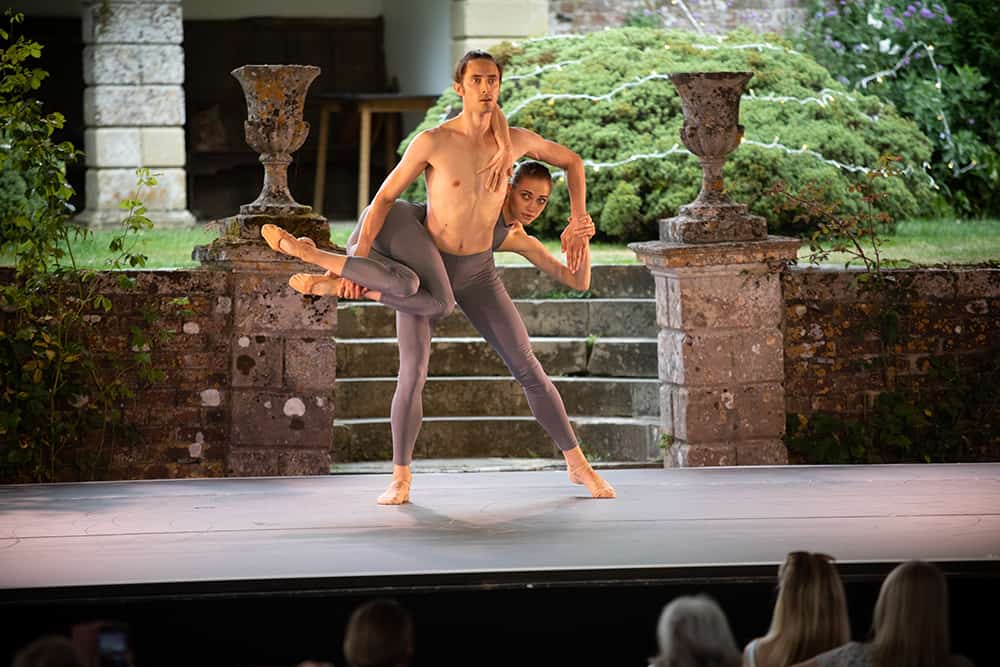
Stanislav Olshansky and Julia Moskalenko perform Dancing Pergolesi All Images: Alice Pennefather
THREE years ago everything seemed settled – even Brexit was something we were going to have to live with. Then along came COVID and the pandemic and lockdowns and our lives changed dramatically … and then Putin invaded Ukraine and our government proved to be quite impressive on the international stage … but at home – not so much! Death, disaster, chaos – so many things changed beyond recognition. What a difference three years makes. And how good to welcome back an event that has been part of the local arts scene for more than ten years.
Ukrainian chemistry The return of Ballet Under The Stars felt wonderful, with its glamorous setting in the walled garden of Sir Henry and Lady Rumbold’s Hatch House near Tisbury, beautiful dance and delicious food. But even this perfect garden haven of art and fine dining has been touched by these massive, catastrophic events. Two of this year’s dancers came from Ukraine, a poignant and powerful reminder of the rich culture of their suffering country. Julia Moskalenko and Stanislav Olshanskyi, principals of the Ukraine National Ballet, are beautiful, graceful and athletic dancers with a palpable chemistry which brought an added intensity of emotion to their two performances. Of course, our emotional response was deepened by sympathy for two gifted young people who are, on the one hand, free to practise their art, but, on the other, inevitably tormented by fears and worries about their country, their families, friends and fellow artists during the ongoing brutal Russian invasion.
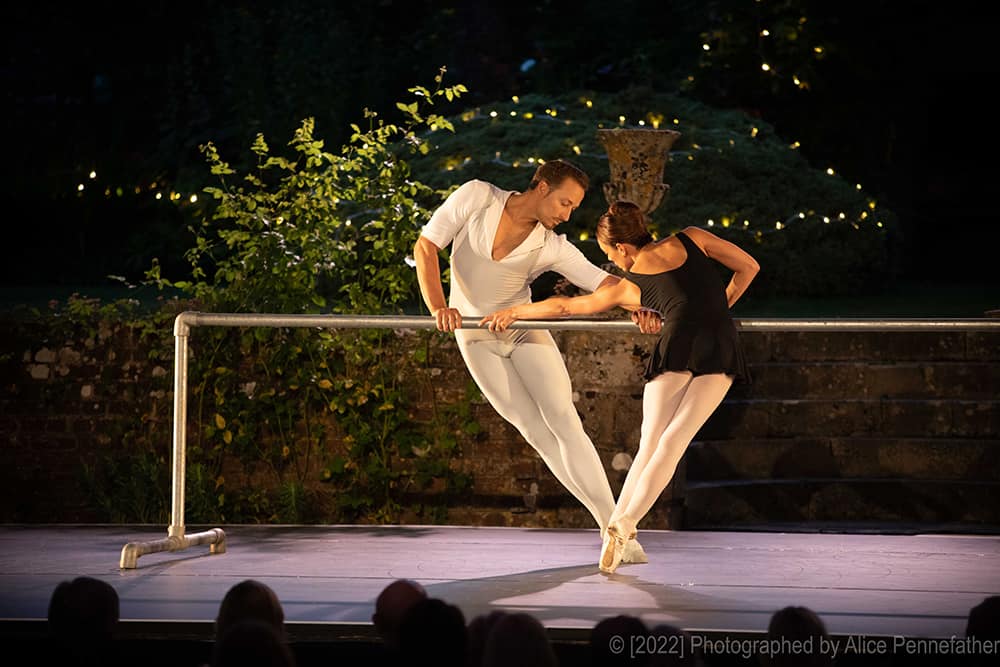
Fabian ReimAir and Fernanda Oliveira dance Three Preludes
But it wasn’t just a sympathy vote – these are world-class dancers who brought a taste of the music and culture of their country, particularly in their first piece, the Act 1 pas de deux, from Forest Song, with music by Mykhailo Skorulkskyi and choreography by Vakhtang Vronskyi. This achingly beautiful work allowed the dancers to display both their physical and dance skills and their emotional connection. Their second piece, Dancing Pergolesi (choreography by Radu Poklitaru) was similarly technically excellent, with a strong response to the Italian baroque composer’s Stabat Mater. Given the deep religious faith of so many Ukrainian people, this felt a particularly powerful interpretation of the tragic music.
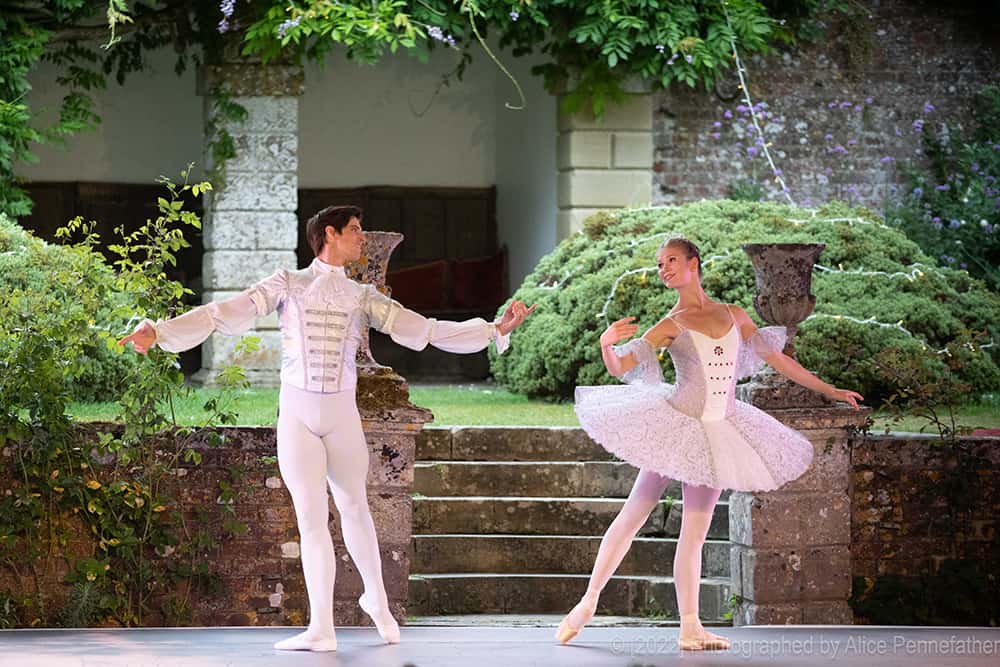
Xander Parish and Anastasia Demidova in The Sleeping Beauty pas de deux Act III
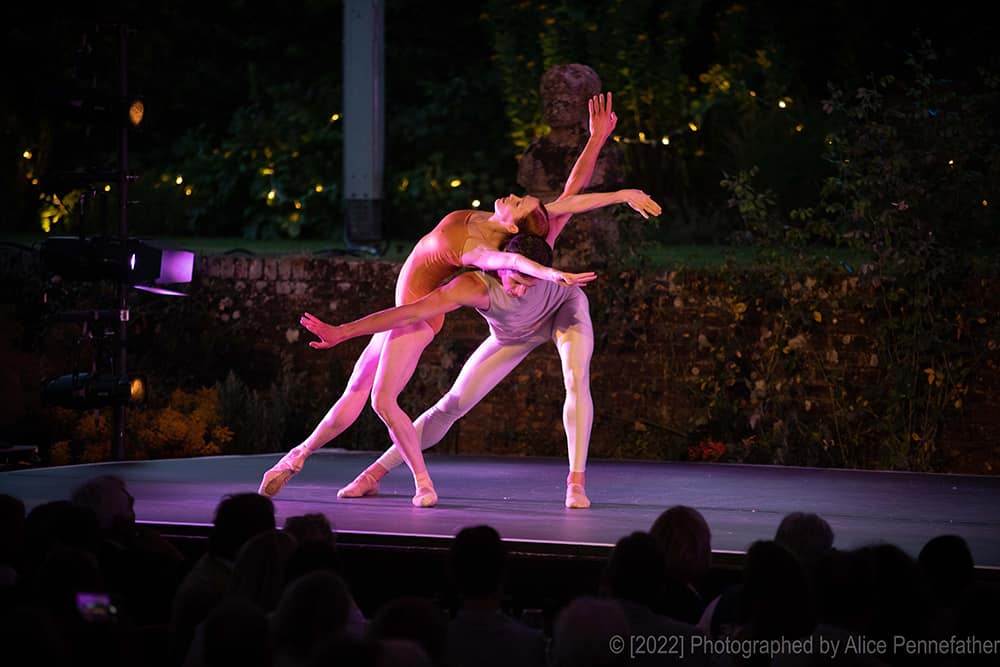
A night of stars The line-up of dancers included the always enchanting Ksenia Ovsyanick, this time partnered by Timothy Dutson. They interpreted David Dawson’s Voices pas de deux, set to music by Max Richter, and returned in the third dance section with an astonishing and provocative piece, Multiplicity/Forms of Silence and Emptiness. Choreographed by Nacho Duato, this has Dutson playing the “cello”– Ovsyanick – to the accompaniment of Bach’s Cello Suite No 1 in G Major. There is a strong connection between women and the cello and this work is both an interesting and subversive interpretation of a masterpiece. Also back, to huge acclaim, was Xander Parish, delighting in The Sleeping Beauty Act III pas de deux with Anastasia Demidova, and then revisiting his 2019 showstopper, the technically dazzling and witty 101 (a kaleidoscope of classic dance positions). New to the Ballet Under The Stars Hatch audience were the young Paris Opera Ballet dancers Hortense Pajtler and Nathan Bisson. They opened the evening with Flower Festival in Genzano, a technically demanding pas de deux choreographed by August Bournonville (music by Paulli), evoking the charm of a Fragonard painting. Their second piece was the exciting and contemporary Triade (choreography Benjamin Millepied, music Nico Muhly).
Ksenia Ovsyanick and Timothy Dutson dance Voices pas de deux
Compulsion and repulsion With the long gap since the 2019 Ballet Under The Stars at Hatch, there was an inevitable break in fund-raising for the Dicky Buckle Fund, supporting talented young choreographers and dance education. This year there was only one new work commissioned by the fund – Opposites Attract by Fabian ReimAir, who also composed the music and danced the piece with Fernanda Oliveira. This was a muscular, visceral exploration of attraction, compulsion and repulsion as the two dancers pushed the physical boundaries of expression in dance. Their second piece was Three Preludes, choreographed by Ben Stevenson to music by Rachmaninov. The final duo were Royal Ballet principals, the exquisite Japanese dancer Fumi Kaneko and the powerful and athletic Russian, Vadim Muntagirov – his jumps and leaps in the pas de deux from Le Corsaire were real crowd-pleasers, bringing gasps and cheers from the audience. The pair brought the evening to an elegant close with the Grand Pas Classique (choreography Victor Gsovsky, music Auber) – technically brilliant, if lacking the emotional bite of some of the earlier pieces. It was wonderful to have ballet back at Hatch – a triumph for artistic director Matt Brady and his team, and a glorious evening for the capacity audiences over the three nights.
It’s a busy changeover month at Thorngrove, says Kelsi-Dean Buck, with a big summer sale, fun events and graduation day
Hydrangea paniculata Silver Dollar
It’s an exciting month at Thorngrove as we look forward to The Gillingham & Shaftesbury show! As in previous years, we’ll be there; it’s without a doubt one of our favourite events in the calendar. If you’re attending the show, please do stop by and see us. We’ll have a huge range of beautiful plants for sale, but will also be on hand for advice and a natter, to talk about our shared love of plants and gardening. Last year we were over the moon to win First Prize for Best Small Stand, which was so humbling given the breadth of amazing local businesses on display. We know it will be the same this year, and we can’t wait to see what everyone brings along, and are looking forward to seeing you all there.
Craft sessions Throughout August we’re hosting Summer Crafts for Children, so if you’re looking to keep the little ones busy during the holidays, bring them along to get creative with some pot decorating! Check our website and social media for full details. Hanging Basket workshops will be returning soon, too, and keep your eyes peeled for the reveal of our big Christmas event … yes, Christmas – it’ll be here before we know it!
This year’s Employ My Ability graduate Maddie Walters
Graduates We also wanted to send huge congratulations to our graduating Employ My Ability students. The end of July saw our ‘Leavers’ Day’ celebration of games, karaoke, barbecue, and certificate ceremony. Thorngrove continues to provide a unique environment for learning and work experience for young people with SEN. For more details, just visit: https://employmyability.org.uk/
Sale on now! And finally – we’ve launched a huge summer clearance sale.Now’s the time when we start making room for new stock and potting up new plants. There’s plenty of summer left, of course, and many of our plants can still find a spot in your summer planters and borders, but time waits for no gardener, and the seasons roll on. As for what’s looking good right now, nursery manager Mark Hoskins recommends “Hydrangeas, particularly Paniculata varieties such as Silver Dollar and Hercules, and Hydrangea Annabelle which has huge flowers in shades of white, pink and green.”. We’re open seven days a week, and the Secret Garden Café is always worth stopping by (if things are a bit hot, it has a fully climate controlled interior). Visit Thorngrove this August! thorngrovegardencentre.co.uk
A favourite spring flower is a surprise stop this month, and expert Carl Mintern has the real reason for those pucker-up sour blackberries right next to the sweet ones
Blackberries are already ripening in the hedgerows Image: Laura Hitchcock
Those of us with younger children will be only too aware of the need to fill voids created by the school summer holidays. And what better way to occupy them than with excursions out into the vast array of public footpaths and woodlands that surround us in the Blackmore Vale? And if it’s your own free time that needs filling with something healthy and rewarding? Well, the sentiment stands! We spend so much of the year here in the UK dreaming of what we will do in the heady days of summer – let’s not let it slip past us without really making the most of the opportunity a little sunshine and and open space afford.
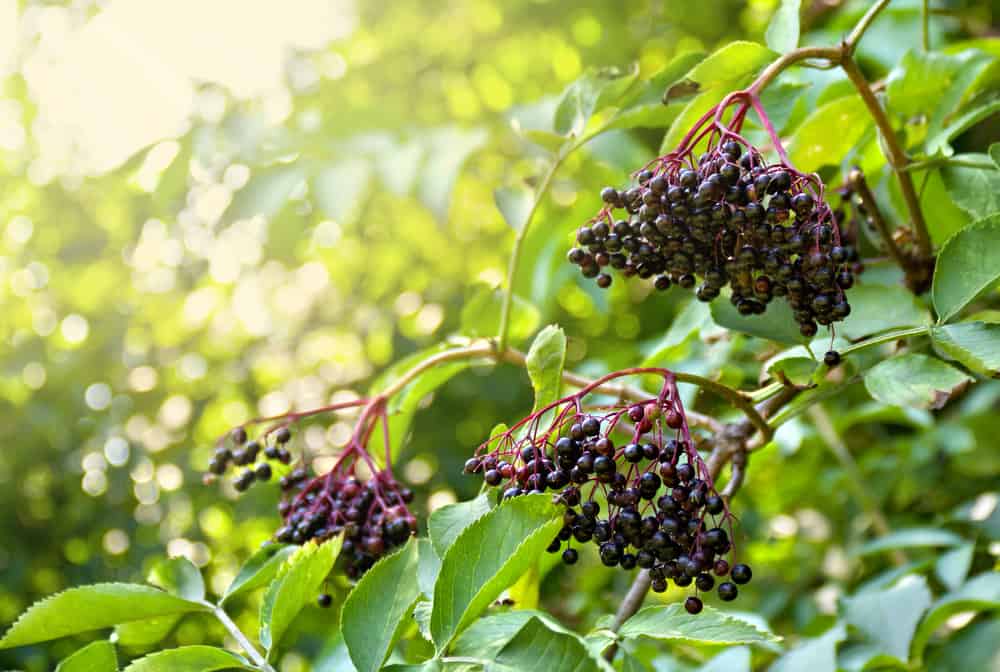
Back to the elder I want to start this month by revisiting a plant I discussed last month – the elder (Sambucus nigra). If you took my advice in July, you have already harvested the flowers and are no doubt sipping on some delightful homemade elderflower cordial while reading this edition. Well, now we return to this bountiful plant for our second elder shopping trip of the season – to harvest the berries. As stated last month, elder is one of the most abundant hedgerow harvests we have, with many landowners opting to use it to form the hedges that border our country roads. As a result, Elderberries are extremely abundant and very easy to find. They can be used for jams, jellies and crumbles but these juicy, sweet berries can also make liquor and syrups (our nutritionist Karen Geary shared her recipe for elderberry rob
bomb’ and suggests taking a daily spoonful during cold and flu season – Ed). Used for millennia, the elderberry’s distinct flavour can also make a simple puree to serve with meats. Be aware that all parts of the elder are mildly toxic when raw, so be sure to cook them, (please see last month’s column for my slightly extended thoughts on this). Elder trees have feathered leaves that grow in opposite pairs along the stem with a terminal leaf. The berries are deep purple and formed from the same sprays of flowers we target earlier in the year.
Elderberries can be used for jams, jellies, syrups and robs, as well as a purée for meats.
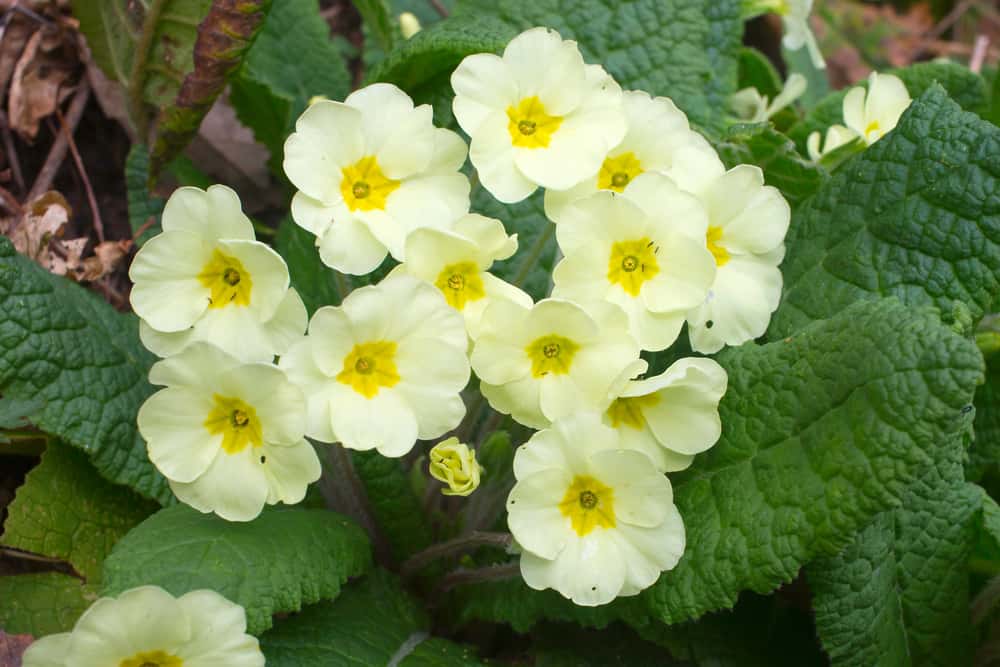
Primrose Next, I wish to continue my crusade against boring-looking salads and bring you the common primrose (Primula vulgaris). A plant most walkers will already be familiar with, primroses don’t tend to grow in shade, so be on the lookout for sunlit areas of meadows and forest clearings. The whole plant is edible; the roots, stems, leaves and petals have all been consumed for culinary and medicinal purposes by our ancestors, as they contain a wealth of vitamins and minerals. Their petals are yet another way to brighten a salad, although these are more likely to have been found in spring. But in August the roots can add a crunch and the leaves can also be included. Be aware that if you plan on harvesting roots, you will need the landowner’s permission. To harvest the rest of the plant, our rights are protected in statute, which allows us to forage the four Fs, – flowers, fruit, foliage and fungi – on public land.
Primrose may not be in flower in August, but don’t ignore its potential for your salad
Not your average blackberry Finally this month I want to talk to you about a plant many people think they know … but I assure you, most do not. When I am out leading foraging walks, I know from the look on people’s faces that no-one wants to ‘learn’ about blackberries. Everyone has been picking them since childhood, collecting them from the hedgerows with their parents. So stick with me – there is a secret layer to be uncovered here that will change your understanding of this quintessential foraged harvest. When out picking blackberries we have all eaten a tasty fruit straight from the bush and remarked to our fellow pickers ‘try these, they’re delicious!’, only to follow up a few minutes later taking another from a different spot just a few metres away and finding it so tart it makes our eyes water, or so bland as to be inconsequential. So what is going on here? I have heard many versions over several years of how the taste is being affected by the weather, or the soil conditions, or some other capricious act of nature affecting this plant this year. In fact, this seems to be the prevailing thought among most novice foragers. However there is a far more interesting and predictable component to this mystery. Vegetable gardeners are familiar with the idea of picking a specific variety of plant to grow in their garden – we choose to grow a certain tomato variety for its giant fruit, small fruit, yellow fruit, blight resistance or huge yields … and yes, of course they all taste different. You may be surprised to learn, though, that we also have hundreds of varieties of blackberries growing wild in the UK. It naturally follows then that your hedgerow harvest contains a huge variation in flavour! So, what can we learn from this? I would suggest that instead of a haphazard wander along a hedgerow, try making a blackberry map and marking the locations of the tastiest fruits. Harvest from those plants every year, and you can reliably collect the perfect fruits for eating fresh with desserts while avoiding the sourface lottery!
Sturminster Newton was once home to one of Europe’s largest cattle markets. In the late 1990s the market site was sold for development, the closing of the cattle market ending a 700-year tradition of livestock trading in the town. One of the other claims to fame Sturminster had was as home to Sturminster Creamery, makers of award-winning Sturminster Cheddar and other cheeses. Following these damaging closures a public meeting was held where the town decided an event to celebrate cheese was one way to keep Sturminster Newton on the map. In 1999 the first Cheese Festival was held – it lasted four days and was a whole-town event, from tours of the Creamery to a tea dance in the old Sturminster Hall. There were three scout marquees on the recreation ground hosting local food producers and crafters (and a fashion show one evening!).
The Cheese Festival 2021 Image: Courtenay Hitchcock
23 years later Fast forward to 2022 and the Cheese Festival is still going strong. It is now a two day weekend, with some rather larger marquees, and it takes over the whole of the recreation ground on Ricketts Lane. This year the show will feature 21 Cheese Producers and 47 Artisan Food & Drink Producers, showcasing the best that the West Country has to offer. Naturally there will be a huge variety of cheeses on offer, and you can sample them with an array of chutneys, bread, biscuits … and of course follow up with some sweet treats of jam, cake or chocolate. Perhaps finish off with some locally-distilled gin, vodka or wine from a Dorset Vineyard. The Craft Tent will be home to jewellery, portraits, photography, home scents, wood turning and more, with more stands outside, including plants and garden furniture as well as craft demonstrations, not forgetting the local charities and other organisations which are represented too. Add to the mix some children’s entertainment (including free Punch & Judy Shows and entertainment from Strawberry Jam), live music, the Real Ale & Cider Tent and an array of outside catering to choose from (yes, including Cheese Toasties!) there is something for everyone. And you never know who you might see – the founder of the world’s largest greenfield festival has been spotted at the Cheese Festival in the past.
Millenium of milling If you fancy a short stroll then take a break to wander down to the Town’s historic 16th century mill which still grinds wheat for flour. It became an international star during the first lockdown when it leaoped into action for a short time, once again producing flour commercially. Then back to the Festival for some liquid refreshment or maybe an ice cream before one last wander around the food marquee.
Find out more at www.cheesefestival.co.uk and buy your tickets online. Earlybird tickets purchased before 10th September are £7 (£8 on the gate). Children under 15 go free. (Free parking is available in the field adjacent to the site). You can also keep up with all the Cheese Festival news on Facebook and Instagram.
The worry of the Australia deal, swinging politics and the ever-more-terrifying cost of living – Mike Chapman speaks for Liberal Democrats across the Blackmore Vale
Mike Chapman Lib Dems
What is happening to our democracy? The Australian trade deal has been formalised without any democratic scrutiny of any kind – not a single parliamentary vote. It’s even worse when you realise it is likely to form a template for other such deals. Britons may gain as consumers and a few exporters and services companies may benefit, but most of us are likely to be exposed to an increase in cost-driven, lower-standard competition as a result, especially in the agricultural world. The level playing field of the EU’s Single Market has gone.
Swinging politics That the Brexit wonderland was voted in by a majority of about 2.7% of the electorate is bad enough. But now we are about to witness a lurch to the right due to just 0.3% of the electorate; the 150,000 or so Conservative Party membership. This may lead to a lurch to the left in a subsequent general election, if the polls are anywhere near correct. Push-me-pull-you politics as always. We ought to know better by now. We ought to drive for a better consensus and be led by people with real skill and understanding rather than dogmatic, career-driven professional politicians.
15 per cent mortgages? Still, not to worry. We are told that somewhere out there a magic tree is bending under the weight of luscious moneyfruit – ready for picking as early as September. It will then be fertilised with loads more tax-free magic money, which apparently won’t even attract higher interest rates. What a difference a few years make. My first mortgage was up around the 15 per cent interest mark. There was just no money for anything else much. Apparently, though, economic fundamentals don’t apply these days if you wish hard enough. Mind you, we may all need a bank loan soon just to pay the energy bills. And there’s the rub: if all it takes to re-budget your household is an adjustment here or there, then fine, you carry on. The cry from the streets, from the working majority and from the vulnerable, however, is that with everything else going up sharply, nothing coming down and the fuel bills doubling, maybe tripling come January, ends cannot – cannot – be met, inevitably leading to disequilibrium, debt and a great deal of unhappiness, here in rural Dorset as much as anywhere.
G&S Show We are going to be at the Gillingham and Shaftesbury Show on the 17th – we want to listen to local hopes, fears, gripes and groans but also to visions and ideas. We want to find that common ground and a forward view that everyone can get behind. See you there!
Roger Guttridge reports on a twilight event at Sturminster Newton Mill that was a spectacular end to a four-month project with a Newfoundland community.
As bats criss-crossed overhead and bemused swans looked on from the river, more than 50 people enjoyed a late, late show that included live music and a shadow puppet film projected on to a screen on the front wall of the mill. This twilight culmination of the four-month Swanskin Seafarers of Sturminster project, that has brought together communities on both sides of the Atlantic, showcased the spectacular results at the mill.Elliott Wagner-Hale, a Year 9 student at Sturminster Newton High School, was among several speakers who described the project, which focused particularly on the Blackmore Vale’s historic connections with Twillingate (population 2,000) on the remote north coast of Newfoundland.
Collapse of an industry Thirty Sturminster students and a group at the JM Olds Collegiate in Twillingate researched various aspects of the connection, which came about after the Blackmore Vale’s swanskin cloth trade collapsed in the early 1800s. A water-powered fulling mill which adjoined Sturminster’s corn mill was demolished about the same time, after serving the trade for 200 years. North Dorset’s swanskin merchants solved the resulting economic problems by going directly into Newfoundland’s cod-fishing trade and developing Twillingate and several other communities. Their employees migrated in large numbers to work in the fisheries. It is estimated that 92 per cent of Twillingate’s ancestors came from Dorset – and about half of those from the Blackmore Vale. Many of their descendants today still speak with a Dorset accent and traditional Dorset surnames are commonplace.
Discovery of swanskin This project inspired many of the Twillingate students to research their family trees after discovering that their ancestors came from Dorset. They also enjoyed a school trip to Change Islands (population 208), where a pair of swanskin mittens has turned up in a private museum. These are the world’s only known surviving swanskin garments, and they came to light as a direct result of the Swanskin Seafarers of Sturminster project. At Sturminster, students investigated the lives of children who were apprenticed to the sea trade and ended up in Newfoundland. Children in both schools also contributed to the shadow puppet film, organised by Dorset-based arts organisation, Emerald Ant, the project leaders (see above). The film tells the story of Sturminster’s Twillingate connection in a humorous and entertaining way. As project leaders waited for darkness, to show the film, four members of the New Scorpion Band entertained the crowd with traditional Dorset folk music and sea shanties. Elliott unveiled a new information board describing the mill’s 1,000-year history and there were tours of the mill. Visitors were able to see the new exhibition boards that include the story of a Twillingate student’s Sturminster ancestors, extracts from the Newman merchant letters, photographs of students and Newfoundland ponies (descended from New Forest, Dartmoor and Exmoor ponies), ledger entries, quotes from a podcast and a short film of Change Islands museum owner Peter Porter with his mittens. The celebration was hosted by Sturminster Newton Heritage Trust and the High School. The Swanskin Seafarers project was funded by the Association of Independent Museums.
Sunday, which oddly seems to be the way this summer, was gloriously sunny as we headed down towards the coast, to join Margaret Green Animal Rescue (MGAR) for their annual Country Dog Show. Not just a fun day out – the BV was sponsoring two classes, and we had been invited to present the prizes.
Never ones to turn down a schmooze with some random dogs, we of course jumped at the chance.
The Dog Show was wonderful – it’s not often you see so many dogs in one place, all being pampered with paddling pool cool downs, owners had come equipped with large umbrellas to provide them with shade, treats were on hand, and no one minded when their feet were wrapped, once again, in someone’s lead as their dog took off stage left.
TPD Goose showing everyone what she can do
We were there to judge the ‘Best Rescue’ classes, but as we arrived the police dogs were beginning their demonstration – and it was fascinating. I lost my heart to TPD (Trainee Police Dog – yes, they do get official titles) Goose; only 18 months old and just four weeks into her 13 week training programme, she was so excited to be there and keen to show off her tracking skills. The handlers were quick to explain that they’re not a show team – these dogs work for a living.
Goose was replaced by R(retired)PD Blaize, who even after two years of retirement snapped to the job and showed an older boy never loses the skill.
You couldn’t pick a more beautiful setting
A quick saunter around the stands as we waited for the ‘Best Condition’ dogs classes to compete, and then we were up. I’ll be honest – my heart sank a little as I watched almost 20 beautiful dogs of literally every shape and size (one was smaller than my cat, others were comfortably looking me in the eye when I crouched to say hello) filed past me and took up their stations around the ring. How were we supposed to judge this? I was happy to simply walk around with the judge and an experienced member of the MGAR team, listening to each dog’s story. A squat little bulldog had been left at the rescue centre because he suffered terrible allergies and nobody wanted to deal with them. We became swift besties.
Me and my new bestie, the small bulldog with allergies and acne. And also the biggest tongue I’ve ever seen.
A young Welsh sheepdog had been abandoned when it turned out he was too lazy to herd sheep – only when they got him home did they discover the horrific worm infestation: “it was something out of Alien, they were being ejected from both ends!” his owner said.
A black labrador had been locked in a back yard, with just a small porch for shelter. Emaciated and weak, he had survived on the odd bit of raw food scraps tossed at him occasionally – instead of resenting humans, his owner now takes him to local old people’s homes as a companion dog to the elderly.
The ‘Best Rescue’ finalists. Allergy Bulldog is far right, third right is the Alien sheepdog!
One owner was close to tears as she explained her husband had a stroke, and had been struggling with depression following his decereased mobility; they had gone to the rescue centre to perhaps find a small dog to be a companion for him. However they were instantly picked by a large mixed-breed black dog who planted himself at her husband’s feet and refused to move. They obviously brought him home, where he has transformed their lives.
Some had been rescued right there at MGAR, but many were from further afield. One shy young owner told how he had saved his pocket money for three years to buy himself a dog (Mum pulled the classic “if you want one, you pay for it yourself”. So he did!). His best friend for the last year has been a pug who had been left in a Chinese pet shop window until he was rescued by a local charity and brought to the UK. He was the only dog in the ring with a Chinese passport! Though there were rescues from Spain and Cyprus, too.
During the judging – the elderly gentleman sitting down to the right of the banner rescued an ‘old’ unwanted lurcher to ‘give him a comfortable year or two’. That was nine years ago – he’s around 16 now, and still pottering about happily!
Over in the girls ring, Courtenay spoke to a couple who were on holiday when they found themselves adopted by one of the local street strays. She refused to leave them, sleeping on their doorstep every night, and by the end of the holiday they had determined to bring her home with them – they worked out how they could do so, and he’s been with them ever since.
Every single dog deserved a rosette, and every single owner deserved an award for having the time, patience and care to take on the unwanted dogs and give them a second chance.
We had such a wonderful afternoon with Margaret Green Animal Rescue and ALL the dogs. Make a note not to miss next year’s, you won’t be disappointed.