The Blackmore Vale logo
Home Blog Page 175

The balance of national well-being

0

Addressing the complex tapestry of security, Simon Hoare MP discusses defence, environmental threats, and energy independence as key areas

Simon Hoare MP
Simon Hoare MP

While there are always many issues that generate heated debate among friends and family (and sometimes between Member of Parliament and constituent … [although rarely in North Dorset, naturally!]) I believe that one thing that unites most people is the issue of security. Like many words, security manifests itself in many ways. It is a good catch-all word and there are various issues of security that I think will be important both this year and in the future.

At home
The first duty of government is the security of the country – it is a long established rule. There is little point in having good public services etc if one cannot defend them.
We live in an increasingly insecure world – the Middle East and Ukraine underscore that, along with a myriad of international rows, wars and skirmishes. Our policies on defence are important to provide both that security umbrella at home and also the opportunity to act overseas, alone or in concert with others, to defend our interests, values – and mankind.

The environment
Increasingly, environmental security is pivotal. Clean air and clean water are the obvious ones, but the insecurity occasioned by climate change is now as much a security issue as it is an environmental issue. The potential for our fellow humans to be forced to flee uninhabitable portions of the planet creates, in great part, the problems and tensions caused across Europe by people fleeing their homelands.
As above, global insecurity and the displacement of people as a result of warfare and territorial struggle add to this problem.

Our food
Disruption to international trade in the Red Sea illustrates once again the importance of food security. Of course there is a place for rewilding and similar projects, but these should be focussed on land which is unusable for food production. A nation which cannot feed itself is indeed too vulnerable. So we must focus on sustainable, environmentally-neutral farming and food production. We cannot afford not to do so.

Our energy
Russia’s unwarranted invasion of Ukraine highlighted our high risk and fragile reliance on foreign energy sources. We cannot afford, financially or morally, to be in a position where we rely upon overseas fuels, even when they have to be sourced from an enemy and where the purchase of the oil or gas adds to the aggressor’s war chest. That is why I have consistently supported the drive towards carbon neutral, UK-generated energy, as well as accepting the realism that, as industry and domestic life transition to Net Zero, oil and gas will continue to be required. Given that fact, I would prefer it to be from low-transport miles UK sources which also protects UK jobs. For some it is an uncomfortable balancing act. Not for me.
Pragmatic realism has always been my hallmark.

Our economy
Economic security at home, for all of us, is the most immediate pressure. The falling rate of inflation and the easing of interest rates help us all to feel a little more secure. The reduction in National Insurance contributions (hitting pay packets even as I type) is a help, as is the promise of tax reductions in the Budget. These changes, if any, will not be delivered as a result of ideological purity but with the understanding that household financial security is important and only where reductions can be afforded sustainably.
Our country, and the entire world, has come through incredibly choppy waters. I believe we will not only have weathered those storms but come out stronger and more resilient as a result. We will keep the elements of security to the forefront of all policies. I owe that to you and I will play my part in delivering on that agenda for all in North Dorset.

All you can eat, build-your-own kids pancake party!

0

Thyme after Time Cafe in Stalbridge has announced a new Pancake Day Event – kids can come and enjoy unlimited pancakes form the Build Your Own Pancake buffet!
The cafe will be going flip-pancake-tastic for one day only, making their delicious pancakes using Silverthorne Farm free range eggs and the whole milk from just down the road at Woodbridge Farm.
Choose from a delicious selection of pancake toppings – lemon, sugar, nutella, ice cream, marshmallows, banana, chocolate buttons, sauces, syrups, cream and more! It’s an unlimited return buffet – the only rule is that you must have finished what was on your plate before you return (because no one likes food waste!). The price includes unlimited drinks, too: choose from delicious hot chocolate, cold milk, squash or water.
And there will also be a pancake day-themed colouring table to keep busy between pancakes!
The Pancake Party for children (and their adults) is on Tuesday 13th Feb, 9 to11.45am, cost is £6 per child or £10 for two kids (there will also be an Adult pancake day menu available!)
Booking is advisable as there are limited spaces available – simply call 01963 362202 Monday to Saturday between 7.30am to 2pm

Wherefore the ‘black’ in Blackmore Vale?

0

Delving into Blackmore Vale’s past, Richard Miles reflects on its changing landscapes, from Thomas Hardy’s era to the impact of modern lighting

The view from the ridge above Minterne Park – Thomas Hardy’s chauffeur drove Hardy to this spot so that he could delight in the view of his ‘Vale of the little dairies’
Image: Richard Miles

If you search the origin of the name ‘Blackmore’ or ‘Blackmoor’ in Google, you will be told that it is derived from the Old English (OE) word “bloec” meaning “black, dark”, and “mor”, meaning “hill”. But beware of Google as it often oversimplifies things. The word ‘mor’ in Anglo-Saxon times also referred to a ‘morass’ or ‘swamp’ and could mean an area of raised ground liable to hold water: one that would be difficult to grow arable crops on, for instance. As to the ‘black’ part of the name, this was written as ‘blæc’ or ‘blÆc’ and could mean ‘ink’, the colour black, or dark. A variant of this is the OE feminine noun ‘blæcce’ meaning black matter.
My feeling is that anyone viewing Blackmore Vale from one of the surrounding hills, such as from the Dorset Downs to the south more than a thousand years ago, would have seen predominantly forest, which, during most of the year (apart from high summer), would endow it with a more-or-less dark, shadowed appearance.

The Hardy Way
Some 15 years ago while walking along the elevated ridge above Minterne Park in the direction of Dogbury Hill in search of a picnic place, I noticed that at one particular place you can see clearly both sides of the ridge: to the left (south-west) the upper reaches of the Cerne Valley near Minterne Magna, whereas over to the right a splendid panorama unfolded of the Blackmore Vale. So, drawn by the view, we turned right through the gate and walked a little way down the slope (OS map reference
ST 6684 0456) encountering two ladies who had just finished picnicking at that very place. In conversation, we discovered that one of them was a granddaughter of Thomas Hardy’s chauffeur. She said that during the 1920s he occasionally drove Hardy along the track to that same spot so that he could delight in the wondrous view of his ‘Vale of the little dairies.’
The track above this spot has recently been named the ‘Hardy Way’.
A century has now passed since Hardy surveyed the scene that he wrote about in Tess of the D’Urbevilles. What would Hardy make of the Vale nowadays? I would like to think that its name is still very appropriate, but I fear that nothing remains the same and the little smallholdings have largely disappeared, as has much of the woodland, transformed by larger scale farming methods over the intervening years.
Another change has been the march of technology – and in my role as dark skies adviser to Dorset CPRE, I have seen a widespread increase in lighting across the Vale. Don’t get me wrong, I am not against lighting per se. But we need the right type of lighting, in the right places, pointing the right way and switched on at the right times.
Dorset does have a good deal of ‘full cutoff’ street lighting (designed to direct the light downward and outward, rather than upwards towards the sky), and those bright sodium lights – some of which used to illuminate the dual carriageway between Sherborne and Yeovil – have thankfully now been replaced. But the countryside is also threatened by ever more development, as well as the introduction of more and higher-intensity LED lighting and the like.

Modern car headlights
One little-known fact about modern lighting is the trend towards ‘white’ light. No doubt you will have noticed those particularly dazzling headlights in new cars. The manufacturers claim they provide improvements in safety for the driver and add a stylishness to the look of the vehicle.
However, has anyone considered the problems they create for other road users and wildlife? To make the light appear white requires adding blue light to the spectrum they emit, but unfortunately ‘blue light’ is invariably ‘bad light’! One reason is that scattered light causes glare, and the amount that is scattered is much greater at the blue end of the spectrum. Technically speaking, scattering increases as the fourth power of the frequency, so the bluest light we see scatters about 16 times worse than red light of half the frequency. High-intensity discharge (HID) headlights are the worst offenders as they are both four times brighter than the standard yellow halogen light but they also have this nasty blue tint.
As well as wet weather and wet windscreens enhancing their glare, as we get older our vision also suffers from scattering of light inside the eye – blue light especially. Yellow-tinted driving spectacles work well, I’m told.
Although white headlights were first permitted as early as 1993, I was astounded to discover that in 2019, the EU mandated the use of ONLY white lights in main and dipped-beam headlights in new vehicles – and that these headlights emit a higher proportion of blue light than is present in daylight. One small relief – since Brexit, the UK has not had to adopt this rather draconian change and yellow headlights are still permitted here!
But what about the effect of unnatural levels of blue light on our wildlife and human health? That is a whole new story that has yet to be fully understood. My concern is that the march of technology will lead to the ever-increasing use of HID and LED lighting, to our own detriment, and that with increased light pollution (especially by blue light) across this part of Dorset, we will lose even more of the ‘black’ of Blackmore Vale!

A wander through Colehill Wimborne | POSTCARDS FROM A DORSET COLLECTION

0

This month Barry Cuff has chosen a couple of postcards of Colehill near Wimborne Minster.

Sent initially to Titchfield, this postcard was forwarded on to Seven Sisters Road in Holloway, London. It was sent in January 1910 to a Miss K Bond c/o The rev’d Matthews, and appears to be simply known as ‘Nurse’. She in turn seems to know the gentleman of the sending couple by his surname – perhaps they were all in service together?:
‘Dear Nurse We had quite a surprise on Sat, Burling met Anstee (?), and Mrs M have taken a house about 7 or 8 minutes walk from here, so I suppose we shall [have] the pleasure of seeing you & the family soon. Only fancy Mrs M coming to live so near us, it really was a surprise. Our very best respects to Mr & Mrs Matthews & love to yourself from your old friends H & E Burling’

‘Millie’ sent this chatty postcard of the stores and post office at Colehill to Miss D Morris on 13th October 1908 – Millie feels like a young girl. Dorrie’s address is simply ‘Stanley Villas, Downton, Salisbury’, which we cannot find in modern day Downton:
‘Dear Dorrie Very many thanks for P.C. was very pleased to receive it and to hear you are all well. Have made another sachel with the silks and have begun a glove case which I hope to finish this week. Give all my love to all, yourself included. Best love, Millie

*Barry has always understood that postcards were often written upside down ‘to prevent the postman reading them’. It’s a puzzle as to which way up to display it on the page! – Ed

Come racing at Badbury Rings!

0

Tickets for the ever-popular Countryside Alliance point-to-point at Badbury Rings on Sunday 18th February, kindly supported by Howden Insurance and Savills Estate Agents, are now available to buy online.
If you are new to point-to-pointing, it is a form of amateur horse racing, where horses and jockeys race over steeplechase fences. It is a great day out in the countryside where you can meet family and friends, watch a fantastic sport and socialise. When you arrive grab a race card and study the form of each horse as they walk around the parade ring.
There is no better location than the historic Badbury Rings – an Iron Age Hillfort between Wimborne and Blandford – where from the top you have sweeping views out across Dorset. The course at Badbury Rings is rectangular and undulating with an amazing view of the four fences in the home straight, so you can watch the horses battle it out to the winning line. An amazing way to watch horses who love what they do speeding across the line to applause.

Plenty to do
Gates open at 10am with the first race – the Countryside Alliance Club Members Conditions Race – starting at 12 noon. This allows plenty of time for racegoers to arrive in good time, enjoy the entertainment and perhaps consider a visit to the bookmakers for a flutter before the first race. It’s a super family day – enjoy a picnic or purchase a variety of food and drinks from the stalls, and stroll around the trade stands selling many great locally-produced gifts and products. Another firm favourite of this annual event is the family dog racing so bring your dogs along too!

The Patron experience
There are a limited number of Patrons’ tickets available – these offer a thrilling race day experience which includes entry and parking. Other inclusive benefits of the Patron’s package are all-day access to the designated marquee area, which is positioned in a prime location and offers seating, a welcome aperitif and buffet lunch, refreshments throughout the day and a complimentary race card.
Tickets for the Patrons’ area cost £45 each and must be ordered before 10am on Friday, 9th February. You can purchase your patrons’ tickets HERE.

Early bird tickets are currently available to buy online at £12.50 per person – card or cash entrance on the day is £15 per person. Further details can be found on the point-to-point website, just click on ‘Buy racegoer tickets’.

Rare chance to go behind the scenes at Swanage Railway

0

Dedicated Swanage Railway volunteers are to stage a two-day Community Weekend, offering a rare opportunity to go behind the scenes of the award-winning heritage line. The special event takes place on the weekend of 17th and 18th February, with staff at Swanage, Herston, Harman’s Cross, Corfe Castle and Norden stations all taking part.
There will be the chance to drive a 1950s heritage diesel shunter at Swanage for £20, watch a train guard or on-train travelling ticket inspector perform their duties for £5, as well as enjoy £5 behind-the-scenes tours of the award-winning signal boxes at Harman’s Cross or Corfe Castle stations.
Free events include guided access to the footplate of a steam locomotive at Swanage, visits to 1960s heritage telephone exchanges at Harman’s Cross and Corfe Castle stations (both subject to volunteer availability) and the chance to have a go at signalling at the Corfe Castle signalling museum.
Event organiser and volunteer guard Clare Collins said: ‘Our Community Weekend is a different and interesting day out for all the family – a rare opportunity to see behind the scenes of a working heritage railway, explore some of the many different roles required to operate the Swanage Railway and find out about varied volunteering opportunities.’
In addition, for people living in the BH and DT postcodes, half-price train tickets for the Community Weekend are available in advance from swanagerailway.co.uk.

Sponsored by Wessex Internet

The Ice Milers of Shaftesbury

0

Winter water wonders: Shaftesbury Lido turns icy conditions into a hub of cold water swimming camaraderie and ambition, says Rachael Rowe

Elizabeth Mills (left) and Harriet Green after the qualifying Ice km
All images: Rachael Rowe

‘There was ice on the pool cover this morning!’
As one of the highest towns in England, standing at 750 feet above sea level, Shaftesbury is known as one of the coldest places in North Dorset.
With frost on the ground, most people are trying to keep warm – the last place I’d expect to find anyone on a January morning is an open air swimming pool. Unexpectedly, Shaftesbury Lido was full of people.

Winter swimming
The lido began offering cold water swimming in November 2023 as a trial, and it has proved very popular. There’s a real sense of community at the poolside, with smiling faces encouraging some to take the plunge and supporting swimmers as they get out of the chilly water. Some were happy to take a dip in a full wetsuit, but others had significantly more experience with cold water swimming. New manager Harriet Green is an aquavit instructor and lifeguard as well as a swimming instructor and cold-water and open-water coach. She is also experienced in teaching people how to swim safely in cold water. She says: ’I love the variety you get with cold water swimming, it really opens the eyes of those who come for a dip. And there’s a whole new side with ice swimming. We have 16 places available here, and we’re fully booked.
‘I got into it myself when I was swimming the River Dart 10km. I had just suffered a trauma, and when I got in the water it was so very cold but it really focused my mind as I relaxed. It took all that [trauma] away. I realised cold water swimming could help me.’
Harriet has just qualified as an International Ice Swimming Association Official Observer, so she can participate in IISA events and ice mile qualifying swims. With the water at a bracing four degrees conditions were ideal for her first observed swimmer to take the plunge in Shaftesbury.

Elizabeth Mills as she finished her final lap – ice Miles must be completed wearing just a normal costume and one hat in water less then 5ºC

No jumping, no diving
An ice mile is a technical term rather than simply a slang phrase for a chilly swim – a one-mile swim under International Ice Swimming Association rules in a water temperature of five degrees Celsius or less, without stopping or putting a foot down, wearing just a standard costume, goggles and one swim hat.
Only 450 people have completed the challenge globally – it is not to be taken lightly. Ice miles are not a stag weekend activity or a dare. Rather, they require very serious preparation.
As with all cold water swimming, ice miles must always be done with other people. Swimmers have to be in good health and it can take several winter seasons to build their stamina. Medical checks, including an ECG, are required before undertaking an ice mile.
Elizabeth Mills from Corfe Mullen was about to attempt her qualifying swim for the ice mile. ‘I’ve built up my strength over about five seasons. You really have to build it up.’
Elizabeth is also a mermaid swimming coach and has previously swum the length of Lake Windermere in a mermaid tail! She’s hoping to be one of four qualifiers to go to Cheltenham in February to swim an actual ice mile. Shaftesbury cannot be used as an ice mile pool – even though the temperature is optimal, the length needs to be 25 metres, and Shaftesbury is only 25 yards. However, it can be used to train and also to get that crucial qualifying swim.
Successful ice mile swimmers have to get the swim properly ratified. They then become part of a very exclusive community and get to own a coveted Ice Mile Red Jacket.
There is, of course, a lot of publicity about the dangers of swimming in cold water, especially jumping in. So what is the team doing that is different? Harriet explained the importance of coaching for anyone interested in cold water swimming.
‘We do a lot just to help people get into the water properly. During lockdown, all the pools were closed and people took to open water. However, they were just jumping in, and that can be really dangerous. The shock of the cold water makes people inhale, and they can take in pints of water. That’s how people drown. Even the tombstoners on Durdle Door are at risk from cold water inhalation.’

Tracking the lap numbers as an alert support team monitors Elizabeth carefully

The swim
With the water temperature at an average of 4.1 degrees, Elizabeth is ready to enter the water for her qualifying one kilometre swim – 44 lengths. Around the pool, all eyes are on her as she carefully steps into the pool, splashing water on herself to try and get used to the cold.
Then she’s away, slowly but deftly gliding through the water. An ice mile typically takes 20 per cent longer than a normal swim because of the strain on your body. From the pool edge, Watching from the pool edge, Elizabeth’s swim looks effortless but all around me the team is vigilant for any sign of a problem. Someone is monitoring the number of lengths she has to swim, and Harriet times each length, focusing on Elizabeth the entire time.
Halfway through, Harriet asks Elizabeth a question to ensure she is still orientated. Then, after 15 minutes and 49 seconds, Elizabeth reaches the finish. She did it! There’s a quick cheer from friends and she’s rapidly bundled off to the changing room, where she has to be dried, changed, and she’s enjoying a warm drink within ten minutes.
Glass hands
An ice mile is not over until the ‘after drop’. During the swim, blood travels from the extremities to the body’s core to protect vital organs. After the swim, there’s a critical ten-minute window before the blood starts flowing back to the rest of the body again, and that cold blood can shock the system. Extreme shivering can occur, and you are often colder than you are in the water. Elizabeth recovers quickly, and is soon wrapped in warm clothes with an essential hot chocolate. ‘It was fun,’ she said. ‘I couldn’t actually feel my hands. I wasn’t sure if my hands were touching the water.’
Harriet nods in recognition as she recognises the feeling: ‘When I swam, my hands felt like glass.’

Not all about the ice
You don’t have to be an ice miler to enjoy Shaftesbury Lido, though there are cold water sessions where you can learn the techniques. In summer the pool opens to schools as well as for naturist swims, aquafit and paddleboard yoga.
New ideas and suggestions from the public are always welcome.

  • A four-person team from Shaftesbury Lido aims to complete ice miles in Cheltenham in February. We wish them the very best of luck.

Gillingham & Shaftesbury Spring Countryside Show

0

Alfred Tennyson might have mused that spring was the season for romance, but in Dorset, hearts are set aflutter with a different kind of love – a passion for the countryside. The Gillingham and Shaftesbury Spring Countryside Show is ready to spring into action as the first rural spectacle of the season. Family fun is firmly at the heart of the exciting new-look show, the first under new organiser Cat Harris. It takes place on Saturday 20th and Sunday 21st April at Turnpike Showground, in Motcombe, SP7 9PL
What’s more, children under sixteen can enjoy the festivities for free, with early bird family tickets currently available for just £12 per adult, rising to £17 on the day.

Clown Dingle Fingle is an undercover policeman is on the relentless pursuit of Slippery Sid the classic car thief …

What not to miss
Get set for a whirlwind of laughter as the UK’s only Arena Comedy Car Act and Slapstick Stunt Show takes centre stage. It’s going to be a riot of fun with the madcap stunt clowns’ capers and water cannon antics – just don’t end up in the splash zone!
And pigs can’t fly – but do they race? Joseph’s Amazing Racing Pigs are about to show you. Witness five rare breeds leap and snort their way through an entertaining obstacle course.
The Lamb National is hot on the trotters of the pig race, with nimble Herwick sheep from the Lake District’s slopes navigating an obstacle challenge. Root for your favourite woolly competitor and see who will out-leap the flock.
On the Sunday you can see The Dog & Duck show – with skilled sheepdogs herding not just sheep but also ducks, geese and chickens! There will be free tractor and trailer rides, horticultural showcases, the finest Dorset culinary delights, and live music to ring in the spring.

scarecrow. Let your imagination run wild – there’s no theme and you can make use of any materials.
Cat Harris says: ‘Who doesn’t love a scarecrow (apart from the birds!)? We’re hoping to have a spectacular line up so visitors can enjoy a Scarecrow Stroll or take the free tractor ride and see all the entries. Entry to the competition is free, and the only rule is that the scarecrow must be a group effort. We hope groups of all ages and sizes will take part – from families to schools, youth clubs to care homes.’
It’s not just a celebration of spring but a community gathering that champions the joyous spirit of rural life.

To take advantage of early bird pricing visit the tickets page here
Register your scarecrow group here or email [email protected] for more information.
springcountrysideshow.co.uk

‘Discovery Day’ at Dogs Trust Salisbury

0

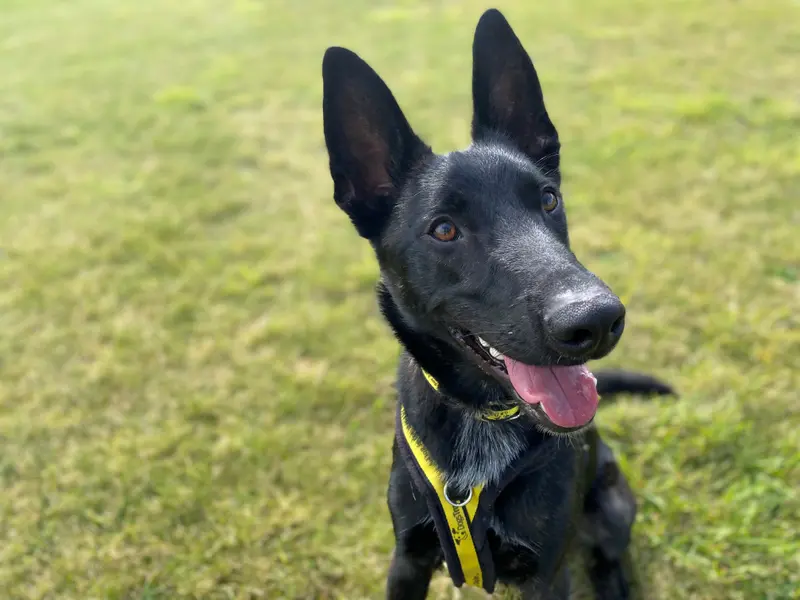
This month, dog owners, potential dog owners and dog fans are in for a treat as Dogs Trust Salisbury opens its doors for a fun open day.
The ‘Discovery Day’ event, to be held at the Salisbury Rehoming Centre in Newton Tony, will run from 12pm to 4pm on Tuesday, 13th February. The free event is designed to provide a real insight into the range of services Dogs Trust offers.
Visitors can look forward to learning about various Dogs Trust initiatives such as the Dog School, Behaviour Support Line, their popular fostering programme, and their educational services:
Dogs Trust Dog School
In person and virtual training classes for you and your pooch. Classes cover all ages, from puppy to adult dogs, and are tailored to the age group to best meet your needs.
Education
Dogs Trust Education and Community Officers offer free workshops for primary schools, with fun sessions to promote safe and responsible interactions between children and dogs. In addition to this, a wealth of resources are available for all ages to learn about dogs.
Behaviour advice
Every Dogs Trust rehoming centre has a dedicated behaviour team who work with the dogs to give them the best chance of success on their journey to find their forever home.
Canine Care Card
This is a free service that anyone can sign up to. The Canine Care Card service provides the peace of mind that should anything happen to you, Dogs Trust will care for your dog(s) – giving them the care they need and deserve.

The Salisbury rescue centre’s knowledgeable staff will be available to field questions on the day as well as share insights into their work. There will also be a Tombola, exclusive Dogs Trust merchandise for sale, and a selection of refreshments.
Justine Salkeld, the Supporter Relations Officer at Dogs Trust, said: ‘We are really excited to host our Discovery Day this February. It is a great opportunity for the public to learn about our fantastic work, explore our rehoming centre, and chat to our amazing staff. It will be a fun event for dog owners and dog lovers alike – we look forward to welcoming everyone on February 13th.’
Set your calendars for a day filled with canine camaraderie at Dogs Trust Salisbury, 45 Amesbury Road, Newton Tony, Wiltshire, SP4 0HW.