Home Blog Page 327

£40m-worth of cars at local teenager’s Classic & Supercar Sunday

1

Zander Miller’s first all-day event was a resounding success, with 160 classic and supercars on display. Laura Hitchcock reports

Zander

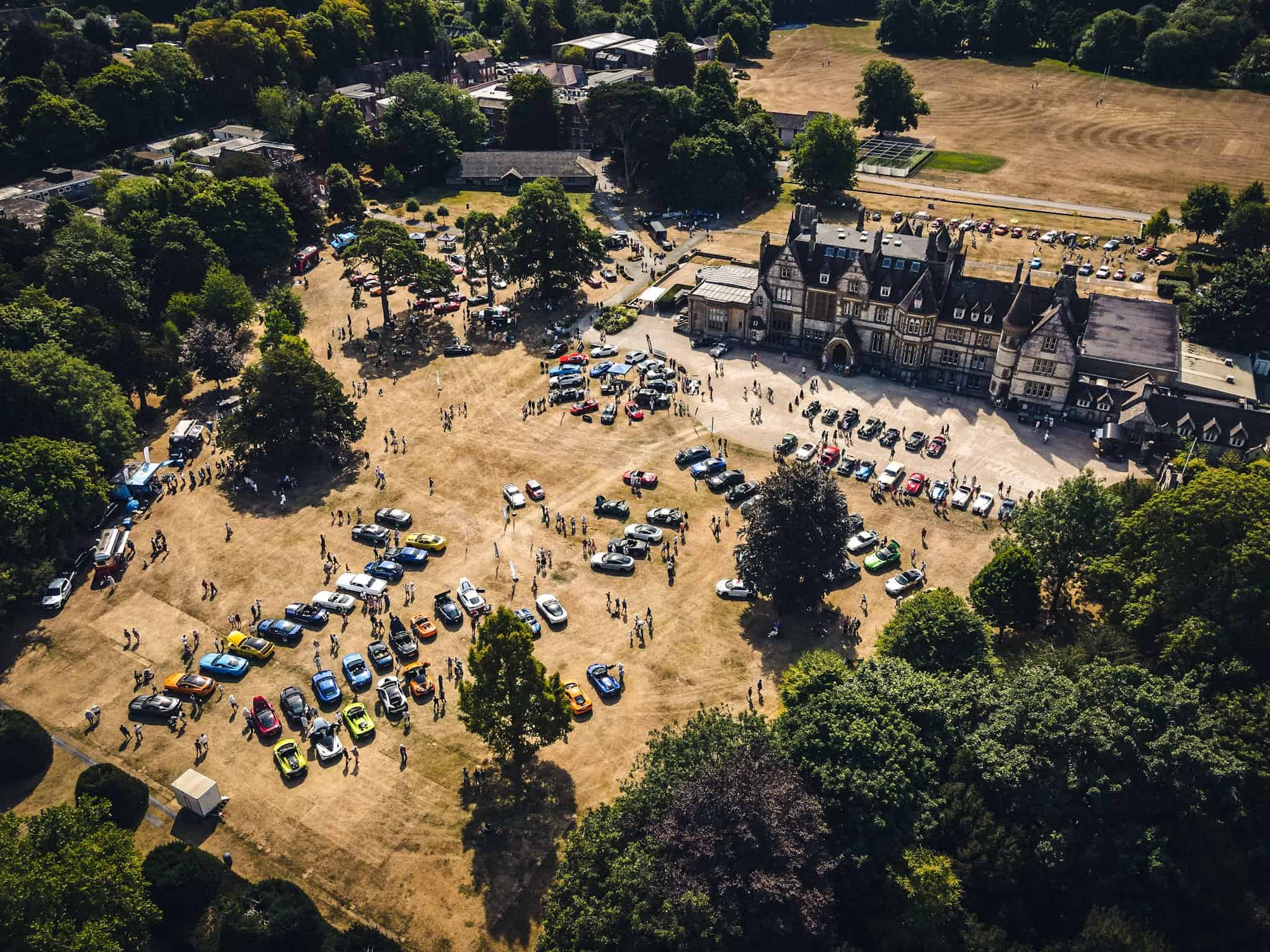
18-year-old Zander Miller from Verwood staged his first all day Classic & Supercar Sunday event at Clayesmore School in August, and estimates that the classic and supercars on display had a combined value of more than £40 million pounds.
‘It is tricky to estimate’ said Zander. ‘The Ferrari F40 that came is worth over £1m, due to its rarity, age and condition. Many of the supercars are worth between £250,000-£500,000. And then the classic cars ranged from 1920 to 1997; we had an Aston Martin DB2 and an Aston Martin DB11. They’re 70 years apart! I’d imagine we had a value of around £40 (ish) million.’
Born on Instagram
Regular readers will remember The BV feature on Zander in the June issue (read it here) – the teenager’s hobby of photographing supercars and posting them on Instagram led to Zander organising his first supercar owners meet-up, and the formation of the South Coast Supercar Club. In his final year of sixth form at Clayesmore, the budding entrepreneur was noticed by the school team who were keen to encourage him – they subsequently invited Zander to put on a full day event at the school over the summer.
Zander grabbed the opportunity and, despite being in the middle of his A Levels year, threw himself into organising the one-day event.
I spoke with Zander afterwards to find out how his first big show had worked out. Firstly, I wondered just how many cars had shown up on the day?
‘The Clayesmore Classic & Supercar Sunday had 160 classic and supercars on display to the public. We had expected 150!’
Can you tell us about some of the cars that were there?
‘The Hendy Group, our headline sponsors, brought a lovely example of an RS Cosworth. We also had a Ferrari F40 on display from one of our most exclusive members, offering the rare opportunity to view such an iconic car – we were really happy that the owner even allowed the public to sit inside!
‘One of our other sponsors, First Choice Detailing, had arranged cars on their stand in three colours to represent the Italian flag, covering the most track-focused and exclusive cars manufacturers can offer. There was a member’s Alfa Romeo GTAM (one of only 500 examples in the world), and a Ferrari SF90 Stradale, Ferrari’s latest and greatest hybrid technology which reaches more than 200mph!
‘We were very fortunate that Meridian Modena (our local Ferrari dealership) was able to bring its brand new Ferrari 296 GTB demonstrator car. We were delighted to have had this on display next to the F40, as not many customers have taken delivery of this elegant machine.’

Taking notes
Putting on your first major event of this kind is a huge amount of work. Was it a steep learning curve?
‘If you’d asked me eight months ago if I would be working with Clayesmore and arranging a proper car event, I never would have believed you! Every single step has been a huge learning curve and has taught me so much about arranging a professional event for which customers are willing to buy tickets … and then be satisfied on the day.
‘I know now what works and what doesn’t for future events.
‘I had a lot of positive feedback both during and after the event which is so nice to hear after all the hours of hard work and planning! All the praise really does make it worthwhile, and keeps me motivated.
Of course, I had a few comments and tips on what I can still improve. Hendy’s told me: “if you come out of the blocks and everything’s perfect, you’re either naive or lucky”. There are some positive lessons learned that will make sure my business continues to grow and be successful.’

And then there were exams
Will there be a 2023 Classic & Supercar Sunday event?
‘Ha, I’m not sure yet! But there will definitely be something. I look forward to what is in store for the club, and I’m excited to see where these next events take me. I think a big charitable event is what I’d like to do next.’
On the day we spoke, Zander had just learned his A Level results:
‘Somehow I’ve managed to arrange Clayesmore Classic and Supercar Sunday while juggling all of my subjects at Clayesmore. I’m glad I can say that my place at Bournemouth University was approved, and I achieved a Distinction* in my Enterprise and Entrepreneurship BTec, A* in Photography, A* in Design and Technology and B in Business Studies.
‘The last few months have been busy and tough. But I have come out the other side with amazing grades and a growing and profitable business in an industry in which I look forward to working after my degree.
‘I’d also like to mention how grateful I am to Clayesmore for giving me the opportunity to work alongside them, starting an event which has the opportunity to become even more successful in the future. And a further thanks goes personally to Rhiannon Harris from Clayesmore School, with whom I worked closely on the event. It simply would not have been as successful without her.’

You can follow Zander on Instagram on @SCsupercarClub, or get in touch with him here.
Thanks to Ben Hazell for allowing the use of his photography. See a full gallery of images from the Classic & Supercar Sunday event at Clayesmore School on the BH1 Photography website here.

Poor mangetouts and waxy brassicas | Voice of the Allotment

0

As the plot breathes a sigh of relief after the summer’s heat, Barry Cuff shares how his plants fared though the drought, and the impact on his harvest

Barry’s Spanish flag (Mina lobata) grown through with Grandpa Ott (Ipomoea purpurea)

We picked our first sweetcorn cobs (Swift) on the 25th August. They were on the plate with lashings of butter within four hours of harvesting! The drought has meant shorter plants and we do not expect to gather more than 50 cobs from the 40 plants. In a normal year we would expect to have 60 to 65.
Throughout the heat, our plot was watered daily, mostly early mornings around 6am. Taking turns with another plotholder to pump from the well, we have been able to keep the 1,500 litre tanks and troughs filled. We have seven tanks on the allotments, all of which supply troughs fitted with ballcock valves. To date our 14 foot well has not run dry and checking daily water levels we have had about eight foot of water consistently.
The heat has had different effects on our crops:

  • Peas
  • Both mangetout and shelling gave up producing much earlier than usual, and a second sowing of mangetouts (Purple Magnolia and Carouby De Maussane) performed badly.
  • Carrots and beetroot
  • Successional sowings of both did well. A last sowing of Early Nantes was made on the 14th.
  • Celery and celeriac
  • With copious amounts of water both are making good growth
  • Runner and French beans Again with plenty of water both are producing well now temperatures are lower. Both stopped producing pods on the hottest days.
  • Leeks
  • Our Musselburgh were planted out in mid-July. They are doing well as they have received plenty of water. A few had leek moth damage but appear to have overcome it.
  • Lettuce
  • We only grow Little Gem and sow once a month in plug trays, planting out when large enough. These have been watered twice daily on the days the thermometer hovered around 30º.
  • Brassicas
  • All have been well watered. All plants have waxed up giving them a bluish tinge – this helps them conserve moisture. Despite the fact they have not been protected from the cabbage white butterfly, there is little or no damage. I wonder if the waxing acts as a deterrent? It has certainly not deterred whitefly which is very bad at the moment.
  • We picked two very small curds of Cheesy cauliflower on the 26th. Normally these are not ready for at least another month. Under stress from the drought the plants are wanting to produce seed early.
  • Courgettes and winter squash
  • Courgettes have been slightly less productive than a normal year. Among the forest of squash leaves, however, we can see some very large fruits forming of both Crown Prince and Butterfly butternut.

    We have also kept our flowers well watered as they attract the bumblebees, moths, butterflies and hoverflies. Some of their favourites are tithonia, cosmos, Spanish flag (Mina lobata), Grandpa Ott (Ipomoea purpurea) and larkspur.

    Sponsored by Thorngrove Garden Centre

Receptionist | Milton Abbey School

0

Receptionist

27.5 hours a week

£9.50ph

Milton Abbey School seeks an experienced and competent Receptionist to work within our busy Operations Team. This will be 27.5 hours a week (term time only) role within the school Operations Team, providing a key welcoming ‘meet & greet’ service for our school.

Working days will be Monday to Friday 8am until 1pm, and 8am until 1pm every other Saturday.

The successful candidate must have a broad understanding of general office tasks, with a reasonable knowledge level. Previous administrative experience is essential, as is the need for good IT skills.

You will be part of a friendly and supportive team, and training will be available to enhance skills. Staff also benefit from free parking and a free daily lunch.

Further details may be obtained from our website or from HR on:

01258 880484 or email [email protected].

Applications must be submitted on the school’s application form.

The closing date for applications is Monday 19th September 2022.

Milton Abbey School is committed to safeguarding and promoting the welfare of children. The appointment will be the subject of an enhanced disclosure from the Disclosure and Barring Service.

Please note that our school is a no smoking site.

www.miltonabbey.co.uk Registered Charity No 306318

The circle of stud life seasons

0

As weaning begins for this year’s foals, the stud begins to focus on sales, says Lucy Procter of The Glanvilles Stud

This year’s recently-weaned foals are a nosy gang
All images Lucy Procter

August has disappeared in a swelter of dust, heat and flies. With more than 40 mares and youngstock on site, the business of protecting all of them with fly rugs (mesh rugs designed to help reduce the irritation of flies on horses living in fields during the day), would be impracticable and – in the extreme temperatures we had in August – even a light mesh fly rug would have made them overly hot.
However, horses do help themselves. When sharing a field with others, they can be seen standing nose-to-tail swatting flies off each other’s heads and bodies with their tails (we deliberately leave their tails long during the summer months to assist this). This summer three of our mares developed a novel fly-swat system, with all three of them standing nose-to-tail in a triangle, so that each could benefit equally from their constantly swishing tails!
(see the fly triangle in action below)
The foals tended to conserve their energy during the heat of the day, spending most of their time sleeping or drinking milk from their dams.
As soon as it became cool in the evening, however, it was time to play. The foals would start galloping around, bucking and rearing for the sheer fun of it, which was lovely to watch.

The neatly organised triangle of mares swatting flies off each other – it’s very unusual and organised cooperation, usually it would just be two nose-to-tail

Dry bags
At the end of August, we started weaning the first foals, by now nearly six months old. Readers may remember from last year (see Lucy’s Sep 21 column here) that we wean in groups, removing two mares at a time from a field, leaving other mares to help steady the dynamics of those left behind. The foals usually settle very quickly with their friends and, as they have already been supplementing their milk with increasing amounts of grass and hard feed in the creep feeder, it is not too much of a shock to their systems.
It was full circle for our foster mare Zeta who took on our orphaned foal at the start of the season. Having the oldest foal at foot, she was one of the first to be brought out of the field, and she will soon return to her owners. She is now back in foal herself, and we look forward to seeing photos of her new foal next spring.
We keep the mares on just a handful of nuts and poor grazing for the first couple of weeks after weaning to help dry up their milk supply. It’s important to keep a close eye on their ‘bags’ (the usual term for a mare’s udder); if a mare continues to produce large quantities of milk without a foal to drink it, there is a danger of her developing mastitis, which (as many human mums can vouch ) can be extremely painful and difficult to treat. Once a mare’s bags have almost dried up, we move her to slightly better grazing and gradually increase her feed until we are happy that she is no longer producing milk.

The two year olds ‘helping’ with poo-picking the fields.

Ready for the sales
This is the time of year when the sales companies and bloodstock agents come to visit us to look at this year’s crop of foals. Tattersalls, whose main National Hunt (NH) sales arm is based at Fairyhouse in Ireland and whose NH foal sale is in November, and Goffs UK, based in Doncaster, whose NH foal sale is in January, both visited this month to see which foals might be suitable.
Generally speaking, only foals born earlier in the year will be ready to sell in November. We have identified three foals that might make the trip to Ireland, and we will bring them into stables and start their prep work in September.
The two-year-olds that we were working with in July were lightly backed and ridden away in early August by our son Freddie, before being turned back out into the field 24/7 to eat, sleep and play – to be youngsters together until next spring when they will be re-backed and start working again.
We got the youngsters backed just in time before Freddie went back out to the States to race ride for one of the leading jumps trainers based in Pennsylvania.
Meanwhile our daughter Alice, who works for trainer Kieran Burke near Dorchester, had her first ride under rules at Windsor. Her second-place finish meant happy owners and trainer, and the prospect of further rides under rules for her.
With a distinct hint of the arrival of autumn in the air and a noticeable shortening of the days, all efforts on the stud in the coming weeks will be focused on having everything ready for when the weather turns and stock needs to start coming in again at night.
I know we’re all just getting over the recent heatwave, but it’ll be winter before we know it!

The Great Dorset Steam Fair

0

After a two year enforced break, the Great Dorset Steam Fair (GDSF) was back! Seen as the world’s leading heritage event, the spectacle covers an enormous showground – at over 600 acres it’s one of Europe’s largest outdoor event locations.
GDSF Managing Director Martin Oliver said: ‘We have all missed the Steam Fair massively these past two years and it’s wonderful to welcome everyone back to the showground.’
For so many visitors, the stars of the show are of course the majestic Showmen’s Engines, standing proudly in front of the Old Time Fairground. After dark they lit up to create the unmistakeable GDSF skyline.
But there were also steam tractors (for light haulage work), steam lorries (for local deliveries) and steam cars – once quite The Thing To Be Seen In, with the world-famous Stanley Steamer being the Aston Martin of its day. Steam road rollers were the last steam engines to be built – some still actively working well into the 1960s, with local councils using them for road building and repairs.
GDSF has one of the most prestigious heavy horse displays in the country, with over 100 taking part in displays each day. The fairground is the largest travelling one of its type in the UK, and is a GDSF special mix of old and new. Visitors could a turn on a steam-driven set of Gallopers (the most traditional of carousels) and then move on to a white-knuckle experience on an adrenaline-fuelled monster ride.
There were craft and food marquees, and a Great Dorset Bake-On Tent. All this plus the Wall of Death, the Grand Palace of Entertainment and seven stages of live music including Folk, Country, Blues, Rock and Chill-out.
‘What a show!’ said Martin ‘It felt amazing to be back and we thank everyone for making it such a special event. See you all 24th- 28th August 2023!’

Massive thanks to Graham at Pengelly Media for the use of his amazing images of the first day at the show. See a full album of Graham’s images on here

Love Local Trust Local Awards are open now – have you entered?

0

The 2022 Love Local, Trust Local Awards are now closed for entries; founder Barbara Cossins reminds us all that supporting local producers is vital

The extreme heat we’ve all endured has meant a very challenging summer for all our farmers and UK food producers. I know from personal experience that we breathed a huge sigh of relief on the farm when the harvest finished and we knew we had made it through with no major fires & all our animals surviving the heat.

sponsors

A social award
All of us here at Love Local have been busy wrestling with Instagram, LinkedIn and Facebook – social media is essential for any modern organisation to communicate – working hard on our content as we gather in all the entries for the 2022 LLTL Awards.
Throughout October and November our wonderful sponsors will be busy judging and, as you can imagine, Tasting Day is one of the best parts of the job!
A big thank you must go to all of our Dorset enable these awards to happen. Being a self-funded not-for-profit organisation is always challenging, of course, but now moreso than ever when everyone is thinking about budgets and trying to save money wherever they can. The fact that our loyal sponsors continue to support us year after year shows us just how important it is that we keep on sending out the message to eat and support local.

Collective power
With rising bills and the onset of huge fuel price increases for all of us, there is no better time to be championing our local food producers, farmers and fishermen. Our own mission is of course to let consumers know what is being produced right here in Dorset. But in a very real sense, if everyone supported just one local producer occasionally, the cumulative effect really would make a massive difference to both the local economy and to the environment.
We need to grow food for everyone’s table and keep our carbon footprint down whenever we can.
We thank all of the entrants for taking the time to fill out their forms – the judges look forward to meeting you all. Good luck with your entries, and we look forward to telling your stories.

Getting back under the saddle

0

Laura Wilson watched a therapist treat her horse – and gave up accounting to train as a McTimoney animal chiropractor

Laura with gentle giant Calido

My event horse Cookie had a guarded prognosis from the vets. After a diagnosis of a hind suspensory tear and sacroiliac strain, coupled with less than ideal conformation, they said he was very unlikely to return to eventing.
I sought help and watched the incredible transformation that my McTimoney therapist Kazia Lyons achieved with him.
At the time I was an accountant, but was inspired to retrain with the McTimoney Animal Association in 2014. Cookie was having treatments every six weeks from Kazia, and then when I qualified I took over. Nine years later he is still eventing (he’s 15 now), and we have had no recurrence of either issue.
He had everything against him, and I am certain his regular McTimoney treatments are the reason he is still sound and well.

Laura treating ‘lovely Lance’

Gentle balancing
McTimoney is a form of chiropractic manipulation which is used to treat pain and dysfunction of the musculoskeletal system. The technique is non-invasive and gentle, and is readily accepted by animals. It predominantly focuses on optimising alignment of the spine and pelvis in order to restore correct function of the skeletal system, the nervous system and the surrounding soft tissue, resolving dysfunction and balancing the animal’s musculoskeletal system, restoring health and movement, soundness and performance.
I also incorporate various soft tissue techniques into my treatments, including myofascial release, craniosacral work and massage. I spend the majority of my time treating a huge variety of horses and ponies from all disciplines: eventers, show jumpers, racehorses (and ex-racehorses), riding and pony club horses, hacks, dressage, endurance, show … and some retired horses too. I also work with vets on rehabilitation plans after injuries or operations, helping the four-legged patients to achieve a return to fitness.

Dressage warmblood’s owner Liz Trowbridge called me to help with Lance’s rehab after a kissing spine operation a few years ago. It has been challenging at times, but it is so very rewarding to follow his return to work, watching him build muscle in the correct places and keeping on top of the inevitable little niggles that have presented themselves along the way.
Liz says: ‘I needed someone who understands the physical demands and mechanics of an advanced competition horse , while always having the horse’s best interests as a priority. Laura is quiet with the horses but effective, completely reliable and I happily recommend her to everyone.’

Laura with ‘Miracle’ dog Toto

Toto
One of my most emotional cases was a couple of years ago, when a vet called me to visit a rescued Romanian street dog called Toto, who had a spinal nerve impingement.
He needed a lot of expensive diagnostics and the vet suspected a possible operation, which sadly the owners simply couldn’t afford. Toto had been really struggling for weeks and I was his last chance before
the unthinkable decision had to be made. He was also a therapy dog for the owner’s young
daughter, so emotions were high and the pressure was on.
When I arrived I could see that Toto was struggling to walk – he was very wobbly and his hind legs kept giving way underneath him, so he’d drag them along behind. If I hadn’t already had veterinary permission to treat Toto, I would have definitely
walked away once I saw him.
He needed a multitude of adjustments from head to tail along his spine, and his pelvis was extremely rotated and tilted. I straightened him up and went away telling the owners to rest him and hope for the best …
The very next day I had an excited message from Toto’s owner, saying that he had
made a full recovery and was now completely fine!
Toto had been fully restored to his former self after just one treatment and after an initial follow up I haven’t needed to see
him again. I cannot explain how gratifying it was to treat this dog and give him back the quality of life that the owner thought was lost forever. Toto’s owner Clare Job says: ‘We honestly cannot thank Laura enough for what she has done for our boy. She is amazing – I just wish I had called her sooner!’
I always say that I have the best job in the world. It is
absolutely true – every single day is different. I’m usually out in the open air, and meeting people who care deeply about their animals. I am doing a job I love, working with animals and relieving their discomfort. It is hugely fulfilling.

Cookie and Laura competing at Oxstalls

Laura Wilson, McTimoney Animal Chiropractor BA (Hons) PGDip MMA
Contact Laura on Facebook here or on [email protected]
To find out more visit mctimoneyanimal.co.uk.

It’s a new look for CC of Wimborne – the town’s only independent ladies boutique

0

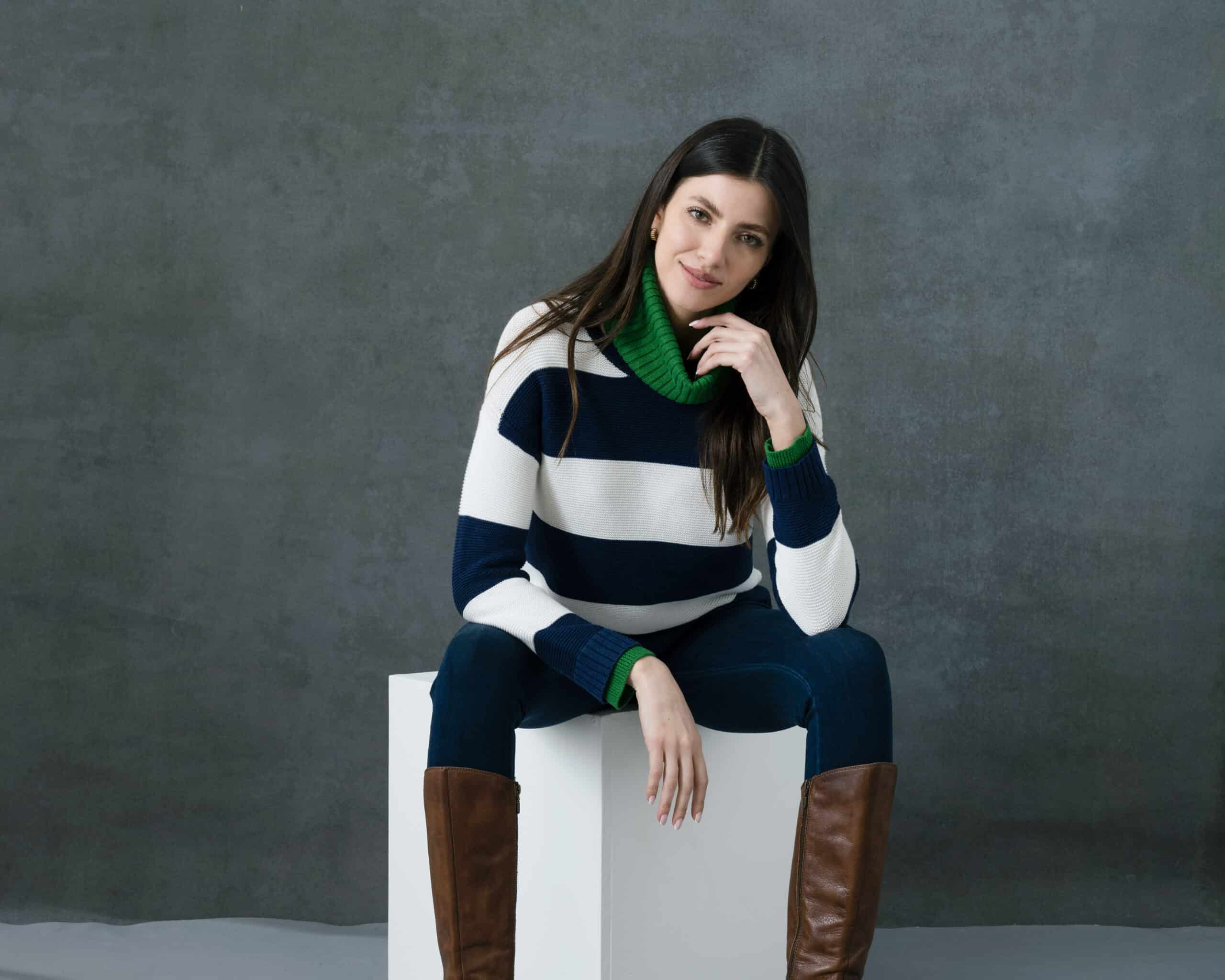
It’s never too late to reinvent your look; and that’s just what Classy Collections of Wimborne has done. After nearly 30 years in business, the award-winning, independent womenswear boutique has relaunched.
In the heart of Wimborne Minster – and now renamed CC of Wimborne – the shop has enjoyed a complete makeover inside and out. It has rebranded, revamped and has a whole new offering of sought-after designer labels that women of all ages are loving.
Collections include Canadian designer Joseph Ribkoff, Marble, Just White, Toni and Rabe Moden. Whether you’re looking for trendy jeans or classic cut trousers, fashionable coats and winter wrap-overs, jumpers, shirts, a party look or relaxed loungewear – inspiration can now be found under one stylish roof.

Marble jumpers to Sloggi bras
Joseph Ribkoff is a Canadian designer known for fabulous fit and individuality. Dress it up one day for a wedding, wear it to a lunch another day. Even better, most items are crease-free. No ironing and so easy to pack!
Marble and Rabe Moden offer smart/casual jumpers, trousers, gilets, dresses and tops while Just White brings a quirky mix of stylish shirts perfect for jazzing up your look.
Orientique is an Australian eco-conscious label offering colourful organic cotton dresses and cover-ups perfect for beach to bar. Some are reversible – so you get two dresses for the price of one! With the long, hot summer this year, this cool and easy-to-wear collection sold out, but is being restocked with the latest new colours and styles for spring/summer 2023. Excitingly, CC of Wimborne are expanding the holiday collection nexty year by introducing leading swimwear brand Triumph with a stunning choice of swimsuits and co-ordinated cover-ups.
A range of flattering bras and pants from leading designers Sloggi and Triumph means you can easily shape up your underwear too.

Still moving forwards
Owner Nicola Sheppard launched the business in 1993 and still works in the shop nearly every day. She says: ‘Fashion is in my blood – I’m passionate about this business and I love helping a woman find what’s right for her. You just can’t get that one-to-one service when you shop online.’
Nicola and her team offer a personal shopping experience, and pride themselves on being friendly, honest and unpressurised.
‘We don’t do age-appropriate dressing here. We do age-less, helping every customer to find their individual style. Your clothes should reflect your personality and lifestyle.’ explains Nicola.
She adds: ‘We plan to celebrate 30 years in business with lots of special events for customers – it’s a true milestone in retail. When I opened the boutique, there were seven other independent clothes shops in the town – three in this street! I’m the only one still here and I’m still moving forward with new ideas to grow the business! That’s something to celebrate!’

CC of Wimborne is at
11 East Street, Wimborne BH21 1DS.
Open Monday to Saturday 10am to 4pm.
Visit classycollections.info

Red Alert in Dorset

0

Local farmer Graham Birch used a WhatsApp group to contact neighbouring farmers who helped save his fields. Rachael Rowe reports

Major field fire. Image © Dorset & Wiltshire Fire and Rescue Service

The really frightening thing was the speed at which the fire took hold. It engulfed the field of corn so quickly, despite the efforts of fellow farmers and fire crews to stop it.’
When Graham Birch’s crops went up in flames, help came swiftly from neighbouring farmers as well as a number of fire appliances who attended from the surrounding area.
‘One of our neighbouring farmers, Mark Tory, set up a WhatsApp group for us, so we can help each other out.’ Graham explained. ‘All the local farmers are on it, and they came running to help, creating a fire break.
‘Typically, they will bring a tractor, cultivator and a water tank to try and create a fire break to prevent it from spreading to other farms and areas. The fire brigade were brilliant at getting things under control and had several engines at the scene. It was an amazing piece of teamwork. We got the fire controlled within about 30 minutes, but it took two hours to put out.’

Firefighters were at this scene on 8th August, extinguishing a fire which affected approximately 100 acres. Ten fire engines, a 4×4 pumping appliances and two water carriers attended. Image © Dorset & Wiltshire Fire and Rescue Service

Red Fire Severity Alert
Graham, who owns Hedge End Farm, at Winterborne Stickland, was reflecting on the terrifying wildfire on his land: ’There’s a lot … hit a flint, causing a spark that set the fire. Everything is so dry at the moment and our crops were super dry. Within moments the fire took hold.
‘My farm manager was treated for smoke inhalation at Dorchester Hospital.’
These dry conditions promoted Dorset & Wiltshire Fire and Rescue Service to issue a Red fire severity alert. They are asking the public not to light bonfires or barbecues during this alert period. A red alert means that, should a wildfire be experienced, it could spread quickly and easily due to the dry conditions. The risk is most significant on large areas of open land, such as heathlands, fields and even cliffsides.
The statistics make grim reading. Area Manager Marc House says: ‘From 1st – 10th August, Dorset and Wiltshire Fire and Rescue Services (DWFRS) has attended 180 fires in the open. During the same period last year, the service dealt with only 34 incidents of this nature. That is an increase of over 430%.’

All that remains of the fire at Hedge End Farm in Winterborne Stickland is a large area of scorched earth. Image: Rachael Rowe

Last year there were no agricultural open fires, but in 2022 there have been 23, mostly in fields of standing crops.
DWFRS is asking the public to be vigilant. Marc continues: ‘Farmland is very vulnerable. They are harvesting and it’s a rural community. They need to get the crops in and we want to support the farming community. Farmers can do a lot to help themselves such as cleaning out chaff and dust from machinery and also using spotters.’
So how can we all help? Hopefully, people are getting the message about disposable barbecues, but as the recent fire at Studland Heath shows, they are still responsible for many open wildfires. Marc House adds: ‘People should avoid campfires, barbecues and bonfires. Cigarette ends will ignite a hedgerow. Litter should also be disposed of safely. Glass reflects the light and ignites material. If there is a fire, people need to get to a safe place and call 999.’
Graham thinks basic good judgment plays a part in preventing fires. ‘It’s not necessarily about legislation, but people having the sense to not use a disposable barbecue or a sky lantern. If you smoke, put the butt out properly. People need to use their common sense.’
Finally, think again if you imagine an odd rain shower is sufficient to reduce the risk. Everything is still very dry.
As Graham reflects: ‘We need a LOT of rain.’