Home Blog Page 5

Dorset’s Mr Bean

0

Giles Dick-Read spotted the coffee revolution before Britain knew it wanted one, quitting the corporate world for a converted Sherborne dairy

All images by Courtenay Hitchcock

It’s 1993: a world before flat whites and baristas occupying every street corner. Giles Dick-Read is sitting in Starbucks – a new concept – looking out over Kitsilano Bay in Vancouver. But it’s not the stunning view that’s distracting him, it’s the buzz of the place, the easy banter of the dexterous baristas working vast, hissing machines. ‘I remember sitting there, feeling the energy this coffee business was generating,’ he says. ‘I thought, this must be the next big thing. That’s what I’m going to do.’
Giles had just jettisoned a well-paid job in the corporate world of automotives and car audio. He’d hopped on a plane to Vancouver with no set plans, just the question of ‘why have you given up a great job?’ ringing in his ears.

Giles Dick-Read


For six months he travelled across Canada and the US, researching the fast-growing world of speciality coffee. ‘I was in the right place at the right time and could see what was coming,’ he says. ‘A coffee explosion!’ He was right. According to the British Coffee Association, we now consume a staggering 98 million cups of coffee every day!
That caffeine-kicked journey eventually led Giles back to London, where he met his wife Charlotte, then working at Café Rouge. She, too, was discovering Britain’s limited understanding of good coffee.
‘Coffee was awful in the UK,’ Giles says. ‘On the road in my corporate job, I’d discovered you just couldn’t get a decent cup. I was also having some health issues thought to be related to caffeine, so if I was going to be able to continue drinking coffee, it had to be good!’
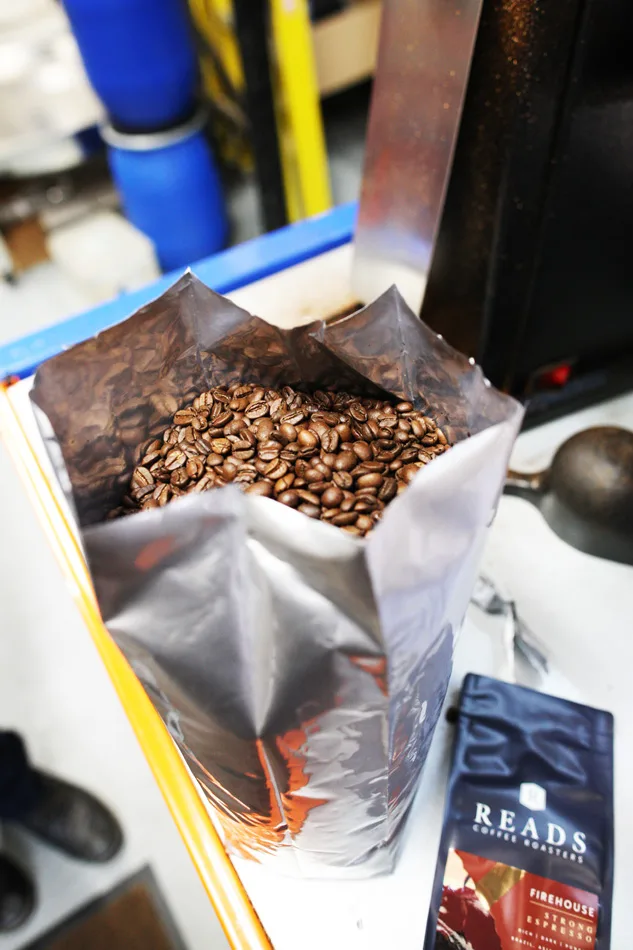
Reads coffee beans roasted, packaged and ready to brew

Becoming Mr Bean
A job with a small café chain followed – ‘the only one I’ve ever done where my wages didn’t cover the cost of living’, says Giles, – but it proved pivotal. Having trained as a barista, Giles briefly worked at Whittards while researching speciality beans in his spare time. The real turning point came from a meeting with the owners of sandwich chain Pret A Manger. Giles confidently told them: ‘Coffee is the next big thing and you need to take it seriously.’
They did, appointing him their first coffee man, soon nicknamed ‘Mr Bean’. Consultancy work with major brands followed, advising on beans and machines and writing barista manuals.
‘I’ve lost count of how many baristas I’ve trained,’ he says. ‘My top tip? Give them a tennis racquet and ball and get them hitting it against a wall. Hand-eye coordination is everything in a busy coffee house. Surprisingly, a love of coffee isn’t essential. I’ve trained plenty who don’t even drink it.’
Despite his success as the coffee man, Giles again stepped away from a comfortable salary to begin experimenting.
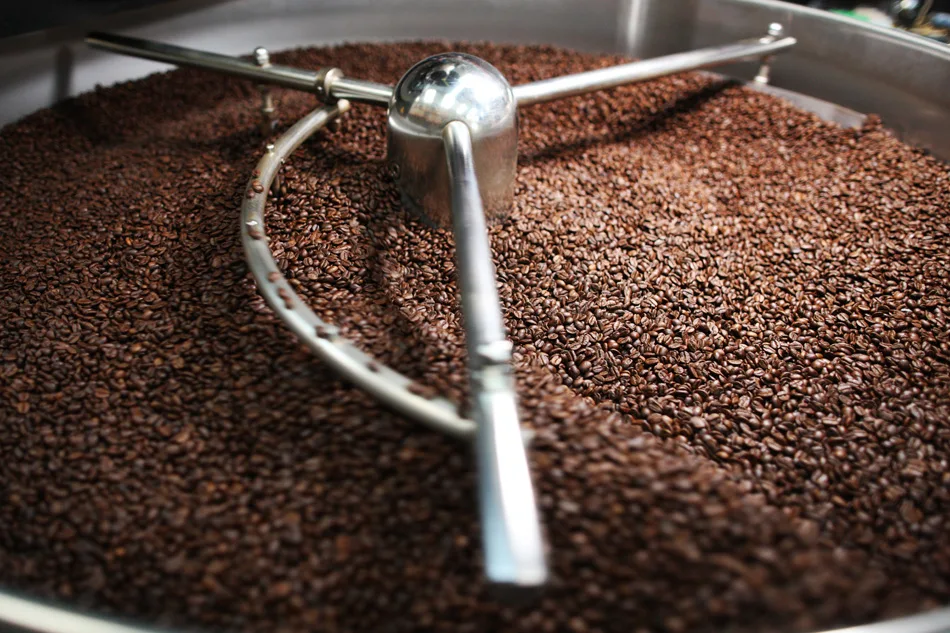
A decaf roast


‘I bought a second-hand roasting machine and started to roast my own beans to sell to friends and family. I love all machines, so I was inevitably fascinated by the magic of the roasting process.’
In 2005, Giles and Charlotte moved to Sherborne along with their fledgling speciality coffee business. A farmhouse with outbuildings provided an ideal new home – a way to run a business alongside family life, with their three young children.
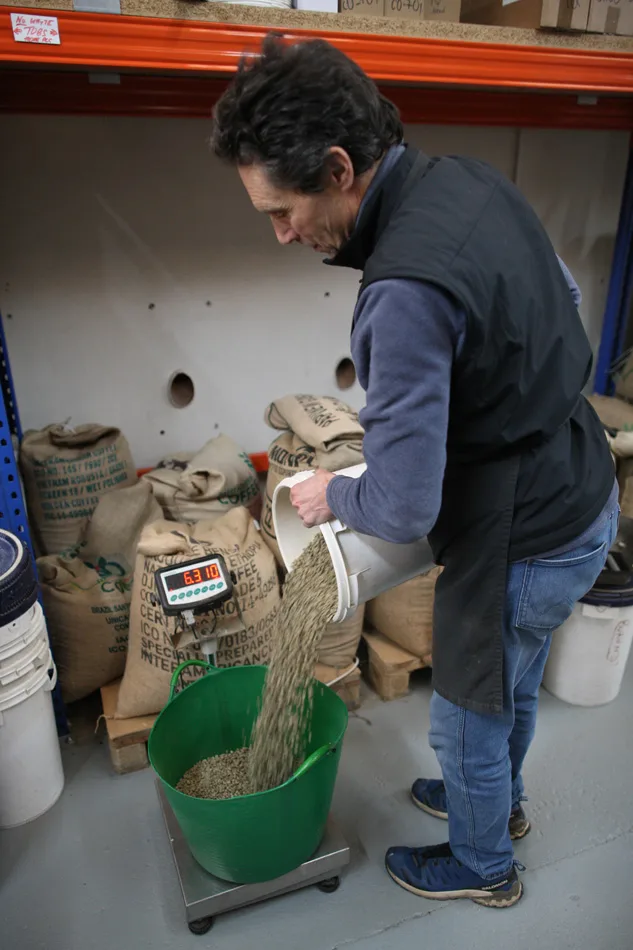
Giles weighing raw coffee: unroasted coffee beans are green ranging from pale, yellowish-green to deep grey-green. They have a grassy herbal scent, very unlike the familiar rich aroma of roasted coffee

Old roots
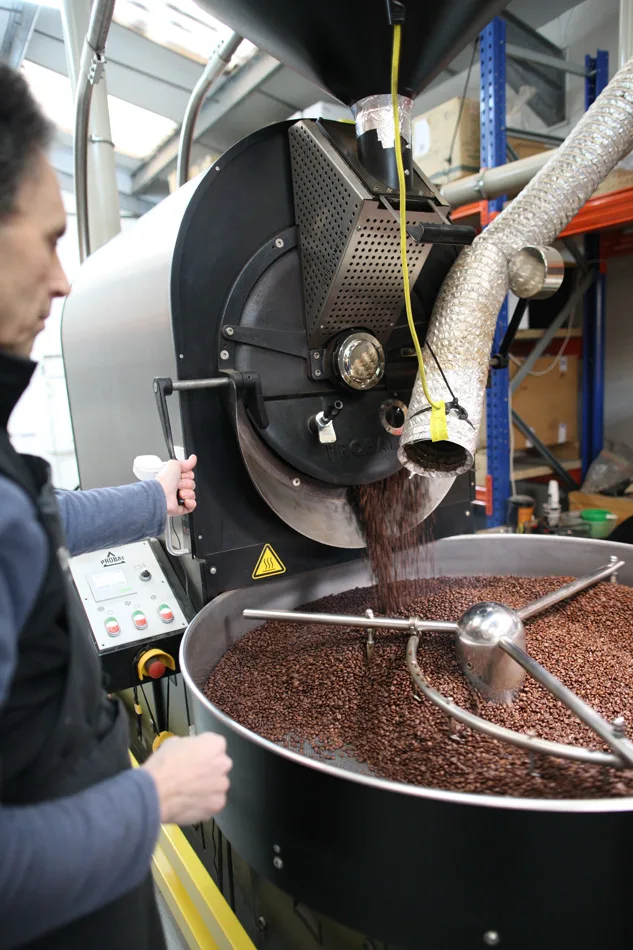
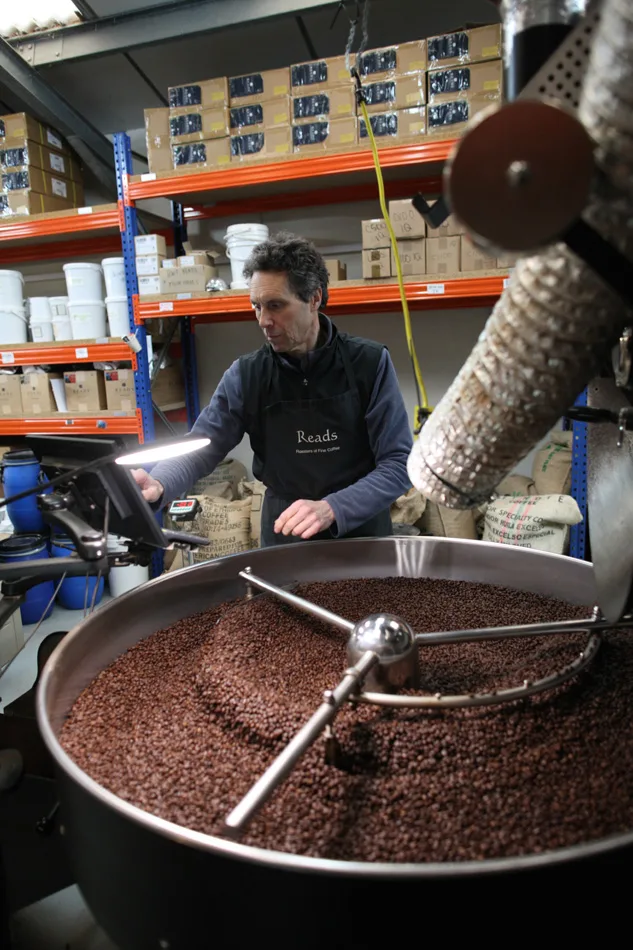
Today, Giles’ ‘happy place’ is a converted dairy – the Roastery. His original small roaster now sits beside a towering Probat machine. Sacks of green beans from a host of countries – Kenya, Sumatra, Peru, Brazil, India and Rwanda – are piled high. The delicious aroma of coffee permeates. ‘Our neighbours are Sherborne Tennis Club,’ he says. ‘They know when I’m roasting – they get a good waft!’
The Roastery is where everything happens, from cleaning and roasting to packaging. Roasting days are Mondays and Thursdays, and every batch is meticulously logged. ‘It’s the only part of my life that’s completely organised,’ Giles ays, explaining that he still does most of the roasting himself.
There’s history in the brand name, too. ‘I hail from Norfolk flour-millers, and my godfather, Brian Read, gave us his blessing to use the Reads name. It’s serendipity, really. Like flour, coffee starts as an agricultural crop. You process it and end up with an ingredient.’
Aside from the roasting, his other favourite part of coffee production is the occasional visit to Tilbury Docks to collect the sacks of green coffee arriving from across the world: ‘It’s such a fantastic experience pulling it off the dockside,‘ he says. ‘Really it’s just the kid in me who loves going to the port to see all the big machines!‘
All images by Courtenay Hitchcock

Coffee culture
From bean to cup, Giles knows every stage of his business, and 20 years on, his core ethos hasn’t changed: ‘We’re still all about roasting special coffee in small batches and helping people make fabulous drinks.
‘As I said, coffee is an ingredient, not a final product. The magic is all in the preparation. The ultimate proof of this is Italy.
‘By and large, Italian coffee is quite ordinary: what’s special is the way it’s so skilfully made.
‘All roasters have their own style – give the same beans to several different roasters, and you’ll get a different coffee from each. We choose to roast traditionally, to produce coffees that are fully developed, without being too dark or too light: we aim for a rich, smooth flavour. In short:
coffee that tastes of coffee!’
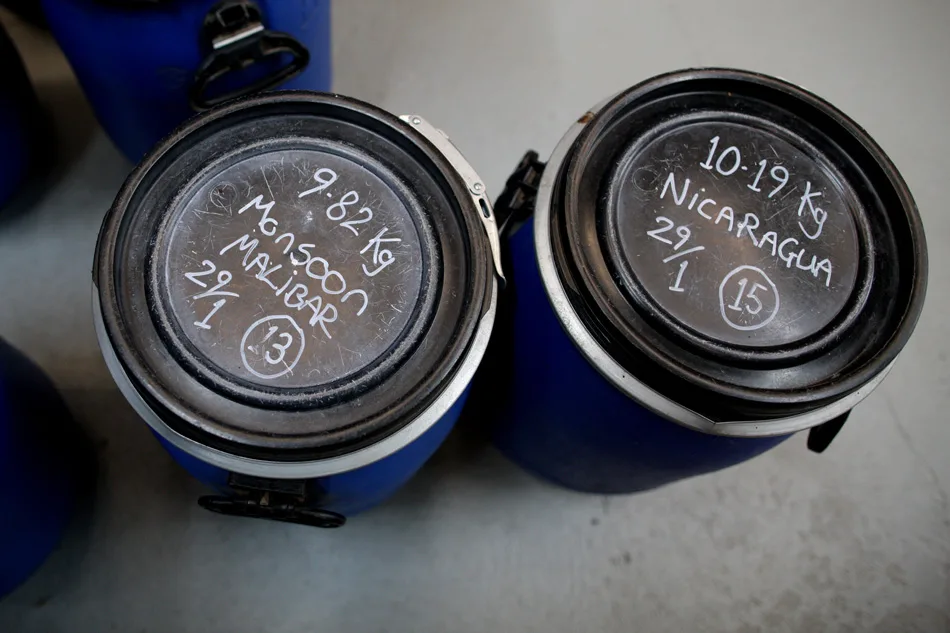
Roasted beans are stored in carefully labelled and dated buckets in the Roastery


Over our own brew (he runs on three espressos a day), Giles gives me a quick lesson on how to use my moka pot: leave the lid open, and watch for the moment the syrupy liquid becomes thinner and paler, that’s the key. A good grinder, he insists, is also essential. Different brew methods need different grinds – cafetières coarse, moka pots fine. The brew ratios of water-to-beans matter too. (Reads supply handy recipe cards to advise customers!)
But Giles is no coffee snob. ‘If people want milk and ten sugars, that’s fine. Coffee should just be enjoyed your way.’
It’s that hands-on passion that Giles brings to Reads’ business relationships, from London eateries like Boxcar to Dorset farm shops. ‘I still love checking the machines, supporting baristas,’ he says. His local customer base grew during Covid, when people came out to visit the converted horsebox coffee bar on the farm for their caffeine fix during the pandemic. Although there is an online shop, Giles still makes time to serve and sell beans himself. ‘We run a pop up stall at Martock Market once a month – the queues are amazing, I couldn’t be more grateful to our loyal customers.’


As we leave, he shows me a converted shipping container – ‘the Tea House’. It’s packed floor-to-ceiling with speciality teas bearing evocative names like Chun Mae Precious Eyebrows: a green tea whose leaves have a lightly-curved shape said to resemble a woman’s eyebrow.
‘At heart, we’re still a nation of tea drinkers,’ Giles says, ‘So … watch this space!’
Is tea Mr Bean’s next big thing?
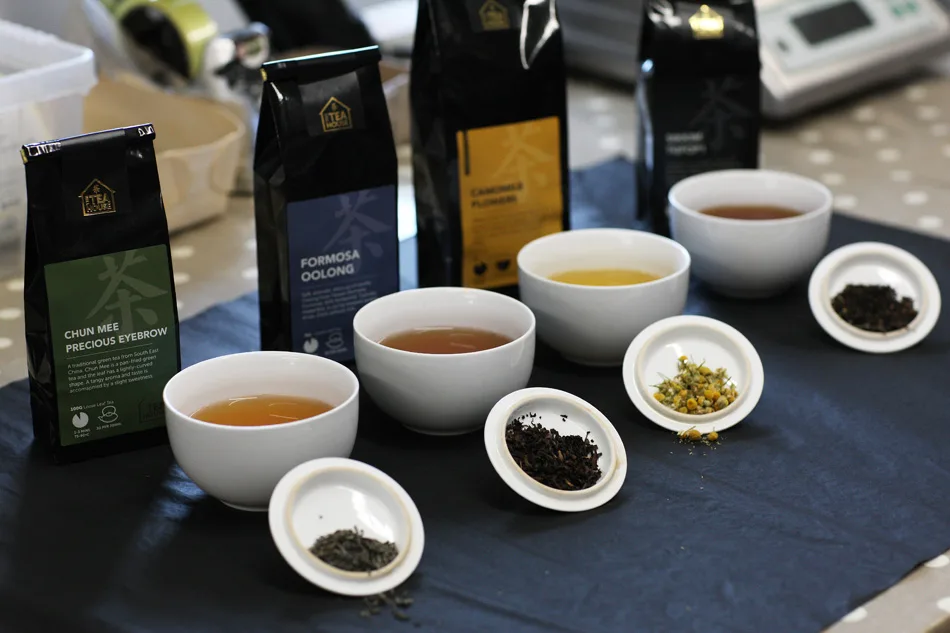
The next Reads adventure looks tea-shaped

Quickfire questions for Giles:

Who would you have a coffee with?
My grandfathers – I sadly never met them. Grantly Dick-Read was an obstetrician who made his name as a leading advocate of natural childbirth.
My maternal grandfather, Colonel William Kingsberry, was a career soldier killed in Ghent by a V-2 rocket.
For my mechanical fix, racing drivers Stirling Moss, both Graham and Damon Hill, and also Guy Gibson VC, commanding officer of 617 Squadron – he led the Dambusters Raid.

Book by your bedside?
Rivets, Trivets and Galvanised Buckets: Life in the village hardware shop by Tom Fort. He’s a brilliant researcher, a shared passion.

Favourite place to drink coffee?
Ironically, I rarely go out for coffee. If I do, I prefer somewhere we don’t supply as I’m always researching the competition! That said, little beats a fresh brew in my thermos and heading out on my motorcycle to enjoy it on Salisbury Plain or Portland Bill – anywhere wild with fantastic views.

Why Britain isn’t broken – despite the rain

0

MP Simon Hoare thanks flood responders, reflects on national strengths and says social media needs limits to protect young people

Simon Hoare MP

Let me begin this month’s offering by extending my heartfelt thanks, on behalf of all residents of North Dorset, to Dorset Council officers and councillors, Dorset & Wiltshire Fire and Rescue and Dorset Constabulary, who have all done so much to look after, help and protect communities during the recent heavy rain and subsequent flooding.
I also want to thank our parish and town councils, and the scores of nameless individuals who have helped out their neighbours in time of need.
I have been compiling a detailed register of where flooding has been at its worst or most disruptive and would welcome residents and others to email me ([email protected] or write to: Simon Hoare MP, House of Commons, London, SW1A 0AA) with their experiences so that I have the fullest picture possible. This will assist me in making the case for remedial works and investments across the constituency. Our changing climate points to these previously rare episodes becoming endemic during the winter months, and we need to do more to attenuate against them.

Battered, not broken
I posted on Facebook recently in rebuttal of the assertion that ‘Britain is Broken’ – and I was really encouraged that the majority of those who commented and those who have emailed or written to me agree that our country is NOT broken.
Do we need to see investment in certain areas? Yes of course. Do we need to see modernisation? Undoubtedly. Is everything in the garden rosy? Of course not! Our national story is one of evolution and adaptation. Nothing can stick with the status quo. Do those accessing SEND provision or Adult Social Care too often find it a trial? Yes they do. But – and here’s the rub – let’s compare ourselves with other countries across the globe.
We have the rule of law and democratic freedoms. We have accountable armed forces and police. We enjoy an independent judiciary. We can say what we like in a free press. We cannot be detained indefinitely without charge. We can criticise the government or the King without the internet being turned off. If we are ill, the NHS will do it’s best for us and never send us a bill. If we are out of work or disabled the State will provide a network of supports, creating a safety net of protection. Our local councils deliver services, day in and day out. We can love whomsoever we like. Our foodstore shelves are plentiful. Our children are not sent out to beg. We can flick a switch, and our electricity supply is reliable. We have schools, colleges and universities doing their best to provide education and skills for the next generation. All of these are important.
All of this demonstrates the intent to provide reliable services for all of us to use and access.
So, no. Britain is not broken.

The FOMO landscape
The Government is to consult shortly on banning the use of social media for those under 16. As the father of three teenage daughters, I see first hand the up and down sides of social media.
The answer to the question has to be one of balance. The growing canon of evidence of the harms social media is causing – for ALL age groups – is alarming. Sometimes, I sit back and wonder why we allow it to dominate our lives as much as it does. For too many, social media has become master rather than servant.
I will be holding some public consultation events over the coming weeks to explore this issue with parents, teachers, health professionals and, crucially, young people themselves. FOMO (fear of missing out) does seem to dominate the landscape. I have heard from lots of young people in North Dorset that they don’t particularly like social media, don’t even particularly want to use it … but believe that they have to, in order to fit in with their peers. That is no way to run a society.
And, when you overlay the algorithms that the providers use to target young users, my conclusion is that something has to be done because doing nothing is not an option. I would love to hear your views on this issue if you are under 16, a parent/guardian, teacher, health professional or relative. What worries to you have? Do you have concerns about the impact of social media? Do let me know ([email protected]).

Gardens Open season is underway this month

0

Two beautiful Dorset gardens will open their gates this March as part of the National Garden Scheme.
Manor Farm, Hampreston (BH21 7LX) has been nurtured by three generations of the Trehane family for over a century.

The gardens at Manor Farm, Hampreston near Wimborne


With classic herbaceous borders, rose beds and a bog garden, it’s a spring highlight – and due to feature in The English Garden magazine this June. Open Sat 28th Feb (10am–1pm) and Sun 1st Mar (1–4pm). £7 entry, children free. Excellent plants for sale, including hellebores.
The Old Vicarage, East Orchard (SP7 0BA) offers a 1.7-acre winter garden full of snowdrops, crocus and bulbs, plus a wildlife garden, grotto and Dorset’s first swimming pond. Open Fri 13th and Sun 15th Mar (from 2pm). £5 entry, children free. Home-made teas available, including gluten-free and vegan options.
More info: ngs.org.uk

The BV community news section is sponsored by Wessex Internet

What happens at The Exchange?

0

If you’ve ever looked at The Exchange listings and thought ‘nothing there for me’, how about looking again?
Yes, there are music shows, but a wide variety – see below – and there is much more on offer. Between now and Easter, in no particular order, you will find brilliantly irreverent cabaret, a British screen legend in conversation, a 60s rock tribute band, the best of Dorset culture in word and song, and a great blend of folk and gypsy music from Eastern Europe. Plus a cake concert by musicians from the Bournemouth Symphony Orchestra.


Cabaret with Balls was scheduled for performance on 29th January – Storm Chandra gave all those who didn’t get a ticket in time a second chance. Charlie Bicknell, a cabaret and circus performer who starred in Ben Elton’s West End hit ‘Popcorn’ is performing with Louise Innes, a versatile mezzo soprano who made her Royal Opera debut in 2010. From Flashdance to Simon and Garfunkel via AC/DC and a throw-back to Not the Nine O’Clock News. The show is a brilliantly irreverent escape from reality, full of surprises, humour, and outrageous fun (age 16+).
Edward Fox is one of Britain’s most distinguished screen and stage actors, who has acted with many of the great names of the last five decades. In discussion with the celebrated theatre director and raconteur Richard Digby Day, Edward will share anecdotes from his glittering career, including The Day of the Jackal, Edward and Mrs Simpson and A Bridge Too Far. Ask questions and hear first-hand stories from a national treasure.
The annual celebration of Dorset culture centred on William Barnes, born and brought up near Sturminster Newton, mixes his iconic dialect poetry with authentic local music delivered by the Ridgeway Singers and Band, and a delicious cream tea. If you want to know what Dorset means to Dorset folk, this joyous event is for you – but book quickly, there are very few tickets left. You don’t need a ticket for the producers’ market in The Exchange from 11am on the same day.

Alice – The Sounds of Smokie sees five talented musicians and vocalists performing all of Smokie’s hits (if you’re of a certain age, Living Next Door to Alice will just have immediately come to mind). There will be more 60s classics in the show, and audience participation is guaranteed.
The Budapest Café Orchestra are no strangers to Dorset. Led by the award winning and outrageously talented Chris Garrick, an orchestra of four brings an evening of folk-based music from eastern Europe – a description which doesn’t start to cover the range of musical delights they will set out.
These musicians have worked with Cleo Laine, Nigel Kennedy, Luciano Pavarotti, Dolly Parton … and they are very funny.
Don’t miss a treat.
Another date for the diary is April 11th, when an open day will tell and show you even more of what The Exchange in Sturminster offers to the whole of North Dorset in 2026.
Pick up a brochure or visit The Exchange website for dates and to see what else is on.
stur-exchange.co.uk

The BV community news section is sponsored by Wessex Internet

Stur’s spring diary starts here …

0

Love Stur
A new community initiative, Love Stur, is launching to shine a spotlight on the people, passion and connections that make Sturminster Newton’s local economy thrive. The initiative is designed to celebrate not just individual businesses, but the strong network of relationships that keeps the town vibrant and resilient.
‘Love Stur is about people supporting people,’ said a spokesperson for the initiative. ‘By giving local businesses a platform to not only share their own stories but also to highlight other businesses they value, we’re encouraging residents to shop local and strengthening the sense of community that makes Sturminster Newton special.’


Features will be shared weekly through local social media channels, creating an ongoing series that introduces residents to familiar faces and hidden gems across the town. From independent retailers and service providers to charities and community organisations, Love Stur aims to be inclusive and representative of the full range of local enterprise.
The initiative hopes to inspire residents to discover new places, revisit old favourites, and continue supporting local businesses whenever possible.
For more information or to express interest in taking part, please contact Lee Cooper on [email protected]

North Dorset Skills Fair
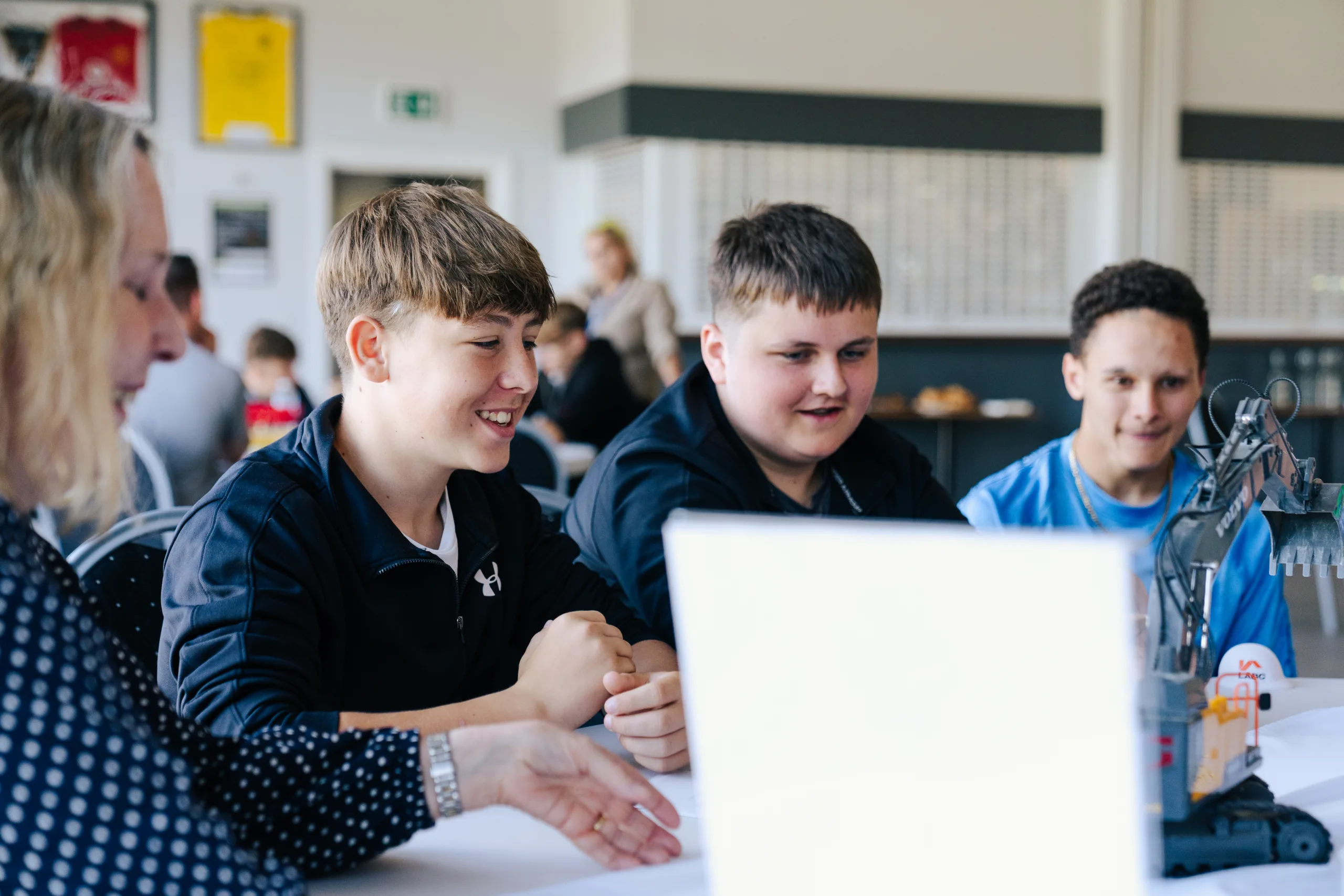
Dorset Careers Hub is bringing careers to life with the launch of the North Dorset Skills Fair on Wednesday 4 March 2026 at The Exchange. The interactive event will connect Key Stage 3 students with local employers through hands-on workshops, showcasing real-world skills, careers, and progression routes including apprenticeships and technical pathways – helping inspire the workforce of the future.

There will be hands-on workshops for Key Stage 3 students at the North Dorset Skills Fair

Tea with William Barnes at The Exchange has become an annual highlight in Dorset’s cultural calendar – a much-loved celebration marking the birthday of one of the county’s greatest literary voices. Born on 22 February 1801 at Rushay Farm, William Barnes went on to become the defining poet of Dorset, his work rooted in the language, landscape and lives of the people of North Dorset. His strong association with Sturminster Newton makes the town the perfect place to gather each year in his honour.
On Sunday 22 February at 3pm, Artsreach brings together a truly Dorset celebration of song, music and verse, inspired by Barnes’ life and work. The afternoon is served, quite fittingly, with tea and cake made from locally sourced ingredients, adding a distinctly local flavour to the occasion.
Before the performance, visitors can enjoy the return of the pop-up market, running from 11am to 3pm, showcasing a range of Dorset artisan-made produce – ideal for browsing, gifting or simply treating yourself.
The event also links perfectly with Sturminster Newton Walkabout Leaflet No. 9 – the Literary Trail, encouraging visitors to explore the town’s rich literary connections. For those keen to stretch their legs, the nearby North Dorset Trailway offers accessible walks on firmer ground, away from the winter-wet fields, making it a great option for a seasonal stroll before or after the festivities. With poetry, music, local food and a strong sense of place, Tea with William Barnes continues to be a fitting tribute to Dorset’s most cherished poet – and a date to look forward to each February.

Stur LitFest
Looking ahead, Tea with William Barnes also offers a first glimpse of Sturminster Newton literary connections for 2026, especially the Sturminster Newton Literary Festival, running from Friday 12th June to Sunday 21st June 2026.
The festival will celebrate literature, place and creativity, building on the town’s deep connections to writers, poets and storytellers past and present. Programme details will be available soon on their website sturlitfest.com.
The SNADS Panto
SNADS are flapping back into action with the pantomime favourite Mother Goose, landing Wednesday to Saturday, 11th to 14th February!
Follow Mother Goose as she chases riches, beauty and happiness (behind you!!) and learns a few life lessons along the way. Expect booing, cheering, singing, dancing, daft jokes and plenty of audience fun! It’s fast, funny and family-friendly, with laughs for little goslings and grown-up geese alike.
Don’t miss it – book your tickets now and join us for a feather-ruffling, giggle-filled panto spectacular!

Sherborne Douzelage Young Musicians Competition returns for 2026

0

After a pandemic-enforced pause, Sherborne Douzelage is delighted to announce the return of its Young Musicians Competition on Friday 14th February 2026.

The event will take place at the Gransden Hall, The Merritt Centre, Sherborne Girls School, and is held in collaboration with all schools across the Sherborne area. Alongside local entrants, this year’s competition will also welcome a small number of young musicians from Sherborne’s Douzelage twin towns across Europe, promising an engaging and inspiring musical gathering.
Finalists will perform in an evening concert, with the overall winner invited to appear at the Sherborne Abbey Music Festival in May. All young musicians in the Sherborne area are encouraged to apply.
To register your interest, please contact Dr Rachel Milestone at: [email protected]

The BV community news section is sponsored by Wessex Internet

Grassroots racing under pressure

0

ADVERTORIAL

This article has been supplied by the Countryside Alliance as part of a paid advertising package. The views and opinions expressed are those of the Countryside Alliance and do not necessarily reflect those of The BV.

The ever-popular Countryside Alliance point-to-point returns to Badbury Rings on Sunday 22nd February, promising another superb day of competitive racing. Tickets are available to purchase online in advance HERE. Gates will open at 10am, with the first race due off at 12 noon, giving racegoers plenty of time to arrive, soak up the atmosphere and make the most of everything on offer.
Visitors can browse the shopping stalls, enjoy the on-course entertainment, meet friends and family, and, for those inclined, place a bet with the bookmakers ahead of the opening race.

Future in the balance
The Badbury Rings point-to-point – along with more than 100 other similar race meetings held at around 80 courses across the country throughout the point-to-point season – are organised by groups of volunteers connected to trail hunts. With a government manifesto commitment to ban trail hunting, we look at what impact a ban might have on the future of grassroots racing. Point-to-pointing continues to welcome thousands of supporters to fixtures taking place throughout the season, but their success depends entirely on volunteers, of which large numbers are required in the lead-up to the events, with even more needed on raceday itself.
The sport is not sustained by paid staff or large sponsors, but by a network of those willing to give their time freely: preparing courses, building fences, stewarding, providing hospitality, parking cars and managing race days. A very large proportion of those volunteers come from the hunting world.
As Tim Bonner, Chief Executive of the Countryside Alliance recently explained: ‘It would be wholly impossible to run a point-to-point without the massive amount of voluntary support that hunts give.’
This is a reality that is often ignored when the future of trail hunting is considered. A ban would not simply affect hunts and their supporters, it would have a knock-on effect on rural pubs as well as the farming community which benefits from the fallen stock collection that many hunts provide, but, it would also weaken the foundations on which point-to-pointing stands. There is no alternative volunteer base ready to step in, and no realistic way to replace that knowledge and manpower without fundamentally changing the nature of the sport. Strip away the hunting community, and the consequences for amateur racing would be catastrophic.

© Tim Holt


Those who care about the future of point-to-pointing must recognise this reality. Protecting amateur racing means understanding what underpins it – and that includes the continued place of hunting and hunt supporters within our rural communities.

Find out how you can take action to protect the future of trail hunting and point-to-pointing HERE.

The BV community news section is sponsored by Wessex Internet

Northern raids, southern ambitions

0

After a testing January, Chris Wald is grateful for the team. He reflects on the latest winners, and a stable hitting form at just the right time

First Confessions won the “Chasing Excellence” Beginners’ Chase at Carlisle

January has been its usual self this year, with a run of frost followed swiftly by storms and flooding, making for a challenging few weeks. According to Chris Wald, it has been a month that tested both horses and staff, even if the yard managed to keep things ticking over.
‘We had a quieter start to the month and then it became quite hard work,’ he says. ‘We managed to keep the all-weather gallops going and keep the horses in their usual routine, but it definitely makes life harder for the staff, working in really wet or really cold conditions.’
There was also some disruption to travel, with flooding affecting access for some of the team, but Chris was quick to credit the staff for getting through it. ‘Everyone worked really hard and we got through it,’ he says. ‘And actually, the second half of the month has been really good for us.’

Mask of Zorro and Western Knight completed a double at Doncaster

Going on tour
It’s been a month of miles, but the long hours of travel were duly rewarded. Chris was in Carlisle when we spoke, where he’s travelled with First Confession for the Chasing Excellence Beginners’ Chase*. A trip to Doncaster proved particularly fruitful, with Mask of Zorro and Western Knight both returning winners.
‘Mask of Zorro’s now four wins from four this season – he’s been a real star,’ Chris says. ‘The next day, we had a couple of runners at Cheltenham. Triple Trade finished a really good third, and then Kripticjim, a lovely young horse, won a Grade 2 Classic Novices’ Hurdle.
‘It’s really competitive, so to get a winner there is great. There was a bit of drama around that race – the start was delayed because they found a hole in the track. It was the last race and, by the time they ran, it was nearly dark. It was a photo finish, and it was so dark they couldn’t get a result from the photo! Luckily, they managed to slow down the video footage and Kripticjim won. That was really good.’
The travelling continued north to Musselburgh for their big meeting of the year. In the Scottish Champion Chase, JPR One moved up to two and a half miles: ‘He’s been placed plenty of times but has found it hard to get his head in front because he’s always up against really good opposition and carrying a lot of weight in handicaps,’ Chris says. ‘This was his first time at that distance and he looked like he absolutely loved it. He won really impressively.
‘The next day, Rock My Way came second in the Edinburgh National Handicap Chase, so that was a great trip north.’

Brendan Powell, JPR One, owner John Romans and Joe Tizzard celebrating after winning the Scottish Champion Chase

The big C
With February under way, attention is now turning firmly towards the Cheltenham Festival. Chris says the brief quieter spell last month came at the right time.
‘It’s let the horses fill out a bit,’ he says. ‘They seem to be really firing now – it feels like a good reward for everyone’s hard work through the cold and wet of January.’
Looking ahead, Alexei is pencilled in for the Kingwell Hurdle at Wincanton on 14th February – a run that could shape plans for the Champion Hurdle at Cheltenham. JPR One is likely to head towards the Ryanair Chase – the feature race on day three of the Festival – while Kripticjim is expected to take his chance in one of the novice hurdles.
‘It looks like we’re going to have a really nice bunch of horses going into the Festival,’ Chris says. ‘It’s been a tough month weather-wise, but it’s nice to see everyone’s hard work paying off.’

  • First Confession won nicely in Carlisle, continuing the trend of winners up north!

February jobs in the flower garden

0

As winter loosens its grip, February brings practical opportunities to tidy, plant and set gardens up for a stronger, more rewarding spring

Primrose – Primula vulgaris

Spring is just around the corner and the days are finally getting noticeably longer! The snowdrops, primroses and daffodils will be opening soon, and some may well be already out in some sheltered spots.
On milder days there is still time this month to plant bare-rooted plants – the soil will soon be starting to warm up and this will give the plants a good start when the sap starts to rise. While doing this, dig out any perennial weeds in your beds and borders: dig them up, roots and all, before the weather warms up.
The quiet time in the garden is a good time for those maintenance jobs: get out of the rain by cleaning up and washing all the pots in the greenhouse this month: this will help keep pests under control. Also bring bags of potting compost into the greenhouse or conservatory now to warm up, before using later in February or March.
How about installing a water butt now, too, ready for the summer? Rainwater is particularly useful for watering acid-loving, ericaceous plants.
And why not find out what type of soil you have? Invest in a soil testing kit to help you choose the right plants for your garden.
If you have a cold greenhouse you can start potted fuchsias back into growth this month. Prune your overwintered fuchsias back to one or two buds on each shoot. Clean up the top of the pots (no need to repot yet – wait until there are active growing shoots). For the next few months, if you pinch out the lead bud on every shoot, you will have lots more flowers in the summer. Late February you can also start dahlias into growth by planting the tubers up in pots.

If you want plentiful buddleia blooms this summer, February is the month to prune them back right to the base and feed with an organic fertiliser

Getting things done outdoors
Outside, all potted plants will benefit from a top dressing with organic fertiliser, such as garden compost, well-rotted cow and/or poultry manure, blood, fish and bone meal. Seaweed fertiliser is one of the most beneficial fertilisers.
Also, this is the right month to cut back wisteria side shoots to three buds from the main stem, to encourage flowers this spring.
Prune buddleia Davidii (the butterfly bush) hard, right back to the base, to keep these vigorous shrubs to a reasonable size, then feed with an organic fertiliser.
Before the birds start nesting, trim back ivy and deciduous hedges, Virginia creeper and other climbers. Prune summer-flowering clematis towards the end of the month, before active growth begins – cut stems back to healthy buds about 30cm from the base.
Also cut back old stems of herbaceous perennials and ornamental grasses.
February can be a particularly hard time for birds, so ensure your bird feeders are clean and regularly stocked – and maybe put up some nest boxes for garden birds to pick themselves a home.