The Blackmore Vale logo
Home Blog

A View From the Saddle: two riders, one ridiculous adventure

0

Two old bikes, two older riders and one dog-eaten pair of bifocals – Giles and Annie Henschel return to the road after 30 years
Many people are finding it hard to access what they need when they need it

Giles Henschel is explaining, with the wry amusement of a man who’s seen some things, how a dog ate his bifocals somewhere in the hills of Chianti. ‘We got up the next morning,’ he says, ‘and there was this gentle crunching noise … the dog had my glasses.’ Annie is already laughing beside him. ‘For the last month of the trip he was basically blind,’ she says.
Giles shrugs. ‘I could see the road perfectly. I just couldn’t see the satnav at all…’
For anyone who knows their history, it’s the perfect illustration of how much has changed since their first great motorcycle journey more than 30 years ago. Back then, Giles navigated by a paper map tucked into a clear pouch on the bike tank. ‘Back then I could ride along, glance at the map, then up at the road…’ he says.
This time, Giles had to get special bifocals made – the lenses set so he could glance down at the satnav on his handlebars and still look up at the road in perfect focus. The dog, of course, had other plans.
It’s the kind of story that fills a book.. which of course they’ve written about their journey: a raw, unedited collection of daily travel notes from their hundred-day olive odyssey. Warm, wry and occasionally ridiculous, it reads just like Giles and Annie sound when they sit side by side – a couple who’ve lived, worked and travelled together for decades.
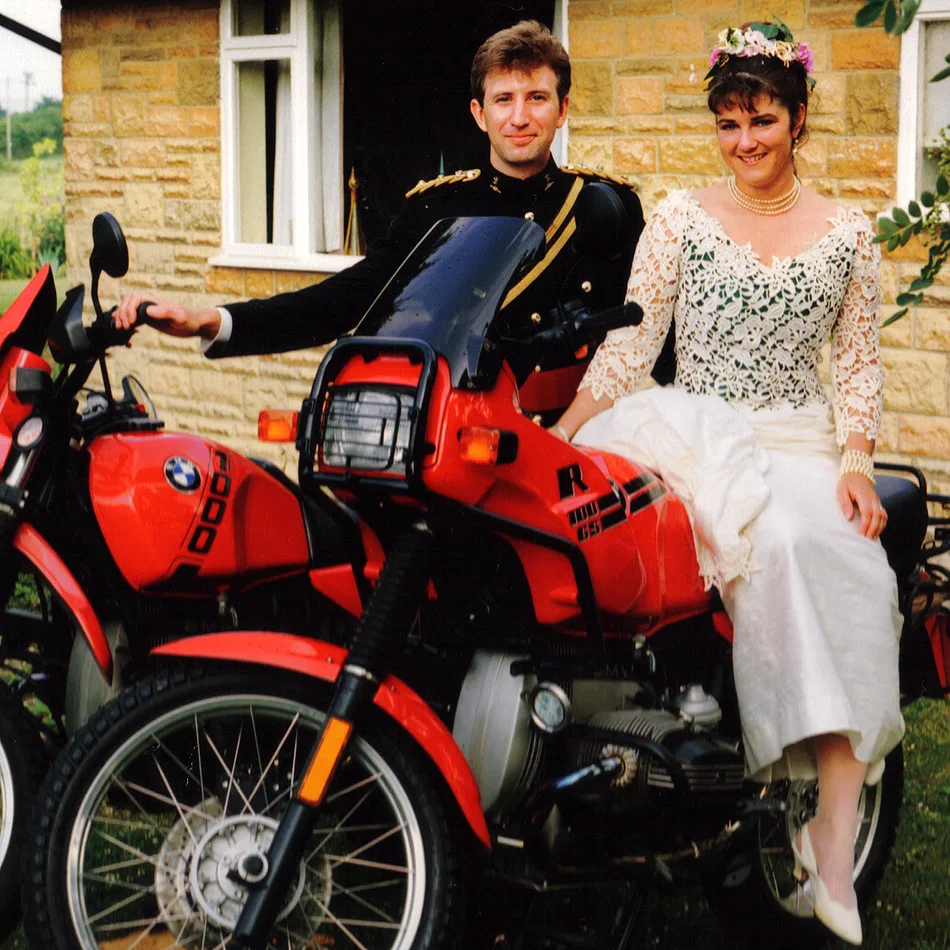
Giles and Annie in 1992 on their wedding day, sitting on the bikes destined to criss-cross the continent

The rhythm of the road
On 32-year-old bikes – the same they used for their first trip – their new book takes the reader with Giles and Annie across 10,000 miles and countless borders. From Spain’s parched reservoirs to Italy’s absent harvests, it isn’t just a travel log. It’s real lives, hard land and a centuries-old tradition under threat. Amid the stories of sliding down a mountain in a random ice storm, dribbling cats and a helmet which makes random phone calls, there are the growers and farmers with stories of drought, flood and resilience whose livelihoods depend on groves passed down through generations.
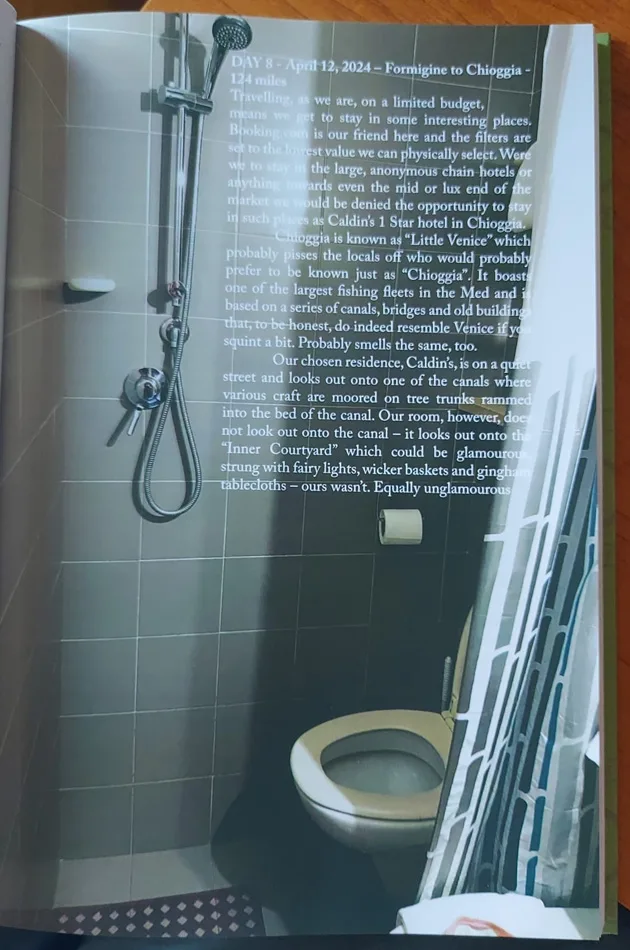
The sheer practical luxury of Caldin’s 1 Star hotel in Chioggia, with the toilet in the shower … it gets a whole page in the book


I wondered how the travelling had compared to their first journey three decades before. ‘After two or three days of getting into the rhythm – getting off, unpacking, packing, getting on – it felt natural to be back on the bikes,’ Annie says.
The rhythm of motorcycle travel has barely changed. Every stop still requires a small ceremony: panniers off, room colonised, socks washed in the sink, a piece of washing line strung across the shower. ‘Everything has a place,’ Giles says. ‘And everything goes back into that place, or you get explosions. True.’
The biggest difference, this time, was that they weren’t camping. The first trip was done with no money, cooking over stoves and pitching tents wherever they landed. Now, with phones and Booking.com, they never planned ahead and just filtered by price (‘30 euros – that’s it, no more’) to find the cheapest rooms available – which they admit led them to some eccentric places.
One in particular has become legendary in their retelling: a one-star hotel in the middle of Chioggia. ‘The toilet was in the shower cubicle,’ Giles says. ‘Directly underneath the shower head. The mark of a gentleman is someone who gets out of the shower to take a pee. The ladies and gentlemen at Calvin’s can stay in the shower with no fear for their reputation. Genius. What a time saver.’
Annie laughs. ‘Even the toilet paper was hung in the cubicle: disastrous if you forgot to remove it before turning the shower on!’.’
Riding itself was harder now. The old bikes required real work. ‘They have to be ridden,’ Giles says. ‘You can’t just sit on them, twist and go, like a modern bike.’ And the elements were harsher than memory suggested. Annie recalls watching Giles being blown sideways by a sudden gust in France. ‘It just picked him up and moved him right across the road,’ she says. ‘Thankfully there wasn’t anything coming the other way … if it were me, I would have been off.
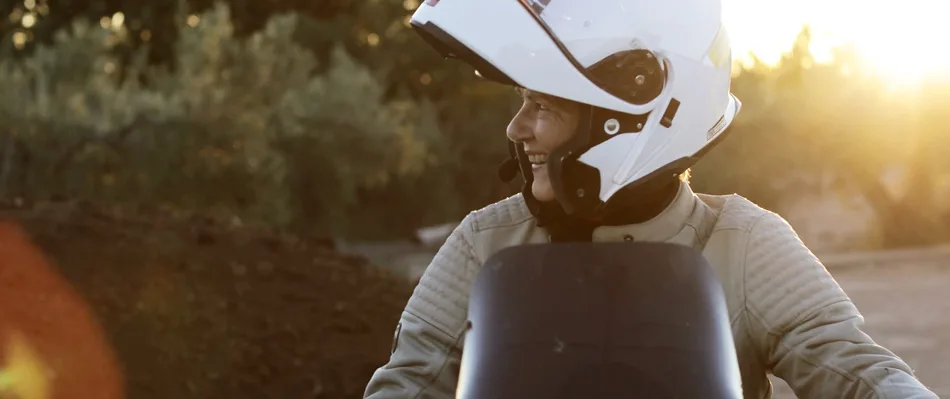
‘I just sailed straight past him,’ Annie says. ‘It was so steep that if I put a foot down I’d have gone over. But the road just kept going up and up.’
Giles chips in: ‘All I heard was “I can’t stop! I-can’t-stop-I-can’t-stop! I CAN’T STOP!” as she shot past me.’


‘We also had to be sure to stop on flat ground. Giles can put both feet down and support his bike, but I can only properly reach the ground on one side at a time: on a hill, I would topple straight over.
‘There was one occasion where Giles had booked a room in Croatia without realising it sat halfway up an alarmingly steep hill…’ Giles seamlessly picks up the story: ‘I was riding up the road towards it, thinking, oh, this is actually really quite steep,’ he says. ‘Finally, it came into view, and I pulled into the drive and stopped.’
Annie did not.
‘I just sailed straight past him,’ she says. ‘It was so steep that if I put a foot down I’d have gone over. But the road just kept going up and up.’
Giles chips in: ‘All I heard was “I can’t stop! I-can’t-stop-I-can’t-stop! I CAN’T STOP!” as she shot past me at a hefty speed.’
‘I ended up on a bit of waste ground right at the top of the hill,’ Annie says. ‘Giggling helplessly out of fear.’
Giles had to park his own bike, run up the hill and help her peel herself off the seat. They walked the bike back down together. It’s typical of the second trip, they say: absurd in places, unforgettable in others, the kind of moment that would have been disastrous if they hadn’t found it deeply funny.
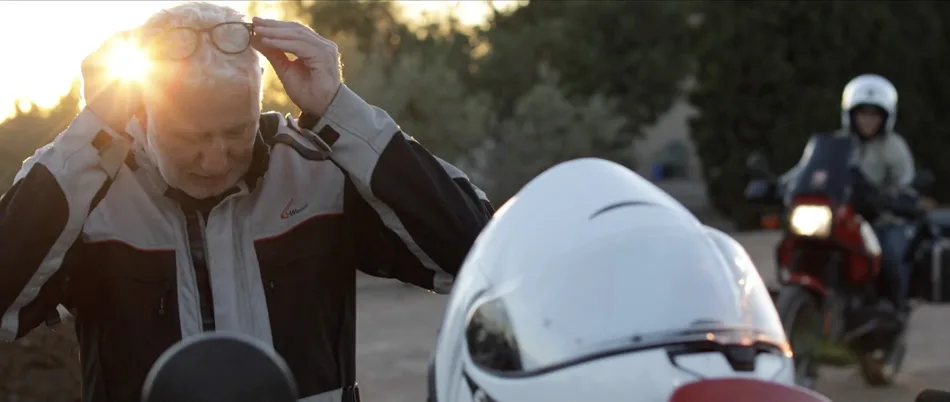
Giles and his ill-fated glasses

Abandoned groves
Their journey wasn’t all comedy, however. The whole purpose of the trip was to see how the olive-growing culture is changing. What they found was complex.
Everywhere they went, people told the same story. ‘Everyone said the weather patterns were changing – there’s no such thing as seasons anymore,’ Giles says. In Sicily they met farmers who only get water in the groves for an hour a week. ‘And they never know when it’s coming,’ says Annie. ‘So the manager sits in the grove waiting for the phone call.’
While some centuries-old groves are being abandoned, others are finding new life as community orchards. In Spain they visited the World Olive Bank in Córdoba, where scientists are working with more than a thousand olive varieties to breed trees that can survive harsher conditions. ‘It was a really good piece of work,’ Giles says. ‘A huge positive in what was a rather bleak scene. Thank God for those people.’
The book – self-published ‘because Giles was impatient’ – collects the day-by-day accounts they wrote on the road. ‘They’re completely unedited,’ Giles says. ‘Completely unfiltered. Completely raw. We shoved it all in, warts and all, and just added explanations where necessary.’
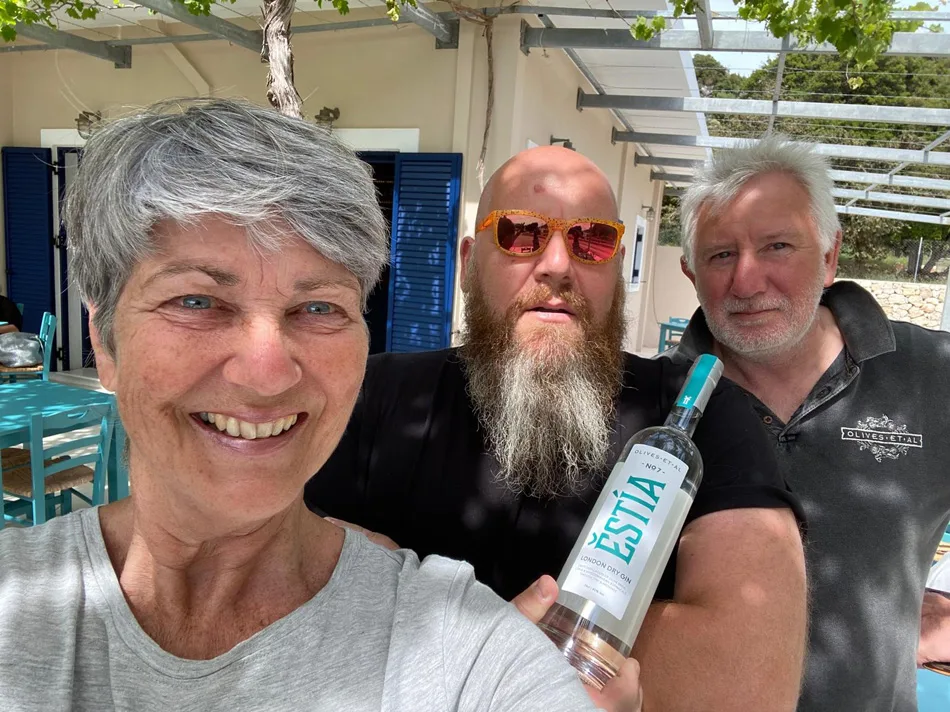
Day 34 – 8th May – Kefalonia-Jerusalem Beach-Ody – 12 miles:
‘If ever you’re passing Ody’s Taverna on Jerusalem Beach, pop in and ask him for a Gin and Tonic with Estía Gin – made from olive brine. All the way from Dorset. By motorcycle courier. Ask him how it got there. It’s almost an interesting tale.


There’s a short prologue about their first trip, the one that birthed Olives Et Al in the early 1990s. Then an introduction explaining why, 30 years later, they decided to do it all again – older, achier, marginally wiser. The rest is pure chronology: where they went, who they met, the roads they followed, the conversations with farmers, millers, hoteliers, and the occasional bemused supermarket cashier.
They filmed it, too – hours of GoPro footage stitched together by a professional videographer in Valencia. Giles remembers sitting in a rain-lashed hotel room in Santander, recording final pieces to camera before sending the clips off to be edited. It was a far cry from their first attempt, when they tried to persuade TV production companies to work with them. ‘We suggested sticking a “helmet-mounted camera” on our heads, and they all laughed in our faces back then at the very idea. A camera just couldn’t be that small, there was no way. Now, the cameras are the size of a matchbox.
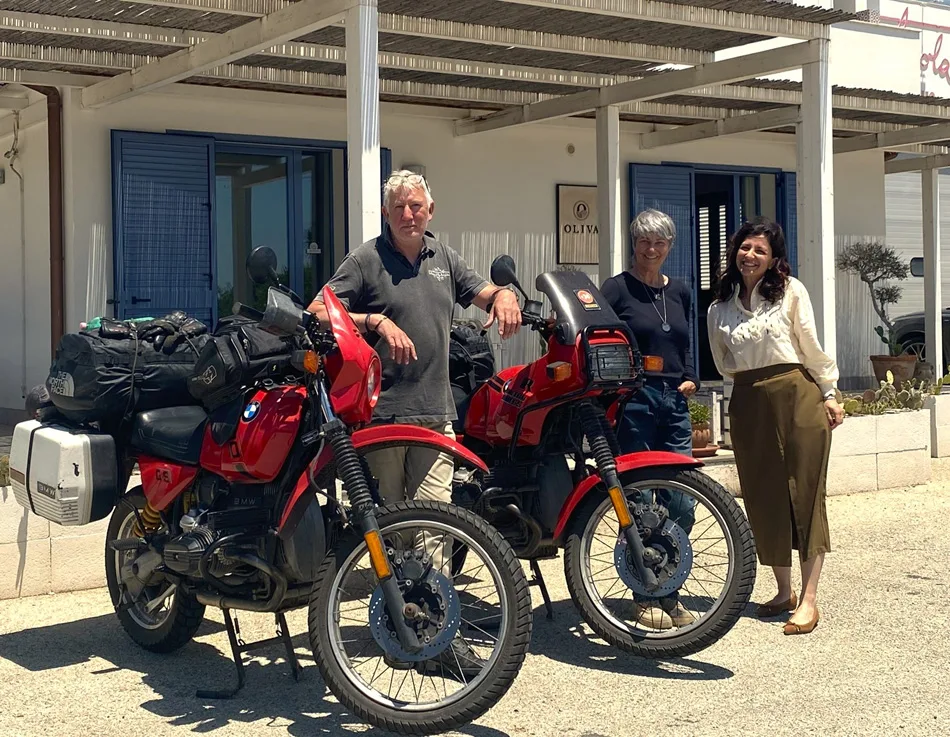
Giles, Annie and the bikes viisiting one of their olive oil producers


The book contains all of it — the hard days, the small revelations, the places you only find by accident. There are glimpses of their younger selves too: the same couple who once got hopelessly lost in Istanbul; the chance encounter with Danish cyclists that somehow repeated itself months later when they met again in the Sinai desert.
What they’ve produced isn’t a polished travelogue. It isn’t curated. It isn’t even gentle. It is, exactly as Giles says, ‘our tale of daily life, seen from the saddles… fruity real-time language and completely unedited writing.’
But it is affectionate, curious, rude, sharp-eyed occasionally sweary and often very funny.
‘It’s just honest,’ Giles says. ‘Probably a great Christmas present for someone you’re not that fond of.
‘Brilliant Christmas present for someone you are fond of, too,’ Annie’s swift to add, vainly attempting to wrestle Giles back on message.
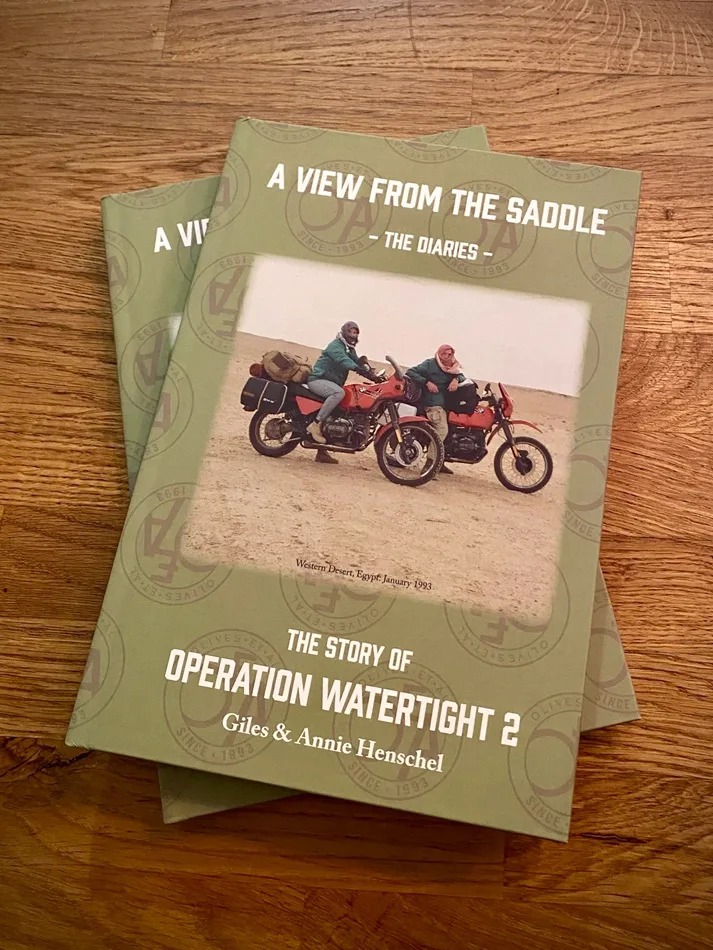
view form the saddle book Giles annie henschel

Potholes and donkeys
One of the questions the couple often get is whether it’s wise to travel long-distance with your spouse once – let alone twice, after 33 years of marriage and 32 years of running a business together. Annie admits she wondered. ‘I did think about that. I did worry. Can we do this again? We work together, live together… but it was just so easy. It was the easiest thing about the whole trip – sharing the whole journey and just talking.’
Giles agrees. ‘The laughter and humour … base, base humour. That’s the best thing about travelling with Annie.’ Then, after a pause: ‘And the comms in our helmets. On the first trip they didn’t exist. This time we could chat as we rode – sometimes warning each other about potholes or donkeys, but mainly just ludicrous conversations.’
‘Giles would narrate what we saw. A couple of times I was actually crying with laughter,’ says Annie. ‘Couldn’t see the road.’
They grin at each other in a way that tells you the decision to do it again was never really in doubt.
And they’d like to do more – more travel, more writing, more exploring the culture of the olive tree. ‘When people think about Olives Et Al, they assume we’re all about the Mediterranean,’ Giles says. ‘We’re not. We’re about food from wherever the olive tree grows – and that’s Africa, Australia …all over the world.’
For now, though, they’re letting the book speak for the journey: two old bikes, two older riders, 30 years between trips, and a hundred days on the road – full of mishaps, hard miles, and the kind of laughter you only share with the person who’s been in the saddle next to you for half a lifetime.

A View From the Saddle is available from the Olives Et Al shop and website olivesetal.co.uk
Donation boost for mental health charity

0

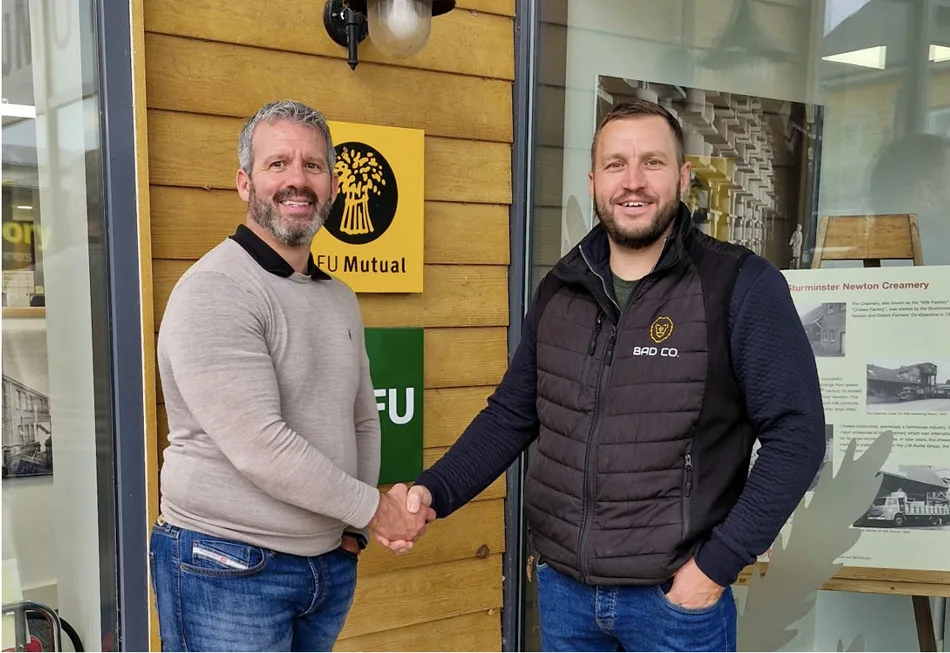
Local charity The Brave and Determined (BAD CO) has received a £7,899 donation from NFU Mutual’s national Agency Giving Fund, thanks to a nomination by the insurer’s North Dorset team.

Local NFU Mutual agent Justin Pinder (left) with BAD CO’s chair Adam Harvey

The funding will support the charity’s plans to create a community mental health and wellbeing hub in North Dorset, and help part-fund a new mental health event focused on the farming community.
Adam Harvey, chair of trustees and co-founder of The Brave and Determined, said: ‘Donations like this mean the absolute world to our young charity. They help open doors that may otherwise have remained closed.’
Now in its sixth year, NFU Mutual’s Agency Giving Fund forms part of the company’s £4 million pledge to support local and national frontline charities in 2025. Justin Pinder, NFU Mutual Agent, said: ‘The whole team at the NFU Mutual North Dorset Agency felt that BAD CO was a very deserving cause, and we’re proud to have nominated a local charity that provides essential services to people in our community.’

sponsored by Wessex Internet

Hub Manager | The Vale Family Hub Sturminster Newton

0

Location: Sturminster Newton, North Dorset

Contract: Part-time 25 hours per week

Salary: £26,071.40 to £31,285.68 (£20 to £24 per hour)

Looking for a role where you can make a real difference in your community? The Vale Family Hub is on the lookout for a part-time Manager to help run our Hub, Café, and Food Pantry.

You’ll be the friendly face keeping everything running smoothly – from supporting staff and volunteers, to making sure families feel welcome to overseeing budgets and community events.  It’s a hands-on role with plenty of variety: one day you might be organising children’s activities, the next you’re making sure the café is serving wholesome meals or helping with fundraising ideas.

What we’re after:

• ​A compassionate and inspiring leader who loves supporting people

• ​Organised, adaptable, and great at problem-solving

• ​Computer tech-savvy with attention to detail & governance

• ​Experience in managing staff and delivering excellent service

• ​Someone reliable, team-focused, and ready to get stuck in

Why Join Us?

• ​Be part of a project that makes a real difference to families and the community in North Dorset

• ​Flexible part-time hours to fit around your life

• ​A supportive team and a role full of variety

• ​Competitive salary depending on experience

Ready to Apply?

If you’re passionate about people, community, and creating a welcoming space, we’d love to hear from you!  

Informal discussions and visits are most welcome, just give our Chair of Trustees, Jane a call on 07469 894833.

Apply today and help us make the Family Hub & Welcome Café the warmest spot in Dorset.

Applications can be made via a submission of a CV and cover letter to [email protected]

Youth cast delivers near sell-out success as Annie Jr. takes over Shaftesbury Arts Centre

0

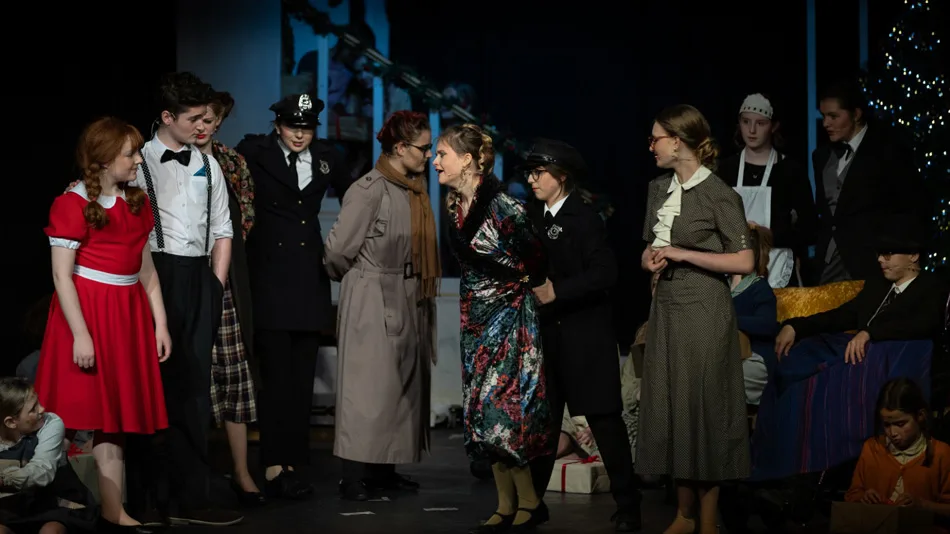
The Music & Drama Group’s Youth Theatre has rounded off a highly successful run of Annie Jr. at Shaftesbury Arts Centre, drawing almost full houses across four performances and showcasing the strength of young local talent. Staged from 21st–23rd November, the production sold 97 percent of available tickets and drew warm praise from audiences throughout the weekend.


A cast of 45 performers aged seven to 17 led the show, presenting a lively, modern interpretation of the much-loved musical.
The creative team incorporated street dance elements and Stomp-inspired percussion alongside the traditional score, giving the production a contemporary edge while retaining the spirit of the original. Audience members commented on the cast’s confidence and precision, as well as the choreography and musical delivery that underpinned the performance. Several musical numbers proved particular highlights. ‘It’s a Hard-Knock Life’ opened with strong ensemble energy, while ‘Tomorrow’ provided a memorable centrepiece and featured a real-life Sandy on stage. The combination of vocal strength and disciplined movement brought repeated applause, including standing ovations across the run.

Quite an experience
The atmosphere at the Arts Centre over the three days reflected strong community interest in youth theatre. Families and regular theatre-goers filled the auditorium, with the weekend matinees especially well attended. For many younger children in the audience, it was their first experience of live performance, adding to the sense of occasion around the production.
Director Daniel Cullen said: ‘We couldn’t be prouder of this cast. They’ve worked incredibly hard, supported each other every step of the way, and delivered a show that truly exceeded expectations. To perform to such full, enthusiastic audiences has been a wonderful experience for them all. This was my first time directing a show and it has been a joyous and fulfilling experience.’
The production continues the Youth Theatre’s commitment to offering structured, high-quality performance opportunities for young people, while providing the wider community with accessible, family-friendly theatre.
Many of the cast will now turn their attention to the Arts Centre’s forthcoming pantomime, Alice in Wonderland, which opens on Thursday 22nd January for a two-week run.

Sponsored by Wessex Internet

Relax, recover and reconnect with Sturfit’s new infrared sauna

0

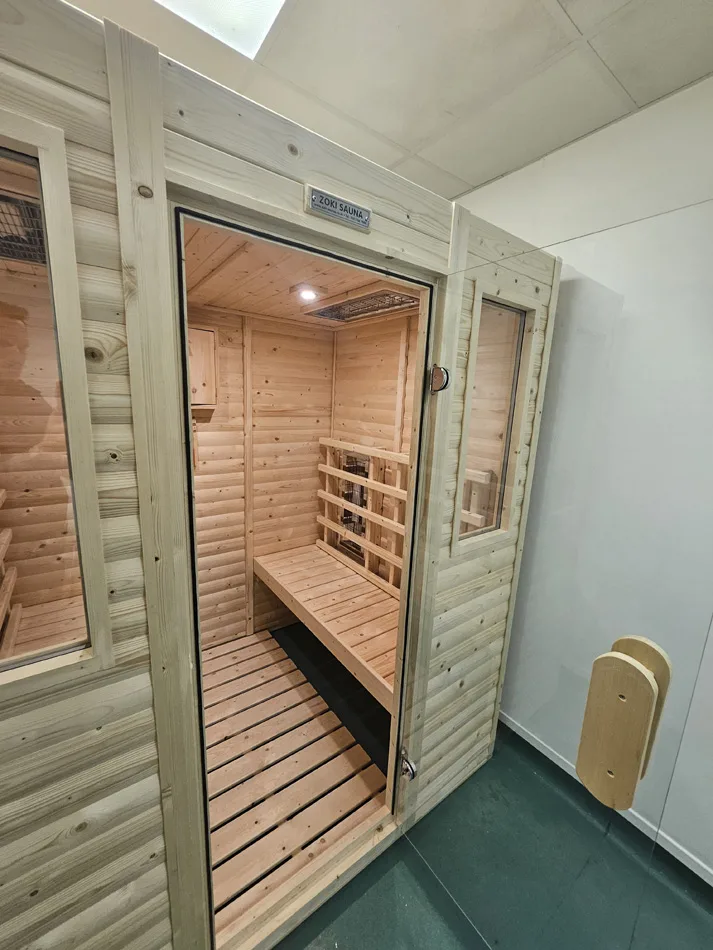
Sturminster Newton Community Leisure Centre, better known as Sturfit, is excited to unveil the latest addition to its community wellbeing offering – a brand new infrared sauna, now available.
Until now, local people have struggled to find any sauna availability without travelling 40 minutes or so. But after listening to feedback from both regular users and the wider community, Sturfit is proud to bring this much-requested facility right to the heart of Sturminster Newton.

Relax, recover and reconnect Sturfit Sauna

What is an infrared sauna?
Unlike traditional saunas that heat the air around you, infrared saunas use radiant heat that warms the body directly. This makes them more energy-efficient, more environmentally friendly, and easier to maintain, while still delivering all the classic benefits of a sauna.

Why try it?
Infrared saunas are known to support a range of health and wellness benefits, including:
Easing joint pain and stiffness
Reducing stress and fatigue
Supporting cardiovascular health
Improving circulation and skin health
Aiding muscle recovery
Promoting better sleep
It’s also a great social option – book with friends and catch up while you relax.

Take your seats
The sauna seats up to four people and can be booked at £5 per person for a 30-minute session. Want the space to yourself or to share privately? Simply book the full session for £20 and divide it between your group. It’s recommended to begin with shorter sessions (10–15 minutes) and build up as you get used to it.
As with all Sturfit facilities, there’s no need for gym membership, just register your details on the booking system.
Contact [email protected] or 01258 471774 to book a sauna session

Sponsored by Wessex Internet

CRT launches festive appeal to protect Britain’s hazel dormice

0

The Countryside Regeneration Trust (CRT) has launched its 2025 Christmas Appeal – and this year, it’s all about helping one of Britain’s most vulnerable – and adorable – native mammals: the hazel dormouse.
The Shelter Belts for Hazel Dormice appeal aims to raise £6,000 to fund vital habitat restoration and install dormouse footprint monitoring tunnels across six CRT farms, including two in Dorset.
Once widespread across England and Wales, hazel dormice have seen a steep decline. According to the National Dormouse Monitoring Programme, populations have dropped by 70% since 2000, and the species is now extinct in 14 counties where it once thrived. Officially classed as ‘vulnerable’ to extinction, recent research suggests dormice should be upgraded to ‘endangered’.
‘Hazel dormice are a powerful bioindicator,’ explains Ruth Moss, the CRT’s conservation and mapping officer. ‘They are sensitive to habitat fragmentation, so when they’re present, it means the surrounding area is supporting a wide range of other sensitive species too – bats, butterflies, amphibians and birds. Protecting dormice helps protect them all.’

Hazel dormice are the only small British mammal with a furry tail.
They are active from late spring to early autumn in the trees and shrubs canopy, hibernating in nests on the ground over winter

Where funds will go
Across the six farms, 250 footprint tunnels will be installed to monitor dormouse presence without disturbing their habitat.
Footprint tunnels are a non-invasive way to detect dormouse activity. As they pass through the tunnel, they leave behind their tiny, distinctive prints, which can then be monitored.
How will they know the footprints are dormice? Hazel dormouse footprints are unique: small, about 1cm wide, with a rounded shape and distinctive triangular pads on their feet. The toe pads look similar to the pieces of pie in the Trivial Pursuit game. Footprints of wood mice and yellow-necked mice are made up of little spots rather than triangles.
Crucially, these surveys don’t require a dormouse licence and can be conducted at scale.
‘We need to raise £1,250 to do this. The rest of the money from our £6,000 appeal will go towards creating a shelter belt at Turnastone Court Farm in Herefordshire to form a woodland corridor habitat for dormice to move between woodland patches. We know they are present in some areas of the farm and want to help them connect to other areas. ‘This is a wonderful opportunity to give something meaningful this Christmas,’ says Ruth. ‘A £5 donation buys a footprint tunnel. Larger donations help create connected habitats, which benefit not only dormice, but also birds, hedgehogs, bats – even the farm’s livestock.’
The farms benefiting from the appeal include
Babers Farm and Bere Marsh Farm in Dorset. There are several ways to support the appeal:
Donate directly online
Buy the CRT’s 2026 wall calendar
Gift a CRT Friendship to someone special
Every donation helps reconnect woodlands, restore wildlife habitats, and protect the hazel dormouse – along with the many other species that rely on the same precious countryside.
thecrt.co.uk

The cost of not reading – and the chance to change it

0

As the nights draw in and we all hunker down, one charity quietly carries on. Read Easy – one of Britain’s leading adult literacy charities – never stops. Jonathan Douglas, CEO of the National Literacy Trust, recently said: ‘Never have charities like Read Easy been needed more.’
He’s not wrong. For decades, successive governments have known that poor literacy carries a high price. The Adult Literacy Trust now estimates it costs the UK economy more than £40 billion every year. A third of businesses say school-leavers’ literacy is not up to scratch – and poor reading skills are affecting productivity. The numbers speak for themselves. According to the National Literacy Trust (2024), one in six adults in England – that’s 18 per cent – struggle to read. And it’s not just about confidence. Pro Bono Economics research shows that 4 million adults could earn up to £1,500 more each year if they improved their reading skills.


Poor literacy means fewer opportunities. Adults who struggle to read are five times more likely to be unemployed, and four times more likely to remain long-term unemployed. If they are in work, it’s often in low-paid, low-skill jobs. That impacts not just the individual, but society – with higher welfare costs, reduced spending power, and fewer people able to respond to change or innovation at work. Employers report more errors, difficulty interpreting written instructions, and costly in-house training. Yet many still don’t know that Read Easy exists.

Help us find them
Read Easy has been providing free, confidential, one-to-one reading coaching for more than 15 years. There are nearly 90 groups across England, including four in Dorset: Blackmore Vale North, South Dorset, Bridport and Poole & Bournemouth.
They welcome any adult who wants to learn – no matter their background, no matter how long ago school was. The team knows how daunting that first step is, and they do everything they possibly can to make it easy.
‘Please help us find these folk,’ asks Lydia Everitt of the Blackmore Vale North group. ‘Give them our phone number or refer them to us with a phone call. Tell them we’ll call them if they prefer.
‘The bravery of that first step is always remarkable, and we commend them all. If you know someone who finds reading really hard, someone who never quite ’got it’ at school, help them to come to us and we can help. Our number is 07748 981935.’
And she says if you want to help, now’s the time. All four Dorset groups need volunteers – especially to help with publicity and social media.

Sponsored by Wessex Internet

Star pianist coming to Tisbury

0

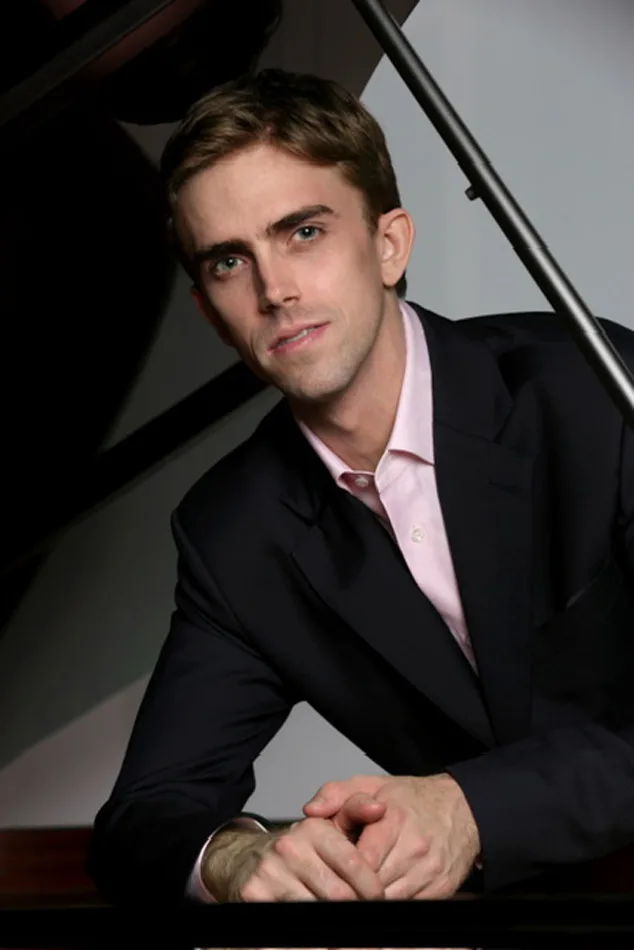
A critically acclaimed young pianist, Reed Tetzloff, will give an afternoon recital, The Romantic Piano, at St John’s Church, Tisbury, on Saturday 13th December at 3.30pm. The concert is raising funds for the church.
Tetzloff came to international attention ten years ago at the XV Tchaikovsky Competition, where he was dubbed ‘the lyric hero of the competition.’
He is a regular performer at large venues around the world – the Tisbury concert will be a rather more intimate affair, and an opportunity for local music-lovers to enjoy South Bank quality piano playing and to meet and chat with the soloist.

Star pianist Reed Tetzloff coming to Tisbury


Reed Tetzloff, described by fellow pianist Richard Goode as ‘a musician of great authority,’ was praised by one reviewer for his ‘richly communicative’ performances, and has been delighting audiences worldwide since making his Lincoln Center (New York) concerto debut in 2012.
He has appeared in major European venues, including the Berlin Philharmonie, the Allerheiligen Hofkirche at the Munich Residenz, Prague’s Rudolfinum, the Great Hall of the Moscow Conservatory, Place Flagey in Brussels, the Théâtre d’Angoulême, and De Singel in Antwerp.
His solo recitals in the United States have been heard from coast to coast. He has performed at many music festivals and in major venues in China and South Korea, and has collaborated as a chamber musician with many ensembles.
His list of recordings is already impressive, including the start of a complete Beethoven concerto cycle, which is due to be issued as a box set before the Beethoven anniversary in 2027.
In December 2025, his recording of the Schumann and Grieg piano concertos with the Luxembourg Philharmonic Orchestra, conducted by Sir John Eliot Gardiner, will be released.
Born in Minneapolis, Reed Tetzloff studied there with Dr Paul Wirth and went on to take bachelor’s and master’s degrees in New York. He has won prizes in several international piano competitions.
There is no advance booking for the Tisbury concert – tickets £15 on the door.

Benches, big print and good loos

0

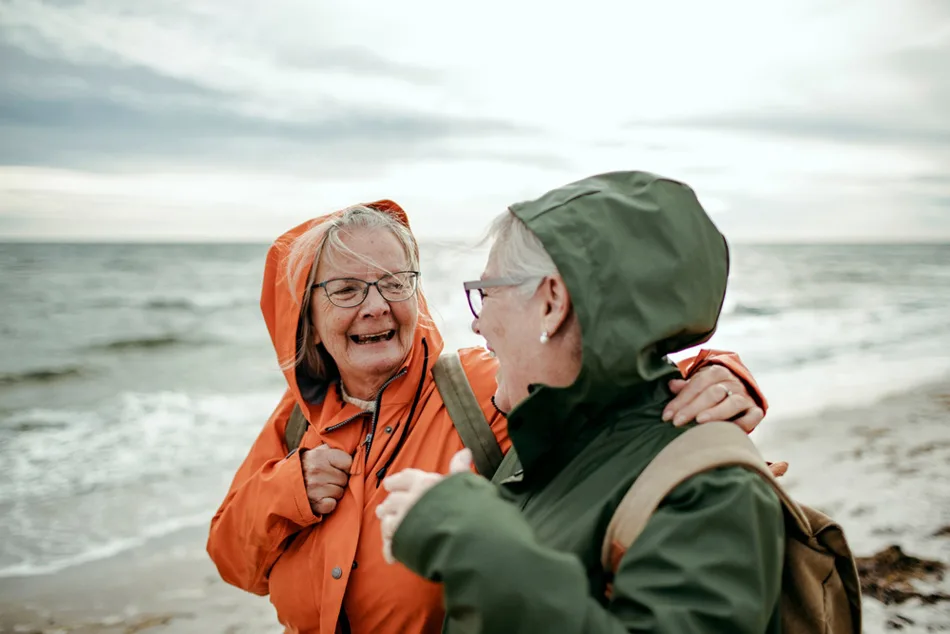
With a third of Dorset residents now over 65, Jon Sloper argues ageing well is about connection, confidence and everyday kindnesses

There is an increasing focus on age in Dorset. Manchester’s average age is 31: Dorset’s is 51. Almost a third (30%) of our county’s residents are older than 65. I think it gives Dorset a unique opportunity to to lead the way in showing how communities can age well – together
As we age, our needs change: the balance of our dependence on each other shifts. The years pass, and some things take more effort and we lean on others a little more. Instead of being the provider of support for others, we are increasingly in need of their support. Sometimes these are transitory changes, others are long-term.


One blunt and rather tired old story is that we become increasingly dependent as we age. Words like ‘frail’ and ‘elderly’ carry cultural connotations of weakness, deficit and incapacity. I don’t think this helps – and I don’t think it is true. At Help and Kindness, I work with people of all ages, including those in their 80s and 90s, and words like weakness and deficit are the last I would use to describe them. They are as bold, fearless, compassionate, self-reliant, kind, engaged and energetic as anyone I’ve met – of any age. They live an interdependence that is as vibrant and fulfilling as anyone could imagine.
I ask them about it often: ‘What has made you who you are now?’ The answers are very human and ordinary: ‘I came from a large family, we had to learn to look after one another from a very young age.’
People often say that their values came from a grandparent or other significant adult who inspired them to look outwards, to serve others, when they were younger, and these values have lasted a lifetime.
They are honest about how life changes, and the need to be happy to receive, as well as give, support while not giving up on things.
Stoicism and gratitude feature highly. They are adults – grounded, wise and quietly practical. Being involved with other people is always mentioned: people from other walks of life and age groups. In their stories they also talk about little (and larger) things that make a difference. Some talk about the importance of their family, others talk about healthcare they’ve received, some reflect on their faith, others mention the home or community they live in. There are also things that help – from apps that make things easier to gadgets that help with hearing or mobility.

A stitch in time
The people that I’ve spoken to don’t need to be wrapped in cotton wool, ‘put out to pasture’, or shut away from society. There is often a list of small things that they need in their lives that make a big difference – a bench half-way to the shops where you can stop to catch your breath. Accessible, clean and safe public toilets. Being able to pick up a neighbour to go into town together. Having large print instructions for things. Someone to sit with the person you care for so you can get to an appointment. Someone stopping to say hello. A phone line to call, or person to speak to, for advice, rather than being expected to find things online. They talk about needing things for a little while, not forever, and things that are a ‘stitch in time’ to help them get back on their feet.
These relatively little things benefit us all and make a huge difference to everyone who finds things difficult from time to time. Whether our needs are associated with age, illness, mental health difficulties, disabilities or other challenges in life, it is the little things which can powerfully change our lives for the better.
When we think about ageing, I think we uncover so many issues that affect us all – along with opportunities that can help us all. That park bench is a great place to socialise. That large print leaflet helps any of us with sight issues. Those ‘good toilets’ are essential to help many people feel confident about visiting places away from home. That phone line or the local library can be used by anyone who isn’t either confident or able to get online.
We can see that interdependence is key. Need and support are not one-way streets. The older people I speak to are also providing support themselves, and are much needed by others – as much, if not more, than the support they receive. We recognised this when we set up Help and Kindness. Our strapline ‘Find help – give help – work together’ expresses this approach.
With so many of us living longer, Dorset has a chance to show what ageing well really looks like – communities that look out for one another, small acts of kindness that keep us connected … and a shared understanding that we all need a little help sometimes.
helpandkindness.co.uk