Home Blog Page 247

PTSD: Real experiences, powerful stories, courageous conversations

0

Dorset Mind is marking PTSD Awareness Day, sharing personal experiences and promoting resources for help and understanding of the disorder

*Trigger warning: This article discusses Post Traumatic Stress Disorder (PTSD) and symptoms of PTSD. Please seek support via the signposting at the end.

On 27th June, Dorset Mind will mark PTSD Awareness Day by helping to increase the understanding around PTSD, sharing powerful real-life experiences of those living with PTSD, and signposting help for those who need it.

What is PTSD?
PTSD is an anxiety disorder that affects any age after witnessing a singular traumatic life-threatening event or serious injury. It can also affect people who have been exposed to continuous unsafe and dangerous circumstances, which is known as Complex PTSD. According to ptsduk.org, 50 per cent of people will experience trauma at some point in their life.

Symptoms of PTSD
Symptoms of PTSD may present as flashbacks or nightmares about the incident, which may lead to avoiding certain people, places and things that remind them of the trauma.
PTSD can heighten emotions such as anger, irritability and hatred. It can present itself in many ways – these are simply the most common symptoms.

Lived experience
A former Dorset Mind participant, who wishes to remain anonymous, shares their experience:
‘I feel like my brain’s working overtime, trying to block out negative memories. I detach myself from those thoughts because I don’t recognise who I am now as the person who witnessed those events.
I’ve had therapy, which has helped, but there are certain memories locked off in my brain. I get very confused when I try to recall events, I can’t retell my story fully without feeling like I’m exaggerating or lying.
‘I feel in a safe space now, where I am a lot happier. However, when I’m exposed to certain triggers – in films, books or hearing others’ shared experiences – I can feel extremely uncomfortable and suddenly emotional, to the point I’ve found myself shaking and crying, but unable to explain why.
‘I feel like I’ve created an exaggerated lie in my head, like I’ll never truly be able to understand what happened, so I find it best to detach myself to keep going.
As an adult, I have developed a better understanding of what is right and wrong and am re-learning to trust myself.
It has affected my relationships, but I am feeling more confident in making decisions based on protecting my own wellbeing.’

Supporting someone with PTSD
It’s important for people who have experienced trauma to feel they are listened to and supported. It may take time for someone with PTSD to feel comfortable seeking help or talking about things. Simply give them time to talk at their own pace and the power to decide who to confide in.
Remember, it may not always be obvious that someone is living with these issues. They may not even be aware themselves, but may still experience some of the symptoms above.
Courageous conversations
On 16th June, Dorset Mind will shine a light on the impacts of trauma and living with PTSD in its FREE community conference at Dorchester Community Church from 11am to 2pm.
The charity invites adults aged 18 and over to join in an interactive session of education and workshops, delivered by expert trainers and carefully selected guests.
Click the link to register to attend:
https://bit.ly/DMConfPTSD

Additional support
Visit dorsetmind.uk for 1-2-1 and group mental health support
Visit ptsd.org for information about PTSD and C-PTSD
Call Anxiety UK’s national helpline on 03444 775 774 (Mon-Fri 9:30 to 5:30)
Call Samaritans for free 24/7 emotional support on 116 123
Call 999 if someone is in immediate danger.

Brave the biennials

0

Once she was afraid of them – but now, flower farmer Charlotte Tombs couldn’t be without her Midsummer Day sowing of biennials

One of Charlotte’s biennial posies, with sweet Williams and sweet rocket.
Images: Charlotte Tombs

Biennials. I’ll admit I rather shied away from them, mostly because I didn’t really know what they were, if I’m totally honest. The definition of a biennial is ‘any herbaceous flowering plant that completes its life cycle in two growing seasons. During the first growing season, biennials produce roots, stems, and leaves. During the second growing season, they produce flowers, fruits, and seeds, and then they die’.
Once I’d actually got my head round them, I took the plunge, and now I wouldn’t be without them. Biennials are brilliant! They flower before any of the annuals, so they fill the gap of flowers once the tulips are over.
I sow the seeds on Midsummer Day – if you are kind enough to read my column regularly you will know I am weirdly attached to working around significant dates. Sweet peas are always sown on New Year’s Day and Valentine’s, for instance.
First on my list is the wallflower – please don’t overlook them, they will flower their heads off for you! A simple jam-jar bunch on the kitchen table will lighten your mood on a gloomy March day and the scent of them is amazing, too. Wallflowers have come a long way and some of the newer varieties are well worth growing. Look for the sugar rush series, fire king and also the sunset series; there are some gorgeous colours.
My second choice is honesty (Lunaria annua) –prized for its seed heads, I resist the temptation of picking to wait instead for the glorious papery silver discs that then adorn my Christmas wreaths (or yours if you come to one of my workshops).
Then there is sweet rocket (Hesperis matronalis) – these come in white and purple and will self-seed freely if you are lucky. They do well in dappled shade and smell delicious to boot!
Fourth on my must-grow biennials list are sweet Williams (Dianthus barbatus). So many to choose from, but some of my favourites are Sooty, superbus, albus, and auricula eyed mixed. Again these smell delicious.
Lastly let’s not forget the magnificent foxglove, those high-rise towers of nectar for the bees, with spots to guide the bee in like runways. Who doesn’t love a furry bumblee bottom sticking out of a gently-buzzing foxglove?

Charlotte’s sweet rocket is a favourite, smelling delicious and often self-seeding across the garden

Keep it simple
What’s so brilliant about biennials is their simplicity. Sow the seeds in the summer, pot them on, then just leave them to grow into strong plants. Plant them out in late September or early October where they can establish themselves while the soil is still warm – come the following spring you are rewarded by the most beautiful flowers. They just get on and do their own thing over the winter. Mother Nature is amazing.
I urge you to give a few biennials a try this year. As always if you have any flower questions I’m more than happy to help.
You can find me as @northcombeflowers on Instagram or facebook – and do look out for workshops that I run throughout the year.
PS – did you see that the coronation flowers were supplied by members of Flowers From the Farm? Some were grown here in Dorset, by my lovely friend Katie at Dorset Flower Co.

Get your tickets for the Cheese Festival!

0
image Courtenay Hitchcock

Tickets for the Sturminster Newton Cheese Festival, this year on the 9th and 10th of September, are now on sale. As always, the weekend will feature a wide variety of food and drink from across the West Country, including (you guessed it) the star of the show – cheese!
There will also be the usual array of crafts to tempt you, as well as children’s entertainment, the essential Real Ale & Cider Tent and live bands will be playing throughout the two days.
New for 2023 is a weekend ticket: currently at an early bird price of £12 (only available in advance).
Early Bird prices are now on offer on all tickets prices – and don’t forget children aged 15 and under go free!
Tickets and more information at cheesefestival.co.uk

It’s Open Farm Sunday!

0

There’s still time to find the nearest farm to you that has thrown open its gates (and fields and barns and tractor sheds…). Check the LEAF website here to find your nearest open day, grab a pair of wellies (and maybe an umbrella) and take the kids for a fun couple of hours exploring the farm.

We opted for Rawston Farm – our nearest, and also home to our farming columnist James Cossins (and our other farming columnist George Hosford was driving the tractor for the trailer rides!), plus the Love Local, trust local awards which we’re so proud to be part of.

Barbara & James Cossins, farmers of Rawston Farm and the force behind the Love Local, Trust Local scheme.

It was our first time at an Open Farm, and we were amazed at just how brilliant it was – there was so much going on! Even as you park in the field there is an array of enormous farm machinery to get up close to, and tractors bimbling up and down offering rides in the cab.

Inside the barns there were stands from local food and drink producers – it was great to catch up with Meggy Moos Dairy (the milkshakes!) Book & Bucket Cheese, Little Waddon Vineyard, Barbara’s Kitchen (the chilli jam!!), and Tarrant Valley Honey. We also chatted to the Damory Vets team, spent quite some time gazing in adoration at a litter of three week old Oxford Sandy and Black Piglets with their mum Peaches as we caught up with breeder Lillie Smith, who we featured back in April.

The tractor & trailer rides are not to be missed, as they include a fascinating introduction to the farm from knowledgeable and interesting ‘tour guides’.

Since the first Open Farm Sunday in 2006, over 1,500 farmers across the UK have opened their gates and, collectively, have welcomed 1.8 million people onto their farm for one Sunday each year.

Each LEAF Open Farm Sun­day event is unique. Activ­i­ties range from machin­ery dis­plays and trac­tor & trail­er rides through to demon­stra­tions, nature walks and much more. At each farm, visitors are given the chance to discover what it means to be a farmer, how food is produced and how the countryside is managed. Simply check the website and find your nearest event – farmsunday.org/visit-a-farm

Trials, tribulations, and triumphs: a Rawston Farm update

0

James Cossins has had a mixed month, with personal loss and the continuing TB testing saga – but silaging is underway, finally

Silage making at Rawston in the late 1960s

It has been a busy time at Rawston Farm over the last few weeks. Firstly we had our dreaded 60 day TB test on all our cattle. We spent nearly four days testing, delaying the turn-out to grass of the young cattle in order to save the time getting them all back in from fields again.
We ended up with a very disappointing result; two reactors and eight inconclusive reactors. The reactors were duly sent to the abattoir, and the results came back as ‘no visible lesions’, which means they probably didn’t have TB, but may have been exposed to it.
We made the difficult decision to also send the inconclusive reactors to the abattoir under a special Animal Health licence – at our expense – as we felt it was unlikely that all of them would come clear at the next test, so would have to go to the abattoir anyway. The result from the inconclusive cattle was again ‘no visible lesions’ which now hopefully means the next 60-day test may go clear.
We have spent hours and hours testing cattle, without finding definitive positive results. I will be relieved when a cattle vaccine becomes available and we can get back to some sort of normality, selling again on the open market.

Dear Cassie
I also had a very distressing time personally with my beloved nine-year-old golden retriever dog Cassie. She suddenly became rather ill and after our local vets had examined her, it was decided to take her to the specialist vets at Ringwood. A flurry of scans found that she had fluid around the heart and a possible tumour on the heart too. The choice was to either carry out major heart surgery or have her put to sleep there.
As any pet owner will agree you need a little bit of time to make that decision. I didn’t want to put her through major surgery, even though I had insurance to cover some of the cost, so I brought her home. The next day she initially appeared fine, but by mid morning she really wasn’t well again. I took the very difficult decision to take her into our local vets and have her put to sleep.
I cannot praise the professionalism of the Damory vet enough, being nearly as upset as I was.
You do wonder sometimes why we keep pets if we have to go through this experience – but the companionship and joy they give us I think far outweighs the sadness at the end.

Too wet, too dry
On a more cheerful note, we have been busy silage-making for our cows’ winter feed. After the wet spring, May has been much drier and we have managed to make some quality (hopefully) silage – and a reasonable quantity. The majority of our combinable crops look well, except for any that were drilled into poor seedbeds. The spring crops sown in April have struggled; the ground was probably too wet and cold at the time and now the soil has dried out too quickly.
Another issue we have found in one or two fields is black-grass, a nasty weed which can impact seriously on crop yields. We are convinced that it must have come from contractors’ balers which had potentially not been properly cleaned when coming from other farms before baling our straw.
There are various ways of controlling black-grass by chemicals, cultivations or changing the type of crop grown, but they have varying degrees of success. We have learned that we must be more vigilant over machines coming onto the farm.

James Cossins’ beautiful retriever Cassie

In other news …
We are hosting Open Farm Sunday on 11th June – the last time was five years ago, and we had more than 2,000 people attending! We hope all vistors will have an enjoyable day out on the farm – in advance the whole Cossins family would like to thank all the local farmers and farm staff who are giving up their Sunday to support both us and our industry.
Finally, after a very tense football season, it is great that AFC Bournemouth are still in the Premiership. We now look forward to next season!

Sponsored by Trethowans – Law as it should be

The Father of Chemistry | Looking back

0

The man who gave us Boyle’s Law was also Stalbridge’s Lord of the Manor and carried out his early experiments in Dorset, reports Roger Guttridge

Robert Boyle – Stalbridge’s Lord of the Manor, and the father of chemistry

Famous the world over as the Father of Chemistry, Robert Boyle is also Stalbridge’s most famous former resident. The man who gave his name to Boyle’s Law – after spotting that the volume of gas varies inversely to its pressure – carried out his early experiments in Stalbridge almost 400 years ago. He was also the village’s Lord of the Manor for almost half-a-century.
The Boyle connection with Stalbridge began through Robert’s father, Richard.
As a young man, Richard Boyle left his job as a lawyer’s clerk in London to try his luck in Ireland.
After arriving in Dublin with £27, he married heiress Joan Apsley. When she died in childbirth in 1599, he married Catherine Fenton, daughter of the Secretary of State for Ireland. Richard was soon one of Ireland’s richest men, becoming Earl of Cork in 1620 and Lord Treasurer in 1631.

Avoiding the temptations of idleness
Robert, born at Lismore Castle in 1627, was the 14th of Richard and Catherine’s 15 children.
Believing his offspring should not be indulged, the Earl farmed Robert out to a country nurse to sample a ‘coarse but cleanly diet and the usual passions of the air’. By the time the five-year old Robert returned to Lismore, his mother had died. He was taught reading, writing, Latin and French before being despatched to Eton.
In 1636, the Earl bought the run-down Stalbridge Manor House, probably as a potential retreat from escalating troubles in Ireland, and promptly began an ambitious restoration programme.
Robert and his elder brother Francis were withdrawn from Eton and moved to Stalbridge, where Robert lodged with Parson Douch in order to continue his education and avoid the serious ‘temptations of idleness’.
His lessons included music – only to be told by his teacher that he had a ‘bad voice’. He also wrote poetry in English, French and Latin but was clearly not impressed with his own efforts, as he marked his 21st birthday by burning the lot.
When plans to support King Charles I in a Scottish expedition in 1639 fell through, Robert’s father finally gave him the key to ‘all his garden and orchards’ at Stalbridge. Robert believed the Earl was encouraging him to be temperate by ‘freely giving me the opportunity to be otherwise’.
The Earl need not have worried.
Robert had little interest in wining and dining, preferring to study or walk for hours in the fields, where he was able to ‘think at random’ and indulge his imagination.

Stalbridge House in the time of Robert Boyle

King Charles I in Mr Reeve’s field At their father’s insistence, Robert and the newlywed Francis were sent on a European tour. By the time they returned in 1644, the Earl had died, Robert had succeeded him as Lord of the Manor, Stalbridge House had fallen into disrepair again and North Dorset was engulfed by the Civil War.On 8 October 1644, the ill-fated Charles I and his troops spent the night at Stalbridge House on their way from Sherborne to Blandford, breaking their journey again at Sturminster Newton, where the King dined in Mr Reeve’s field.Robert was probably not at home to welcome the King, preferring to spend his first months back in England with his favourite sister, Katherine, Lady Ranelagh, in London.After a visit to Stalbridge in 1646, Robert commented, with ironic humour, that the area was ‘infected with three epidemical diseases’ – the plague, ‘which now begins to revive again at Bristol and Yeovil…’, ‘fits of the committee’ and ‘consumption of the purse’.‘The committee’ is thought to refer to Parliament’s Standing Committee, set up that same year to sequester the estates of royalist sympathisers until fines were paid.Despite the turmoil, Robert nurtured plans for a chemistry lab at Stalbridge and wrote in the same year to Lady Ranelagh of his enforced idleness due to the non-arrival of the wagon bringing his ‘Vulcanian implements’.When his ‘great earthen furnace’ finally turned up, it was broken into pieces, and Robert complained to Katherine that ‘all the fine experiments, and castles in the air that I had built upon its safe arrival, have felt the fate of their foundation’.He added: ‘I see I am not designed to the finding of the philosopher’s stone. I have been so unlucky in my first attempts in chemistry.’However, his pessimism was premature. Just two years later he wrote to his sister: ‘Vulcan has so transformed and bewitched me to make me fancy my laboratory as a kind of Elysium.’During his stays in London and regular visits to Oxford, Robert met most of the great minds of his era, describing them as the ‘Invisible College’. His Oxford friends he called a ’knot of ingenious and free thinkers’.

Drawing of Robert Boyle’s Air Pump, 1661

Duly eaten alive
He moved to Oxford in 1655 and five years later was one of the founders of the illustrious Royal Society. Boyle was a prolific writer on a vast range of subjects, including Dorset Blue Vinny.
Commenting that foreigners were despised for eating insects, he pointed out that Dorset’s blue-veined cheese was ‘crawling with insects bred out of putrefaction’, which were duly eaten alive.
In the modern world, alas, the custom of maturing Blue Vinny in a dung heap has failed to cut the mustard with the food safety people.
They’re no fun!
Boyle also knew people, including ‘some fair ladies’, who drank their own and boys’ urine to prevent scurvy and gout.
Despite being tall and slim, Robert was ‘pale and emaciated’, and suffered health problems throughout his adult life. Physically weak, he had poor eyesight and such a terrible memory that he was ‘often tempted to abandon study in despair’.
He made up for these challenges with a ‘flow of wit’ described as ‘so copious and lively’ that he was the equal of ‘the most celebrated geniuses of the age’.
Some of these geniuses were his friends – such as fellow scientist Sir Isaac Newton, East Knoyle-born architect Sir Christopher Wren, antiquary John Aubrey and diarists Samuel Pepys and John Evelyn.
Robert died in December 1691, just a few days after his beloved sister, Katherine.
Evelyn records his death and funeral in his diary entries for 1st and 6th January 1692, describing him as ‘that pious admirable Christian, excellent philosopher, and my worthy friend, Mr Boyle, aged about 65 – a great loss to all that knew him, and to the public’.
Stalbridge House, which stood far behind the long stone wall we know today, was dismantled in 1822 and the materials sold by auction.

Positivity at the first Farm to Fork Summit

0

The first convention on the UK food supply chain gave some encouraging signals to the industry, says NFU county advisor Gemma Harvey

shutterstock

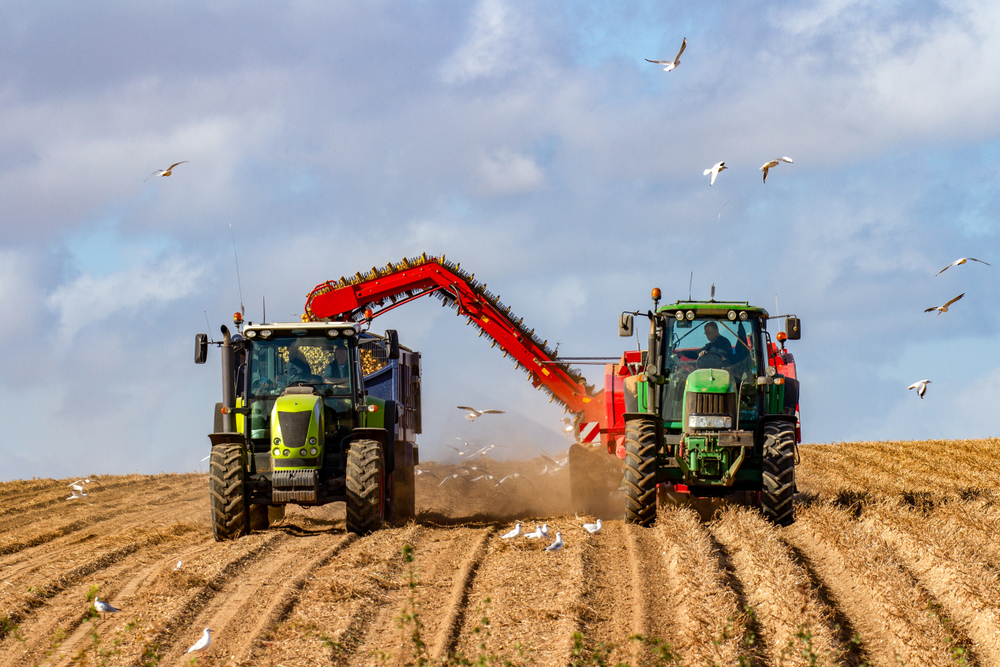
The Farm to Fork Summit on food security, which Prime Minster Rishi Sunak hosted at 10 Downing Street on Tuesday 16th May, marked a significant step in the NFU’s campaign for recognition of the strategic importance of British food and farming.
The very first food summit of its kind was the culmination of more than a year’s work and campaigning by the NFU, who asked the Prime Minister to convene the whole supply chain. Farmers, food producers and some of Britain’s largest supermarkets came together to discuss the vital measures needed to build resilience and transparency quite literally from farm to fork, thereby strengthening productivity.

Serious commitments
NFU President Minette Batters said: ‘I am absolutely delighted that the Prime Minister has delivered on the commitment he made to NFU members last year to host this summit. The number of Cabinet Ministers present shows the ambition for cross-departmental coordination to deliver measures to boost home-grown food production. Many of the farmers and growers I represent will be relieved to see UK food security being taken seriously by the government.’
The summit coincided with several announcements from Government which represent major wins for the NFU:
Reviews into fairness, specifically in the horticulture and egg supply chains
A new bespoke £1m programme to help dairy businesses export
Replacing the retained EU Fruit and Vegetable Producer Organisation Scheme when it closes in 2026
Five additional agri-food and drink attachés who will help spearhead the removal of restrictive market barriers
Making it easier to build new glasshouses through changes to national planning policy
A commitment that the Groceries Code Adjudicator will not be merged with the Competition and Markets Authority, in recognition of its importance in ensuring our food supply chains function as they should
Additional investment of around £20 million to unlock the potential of precision breeding.
Minette said that ‘the announcements made today show a recognition and an understanding of the strategic importance of British food and farming to the nation. They recognise the importance of coordinated action across government to support confidence, investment and growth in British food.
‘What we need now is to build on these announcements. We are calling for a set of core agri-food import standards for trade. While it is pleasing government is looking to maintain self-sufficiency at 60 per cent, we believe there’s an opportunity to produce much more of our own food here. We can and should be more ambitious and look to move beyond this target.
‘Vitally, the Farm to Fork Summit should become an annual event, as our food supply is part of the UK’s national infrastructure and will ensure that, across all parties, food security never drops down the political agenda again.’

Sponsored by Trethowans – Law as it should be

Clayesmore Classic & Supercar Sunday is back!

0

Last year’s inaugural Classic & Supercar Sunday blew everyone’s socks off with 180 drop-dead gorgeous classic and supercars exhibiting in the blazing sunshine at Clayesmore School.

‘Last year we had a Ferrari F40, offering the rare opportunity to view such an iconic car – we were really happy that the owner even allowed the public to sit inside!’ says organiser Zander Miller. ‘We also had an Alfa Romeo GTAM (one of only 500 examples in the world), and a Ferrari SF90 Stradale, Ferrari’s latest and greatest hybrid technology which reaches more than 200mph.
‘Meridian Modena, the local Ferrari dealership, brought its brand new Ferrari 296 GTB demonstrator car.

‘And then the classic cars ranged from 1920 to 1997; we had an Aston Martin DB2 and an Aston Martin DB11 – the two are 70 years apart!’
Over 1,500 guests strolled the grounds enjoying cars, delicious street food, stunning cocktails and, of course, brilliant music! It was a great vibe, and this year is set to be bigger and better … more exhibitors, more cars attending and a packed programme of activities.

There well be two scheduled ‘REV OFFs’ – everyone’s there to hear the roar of the visiting supers, after all! There will also be guest speakers and judges to help award the Best Club Stand, the People’s Choice Award and more. It’s a family event with plenty of fun for the kids too!
Buy tickets here – bit.ly/classicsupercar2023

  • The organisers are keen for classic & supercar owners and club to sign up to exhibit. Please register here:
    apertaevents.co.uk/paddock

BLANDFORD’S HIDDEN GARDENS

0

Visit some hidden gardens in our unique Georgian town

SUNDAY 25th JUNE 2023

11am -5 pm

£5 for all gardens

Tickets available two weeks before the event from the
BLANDFORD INFORMATION CENTRE & BLANDFORD TOWN MUSEUM