The Wessex teams arranged a makeover for the communal garden of the Nadder Close community as part of its wider Social Value Charter.
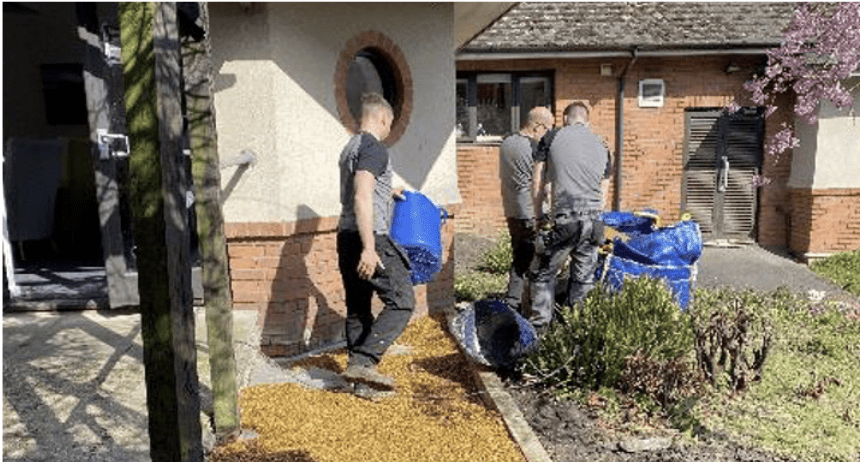
Nadder Close is located in the centre of Tisbury and comprises 34 apartments and eight bungalows for social rent and has a large garden and patio areas for all the residents to enjoy. Built in 1992, Nadder Close celebrates its 30-year anniversary this summer. To celebrate, the Wessex teams turned their hands to gardening to refresh the communal areas. Many of the residents’ apartments face onto the gardens, with the focal point a 30 year old wisteria which provides a spring display of colour and scent, as well as shade in the warmer months. Having notified them about the Nadder Close project, Edmundson Electricals very kindly supplied all the materials needed for the garden refresh. Over the course of three days, the Wessex team jet washed the patios, mowed the gardens, weeded and planted new flowerbeds and pruned back the wisteria. The team also undertook structural work to stabilise the pergola supporting the wisteria, replaced and painted hand rails and rebuilt damaged raised flowerbeds. Lastly, the teams created a new gravelled terrace with seating in a sunny spot overlooking the new flowerbeds. Jamie Robinson, Operations Manager, Wessex Electricals said “The team have got to know the residents over the years, and wanted to help to refresh the garden for them.” Nadder Close resident Maureen came to oversee proceedings, including the pruning of the wisteria, and offered wise advice, as well as cake for the team. She said “It’s nice to have them here helping out, the gardens look amazing, and I am looking forward to sitting on the new bench in the summer. We are all really grateful.”
We’re dealing with beetle, unseasonal weather and confusing, costly messages from the EA, argues Dorset NFU County Chair George Hosford.
Where have all the larvae gone? There we were, a few days ago, hunting around in flowering rape for evidence that there had been any flea beetle attack this season. Eventually we found one larva embedded in a stem – far short of anything to worry about. Since the Europe-wide ban on neonicotinoid seed treatments in 2013 we have tried countless methods to outwit the little devils which have decimated the UK rape crop over recent years. The flea beetle is a formidable pest. The adult will attack the tiny emerging plants shortly after sowing in autumn, and on many of the plants that survive, the beetle lays eggs, which eventually hatch and then attempt to burrow into the stems as the plant grows in late autumn and into early spring. They can weaken plants considerably, and when you think you have escaped the autumn onslaught, you find patches of plants in spring where they have given up, having been hollowed out. We have tried applying smelly manures, sown companion crops to distract them, sown early, even grazed the rape off with sheep in the hope that the sheep actually eat the larvae in the plants. Overall larvae numbers on this farm were lower in 2021 than 2020, and appear to be lower still this year, the fourth since forsaking insecticides. Can we dare to believe that beneficial predators are making a comeback, now we aren’t repeatedly killing them off with increasingly unsuccessful chemical attempts to control the flea beetle?
We know the drill In a vain hope to encourage a bit of rain in May, is it appropriate as I write this on the 23rd of April, to have a good moan about the very dry, cool and windy, weather? Our spring barley is seriously struggling, it was sown into rapidly drying seedbeds, which in spite of our intentions to direct drill, had to be cultivated to make a half decent seedbed. A return to the field with a heavy flat roll this week has been required to try to encourage some late germination where there are gaps, and to conserve what little moisture is there. The spring beans, usually more sensitive to lack of moisture than most crops, are holding out at he moment. We managed to direct drill some of them into the kinder soils, and in two small fields we are using them as a break with which to improve some worn-out permanent pasture. Direct sowing the beans into the turf has so far worked well: leatherjackets, that would otherwise have demolished a cereal crop, are not interested in beans, and will have hopefully hatched and left the field before we sow a wheat crop in the autumn, and then establish a long term herbal mixture in the following year. Digging down below the turf finds surprisingly moist soil, protected from the wind and sun by the old turf.
A urea heap? Defra have announced some long-awaited answers for farmers recently: firstly, their response to the urea fertiliser consultation that they issued a year ago, which had left farmers who are accustomed to using urea fertiliser, with no idea whether they could buy, let alone use any urea this year. The decision means that previously announced restrictions on the use of urea are being postponed whilst the industry tries to cope with the enormous rise in fertiliser prices that has occurred in the last few months. Urea has traditionally been used as a cheaper form of fertiliser than the more widely-used ammonium nitrate, but a major drawback is that it leads to the emission of more ammonia into the atmosphere than AN. Both contribute to global warming, but urea is worse. The decision seems likely, in the longer term, to lead to a regime which will restrict urea use, force farmers to adjust the timing of applications and to only apply it in conjunction with an inhibitor, to help reduce emissions.
In 2018 the Environment Agency (EA) announced a clampdown on manure spreading in the autumn. The implication was that farmers who produce organic manures would not be able to apply them to any more than a narrow range of permitted crops in autumn – the time when traditionally many millions of tons of manures are applied to newly sown crops.
Costly storage needed? The second announcement relates to the ‘Farming Rules for Water’, devised and policed by the Environment Agency (EA), which aims to control pollution from farmland to waterways and ground water. These rules have been contentious from their inception in 2018, when the Environment Agency (EA) announced a clampdown on manure spreading in the autumn. The implication was that farmers who produce organic manures would not be able to apply them to any more than a narrow range of permitted crops in autumn – the time when traditionally many millions of tons of manures are applied to newly sown crops. Lots more storage capacity would have to be built to carry it safely through until it could legally be applied in the spring. There are many reasons why this draconian ruling didn’t make sense, and I plan to return to this subject soon, but to put it concisely, DEFRA have asked the EA to look again at this, and work more closely with farmers to make the system more sensible. No farmers intentionally allow their manures to get into water, they are far too valuable to do that. A confrontational approach helps no-one, and I very much hope now that we can move forward with an environmentally responsible, and economically justifiable blend of common sense and practical regulation.
Once again, FORM brings a world-class exhibition of inspiring contemporary sculpture to Dorset, says Edwina Baines. FORM runs until May 29th.
Greer, Guardian Angel by Ed Elliott. Image Edwina Baines
The FORM exhibition returns to the stunning setting of Simon and Monique Gudgeon’s Sculpture by the Lakes, Pallington, near Dorchester until the end of the month, to coincide with Dorset Art Weeks. This year it is more spell-binding than ever, with work from more than prestigious artists. The exhibition takes place around the 26 acre garden and lakes for the larger, monumental pieces – and smaller works are on display in the Gallery and in the Sculpture Courtyard.
Cheetah by Gill Parker – Image Edwina Baines
I was lucky enough to visit on a lovely sunny day and no sooner had I parked than I was faced with the arresting cast bronze ‘Greer Guardian Angel’ figure by Ed Elliott. Greer means ‘alert, watchful’ and the sculpture has been cleverly placed at the edge of a reflecting pool feature to create a brooding image. The piece received the award for ‘Sculpture of the Year 2020’ at the Cotswold Sculpture Park. Ed Elliott is an award-winning sculptor specialising in large scale figurative pieces, who has received national acclaim for his innovative and emotive work in his distinctive style. Revived with a coffee and Danish pastry from the Artisan’s Pantry and a wander around the Bazaar, I aimed for the new ‘Gallery by the Lakes’ and was immediately confronted by Heather Jansch’s life-size driftwood horse ‘The Young Arabian’ and a bronze driftwood horse’s head ‘Shaker’. Heather, who sadly died last year, was a renowned British sculptor whose lifelong passion was to achieve mastery of the equine form.
Beautiful ‘Mouse in a Pod’ Some of my favourite pieces in the Gallery were by Adam Binder. I especially loved his ‘Mouse in a Pod’. The little mouse could be removed from his pea pod to nestle in one’s hand! Adam is one of Britain’s leading wildlife sculptors, whose signature fluid style of simple lines and flowing forms depicts both movement and emotion that beautifully captures the essence of his subjects. He has said ‘Nature is my passion and my constant distraction.’ There is an interesting story behind Nadine Collinson’s ‘To The Stars!’; the maquette for the full-size sculpture installed at the Silverlake Holiday Estate in Warmwell. Simon is soon hoping to install one of the editions on the lake at Pallington. Silverlake was a former RAF base and the piece was created as a homage to the RAF and the Spitfire, as well as a celebration of the local birdlife. The Spitfire’s acrobatic performance is represented in the looping trails of the birds which create a ring reflecting the RAF badge. As I made my way into the garden and towards the lakes I found Jane Shaw’s ‘Sherlock, the Mountain Goat’. She told me “The goat stands proud with attitude and comes alive when the sun brings out the vibrancy of the rust colour, bouncing off from the green surrounds. We have featured Jane’s work in the past and she has several more sculptures in the exhibition including ‘Electric Blue Hare’ and ‘Forever Friends’. “There is a huge number of unspoken words being said between the two lurchers in ‘Forever Friends’.” Jane went on ”and the hare is about to turn the corner at speed, provoking a feeling of energy and joy for anyone who manages to catch his glance.”
Sherlock, the Mountain Goat’ – Image Edwina Baines
Hunting for goats! It could have been Gill Parker’s ‘Cheetah’ who was hunting for goats as he crept through the sunlit woodland. This beautiful bronze is made by a sculptor who says “I never set out to be an artist” and who had no idea she could make a career out of her art. However, she has a passion for animals and nature and over the years she has become a leader in the field of equine and wildlife sculpture. There are some lovely pieces by her in the exhibition.
Barn Owl III’ – Image Edwina Baines
Finally, I have to mention Carl Longworth’s massive, imposing ‘Barn Owl III’. This exceptionally talented sculptor says “I wish only to capture the simple essence and movement of the beautiful”. The long, elegant lines and distinctive patination enhance the beauty of his stunning works.
Please remember it is necessary to pre-book your ticket and no dogs or children under the age of fourteen are allowed onsite. As well as the Artisan’s Pantry where picnic goodies can be purchased, there is a lovely café where you can enjoy fresh produce from the gardens. It all makes for a wonderful day out. www.sculpturebythelakes.co.uk
David Sidwick is about to celebrate his first anniverary as Dorset’s Police Crime Commissioner. He shares his top eight music choices with us.
David Sidwick Police and Crime Commissioner for Dorset
David Sidwick was elected Police and Crime Commissioner for Dorset in May 2021. David was born and raised in Dorset, and his working life has been spent in the pharmaceutical industry. For nearly two decades, his company STAC Consultancy facilitated the education of more than 17,500 secondary care consultants in areas such as chronic pain, epilepsy, dementia and multiple sclerosis.
£5,000 for magic While on holiday in the US, David and his wife visited a key shop – which offered magic tutorials as a side line (of course it did – Ed). David had always been keen to learn, and he immediately signed up. The owner of the shop then provided David and his wife with tickets for the Magic Castle in Los Angeles – a venue only open to registered magicians, and their specially invited guests. The Harry Potter- esque experience of visiting this clubhouse of the Academy of Magical Arts cemented David’s love of magic – and lead him, years later, to being paid £5,000 for his magic skills. In fairness, it wasn’t a big show: he was working with a training company who were struggling to enliven a course on organisation and planning for pharma sales reps – David pitched the idea of doing it via a magic routine, and they accepted!
Dinner dates Apart from politicians, David can put on his CV that he has had dinner with Sir Terry Wogan, Sir Patrick Stewart, Raymond Blanc, Dan and Peter Snow, Rick Stein, George Lazenby – and Q! His favourite dinner date? “Sir Terry Wogan. By a long way. What a lovely, lovely man. He just got slightly squiffy with my wife! Lady Wogan reassured me it ‘happens all the time’.”
And so to David’s eight music choices, along with how and why they stuck in his life:
The Quartermasters Stores My parents ran an off licence, and their only time off throughout my childhood was Sunday afternoons (2-7pm!). This meant I spent lots of my free time with my grandparents, and treasured Sunday afternoon trips with mum and dad. The Quartermaster Stores was the song we always sang in the car, and hearing it takes me right back to sitting on the back seat, heading home from a day in the Dorset countryside.
The James Herriott Theme I grew up determined to be a vet. Until the age of 21, it was all I wanted to be. But just before my final exams, I was very unwell – I did the exams, but underperformed and failed to get the grades. Reassuringly, I was offered a place at Bristol to study Anatomical Science, with the plan of applying again to switch courses the following year. However, in the meantime James Herriot appeared on TV, and the world and his wife suddenly wanted to be a vet. Competition was so fierce I never did get my vet placement and after finishing my degree I joined the Pharma industry. James Herriott has a lot to answer for.
Hallelujah Leonard Cohen In the year 2000 my wife walked into a bar where I was drinking… and I fell in love. She is a huge Cohen fan, and this will always remind me of her. She’s supported me through three long years of full time campaiging to be PCC. We fit. I love her to bits.
The Gambler Kenny Rogers I love a song with a story, and this is just a great tale of redemption! I’ve learned over the years that I’m just a visual learner; it’s one of the reasons that I often struggle with classical music, it’s difficult to absorb unless I can see it visually too.
Jerusalem For me this just resonates with everything I love about the Dorset countryside. In my Pharma rep days I would drive the length and breadth of the county, hunting down tiny villages to find the local GP surgeries. I developed a deep love of the special, quirky, often hidden parts of our county. It’s that feeling that drives one of my main policing commitments – I’m aware that we really need to get things right for the enormous rural part of our county. Until this year the Rural Crime Team has been effectively a token gesture – it has now trebled in size, and is being properly funded.
Every Breath You Take The Police Oh, this song just screams STALKER, doesn’t it? I know many perceive it as a love song, and Sting says it’s for his daughter… but to me it’s just a personal representation of one of the most nasty crimes, and one which has only got worse as modern technology has developed. I am determined to change the victim experience of stalking in Dorset – I have installed an independent advisor to help victims, and this year I asked the police to scrutinise the Stalking Protection Orders, how they’re used and to be certain they are correctly resourced. In times past this was one of those crimes which was often shrugged off as ‘nothing we can do’ – and that is simply no longer the case.
Bohemian Rhapsody Queen Okay, I can’t sing a note. I really can’t. But I don’t care – I’m a proud lover of karaoke, and this is the one I sing! No one ever faulted my ambition… In the movie of the same name, Freddie Mercury’s life is openly intertwined with his drug use, and the song segues nicely as a representation of my work on drug issues. Dorset has one the top ten areas of opioid and cocaine use in the UK. That’s not a stat I’m proud of, and we’re working from many angles to ensure we don’t stay on the hit list. It’s not a simple solution, obviously, but recently five PCCs working together saw an operation take £400,000 of drugs off the streets. In Dorset with Operation Viper we’re addressing County Lines, drug dealers, and anti-social drug users, but there’s still so much more to do. Apologies, slightly off my Bohemian Rhapsody track!
The Bright Side of Life Monty Python Because we all need some JOY! We have to keep looking forward, staying positive. It’s a silly, fun song, but also it’s about a philosophy. I think we need to strive to be Winnie the Pooh, not Eeyore.
And if the waves were to wash all your records away but you had time to save just one, which would it be? Monty Python – if I’m stuck alone on a desert island, I’m going to need some cheering up.
My book The Lord of the Rings. It’s so much more than the classic tale of good vs. evil. My favourite part of the book(s) – I’m taking the complete collection in one volume and you can’t stop me – is the part the movie franchise entirely skipped. It’s a testament to our countryside, and a cry against industrialisation. The part when the hobbits return to the Shire is one of the most powerful and resonant.
My luxury item Robinson Crusoe, the board game. I love board games (I have an occasional slot on Hope FM as their resident board game fanatic) – it’s a family activity, and a slight obsession. I have a collection of 120, and I just love playing them. Unusually you can play Robinson Crusoe as a one player game (handy on my island), and I thought it might provide some useful hints and tips on survival too.
A story full of humour, pathos and energy, based on ancient of willow farming, is just one of Artsreach’s ‘must see’ events this year, says Fanny Charles.
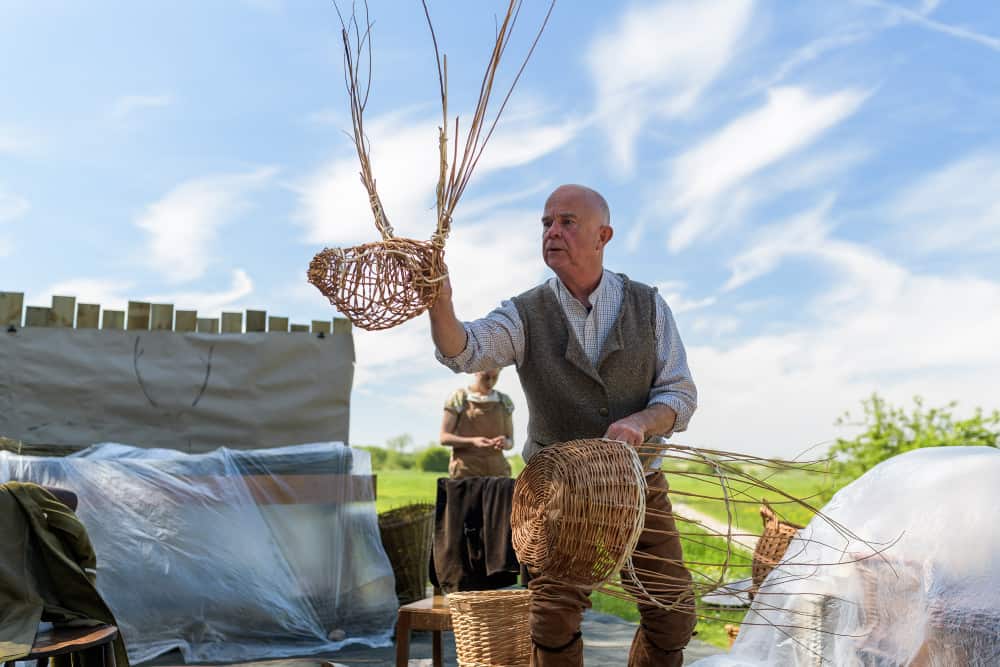
Willow planting, growing, harvesting and weaving. It’s one of Somerset’s most ancient industries, and it remained at the centre of life on the Somerset Levels until the middle of the 20th century. Whispering Willows, a magical open-air show by Somerset based Wassail theatre company, is a moving evocation of the changing life of a willow worker, coming to Springhead Gardens, Fontmell Magna, on Saturday 11th June as part of the 2022 summer programme from Artsreach, Dorset’s rural touring arts charity. It’s 1929. Morris has been planting, harvesting, basket making and drinking tea on his Somerset willow farm since before he can remember. Every year the pattern repeats itself. Plant, harvest, weave. Plant, harvest, weave…
…she’s a complete nuisance! One day he pulls up a particularly large piece of willow with a girl clinging to the end of it! She eats too much, breaks everything in his workshop and is a complete nuisance. But as time moves on, they teach each other the ways of the willow. Planting, harvesting, weaving… the cycle continues, and all is well until the chaos of the Second World War and the invention of plastic threaten to destroy the farm and their livelihoods. Can they find a new use for willow before it’s too late? Pack a picnic and join Wassail in Springhead Gardens for a beautiful, non-verbal story that’s suitable for all the family, with puppets crafted from Somerset willow and an evocative original soundtrack. It’s a story full of humour, pathos and energy.
Also showing locally… The Exchange at Sturminster Newton has two very different Artsreach events – a visit by contemporary dance company New Art Club on 14th May, and the stars of tomorrow’s stage, Bristol Old Vic Theatre School on tour with Vanity Fair on 30th June. New Art Club’s Cupid’s Revenge is a comedy dance theatre piece, exploring love in all its many joyful, tragic, infuriating and hilarious facets. One of the greatest English novels, Vanity Fair is a brilliant satire on early 19th century society. It is a tale of intrigue, survival and sexual politics starring the irresistible but deeply selfish Becky Sharp and sweet natured Emmy Sedley tumbling their way through the exploitative and hazardous playground of the English upper class in war and peace.
Stomping bluegrass Stomping virtuoso bluegrass trio Old Baby Mackerel will rattle the rafters at Winterborne Stickland’s Pamela Hambro Hall on 1st July and Marnhull village hall on 8th July. The band’s songs dramatise the small-town fascination with locomotion, the trials of murderous drunks and the veneration of whisky and bootleg liquor.
Lucky pigeons A new name on the local summer scene, Brainfools come to Stalbridge village hall garden on Sunday 14th August at 2pm, with Lucky Pigeons. A young businessman struggles with the demands of city life and, after losing his job, takes his frustrations out on a group of pigeons. Karma soon returns however, and the man finds himself turned into a pigeon, where he quickly learns about the playful world of this misunderstood animal. The show is performed by skilled circus and aerial performers.
Yewstock School in Sturminster Newton have recently given their school playground an exciting new look with colourful markings to replace the previous tired, old designs. The surfaces now contain decorative games that invite the children to be active whilst having fun outside.
Next to the new playground markings are (l-r) Clive Padgett (Yewstock Headteacher), Jana Hounsell (Geveko), Fiona Wing (Geveko), Karl Whittick (PE Teacher), Bryan Trim (Yewstock)
The new playground markings are bright and engaging, and include a new basketball court, mini roadway, snakes and ladders, activity trail, compass, hopscotch, and phonics and numeracy activities. These have all been very generously provided by Geveko Markings who specialise in using materials that minimise the risk of slippery surfaces, and make play areas safe for children. Bryan Trim of Yewstock school said: “We are extremely grateful to Geveko Markings for so generously providing their time, resources and design skills to produce such fantastic, fun markings. The pupils at Yewstock School will enjoy them for years to come!” Jana Hounsell of Geveko Markings said “We are very pleased that the children enjoy having fun with the games. It is our pleasure to give something back to the community.” Yewstock School is a day community school for children with Profound and Multiple, Severe, Moderate and Complex Learning Difficulties.
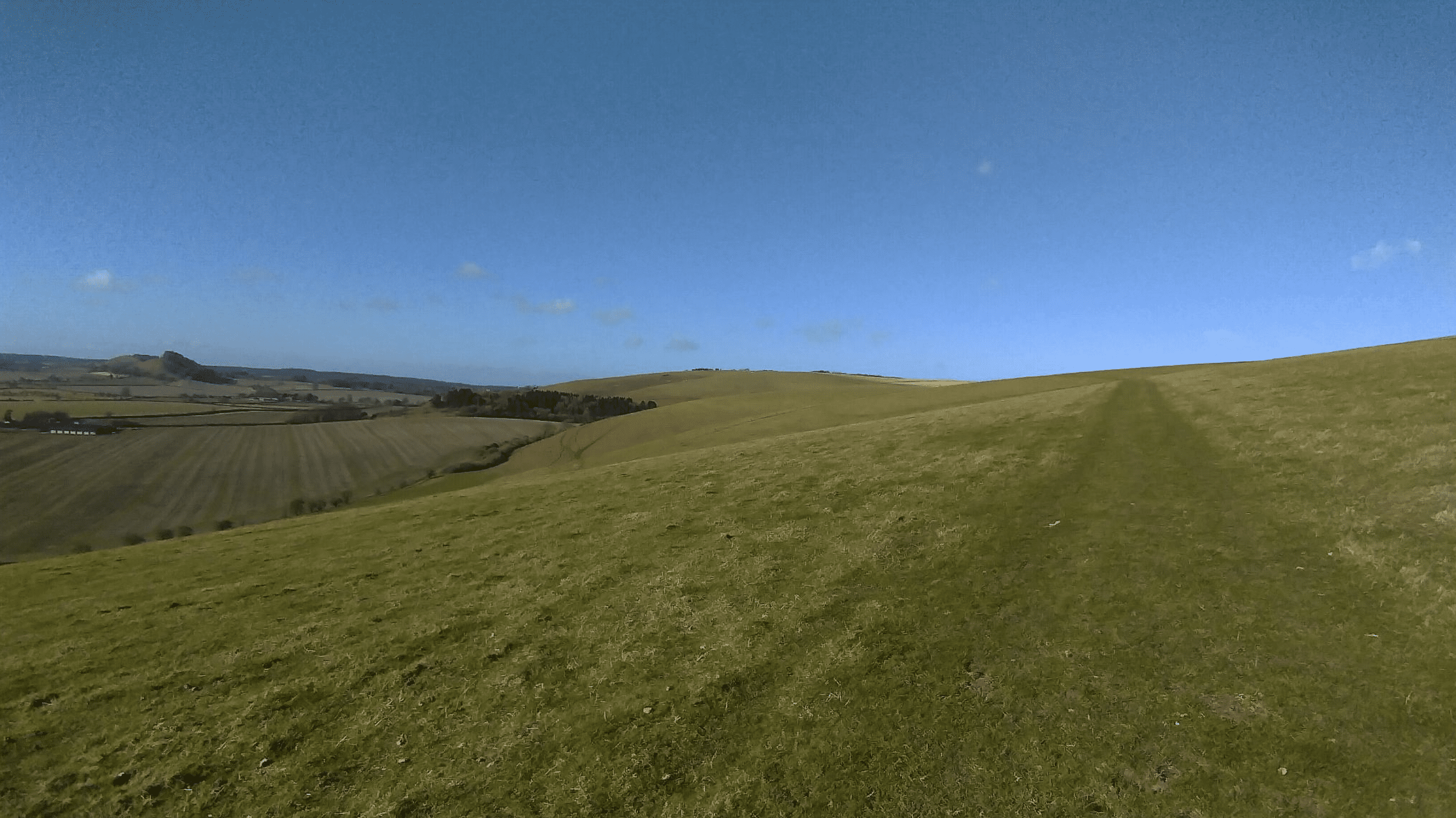
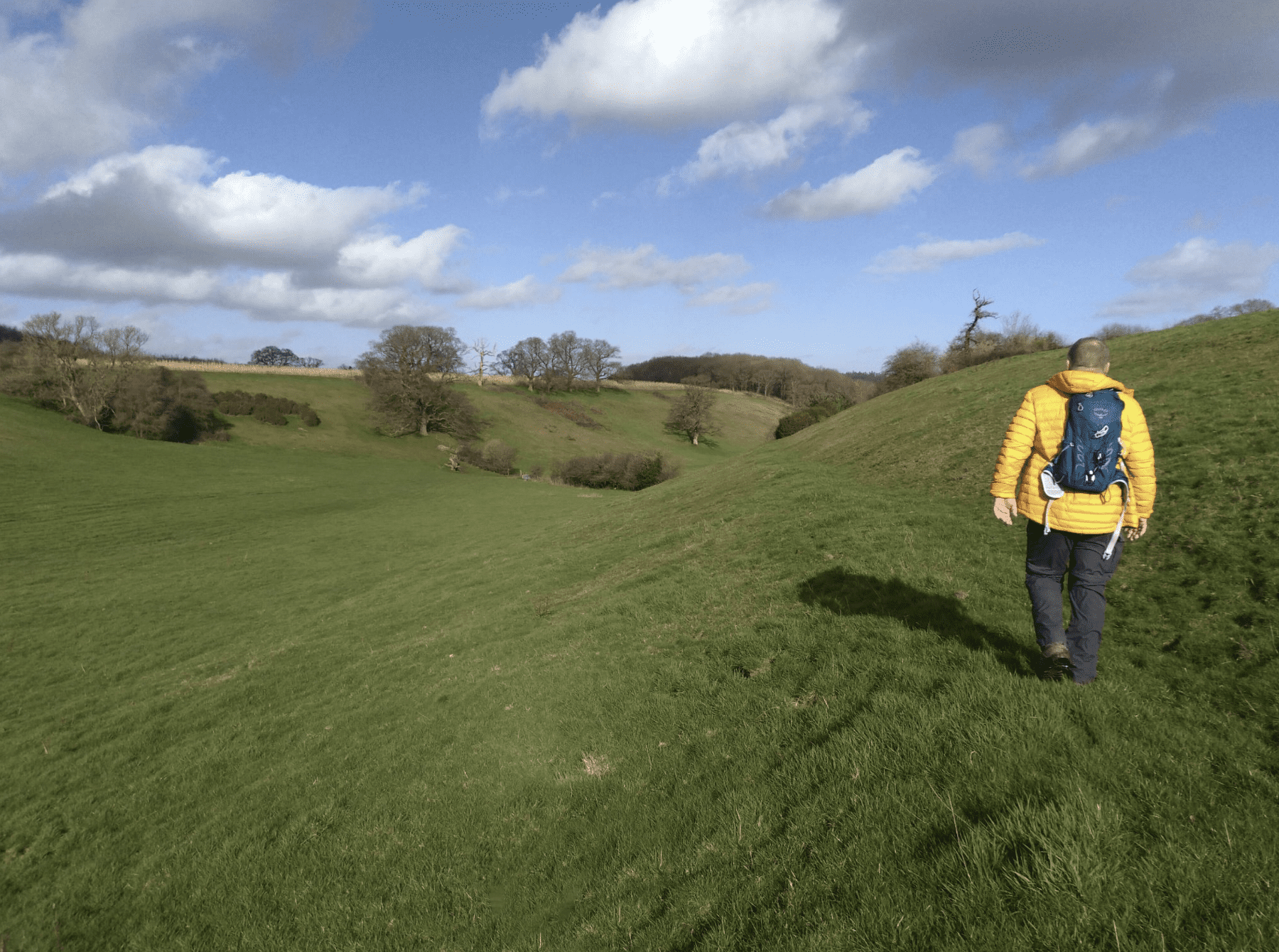
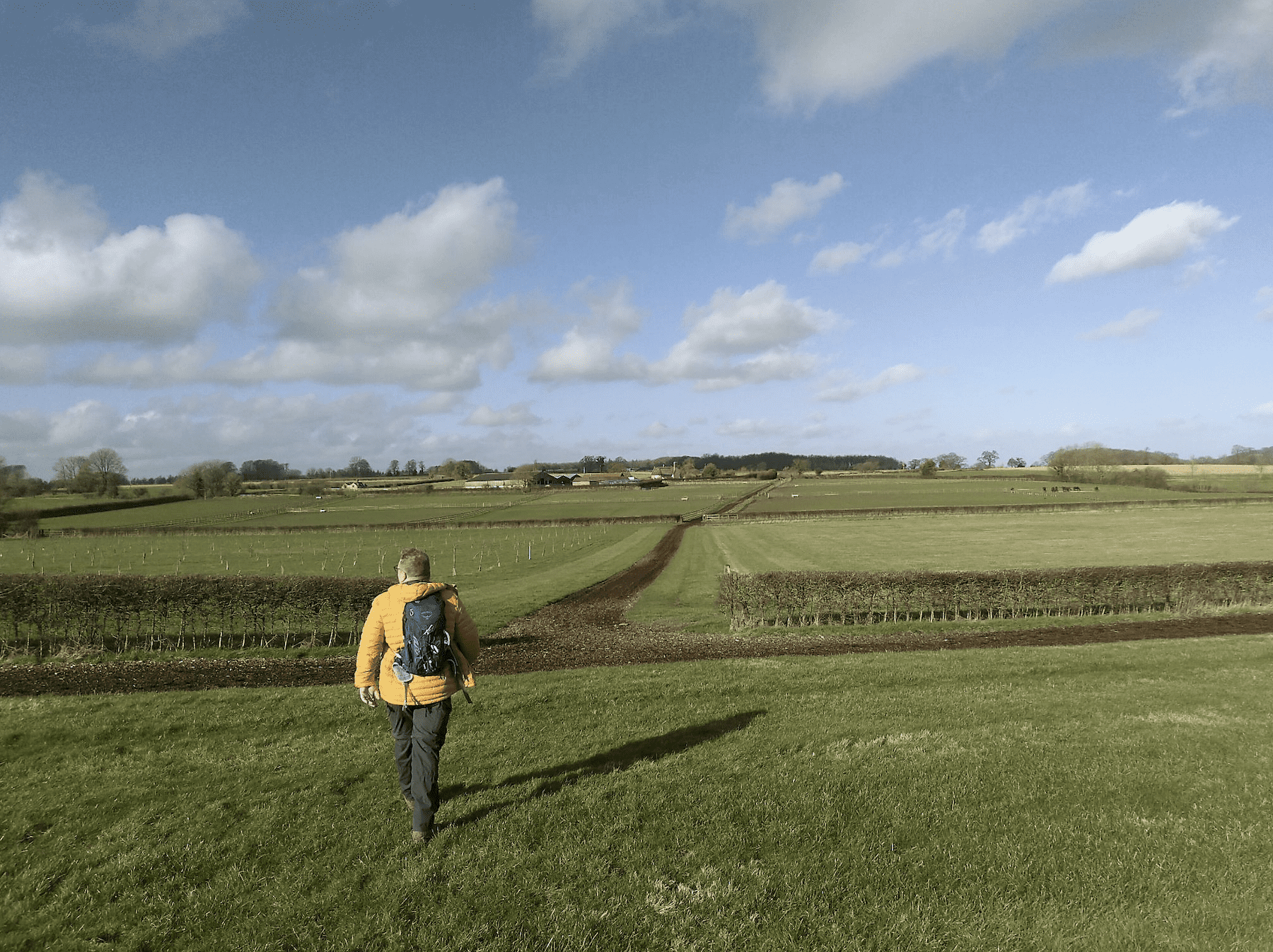
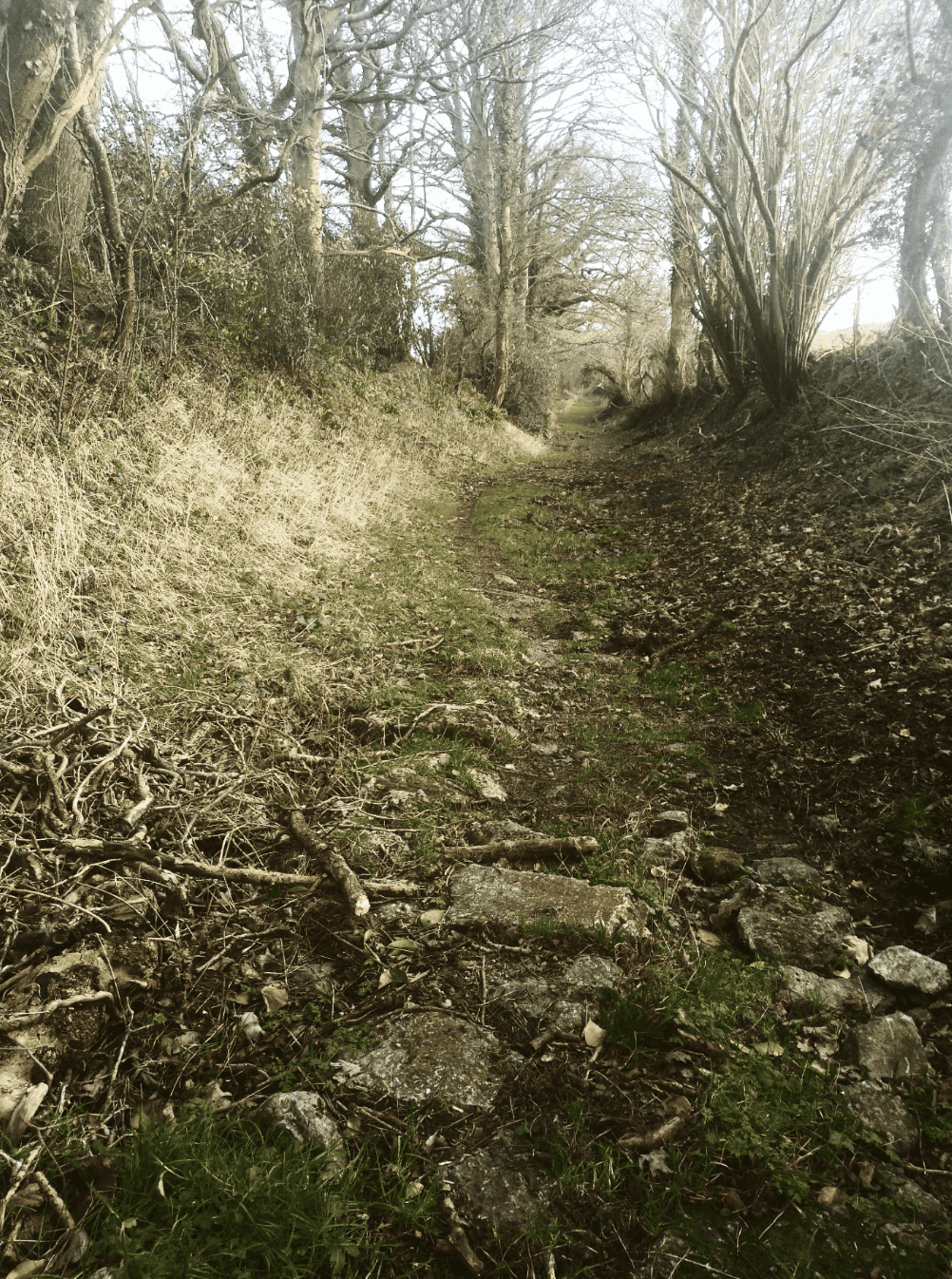
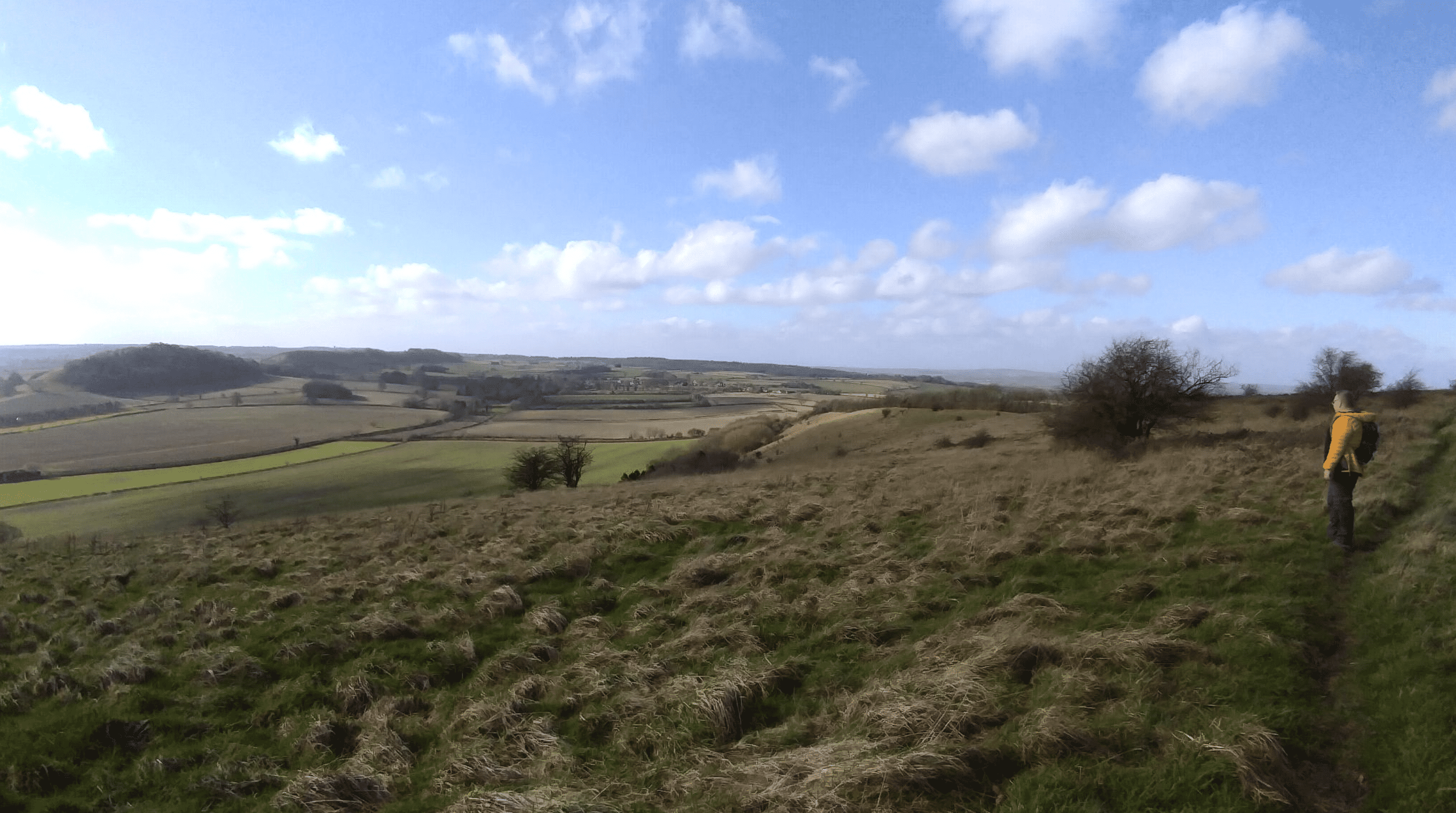
In between the A303 and Warminster is a stunning area which is often overlooked. Head up there (hit Longleat and you’ve gone too far) and you’re rewarded with the broad rolling downland and extraordinary wide views of the ancient landscape that is the West Wiltshire Downs AONB.
To follow this route using the Outdooractive App, please find the route here.
This is a longer hike than we’ve shared for a while – but set aside a day, pack a sandwich and treat yourself, it’s a total stunner.
One word of warning – the start of this is immediately and moderately stiffly uphill; if like me you hate that straight out of the gate, do think about reversing the route!
All the Dorset Walks we feature have been created and walked recently by ourselves, so you know you can trust them – we aim for unpopulated routes with as little road and as many views as possible! You can always see the route and follow it yourself via the free Outdoor Active app – see all our routes here.
Husband and wife team Mervyn and Sue Rose have run Rose Engineering from Sturminster Newton for the last 35 years.
“We’re immensely proud to have been selected as a finalist for the South & South West’s Family Business of The Year Award” said Sue Rose. Founded in 1986 by the husband and wife team, Mervyn and Sue have now been joined by their son, Tom Rose, who brings a new generation’s energy into driving the family business forward. The Family Business of the Year Awards, established in 2012 by Family Business United, are now in their 10th year of celebrating the UK family business sector, recognising the diversity of family firms across the country. Managing Director Tom said, “We’re so pleased to recognise the hard work that my family puts into our business. Taking on the role of Managing Director in the past 18 months, during a global pandemic, has been a real challenge. But to have remained in business and fully operational during this time is testament to the hard work of the whole team.” Spokesman for Rose Engineering, Anita Beaumont, said “We’re proud of our growth and of the hard work all our teams carry out. This [award] is a great way for this to be recognised.” Paul Andrews, founder of FBU and organiser of the upcoming awards explains, “Each year it is an honour to celebrate with some of the very best of British family firms. It is a pleasure to champion the sector and to celebrate the collective contribution that family firms make in terms of jobs provided, income generated and wealth created.” He adds, “Each year we are amazed at the nominations received and and there are always some real gems that are fabulous ambassadors for the family business sector.”
The pupils and staff of Broadmayne First School were excited to welcome an unexpected visitor to their school field this week, in the shape of a helicopter! Piloted by Peter Faulding, the visit was fun, but with a serious message.
Peter Faulding presenting life jackets to the children of Broadmayne First School
Peter is the Chief Executive at Specialist Group International, which supports rescues, both privately and alongside police and fire services across the UK. Peter was involved in a sadly unsuccessful attempt to rescue a drowning child. Consequently he created the Lucas Dobson Water Safety Campaign, and he flew into Broadmayne to speak to the children about the importance of water safety, and to deliver eight children’s life jackets. The children and staff also had the opportunity to watch the helicopter in flight, and have a look inside it. Headteacher, Helen Collings said “Living so close to the coast, and with our own swimming pool on site, water safety is really important to all of us at Broadmayne.” The life jackets will be available for families and the local community to borrow from the school to help keep children safe near the water, whilst allowing them to take a full part in water-based activities.