Passed away 12th may 2022, aged 76 years.
He will be sadly missed by wife Lesley, sones Mark and Steven and all his family and friends
Donations to South western Ambulance service.

Passed away 12th may 2022, aged 76 years.
He will be sadly missed by wife Lesley, sones Mark and Steven and all his family and friends
Donations to South western Ambulance service.
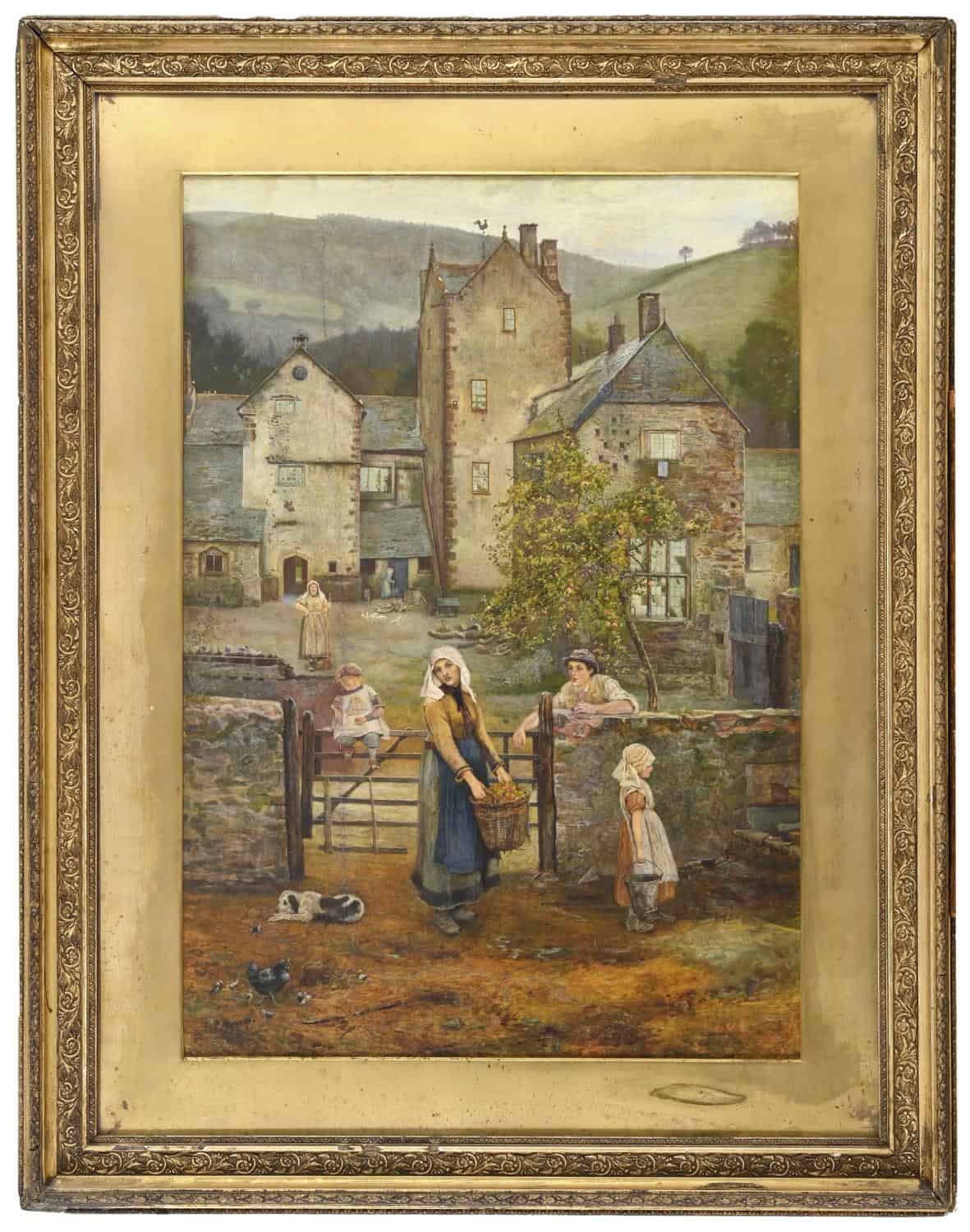
A single determined bidder ensured that a group of lots relating to Combe Sydenham, the historic manor in Somerset, all ended up ‘back where they belong’ last month. “In the age of the internet, auctions may scatter art and antiques across the globe but sometimes they can gather antiques back into a collection too,” observed Helen Carless, Lawrences’ Managing Director. “We were fortunate to have been given the opportunity to sell four lots that each related to one historic house in Somerset and the current owner bought them all, to place back in the family collection.”
A large watercolour view of Combe Sydenham house by Edward Gurden Dalziel, 1870 (see image,
above) that was probably a Royal Academy exhibit in 1871, made £3,250.
A Victorian oil painting by John Adams Whipple, also depicting the house, made £400. This picture
had been spotted by the vendor’s father in the window of an antique shop in Kensington and was
recognised immediately. A more modern oil on board of an atmospheric moonlit scene at Combe
Sydenham house, painted by Felix Kelly in 1964, made £5,500 (image right, immediately below).

The Earl of Egmont’s chairs
The following day, a pair of Windsor armchairs that had been made in about 1756 for John Perceval, 2nd Earl of Egmont were offered for sale. The chairs were sold at a sale at Enmore Castle in 1899 and went to Combe Sydenham.
The superb provenance and strikingly decorative design of the pair (see image below) ensured that the price topped £15,000 and these have also returned to the house.
The buyer of all four lots, William Theed, commented that he had sat on these very chairs when he purchased the house in 1963.
In addition to the Combe Sydenham lots, two large drawings by Dame Elisabeth Frink (who lived and worked at Woolland, Dorset) from 1962 were sold. One of a horse’s head and the other of a fallen warrior, they showcased Frink’s skill at portraying the vulnerability of strength. These made £3,500 and £4,750 respectively.
A twilight landscape scene in oils, entitled ‘Evening’ by Midlands artist William Kiddier (1859-1934) surged beyond its estimate of £400-600 to make £6,875, almost ten times any other price paid for this artist’s work in any auction. The lots contributed to an auction that totalled £1m across four days of selling.


Research by the Mental Health Foundation has revealed that people across the UK became a lot more lonely during the pandemic. Loneliness can have damaging effects on physical and mental health. Not only can loneliness contribute to, and exacerbate, mental health issues such as anxiety and depression, but some research suggests that loneliness can be as damaging to physical health as smoking 15 cigarettes a day.
Loneliness is a unique experience. Someone can be lonely due to social isolation, where they have little
contact with others, such as an older adult with no family. It is also possible to feel lonely in a room full of people. This is because loneliness can stem from not feeling heard, understood, or cared for by the people around you. Equally, it is possible for someone to feel content being alone. Everyone is different and all emotions are valid.
So how to combat loneliness? One option is to make a concerted effort to meet new people. Although this can be daunting, it is worth giving yourself a little push, remembering that you can leave if you feel overwhelmed. This may be through joining a club or activity – somewhere you can meet people with similar
interests.
Alternatively, you can sign up to volunteer for a cause (such as Dorset Mind!) where you can meet people with similar passions whilst giving back to the community. There’s a charity for every interest, and I guarantee they’re ALL crying out for more volunteers. Helping others can help combat loneliness as it can make us feel more connected to society. Research suggests that ‘giving back’ is one of five proven ways to improve your mental health.
Another strategy would be to appreciate and strengthen your existing connections. Sometimes we can be too focused on what we believe are active demonstrations of caring (i.e. regular phone calls) but not recognise other gestures, such as a friend who is always willing to help with errands. Additionally,
sometimes we are reluctant to make the first move, such as initiating plans. Even if it doesn’t work out as you hoped, you can feel comfort in the knowledge that you tried.
It is possible to become better at managing and accepting the experience of loneliness. The first step is to accept the feeling, learn to sit with it and know that you can survive it. Try to learn to enjoy your own company by making an effort to do enjoyable things. Follow a routine of self-care or start a new activity – rediscover the benefits of enjoying your own company. You can also learn strategies to better manage difficult emotions such as loneliness through various talking therapies and psychological treatments.
Monthly updates from the various North Dorset Police Teams. This month’s news from Sturminster Newtons’s PCSO Mandy Robinson.

North Dorset Rural Neighbourhood Policing Team (NPT) attended the Spring Countryside Show at the Shaftesbury on Saturday 23rd and Sunday 24h April. NPT were joined by members of the Rural Crime Team on the Saturday. This was our first large community engagement event for 2022.
It was great to see so many people out and about enjoying the demonstrations, craft and food stands as well as the weather. Leaflets, stickers, lost child badges, card police hats, pens and reflectors were handed out to members of the public.
Questions were asked and advice was given.
We will also be in attendance at the following events;
Three Okeford’s Preservation Society Steam and Vintage Show 21st and 22nd May at Shillingstone, and Shaftesbury and Gillingham Show on Wednesday 17th August at the Turnpike Showground Motcombe.
Beauty spots
When visiting beauty spots please do not leave valuables in your vehicle whilst you go for a walk – whether you are walking the dog or out enjoying the countryside. Do not place items under your car seat, or put them in the boot as the would-be thieves know all the hiding places. Best by far; don’t take valuables out with you and leave them at home! There is nothing more frustrating than returning to your vehicle after a
lovely walk to find that your car has had a window smashed and your valuables are gone.

For details on your local team’s future engagements please refer to our website. As always, if you wish to contact us follow the links. You can report non urgent matters via 101, and remember if you see a crime in progress or a person in danger call 999.

What an absolutely stunning April we had. The weather over Easter felt like Summer had arrived early on some days, and we just could not get enough. At the garden centre, the warmth and sunshine meant that many of our plants began to spring into life as they sought to soak up some of them golden rays!
We also saw our first children’s event since late 2019, as we hosted Easter Crafts at Thorngrove, and it was a huge success with a brilliant turnout. We want to extend our sincere thanks to everyone who attended
and spread the word about our event. We look forward to putting on more as the year goes on.

The furniture’s out
Our brand new range of garden furniture went on sale in April too. We had a few available last year but this time we’ve really extended the range and there are so many beautiful items to choose from, whether it’s a fire pit, hanging chair, rattan dinging set and more – there’s something for all tastes and needs! (browse the range on our website today).
At the time of writing, it’s the Monday after the weekend of the Spring Countryside show, which we attended proudly, offering a selected range of plants to the show visitors, while also taking some time to have a wander around and see all the fantastic local businesses and entertainment all coming together again for this important community event. We can’t wait for the Gillingham & Shaftesbuy show later in the summer which we’ll also be at!
Thorngrove’s got basket
Let’s see…what else is going on… oh yes, that’s right, our famous hanging basket workshops are back for late spring! There will still be time to book your place once this issue hits your inbox.
Thorngrove expert Chris Francis will be on hand to help you get creative, and create a beautiful and unique handing basket full of seasonal plants of your choice. These events always fill up so please book to avoid
disappointment.
Phew… I think that about covers it for now. Right, where’s our ‘To Do’ list…the roses need watering (they’ll be blooming soon!!). Stop by Thorngrove this May for all your gardening needs. We’d love to chat about ideas and how to make the most of your garden space. See you soon!
Kelsi Dean Buck Thorngrove Garden Centre

When it comes to training in the gym, I always encourage people to incorporate ‘functional movements’ as opposed to isolated exercises, which only train specific muscles. It’s important to train the muscles that we
require for simple everyday tasks, such as picking things up from the floor – it’s easy for these basic movements to become difficult as we get older if we don’t keep using those muscles properly. There are seven established basic movement patterns, the most common five I’ve outlined below, with tips on practicing them:
1. The Hinge
The hinge is the movement we perform when picking things up from the floor – and we all know how hard that gets as you age! Training this movement (for example with deadlifts or kettlebell swings) can not only
help strengthen the muscles involved but also allow you to develop the capability and perfect the form required to lift without damaging your back.
2. The Squat
This is a movement that we do more often than people think. You are essentially squatting whenever you are sitting down in a chair, or coming back up from it again. Even sitting on the toilet is a squatting motion, so why would you not train this movement! Exercises such as front and back squats are a great addition to any gym program.
3. The Lunge
Lunging is a single leg movement. Everyday movements such as climbing stairs or stepping forward to throw a ball for the dog are all forms of lunging. It’s important to note that lunging is not one dimensional, and should be trained in all directions in order to improve balance, strength, flexibility and overall mobility.
4. Push
Pushing objects away from our body is another fundamental movement that we use every day. Movements such as pushing ourselves up from the floor or lifting objects above our head to place on a shelf are common examples of this movement pattern. Adding exercises such as press ups and the overhead press are a great way of strengthening this movement.
5. Pull
Obviously this is the opposite movement to push, literally pulling objects towards your body. Although we don’t necessarily do much of this movement everyday – other than pulling people in for a good old cuddle (run through that again, Ed) – this movement is essential for training and maintaining good posture. Any of the row exercises, and gym machines such as the lat pulldown are brilliant for this movement pattern.

by Mel Mitchell

Veterans with Dogs trains and provides assistance dogs for current and former members of the British Armed Forces with service-related mental health conditions.
Veterans with Dogs was founded for the purpose of training fully accredited assistance dogs to help mitigate the symptoms of mental health difficulties for Veterans and active-duty service members. Veterans who qualify through the programme have partnerships that they can depend on to help them recognise earlier the increasing symptoms of their difficulties. The dogs are trained to intervene with interruptive
behaviours to help their Veteran with emotional regulation, grounding and to remain safe.
It is commonly recognised and accepted, a Veteran suffering from a condition such as PTSD can become extremely isolated – and their life can become dominated by conditions such as anxiety and depression. Introducing a specially trained dog into the life of a Veteran who is suffering from PTSD has been shown to have hugely beneficial outcomes, increasing their quality of life and regain independency.
Local girl Belle
Belle is a three-year-old black Labrador and a much-loved family pet. To help raise awareness of the charity, she has recently passed her assessment to be a Veterans with Dogs Community Support Dog. She is now able to wear her Community Dog coat with pride.
A Community Dog provides access to the public within group activities and represents the charity at public
events. These dogs need to be trained and are assessed before they are accepted as a Community Dog. They can be playful and fun, but also have the ability to be very relaxed and settled when required. They need to be calm and confident in many different situations and be able to bring their natural benefits of physical interaction to the public.
Belle’s training is continuing so that she can further the support she can give to the charity. She is now learning to carry out tasks which might be required of an assistance dog to support their veteran. She will then be able to demonstrate these to the public as an example of what these highly intelligent and special
assistance dogs can do. Belle, and her humans, Carol and Andy, are happy to attend any local events to help raise awareness of this much needed charity. They can be contacted through Veterans with Dogs.
Damory Vets in Blandford have very kindly agreed have a collection tin in the reception area from the end of April in support of Veterans with Dogs. For more details of the charity, please visit their website (veteranswithdogs.uk) and support the charity in any way that you can.
Sturminster Newton DT10 – £19,500 full time 37.5 hours per week or £9,360 part time 18 hours per week.
Full Job Description
Do you have a passion for live music and events with a grounding in marketing and promotion? Looking to work with a supportive team of staff and volunteers? Enjoy being creative? This might be the role for you!
The Exchange is an award-winning Community Arts Centre based in Sturminster Newton, Dorset. We have a 301-seat venue that hosts an impressive range of local and international performers including live music, theatre and cinema. We have a suite of rooms available for private hire, a range of community groups and activities, such as the Country Market, who base themselves at the Exchange and a programme of art exhibitions. There is also a community café and a bar available for evening performances.
Ideally we are seeking a full time employee working 37.5 hours per week and five out of six days (Mondays to Saturdays). We will also consider those looking to work part time providing they can work at least 18 hours a week.
Marketing:
Essential – You must be experienced in producing creative copy and content writing, designing of brochures/posters etc., social media marketing & email marketing. Use of Microsoft, Outlook, Word Excel, Publisher, and PDF.
Desirable – You will have some expertise of social media, design software, be open-minded, a good communicator, well organised and hopefully be used to working with Mailchimp and Canva.
You will be able to maintain excellent relationships with regional press and media to raise the profile of The Exchange through timely press releases and effective advertisements, features, and listings.
Front of House and Box Office:
You will need to also provide cover for the Box Office and Front of House, including evenings and weekends when required. This should be no more than one Saturday and Friday evening and one Saturday morning per month. Duties will include taking bookings and payments, greeting visitors and dealing with general enquiries over the phone and in person.
General:
To apply please email your CV and covering letter to [email protected]
or call Sharon on 01258 475137 for more information

House Pastoral Assistants
Full Time, Term Time, Permanent – And Part Time, Term Time, Permanent
These roles require enthusiastic, well organised individuals with a warm and welcoming nature to assist the House parents in 2 of our boys’ boarding houses, and the duties associated with the boarding operation, and to oversee the pastoral wellbeing of all the pupils in their care.
The successful candidates will have experience of working with young people and an understanding of safeguarding and child protection responsibilities, along with the ability to deal calmly with sensitive situations.
Role 1 Is a term time, full time role, working 10.00am until 6.00pm Monday to Friday
In addition to the House Pastoral Assistant role, the successful candidate will have the opportunity of undertaking the HPA Team Leader role for which an additional salary allowance will be paid – details of this role can be found with the application pack.
Role 2 Is a term time, part time role, working 14.5 hours per week and the hours are 3.00pm – 6.30pm Tuesday and Thursday, and 4.00pm – 6.30pm Monday, Wednesday and Friday.
For further information and to apply please go to:
https://clayesmore.com/work-for-us/
Closing date: 8:00am on Friday 10th June 2022
Clayesmore is committed to the safeguarding and promotion of children’s and young people’s welfare and expects all staff and volunteers to share in the commitment.