The programme at The Exchange in April includes two great films (The Choral with Ralph Fiennes, and the Oscar-sweeping box office smash Hamnet), the amazing Budapest Café Orchestra, a riot of 50s and 60s Rock and Roll with perennial favourites Lipstick on Your Collar, and the Soul and Swing Big Band – the lovechild of the old local favourite Barrelhouse Blues Orchestra. It’s a typically great selection of entertainment … but on top of all that, on the 11th of April – with no tickets required – it is The Exchange Open Day!
Soul and Swing Big Band
Budapest Café Orchestra
It’s a chance to come and see behind the scenes, as well as finding out just how much you can enjoy at The Exchange between the shows. And how can a community arts centre do so much for the community and the area with no cost to the ratepayers? The Exchange is open from 10am to 2pm on Saturday 11th April. Entry is free, hot drinks are half price and there are homemade cakes too. There’s free parking in Sturminster all day, and The Exchange is waiting to see you.
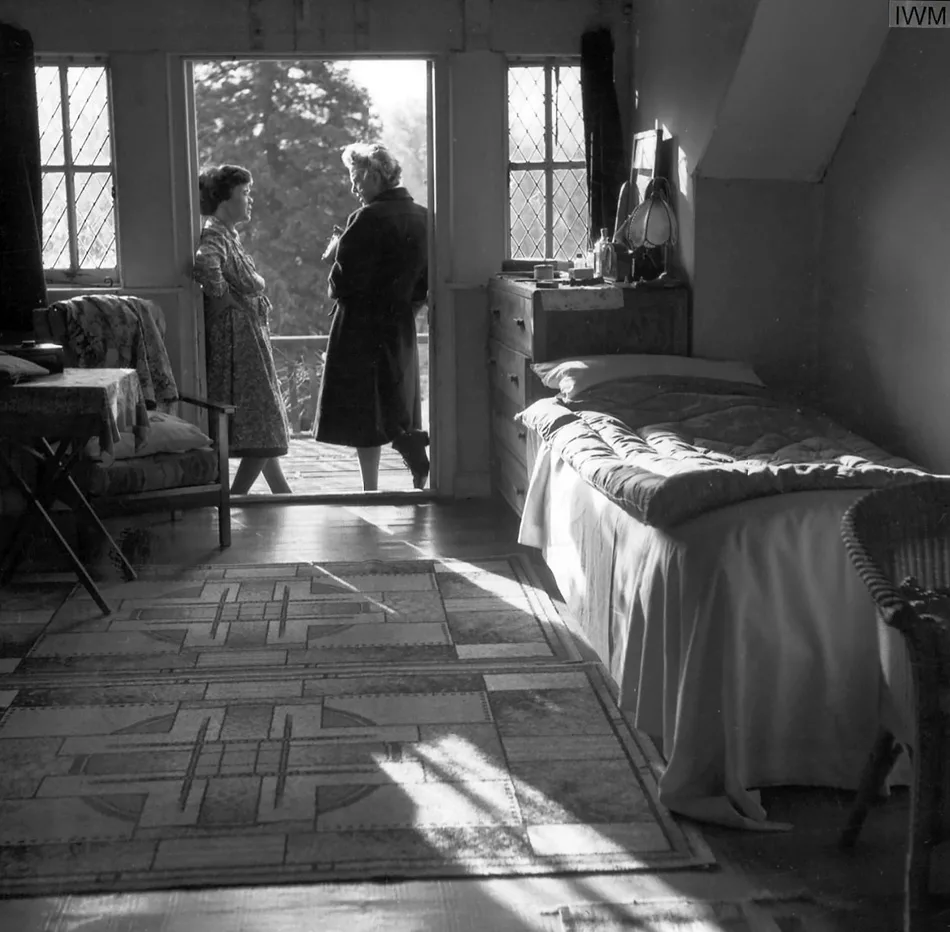
During the Second World War, Special Duty Sections were recruited from the local civilian population to gather intelligence. Led by officers from military intelligence, the network consisted of key men and women, observers and runners. Each member was issued with a code and password, and information was passed along carefully structured chains so that individuals rarely met and could not identify the wider network. In the event of invasion, runners would have carried reports across the front line to British forces. By 1941, however, wireless transmitters had been introduced to speed communication. Special speech-based sets were developed, which were far easier for civilians to operate. Pre-war radio amateurs were recruited into the Royal Signals to design and build the equipment, which was concealed in ingenious ways. Civilian outstation operators transmitted reports to instations manned by the Royal Signals or the ATS (the Auxiliary Territorial Service, the women’s branch of the British Army), who passed the intelligence to army headquarters. Nearly 4,000 civilians across Britain became the ‘eyes and ears’ of the country. They reported careless talk, watched for collaborators and monitored military movements. Sections were trained to identify German officers, units and equipment. Messages were then hidden in dead letter drops – hollow tree stumps, behind telegraph pole ID plates, inside gateposts and many other locations – before being collected by runners and taken to one of around 200 secret transmitters. One such transmitter operated at Anderson Manor near Blandford.
many special duty section operatives were widows of servicemen or wives of those serving overseas
Each wireless station involved 20 to 30 people, from observers gathering intelligence to runners moving reports between drops. The compartmentalised system was designed so that if one individual was captured, the wider network would remain protected. Unlike the Operational Patrols covered in the February issue of the BV, the Special Duties Sections included both men and women. Women were considered less likely to be stopped and searched by occupying forces. Many were widows of servicemen or wives of those serving overseas. Members were sworn to ‘everlasting secrecy’ under the motto Be like Dad – Keep Mum. They were all volunteers, and even today there is no complete list of names. Interestingly, by the time the organisation stood down in 1944, its principal contribution had been its internal security role, eavesdropping on the loyalty of the British populace and monitoring careless talk among the troops massing for D-Day.
Women were considered less likely to be stopped and searched by occupying forces
The Scout Sections The Scout Sections formed an early and vital part of the Auxiliary Units structure. These were regular soldiers, each section commanded by a lieutenant, tasked with training the civilian patrols. Their origins lay in the XII Corps Observation Unit under Captain Peter Fleming, the famous writer and traveller. He had arranged for a section of Lovat Scouts to help him. Recruited from the Highlands of Scotland, they included experienced ghillies, skilled in stalking, who had also trained snipers during the First World War. In Dorset, two Scout Sections operated, covering East and West, drawn respectively from the Dorset Regiment and the Wiltshire Regiment. It was intended that Sections would be trained over a three-month period, after which they would in turn train the Auxiliaries. The Dorset Auxiliaries were trained at Duntish Court in Buckland Newton, and then Bingham’s Melcombe House. They had several operational bases, including one near Blandford and another at Duntish. Lord Lovat’s No. 4 Commando, stationed in Dorset, also trained many local members. There is an interesting story told of when the Dorset and Wilts Scout Sections combined to test their new-found skills. The operation was to attack Blandford, which was defended by No. 4 Commando: the Auxiliary Units’ task was to sneak in and place big chalk crosses on strategic buildings and structures to emulate planted bombs. Chalk marks were successfully placed under the bridge and also on the Commandos’ own HQ. The Auxiliaries were completely successful, and were considered to have effectively destroyed the town without compromising themselves or confronting the Commandos in any fighting. Jack Blandford from the West Dorset Section explained to Lord Lovat how they were able to operate without his Commandos realising: the Auxiliaries were not only dressed in black, but they also wore black plimsolls. The sound of the Commandos’ hobnail boots gave their positions away. While Commandos were running along the road, Jack and his comrades were running alongside them in a lower ditch without them realising it!
One of the Auxiliary Units which ‘destroyed’ Blandford – Wiltshire Patrol East Dorset 1942-43. From back left: Jack Blandford, Jack Straker, Ron Hanford. Lionel Stoneham, John Hutchins, Blackie Blackwell, Barret (Busty) Beckford, Slark, Sgt Smith, Lt Geoffrey Brain, Cpl Bob Burgin, Powell. Image courtesy of CART staybehinds.com
Aftermath As the threat of invasion receded and Auxiliary training was completed, many Scout Section officers and men transferred to active service in Special Forces. In 1943 the two Dorset Sections were combined. The SAS in particular recruited former Scout Section members for their expertise in operating behind enemy lines.
Further information on staybehinds.com, and at the Royal Signals Museum which includes a display on the Special Duty Sections.
Dorset Wildlife Trust is inviting residents, landowners and businesses to have their say on the potential return of wild beavers to parts of the county.
The consultation follows recent licensed releases elsewhere in the South West, alongside five years of monitored work at the Trust’s enclosed beaver project on the River Hooke. Since their introduction there in 2021, beavers have significantly altered the landscape through dam-building and tree management. Research linked to the project suggests beaver activity can slow water flow, create wetland habitats and increase biodiversity, as well as helping the surrounding land cope better with both drought and flooding. Beavers are now recognised as a native species in England, and the Trust has submitted an initial expression of interest for a possible licensed release within the River Hooke and wider River Frome catchment. No decision has been made at this stage, and the Trust is keen to emphasise that the consultation will play a central role in determining whether a full licence application is taken forward. It is intended to gather views from those who live and work in the area, particularly given the practical implications for farming, land management and flood risk. A series of public drop-in sessions will take place in April and May, alongside an online survey. These include: Saturday 11th April, 9am to 3pm at Maiden Newton Village Hall Saturday 18th April, 9am to 4pm at Dorchester Town Hall at the Corn Exchange Saturday 2 May, 9am to 4pm at Wareham Corn Exchange
Steve Oliver, Dorset Wildlife Trust’s Rivers Conservation Officer, said: ‘Our enclosed project has given us clear, science‑based evidence of the multiple benefits beavers can bring to Dorset’s rivers and wetlands. Wild beavers are already present in parts of the county, but any future releases in new locations must be shaped by the people who live and work here. This consultation is an opportunity for everyone to share their views, raise questions and help us understand what a future with wild beavers could look like for Dorset.’ Further details and the survey can be found via dorsetwildlifetrust.org.uk
The BV community news section is sponsored by Wessex Internet
[adv] A Dorset household has shared their experience of making home energy improvements, supported by a loan from Lendology CIC. Mike and his family were looking at ways to improve their home’s energy efficiency, including installing solar panels. With upfront costs to consider, they chose to apply for a home energy loan through Lendology — a not-for-profit community lender working in partnership with local councils.
Reflecting on the process, Mike said the support they received during their application was helpful, and that accessing the loan enabled them to move forward with their planned improvements. Individual experiences will vary depending on personal circumstances. The solar panel system is expected to generate electricity that may contribute towards the household’s energy use, depending on factors such as usage and weather conditions. The family is also exploring further improvements, including the potential installation of a heat pump, as part of a longer-term plan for their home. Lendology works with local authorities across the South West to provide loans that support a range of home improvements, including energy efficiency and renewable energy measures. These loans may be available to homeowners depending on eligibility and individual circumstances. If you are considering improving your home, it’s important to understand the costs involved and whether borrowing is right for you. We recommend seeking independent advice, including a retrofit assessment, to help identify the most suitable options for your home and budget. Because our loans are funded by local councils, what’s available can vary depending on where you live. Find your local council to see what support may be available to Dorset homeowners: lendology.org.uk/partner/dorset-council/
Important information Representative Example (4% fixed interest rate, Representative 4.2% APR). Loans are subject to status and are typically protected by a Title Restriction.
Borrow £5,000 over 60 months, £92.08 monthly repayments. Total amount repayable = £5,544.96, including £20 fee for registering the Title Restriction against your property at the Land Registry. The £20.00 fee is only payable if a loan is agreed by Lendology and you decide to proceed with a loan. We do not charge interest on the fee. A Title Restriction means that you may not be able to sell your home without our permission unless the loan is fully repaid. This is a financial promotion approved by Lendology CIC. Missing payments could affect your credit rating and ability to obtain credit in the future.
Cheltenham brought solid runs, but Tizzard’s yard heads to Aintree buoyed by a promising next generation, writes Chris Wald
Kool Kid (centre) on his way to win at Plumpton
March has been something of a mixed bag for the Tizzard yard – solid performances on the biggest stage, followed by a string of encouraging results closer to home, and a reminder that the next generation is already coming through. Cheltenham, as ever, set the tone. This year it was a Festival where the yard held its own, without quite landing a blow. ‘They all ran well without having any spectacular results,’ Chris Wald says. ‘Alexei was fourth in the Champion Hurdle, JPR One was fourth in the Ryanair – everything ran well. It’s just so competitive there.’ That lack of a headline winner doesn’t tell the full story. Horses ran to form, and in a week where margins are fine and competition relentless, that in itself carries weight: ‘We were happy with all the horses that ran,’ he says.
13-year-old Amber Tizzard winning her first pony race at Buckfastleigh P2P
Kool Kid has been one of the standouts of the last few weeks, winning over hurdles at Plumpton before returning two weeks later to score again on his first run over fences – a step up that suggests there is more to come. Sherborne has followed a similar path, winning at Exeter before stepping up again to land an impressive victory at Ascot. ‘They’ve both won their last two,’ Chris says. ‘They’re the two that have really stood out.’ There was also a notable success for The Italian Fox at Chepstow, a horse who has required patience. ‘He’s owned by a syndicate,’ Chris says. ‘And they’ve had to be patient with him. He’s been here a couple of years, since being bought as a three-year-old, and he’s taken a little bit of time to mature and grow into himself. But it all came together last Thursday, and he won nicely – by 14 lengths. So it looks like he’s a nice prospect going forward now. And it’s always nice for a syndicate to have a good day!’
Katherine Sprake, 16, winning on Whydah Gally, who she has trained herself
Attention now turns to Aintree, with around half a dozen Tizzard runners expected. Several of the Cheltenham horses will go again, including Alexei and JPR One, while Eldorado Allen is set for the Topham Chase, which is over the Grand National fences: ‘He jumped very well in the National a couple of years ago but didn’t quite stay the distance,’ Chris says. ‘Hopefully the shorter trip will suit him really well.’ From there, the season begins to taper. Ground conditions will dictate who runs again, with some horses already nearing the end of their campaigns. ‘We’ll try and get most of them one more run,but then we’ll start winding them down and turning them out.’ Smaller big wins Alongside the headline race results, there are other stories emerging within the yard that matter almost as much. Sixteen-year-old Katherine Sprake, who works on the yard around school hours, bought Whydah Gally from Joe last year and has been training him herself. ‘She rode in her first point-to-point at Maisemore – and they won,’ Chris says. ‘That was a really nice result.’ Still at school, she is set to join the yard full time next season.
Owner Garth Broom with Alexei after finishing 4th in the Champion Hurdle at Cheltenham
She is not alone. Another of the youngest members of the team, 13-year-old Amber Tizzard, rides out at weekends and during school holidays. Too young for point-to-point racing, she competes in pony races and this month recorded her first winner at Buckfastleigh. For a yard operating at the top level, it is a reminder that success is not only built on Festival results, but on the steady development of horses and the people coming through behind them.
April brings longer days and warming soil, but patience remains vital as gardeners balance fresh sowings with the lingering threat of late frosts
April at last! Just a few jobs to do in the garden this month. Start by giving your trees and shrubs a boost by lightly forking a slow-release fertiliser into the soil surface. Roses will also benefit from a dedicated balanced rose fertiliser. As the soil begins to warm, night frosts are still a threat – resist the urge to plant out too early! Check forecasts and protect early outdoor sowings with horticultural fleece if temperatures dip.
It’s time to plant your foxglove (Digitalis) seeds – planning ahead for next summer’s flowering
Sowing and planting A cold greenhouse is now warm enough to start sowing annuals and biennials, including foxgloves, hollyhocks, nemesia, rudbeckia, and French marigolds. Sunflowers can also be started now, either in pots undercover or sown directly into finely raked soil. They are perfect for children to grow and excellent for pollinators and birds: while famous for their height, there are many interesting dwarf varieties now available. Sweet peas can be sown outdoors this month at the base of their supports. To encourage a bushier plant with more flowers, pinch out the growing tips of any sweet peas you have currently in the greenhouse or cold frame. If you have dahlias started in pots, or dormant tubers, these can safely be planted out during April.
Perennials and bulbs Place support frames or pea sticks over tall perennials now: doing this early allows the new stems to grow through the supports, hiding them from view. This is also the ideal time to plant summer-flowering bulbs such as gladioli, begonias, lilies, crocosmia and freesias. If you wish to increase your stock of primroses, lift and divide them now: they are hardy plants that split easily to fill gaps around the garden.
Rudbeckia hirta, or black-eyed Susan, make a bright splash in a summer garden – now’s the time to sow them
Lawn care and pruning Your lawn will need regular attention from now on. Sow fresh seed on any bare patches and aerate compacted areas by spiking the turf with a garden fork or aerator. There is still time to prune hydrangeas: cut back to a strong stem and for more plants simply push the cuttings into sheltered soil to root! Once spring-flowering shrubs like forsythia, winter jasmine, and chaenomeles fade, prune them by a third and feed. Conversely, lavender and grey-leaved shrubs prefer poor soil and don’t need feeding – but they do require a light 5cm trim to prevent them from becoming leggy.
Hanging baskets Later in the month, start making up hanging baskets in the greenhouse. Keep them undercover for protection, only moving them to their outdoor positions once the danger of frost has passed.
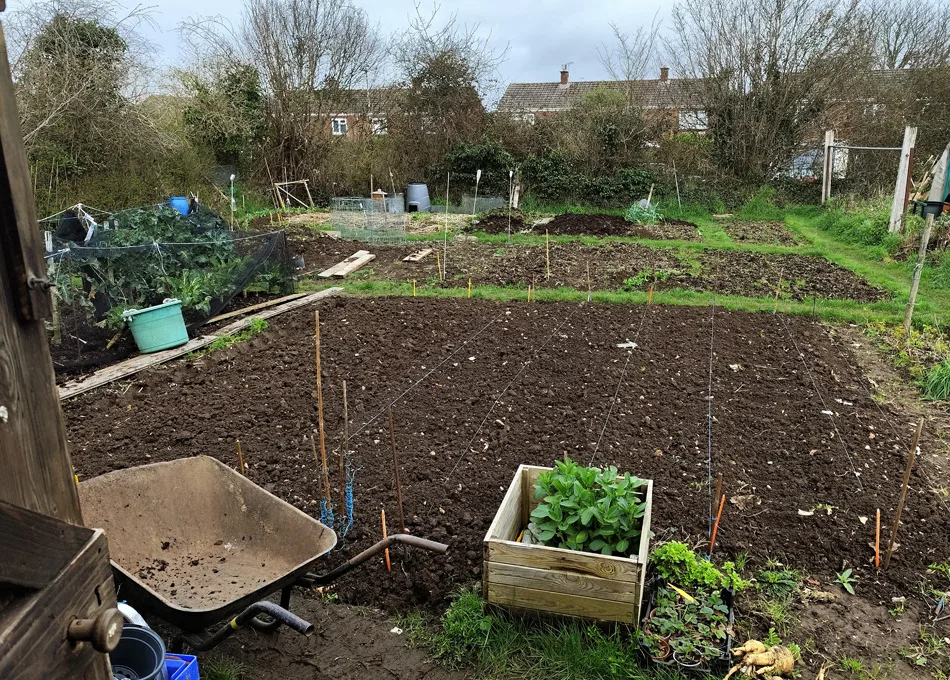
Barry Cuff takes a look back through his notes of what happened on his Sturminster Newton plot last month
Barry Cuff’s allotment in Sturminster Newton
allowed plenty of work to be carried out on the plots. With the blackthorn putting on an amazing show in the hedges, there was always a risk of overnight frosts (a Blackthorn Winter*), so a close eye was kept on the forecasts to determine whether there was a need to heat the greenhouses.
Plot work: As last year’s crops were cleared and old plants consigned to the compost heap, beds were manured and dug as required. A long-handled Cornish spade makes light work of it – far easier than a conventional spade or fork.
In the ground: Garlic planted in November and broad beans planted out in February are both looking strong, helped along by liquid seaweed, although the beans are showing a little weevil damage. Leeks continue to be lifted as required.
Planting and sowing: It is still too early to sow outside, but the greenhouse is busy. Second batches of lettuce and leaf salad mixes are under way, alongside agricultural peas for shoots and spring onions for either in-situ harvesting or transplanting later. Tomatoes (14 varieties, more than 100 plants) and around 45 sweet pepper plants are developing well indoors, with surplus destined for fellow plot-holders.
Potatoes: The last of the Charlotte crop has been enjoyed (particularly good as wedges), with Desiree and Caledonian Rose still in store. New plantings have gone in steadily as ground has become available: Orla and Charlotte, Jazzy, Sagitta, Caledonian Rose and Desiree. A greenhouse-grown Jazzy in a large pot is already fully in leaf. Onions: The final trays of the 2025 crop are being used up, with any early sprouters processed and frozen. This year’s crop has been sown in stages: 9th: 150 plugs of Bonus (white) 10th: 60 plugs of Red Baron (red) 17th: 150 plugs of Bonus By 25th March, the earliest onion sowings were already showing strong emergence.
Fresh harvest and stores: The final pickings of sprouts, parsnips, carrots and early purple sprouting broccoli have been gathered. Autumn salads and radishes are now finished, replaced under cover by mixed leaves, pea shoots and chicons, with the first Little Gem lettuces planted out inside.
From store and freezer: potatoes, squash and onions, alongside sweetcorn, peppers, broad beans and French beans.
Fruit: Raspberry canes are pushing new growth, while buds are breaking on pear, currants and gooseberry. Strawberries have been fed with liquid seaweed and potash.
Wildlife: Warmer days have brought out peacock, orange tip, comma and brimstone butterflies. Bees are active on red dead-nettle and dandelions, with dark-edged bee-flies and ladybirds also making an appearance.
*Blackthorn winter is an old saying, referring to a sudden cold snap, often accompanied by frost or snow, in early spring (usually April), coinciding with the blooming of the blackthorn bush
A very long winter has suddenly been interrupted by a lovely weather interlude, allowing some much-needed work to be done on farms across the county. But the wet winter has once again been costly. For livestock farmers, the cost of bedding and keeping animals indoors has been significant, while many arable crops are still unhappy with waterlogged feet.
All of this places real pressure on farm businesses, and on the resilience and wellbeing of the farmers themselves. If you are finding things difficult, FCN is here to help – you can contact us in confidence on [email protected]. FCN hosted a Quiz Night at the Udder Farm Shop in March, with more than 130 people attending. More than £1,000 was raised for the charity. This spring we are also holding more of our popular Walk & Talk events around the county – details in the ad. Anyone within the rural community is very welcome to attend. Come and join us for a five to seven mile walk. We always meet at a village pub or café car park, so there’s the option of a drink and a meal afterwards. To book please contact Helen Newman by text or WhatsApp on 07957158259 or [email protected]
The countdown is on to the final fixture of the 2025/26 season at Wincanton Racecourse, and it promises to end on a high. Join us for the WinOlympics Family Raceday on Sunday 12th April: a celebration of sport, entertainment and great racing for all ages.
Bring your family, friends and even your dogs along for an action-packed afternoon! There’s something for everyone, from crazy golf and a surf simulator to Velcro dart football, all designed to get you into the sporting spirit. Younger racegoers can enjoy soft play and a quiet arts and crafts area, perfect for those who need a more relaxed pace during the day.
On the track Of course, the highlight remains on the track, with six thrilling races set to provide an exciting finale to a fantastic season of racing. Don’t miss your last chance to experience the atmosphere at Wincanton before the summer break. Celebrate the season in style and be part of a memorable day: gates open at 12:40pm. Visit our website for more information and to secure your place: thejockeyclub.co.uk/wincanton