Unsurprisingly, astrophotographer Rob Nolan talks about the surreal experience of watching an aurora borealis from our back gardens
In case you didn’t know, something quite spectacular happened on the night of 10th May, and I really hope you had the chance to witness it with your own eyes. Most of Northern Europe was treated to the most powerful Northern Lights display in more than 20 years! To put that into context, the last time this happened, most of us were using film cameras! This time was very different, and thousands of photographers headed to famous landmarks to photograph this extremely rare KP8 to KP9 event. The KP-Index is derived from the German Planetarische Kennziffer, meaning planetary index, which is a measurement of geomagnetic activity in the Earth’s atmosphere. It ranges from 0 (quiet) to 9 – an Extreme Storm. May’s event teetered on the edge of a KP9 event. The last time there was an official KP9 was the Carrington event, the most intense geomagnetic storm ever recorded, which happened in 1859. For May’s amazing display I chose to stay local, and spent hours walking around my local village and the surrounding hills, admiring the views of the spectacular pillars of lights in solitude, which made it all the more special. The image I’ve shared is a particular tree known locally as The Spooky Tree which caught my eye as I was wondering down the lane in our village. This particular geomagnetic storm was the direct result of three CMEs that surged out of the sun’s outer atmosphere and headed toward Earth. A Coronal Mass Ejection, or CME, is a collection of magnetized plasma ejected from the sun’s (exceptionally hot) outer atmospheric layer – the corona – as a result of a disruption in the sun’s magnetic field. I was fortunate enough to capture this CME using my telescope and solar film, to safely observe and photograph the sun’s surface. To have captured the sun spots that then caused the Aurora in the photographs that followed was extremely special.
More to come For me, seeing the huge output from the Sun and its direct effect on the Earth reinforced the huge cosmological forces at work and made it all the more interesting to observe. By pure fluke, I’ve now witnessed the Aurora in March in Finland, in April in Dorset (albeit a much less powerful display) and now in May. I do hope to keep this going into June and beyond, but with night-time hours diminishing, and the more northerly countries already enduring never-ending days, this seems an unlikely trend to keep going. Theres a very good chance we could see more huge Aurora storms this far south, though. With the peak of our Sun’s solar cycle reaching its maximum this year, the Northern Lights could put on some more incredible displays during the middle of our summer nights and on into winter – let’s keep our fingers crossed! This image was taken with the Nikon Z8 Mirrorless Camera and Nikon Z 14-24 f2.8 lens. The settings used were 14mm at f2.8 exposing for 6 seconds at ISO 1600 and processed in Adobe Lightroom.
The night sky, June 2024 – Rob’s guide for your stargazing this month:
I’ve already talked a lot above about the Northern Lights (it’s so exciting!), so I’ll just pick out a few key celestial events to watch out for during June. As we enter the summer months, it’s time to keep your eyes peeled for those rare noctilucent clouds often seen in the twilight hours after the sun has set. These eerie-looking clouds occur high up in the sky some 50 miles up, on the edge of space and lit up by the Sun. On 20th June, at exactly 9.51pm, we reach this year’s Summer Solstice and Midsummer’s Day – the longest day and shortest night of the year. There’s also an occultation of the Moon across Saturn on the 27th June in the early hours. This is when the Moon will appear close to Saturn and will briefly pass in front of the planet and Earth to obscure her from our view for about an hour, visible from Latin America and the Caribbean, Africa and Europe. Until next time, clear skies!
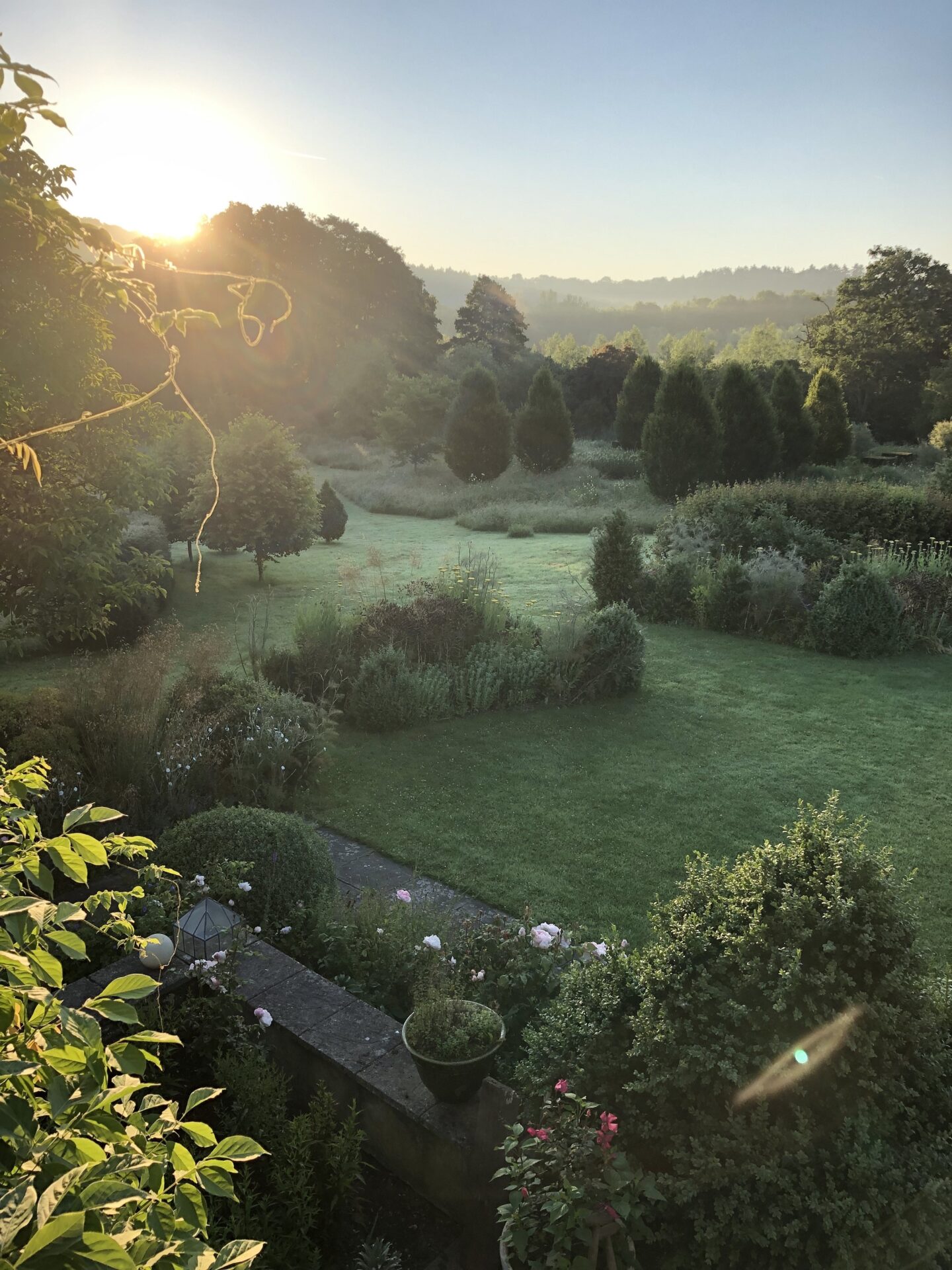
Garden lovers will have the opportunity to explore two private gardens, as part of the new Open Gardens event by the local children’s hospice, Julia’s House. Lady Tania Compton’s Spilsbury Farm in Tisbury and Littlebrook Farmhouse in Blandford Forum will open to the public this June. New for 2024, the Julia’s House Open Gardens scheme aims to raise vital funds for the Wiltshire and Dorset children’s hospice charity, which provides critical and compassionate care for the most seriously ill children and their families. Guests can enjoy exploring these delightful gardens, savour homemade cakes and refreshments, and gain gardening tips from the owners. Visits must be booked in advance at the Julia’s House website, where more entry information can be found: juliashouse.org/open–gardens-2024.
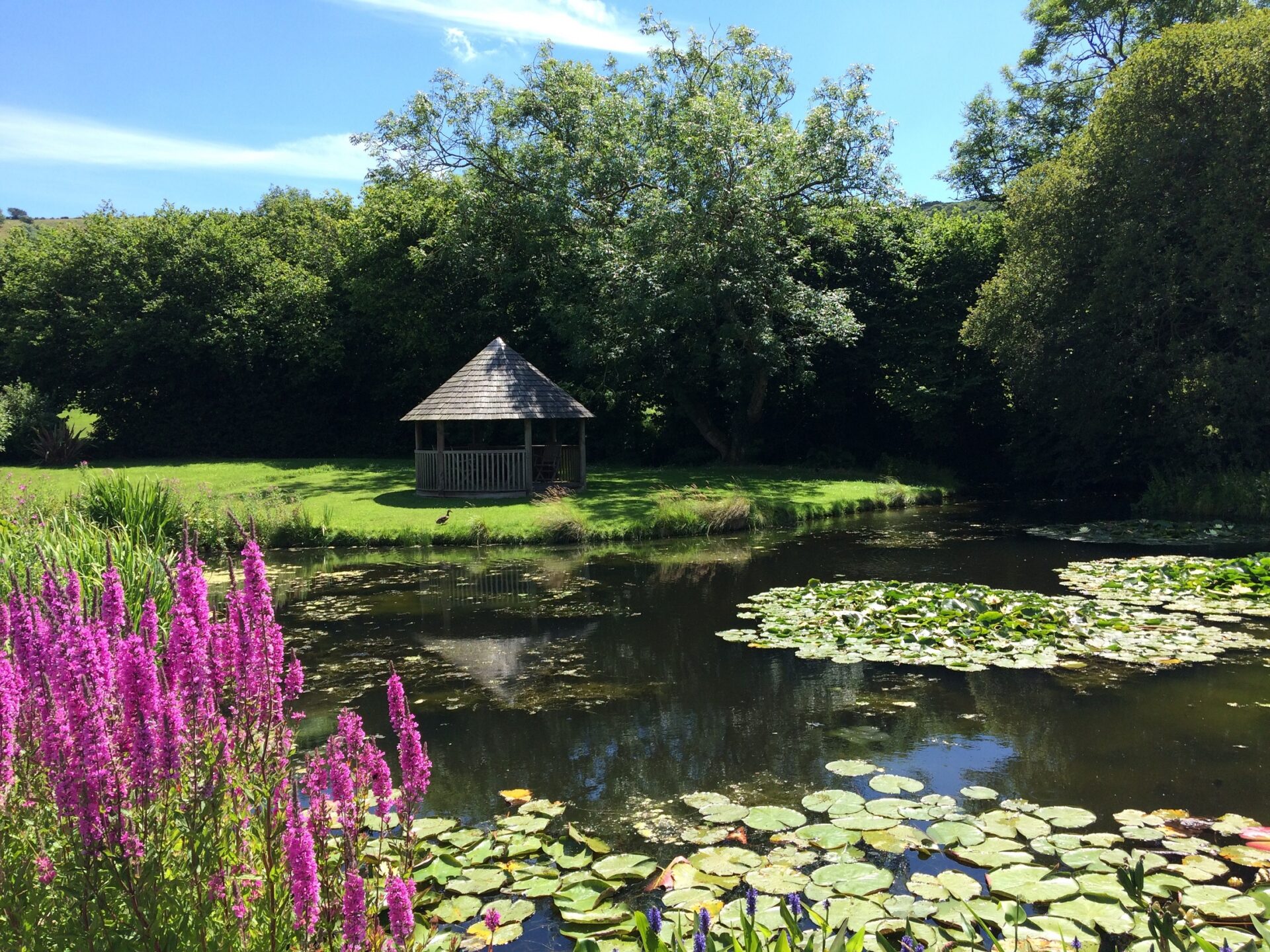
Littlebrook Farmhouse, Blandford Forum Wednesday 12th June Visitors will enjoy breathtaking views of the Blackmore Vale from the gardens at Littlebrook Farmhouse which will be open from 2.30pm to 5pm. These charming gardens feature a large landscaped pond area, as well as fruit trees, formal terracing and a thriving vegetable patch – all with those spectacular views! Entry £6 per person.
Lady Tania Compton’s Spilsbury Farm, Tisbury Saturday 15th June Explore the idyllic farmhouse gardens of Spilsbury Farm from 10am to 5.30pm. Home to esteemed garden designer Lady Tania Compton and botanist Dr James Compton, the six-acre gardens are a sweeping mixture of formality and wilderness. Each 1.5 hour bookable visit will begin with a talk from Tania Compton herself, and the opportunity to gain valuable gardening insights and advice. Guests can explore the romantic naturalist gardens at their leisure, taking in the ancient oak trees, an orchard with long meadow grass peppered with perennials, and borders billowing with eryngiums, delphiniums, cardoons and roses. Entry £15 per person
Yeovil’s Stroke Unit controversy – amid the public debate, Rachael Rowe looks at the pros and cons of NHS Somerset’s plans to centralise services
Yeovil Hospital
The NHS in Somerset is recommending centralising its stroke service. In January NHS Somerset’s Integrated Care Board (ICB) voted for a single emergency stroke unit for the county at Musgrove Park Hospital in Taunton, and the closure of the hyper-acute unit at Yeovil Hospital, which provides an acute stroke ward with specialist services for people who have had a new suspected stroke. Centralising services is recommending nationally – it saves lives. But the threatened closure of the Yeovil unit has raised concerns from local people and politicians. Under the ICB plans, Yeovil District Hospital will keep 12 acute stroke beds – where people can be cared for, from 72 hours after a stroke. But it will lose its four hyper acute beds.
Strokes in Somerset A stroke is a medical emergency, and for each minute treatment is delayed, four million neurons and 12 million brain cells die. Swiftly getting the very best treatment is critical, as is access to stroke rehabilitation. The way that stroke is treated today is radically different to that of even 20 years ago, when people were simply given some rehabilitation. Today, people with a suspected stroke can expect a CT scan, access to clot-busting drugs, rehabilitation and, where appropriate, specialist procedures. In London, centralising the stroke pathway saves almost 100 lives each year. Nationally, the chance of a stroke affects 1.8 per cent of the population, but Somerset has an older age profile, so it is higher at 2.3 per cent and Dorset is higher still at 2.55 per cent. Those higher figures are a vital reason for prioritising stroke care in the South West. The public can also play a critical role. Nine out of ten strokes are preventable, according to the Stroke Association. Smoking, obesity, atrial fibrillation and drinking excess alcohol all increase your risk of a stroke. Around 5.5 million people in the UK have no idea they have high blood pressure – getting it detected and treated can significantly reduce the risk of a stroke. Preventing strokes in up to 90 per cent of sufferers would result in massive savings in resources. A national review (GIRFT) of stroke services in 2019 found care in Somerset was good. However, stroke medical teams were not always able to perform rapid assessments, CT scans could not always be provided within an hour, clot-busting drugs were not always given within the critical time frame, and it was challenging to get an MDT (Multi-Disciplinary Team) assessment for therapy. Clearly, something had to change. Proposals to centralise stroke services in Somerset are not new. Since 2013, there have been at least three commissioned reports by the health organisations, visits by experts, and recommendations to centralise the hyper-acute stroke service so that stroke patients will go to Taunton or Dorchester. Locals know that the stroke unit at Yeovil Hospital is not solely for the people of South Somerset – a quarter of users come from North Dorset. If it is safe to close, as claimed, why has it taken so long?
Distance and Staff When centralised services were recommended back in 2014, a major analysis of travel times was also commissioned. The review showed that from some parts of Somerset, patients would be unable to get to a hyper-acute stroke centre within an hour. A further review of times in Somerset for the latest report shows that there would be an increase in journey times in some areas. Is it better to travel for slightly longer to get the best and most appropriate treatment, given that all the research supports centralised services? Concerns have also been raised by local politicians about transferring the sickest patients to Bristol or Southampton. West Dorset MP Chris Loder says: ‘It is a fantasy to believe that stroke patients from Yeovil will stay in Somerset. They will not go to Taunton for their treatment; they will go to Dorchester, and if necessary on to Southampton.’ Transfers to Southampton give certain people a fighting chance of receiving a thrombectomy – a revolutionary new treatment to remove a clot from the brain. Somerset and Dorset have never had neurosurgical centres, and residents have always had to travel to be treated by a brain surgeon. Given the choice of surviving a stroke and reducing the effects of long-term disability, or choosing to not travel to Southampton, few would refuse to travel. In the past year, 17 people from Somerset received this life-saving treatment. There is a national shortage of stroke consultants and specialists in England, which means it is increasingly difficult to find new staff. Although Yeovil has recently recruited new stroke consultants, there remain challenges in covering on-call rotas at both Taunton and Yeovil, which means the target of a seven day service is more difficult to achieve.
Postcode lottery Perhaps more concerning is that currently there is unequal care for people experiencing a stroke in Somerset. A spokesman for NHS Somerset said: ‘There is currently variation and inequitable provision of hyper-acute and acute stroke care across the county, especially over weekends and out of hours, where it takes significantly longer for patients to receive treatments such as thrombolysis. Patients admitted to Yeovil District Hospital at weekends are unlikely to see a consultant stroke specialist until after the weekend. There is no weekend outpatient service for patients suffering a TIA (transient ischaemic attack, or ‘mini stroke’) in the Yeovil area. ‘We are failing to meet several national performance targets in relation to hyper-acute and acute stroke care, which has a negative impact on clinical outcomes, including rates of thrombolysis and thrombectomy, time taken to receive thrombolysis, TIA assessments falling outside of 24 hours and access to MDT assessments.’ Underpinning the decision to centralise services is the need to provide a service that enables everyone to get the best possible care – not just pockets of the general population. It’s a difficult decision to make, but the research consistently shows that, when specialist services like hyper-acute stroke are centralised, more lives are saved. Dorset County Hospital NHS Trust was approached for a response but was unable to comment due to the pre election period. The Stroke Association was approached for comment and did not respond by the publication deadline.
Barry Cuff says a warm, damp spring means slugs and weeds – but also strawberries!
The lettuce has enjoyed the warm damp spring. All images: Barry Cuff
May was a very busy month, both on the plot and in the greenhouses. With more than four inches of rain and fairly warm conditions, good growth was ensured, and flushes of weed seedlings kept the hoe busy! One of our ‘special’ weeds is thornapple, which has quite distinctive seedlings. When these started to appear on the 8th it was a good sign that the soil was warm enough for the more tender vegetables to go out. So far, 2024 has been the year of the slug! Together with snails they have been active since February, and unusually they have even attacked plants like rhubarb, which they usually avoid. Pigeons have been another major pest this spring.
On the allotment in May:
1st – Plant up 20 tomatoes in large pots. Sown in individual small pots: six Crown Prince squash, six Butterfly squash, five Defender courgette and two Astia courgette, all in the greenhouse. 2nd – Cut paths, put straw under strawberries and cover with a net. Greenhouse – sow ten seeds of Cornichon de Paris gherkins. 4th – A cutworm has attacked a few lettuce. Harvest the tub-grown Jazzy potato: 19 tubers of varying sizes. Most of these were eaten with our evening meal – absolutely delicious with butter! 5th – Hand weeding, and prepare the ground for the first two lines of peas. 6th – Plant out second batch of Little Gem lettuce, and sow a patch of Scarlet Globe radish. Plant out the last of the onion seedlings – these will be used as spring onions. Sow Moonshine and Scarlet Emperor runner beans in the greenhouse. 7th – Put twine around broad beans for support. 8th – Sow 20 seeds of White Step cauliflower and 30 seeds of Safari dwarf French bean in the greenhouse. 9th – Pump water from the well (mainly being used in the greenhouses on the site) 10th – Sow 20 seeds Cheesy cauliflower and 36 seeds of Swift sweetcorn. This is a second batch, as those sown in April are a little slow.
trawberry picking began on 24th May
12th – Prepare the ground for two lines of peas, more weeding, and feed the garlic and onions. 13th – Put net cloches over first two rows of peas. 14th – MORE THAN AN INCH OF RAIN! 15th – Sow 20 seeds of Cendis cauliflower and 15 seeds of Rudolph purple sprouting broccoli in the greenhouse. Tie and remove tomato side shoots. Hand weed the parsnip. 16th – Thin celery and celeriac seedlings in plugs. Another plot holder gave us two Butterfly squash plants as we had poor germination. Runner beans into the cold frame. Pull some spring onions. 17th – Sow 20 seeds of Ironman and 15 seeds of Atlantis calabrese in the greenhouse. 18th – Pump water for site. Weed raspberry canes. See we have lost two potatoes due to ant damage – we lose a few each year as ants nest on the roots. 19th – Harden celery and celeriac. 21st – Sow about 30 seeds of Nautica dwarf French beans (as Safari had poor emergence). Cut the hedgebank. Put more twine around broad beans. 22nd – Harden sweetcorn. Cut lettuce. Cut chicons for their fourth cut. 23rd – Erect canes for runner beans. Dug skulkers* from the next area to be planted. 24th – Patch first three rows of peas. Sow a line of Johan pea and half line of Carouby de Massaune mangetout pea. Pick first bunch of Sweet William and the first strawberries! Hand weed and thin parsnips.
At the end of the month most crops are looking exceptionally well
26th – Plant out 30 Moonshine and 20 Scarlet Emperor runner beans. 27th – Pull spring onions, cut lettuce. Delicious skulkers for dinner. 28th – Plant out about 70 Swift sweetcorn, weeding. Pick strawberries. 29th – Plant out Astia and Defender courgettes.Plant out Crown Prince and Butterfly winter squash. 30th – Pinch out tops of broad beans to aid pod production. Very little blackfly, but large numbers of Ladybirds. Taking side shoots from tomatoes At the end of the month most crops are looking exceptionally well.
Dorset term for potatoes accidentally left in the ground from the previous year.
From left: Rachael Perrett of Meggy Moo’s Dairy, Peter Morgan of The Book & Bucket Cheese Co, and Barbara Cossins, founder of Love Local Trust Local
Love Local Trust Local was fortunate enough to help showcase some of the best Dorset produce on offer at the Dorset Spring Show a few weeks ago. We worked alongside Peter Morgan of The Book & Bucket Cheese Company and Rachael Perrett from Meggy Moo’s Dairy. Both of these Dorset food champions are much-loved members of the Love Local Trust Local family, and have been since we set up in 2018. The three of us were a great team; cooking and talking about our local Dorset produce and ingredients while we explained to the audience the importance of supporting our British food producers and farmers. Why we should all be using as much local and in-season produce as possible, to keep our carbon footprints to a minimum. It was great to see so many people enjoying their day out despite the challenging British weather. We’re a nation of real troupers! On both show days we had a big audience listening and watching our food demos – it was fabulous to see so many people enjoying a taste of what we had produced and genuinely interested in what we had to say. We all came away buzzing with energy and excitement … and sore feet!
Selection of The Book & Bucket cheeses, with Meggy Moo’s butter and cream
The local directory Dorset is a beautiful place with an abundance of food producers and it’s so important to keep spreading the good word about what we are doing for food and farming. We will shortly be launching a handy directory of Dorset food producers on the new Love Local Trust Local website. This will help people to discover where they can buy local produce in their villages and towns; which of the shops will be stocking local Dorset produce, as well as where the county’s milk vending machines are located. It will include lots of farm shops and butchers for sourcing local meat and cheeses, plus some of our local Dorset bakeries with their delicious homemade bread and cakes. Now more than ever it is so important that we all work together and help support each other in these costly and challenging times. We must not rely on imported foods and we must not forget that supermarkets do not grow the food; our farmers do. Remember folks. No farmers, no food. It’s the real people in the food chain that matter lovelocaltrustlocal.co.uk
Dingle Fingle & The Clown Town Crime Watch were an absolute MUST-SEE in the main ring of the Spring Countryside Show today! We ooh-ed, we boo-ed and we roared with laughter as the car hurtled round the ring (with or without Dingle Fingle inside it), sliding the corners and spraying the crowd with water. It’s a truly great slapstick comedy clown act which not only had all the kids shouting, but the adults too. The mime was first class – Dingle Fingle getting his briefcase stuck IN THE AIR had everyone gasping and laughing.
Not to be out done, the terrier racing was it’s usual chaotic hilarity – helped along by the commentator being thoroughly rude about everyone’s dogs. Pig racing was exactly as bonkers as you’re picturing – these are not highly-trained big pigs. No no. These are mad and speedy young pigs, racing over jumps to get to the food bucket. Brilliantly fun. We loved the heavy horse area – not only being able to get up close to the Shire horses, but also to watch them being plaited, washed and harnessed – it was a fascinating insight.
In the farmyard area children were able to meet the goats and VERY small sheep, hold adorable floofball baby chicks and chat to the therapy ponies from Tokes Farm.
There were of course aisles of craft and artisan stands to browse, the food stands had plenty of choice for lunch, and the call-important coffee was excellent. There’s something for all the family, so if you didn’t make it to today, go tomorrow!
Spring Countryside Show is at Turnpike Showground, SP7 9PL.
Tickets on the gate: £17 per adult (KIDS GO FREE – 15 and under!).
Gates Open: 9:30am to 5pm. Dogs welcome, but must be on a short lead.
Pauline Batstone shares her monthly round up of what’s happening among the town’s collection of community enterprises and events
Screenshot
We’re just in time for the Sturminster Newton Literary Festival 2004 – see the poster opposite! There’s something for everyone … and the ever-popular Ghost Walk event looks like it will be repeated beyond next week, as we have a waiting list (or is it the local poltergeists booking the places?). In addition to the broad range of literary walks, talks and workshops, the UK commemorates 80 years since D Day on the 6th June. As part of this commemoration, Sturminster LitFest is devoting the 9th of June to military history, with a special day ticket covering all events on the day. This will include the Story of the Hampshires, Dorsets and Devons on 6th June 1944 by James Porter, the official opening of the special D-Day testimony exhibition and The Army that Never Was – D Day and the Great Deception by Taylor Downing. Saturday 15th June is the LitFest’s first Crime Writer’s Day, with another day pass available for the three crime writing talks – come be on a jury and solve a real crime! Dorset Arts Week is happening right now around the county, but Sturminster will be holding its own Arts Fortnight next month, the 13th to 28th July, with a pop up exhibition soread around the town’s shops. A big thank you goes to all who have offered window space – and there is still room for more artists, whatever your type of work.
Wolf wine stock the old bank vault in 1855
Elsewhere in Stur… SturAction’s four shops continue to flourish and benefit the town by bringing shoppers in as well as putting money towards projects. Amazingly we now have almost 100 traders in 1855 – but we can always find space for more! SturAction does not give grants to individuals, but does consider applications for funding from groups and organisations, as well as initiating projects itself. The key qualifier is that the money must go to support the economy of the town and to the benefit its residents. In addition, SturAction’s volunteers are a lively social group, and we are always pleased to welcome more people into our family! In particular we are currently looking for folk to help staff our Furniture Warehouse – do speak to our shop manager Cheryl Basten (usually found at either 1855 or The Emporium) email her on [email protected] or phone 07733 430105. Cheryl will also point you in the right direction to apply for funding.
William Fox-Pitt bids a quiet farewell to 5 Star Eventing – Sally Cooper talks to him about his plans for training and breeding … and some family time
William Fox-Pitt at his yard in Dorset – All images: Courtenay Hitchcock
No fuss, no pomp … just a casual announcement on Sunday 12th May at the end of the BBC Badminton Eventing coverage, surrounded by his children. ‘Yes, that’s it …’ And so, with no fanfare and in his own typically quiet, unassuming style William Fox-Pitt – the Great Equestrian from our own county has retired from 5* Eventing in his 40th year of competing, aged 55. At the May 2024 Badminton, as he rode the most amazing Cross Country on the mare Grafennacht, the question on everyone’s lips was if, as had quietly been rumoured, it really was to be the end, was he to get his dream swan-song?
A parent, not a trainer William’s career started in the 1980s – he has been so successful that it is hard to provide a snapshot without writing a book. William has been British number one many times, and was the first British rider to become World No.1. He has won 20 major Championship medals and represented GB at five Olympic Games, winning two team silver medals and one team bronze. He is the only rider to have achieved five of the six 5 Star three-day events worldwide. William was awarded the MBE in the Queen’s 2019 birthday honours for services to the equestrian world. I met William to have a chat about his plans for the next stage of his career. He has a state-of-the-art eventing training yard near Sturminster Newton, where he lives with his wife Alice Plunkett, one of ITV’s BAFTA-winning racing team, and their four children, Oliver, Thomas, Chloe and Emily. The family is happily ensconced in Dorset life. William can often be seen driving his children and their ponies around and supporting Portman Pony Club and school Show Jumping events. How many Pony Clubs and schools can say that their children are coached and encouraged by a 5 Star Olympian? And yet he accepts no formality or ceremony, and teaches with his trademark quiet persuasion and enthusiasm. ‘I enjoy my involvement with the young people – but as a parent, not a trainer. Retirement from 5 Star allows me to attend their events more. Next weekend we are off to Goodwood, pony racing!’ Many moons ago, when my own children were members, I remember the Pony Club being invited to the Fox-Pitt eventing yard to have a look around. As you’d expect, it was all very impressive and chic, but there were certain things which we can all still recall today. On the yard tour, William showed us a horse literally wrapped up in many red ribbons. ‘That one’s a secret,’ he said. ‘Its Alice’s new horse for her birthday today. No telling!’ William was asked by the wide-eyed young riders if they could look in the enormous eventing horse lorry. Not a problem. They were all examining the travelling horse and human facilities when William realised that he had a visitor – a horse owner had unexpectedly turned up to see him ride her horse. It was spectacularly windy, and William said: ‘You can all stay and watch me ride in the outside arena if you stay out of sight and are very quiet.’ We watched in silence as he calmly mounted a beautiful, skittish animal in the high winds. The horse immediately went crazy – but the long legs, calm seat and Velcro bottom just went with the flow. He simply stayed put and rode on. Young and old alike, we were all in awe of what we saw – a true equestrian, doing his thing to perfection. Calm, confident horsemanship with total respect for the animal.
William Fox Pitt in Dorset
The swan-song that wasn’t William survived a major riding accident in France in 2015, when he suffered a life-threatening head injury during a cross country fall at the 2015FEI World Breeding Eventing Championships for Young Horses. He was placed in a medically induced coma for two weeks, and had to learn to walk and talk again. The fall threatened to end his career – but, despite lingering vision problems and memory issues, he miraculouslyreturned to competing and even went on to ride in the 2016 Rio Olympics. Unfortunately, this year’s Badminton dream finale was not to be. While the pair were in second place after that fabulous Cross Country, they had six down in the Showjumping and dropped to 13th position. William was typically self-effacing. ‘The mare will definitely return – but with younger bones on her back …’ William’s plan is to have more time to develop his business model for the Dorset estate. Naturally he is keen to spend more time with his children, family and friends and, he admits, his chickens. ‘Yes! I love my chickens! Thanks to Mr Fox we have some gaps, and one of my daughters and I are having fun with the incubator, producing some new fancy breeds.’ William is the first to accept that he is very lucky to still be in one piece after a long career in a dangerous sport. He also recognises that he has been extremely lucky to choose to retire in his own time – and he admits that Alice is absolutely delighted that he is hanging up his 5 Star boots! ‘Particularly since my 2015 accident. It’s been very hard on Alice and my family to watch me competing – they do it with great fear and trepidation. But equally, it’s very nice that they care!’ But why was 2024 the year? ‘The decision hinged on many factors: horsepower, financial issues like sponsorship making the business model less appealing and, inevitably, my age,’ he says.In the month that saw the sad death of Georgie Campbell at Bicton, it was inevitable that the conversation turned to Health and Safety. ‘Standards have improved enormously in my time,’ William says. ‘There is a huge degree of assessment and safety in Cross Country. We try to make it as safe as possible, but at the end of the day it is a very risky sport involving huge animals and vast jumps. It is no different from skiing or driving – sometimes we are in the lap of the gods. And we know that. Sadly, accidents do happen, and lives can be lost.’
William Fox-Pitt and the photo bomb horse Lucky
New plans This summer William will be at the Paris Olympics as both trainer of the Brazilian event team and coach of the Japanese rider Kazuma Tomoto. He sees training and teaching as a natural and enjoyable progression from his own career – and it’s one for which he is increasingly liked and respected. ‘I enjoy the international teaching, and inspiring the next generation of professional riders,’ he says. ‘But I also enjoy the more “normal” local teaching. In many respects I wish that I had done more of that earlier.’ Breeding and producing will also take centre stage, he says: ‘I am looking forward to breeding, producing, training and selling on horses from the yard. I am keen to produce from lines that have brought me success in the past. Currently, we have a new trendy initiative and we have bred three cracking Connie X Thoroughbred youngsters. Hopefully my girls will ride them and other homebred horses in the future. I’m certainly not buying them in outside yaks – they can jolly well ride things that I produce at home!’ The overall aim is very much to have more time to develop his business plans for the Dorset estate. With so many new plans, will he miss the 5 Star competitions? ‘That’s an easy answer. I’ll miss the adrenalin. It’s an addictive drug. Eventing provides a target and drive, with a fantastic adrenalin crescendo. ‘However … I will not miss the morning of Cross Country, waking up and thinking: “What on earth am I doing here?” To be honest, the biggest difference in lifestyle will be accepting that perfection is no longer essential … That “pretty good” is now perfectly fine! ‘The other thing I’m looking forward to is being able to say “Yes” to friends’ invitations. Saying “No” has been my stock answer for so long. That feels quite exciting!’
William Fox-Pitt happy and smiling
And so to the 19 random questions…
What’s your relationship with Dorset? My father was born here, in Caundle Marsh. He lived here for a long time so we came back a lot of times to see my grandparents in Caundle Marsh and part of our family is Pitt-Rivers, we are cousins. It was family which drew me to move back in 2001. They created a base for me, and supported me – and now my involvement with Hinton St Mary Farms is increasing all the time. So I do have long-time Dorset connections, and now it’s where the Fox-Pitts are at home.
What was the last song you sang out loud in your car My god, I don’t do singing out loud, I don’t subject anyone to that. Even myself!
It’s Friday night, you have the house to yourself, no work is allowed. What will you do? Oh my goodness. I would enjoy no noise. I have a bit of a passion for gardening, so I think I would get out in the garden. I would probably not even turn the telly on … But by the time I’ve done the dogs and the garden and shut up the chickens, that’s probably my evening gone!
What little luxury would you buy with £10? Very long, serious and thoughtful pause Probably … several bags of Haribo jelly babies
The last film you watched? I saw Guy Ritchie’s The Gentlemen. I’d wholly recommend it. I don’t think it was anything extraordinary, but it’s defintely enjoyable.
What would you like to tell 15 year old you? Always always have a go.
Who’s your celebrity crush? Oh, goodness me … more serious contemplation I’m showing my age, but probably Gwyneth Paltrow!
What’s your comfort meal? Oh I’m very greedy, I eat a LOT … Shepherd’s pie.
The best biscuit for dunking. I’m not a dunker! I mean, I do very occasionally, and then it’s got to be a Digestive, but no … I’m definitely a biscuits man, but I’m not a dunking man. I do dunk toast in soup. But I wouldn’t dunk a biscuit in my tea.
What’s your secret superpower? I haven’t got any superpowers! Erm … I’m quite reliable? Quite consistent. Predictable. Actually I’m quite … boring!
What was the last gift you gave or recieved? I haven’t had anything since Christmas! Oh, I gave my family – including myself – a trip to Kenya for Christmas. That was pretty amazing. We’d always said we’d do a horse riding safari when the girls were old enough to go and the boys were young enough to still be around. So we finally went – it was very special. It was money that I’d put aside, just to put into a specific adventure.
What’s your favorite quote? I’ve got several – but they’re not terribly printable! I got a school report once that was very bad, but very complimentary in other ways, and my father said ‘nice guys come last’. That has always stuck with me. I would probably say ‘Never say no’ or ‘never give up’ .. I should ask my poor sons this question, I’m always banging on to them “Remember, when I’m dead, remember I always said …” I think Always Have A Go has to be the best.
Your most annoying trait? God you should ask my wife that question. I think … ponders I’m quite lazy. I think that annoys her sometimes, that I’m not urgent enough.
Cats or dogs Dogs!
What shop can you not pass without going in? None! I don’t go into any shops if I can help it! Though I suppose I’m a bit of a sucker for The Buck services at Andover, I tend to stop there for a cup of coffee too often. Does that count?
William Fox-Pitt training in his menage
Tell us about one of the best evenings you’ve ever had Probably my wedding. It was very special. My wife’s family were home, nearly all of our best mates were there … It was just such a special night.
What in life is frankly a mystery to you? That’s a good question … a mystery to me … Ice baths! I absolutely don’t get that. I’m a hot bath man. I would never. No.
Chip shop chips or home baked cake? swift and unblinking, the first answer to cause no hesitation Home baked cake!
You have the power to pass one law uncontested – what would you do? A suicide button. I put my dog down rather than let it suffer, and yet you have to watch your grandmother lie in bed for five years? It’s a contentious issue, but I suspect it’ll happen in my lifetime. I wouldn’t want to leave anyone in any pain. As in, by relieving myself of pain, I wouldn’t want to leave somebody else in pain behind. But if my family were looking after a vegetable in bed, I would like them to be able to just press a button. There’s got to be a way of protecting yourself, so no one’s going to murder you because you’ve got money or because you’ve got a garden or because they don’t like you. There has to be a way to work around that. I just know if I had an accident – like I did have, I was a vegetable – I say to all of them, if it should happen again … for God’s sake. Just unplug me. Please do not keep me going. There might be a hope of something one day, but honestly – look at the big picture and just think, what have you got?
How the Nutrient Neutrality Scheme bought Lyscombe: Andrew Livingston looks at the strategic approach to saving Poole Harbour
Lyscombe Farm nestles into the small valley below Lyscombe Hill and Dorsetshire Gap All images Courtenay Hitchcock
Take a walk alongside Poole Harbour: you only have to peer into the water to see the effects of water pollution on our waterways and coastline. It’s undeniable that nitrates in our water courses are an issue. Green algae, which feeds off nitrates, is in the harbour bed, the mudflats and the wetlands that make up Poole’s natural harbour, and is slowly killing the ecology and biodiversity of the harbour – which is designated a Special Protection Area (SPA), Site of Special Scientific Interest (SSSI) and Ramsar (international wetlands) site. Seagrass and salt marshes, which feed the wetland birds, have been smothered, and the water is increasingly becoming more and more poisonous for the fish and molluscs that live there. It is a big problem.
DWT’s George McGavin, president (centre), and CEO Brian Bleese (right), speak to the guests at Lyscombe
Natural regeneration But both Natural England and Dorset Wildlife Trust (DWT) believe that their acquisition of farmland north of Dorchester, 15 miles as the crow flies from the harbour, may help. DWT celebrated its purchase of Lyscombe Farm, a Site of Special Scientific Importance (SSSI) between Piddletrenthide and Cheselbourne, at a launch event last month. Dignitaries from Natural England and DWT spoke to guests about the opportunities open to them now that the farmland has been taken out of traditional agricultural use. The farm – 827 acres of chalk downland, grassland, woodland and wildflower meadows – was farmed organically by the previous owner, with half the acreage to grow cereal and the rest to run herds of livestock. ‘We aim to showcase sustainable land management here, natural regeneration, and we want to engage people in the rich heritage that is here,’ said DWT chief executive Brian Bleese at the event. ‘Our aim is to establish Lyscombe as an exemplar nature reservation. Ultimately, our ambition is for it to become a national nature reserve. ‘We are facing a global ecological crisis that threatens thousands of species and their habitats. Dorset is not immune to this – there are horrific statistics in Dorset when you delve into them; one in 40 species previously recorded in Dorset is no longer present. They’re locally extinct. That’s a pretty poor statistic, and one that we have to do better in correcting. Places like this can give us an opportunity to make that space for nature. It’s vital that we make space for nature in our landscapes.’ Returning the farm to nature will inevitably allow for the biodiversity on the land to grow and improve. But not everyone agrees that this is the right use of public money. George Hosford farms near Blandford, and is deeply passionate about environmentally friendly, sustainable food production methods. He is sceptical about the effectiveness of the scheme, and suggests the money would be better spent educating local farmers on the responsible use of nitrogens.
The green algae is clearly visible in Poole Harbour
House building with nature However, the question is how does land near Dorchester save Poole Harbour? Natural England’s answer… The Nutrient Neutrality Scheme. There are two main causes of nitrates in our water; agriculture and sewage discharge. Natural England has set up the scheme to allow funding of new nature recovery projects which offset additional pollution from new houses. They then sell these benefits as credits to developers so they can offset the pollution from new homes, quickly get planning permission and enable the building of much-needed new homes. At the event, Natural England chief executive Marian Spain explained how the scheme is designed to save our waterways and coastline. She said: ‘I came down for a visit about five years ago to look at some of the issues on the coast path, and I couldn’t ignore the green algae. It has stayed with me ever since. When we talk about pollution, it is not an abstract thing, it is something that the people living and working on Poole Harbour are seeing and feeling and smelling on a day-to-day basis. It really struck home to me, what a big thing this was. ‘We clearly couldn’t just stop house building. We didn’t want to and we couldn’t. Contrary to what you might read in some parts of the press, it is not our job to stop house building. It is our job to enable house building that works with nature. ‘The other thing that I and Natural England are increasingly becoming aware of is that this is going to be how conservation happens going forward. It is no longer enough just to look after protected sites or to designate national parks. When I started this job, more than 30 years ago, conservation was pretty easy – we just looked after the stuff we owned or the stuff we controlled. The job now is about looking after the whole ecosystem, reducing pressures where we can – because those ecosystems are going to have to absorb new pressures.’ Natural England has calculated that the acquisition of Lyscombe Farm will enable 3,700 new homes to be built around the waterways that feed into Poole Harbour across Dorset. Figures released by Dorset councils in 2016 suggested that 100 new homes (60 houses and 40 flats) in the catchment area of Poole Harbour would produce 0.185 tonnes of nitrogen per year – suggesting that 3,700 homes would produce 684.5 tonnes of nitrogen a year. Building developers will now be able to purchase nitrogen credits from Natural England to be able to build new homes.
The yellow shaded area is the Poole Harbour catchment area. There are 500 farmers within this zone affected by the Nutrient Neutrality regulations
Value for our money The removal of farmland from high nitrogen input to low nitrogen input to allow for an offset to build houses is called indirect mitigation. Direct mitigation would be the improvement of nitrogen stripping at the Wessex Water sewage treatment works, or introducing natural means of nitrogen stripping in the water, such as reed beds and wetlands. George Hosford believes that the removal of Lyscombe Farm as farmland will make no difference to the nitrate level in Poole Harbour. He told the BV: ‘There won’t be any impact from this farm on what actually pitches up in Poole harbour and causes any pollution in the years to come.’ The Blandford farmer suggested that the money spent acquiring the farm could have been better spent on local farmers in the Poole Harbour catchment area, helping to educate them further in the responsible use of nitrogens on their land. ‘I would like to have seen some of the public money that went on this farm go into helping the 500 farmers in the Poole Harbour catchment to learn how to farm more efficiently with their fertilisers and their manures. ‘Because, as well-educated as an awful lot of them are, the technology and the science needs to understand from how much nitrate is applied to your crop, how much of it is used by the crop and how much gets washed through below the rooting zone where the plant can’t reach it. There’s still an awful lot to be understood – should we be applying a little at a time rather than a big slug all at once? Should we only apply it just after rainfall, or just before it starts to rain? ‘Many farmers I’ve spoken to actually want an effective nitrate-leaching tool, so they can better understand what happens to the manures and the artificial nitrogen that they apply to their fields. And also just how much of it is leaching, ending up in the water, the rivers and eventually into Poole Harbour – which is what we’re all concerned about.’
Wildlife Trust chief executive Craig Bennet addressing the guests at Lyscombe
Farmers are aware that nitrates are running off from their farms, but George doesn’t believe that they are all to blame. He said: ‘Some of those nitrates are coming from farms. I think we’re all happy to acknowledge that. But an awful lot, we don’t know exactly how much, are coming from the sewage treatment works. There are 28 in the catchment. And there has been no monitoring of this, or very, very limited monitoring of the amount of sewage outflow that has been treated or untreated.’ Members of Dorset Wildlife Trust and Natural England wanted to make it clear during the event that the acquisition of Lyscombe Farm will help to put pressure on the sewage companies to work harder to minimise the number of nitrates that are leaking from their treatment plants. ‘Now, the Natural England chap tried to persuade me that the water companies are going to be forced to clean up their act,’ continued George. ‘And he sounded rather confident about that. But I have serious misgivings. A lot of the coverage we’ve seen recently leads me to feel sceptical about that. But he says he feels confident that once we’ve got the water companies cleaning up their act, and there’s no more crap going in the water from them, then we’ll just have the farmers to deal with.’
Dorset Wildlife Trust’s launch event at Lyscombe farm
Reverse the decline There is no doubt that we have an issue with pollution in our waterways, and there is also no doubt that there is a housing crisis across the United Kingdom. But, it shouldn’t be forgotten that there is also an issue with food security. As a nation we are not self-sufficient when it comes to the production of food – latest figures suggest that only just over half of the food we eat in this country is grown here. Wildlife Trust chief executive Craig Bennet said that in 2022 the UK government signed up to ambitious biodiversity framework targets at the UN Biodiversity Conference in Montreal: ‘That global biodiversity framework requires all those countries to try and get 30 per cent of land and inland waters and sea in recovery for nature, by 2030, just six or eight years away now. And in the UK, in England, we’re at less than five per cent. So we’ve got a long way to go to get to 30 per cent in the next six years. ‘So, seeing this acquisition today, through this partnership between Natural England and Dorset Wildlife Trust, it’s a brilliant example of how we can do this, how we can start to turn things around. I don’t know about you, but I’ve been fed up for decades. I’ve seen all these graphs of nature going downwards … well, we don’t want to just slow the decline, we want to reverse the decline and bring nature back! That’s absolutely crucial. We want to do it fast. As fast as we possibly can.’