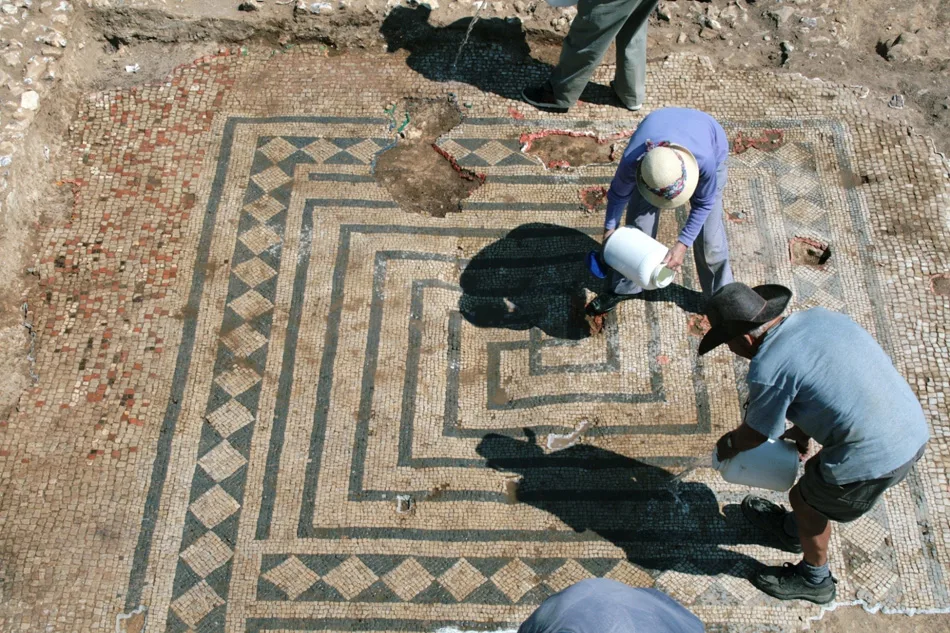
The East Dorset Antiquarian Society (EDAS) has received the prestigious Britannia Award from the Roman Society, recognising their ‘outstanding voluntary contribution to Roman archaeology in Britain’ for excavations at Druce Farm near Puddletown. From 2012 to 2018, a core team of 20 EDAS volunteers – led by Lilian Ladle and Andrew Morgan – excavated the site of a Roman villa, supported by members of other local groups.
Over 4,800 volunteer days uncovered the villa complex, Neolithic remains and extensive Roman features. The project actively welcomed the public, including school visits and open days, and was praised for its high-quality research and rapid publication. In 2022, Ladle’s monograph The Rise and Decline of Druce Farm Roman Villa (60–650 CE) was published to acclaim. EDAS, based in Wimborne, continues to offer practical archaeology opportunities to its 270 members. and remains committed to exploring and preserving Dorset’s rich archaeological heritage.
The BV community news section is sponsored by Wessex Internet
The loss of biodiversity threatens national security, says a new government report – and Dorset is already feeling the effects
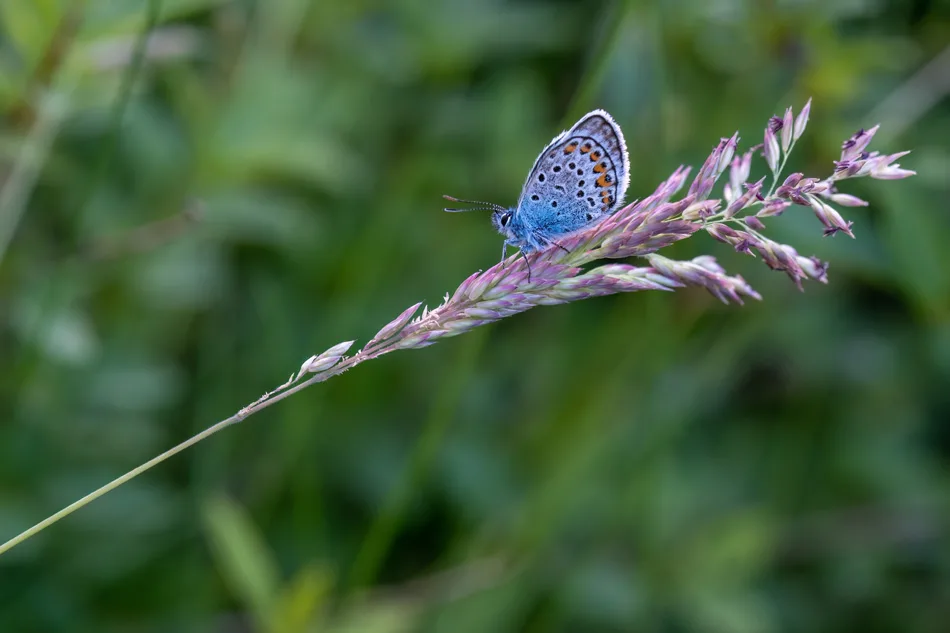
Silver studded blue butterfly
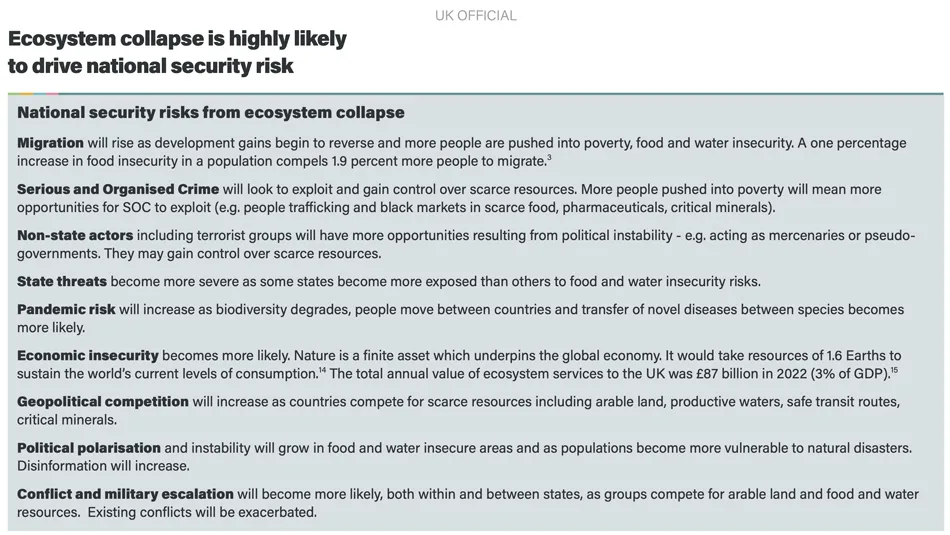
Wildlife populations are down by 73% since 1970. Freshwater species have fallen by 84%. These two examples are not just ‘nature loss’ – they are the result of the sweeping erosion of the systems that feed and stabilise civilisation. The Government’s new national security assessment, quietly released on 20th January, reaches a stark conclusion: global biodiversity loss and ecosystem collapse are no longer ‘just’ environmental issues, but are direct threats to national security, economic stability and the food supply. Using intelligence-style risk frameworks rather than academic modelling, the report warns with high confidence that ‘ecosystem degradation is occurring across all regions. Every critical ecosystem is on a pathway to collapse (irreversible loss of function beyond repair).’ The consequences are likely to include food insecurity and rising prices, alongside political instability, increased migration and conflict over resources.
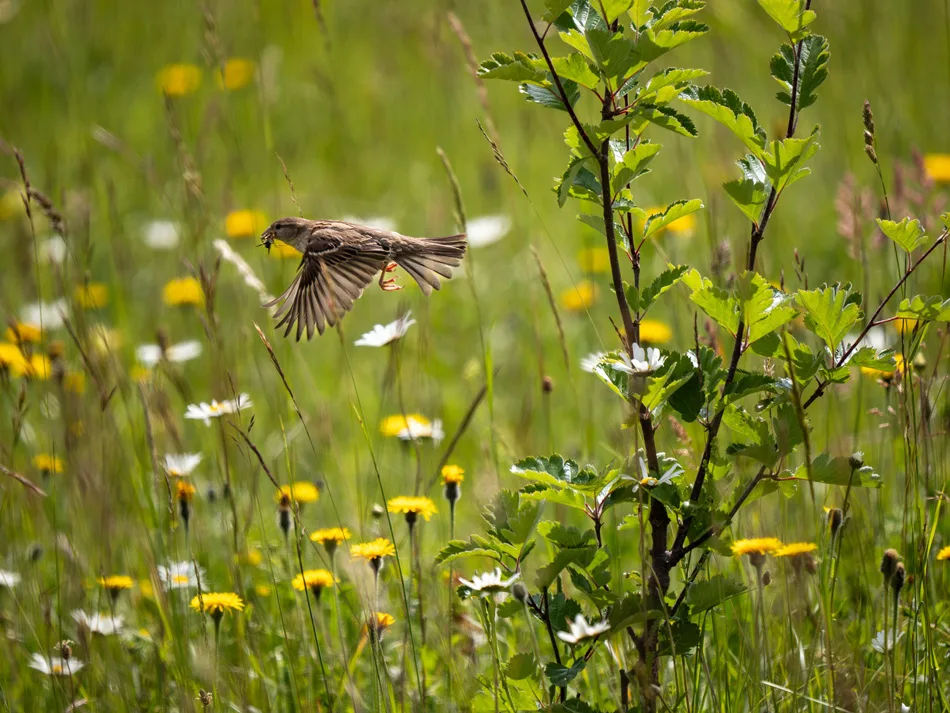
Female House Sparrow in Flight Feeding on Insects
Does it matter in Dorset? For many people, the report feels distant – rainforests and coral reefs are a world away from rural Dorset. But according to Dorset Wildlife Trust (DWT), the impacts are already being felt much closer to home. ‘It can be difficult to envisage how nature loss somewhere else affects us locally,’ says Imogen Davenport, DWT’s director of nature-based solutions. ‘But we’re already seeing it with climate change. The security risks – food supply, political instability, migration – are happening now. The same applies to biodiversity loss. It will affect food prices, availability and the water cycle.’ One of the report’s clearest warnings is that when ecosystems break down, the consequences don’t stay local: fertile soils, clean water, pollination and climate regulation all unravel together. These changes can be seen most quickly in the marine environment: ‘The ocean is more fluid – obviously,’ Imogen says. ‘Temperature and acidity shifts move quickly, and species respond by relocating.’ Off the south-west coast, octopus numbers have surged, tuna are appearing more frequently, while basking sharks – once a familiar sight – have largely moved north. ‘It’s not just about loss,’ she says. ‘It’s the speed of change. Add biodiversity decline, and the impacts multiply.’ On land, Dorset’s sheltered position as a southern county means it can become a refuge for species moving north – but that does not mean ecosystems are healthy. ‘We’ve seen long-term degradation to the point where systems struggle to function,’ Imogen says, pointing to Poole Harbour. Excess nutrients entering via rivers have fuelled algal growth that smothers mudflats and saltmarsh, weakening the entire system. ‘Once degraded, ecosystems are far less able to adapt. ‘It becomes a vicious circle.’
Screenshot
Farming or wilding? The report identifies food production as the biggest driver of biodiversity loss on land – an uncomfortable finding in a county where farming is economically and culturally central. But Imogen firmly rejects the idea that food security and nature recovery are in conflict. ‘You can’t have a healthy food system without nature,’ she says. ‘If soil washes off fields into rivers, it’s not growing food – and it’s causing damage downstream.’ In some places, work is already under way to undo historic decisions – including more costly options like ‘daylighting’ rivers that were forced into underground sewers decades or even centuries ago.Restoring ecosystems, the report argues, is often cheaper and more reliable than technological fixes applied after failure. Imogen agrees – with caveats. ‘There’s definitely some fantastic uses for technology, but some of the ‘fixes’ we’ve used historically have made things worse,’ she says. ‘Simply adding more fertiliser to degraded soils just means more nutrients end up in rivers.’ Restoring natural watercourses can reduce flooding and pollution, and can be simple where water is given the space to establish wetlands. In some places, work is already under way to undo historic decisions – including more costly options like ‘daylighting’ rivers that were forced into underground sewers decades, or even centuries, ago. Water sits at the heart of the issue. Dorset has swung between drought and flooding in the past year, exposing how fragile its landscapes have become. ‘If we keep water closer to where it falls – slowing it, holding it in soils and wetlands – we reduce flood risk, recharge supplies and help nature at the same time,’ she explains. Much of that thinking is embedded in Dorset’s Local Nature Recovery Strategy. ‘The challenge isn’t the ideas,’ Imogen says. ‘It’s implementation. These are big, interconnected jobs that require commitment across sectors.’ Framing biodiversity loss as a national security risk could now sharpen that commitment – but only if it changes decisions on planning, land use and infrastructure. The report’s warning may be in the language of global risk and national security, but its impacts are felt in Dorset’s stressed landscapes and harbours, in the heated debates about farming vs. development. The distance between those global warnings and everyday life in Dorset is shrinking fast. Read the Nature Security Assessment on Global Biodiversity Loss, Ecosystem Collapse and National Security in full here
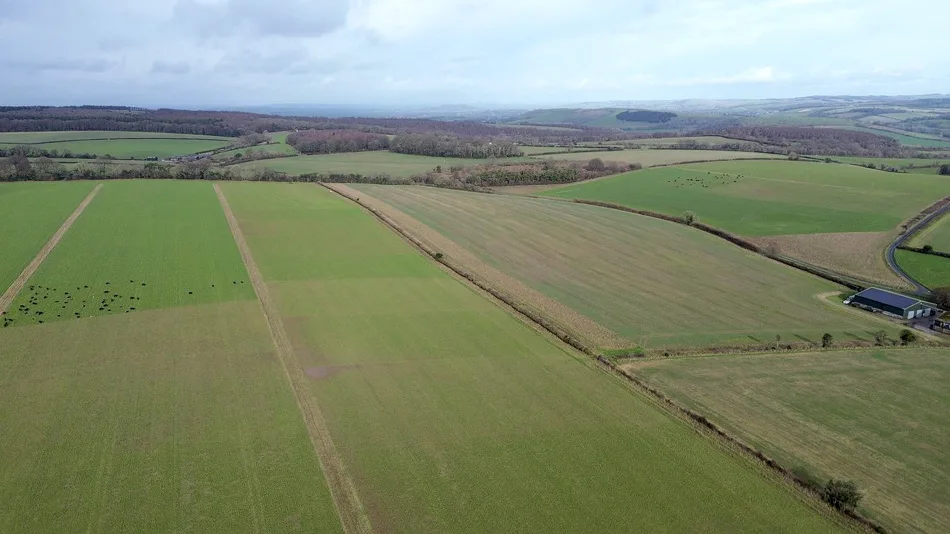
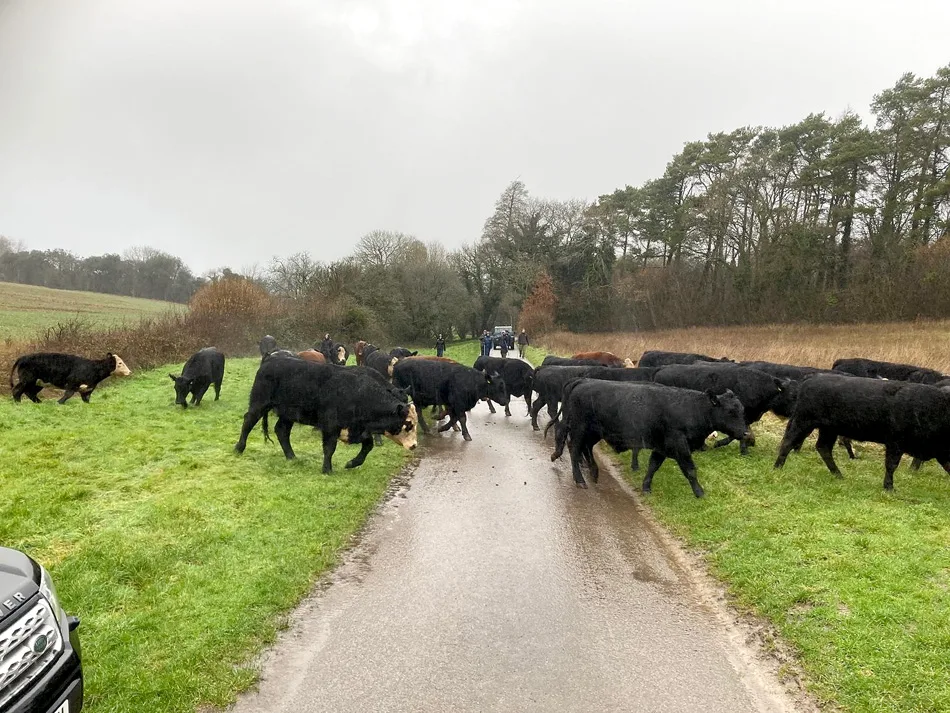
The total rainfall on the farm for January is 313mm – 12 and a half inches in old money. The previous monthly record was 304mm in January 2014, and all other months since 1985 pale into insignificance. It’s no wonder springs have broken all over the place, and many people are spending a lot of time filling sandbags, hiring pumps and nervously checking their insurance policies. The Blandford area seems to have been hit quite hard: the town centre has been closed off by flooded roads for several days, and the Stour rose to a level this week that we’ve not seen in many years. In the image above, two groups of youngstock are marching across the broad acres of cover crops in fields destined for spring cropping this year (the black dots are the cattle). They spend a day on the plot, approximately a hectare, and then very happily move on when the fence is opened for them. The fresh grazing every day, where the animals can choose what to eat from a multi-species mixture, does them very well – they are not fed anything else such as silage, hay or straw. This approach last year led to all animals gaining weight over winter, which was not the case before we began this regime. Previously they would have been on a maintenance ration of hay or silage, plus a thin strip of turnips every day. Not so good for the land, which would get badly poached, or for the animals, who spent months standing in mud. There is an awful lot of electric fencing needed to graze the cattle like this, but Brendan takes it on with great gusto come rain or shine (if he counted the miles perhaps there should be an award in it!). On our particular patch of Dorset the ungrazed land on our chalk-based soils drains well, even after the recent heavy rainfall, so moving the animals onwards daily minimises poaching. Farmers on heavy clay may weep to read this: they have no alternative but to house their livestock over winter, and feed them with stored forage. The unrepentant group at the bottom clearly got fed up with the miserable cold rain this afternoon though (Sunday 1st) – they broke out through the electric fence, and were only noticed when they arrived in the yard at Shepherds Corner, clearly keen to get indoors with their mothers. Sorry chums, it’s back to the field for you!
Youngstock winter feed
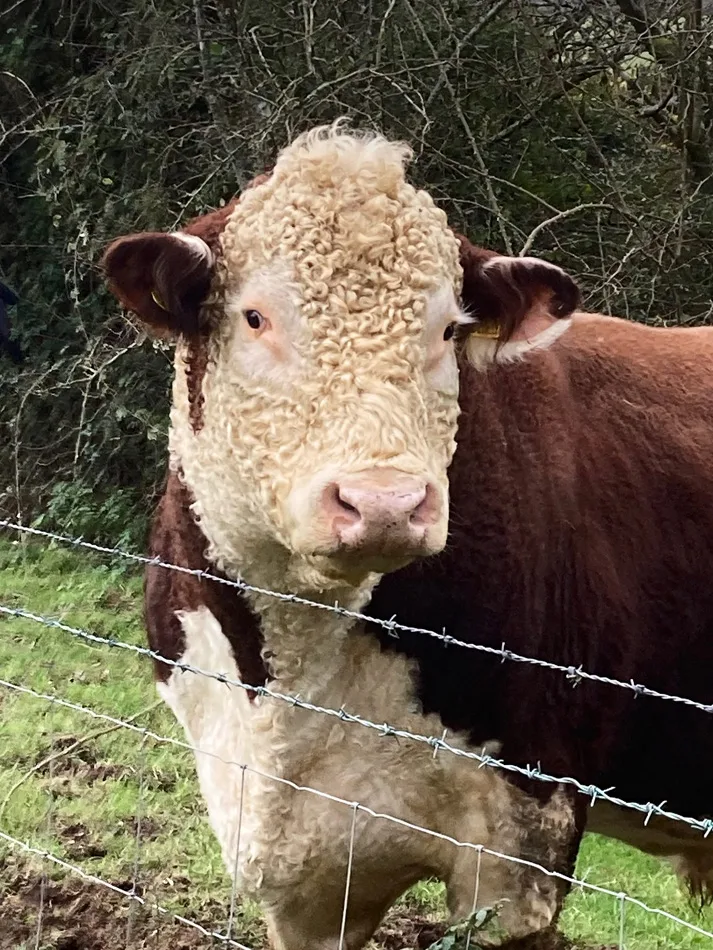
TB time Theo and Mr Red, our bulls, make do with hay, some light grazing when it’s not too wet, and a pound of grass nuts every day to keep them sweet – particularly important come TB testing day, which we had to face once again a fortnight ago. The ‘Inconclusive’ animal from the previous test 60 days ago was once again declared an IR – so now becomes a full Reactor – which is, to be frank, a death sentence. The same was pronounced out of the blue for another animal, in a different group, and he obviously took a pretty dim view of the decision. On the day the death wagon rolled up, he couldn’t be seen for dust (well, mud), and led the team on a 4½ mile steeplechase around the farm, ending up back with his original group. After ten days away with a stranger – the other inconclusive reactor – he still knew exactly where his herd was. Cattle psychology is rightly being studied more closely, as these poor animals are forced to endure the blunt tools of the response to a disease which the dim humans seem so utterly incapable of getting rid of. We can put men on the moon, we can ‘undress’ pictures of people on grossly unpleasant social media platforms, but when it comes to TB in cattle, we are still using a test invented in the 1890s as the first line of defence in rooting out infected animals from our herds. The SICCT skin test is very good at telling you if you have TB in your herd, but is hopeless at telling you which animals are infected, leaving on average 20 to 25% of infected animals undetected. This is the same test which is used pre-movement to tell you whether animals you plan to buy from other farms are clear of TB prior to bringing them into your own herd … What could possibly go wrong? Looking for a way forward The NFU has helped to set up a new TB management group in Dorset, and other counties, in the aftermath of the badger cull, to take advantage of the (temporarily) lower badger numbers, and to encourage farmers to take advantage of the things that they can control, rather than agonise over the things that they can’t. There are other tests available, though they come at private cost and with no government compensation for any TB reactors they detect that weren’t picked up by official testing. Biosecurity measures can also help – protecting cattle from infection by badgers or by other livestock, such as neighbouring animals over a fence or escapees from nearby farms. One promising approach is to closely study the lump sizes recorded during previous TB tests. These can be used to rank animals by risk, allowing farmers to manage higher-risk cattle in separate groups – or cull them earlier than they otherwise might. The size of the lump in response to the TB test is a good indicator of the animal’s immune reaction, indicating prior exposure to the TB organism. There’s also the IBTB online service, which lets farmers check the TB status of holdings they might be buying replacements from. That cow farmers do not all operate closed herds in the TB era completely stumps me: buying in cattle for your herd is like Russian roulette, you have no idea which barrel is loaded. As the vet leading last week’s meeting pointed out however, those of us who THINK we operate a closed herd, probably aren’t. Even if you use AI (artificial insemination, not intelligence!) on all of your cows, and breed all your own replacements, can you really call yourself a closed herd if you have neighbours with cows, or badgers on your farm, or even deer, which also carry TB?
Theo the bull at Traveller’s Rest Farm
A different route Our motivation, as a Dorset group, is simple: to ease the burden of this disease in any way we can, and to bring together everyone with a stake in it – in the hope of finding a realistic way forward. Right now, we’re heading backwards again, despite the earlier drop in outbreaks that followed the badger cull. What that cull showed was that reducing badger numbers can cut the number of new TB infections – but only by around 50%. That makes it just one part of any long-term strategy. And let’s be honest: it’s highly unlikely to happen again. So we need a different route. Top of the list is getting DEFRA to reassess its approach. The current 25-year TB ‘eradication’ plan is clearly a bad joke – for all the reasons already mentioned. The department must be willing to continually review new tests, new science, and the changing shape of the cattle industry itself. Frankly, I don’t understand why we still have a category called ‘inconclusive reactor’, or why we persist with both standard and severe interpretations of lump sizes. The severe version is used where TB is strongly suspected or already confirmed – but if an animal reacts to the test and produces a lump, that means it has been exposed to TB, and poses an ongoing risk to the rest of the herd.
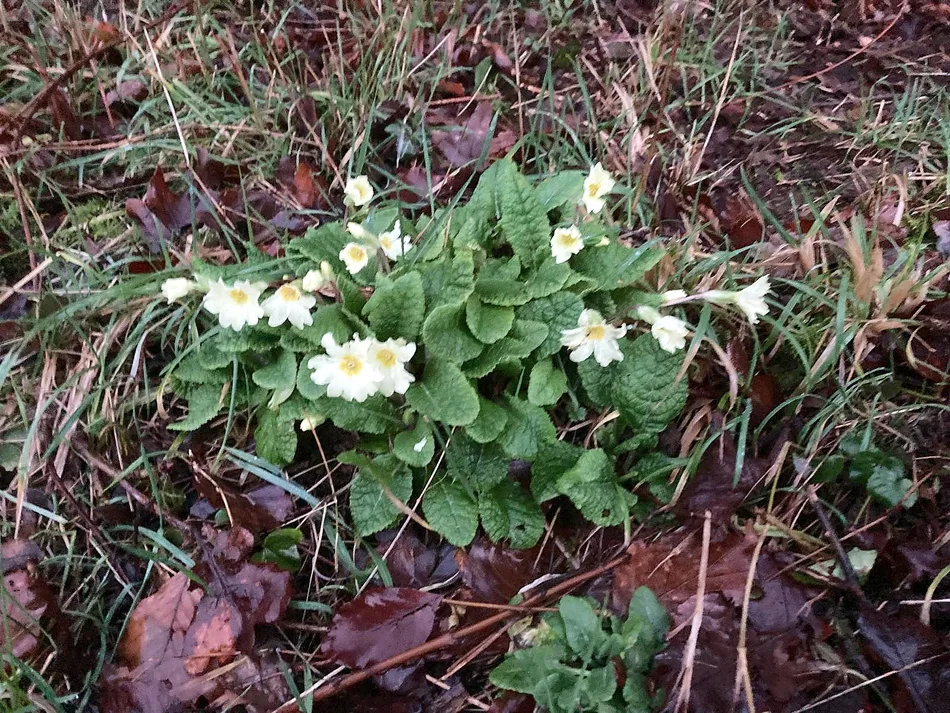
Amidst the madness of the wettest month ever recorded on this farm, these little beauties have decided to compete with the snowdrops popping up everywhere. Tucked under Blackfern wood, sheltered from the east wind and sitting pretty for the afternoon sun as it climbs, by tiny increments, slightly higher in the sky every day.
The problem, of course, is that TB is now so deeply embedded in so many herds that removing every animal with a lump – however small – would cause chaos. And it would cost a fortune. So the can keeps getting kicked further down the road. If we really want to see an end to TB we need to take the disease seriously and prescribe some very painful and expensive medicine. And by this I don’t mean a vaccine – the nature of the disease makes this very difficult and a long way in the future. If you’re then naturally asking me why we’re vaccinating badgers against TB, my answer is that it is simply a very cynical, expensive and dishonest political gesture. This is a condensed version of George’s farm diary. See the unabridged version on his blog viewfromthehill.org.uk
As I write it’s been a difficult week for West Dorset, with Storm Chandra bringing torrential rain, some areas seeing more than 55mm in a matter of hours. Coming hot off the back of two other storms in January, the ground is sodden, the sewers are overwhelmed, and there is widespread flooding. Whole villages have become islands, schools have closed, residents have been unable to get to work or to the shops. Right now we desperately need a dry spell to allow the water to dissipate.
Edward Morello MP for West Dorset
Dorset & Wiltshire Fire Service, along with all our emergency services, have been doing a fantastic job supporting residents during this crisis and I pay huge tribute to their hard work. Many of you will have seen that the Fire Chief has recently announced a consultation on station closures. This is a result of the ‘long-term funding settlement’ (for long-term read three years) announced by the Government, which will result in our fire service having £1.2m less in year one than it requires. The deficit only increases in years two and three. The Fire Service strongly disputes the underlying assumptions that the Treasury used when working out Dorset & Wiltshire’s allocation, and having gone through the numbers with them I agree. This week at Treasury Questions I raised it with the Chancellor and ask that she meet with me and the Fire Service, to review the numbers. Sadly the Treasury declined, but I will be writing to her in the hope we can still secure a meeting. This past week has shown just how vital our fire service is when crisis hits, and how important it is they have the funding they need. Sadly, this is just another example of where Treasury funding formulas fail to reflect the reality of life in rural Britain. In a speech in Westminster Hall this week I explained how the same issue impacts children’s services. While the Government is bringing forward legislation designed to improve service provision, unless the funding formula is altered to reflect the challenges faced by rural communities, places like West Dorset will continue to receive less than their urban counterparts. This needs to change. Edward Morello MP West Dorset (LibDem)
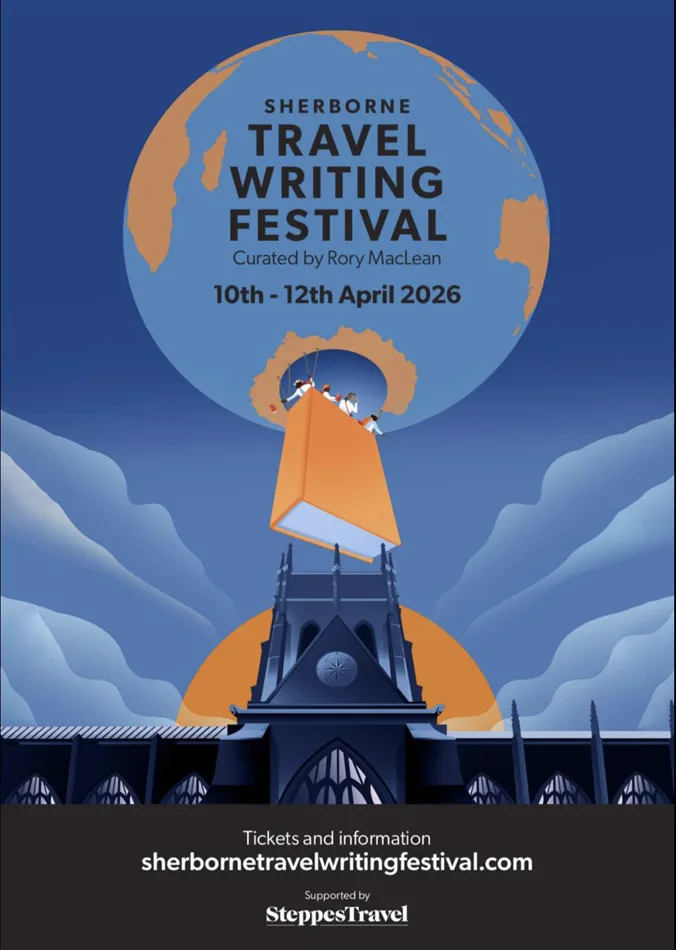
The prestigious new Sherborne Prize for Travel Writing, launched with a remarkable £10,000 award, has revealed its first-ever shortlist – a six-strong line-up that speaks to the power of travel literature to illuminate, connect and challenge. Awarded as part of the Sherborne Travel Writing Festival (10th–12th April 2026), the prize celebrates outstanding non-fiction from British and European authors whose work fosters understanding across borders and cultures.
The judging panel – acclaimed travel writer Colin Thubron, award-winning author Sara Wheeler, and literary agent Emma Paterson – selected the finalists from more than 70 submissions. They looked for bold ambition, superb writing, and books that bring our fragmented world into sharper, more compassionate focus. From exploring the emotional scars of war to charting a wolf’s epic journey through Europe’s highlands, the shortlist captures a diversity of voices, places and preoccupations.
The shortlist includes:
Russia Starts Here by Howard Amos – a thoughtful, personal journey through
the overlooked Pskov region of Russia.
A Wild Pastoral by Kapka Kassabova – an intimate portrayal of Europe’s last nomadic shepherds.
Is A River Alive? by Robert Macfarlane – a lyrical argument for recognising rivers as living beings.
Greyhound by Joanna Pocock – a haunting, personal retracing of a 2006 bus journey across America.
Night Train to Odesa by Jen Stout – dispatches from Ukraine that lay bare the human cost of war.
Lone Wolf by Adam Weymouth – a hike across the Alps in the footsteps of a GPS-tracked wolf.
Chair of the judges Colin Thubron said: ‘In its vigour and diversity alone, our shortlist is a striking tribute to the indispensable value of travel and the seriousness of its writing.’ The winner will be announced at a special event on Sunday 12th April at the Sherborne Travel Writing Festival. Tickets for the presentation and the full weekend programme are now available via the Festival’s website. This powerful debut prize not only elevates the Sherborne festival’s national profile – it cements its status as a leading showcase of contemporary travel writing at its most thoughtful and relevant.
The BV community news section is sponsored by Wessex Internet
Next time you are at The Sherborne, take a moment to spend a penny – and admire the truly remarkable toilets
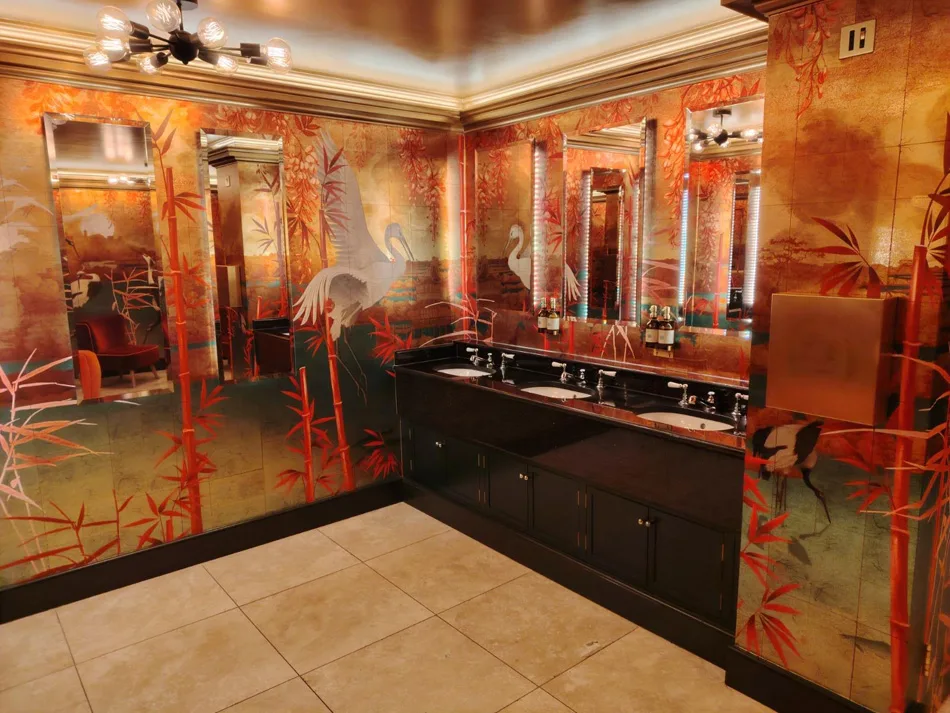
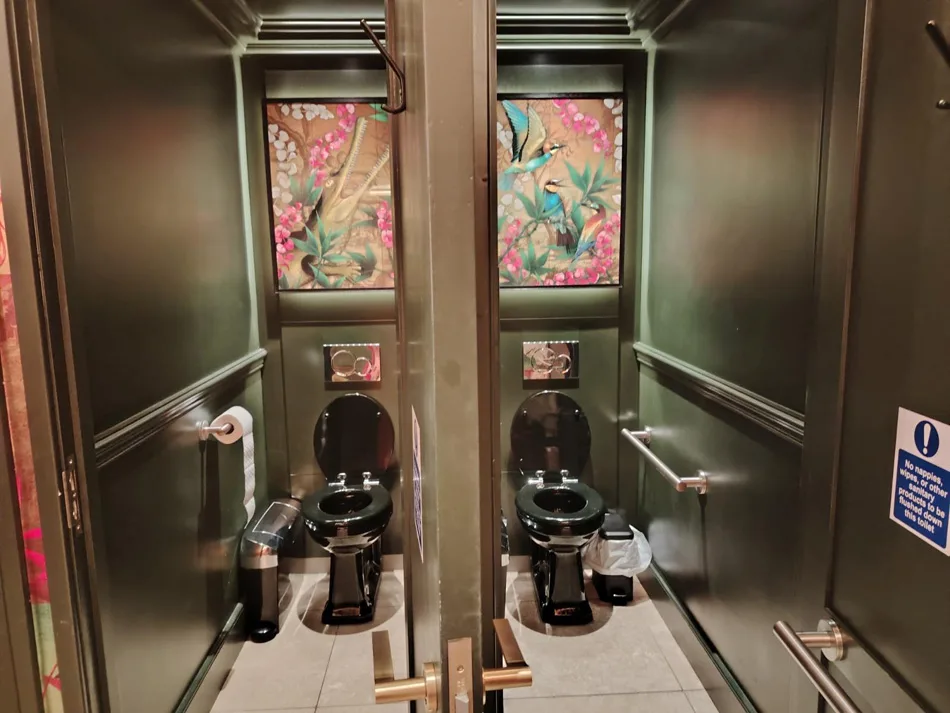
The Sherborne is proud to have the Quirky Loo of the Year. Images courtesy of The Loo of the Year Awards
The loos at The Sherborne are not just any old toilets. The recently-renovated arts centre is popular for its restaurant, gallery and exhibitions. Apparently, the loos are also a highlight. Step into them and it’s like entering another world, thanks to the exotic, colourful décor and their impeccable cleanliness. There’s a definite wow factor as you enter these bathrooms. And that wow factor recently brought The Sherborne the national Quirky Loo of the Year award.
What are the Loo of the Year Awards? We’ve all been to an unspeakable (in)convenience that we wish we had never found, so there is always a sense of relief to find pristine facilities in an unfamiliar place. The Loo of the Year Awards (LOTYA) are on a mission to encourage excellent standards in all loos away from home. The awards might sound fun, but they’re no joke. Running since 1987 and sponsored by Tork (a leading global brand of professional hygiene products), they operate on a grading system. Entrants have to agree to receive an unannounced visit from an inspector. Then, each washroom is judged on 101 criteria, including cleanliness, décor, signage, accessibility and customer care. The inspectors know what constitutes an excellent loo and they get to experience more bathrooms than most: in 2025, LOTYA inspectors visited more than 1,500 businesses including pubs, shopping centres, hotels, caravan and camping sites, motorway service stations, public toilets and private companies with staff facilities. There’s also a roll of honour for local authorities (apparently very popular in Scotland). The Sherborne stands out because a very impressed member of the public nominated the facilities for an award – apparently it’s more normal to receive a business owner nomination. The Sherborne’s is not just Quirky Loo of the Year. During the judging process, the facilities are graded. The largest category of awards is Platinum, achieved by 52.4% of entries, and the highest accolade is Diamond. It’s encouraging to see the number of recipients rising, from 3.5% last year to 5.8% this year. The Sherborne’s public toilets were among them, awarded the coveted Diamond grade.
Toilets in the Sherborne
Credit to the staff For every excellent facility there is someone behind the scenes cleaning and maintaining the loos. Knowing these awards involve unannounced inspections means the bathrooms have to be in tip-top condition all the time. And that includes things like sufficient toilet paper in the cubicles (criteria 4.7) and ensuring urinals are chip and streak-free (criteria 3.1). The cleaning staff responsible for maintaining the loos deserve significant credit for adhering to such high standards of cleanliness. Lizzie Watson, marketing manager at The Sherborne, said: ‘Maintaining the standard is the real work: consistent daily checks, strong routines and a team culture that treats visitor comfort as a priority. The scheme is inspected against detailed criteria, so it’s really about the ongoing commitment rather than a “one-off” push. This recognition is absolutely a testament to our facilities and cleaning team and the colleagues who check and maintain standards throughout the day. Their work is often behind the scenes, but it makes an enormous difference to every visitor’s experience – and yes, we’re incredibly proud of them!’
The Sherborne loo designers So what makes a loo ‘quirky?’ According to the toilet experts, it’s recognising loos that bring something original, characterful and delightfully unexpected to the experience. The very special loos at The Sherborne stand out for the décor, especially the lavish wallpaper of exotic flowers and birds which was designed specially for The Sherborne by Adam Ellis Studio. Lizzie said: ‘The inspiration was to bring a sense of character and surprise to an everyday moment, while still feeling true to the building – warm, welcoming, and full of charm.’ In another touch, the founders of The Sherborne, Sally and the late Michael Cannon, were strong advocates of good toilets – the kind that are clean, thoughtful, beautifully finished and dignified for every visitor. It’s a testament to them that Sherborne has such an inspirational space – with great loos. The Loo of the Year judges were impressed by many of the loos they visited this year. Stuart Hands, Commercial Development Manager for Tork, said: ‘Congratulations to all the winners of the Loo of the Year Awards! It was fantastic to celebrate them all in Birmingham. We are incredibly proud to be the headline sponsors and support excellence in hygiene standards. The winners have truly set a high bar with their outstanding facilities.’ Next time you are in Sherborne, take a moment to spend a penny and admire the truly remarkable quirky bathrooms.
Other North Dorset loos with a story The Bell Street public loos in Shaftesbury were refurbished in 2019 by Build Love, who offered on-the-job skills training to prisoners at Guys Marsh who were nearing the end of their sentences. The project was completed within budget and on time. The new loo in St Andrew’s Church, Okeford Fitzpaine was installed as the final part of a re-ordering project that hit international headlines when pews were removed. Today the church space is busy, once again an integral part of the community used for multiple events – and thanks to the new facilities, there’s no longer a need to dash to the village hall.
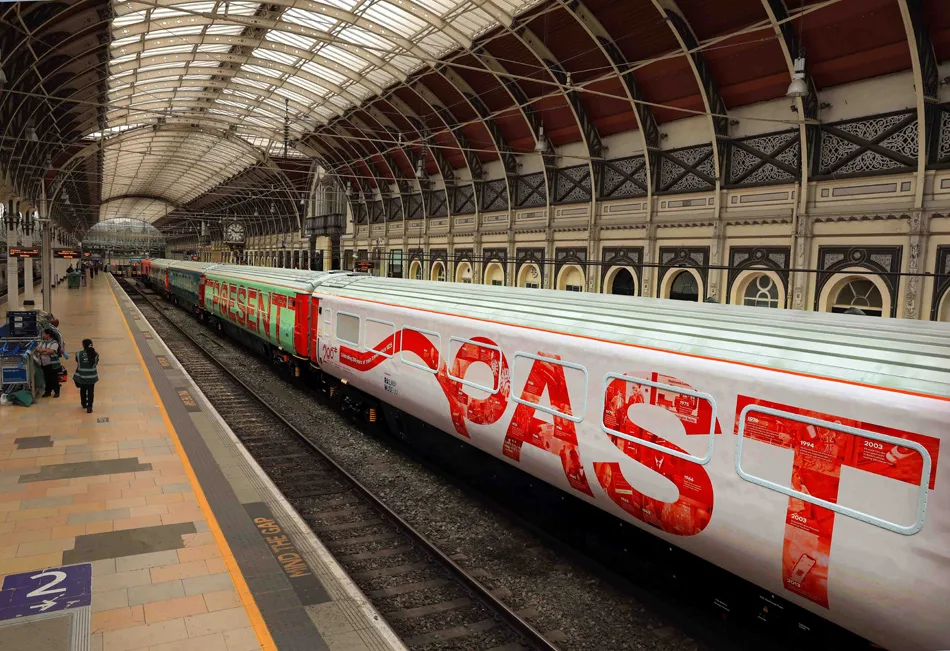
A travelling exhibition celebrating 200 years of railway history is set to visit Corfe Castle this February – and it promises to be an inspiring stop for families and rail enthusiasts alike. The Railway 200 ‘Inspiration’ train, made up of five converted British Rail carriages from the 1970s and ’80s, is part of a national tour co-curated by Network Rail and the National Railway Museum. It will be stationed at Corfe Castle station from Monday 16th to Wednesday 18th February (10am to 4pm), and entry is free with a valid Swanage Railway ticket.
The exhibition arrives just as Swanage Railway marks its own milestone – the 50th anniversary of volunteers beginning restoration work at the once-disused Swanage station in 1976. Fittingly, the ‘Inspiration’ train celebrates both the history and future of Britain’s railways, with hands-on exhibits, railway ‘firsts’ and engineering challenges. More than 50,000 people have visited the engaging, family-friendly train so far on its 60-stop UK tour. Abbie King, CEO of Swanage Railway, said: ‘It’s a real privilege for the Swanage Railway to host something so special and historic. It’s a fun, free and fascinating way to learn about the past, present and future of the railways, there will be something of interest for everyone – whether you are a railway enthusiast or just curious about a British innovation that changed the world To help manage traffic in Corfe Castle – where parking is limited – visitors are encouraged to arrive by rail. A 1950s heritage diesel railbus will run regularly between Norden (next to the Purbeck Park long-stay car park) and Corfe Castle. Tickets for the diesel railbus and further details are available at: swanagerailway.co.uk
The BV community news section is sponsored by Wessex Internet
With cuckoos gone and insects vanishing, Neil Walker believes towns like Sherborne are unexpected sanctuaries for wildlife pushed out of farmland
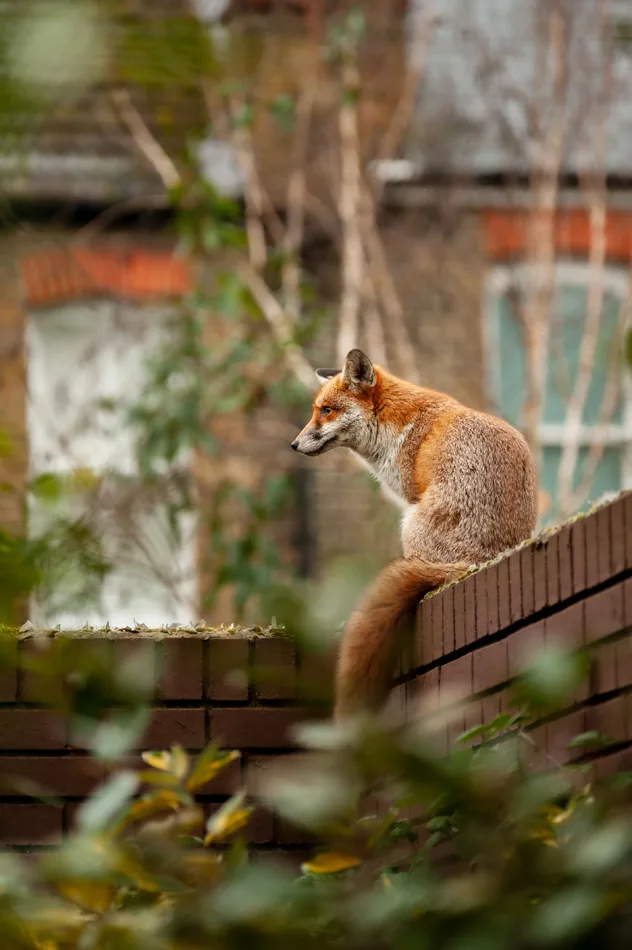
Urban red fox (Vulpes vulpes) wandering on top of brick wall spiked with broken glass on very early morning in residential gardens.
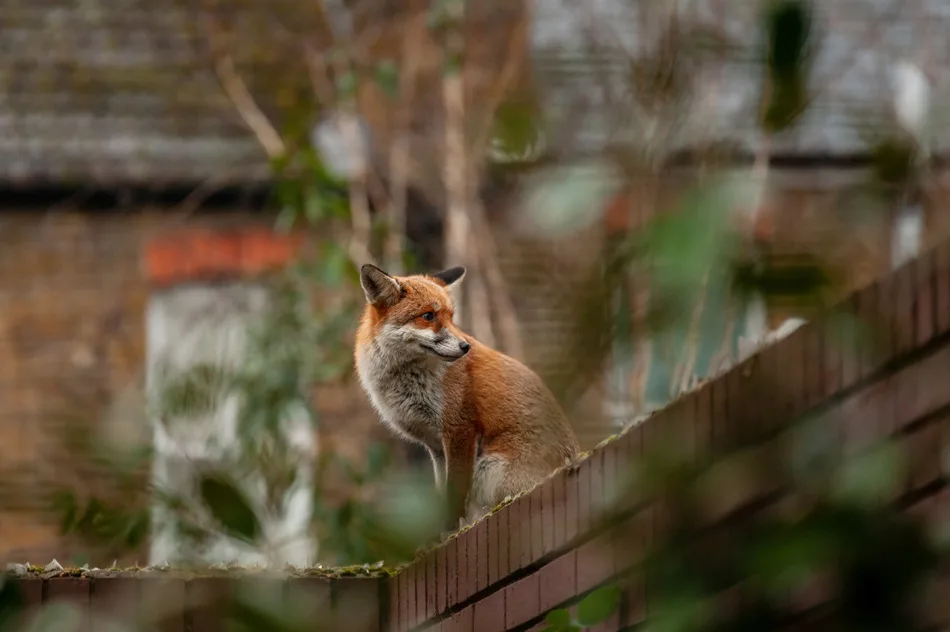
For most of us, the decline in wildlife has been gradual enough to feel almost invisible – until one day it isn’t. Fewer insects spattered on windscreens. Empty verges where rabbits once darted. Realising it’s July and you still haven’t heard a cuckoo this year. Neil Walker has noticed all of these during his six years living on the edge of Sherborne, and they form the backdrop to a growing conversation about how towns may now be playing an unexpected role in supporting nature. ‘When I moved here, I used to hear cuckoos, see hares, foxes and deer regularly,’ he says. ‘Now the cuckoos have gone, the hares have gone, and I hardly ever see a fox. You start asking yourself where everything has gone.’ The answer, he suggests, is not simply that wildlife is disappearing, but that it is being pushed out of the wider countryside. Intensive land use, habitat loss and chemical inputs have made survival increasingly difficult, leaving towns and gardens as some of the last remaining refuges. ‘People often talk about “bringing the countryside into towns”,’ Neil says. ‘But the truth is, it’s already there. Butterflies, birds, bats, hedgehogs – they’re constantly moving through our towns, looking for somewhere safe to feed, breed and rest. The issue is whether we let them stay.’ The 2023 State of Nature Report showed that wildlife decline in Dorset’s farmed landscape is among the most severe in the country. More than 3,000 species of plants and animals in the county are now at risk.
Urban red fox (Vulpes vulpes) wandering on top of brick wall spiked with broken glass on very early morning in residential gardens.
Many small actions Gardening, Neil believes, has become one of the most important connections between people and wildlife. Attitudes have shifted markedly in recent decades, with fewer chemical pesticides on sale and a growing recognition that creatures once labelled as ‘pests’ are essential parts of a functioning ecosystem. ‘We’ve changed our minds before,’ he says. ‘Gardeners used to kill earthworms because they thought they were harmful. Now we know better. The same applies to so many insects – if you remove them, what do you think hedgehogs and birds are supposed to eat?’ Neil points to a paradox emerging across Dorset: while wildlife is declining sharply in surrounding farmland, it is increasingly being recorded in towns. ‘Wild creatures are discovering the town is one place they can still go,’ he says. ‘That really should give us pause.’ The solution, he argues, does not lie in grand gestures, but rather in small, cumulative, everyday decisions – gardens that offer nectar, shelter and connectivity. Fences with gaps for hedgehogs. Trees and orchards planted with long-term benefit in mind. Even people without gardens can often add a bird box to a wall or a window box planted with a few flowers. ‘If each of the 10,000 people in Sherborne did just a little bit more, it would make an extraordinary difference,’ he says. ‘It doesn’t mean gardens have to look messy. Wildflowers are beautiful – most of our cultivated plants started out as wild ones.’ At its heart, the conversation is less about rewilding in the abstract and more about rethinking how towns coexist with the natural world around them. As Neil puts it: ‘We don’t need to do everything. We just need to stop killing what’s already trying to live alongside us.’
Neil Walker has launched the Wild Sherborne initiative. The first meeting is on 12th February, Digby Hall in Sherborne at 7pm. There’ll be tea and cake! wildsherborne.co.uk
Dorset sculptor Jane Shaw has been selected not once but twice for the 2026 Royal Society of British Artists Annual Exhibition – a rare distinction that places her firmly among the top names in contemporary British sculpture.
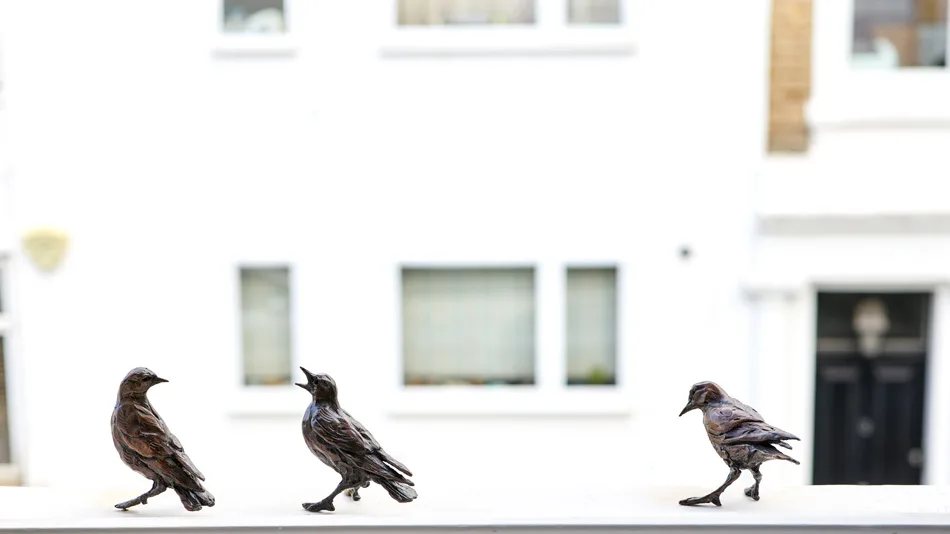
Chosen from almost 4,000 anonymous submissions, Jane is one of very few artists to have two separate works accepted in the same year. Her bronze sculptures Community Spirit (Group of Starlings) and Kissing Mice will both be exhibited at London’s prestigious Mall Galleries this February. Each year, only around 280 works by non-RBA members make the final selection, with most chosen on a one-per-artist basis. To receive a double acceptance, through blind judging, is highly unusual and widely regarded as a mark of exceptional artistic merit. Jane, who lives and works just outside Blandford Forum, says: ‘My work is always about the moment just before something happens – the balance between stillness and movement. To have two such different pieces recognised in this way is deeply affirming.’ Community Spirit captures the compressed energy of a murmuration of starlings, cast in bronze and set on slate. It’s not a literal depiction of flight, but a sculptural interpretation of shared movement and collective instinct.
By contrast, Kissing Mice is a more intimate study in vulnerability and balance. Perched delicately on stacked pebbles, the two mice lean towards one another in a quiet moment of affection. One is older, more watchful; the other curious, reaching. Cast in white bronze, it’s a piece that invites viewers to pause and reflect. Both works will be on display at Mall Galleries, The Mall, London SW1, from 26th February to 7th March 2026, alongside some of the UK’s most celebrated contemporary artists. Admission: £7 (free for under 25s) – mallgalleries.org.uk
The BV community news section is sponsored by Wessex Internet