The Blackmore Vale logo
Home Blog Page 15

Benefits, visas and British jobs: the Reform UK plan

0

September has been an extremely busy month for the party, with our annual conference in Birmingham, a number of key policy announcements, and the high-level defection from the Conservatives of Danny Kruger, MP for East Wiltshire and Shadow Minister for Work and Pensions.

Thomas Gargrave Reform UK Dorset


Mr Kruger is widely regarded in Westminster as a considered and thoughtful MP, and a true conservative. His defection to Reform UK is significant – and I am sure will not be the last. In his defection press conference, Mr Kruger said, ‘The Conservative Party is over. Over as a national party, over as the principal opposition to the left. The best hope we have, maybe our last hope, is Nigel Farage.’ In a subsequent interview, he made a salient point that I think is worth highlighting – ‘The British public wants radical change.’
The electorate’s tolerance for failure on immigration, welfare, crime and taxation, to name a few, has completely run out. Half measures and more empty rhetoric simply will not cut it in today’s political climate.
With that in mind, this month saw Reform UK announce a series of bold policies termed ‘Prioritising UK Citizens’. The two headline policies within this were the ending of Indefinite Leave to Remain (ILR) and its replacement with a five year renewable work visa, and the second is a cessation of all benefit and welfare entitlements for non-UK citizens (EEA nationals will initially be exempt under the EU withdrawal agreement, but this would be renegotiated by a Reform UK government).
These measures are, in large part, borne out of an urgent fiscal need to reverse what is referred to as the Boris Wave, describing the broader immigration policy of the Conservative Party between 2020 and 24, which saw unprecedented levels of mass immigration into the UK, principally by low-skilled migrants and their dependents from non-EU countries.
Reform UK estimates 800,000 of those who entered will soon be able to apply for ILR and gain access to the UK’s benefits system, creating a looming fiscal crisis. The current direct cost to the taxpayer of benefits paid to foreign nationals is already £12 billion every year. This is why it is absolutely imperative that the Boris Wave is reversed. As Nigel Farage said, ‘It is simply not fair to ask the British taxpayer to go out to work every day to pay for the benefits of foreign nationals, many of whom are not even working.’
Importantly, we are also proposing major changes to address the long-term issues around the UK’s reliance on foreign labour. A Reform UK government will introduce an Acute Skills Shortage Visa (ASSV). This will be strictly time-limited, with a finite cap at the start of each year. Any company sponsoring a worker via this route will have to pay an equivalent levy to fund the training of a British worker in that role, allowing us to build long-term capacity for British workers and end our reliance on foreign labour. For far too long, British workers have had to compete with a virtually unlimited amount of foreign labour, effectively making the minimum wage the maximum wage in many sectors. Ending our reliance on low-skilled foreign labour and unleashing the huge potential of the very large number of British people who are currently not working is a generational opportunity, one Reform UK fully intends to realise.
Thomas Gargrave
Reform UK Dorset

Levelling up … the John Deere way

0

Oats have frustrated George Hosford this year … almost as much as politicians and DEFRA and the Countryside Stewardship Scheme

The view from The Knoll. All images: George Hosford

Everyone loves working on the Knoll (the field with the combine harvester above) – the view stretches out over Durweston and Stourpaine, with Hod Hill behind and Hambledon’s yews just sneaking in, top left. It’s hard to keep your eyes on the machine you’re supposed to be minding. It’s a spectacular spot, and it produced a surprisingly handsome spring oat crop this year, stretching thickly from one side to the other. The bi-crop beans sown alongside didn’t fare so well – the drought all but wiped them out, and the few survivors stayed tucked beneath the oat canopy.
The frustrating thing about growing oats is that, despite the quality of the crop, they rarely command the price they deserve. Oats consistently sit below wheat and barley on the price scale, and the UK oat market is notoriously volatile – a classic feast-or-famine setup. It’s a relatively small market, easily over-supplied, and when that happens, prices crash. This year, the problem is worsened by a national carry-over of good-quality oats from last season, which continues to suppress the market.

Our in-calf heifers tucking into our valuable winter hay supply: two groups munched through this, while other groups survived on meagre pickings across the herbal leys, which were more tolerant of drought than the shrivelled permanent pastures

Let’s not discuss food
A trip to the County Show last month was enjoyable, as always. Tom Bradshaw, NFU National President, was present, and in the NFU tent delivered a pretty sobering assessment of many issues currently facing agriculture, not least the sudden and unexpected replacement of Steve Reed as Secretary of State at DEFRA, with the rather less well-known Emma Reynolds, formerly Economic Secretary to the Treasury, another in a long line of DEFRA secretaries to be inducted into the world of landscape and agriculture.
Tom Bradshaw had developed a strong working relationship with Mr Reed, which he pointed out is of huge value, even when many areas of difference exist between parties.
It is to be hoped that the same can be achieved with the new incumbent.
Her origins lie in the countryside, so let us be optimistic that she might at least be able to approach the new job with some feeling for the rural issues.
There are, of course, some huge issues for her to get to grips with: number one being DEFRA itself. Due to the utter incompetence of the last government, coupled with the utter incompetence of the new one, DEFRA has made a complete hash of the budget controls required to get the new environmental schemes working fairly and properly. Some stories are breathtaking – farmers allegedly receiving four times as much in SFI (Sustainable Farming Initiative) payments as they did under the old BPS (Basic Payment Scheme) system. No wonder DEFRA ran out of money …
They still won’t come clean on how much funding has been allocated to the various SFI iterations, to capital works projects and to landscape recovery schemes (rumoured to be very expensive).
It seems that the ‘wonderful’ new payments of ‘public money for public goods’ really were too good to be true. If it isn’t sorted out PDQ, there are going to be some very unfortunate consequences. Tom told us that more than 5,000 farmers will be coming out of their five-year Countryside Stewardship schemes this autumn – and right now, there’s nothing for them to reapply for.
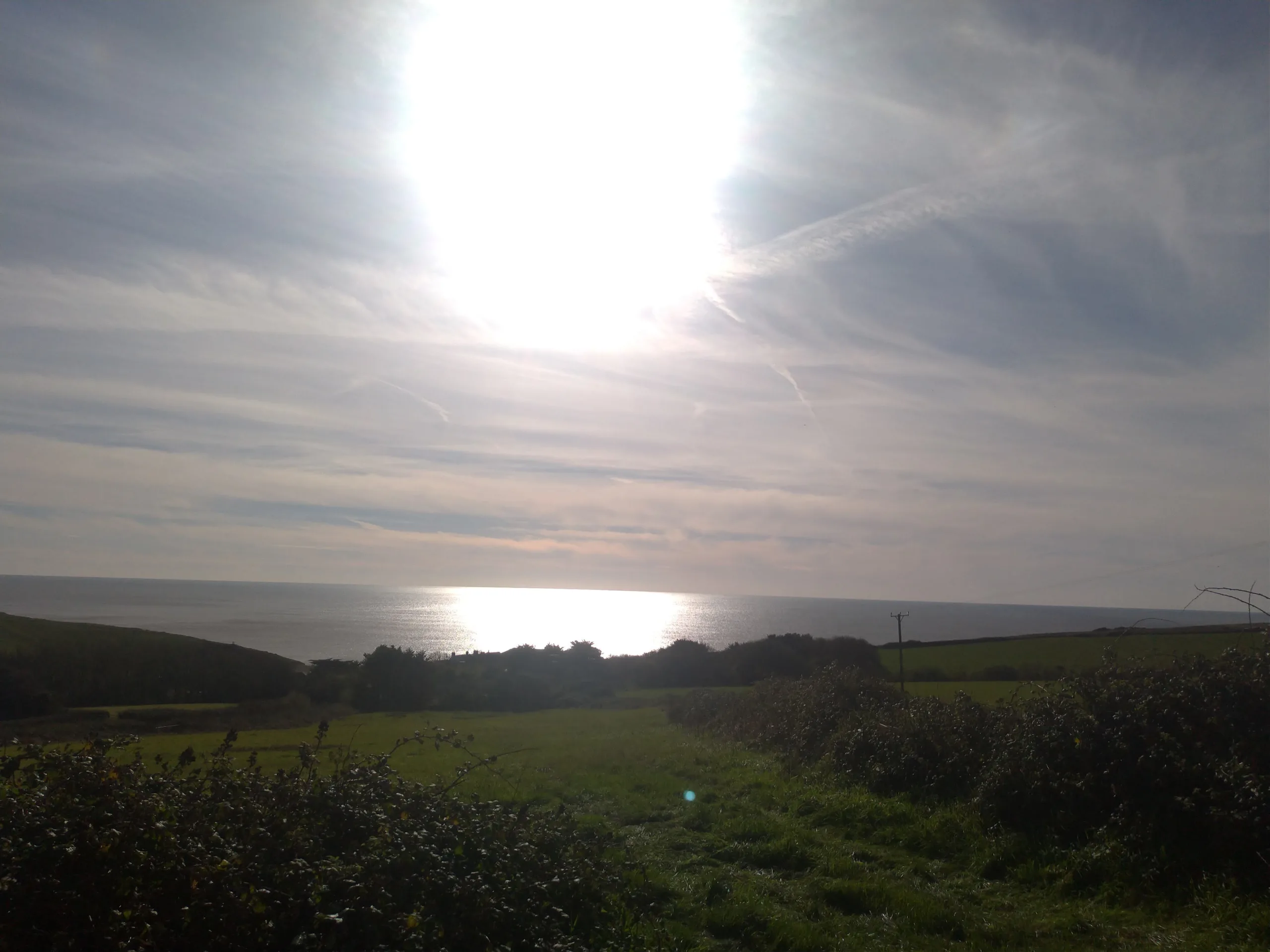
We ourselves will be in the same boat in two years’ time. What are farmers supposed to do with the long-term options they committed to – plough them up? In our case, we have 75 hectares of flowery field margins, which, together with the hedge and a neighbouring margin, form a 15 metre-wide wildlife corridor between fields. It would be an absolute travesty to cultivate and crop this back to the hedge.
There’s also an area of arable reversion, where we sowed genetically-appropriate seed stock into a small, stony field. It’s now a haven for downland flowers, insects, birds and small mammals – along with grazing animals, which don’t stay long, as it’s not particularly productive in modern agricultural terms. Without environmental payments, we simply cannot afford to farm like this – there’s always rent and a load of other bills to pay. We desperately need the next phase of SFI to be announced, and some consistency and continuity applied to agricultural policy.
Did anyone even mention food …?

Will, on the John Deere combine, demonstrating its special self-levelling ability to not spill your tea

A Knoll with a view
With Will at the helm, the combine below is demonstrating its self-levelling ability. This is a John Deere speciality: other manufacturers use different systems in an attempt to replicate this true levelling effect, such as by cleverly shaking the sieves so they throw the grain uphill to utilise the whole cleaning area. An essential component of the combine’s thrashing system is to be able to separate the seed from the chaff, and if you can imagine using a sieve on an angle, the grain will always fall to the lower side, which drastically reduces efficiency.. The whole body staying level allows the grain and trash to spread across the whole thrashing system: this allows even distribution of the flow of cleaning air. Not only this, but it is far more comfortable for the driver than a fixed chassis machine.
It is old technology now: we bought our first self-levelling combine in 1994, and are now on our fourth, each one slightly larger than the previous. We would not be without the self-levelling.
It is not available for those on tracks, because the system relies on the ability of the machine to roll on the tyres as it changes angle: flat tracks can’t do this. Their advantages of lower ground pressure and superior grip on steep land do not, in our estimation, outweigh the ability to not spill your tea.

It’s not left vs right – it’s truth vs lies

0

‘Divide and distract’ are tried-and-tested means of conquering opponents. Both are being heavily employed at present by powerful individuals hell-bent on making our world one which feeds their needs, rather than being for the benefit of all.

Ken Huggins North Dorset Green Party


Let’s call it what it is – insanity, driven by greed for power and money. And it’s criminal insanity at that, because of the damage it is doing to innocent peoples’ lives, and the death and destruction it will ultimately result in unless it is checked. But that’s where we come in. We are not powerless!
The present American administration has shown that total lies can be broadcast with impunity, unless they are effectively challenged. While claiming to be in the cause of ’defending free speech’, a hostile campaign is underway to actually suppress any speech that doesn’t support the official narrative – no matter how false that narrative might be.
The leaders of Reform UK are copying the American far right’s playbook, with false claims about climate change and immigration for example, and stifling criticism by barring left wing journalists from party conferences.
Patriotism has also been weaponised, aiming to drive a wedge between different communities and encourage us to turn on one another rather than the real perpetrators who are responsible for the crises we face. The recent so-called Unite the Kingdom rally actually aimed to further fragment us, with added violence towards the police resulting in dozens of officers being injured.
We must resist attempts to get us to attack one another. Not everyone who supports Reform is a racist bigot. Many simply have justifiable concerns around issues like the broken housing market, the collapse of public services and the increasing inequality between generations. One hope with the new Green Party leader Zack Polanski is that, by more effective use of social media to counter divisive toxic populist outpourings, we will establish the common ground between all those of us who actually just want a society that is genuinely fair and free from hate.
We all need to seek out the best in others, and to unite together to reclaim a positive vision for the future of our world.
Ken Huggins
North Dorset Green Party

The Dorset Cursus: the biggest Neolithic monument in Britain

0

Exploring Britain’s largest Neolithic monument, stretching across six miles of Cranborne Chase, with Dorset CPRE’s Rupert Hardy

View from the Roman Ackling Dyke where it crosses the now-hidden Neolithic Dorset Cursus. The left bronze-age burial mound in the foreground is within the Cursus banks, highlighting the layered history of Neolithic, Bronze-Age, and Roman periods

Built around 3,300 BC – predating Stonehenge by centuries – the Dorset Cursus is also three times its size. The term “Cursus” was coined by 18th-century antiquary William Stukeley, who first believed these long, narrow structures were ancient Roman racetracks. We now know they were Neolithic ritual sites, constructed long before the Romans arrived.Evidence of even earlier activity has been found on the Dorset Cursus, with Mesolithic flint scatter discovered along several sections. Much of the site was hidden until aerial photography revealed it in the 20th century, and the Cursus is still best appreciated from above, as little remains visible from the ground. It is a rectangular enclosure, consisting of parallel banks about 1.5 metres high, spaced approximately 82 metres apart, with external ditches 1.5 metres deep.

View northeast from Gussage Hill towards Bottlebrush Down, showing the Dorset Cursus route across Wyke Down


Constructing the Cursus was a monumental task. More than six million cubic feet of chalk were removed using a combination of stone, wood, and antler tools – along with a significant amount of human labour. While much of the monument is now hidden, the banks remain visible in a few places, such as Oakley Down near Sixpenny Handley and Bottlebrush Down. Of the terminals, only the one at Thickthorn Down, northwest of Gussage St Michael, remains intact; the terminal at Martin Down has been lost to ploughing. The Cursus is believed to have been constructed as a grand avenue linking long barrows. While other cursus monuments exist across Britain, none match the size of the Dorset Cursus, which is also unique in that it runs perpendicular to the local topography. Spanning two ridges and three river valleys, it was likely built in sections, which accounts for its slightly curved path. The first section ran from Thickthorn Down to Bottlebrush Down – sometimes referred to as the Gussage Cursus – and the second stretched from Bottlebrush to Martin Down via the Allen Valley. Evidence suggests a third Cursus may have existed at the northern end, running at a right angle and aligned with two long barrows.

map of the Dorset Cursus – ©️Crown copyright 2025 Ordnance Survey. Media 048/25.

Significance and interpretation
The Dorset Cursus probably had a ceremonial purpose, possibly connected to solar rituals or funeral practices. Archaeologist Richard Bradley called it the Avenue of the Dead, suggesting it may have been believed to guide the spirits of the deceased. He theorised that those wishing to communicate with the dead could meet them on the avenue.
The massive scale of the Cursus and its surrounding earthworks indicate it was carefully designed with symbolic meaning. One of the most striking features is how the Gussage Cursus aligns with the sun at the mid-winter solstice – people gathered at the Bottlebrush terminal could have witnessed the sun setting behind the long barrow on Gussage Down. Enthusiasts still gather on 21st December for this magical experience, especially if the weather is sunny.
While there is limited direct evidence of ceremonial practices, the discovery of human bones suggests the site was used for excarnation – a practice of leaving bodies to decompose naturally.
An intriguing theory suggests that the Great Cursus at Stonehenge was used to observe two stars, with processions taking place between their setting and rising. This idea of astronomical alignment could also apply to the Dorset Cursus, which may have served as a platform for viewing celestial events.
The local archaeologist most closely associated with the Cursus is Martin Green, who has excavated a section of it on his land at Down Farm. Dorset CPRE has organized several visits to Down Farm, where groups of six or more are welcome at his museum*. He also leads tours of the prehistoric sites on the farm, which I highly recommend. Last year, Martin and others organized a week-long event focusing on the archaeology and history of the Cursus, as well as the culture of our Neolithic ancestors. Martin’s early mentor, Richard Bradley, wrote The Dorset Cursus: The Archaeology of the Enigmatic (now out of print, but still available online), and Martin’s own excellent book, A Landscape Revealed, on the history of his farm and the Cranborne Chase, is still available.
Musician Ashley Hutchings, inspired by the Cursus, wrote an evocative song celebrating its connection to our landscape and ancient past:

“When Stukeley to the Cursus came
Low down in hallowed ground,
A Roman race track gave its name,
Low down are secrets found.
For six long miles it stretches west,
Low down in hallowed ground,
And ancient warriors take their rest,
Low down are secrets found…”

For more details, contact Martin at [email protected]

Digital ID cards? Let’s see the detail

0

With proposals resurfacing, MP Simon Hoare asks if it’s security theatre, a serious tool for immigration control – or another failed IT promise?

Simon Hoare MP

As I write, the issue of the potential introduction of Digital ID cards is breaking: the details (and the Devil is always in the detail) remain scant. So, rather than rush to a thumbs up or thumbs down response, I will wait to see those details. A lot has happened with regards to how we use and handle our data since Mr Blair first tried to introduce them – we now carry much more of ‘us’ on our person in digital form every day. The anxiety that some form of digital ID creates a ‘papers please’ society is understandable, but I believe misplaced. Indeed, I was heartened to hear Big Brother Watch (a civil rights-championing organisation) declare that this did not make the UK into North Korea.
I also know, from conversations with French officials and migrants themselves, that the lack of ID cards in the UK makes it more attractive compared with countries on the Continent where such systems are in place.
As a people, we have asked the Government to use every weapon in its arsenal to deter and reduce illegal entry to the country. Having asked it to do so, it would be churlish to dismiss out of hand the creation of a proof of citizenship and rights, if there is a clear indication that it would help in the task of deterring illegal immigration.

The black economy continues
However – and there usually is a ‘however’ – in political debate, I well remember when I was a PPS at the Home Office, some MPs coming to ask the department to introduce a new law to ban a particular activity.
We were not convinced, and asked civil servants to see if there were any existing laws that would do the job. There were. In fact, there were two sides of A4 which did exactly the job in hand.
It is already illegal to employ, or let a house to, someone who is not here legally. There are already rules which cover access to a whole range of public and social services. The existing rules merely need robust enforcement … increased fines … stiff prison sentences … confiscation of assets. All could be used to put the onus onto the lawbreaking employer etc.
In any case, I firmly believe that those already breaking the rules – by employing, letting, or otherwise – are unlikely to be deterred by the introduction of a digital ID card.The black economy has always been with us and, regretfully, it always will be. With the recent cyber attack on M&S, the nursery chain Kiddo and the debilitating impact of the one on Jaguar Land Rover, the robustness of the security arrangements which would be needed to support such a massive national project need to be set out clearly.
Unfortunately, His Majesty’s Government plc does not have a terrific proven track record when it comes to handling and delivering huge and complex IT projects. The government’s communication has already been woeful – both in explaining the hurdles involved and in setting out how to overcome them, as well as highlighting the potential benefits of an ID card for UK society. I have told a senior minister this in unambiguous terms.
At a time when the national finances are under huge pressure and growth ever-further away, we will also need to know the costs of both introduction and maintenance. A full Cost Benefit Analysis is needed to inform the debate.
So, for the moment, from me it’s a ‘watch this space’. I was opposed, fundamentally, to the first proposal, but digital tech has changed, and the scale of the immigration challenge increased. Let’s not be like Reform and first advocate for and then oppose a card: the Pushme/Pullyou bandwagon jumpers of UK political debate.
Nor, like the Lib Dems who, Vestal Virgin-like, will wang on about principles of abstract liberty. The proposal deserves a big national conversation, and a much deeper understanding of the whys and the wherefores than Sir Keir has been prepared to give the country to date.

Rockbourne Fair returns this October

0

The Rockbourne Early Christmas Fair is back at Salisbury Racecourse from Wednesday 15th to Friday 17th October, bringing three days of boutique shopping and festive spirit in aid of the Stars Appeal, Salisbury Hospital’s charity.

The annual Rockbourne Fair in aid of the Stars Appeal


With more than 100 stalls – more than a third of them new this year – visitors can browse fashion, jewellery, homeware, gourmet food and unique gifts, many not found on the high street. Late-night shopping on Thursday 16th October (open until 7.30pm) is perfect for post-work browsing.
Alongside the shopping, the on-site restaurant offers seasonal lunches, cakes and fizz, while a wood-fired sourdough pizza van makes its debut.
Entry is £6 per person (£3 after 6pm Thursday), with free parking. Proceeds support projects across Salisbury District Hospital.
Full details at rockbournefair.org.uk.

Sponsored by Wessex Internet

Not trying to take over the world – just make great ice cream

0

It started with a road trip to Middlesbrough for a second-hand machine – meet the North Dorset farming couple scooping small-batch ice cream

Kate Buckler and Ed Mogridge with some of the Buckridge Jerseys
All images: Courtenay Hitchcock

At Lushes Farm near Manston, the usual rhythm of milking, mucking out and feeding runs like clockwork. But lately, there’s something new in the mix – a walk-in freezer, the churn of machinery, and a side hustle that’s growing fast.
This year, the cows don’t just make milk. They make ice cream.
‘We wanted to do something that would keep the farm viable for the future,’ says Ed Mogridge, who farms with his partner Kate Buckler. ‘Something that used the milk, but gave us more control. A bit more return.’
That “something” is Buckridge Dairy – a handmade ice cream made with their own milk.

The addition of the Jerseys to the Holstein herd at Lushes Farm brought the milk up to quality for Barbers cheese … and great ice cream

Rooted on the farm
Lushes Farm is a 260-acre mixed holding in North Dorset, with grass, maize and arable fields for wheat, barley and beans. ‘I moved here with Mum and Dad in 1996,’ says Ed. ‘We’re just across the road from my gran’s farm, where Dad worked with his brothers. I was leaving school and wanted to farm, but there wasn’t enough work for me too – then this place came up.’
His father, Anthony Mogridge, was known for the Marnhull herd of pedigree Limousins – shown and sold all over the country. He sold them to fund the switch to dairy when Lushes Farm became available for the family.
Today, Ed and Kate run 150 milkers, with the milk used by Barbers, the longest continuously operating cheesemakers in Somerset, for their award-winning Cheddar cheese, with 100 replacements, and 40 head of beef. Most are Holsteins, but around 30% are Jerseys – Buckridge Jerseys – the cows that provide the rich, high-fat milk needed for cheese … and great ice cream.
‘Barbers want higher constituents – more fat and protein – for cheese,’ says Ed. ‘That’s why we brought Jerseys into the herd. They’re renowned for producing milk with higher butterfat and protein. You can increase those in Holsteins by feeding additives, but we don’t believe in adding stuff we don’t need. So instead of throwing bags of that in, we brought in Jerseys. Now we’re about 70% Holstein, 30% Jersey.’
They milk twice a day, 365 days a year, using a 16:16 herringbone parlour.
Kate came to farming from a different world – 20 years working in local authority. ‘I started by doing the accounts,’ she says. ‘Then I trained in food hygiene, risk management, nutrition … and now I’m in a hairnet, making ice cream every week.’
The farm is currently under TB restrictions – not uncommon, but still stressful.
‘We had the first issue in 2018,’ says Ed. ‘We lost close to 90 cattle. It’s incredibly hard. Then we were clear for a while – but we had another positive this March.’
‘It’s the unknown that’s hardest,’ says Kate. ‘You might have a perfectly healthy cow – heavily in calf, your favourite cow – and then she’s just gone. There’s aboslutely nothing you can do. You never feel like you’ve cracked it. You go clear, then it comes back. It feels never-ending.’

Kate with the cart which has had a busy summer at agricultural shows, fetes, corporate events and weddings

The turning point
The idea for diversification had been bubbling for years for Kate: ‘I’ve always wanted to do something alongside the farm. But it’s hard to find your niche.’
A chat with a Jersey Society judge who sold raw milk and ice cream on his own farm sparked the idea. ‘It just made sense – we already had the milk,’ she says.
In February, the Kate and Ed visited the Ice Cream Alliance show. ‘We were overwhelmed by all the options – the machines, the flavours, the cones,’ says Kate. ‘But the best advice we got was: “You don’t need all the fancy stuff. Keep it simple, start small.” Also, we were told not to buy new, but to look for second-hand.’
The farm’s single-phase electricity supply limited their equipment options – until two used machines popped up on Facebook Marketplace: ‘They were in Middlesbrough,’ says Ed. ‘So I said, “Fancy a road trip?”’
They picked up an ice cream cart from Rotherham – another Facebook Marketplace find. ‘The only thing Kate bought new was the blast chiller,’ says Ed. Six months after deciding to diversify, they launched Buckridge Dairy.

Currently, only the flavours stocked at 1855 in Sturminster Newton are in the pretty pots


‘I took a booking for the first weekend of June – and we hadn’t actually made any ice cream at that point,’ he laughs. ‘So I told Kate she’d better ring Environmental Health!’
‘Which I did – and they were great. We were approved straight away – both Trading Standards and Environmental Health have been so helpful. It was six months from the idea to our first event. But to just push through like that? It was absolutely the right thing to do.
‘We’ve had such a good summer. The equipment we’ve bought is exactly what we need. And we’re still entirely self-funded. Had we gone for brand new shiny kit, we might be saying something different!’
‘We could potentially have qualified for a grant as we’re adding value to the milk, but that scheme closed … and it doesn’t look like there’ll be any new farming grants for a while. Start-up loans tie you to repayments – and we didn’t know if it would take off.’

Ed and Kate have 150 milkers with a 16:16 herringbone parlour

From parlour to freezer
Buckridge Dairy makes small-batch gelato-style ice cream from the farm’s own milk and cream.Flavours range from White Chocolate Raspberry Ripple to Udderly Mint.
‘Honeycomb is far and away the best seller,’ says Kate. ‘Chocolate Velvet is dark chocolate, and Ferrero Rocher started as a joke, because my dad loves them. We also do dairy-free sorbets, like mango. At the moment we’re just getting our heads round everything and establishing everything – next year we’ll look at expanding flavours.
‘At the moment, it’s just me. I can’t compete with bigger brands, and to be honest I don’t want to. I think lots of people are looking to make their millions? I mean, the millions would be nice … but we’re not looking for that. I want it to be something that is local and small scale and good quality and stays like that.’
This summer, Kate and Ed have been taking their cart to fetes and events, scooping ice cream and chatting with customers.
‘That’s the bit I love,’ says Kate. ‘We milk the cows. We look after them. So when we talk to people about the ice cream, it’s real – we know exactly where it’s come from.’
The artisan store 1855 in Sturminster Newton marketplace is their firstretail stockist. They’ve also been a regular weekly presence with their cart at Railway Gardens.
But scaling up isn’t the goal.
‘Wholesale’s not for us,’ says Kate. ‘We just can’t compete on price. And to be honest, things took off so quickly we’ve had to rein it in a bit!’

‘The Ferrero Rocher flavour started out as a joke, just because my dad loves them!’

What’s next?
As the event season winds down, Kate is focusing on potting up more stock.
‘Only the 1855 flavours have the pretty pots and labels right now,’ she says. ‘But we’ll build that up – and then start selling direct from the farm.’
There’s no grand expansion plan – just an aim for steady growth.
‘We’re not trying to take over the world,’ says Kate. ‘We’ve had a great first summer. We’ve learned loads. Now it’s about doing it better next year – and not stretching ourselves too far.’

buckridgedairy.co.uk

Music and the Land: exploring the connections between culture and landscape in one of Dorset’s most beautiful locations

0

Springhead at Fontmell Magna, an ancient mill-house, mill-pond and gardens, is a fusion of natural beauty and human creativity. What better location for an event that celebrates and explores the connections between music, art and the land?
From 23rd to 27th October, Springhead is the setting for a symposium, Music and the Land, organised by Springhead Constellation, the new music and art organisation created by Dorset-based conductor Sir John Eliot Gardiner and his partner, harpist Gwyneth Wentink.
The four-day event includes opportunities for musicians and artists to develop projects and showcase their work, ending on Sunday 27th October, with a day for the public to see some of the work and hear music, discussions and talks by some of the participants.
The symposium topics include the role of farming in cultural health, the impact of land stewardship on artistic traditions and the ways in which music and the arts inspire sustainable living.

Sir John Eliot Gardiner grew up at Springhead – his mother, Marabel Gardiner, createdthe gardens. Image © Hans van der Woerd

Regain the elemental force
Speakers include John Eliot, who grew up at Springhead and whose mother, Marabel Gardiner, was the creator of the gardens – more recently, his late sister Rosalind restored them. He will be joined by the former president of the Soil Association, sustainable food pioneer Patrick Holden to talk about the theme of music, culture and the land.
Music comes from Ensemble Echappee, who are in residence during the week, and some of the Springhead Constellation singing apprentices who had a week-long residency in the spring. Visual artists taking part include James Grossman, Tom Unwin, Amy Keller and Dorset-based Aisling Hedgecock.
Another keynote speaker will be Guy Haywood, sculptor and curator, with a particular focus on performance and interdisciplinary practices. His theme will be “The home of Songs – Place, Identity and Folk.”
John Eliot, whose musical practice ranges from the Renaissance and baroque to 20th century works, is also an organic farmer and has a life-long commitment to the environment, the land and to our need to connect with it. He says: ‘In today’s noise-polluted world, music can regain the elemental force that our ancestors once acknowledged when they celebrated its magical origins. All of us can be inspired and refreshed through direct exposure to its mysterious and life-giving beauty and joy.’
Concerts and conversations explore how music and the arts can inspire ecological renewal. Come for the music, the ideas or to soak up Springhead’s beauty.

springheadconstellation.com

Sponsored by Wessex Internet

Aldi plans new store for Sturminster Newton

0

Discount supermarket chain Aldi has revealed plans for a new store in Sturminster Newton – and is inviting residents to have their say.

The proposed site is on North Dorset Business Park, just off the A357 on the outskirts of the town. If approved, the development would bring up to 40 new jobs to the town, with Aldi stating all roles will be paid at rates above the National Living Wage.

Representation of how the site on the North Dorset Busines Park may look

The £7 million investment would include free customer parking, electric vehicle charging points, and cycle parking for both customers and staff. The store would also aim to boost employment through construction and supply chain contracts.

Elliott Saunders, Aldi Real Estate Director, said: ‘We are thrilled to bring forward plans for a new Aldi store in Sturminster Newton, giving people better access to Aldi’s award-winning range of high-quality products at prices no other retailer can match. We encourage residents to participate in our virtual consultation to learn more about the scheme and share their views.’

Aldi currently has more than 1,000 stores across the UK and continues to expand its presence in rural and market towns.

Residents can view the full plans and share feedback online between 13th October and 10th November by visiting:
👉 www.aldiconsultation.co.uk/sturminsternewton

For more information or questions, email [email protected] or call 020 3398 1590.