Home Blog Page 194

Here’s How You Can Stay Active As You Get Older

0

As we age, staying physically active becomes increasingly important for maintaining overall health, mobility, and independence. Engaging in regular physical activity can improve strength, flexibility, and balance, reducing the risk of falls and injuries while enhancing overall well-being. In this article, we’ll explore various strategies and resources to help you stay active as you get older, promoting a healthy and fulfilling lifestyle well into your golden years.

PeopleImages.com – Yuri A shutterstock

Embrace A Variety Of Activities

One of the keys to staying active as you age is to embrace a variety of physical activities that cater to your interests, preferences, and abilities. Rather than sticking to a single exercise routine, explore different activities that challenge your body in various ways. Consider activities such as walking, swimming, cycling, dancing, yoga, tai chi, or gardening, each offering unique benefits for physical and mental health. Mixing up your activities not only keeps things interesting but also ensures that you’re engaging different muscle groups and promoting overall fitness.

Incorporate Strength Training

Strength training is essential for maintaining muscle mass, bone density, and overall strength as you age. Incorporating regular strength training exercises into your routine can help prevent age-related muscle loss and reduce the risk of osteoporosis and fractures. Focus on exercises that target major muscle groups, such as squats, lunges, push-ups, and weightlifting with light dumbbells or resistance bands. Start with light weights and gradually increase resistance as you build strength and confidence. Consult with a fitness professional or personal trainer to develop a safe and effective strength training program tailored to your needs.

Wheelchair Accessible Vehicle Hire Can Make A Massive Difference

For individuals with mobility challenges or disabilities, accessing transportation can be a barrier to staying active and engaged in the community. However, wheelchair-accessible vehicle (WAV) hire can make a massive difference by providing accessible and convenient transportation options. Hiring a WAV allows individuals with mobility needs to travel comfortably and independently, whether for medical appointments, social outings, or recreational activities. With features such as wheelchair ramps, lowered floors, and spacious interiors, WAVs provide a safe and comfortable means of transportation, enabling individuals to stay active and maintain their independence.

Prioritise Balance And Flexibility

Maintaining balance and flexibility is crucial for preventing falls and maintaining mobility as you age. Incorporate exercises that focus on improving balance, such as standing on one leg, heel-to-toe walking, or practising yoga poses that challenge your balance. Additionally, include stretching exercises to improve flexibility and range of motion, targeting major muscle groups and joints. Regular stretching can help reduce stiffness, improve posture, and alleviate aches and pains associated with ageing. Consider attending a yoga or Pilates class specifically designed for older adults to improve balance and flexibility in a supportive environment.

Stay Active In Daily Life

Staying active doesn’t necessarily mean dedicating hours to structured exercise routines. Look for opportunities to incorporate physical activity into your daily life, whether it’s taking the stairs instead of the lift, walking or cycling for errands instead of driving, or doing household chores that involve movement and exertion. Even small bursts of activity throughout the day can add up and contribute to your overall fitness and well-being. Find ways to make physical activity a natural and enjoyable part of your daily routine, incorporating movement into your lifestyle wherever possible.

WHAT’S ON @ THE EXCHANGE STURMINSTER NEWTON

0

All the goodies that are on at the Exchange in Sturminster Newton in February and early March 2024

BOX OFFICE: 01258 475137

BOOK ONLINE 24/7: WWW.STUR-EXCHANGE.CO.UK

Observing the other half of Dorset

0

DWT’s Peter Tinsley explores the underwater terrain of Dorset’s coast, from the seabed’s physical features to mapping its elusive ecology

Diver in the trench caused by a large ship anchoring in Weymouth Bay.
© Simon Brown

The land area of Dorset is roughly equivalent to its adjoining sea area, which stretches 12 nautical miles from the coast – an area you could call Dorset’s territorial sea. But look at any map and you will see far fewer features (if any) marked in the sea than on land.
The mappable features on the seabed are all physical – depth contours, reefs, sandbanks, even tidal currents are reliably predictable. Some of these features are named on Admiralty charts – such as the Shambles Bank, Adamant Shoal, Whitehouse Grounds. Others have local names – Lobster Rock, Blackers Bump. There is also a scattering of shipwrecks – many dating back to the two world wars – and a few man-made features such as maintained channels into Poole and Portland harbours, and pipelines such as the disused radio-active waste pipeline running out from Arish Mell.

Who sees the seashore?
The ecological features are harder to map. While land is conveniently divided into tidy packages by walls, fences or uses, the seabed is mostly in the hands of one owner – the Crown – and there are no fences and very few seabed-uses that make an obvious mark.
Gathering ecological information in the marine environment, therefore, poses challenges. Dorset Wildlife Trust makes use of a mixture of digital technology and old-fashioned volunteering. The latter ranges from shoreline strollers reporting anything from jellyfish to stranded whales (this year’s signings have included several seahorses, one caught by a child ‘crabbing’ in Poole Harbour)to Seasearch divers trained in the identification of marine species and habitats and Shoresearch volunteers grabbing that short opportunity when the tide is out to search for intertidal species.
Other volunteers use snorkels and kayaks to map out shallow water features, such as beds of snakelocks anemones in Kimmeridge Bay.
Repeat surveys of the same site can detect long-term changes – in Kimmeridge Bay, volunteers have noticed an increase in the number of furrowed crab among the ledges, compared with juvenile edible crabs, a trend which appears to hold across the south west. Another Kimmeridge Bay group is monitoring the population of peacock’s tail alga – a species which is one of the features of the Purbeck Coast Marine Conservation Zone
The use of photogrammetry underwater in Dorset has provided detailed, scaled views of garden-sized patches of seabed – views that are impossible in the real world, where underwater visibility is just a few metres. We have now established three monitoring sites, one of which has been surveyed three times over three years. The same technique has been applied to monitor one of the scars left on the seabed in Poole Bay by cruise ships during the lockdown – still very visible three years later. Photogrammetry has proved to be an invaluable way of documenting habitat change, be that recovery or damage, natural or anthropogenic. It has enabled a much better appreciation and understanding of seabed biotopes and repeat surveys provide an opportunity to monitor change in a way that has not been possible before.

The BV’s Dorset Christmas Quiz 2023

0

1 – Is Dorset Blue Vinny
a) Sparkling wine made with the water of the Blue Pool
b) Traditional Dorset recipe for blueberry compote
c) Veined cheese made from an ancient and secret recipe

2 – What is Wasabi?
a) William Barnes’ question about the provenance of a dumbledore
b) Japanese horseradish, exclusively grown in the UK in Dorset
c) The ancient Japanese art of folding the roots of plants

3 – What is a Poll Dorset?
a) The county’s traditional version of a Maypole, originally made from wooden spars from the wrecked boats of the Spanish Armada (1588)
b) A native breed sheep
c) The confusion that locally surrounds a General Election, where Dorset residents question why we vote for people whose bosses don’t care about the area outside the M25

4 – Who coined the phrase ‘The Vale of the Little Dairies’?
a) Recent environment minister George Eustice
b) Thomas Hardy
c) The manufacturers of face coverings made from milk and calf hide

5 – Where is the Guild of Fine Food based?
a) Gillingham in Dorset
b) Jamie Oliver’s HQ
c) Lyon in France

6 – What was the Roman name for Dorchester?
a) Drome
b) Wessixii
c) Durnovaria

7 – What is a farmer’s market?
a) A place where farmers go to find new staff
b) A place to buy livestock
c) A chance for local producers to meet potential customers and sell their wares

8 – Where are Dorset Cereals made?
a) At Poundbury
b) In Poole
c) In Poland

9 – What is a Dorset Naga?
a) Dorset farmer’s wife when he comes in without taking his boots off. Again.
b) Once the world’s hottest chilli pepper, developed in Dorset at 1.5 million Scovilles
c) Famous racehorse bred in the Piddle Valley

10 – What are Dorset Knobs?
a) The famously tough local rugby team
b) Sari Smith on a day trip south
c) Small round high-baked biscuits for eating with cheese

11 – Who were the Dorset Clubmen?
a) The county’s first Mini appreciation society
b) The original name for Dorset County Cricket Club
c) Local civil war militia protecting the rural communities from both Cavaliers and Roundheads

12 – How is Black Cow Vodka sourced?
a) By painstakingly following every black Dorset cow as it goes about its business
b) From the left ears of Russian cattle of a dusky disposition
c) From pure Dorset milk

13 – Where was that Hovis advert actually filmed?
a) Haworth, Yorkshire
b) Gold Hill, Shaftesbury
c) Pinewood Studios, London

14 – What is Slack Ma Gurdle?
a) An instruction from a wealthy Alabama heiress to her servant.
b) A Dorset apple
c) A dance step discovered by Tim Laycock in a sheaf of musical memorabilia, hidden under the stag on the roadside arch at the Charborough home of MP Richard Grosvenor Plunkett-Ernle-Erle-Drax.

15 – What is Ironed Maiden?
a) The best domestic services company in Sherborne
b) The best Iron Maiden tribute band in Europe, with lead guitar from Luke Rake, the principal of Kingston Maurward College.
c) A Dorset witch, having undergone the local medieval method of hot torture.

16 – What is a baking bird?
a) Upwey baker Lizzie Crow
b) A ceramic blackbird used to stop soggy pastry descending into the depths of a pie.
c) The Dorset version of a Stargazy Pie, in which murmurations of starlings are netted and baked to prevent further disturbances in the pristine skies over Portland (in other areas, their place in the pie is taken by rabbits, often accompanied by a popular song from Flanagan and Allen).

17 – What is Hod Hill?
a) Where Dorset bricklayers are said to go when they retire
b) The largest hillfort in Dorset
c) Victorian slang for the pile of coal when the coal man’s been.

18 – What was Durdle Door originally called?
a) Duddledoor
b) Durdle-rock Door
c) Dirdale Door

ANSWERS

1C | 2B | 3B | 4B | 5A | 6C | 7C | 8C | 9B | 10 C | 11C | 12C | 13B | 14B | 15B | 16A | 17B | 18 all of the above!

Nature’s tiny technicolour tapestry

0

Jane Adams delves into the peculiar world of lichen, revealing a vibrant, year-round splash of colour in the UK’s landscapes, even on the darkest days

Sprouting from the rotten wood of the gatepost were tiny cups on stalks, like miniature golf tees
All images: Jane Adams

This week, nature reminded me that even its tiniest wonders still have the capacity to surprise and amaze. I had been leaning on an old gate, watching a mother roe deer and her two youngsters. Since June, her fawn’s coats have morphed from camouflaged caramel swirls to the soft beige that now matches her own. Turning to leave, something caught my eye. Sprouting from the rotten wood of the gatepost were tiny cups on stalks, like miniature golf tees. For a while, I lost myself in this Lilliputian ecosystem raised four-feet above the ground, a place so intricate and delicate, yet completely beyond my comprehension – like peering into an alien world. Back home, and having taken lots of photographs, I identified the stalks as apothecia, the reproductive hubs of lichens, ready to release their spores.

Some are like green coral growing on bark

Lichens are weird
These strange organisms aren’t plants. Instead they’re a mashup of fungus and alga and/or cyanobacterium. And with more than 1,800 recorded species in the UK – 710 of which grow in Dorset – it’s surprising we don’t notice lichens more. Not only do they grow on pretty much any undisturbed natural substance including stone, wood and bark, but they’ll also happily wander across metal, glass and even plastics. The fungus bit makes up roughly 95 per cent of the lichen and provides the structure, and the alga and/or cyanobacterium provide the nourishment, through photosynthesis.
Since then, of course, I’ve been noticing lichens everywhere. White blotchy ones, like paint splatters on walls. Bright orange ones creeping over gravestones. Some like green and yellow coral growing on bark, while other species hang like verdant tinsel from twigs.
Our trees may have lost their autumn leaves, but lichens keep their glowing colours year round. So if you’re looking for something a little bit different, something that glows on the bleakest of winter days, keep an eye out for lichens – and lose yourself in their other-worldly magic.

Even nature’s tiniest wonders still have the capacity to surprise

Lichen information
The British Lichen Society britishlichensociety.org.uk
Some fantastic photographs of Dorset lichens (and other local wildlife) on Jenny Seawright’s website dorsetnature.co.uk
Mike Sutcliffe’s photos and help with identification of British Lichens:
britishlichens.co.uk

Dinner at Moonfleet

0

It’s a lovely cross-country drive from north Dorset to Moonfleet Manor, on the Fleet lagoon between Abbotsbury and Weymouth – but is the hour-long journey worth it for dinner?

Moonfleet manor
All images: Courtenay Hitchcock

Fleet House was built more than 400 years ago, and the current Georgian structure was immortalised in J Meade Falkner’s classic smugglers tale Moonfleet. It became a hotel after the Second World War, and in 1987 Luxury Family Hotels took over, restoring it, and renaming it in honour of the famous book. A multi-million transformation was completed last year.
The drive was glorious but we arrived at the last minute – to a warm, unhurried welcome and we were invited to relax by the fire with a cocktail before dinner. It would have been nice if my Moonfleet French on the ‘local cocktails’ menu had contained Dorset gin and wine, but it was delicious anyway. The mocktail menu was excellent too – Courtenay’s non-alcoholic Moonfleet Sunset was as tasty as it was pretty!
Eventually we dragged ourselves away from the comfy sofas and moved into the restaurant – I’m sure there is a spectacular sea view during the day, but in winter it’s too dark to see. The long narrow restaurant with its big windows feels rather like being on a cruise ship.

The restaurant felt rather like being on a cruise ship

Schneaky schnitzel
The evening menu was reassuringly small, with just five or six seasonal choices for each course. I opted to start with the pan-seared prawns in garlic and herb butter on sourdough from the specials menu , while C picked cured chalk stream trout on sourdough with capers and lemon. The prawns were perfect – tender, flavourful and not drowned by the garlic. C’s trout was beautifully smooth and similarly delicately balanced.
We both had a glass of Argentinian malbec (Don David El Esteco), which was excellent.

Creedy Carver chicken schnitzel and Huntsham Court Farm 8oz Longhorn sirloin steak

For the main course, I chose the Creedy Carver chicken schnitzel, served with a Burford Brown fried egg, capers, anchovies and fries. This is not for the faint-hearted – the schnitzel was ENORMOUS. The chicken was beautifully cooked and incredibly tasty, and the combination with the capers and anchovies was heavenly. The crumb was a little hefty for me, and sadly, as it cooled it inevitably became a little greasy. For presentation the schnitzel was served on a square of paper, which looked pretty but started to disintegrate under the chicken halfway through.
However, I was eating slowly because the very good schnitzel was so big – who’s complaining?! C chose the Huntsham Court Farm 8oz Longhorn sirloin with chips and a peppercorn sauce.

Cured chalk stream trout

The steak was very thick – but skilfully cooked to perfection, meltingly tender and so full of flavour he closed his eyes for the first mouthful.
Our brilliant waiter James, funny., attentive, but not too present, full of knowledge about the food on the menu and clearly a very bad influence, talked us into dessert. C opted for the sticky toffee pudding with butterscotch sauce and ice cream, while I made the only error of the night.
I ordered the Paris-Brest.
It arrived … and I heaved a sigh of despair.
The luscious concoction of pastry and cream and almonds was gigantic.
On the other hand – it turned out to be giddy-makingly delicious. The ring of choux pastry was filled to bursting with the lightest, most delicate praline crème mousseline. I couldn’t finish, and in the end had to bribe C into ‘sharing’ some of it – once he had slowly devoured ‘possibly the best sticky toffee pudding I’ve ever had.’

That Paris-Brest, with the perfect sticky toffee pudding in the background

After we managed to find our feet and actually walk again, we wound our way back to the roaring fire in the lounge to enjoy coffee on the deep sofas. The benefit of being a hotel restaurant is that there was no sense that staff were itching for us to finish up so that they could go home – there was no rush at all, and we relaxed gently and chatted until very late, genuinely reluctant to leave.
And as much as the delicious food, that’s the joy of Moonfleet. The welcome was warm, the mood was relaxed and easy – we can’t wait to return.

Maps and memories from The Old Chapel

0

Kate Chidley didn’t want “a proper job” … so she followed in the family tradition and became an artist. By Fanny Charles

Artist Kate Chidley with this year’s Christmas card, featuring the West Front of Bath Abbey
Image: Fanny Charles

When you arrive at Kate Chidley’s Old Chapel studio in West Coker, the first thing that you notice is the big colourful “Egg box” by the red door. And the first thing you see inside, once you have taken in the height and scale of the 1839 former Wesleyan Methodist chapel, is the elegant mannequin stretching her legs from one of the high window sills.


There are other mannequins around the big space, which Kate describes as ‘chaos’ but which looks like the busy studio of a prolific artist, with piles of prints and paintings, books, sculptures and general ‘stuff’. She found some of the life-size figures at a car-boot sale and she bought others on Facebook – a few were originally costume models from the V&A in London.
She bought The Old Chapel in 2015, and had a mezzanine constructed, which is reached by a metal spiral staircase that she found at an old blacksmiths at Frome.

Home Gallop

Cows jumping over the moon
Kate’s art fits comfortably into this eclectic setting – she has an eye for the quirky and the unusual, with hints of folklore and magic, country tales and curious characters, ancient sites and historic buildings, cows in fields or jumping over the moon … In fact her farmer father encouraged her artistic inclinations, suggesting she would be better off painting cows than milking them.
Kate is Somerset and Dorset born and bred – literally … Higher Halstock, where the men in her family have farmed for generations, has farmland in Dorset and woods in Somerset. Her mother and grandmother were both artists and her great-grandmother, sculptor Maggie Mitchell Richardson, studied at the Royal Academy of Arts – a rare woman student in the early 20th century.
‘I never wanted to have a proper job,’ Kate says. Her mother supported her plan to do an art foundation course at Yeovil College followed by a degree in illustration at the University of the West of England at Bristol.

Moojitos by Kate Chidley

‘Mum was always supportive but she also insisted that I got a job. She said: “You have to know what work is.” So I worked as a cleaner for a year.’
Over the years, Kate has produced colourful pictures that range from rural scenes to cows jumping over the moon, but increasingly she has focussed on her unique maps, which range in theme from Glastonbury Festival to whole counties. She is currently working on Hampshire. It all started when she made a map to show visitors where she was exhibiting and found she loved the process. She also made a map which was on the back cover of the Scotts of Merriott horticultural catalogue – her grandfather, Michael Wallis, owned the famous and historic nursery, which sadly closed in 2009.

In Kate’s former Wesleyan Methodist chapel, an elegant mannequin stretches her legs from a high window
Image: Fanny Charles

She spends weeks researching each county, and asks for suggestions via social media and from anyone who has particular knowledge of her chosen area. Hampshire is full of amazing stories – from the murder of King William Rufus in the New Forest to Henry VIII’s Mary Rose and Nelson’s Victory at Portsmouth, to the glories of Winchester Cathedral or Highclere House (television’s Downton Abbey). The actual painting takes an intense three weeks – an amazingly short time when you look at the detail in the large and colourful maps.

Festival souvenirs
One of Kate’s most popular designs is her annual map of Glastonbury Festival, where she has two stands every year. Over the last decade these have developed from what was initially just a colourful guide to the sprawling site of the world’s greatest music festival into a unique festival souvenir. She loves to hear from people who have a particular connection with the festival – where a couple got engaged, for example – and will include a little image to record these special personal stories. She also paints colourful little flags which represent people who have got in touch with her about the festival during the year. She loves the way they search for their own little picture or flag!

Glastonbury 2014


With the county maps, Kate begins with relatively conventional map-making – towns, villages, famous landmarks or historic buildings. But she also includes more unusual items, folklore and little-known stories about places that are perhaps less known or visited. In her map of Wiltshire, for example, there is a small picture of an extraordinary stone building which is a unique sheep shelter. Clients who buy a map can also ask to have their house or farm included, or some other detail to personalise it.
‘It’s often these little things that people love,’ she says. ‘I love to make someone happy. If people laugh or cry because they love my pictures, it makes me so happy. I feel I am illustrating memories for people.’
Kate has a stall at the Bath Christmas Market, which runs daily to 10th December. She is in the Abbey Yard – appropriate as her Christmas card this year depicts the beautiful
West Front of Bath Abbey. You can see some of her work and read about her various projects on katechidley.com and you can visit her studio by appointment – contact her via the website.

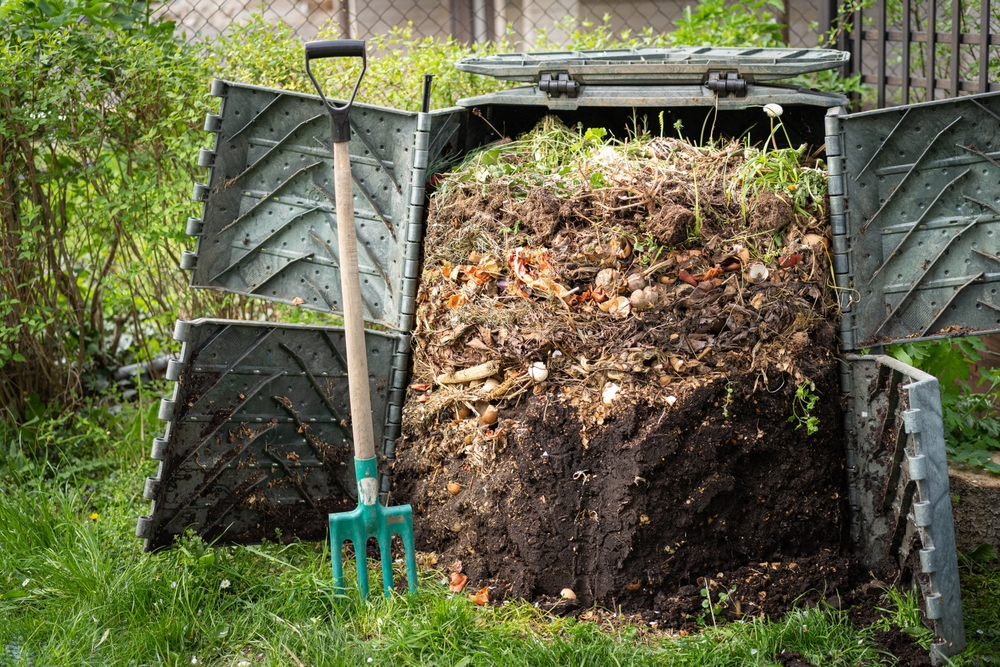
Time to brave the composting

0

It’s December, but there’s always something to be done. And now’s the perfect time to finally work out composting, says gardener Pete Harcom

This month we need to continue winter digging as we prepare the borders for next spring. To feed the soil and improve its structure, the best thing to use is garden compost, well rotted manure and leaf mould.
Do you make your own compost? Homemade compost saves money and resources, it will improve your soil structure and it can reduce your own impact on the environment.
There are lots of types of compost bins available at the garden centre or via your local council, but it’s also easy to make your own, using wooden pallets for example – there are many guides for making wooden compost bins online.
Dorset Council currently has a home composting offer – you can buy a 220 litre plastic compost bin for just £6 AND if you order two, the second one is half price! There will be a delivery charge (£7) and you may also need to buy a base for the bin, but it is still at a reasonable cost. I have experience of these black plastic bins and they can work really well, providing good compost in just 12 months!

How to start composting
Find the right site – ideally site your bin in a reasonably sunny place on bare soil. Be sure to choose somewhere you can easily add ingredients to the bin – and get the compost out!
Gather the right ingredients – save everything from vegetable and fruit peelings to teabags, toilet roll tubes, cereal boxes and eggshells to go in your compost bin. Never put cooked food, meat, fish or dog or cat mess in a compost bin – this will attract vermin. You can put in limited amounts of paper or thin cardboard, but no glossy printed paper.
Fill it up! Place all these items, along with all of your garden waste into your compost bin. A 50/50 mix of greens (nitrogen rich) and browns (carbon rich) is the perfect recipe for good compost. You need to ensure the contents are cut into small pieces, and mixed well – a garden shredder will help with this – or try to cut up or break any woody twigs etc down by hand, as this will aid decomposition.
And now you wait … It takes between nine and 12 months for your compost to become ready for use. Keep on adding greens and browns to top up your compost.
Once your compost has turned into a crumbly, dark material with just an earthy smell, it is ready. Use it to enrich borders and vegetable patches, plant up patio containers or feed the lawn.
Anyone with a smaller garden might want to consider setting up a wormery instead – check out theurbanworm.co.uk

Sponsored by Thorngrove Garden Centre

Frink in Dorset

0

Elisabeth Frink: A View from Within is a major exhibition at Dorset Museum in Dorchester, from 2nd December to 21st April. It coincides with the 30th anniversary of the artist’s death, and will be the first to focus on the work produced by Frink (1930-1993) at her Woolland studio between 1976 and 1993. It will include works that the museum acquired from the Elisabeth Frink Estate in 2020, and feature sculptures, prints, drawings, and personal possessions. Many of these items, including working plasters that formed the basis of Frink’s bronze sculptures, will be on public show for the first time.
Arranged thematically, the exhibition will comprise around 80 works, each offering a unique perspective on Frink’s life and art.
Pictured: Elisabeth Frink working on part of the Dorset Martyr group, 1985. The imposing group of sculptures was unveiled in 1986 on the site of the gallows where Catholic martyrs were hanged in the 16th and 17th centuries. © Anthony Marshall/Courtesy of Dorset History Centre. Artist copyright in image approved by Tully and Bree Jammet.