

Paul John Deram
Died peacefully at home on 10th March aged 78
Will be greatly missed by all who knew him. Funeral has already taken place. Donations please to the MacMillan Trust
Paul John Deram
Died peacefully at home on 10th March aged 78
Will be greatly missed by all who knew him. Funeral has already taken place. Donations please to the MacMillan Trust
With a break in the weather, Spring on its way and Boris soon allowing us out to play we can again look forward to the attraction of the outdoors. I have put together some titles to entice and entertain.
Wayne
Nick by Michael Farris Smith £12.99

Critically acclaimed novelist Michael Farris Smith pulls Nick Carraway out of the shadows and into the spotlight in this exhilarating imagination of his life before he became the The Great Gatsby. Before Nick Carraway moved to West Egg and into Gatsby’s world, he was at the centre of a very different story – one taking place along the trenches and deep within the tunnels of World War I. Floundering in the wake of the destruction he witnessed first-hand, Nick delays his return home, hoping to escape the questions he cannot answer about the horrors of war. Instead, he embarks on a transcontinental redemptive journey that takes him from a whirlwind Paris romance – doomed from the very beginning – to the dizzying frenzy of New Orleans, rife with its own flavour of debauchery and violence.
An epic portrait of a truly singular era and a sweeping, romantic story of self-discovery, this rich and imaginative novel breathes new life into a character that many know only from the periphery. Charged
with enough alcohol, heartbreak, and profound yearning to transfix even the heartiest of golden age scribes, Nick reveals the man behind the narrator who has captivated readers for decades.
The Garden Visitor’s Handbook 2021 £14.99

The famous yellow ‘bible’ for anyone interested in gardens and the 2021 edition is now available. Its 744 pages contain descriptions of the 3,700 gardens opening to visitors throughout England and Wales this year, and offers people unique access to the most beautiful gardens in the country.
When We Went Wild by Isabella Tree £7.99

From the bestselling author and rewilding pioneer Isabella Tree, When We Went Wild is a heartwarming, sustainably printed picture book about the benefits of letting nature take the lead, inspired by real-life
rewilding projects. Nancy and Jake are farmers. They raise their cows and pigs, and grow their crops. They use a lot of big machines to help them, and spray a lot of chemicals to get rid of the weeds and the pests. That’s what all good farmers do, isn’t it? And yet, there is no wildlife living on their farm. The animals look sad. Even the trees look sad! One day, Nancy has an idea… what if they stopped using all the machines, and all the chemicals, and instead they went wild?
The author’s own experience of rewilding her estate at Knepp has influenced conservation techniques around the world that are bringing nature back to the countryside and bringing threatened species back from the brink.
In 2022 Winstone’s will celebrate 10 years as Sherborne’s Independent Bookseller. Winstone’s has won the ‘British Book Awards South West Bookseller of the Year’ four times and was winner of the ‘Independent Bookseller of the Year’ national award in 2016. Owner Wayne Winstone was previously one of the three judges for the Costa Prize for Fiction. This year Wayne was selected as one of the top 100 people in the Book Trade’s Most Influential Figures listing.

I trained to become a veterinary nurse in Australia in 2008. The diploma course is very similar to the UK, a 3 year training program at a Veterinary Practice to gain practical skills with day release to college for theoretical knowledge. However, I have found the standard of nursing in the UK far exceeds the standard in Australia that I personally experienced in practice. The nurses at Damory are very technical and the level of education and exams they have to undergo to become a Registered Nurse are far more in depth compared to the course I took 12 years ago in Australia. The level of care, experience and skills the nursing team have to offer are exceptional and in many ways Damory would be classed as a Referral Centre in Australia.

As aforementioned, I started my career in a Practice in Australia and my nursing role was very similar to the role I have at Damory Veterinary Clinic; taking blood samples, assisting with radiography, monitoring anaesthesia, animal husbandry, Puppy PreSchool (puppy parties) and reception duties.
The main contrast between nursing in Australia and nursing in the UK are the emergency cases that are seen. An emergency often seen in Australia is tick paralysis. Once the tick bites the dog the paralysis agent is secreted through the saliva. The dog is then presented as an emergency with paralysis of the hind legs. Unless a serum is administered, the toxin spreads through the body, eventually reaching the lungs which then progresses to respiratory failure. The patient then has to be transferred to a referral centre to be placed onto a ventilator until the toxin is excreted from the body.
Heat Stroke is another emergency situation I saw more regularly in Australia. Living in a hot and humid climate, it is very difficult to keep animals cool. Once they become overheated, you have to cool them down immediately otherwise their bodies go into shock which can result in organ failure and in some cases death.

Local wildlife in Australia also differed greatly compared to the UK. On a night shift at Damory you could have up to 5 hedgehogs in at any one time and in Australia it would be Fruit Bats which are the size of a small cat! Or a Possum or Cockatoo!!! Fruit bats were usually hospitalised due to suffering electrocution from flying into overhead cables. They arrived stunned and unconscious. It was our role to administer fluids whilst they were unconscious and then could be transferred to a rescue centre to recover and then released. Possums were hospitalised usually after being involved in Road Traffic Accidents, whereby the mother suffered an injury, we would then have to check the pouch to see if there were any babies and if so, they would require hand feeding. There were initially rehabilitated in the Practice before being transferred to a rescue centre.
Here in the UK, one of the most common emergencies that I have experienced are animals involved in Road Traffic Accidents. I witnessed these far less whilst nursing in Australia, which I suspect is down to the legislation regarding ownership of a dog. In Australia all dogs are required to be on a lead at all times, there are designated dog parks where they are able to run off lead. If you do not abide by the rules, there are Park Rangers who will issue a fine of up to $300.
In conclusion I have enjoyed my experience of working in both countries. I am extremely happy and proud to have been part of the Damory team for the past 6 years and I am very excited to continue learning and expanding my knowledge and skills within this team.
By: Leanne Stephenson-Horne RVN
A health and inclusion coach is one of the three editors of a book which has reached the Amazon bestseller lists.
Jackie Arnold, who lives near Blandford Forum, said the book – Empowerment in Health and Wellness – was highly relevant to present times.

Available in paperback and Kindl, it offers approaches from professionals working with the mind-body connection to reduce stress and anxiety, build motivation and enable individuals to understand and respond to their needs.
The book details the impact of the three pillars of health and wellness: awareness, information and learning.
It provides a framework to deepen professional knowledge, skills and confidence to support others in times of uncertainty and crisis.
The methods and content outline the experiences that continually come from supporting cancer patients, carers and their families at the Fountain Centre, a UK charity working with the National Health Service.
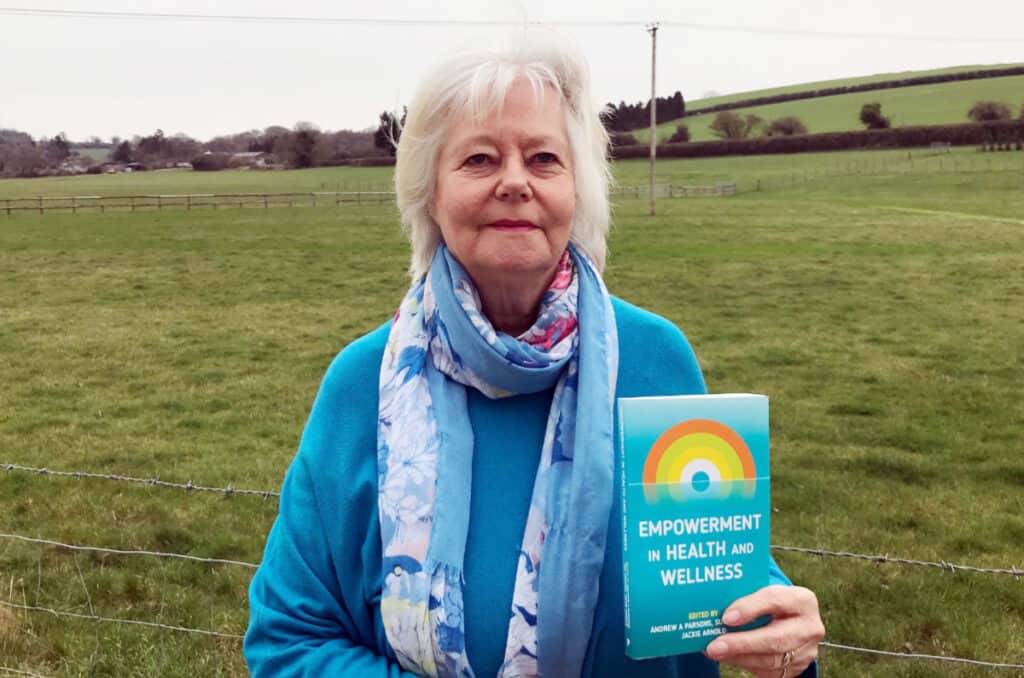
Jackie Arnold worked for more than 30 years in organisations around the globe supporting senior leaders.
She joined the Cancer Fountain Centre, part of Surrey Hospital NHS Trust, in 2017 as a volunteer support coach and supervisor.
In 2020 the team of coaches, supporting all those impacted by cancer, came together to create a service and write the book.
It is aimed at health and care professionals, HR and leaders in organisations who are supporting both cancer and Covid-19 patients who need support in times of uncertainty and change.
The book can be ordered from Amazon here.
By: Andrew Diprose Dorset Biz News
Leaving litter around is not just unsightly. It could also endanger lives. That’s the message from Compton Abbas Airfield near Shaftesbury.
Clive Hughes, who owns the family-run airfield, a popular destination for light aircraft, is concerned about the increasing amount of litter being blown onto the runway.
“This is not a whinge,” he explained. “It could cause a major disaster. If a plastic bag or sandwich wrapper gets caught up in the engine compartment of a light aircraft while it’s taxiing, it can block the airflow to the engine. This can result in engine power reduction or complete power failure at the critical phase of flight, namely take-off. A forced landing could then become necessary and if a suitable landing area is not available, it not only endangers the aircraft and its occupants, but possibly those on the ground too. Even more concerning, combustible litter such as plastic or paper could even cause the aircraft to catch fire.”
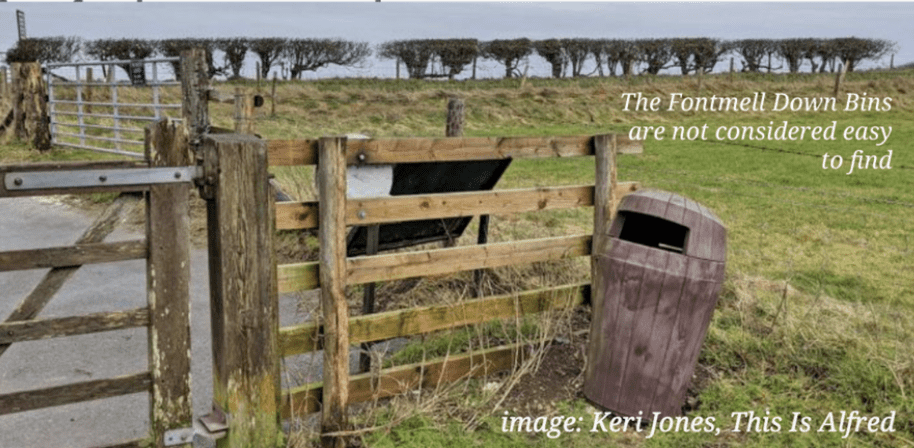
He added: “Our daily regime is to remove foreign objects from the airfield which are injurious to safety. Since the pandemic, litter has significantly increased. The hedgerows are blighted with discarded fast-food wrappers and plastic bags which are being blown at least 200 metres onto the runway. This is also concerning for wildlife and nearby organically-farmed cattle.”
But Mr Hughes is keen to point out he doesn’t want to stop people coming to the countryside. “The last thing I want is for people to stop enjoying our beautiful surroudings so I’m keen to find a solution to this problem in conjunction with the National Trust.”
He believes that re-siting the rubbish bins in the two car parks at Fontmell Down and Spread Eagle Hillto make them more visible would help encourage better use of the bins. The airfield owner is also suggesting a sign be erected to encourage people to take their litter home. He has contacted the National Trust but there has been no agreement reached and an invitation to a site visit declined.
Mr Hughes said: “I’m disappointed in what I regard to be a dismissive response by the National Trust to an issue which is a potential flight safety hazard.”
Dorset councillor Jane Somper has visited the car parks and airfield to assess the situation. She said: “I sympathise with the airfield. I had a thorough walk around there a few weeks ago and found it hard to find the bins in the NT car parks.”
The councillor has spoken to Dorset Council and Melbury Abbas Parish Council to put forward the idea of erecting a litter notice and this is now in discussion.
The National Trust told the digital Blackmore Vale: “Our Countryside team in North Dorset are working incredibly hard to keep Fontmell Down and all of the special places within our care, open, clean and safe – but we need everyone’s help to keep them that way. We are emptying bins as often as we can. We would urge everyone who visits our sites to take their litter home with them. Dropping litter puts extra pressure on our staff and local authorities at a time when resources are stretched.”
By: Tracie Beardsley
I think most Farmers, Growers and Gardeners will be glad to see the back of February . We again seem to have had the extreme of the weather with a very cold spell followed by a very wet spell.
On the farm we managed to carry out a limited amount of ploughing in preparation of sowing our crops. During the cold spell we carried out our regular 60 day interval Bovine TB test with temperatures well below freezing due to the wind chill. Our brave Vets from the Damory Practice survived the four days of testing . The suprising and encouraging result was a clear test meaning that we now need one more clear test in60 days to be able to lift movement restrictions so we can sell cattle to other farmers. A good number of cattle keepers in the South West are beginning to test clear but the question is for how long.

In spite of the covid pandemic on the farm we have remained largely unaffected, which is more than can be said for my wife’s hospitality business which remains shut .Recent announcements have given us some light at the end of the dark tunnel. Let’s hope that the planned dates become a reality especially with the vaccine rollout continuing at a pace.
Looking forward to March and our farming activities, it is generally a very busy month if the weather allows. The planting of our spring barley will be a priority . Applying fertiliser to our winter crops and grass to give them a kick start into growing will also take place . The milking cows will be looking over the gates from their winter accommodation thinking that they can sense the grass is growing and when will they be allowed out again to their green pastures again.
Let,s hope that spring will be soon upon us and put a smile on our faces again with plants and flowers growing to start the food production cycle going again.

Looking back to the farm dairy of February 1921 we were thrashing wheat and oats. Work had started preparing the fields for planting crops which is very similar to what we are doing today .The picture probably taken in about 1930, of my Grandfather driving an International harvester 10-20 tractor built around 1927 shows the tractor preparing the soil for planting , a very similar operation to our John Deere working during the end of February this year. An interesting comment in the 1921 diary was that this year was the longest and hottest drought within living memory. The stream dried up in July and started flowing again in January. Let’s hope the weather pattern doesn’t go in 100 year cycles !!
By: James Cossins
Call me old-fashioned but even with the modern technologies of sat nav and the all-knowing Google, I still make a Tourist Information Centre (TIC) my first port of call when holidaying or even going on a day trip closer to home – of course this was in halcyon, pre-lockdown days.
Local maps, a wealth of knowledge and asking questions of a real person behind the counter who can’t really recommend just one restaurant, but always does. And I’m such a sucker for those tantalising tea towels and souvenir thimbles.
Sadly, such TIC delights in parts of Dorset are in danger of becoming a thing of the past with news that Dorset Council is to stop funding their last three Tourist Information Centres in Dorchester, Sherborne and Wareham. The Council says it cannot afford to continue to fund the centres which cost around £200,000 each year to operate and employ 12 part-time workers.

Councillor Jill Haynes, Dorset Council’s Portfolio Holder for Customer and Community Services, said: “It’s always a difficult decision to reduce services we have historically provided, especially in the current climate and when jobs are potentially put at risk. However, our financial situation leaves us little choice but to review the provision of all services we’re not legally required to deliver.
“We cannot afford to fund tourism support activity at a local level across communities in Dorset. The Council’s role is to promote Dorset as a destination, so we will continue to develop the Visit Dorset brand to support the visitor economy and promote sustainable tourism as part of our Economic Growth Strategy.”
A recent public consultation by Dorset Council, in which 990 people took part, showed a strong level of support for its TICs and the service offered to residents and visitors alike.
Dorset residents made up 85% of respondents. The consultation revealed that 82% make use of a TIC with nearly 40% visiting more than five times a year.
Councillor Jill Haynes said: “The consultation has demonstrated that TIC services are still considered to be important by local people, visitors and businesses. It’s important that Dorset Council investigates all potential options for how these services could be provided in the future. “
Submitted comments frequently mentioned the importance of encouraging tourism for the local economy, the value of offering a face-to-face service, working with other organisations around sites and having knowledgeable staffing.
Dorset resident, Paul Sugg, who participated in the consultation, wrote: “This seems the wrong time to reduce spending on encouraging tourism to our county. Bizarrely, at the time of greatest strain on the public purse, it is the remainder of 2021 when these services will be required most. Foreign holidays are unlikely to be permitted and the majority of UK nationals will be looking to ‘get away’ to attractive areas of our green and pleasant land. We now have a unique opportunity to showcase our county and persuade people to spend more time here, particularly in low seasons, for years to come.’’
Miranda Tunnicliffe suggested: “Could the TIC’s sell local products and tea and coffee to supplement their income? Leaflets about local events, accommodation and attractions are essential to a positive visitor experience in Dorset. The redevelopment of Weymouth train station could include a TIC office surely. There are masses of empty shops too. I would like to see Visit Dorset employees manning them to get value for money.”
Andrew Patrick felt any savings could be better redeployed: “Tourism is very important to the Dorset economy, but the Council has to consider why the majority of council-tax payers, who live in places with either no TIC , or a locally self-funded TIC, should subsidise TICs in just three places, when those council-tax payers might well prefer potential savings to go toward more vital services – such as child care for example – which are in desperate need of funding across the Council area.’’
This public consultation report was discussed at a recent Place and Resources Overview Committee meeting with discussions around how to continue to support the Visit Dorset website, work with local organisations to find solutions and consider one-off funding to reduce the impact of potential closures on local people.
During this meeting, it was revealed that half of respondents to the TIC consultation were not even aware of the Visit Dorset website.
Sturminster Newton’s Councillor Carole Jones raised her concerns that the Visit Dorset website should be more seamless. “It needs tightening up so that visitors to the website are taken easily to sections on an area of Dorset where they can find everything – where to stay, where to eat, where to visit.”
Councillor Sherry Jesperson, representing Hill Forts and Upper Tarrants, voiced concerns that rural tourism industries such as farm glamping need to be more engaged. “We need to market tourism opportunities beyond the ‘coastal smile’. This should be a priority for Visit Dorset.”
Councillor Jill Haynes told the meeting that the website, which receives 2.6 million visits a year, is likely to be revised: “We have 15 million social media hits a year and 85,000 followers yet I was surprised at the amount of people who took part in the consultation who weren’t aware of Visit Dorset. I’ve already been involved with meetings with town councils to discuss how we can encourage them to promote their areas and are keen for more networking across tourist attractions to happen.”
The reorganisation of the TICS was passed and will begin at the end of April in conjunction with the finish of the financial year. Weymouth Councillor Ryan Hope, objecting to the plan, voiced concerns that Dorset Tourism had been hit hard during the pandemic and this timing was not good. “With Covid restrictions being lifted and staycations set to be the popular holiday option this year, Dorset will be a favourite destination. Our TICs answer questions and give support for the whole of Dorset and our tourism industry needs all the help it can get.”
Public consultation respondent Ian Stuart believes Dorset Council will regret their decision.
“The elimination of the Tourist Information Centres is absurd. Dorset Council will live to regret it. At such a time tourism, and tourists, need more help than ever. Dorset Council – whose very existence depends upon the tax payer – is doing a radical disservice to the beautiful area they represent and we all live in.”
TICS in DORSET – how many are left and where are they?
There are five other TICs in Dorset Blandford, Bridport, Shaftesbury, Swanage and Wimborne are run by other organisations, such as Town and Parish Councils.
Some areas in Dorset no longer have a TIC at all, such as Weymouth and Lyme Regis. Evidence shows that it is mostly local people who visit TICs. Around 30 million people visit Dorset annually, with approximately 93,000 people visiting one of the three TICs during 2019/20.
By: Tracie Beardsley
A £7m project hailed as game-changing and with the potential to close the rural/urban digital divide for farming and rural communities has been unveiled for Dorset.
The Small Robot Company (SRC), a British agritech start-up for sustainable farming, is to partner with Wessex Internet, Telint and Dorset Council in the 5G RuralDorset project.
The project will develop and prove a blueprint for rural-optimised 5G connectivity, with the world’s first 5G-ready agri-robot for arable farms.
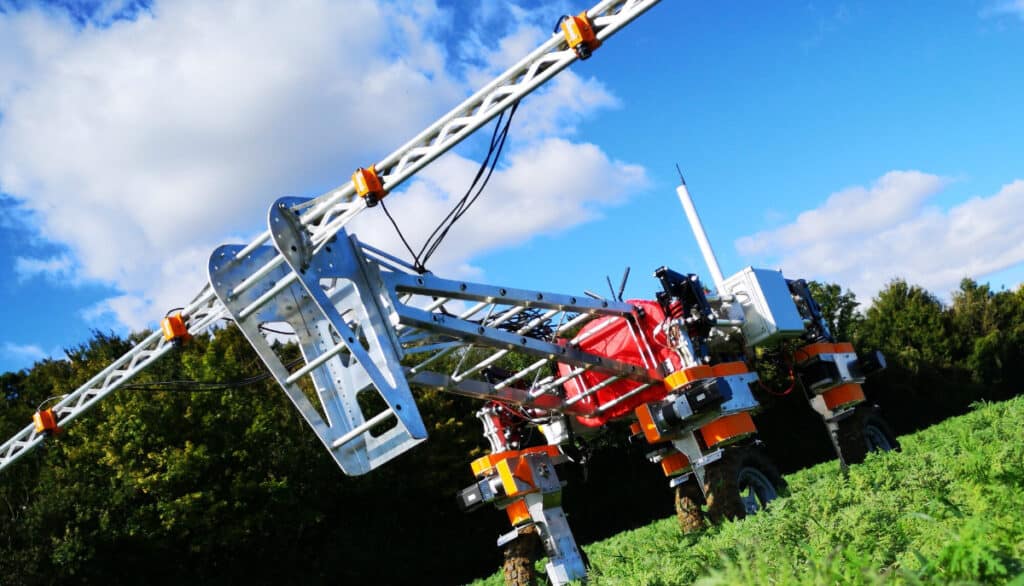
The resulting 5G blueprint will enable rapid deployment of 5G to rural areas.
The partners say it could boost rural investment, create skilled jobs and improve prosperity.
The project will develop an affordable, reliable and interoperable 5G network that is custom-designed for farmers and the particular challenges of rural connectivity.
It will look to explore how 5G and its roll out might be able to provide a step-change in the industry.
The project is part-funded, to the tune of £4.5m, by the Department for Digital, Media, Culture and Sport as part of its 5G Testbeds and Trials Programme.
The 5G robotics trial aims to demonstrate a revolution in farming, increasing productivity, yields and biodiversity while simultaneously reducing environmental impact.
Importantly, it also looks to improve soil health and reduce emissions, helping farmers meet the UK agriculture target of Net Zero by 2040.

Alongside the work with SRC, Wessex Internet is working with other future industry players to trial uses of 5G connectivity in agriculture.
The aim is to deliver high/mid bandwidth 5G solutions and breakthrough innovation within agriculture.
Anticipated benefits include empowering farmers with cost-effective, interoperable agritech; and more localised and efficient supply chains, linking local needs with local produce to improve food security, reduce waste and provide higher-value local produce.
Hector Gibson Fleming, Managing Director of Wessex Internet, said: “Our work taking full-fibre broadband to farms, homes and businesses in rural communities has shown us how great connectivity can transform countryside communities.
“But connectivity across farms remains a massive issue.
“Exciting technological developments in agriculture have the potential to transform farming, but are held back by poor connectivity and mobile coverage.
“We hope the 5G networks we’re building across a number of Dorset farms, and the exciting 5G applications we’re trialling, such as Small Robot Company’s agri-robots, will be a shining example of what the future can look like.”
Ben Scott-Robinson, CEO and Co-founder, Small Robot Company, said: “This 5G blueprint could be a catalyst for rural economies – with our robots demonstrating the potential for 5G to transform agricultural productivity.
“Connectivity is not a luxury.
“It’s a utility and vital to economic performance.
“5G technological development within agriculture is vital post-Brexit.
“One of the biggest obstacles facing UK farmers in adopting new technologies is poor connectivity around the farm.
“This 5G blueprint will pave the way for growth in the rural economy – and alongside it greatly-improved quality of life.”

The project will build a 5G ecosystem within the agriculture/aquaculture industry.
Wessex Internet will trial uses of 5G connectivity in agriculture, looking to establish sustainable business models that can be rapidly commercialised.
5G robotics could completely revolutionise the way the UK farms and bring enormous benefits to the environment.
Rural-optimised 5G connectivity also allows for the potential to reduce the cost of operating robots – which is already significantly less than conventional farm machinery.
It is anticipated that 5G robotics will enable real time capabilities such as the ability to quickly identify pests like slugs and immediately take action; and enabling farmers to act faster to exploit the UK’s dry weather windows.
Reducing the use of pesticides by improved precision mapping and weeding without the use of herbicides will improve biodiversity and soil health.
It will also provide farmers with live operational information such as soil moisture and crop emergence.
Seamless and real-time data and systems integration will also break down vertical silos, eliminating manual data transfer, reducing costs and greatly improving decision making.
The trials will be the first to demonstrate wide-scale autonomy of robotic farming operation, including the development of the UK’s first ‘5G-ready’ agri-robot.
Wessex Internet will be delivering three farm 5G networks on the back of its existing 2,100km full-fibre network as part of the 5G RuralDorset trials.
As a company with a farming background, the rural connectivity provider will be aiming to experiment with a 5G network which is fit for the industry – testing the technical and commercial viability of 5G deployment models in rural areas.

The trials with the Small Robot Company robots will be taking place at the Ranston Farm 5G trial site.
SRC is building a 5G-enabled Tom monitoring robot, Kennel and Robot Handler App.
In addition, the project scope includes a 5G-enabled Dick non-chemical weeding robot.
SRC will test this capability in Dorset from October 2021 to March 2022, writing a report on the resulting outcomes and benefits for its Farming-as-a-Service robotics model.
Mike Donnachie, Farm Manager at Ranston Farms, said having precise and accurate data to hand would help him make instant decisions while Cllr Peter Wharf Dorset Council’s Deputy Leader, said : “It is our hope that in making farming operations more sustainable through partnership with the Small Robot Company, we can revolutionise not only the productivity of agricultural operations but also reduce its impact on the environment through novel uses of monitoring and weed control.
“In doing so we will make agriculture part of Dorset for generations to come.”
Matt Warman, Digital Infrastructure Minister, said: “As we level up rural communities, we’re proud to be backing 5G RuralDorset and the many innovative projects it’s involved with – from intelligent buoys to 5G seaweed farms.
“This has huge potential to close the divide between rural and urban areas and transform agriculture as we build back better and greener for a more prosperous future.”
By: Andrew Diprose Dorset Biz News
It’s a crime that often goes unnoticed and unreported. Domestic abuse is on the increase and those in violent relationships have been affected severely by the three lockdowns.
Police recorded over a quarter of a million domestic abuse offences during the first lockdown between March and June 2020 – 7% up on the same period in 2019. Dorset Police reported a 17% increase across the county during the same period. The nationwide rise compelled Prime Minister Boris Johnson, at the start of the second lockdown, to urge victims to “flee from harm.”
The Office of National Statistics (ONS) states there has been an increase in demand for victim services during the coronavirus pandemic. As lockdown measures eased helplines in particular felt the pressure. The ONS suggests a probable increase in the severity of abuse and a lack of support mechanisms, such as the opportunity to escape the abusive home or to attend counselling.

However, the pandemic has been useful in helping bring this terrible topic into the spotlight and to highlight the need for more funding. Indeed, there is some good news for domestic abuse victims and their children living in Dorset: they are to receive more support through £1.4million of extra government funding.
The much-needed funding will help victims and their children access life-saving support and flee their abusers. This will include advocacy, counselling and therapy in safe locations such as refuges or specialist safe houses.
Dorset Council has secured £651,000 and Bournemouth, Christchurch and Poole Council will receive £750,000.
For David Sidwick, Conservative candidate to be next Police and Crime Commissioner in Dorset, the subject of domestic violence is a matter close to his heart. He said: “Having had a close family experience of domestic abuse, I know the pain and trauma it can cause. “
Mr Sidwick shared with the digital Blackmore Vale Magazine: “Somebody I know well was in an abusive relationship for a number of years. This consisted of coercive and controlling behaviour eventually leading to physical violence. This person endured interrogation of every aspect of her life – car mileage checked, phone bill scrutinised, even her workplace called to check she’d gone to work!”
He added: “And this was just the tip of the iceberg – being grilled if she was late back from shopping, possessive and controlling behaviour that forced her to pay all the bills so she was left with no money of her own. Thankfully, she eventually broke free with the help of a police domestic violence team.
David Sidwick continued: “I am pleased Dorset I getting £1.4 million. Having spoken to charities and residents across Dorset, I feel even more could be done to increase victim support and reduce offending. This behaviour destroys self-esteem and engenders shame of being a victim.”
Tonia Redvers, Quality and Operations Director for YOU, who deliver You First, the commissioned domestic abuse service in Dorset, told the digital Blackmore Vale: ‘We appreciate all funds that are allocated to Dorset to support victims and survivors of domestic abuse and their children. It’s very early days and we don’t yet know how the increased funding for Dorset will be allocated.
“We have seen an increase in referrals since the pandemic started. Not only have our team been amazing, but also we’ve received wonderful support from Dorset Council and the Police and Crime Commissioner which has enabled us to add staff to our initial contact team and to grow our counselling support for people in Dorset.’’
She added: “We look forward to working with Dorset Council to ensure these funds make a difference to people experiencing domestic abuse in Dorset.”

ASK FOR ANI
In January 2021 the government launched the ‘Ask for ANI’ code word scheme, which provides victims of domestic abuse access to immediate help from the police or other support services from their local pharmacy.
The Ask for ANI scheme allows those at risk or suffering from abuse to discreetly signal that they need help and access support. By asking for ANI in places like Boots, which have signed up for the scheme, a trained pharmacy worker will offer a private space where they can establish if the victim needs to speak to the police or would like help to access support services such as a national or local domestic abuse helpline.
By: Tracie Beardsley

© Bluebean Publishing Ltd