Home Blog Page 426

All the leaves are brown, and the sky is grey…almost!

0

There’s something to be said about the chill of Autumn arriving around this time of year. Summer 2021 was a bit sporadic in terms of the warmth, but we weren’t short of heatwaves and lots of bright days. Being able to reconnect with friends and family with the sun shining upon us brought smiles to our faces here at Thorngrove. Even with the adaptions we’re making to cope with life eventually moving past the pandemic, it does feel the most ‘normal’ things have been in a long time, and the arrival of a new season brings time for reflection on those things, but also, for looking ahead!

Sorbus – Image courtsey of Thorngrove

Here at Thorngrove, planting season is underway, and Nursery Manager Mark Hoskins has his hands full! – “Autumn is probably my favourite time of year, personally and work wise, I like the autumn colours of the leaves, and it means we get to do some proper nursery work, potting up all the bare root stock, the bare root roses are due in November, and the trees shortly afterwards. Right now we also have some nice trees and shrubs with autumn berries! – including Pyracantha, Cotoneaster, Callicarpa, Symphoricarpos, so do stop by Thorngrove to see if something takes your fancy and could have a new home in your garden”.

Pyracantha – Image courtesy of Thorngrove

The glasshouses team are also busy as we move into Autumn taking scented geranium cuttings for next year, and snipping flower heads of agapanthus and drying them ready to sow the seeds! September also saw the return of our Employ My Ability students, with some new arrivals too, all settling in well and continuing to be a vital part of our team here. Their work experience allows them to get involved in all aspects of running the garden centre and café, so it’s great to see them all getting stuck in after the summer break.
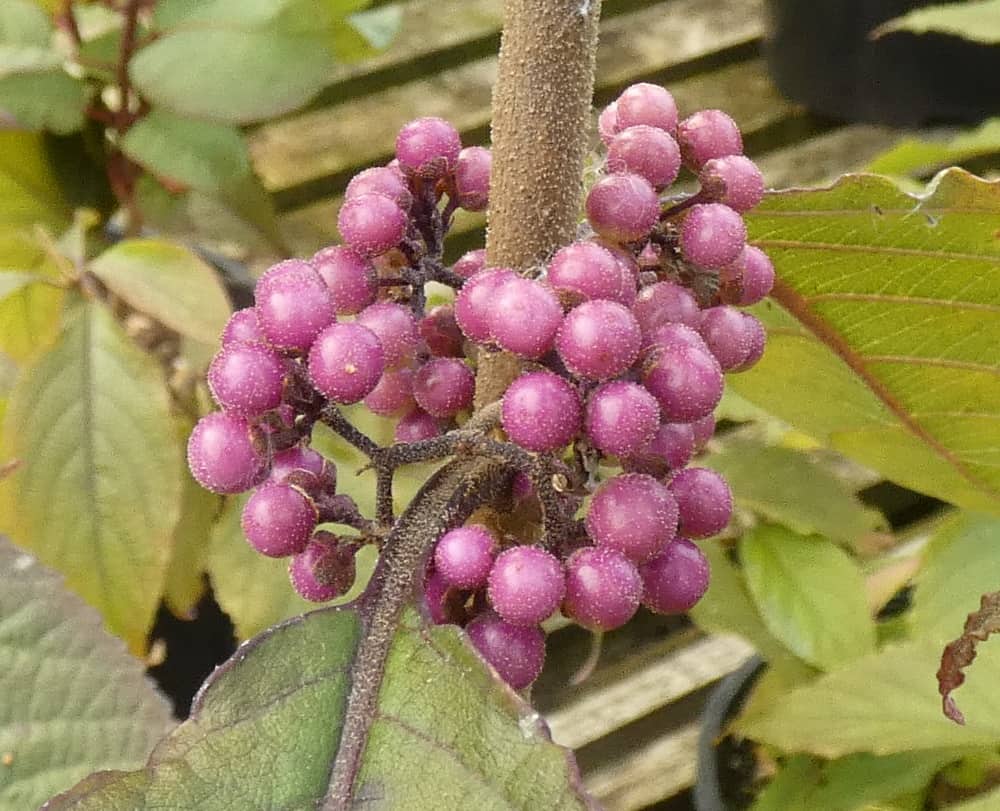
Callicarpa – Image courtesy of Thorngrove

The new season may mean we’re saying goodbye to summer, but the freshness of Autumn is another new beginning, and we’re excited to continue planting and then look ahead as we start getting festive…yes, it’ll be here before you know it!

Kelsi-Dean Buck

Marketing Executive

Employ My Ability

The Walled Garden, Moreton, Dorset. DT2 8RH – 01929 405685

www.walledgardenmoreton.co.uk

Thorngrove Garden Centre, Common Mead Lane, Gillingham, Dorset. SP8 4RE – 01747 822242

www.thorngrovegardencentre.co.uk

The Elephant Trunk

0

Whilst most are mourning the long summer days, astrophotographers across the country are excited to see the longer hours of truly dark sky.

The longer nights allow us to gather lots of data on a target, and that is what provides us with the detail we need to produce some spectacular images.

The Elephant Trunk

The image this month is of the Elephant Trunk (IC 1396A). Called the Elephant Trunk for its appearance, it is a concentration of interstellar gas and dust within the much larger ionized gas region IC 1396, located in the constellation Cepheus about 2,400 light years away from Earth.

This image was taken using a Skywatcher 200 PDS Newtonian Reflector Telescope and dedicated Cooled Astro Camera with around 5 hours of total integration time. Another piece of equipment that I wouldn’t
be without is the computer that helps orient my targets, and gathers the image. Some choose a setup that requires them to keep watch throughout the imaging session, sometimes staying outside all night, even during those freezing nights. We less hardy souls chose a system that can automate many of the tasks required. I choose

to use the ZWO ASIAIR Pro, and have also been chosen as an Experience Officer for the later ‘ZWO ASIAIR Plus’, a very clever bag of tricks that simplifies the minefield of astrophotography, and automates the process. I’ll be releasing a review of this device on my Facebook page in the next couple of weeks, so please do keep a look out if you’re interested in what it can do. There are lots of different solutions and software out there, so its worth investigating to see which might be best for you if you’re starting to get into the hobby.

The Night Sky, October – what to see this month:

October is a subtle month for astronomy and star gazing.

Pegasus dominates the southern skies this month, with Andromeda, our nearest cosmic neighbour, firmly attached to his side. Soon these dimmer autumn constellations will be superseded by the brilliant lights of winter. Among these, the beautiful star cluster of the Pleiades is sure to delight and dazzle any star gazer.

Watching Andromeda

October is a great month to start looking at the Andromeda Galaxy (M31) in the darker night skies. Visible to the unaided eye, the galaxy fills an area of our night sky that is four times bigger than our Full Moon. It appears in the sky as a fuzzy patch of dust and stars with a brighter elliptical core.

Andromeda is a spiral galaxy much like our own Milky Way, and in around 2.5 million years, the two galaxies will collide to create a new giant elliptical galaxy, fondly nicknamed ‘Milkomeda’.

The Seven Sisters

The next bright target to look out for is the Pleiades star cluster, a leading feature in our winter sky. The Seven Sisters, as they are known, are just a small fraction of the larger 1,000 star cluster, and great to view even using binoculars to truly appreciate their beauty.

Look to the planets

On the 9th October, looking towards the south-west after sunset, viewers will be rewarded with a stunning view of a narrow crescent moon adjoining Venus, with the Antares star to the left. Jupiter and Saturn are still well within view albeit moving away from the Earth now, and are clearly visible on the nights of the 13th, 14th and 15th dancing around our Moon, with Jupiter appearing on the left and Saturn on the right.

Halley’s comet

On the nights of the 21st and 22nd, the peak of the Orionid meteor shower will be visible, as debris from Halley’s Comet collides with our atmosphere. The Moon may somewhat spoil the event this year unfortunately. Halley’s comet itself is only visible from Earth every 75 years, with its last appearance back in 1986: I was 2 years old then! I look forward to hopefully being able to see it myself in 2061. Also on the 22nd, whilst waiting for the meteors to appear, take a look at the Moon near the Pleiades. On the 31st October at 2am, we formally bid British Summer Time farewell, and the long nights really start to draw in. I for one cannot wait!

by Rob Nolan

Find RPN Photography on Facebook here and on Instagram here.

Voice of a Framer | The Great British Sowing… Bet

0

The annual gamble is upon farmers – when do we sow next year’s crops?

As we move into October our main activity is planting autumn crops, winter barley and winter wheat. Our grass seed, oil seed rape and cover crops are already in the ground. The timing of sowing these crops is becoming increasingly critical. If the crops are planted too early aphids will spread viruses to the leaves leading to diseases affecting the yield. Also early sowing will increase the amount of fungal disease in the crop leading to more
pesticides having to be applied in the spring. Yet, sowing the crop too late can mean the fields are too wet to
get the operations completed. In recent years we have experienced some extreme weather conditions preventing machinery from travelling in fields because of excessive rainfall. Crops can be successfully established in November if only we knew what the weather conditions would be like.

Attacking deadly TB

The TB test of all our cattle was partially successful with no reactors having to be taken from the farm, but we have to re-test two milking cows as their results are inconclusive.

So our future TB status depends on two cows as to how quickly we can be classified as TB-free. It is very frustrating. We have though, I think, made progress as we are not losing as many cattle being confirmed as TB cases as in the past. Fingers crossed that in our next test in 60 days we are clear.

The milking cows are now beginning to eat into their winter supply of food and with our maize crop still to be harvested we look as if we have a plentiful supply of fodder to see us through to next spring. It was a busy month for our farm audits from the Red Tractor Scheme and the Food Standard Agency. Both visits were at short notice, or no, notice so they certainly came as a surprise . We have a few non-compliances to correct otherwise we were reasonably in order. There is a lot of debate within the farming community about the benefits from the Red Tractor Scheme. My feeling is that if it brings farms up to a sensible standard of food production and a high standard of animal welfare then it is worth keeping. But there is a need to explain to consumers what the Red Tractor logo means on food products.

What is the Red Tractor Scheme?
Primarily the food will be produced to a certain standard and the farm inspected regularly. The logo also means
that the produce has come from this country.

The labeling needs to be more readily identifiable to consumers. Also food products coming from outside the UK which are processed in the UK have the logo on the packaging. I believe this is wrong. Currently there are concerns that cereals produced abroad are being mixed with home-grown cereals and given a Red Tractor logo. Yet the imported grain has not gone through such rigorous checks.

Trust local

At our Rawston Farm Butchery we are promoting the Trust Local Love Local brand. After hosting Open Farm Sunday a few years ago it was apparent that consumers wanted to support the British Farmer. We hope that other counties will follow Dorset’s lead and use the logo with their county flag on to show where the food comes from.

by James Cossins, a fifth generation farmer in the Tarrant Valley.

Sponsored by Trethowans – Law as it should be

What is TOLATA?

0

Marriage is certainly on the decline; data from the office for national statistics shows that the latest marriage rates are the lowest on record. 

Couples no longer consider it necessary to marry before they have children or buy property together; but what happens to jointly owned property in the event couples who are not married separate?

Most people in this situation are surprised to find out that the legislation in England and Wales which governs this situation is completely unrelated to Family Law and they are not protected by the Matrimonial Causes Act 1973.

The issue between the separating couple, would essentially be a dispute over property ownership; and, therefore, the legislation that assists is the Trusts of Land and Appointment of Trustees Act 1996 (also known as TOLATA).

Shutterstock

What is TOLATA?

TOLATA gives Courts certain powers to resolve disputes about the ownership of property (or land).

Who can make an application?

An application is usually made by:

In addition, there are other parties that can make an application, such as a personal representative of a beneficiary; a trustee in bankruptcy; a judgement creditor with a charging order secured against the property; or a receiver; however, these are less common.

When can a TOLATA claim be issued?

A TOLATA claim can be issued:

  • To determine whether jointly owned property should be sold;
  • To determine the respective shares that each co-owner is entitled to;
  • To determine whether a party has a beneficial interest in the property, usually where that party’s name is not on the legal title and the legal owner is disputing the claim;
  • To determine whether property subject to a trust of land, should be sold on the application of a creditor or a beneficiary such as a parent/grandparent seeking to recover their financial interest in the property.

The Court is asked to determinewho are the legal and beneficial owners of a property, and in what proportions.

Limitations

TOLATA limits a court to deciding on co-ownership of property. It does not give the court the power to:

  • vary that co-ownership;
  • adjust the proportions that each person owns;
  • order that one party sells or transfers their share of the property to the other;
  • order one trustee to do something that they are not permitted to do under the terms of the trust; or
  • order that one party compulsory purchases the interest of the other party.

If you require any assistance in relation to jointly owned property, please contact Karen Watts on [email protected] or 01308 555639.

Richard Batterham – Obituary

0

Richard Batterham, of Durweston, was one of the most revered potters of his time.
27th March 1936 – 7th September 2021

Richard Batterham in The Pottery – © Millie Pilkington

It was Donald Potter and Bryanston School that set Richard off on a lifetime’s work making pots. After school he studied for two years at the Leach pottery in St Ives, where he met fellow potter Dinah Dunn. They married and moved to Durweston, where they set up the pottery in which Richard worked for nearly 60 years. He made his last pots at the age of 82.

Richard sold his work at David Mellor and Joanna Bird in London, Simon Pearce in New York, and at Sladers Yard in West Bay. He had exhibitions across the UK and Europe. His exhibitions closer to home were often with artist Richard Bawden, his friend from childhood, or John Maltby, a long term friend and fellow potter and sculptor.

Many, many of his pots were sold directly from the pottery, and Richard formed close friendships with long-term customers. Their visits were nearly always accompanied by warm and wise discussions and a walk around the vegetable garden which formed as much a part of his life as the pottery.

Little changed at the pottery in those 60 years, apart from the ongoing development of his pots. The pottery gave several generations of family and visitors a huge stability, forming an integral part of their lives, reinforced with the daily use of his pots.Richard rang the bells at Durweston church for more than 40 years, he played Joseph in the Christmas play at Lower Berrycourt Farm for as many years, and he kept Bees until varroa struck.

He faded away peacefully at home on the 7th September age 85, after spending two years working with the V&A in London, planning an exhibition of ‘life in pots’ which will open on 26th November 2021 and will include a book to mark his life. This gave a focus to his reflections on a productive and extraordinary life once he was no longer able to make pots.He has been described as one of the ‘greatest artists of Modern times’ – an accolade he would have smiled at and just got on with making pots.

Dinah died in 2007. Richard is survived by their five children, Annabel, Imogen, George, Jessamine, and Reuben, by 15 grandchildren, one great-grandchild and by his brother David.

Help secure the future of British food

0

Back British Farming! That’s our over-riding message – whether it’s to the public, Government or any policy holder who‘s decisions impact our farming businesses.

A field of hay bales near Milton Abbas in the rolling landscape of England’s Dorset Downs. Shutterstock

It’s the sixth year of the NFU’s big campaign ‘Back British Farming Day’, which is always held in September. The aim is to drive support for the British food and farming sector through simple actions like buying British produce, enjoying the countryside responsibly, and spreading the word with friends and family.

Why is this important?

The UK food and farming industry contributes more than £120 billion to the UK economy, with our farmers producing the raw ingredients for the food industry. Here in the South West (SW) we have over 1.7 million hectares of farmed land – that’s 1,700,000 rugby pitches! Every SW farm trades with an average of 48 other businesses, whether that’s tractor dealerships, animal feed companies or vets. The farmed landscape also makes a key contribution to the tourism industry by managing our glorious countryside. All in all, the value of farming to the South West’s economy stands at a gross output of £4 billion and a gross value added of £1.6 billion. So, yes it is important!

Reasons to be proud

This year on our Back British Farming Day on Wednesday 15th September, Jeremy Clarkson joined the NFU and thousands of farmers and growers, MPs, celebrities and members of the general public to take part in the annual celebration of British farming. You may have seen farming champions across the nation using the hashtag #BackBritishFarmingDay on social media with videos and pictures of why they were proud to produce the nation’s food. And quite right they are to be proud – British farmers produce some of the best food in the world. Not only is it delicious and nutritious, but it’s produced to incredibly high environmental, animal welfare, traceability, and food safety standards – something not every country is able to say.

Food self-sufficiency

Yet, over the past few years the country has watched its self- sufficiency drop from 78% in the mid-1980s to its current level of just 60%. As an island nation very well suited for quality food production, it would be a mistake to become even more reliant on the rest of the world to feed us. We would encourage you to add your support to our letter to George Eustice, the Secretary of State for Environment, Food and Rural Affairs, and ask him to keep food self-sufficiency levels above 60%: Help secure the future of British farming.

If our government truly backs the potential of British food and farming, the country could see huge benefits. British farmers could increase the industry’s economic contribution and provide more nutritious, affordable, climate-friendly British food for UK shoppers while bolstering domestic food security.

The Cheese Festival.

Our local office in Sturminster Newton was delighted to be supporting the Sturminster Newton Cheese Festival again the weekend before Back British Farming Day. The Festival has raised over £100,000 for local charities and organisations.

We were delighted that Dorset Tractors & Agricultural Equipment – CJ Cox Agricultural Engineers donated to our stand their striking pink tractor and the Gillingham & Shaftesbury Show their enormous floor tractor puzzles! Alongside our wooden milking cow “Daisy” we were able to entertain and talk farming to people of all ages and show where your food comes from, whether its wheat becoming bread, barley becoming beer or oats becoming your porridge.

Louise Stratton NFU Dorset County Adviser

Sponsored by Trethowans – Law as it should be

What are the benefits of leaving a gift to a charity in your Will?

0

The philanthropy of give to charity aside, are you aware of the tax benefits of leaving money to Charity in your Will? Private Client specialist Lesley Eveleigh explains:

Shutterstock

What are the benefits of leaving a gift to a charity in your Will?
Not only is a gift to charity free of inheritance tax (IHT), should you gift over 10% of your estate to charity and your estate is still subject to IHT, it will be charged at 36%, rather than the usual 40%.

What are the different types of legacy you can leave to a charity?
You can leave them a fixed sum of money, a particular asset, such as a shareholding or a house, or you can leave them a percentage of your estate.

Can you leave your entire estate to a charity? Can this be disputed?
In this country we have ‘testamentary freedom’, which means you are free to leave your estate to anyone you wish, including leaving everything to charity. However, potentially family members, anyone you have cohabited with over 2 years, and anyone who was financially dependent on you could make a claim against your estate under the Inheritance (Provision for Family & Dependents) Act 1975. Whether they are successful or not will depend on the circumstances.

How is your donation passed onto your chosen charity after your death?
Your Executor will need to account toa charity for your gift once they have access to your funds and after various
deadlines have passed. This is usually after they have obtained a Grant of Probate which can take some months. In any event, they should if possible account to the charity within one year of the date of death, otherwise ‘statutory interest’ is added to any fixed sum of money left to a charity (but not a share of your estate). This is known as the ‘Executors’ Year’.

How can a solicitor help you include a donation to a charity in your Will and ensure your wishes are carried out?
A solicitor can advise you on the best way to leave a gift to a charity. There are different implications for leaving either fixed sums of money, specific assets or a share of your estate and the procedures after your death and any costs associated with administering them, will be different. So it is important that you take professional advice. Your solicitor can also advise you on the IHT implications of leaving a gift to charity.

For further information please contact Lesley Eveleigh on 01935 846275 or email l[email protected]

How do I overwinter my elderly horse?

0

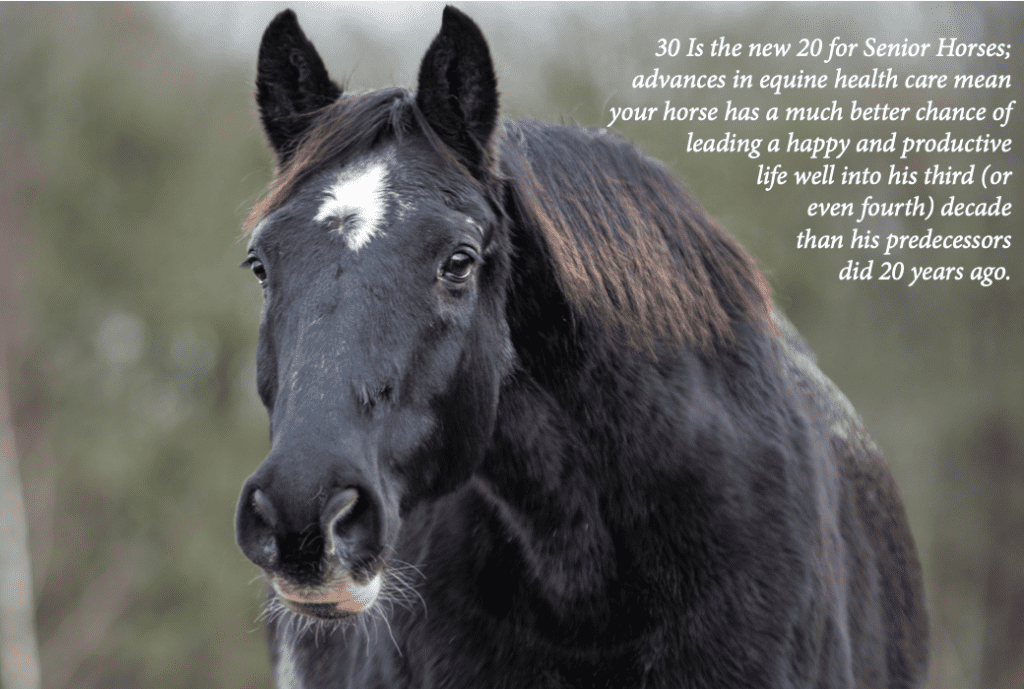
Owning an older horse or pony is very rewarding. They are usually (but not always!) more sensible; if still actively working or competing, they know their job, and get on with it. Traditionally, a horse or pony was recognized as a veteran at just 15 years of age. These days, many horses do not reach their competitive peak until their mid-teens. Countless horses and ponies are still active well into their twenties and even thirties!

Senior horses will find it hard to keep warm during the winter months and so they will most likely need a rug and some sort of shelter. Rugs are great for the senior horse as they can lose weight quickly if they become cold. Please note that horses diagnosed with Cushings disease may get too hot in a thick rug, due to their hairy coats. Providing shelter, whether it be a stable or field shelter is also important as it will offer protection from the weather – sun, wind and rain.

A key factor in maintaining a healthy senior horse is nutrition.
As horses get older their digestive efficiency reduces, which means they absorb less protein and nutrients from their food. There is no one-size-fits- all option, so what you choose to feed should be adapted depending on their health and condition. If your horse is no longer able to eat hay, you will need to provide fibre through a hay replacer. Horses with dental problems may also require a special diet as they may find chewing difficult. Therefore, you will need to provide fibre that your horse can chew, to ensure they get the nutrients they need. We recommend doing an annual health check before the winter. An annual health check, provided by your vet, will ensure your horse is checked over thoroughly and allow them to diagnose any problems early.

What does an annual health check include?
• Body condition score – This will provide a baseline before you go into winter of where your horses’ weight is.

• Dental check – ensuring good dental health will help your elderly horse to properly digest their food and keep weight on in the colder months.

• Listen to heart and lungs – this helps to pick up any problems early on.

• Eye examination – especially important if your elderly horse is still ridden, this again can pick up any early signs of problems they may have.

• Blood sample – a general screen which often includes an assessment of red blood cell count, white blood cell count, protein levels, liver and kidney enzymes.

• Worm egg count – the vet can then advise on what wormer your horse may need.

If you haven’t already, do check the Damory Equine Team out on Facebook and Instagram for lots of information to help with the care of your horse.

We are currently running a great competition for one lucky elderly horse or pony!

by Julian Radburn BVM&S CertEM(IntMed) MRCVS Damory Clinic

Community in Sturminster Newton

0

Sturminster Newton is a pretty market town and the ‘unofficial’ capital of the Blackmore Vale. It’s picturesque 1,00 year old mill on the River Stour is seen by all those passing the narrow arched bridge into the town. Once home to Thomas Hardy and Dorset dialect poet William Barnes, Sturminster Newton is a small town with a big community.

Image by Tim Robins

“The Boutique”  in Market Cross is the renamed former “Community Chest” and contains a hoard of preloved ladies and children’s clothes and accessories.   Renamed, but the same lovely quality clothes at  fair prices. 

The Emporium recently celebrated its first anniversary as a treasure trove of items looking for  new homes.    The Emporium offers china, glass, “collectables”, kitchen ware, children’s toys, books, music and much more, including now having a Gentleman’s Clothes Boutique with it own changing-room.    The money raised from The Emporium  and The Boutique is  used for the benefit of the town – you will soon see a defibrillator appearing on the outside of the building.

Image by Tim Robins

The Emporium is  a place for rehoming and also recycling.   The plea from Shop Manager Cheryl Basten is “we want good quality goods to sell but our motto is that nothing goes to waste if we can possible avoid it.   So please – remember us when you are having a clear out.”

So if clothes and goods are not of good enough quality to sell in the two shops they are sold on for recycling.   The Emporium also saves milk bottle tops which go to a cancer charity, stamps which go to the RNIBm , batteries, bras (which go to women in the third world), glasses which are handed on to local opticians, printer ink cartridges, buttons which are put on cards for sale, old woollies which are made into gloves, broken jewellery which is used to decorate handbags.  

Image by Tim Robins

The Emporium houses a community fridge with free food for anyone who wants to help themselves…..says Cheryl “ we take surplus food from The Pantry or food shops, including produce in season from out local gardeners and most recently free range eggs.   So don’t be shy, come and help yourself and fight food waste”