The Blackmore Vale logo
Home Blog Page 224

Here comes the sun …

0

The Thorngrove team are loving the seasonal rush of colour, and they’re ready to help you make the most of your garden says Kelsi-Dean Buck

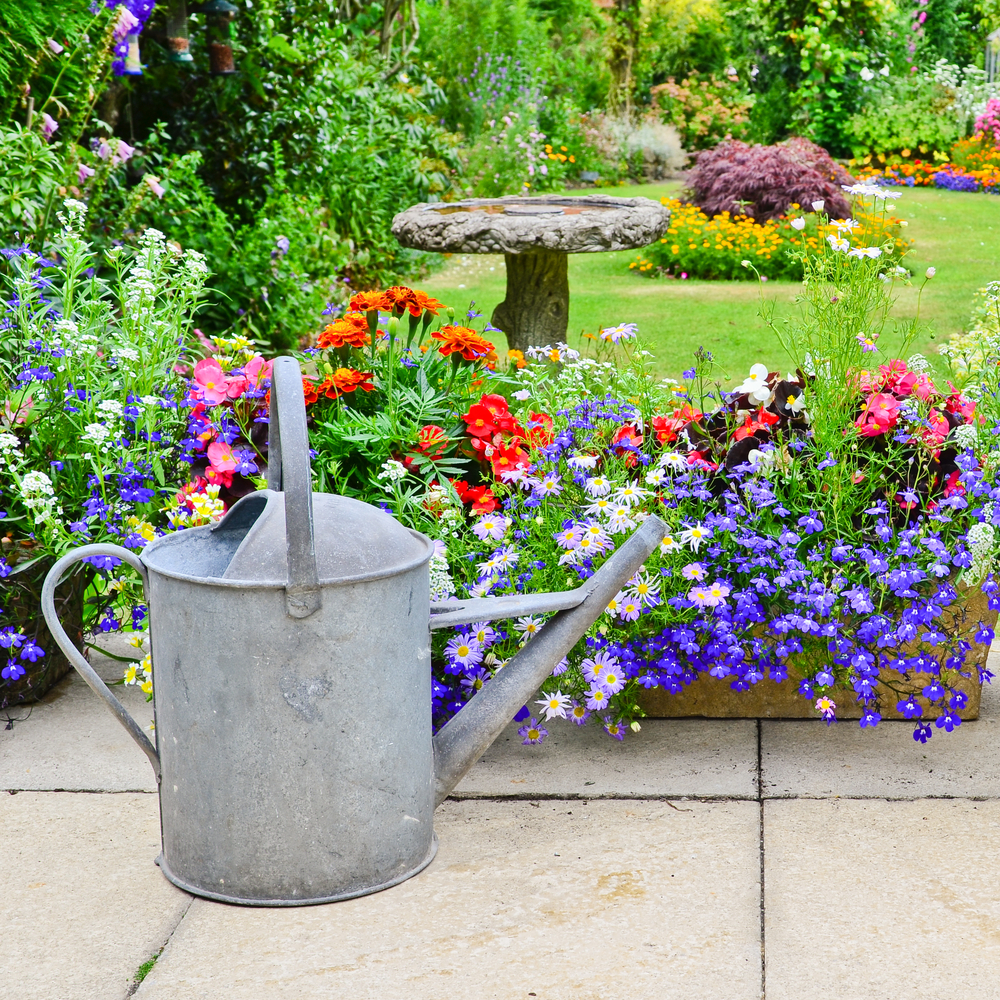
this but the last few weeks have brought some stunning garden weather – it’s been such a joy to wander the courtyard here at Thorngrove in Gillingham. We’ve made a few changes to our displays and the diverse selection of vibrant plants have frequently been stopping me in my tracks. It felt like spring took a little while to arrive this year but May’s been a beautiful month, and now as we move into June, we can finally look ahead to the official arrival of summer!
Our plant of the month for June is the Foxglove – also known as digitalis, a beautiful plant famous for their bell-shaped flowers. Picking yours up from us? Here’s a few care tips!
Digitalis prefers partial shade to full sun. Ideally, it should receive four to six hours of direct sunlight each day. Choose well-draining soil that is rich in organic matter, and keep the soil consistently moist – but not waterlogged. The tall varieties of digitalis may require staking or support to prevent them from bending or toppling over in strong winds. Do keep an eye out for common garden pests such as aphids, slugs, and snails. If you notice any infestations, treat them promptly using appropriate organic or chemical methods

Get the kids gardening
As I write this, it’s National Children’s Gardening Week and we’re running a special competition at Thorngrove to help your little ones get creative in the home and garden (visit our social media for more details), but even if the week is up by the time you read this, it’s still a brilliant time of year to get them interested in gardening!
Try making a butterfly-attracting garden – teach children about pollinators by creating a garden specifically designed to attract butterflies. Plant nectar-rich flowers like lavender, marigolds, and buddleia.
Or how about an upcycled container garden? Encourage children to repurpose items like old buckets, cans, or wooden crates to create unique container gardens.
Perhaps a pizza garden will capture their attention: help them design and plant a pizza-themed garden by choosing various Italian herbs like basil, oregano, and thyme, along with some tomatoes and peppers.
You could also try creating bug hotels, pinecone bird feeders, hedgehog huts and more! We have plenty of plants and garden essentials at Thorngrove (including bird feed!) to help you with these kinds of projects.
Whatever you’re doing this month, we hope you get to enjoy the outdoors, and don’t forget the roses will be blooming!
We look forward to seeing you in the garden centre and café soon.

From war refuge to lifelong haven

0

More than 40,000 animals were helped by the sanctuary created ‘temporarily’ by the Duchess of Hamilton near Shaftesbury, says Ferne Rescue Centre

Nina Douglas-Hamilton, Duchess of Hamilton, photographed in 1926

In 1939, Nina Douglas-Hamilton, Duchess of Hamilton, realised there was a huge need to help animals affected by the war.
A well-known early animal rights activist, she had co-founded The Animal Defence and Anti-Vivisection Society (ADAVS) in 1903. When she heard that people were euthanising their pets if they were unable to find them a safe home out of the city, the Duchess rushed down from Scotland and put out an announcement on BBC radio asking for suitable homes for displaced animals. The story goes that when she returned home that evening, the Duchess was met with a queue of owners, with dogs, cats and even a parrot, looking to save their beloved pets from slaughter or starvation. Many volunteers did indeed come forward to offer homes to displaced pets, but the offers were very swiftly outnumbered by the number of animals in need. The Duchess didn’t hesitate. She opened the house and grounds of the family’s Ferne Estate near Shaftesbury to accommodate as many animals as possible.

Feeding time at the kennels – with Miss B Broms, Miss P Reid, Miss M Atherton and Nina, Duchess of Hamilton

The best of intentions
During the war years, with the assistance of a team of dedicated staff and local volunteers, the Duchess provided safety and sanctuary to more than 6,000 pets.
Inevitably, at the end of the war many owners failed to return to collect their pets. Ferne’s legacy of rescuing and rehoming animals-in-need had begun.
However, the Duchess’s well-intentioned restrictions were so stringent that the house became unsaleable. It feel into disrepair and was demolished in 1965. In the early 1990s the estate was bought by Lord Rothermere and in 2001, the present Ferne House, designed by Quinlan Terry, was built.
But the animals sanctuary remains, just as the Duchess intended, near Chard in Somerset, in the Blackdown Hills Area of Outstanding Natural Beauty.
Ferne sanctuary has cared for approximately 40,000 animals in its more than 80-year history, and in keeping with the Duchess’s aims, animal welfare continues at the heart of everything that Ferne does. Any animal passing through its gates is assured of love and compassion throughout the rest of its life. You can see cat feeding time in 1965 in footage from British Pathé above, and in the British Film Institute archive there is an eight minute TV documentary about Ferne Sanctuary, filmed in 1977, not long after the move to Chard (watch it here).

Ferne rehomes dogs, cats, horses and ponies and also currently provides a home – for life – for 300 farm and domestic animals. The centre is open to visitors, and provides a fascinating glimpse into a working sanctuary, with all proceeds going towards the care of the animals who need the sanctuary’s support.
There is also an on-site café – appropriately named Nina’s in honour of the Duchess – which serves locally-sourced produce and fantastic home-baked goods. It’s the perfect place to enjoy a catch-up with friends, or simply for a quiet coffee after a visit at the sanctuary.

  • To find out more about rehoming an animal, visiting the sanctuary or other ways you can support Ferne and its work please go to ferneanimalsanctuary.org/

Beautiful Amber is Ferne’s longest resident, having arrived in November 2021. All the dogs she arrived with have long since found homes, leaving Amber waiting in kennels, watching others come and go.
She is simply a joy to be around, adoring the company of people; she’s a playful girl who loves her cuddly toys. A thoroughly gentle soul, Amber is desperate for the right person to make her feel safe at home.
Amber loves cuddling up on a sofa and just sitting with people. She’s a keen sunbather, finding any sun square on a warm day, and she really loves her food!
Specific needs: Amber is selective with other dogs and needs to be the only pet in the home. She should have a secure garden, ideally in a quiet location. Amber cannot be let off lead in public, and she must wear her muzzle on walks. Off-lead time would be fine at a safe dog exercising facility.
Being in kennels for a long time can cause chronic stress, and this in turn can cause illness. Amber is now on lifelong medication for an underactive thyroid, and she is also under medication for hip dysplasia.
As a middle-aged girl, Amber desperately needs a second chance at happiness. But with the right owner, who has the right location, she will be a wonderful pet and has so much potential to be someone’s new best friend. Do you have space in your heart (and on your sofa) to give this beautiful sweet girl the home she so deserves?
Read more about Amber here

Semley Music Festival

0

Saturday 8th July

Noon – 11:30pm, Church Common, Semley SP7 9AS

LIVE MUSIC • PIZZA & STREET FOOD
BEER TENT • STALLS
CHILDREN’S ACTIVITIES

Tickets on sale https://www.semleymusicfestival.org

EARLYBIRD OFFER
Book tickets before 11 June for discounts (see website)

What’s on at The Exchange this summer

0

All the good things on at the Exchange in Sturminster Newton this summer 2023

Tom Seals with Noddy Holder in Wimborne

0

Wednesday 7 June at 7:30 pm

Hailed by Jools Holland as “an extraordinary young talent” and compared by Tom Jones to Little Richard, Tom Seals is already a huge hit, enjoying regular sell-out shows at London’s legendary Ronnie Scott’s, the world-famous Birdland Jazz Club in New York City and the prestigious Dubai Opera House.

Fresh from a series on Sky TV, ‘Tom Seals Presents…’ is an exciting, ground-breaking music chat show. And he’s coming to Wimborne – be ready for a fun-packed evening!
The Godfather of Glam, MBE and genuine national treasure, Slade legend Noddy Holder will look back over a lifetime of towering achievements, re-living the heady days of the pop-tastic 70s … and 80s and 90s. He’ll choose his favourite songs for Tom Seals and his band to perform, combining them with a wild night of stories – from his early days on the West Midlands beat scene, a stint as roadie for Robert Plant, all-conquering Top of the Pops appearances, endless world tours, thespian triumphs and of course the ever-changing the face of fashion!

Tickets £26 from Tivoli Theatre

A Summer Festival at Sculpture by the Lakes

0

The five day Summer Festival combines everything beautiful for your home … inside and out!
At our Fire & Food Outdoor Kitchen we will be running a series of BBQ demonstrations every day, including Marcus Bawdon from the UK BBQ School, pizza masterclasses with Martin Sviba, Luke Vandore-Mackay from High Grange demonstrating Kamado Joe’s, Moroccan cooking with Simon Gudgeon, Vegan BBQ with Vegan Magda along with many others.

There will also be a selection of stalls cooking delicious food for you to eat while you watch!
There will of course be BBQ’s and accessories for sale, too, and the Brace of Butchers will be talking about different cuts of meat and how to cook them.
The very best artists and makers in Dorset will be showcasing their craft in the spectacular surroundings at Sculpture by the Lakes. Many exhibitors will, in addition to selling their works, be demonstrating their skills to allow you to appreciate the process of their craft. Watch pots being thrown, live raku firing, blacksmith forging, printmaking and much more.

Join us for the Summer Festival – it’s going to be a wonderful day out!
28th June to 2nd July. Entry £14.50, and includes entry to the sculpture park.
Book tickets sculpturebythelakes.co.uk

You just can’t get the staff…

0

The UK’s first post-Brexit trade deals begin amid agricultural industry concerns and severe labour shortages. Andrew Livingston reports

shutterstock

The seventh anniversary of the British people’s vote to break away from the European Union is on 23rd June. This year, however, it was 1st June that marked a watershed moment for the UK, as the first post-Brexit trade deals with Australia and New Zealand began. For some, these two Oceanic trade deals will bring exciting opportunities to grow their businesses, selling more easily into the two countries.
For UK agriculture, however, there begins an anxious wait. Farmers are concerned that their high-welfare (and therefore costly-to-produce) food is going to be undercut by Australian and New Zealand-produced meat.

shutterstock

Sell the herd
Unfortunately, this isn’t actually the biggest issue for UK farming in the post-Brexit era – that issue is still labour. Tighter restrictions on immigration have left the UK’s agriculture sector short of its necessary and willing foreign workers, as the British workforce is still unwilling to fill the gap.
Richard and Dee Foot, who farm in Bishops Caundle near Sherborne, have experienced this first-hand in the last few years. Dee told the BV how they have now had to stop milking cows as they couldn’t find a herdsman.
She said: ‘We put several advertisements out and the people who applied weren’t particularly suitable. Richard did offer the job to someone, a local man – he shook Richard’s hand and then never turned up!
‘We had people not bothering to turn up for the interview, too. The British view is if they can get more money, they’ll go for it. It’s not all, obviously, but there’s an awful lot of British people who think the world owes them a favour. If they can get a better deal, there’s no commitment.’
Previously, foreign workers could have filled the position, but Richard and Dee have now sold their dairy herd and are instead rearing dairy heifers to be sold.
The vast majority of British people don’t fancy the hard work that comes with working in agriculture – and Dee says that the workers of tomorrow aren’t going to be any different.
‘I mean, we took on a load of young lads, and I’m afraid they were an absolute waste of space. Richard found them asleep in the tractor! Youngsters today just don’t have the commitment.
‘I’ve worked since I could work, basically. Even when I was at college I used to work weekends and school holidays. We had a young lad here last July, and even though he’s on half term this week he hasn’t come to us to ask us for any extra hours at all.’

shutterstock

There is no bucolic idyll
Over in Blandford, Jim Farquharson, Managing Director of B & W Feeds says this has been their worst year so far looking for labour.
‘What we seem to have done is cut ourselves off from a supply of seasonal labour from countries that have more of a rural-based economy; therefore they have a working population that is more used to working in agriculture-related sectors. We don’t have that here in the UK anymore.Our workforce has become very divorced from that – despite what the government tells us about a “willing UK labour force that is ready to come back into the field”. They are not!
‘There is this bucolic idea in Westminster of these happy Eastenders coming out of London to go and pick hops in Kent. And it’s just not reality.’
As a sideline, Jim also has a silo pressure-washing business which he is now struggling to staff.
‘I think that they have this view [on] immigration, that I agree with – you know, no one wants to see people illegally trying to get into this country … But we are then losing sight of the need for legal immigration and necessary seasonal workforces.’
Jim didn’t vote for Brexit and is, like many farmers, concerned about the upcoming trade deals that will replace the European Single Market.
‘On the back of trade deals I think agriculture is probably being regarded as, excuse the pun, the sacrificial lamb. They’re going out to seek trade deals because they’ve lost the European market. But a lot of deals are being done with countries using agriculture as leverage.
‘Farming in the UK has a double pressure – everybody wants cheap food, which is fine, except we’re also being asked to farm to the very highest welfare and environmental standards. Those come with a cost.
‘The worry is that we will export our moral conscience too, by saying, “Okay, well, that’s fine, we’ll just bring in cheap food from abroad”.’

Area Coordinator (Dorchester/Bridport) | NMR

0

If you enjoy the outdoor life, NMR have a great opportunity to work within a Farming environment

Area Coordinator (Dorchester/Bridport)

The Area Coordinator will be responsible for delivery of a full milk recording service to approximately 40 farms within the Dorchester/Bridport area. You will need to live within close proximity to the areas mentioned, as this role involves visiting the farms and collecting event data about individual cows and sometimes taking milk samples.

Averaging a 37 hour week Monday-Friday, the daily and weekly hours will have some flexibility to suit the business needs, daytime farm visits and working from home, with early mornings and late evenings. You will be provided with the relevant equipment to undertake the role, including a company van.

For more details & how to apply, please visit our careers page: www.nmr.co.uk

Closing date: 30/06/2023

Come the warmth, come the weeds

0

As summer arrives, the job list is a constant round of tending and tweaking and weeding, says gardener Pete Harcom

Don’t forget to water your pots – light rain showers do not necessarily reach potted plants properly

At last – we actually have some warmer weather. Thanks to the longer days and some real sunshine, the garden is finally actively growing now … but of course, so are the weeds!

Weeding
Hoe and hand-pick annual weeds when you see them, before they get out of hand.
Keep deadheading (particularly roses) – removing faded blooms will help continue their display.

Planting and cutting back
Plant out summer bedding, including potting up hanging baskets.
Trim back trailing /spreading plants (eg Aubretia), as this will encourage fresh growth.
Pinch out the tips of fuchsias to encourage bushy growth and more flowers.
If planting out newly purchased clematis plants, put a few handfuls of grit in the bottom of the hole. This will help with drainage and reduce waterlogging.
Tie up the stems of sweet peas – the plants are growing fast and a strong gust of wind or heavy downpour can quickly damage these plants. Secure to a support every 10cm with garden twine. Once they start, pick the flowers often to encourage more blooms.

Cuttings
Now is the perfect time to take softwood cuttings of many shrubs, including lavender, fuchsia, forsythia and philadelphus.
Collect healthy shoots from the tips of plants and make 5-10cm long cuttings – slice through the stem below a pair of leaves and remove the lower set of leaves.
Simply push the cuttings into a small pot filled with gritty cutting compost and place in a shady part of the greenhouse or a windowsill propagator until rooted.

Sowing
In the greenhouse, use blinds, shade cloth or apply shade paint on the external side of greenhouse glass to prevent overheating through the summer months. Remember to always open vents and doors on warm days (automatic window openers are a real bonus this time of year).
Start sowing perennials and biennials such as wallflowers, pansies, daisies, bellis perennis and Sweet Williams between May and July, for flowering next spring and summer. Sow in trays, cover with vermiculite and place in an unheated propagator. Plant into their flowering positions in autumn.

Watering and feeding
Keep an eye on your pots – light rain showers do not necessarily reach potted plants properly.
Start to feed fuchsias and petunias in hanging baskets – and any other flowering pot plants – once you notice flower buds forming.
Feed with fertiliser once a week to boost the flowering and continue feeding until the plants run out of steam in early autumn. Don’t worry about purchasing special products – simply use a high potash liquid tomato feed.

Sponsored by Thorngrove Garden Centre