heat are being encouraged to start sowing now, as the Great Dorset Chilli Festival launches its annual chilli-growing competition. This year’s variety is Rooster Spur, a small but famously fiery chilli known for its prolific harvest. Dorset seed company Sea Spring Seeds once counted 3,238 chillies from a single Rooster Spur plant (see image). To achieve ripe fruit in time for summer, organisers say seeds should be sown now, giving plants enough time to grow and produce chillies before judging at the festival in August.
The competition is open to amateur growers, and focuses on the overall quality and appearance of the plant rather than simply the number of chillies produced. Entries will be judged by commercial seed grower Matt Simpson of Simpson’s Seeds, with winners in each class receiving a £50 voucher from Harts of Stur, the Sturminster Newton-based cookware and gardening retailer. A limited number of free Rooster Spur seeds are available to anyone keen to take part in the hotly-contested (sorry) compeititon. Growers can request a pack and competition rules by emailing [email protected] The Great Dorset Chilli Festivalreturns to Stock Gaylard Estate on 1st and 2nd August 2026.
The BV community news section is sponsored by Wessex Internet
Dorset already ranks among England’s highest council tax area – as bills rise again, sharp variations in parish precepts prompt fresh scrutiny
As council tax bills begin landing on doormats across Dorset, many households will notice another increase. Dorset Council has agreed a 4.99% rise – the maximum it can charge without triggering a local referendum. While council tax is calculated according to property value, the total bill also includes separate charges for adult social care, the police and fire services, and the parish or town council precept. Nationally, Dorset is already among the most expensive areas in England for council tax. For 2025/26, Dorset Council’s Band D charge stands at £2,630.30, placing it third highest nationally behind Rutland and the City of Nottingham. But within Dorset itself, it is the parish and town council precept that varies most dramatically.
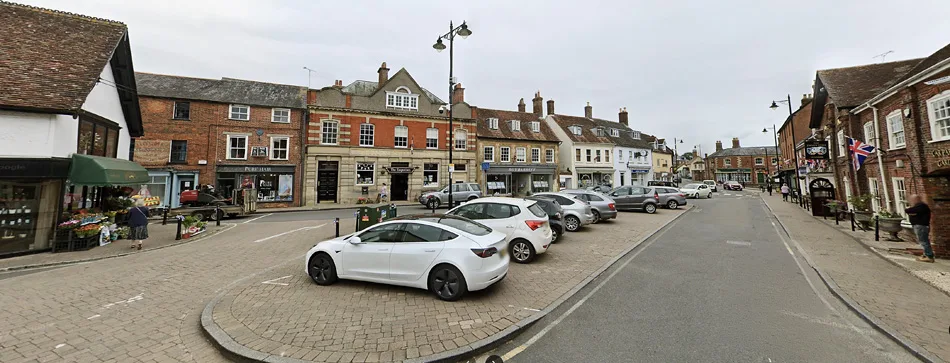
Sturminster Newton – where the Band D parish precept is £303.52 for 2026/27.
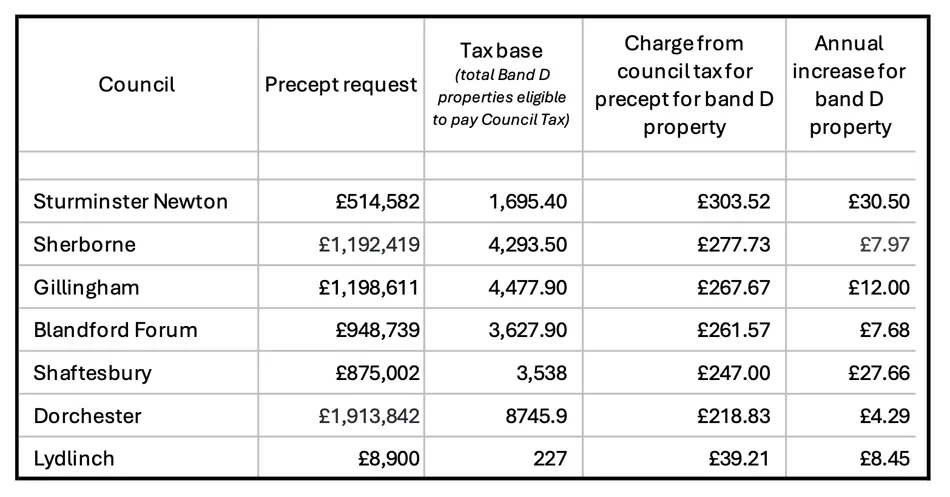
What is a precept? A precept is the amount requested by a parish or town council to fund local services. These range from grass cutting, public toilets and play areas to CCTV systems, street lighting, allotments, recreation grounds and community facilities. Unlike principal authorities, parish councils often have limited income streams and rely heavily on the precept. This year, towns and parishes across Dorset have reviewed their budgets against rising costs in wages, fuel, utilities and maintenance. Some have also chosen to fund new projects or expand services. The table opposite shows how precepts vary across several Dorset towns.
A wide variation The difference is striking. A Band D household in Lydlinch will pay £39.21 towards its parish council this year. In Dorchester the figure is £218.83. In Sherborne it is £277.73. In Shaftesbury it is £247. But in Sturminster Newton, the Band D precept charge is £303.52 – the highest among the towns listed – with an annual increase of £30.50: also the highest increase in the county. So why is Sturminster Newton’s figure higher than larger towns such as Dorchester or Sherborne? One key factor is the ‘tax base’ – the total number of Band D equivalent properties contributing. Dorchester’s tax base stands at 8,745.9. Sherborne’s is 4,293.5. Sturminster Newton’s is just 1,695.4. When costs are spread across fewer households, the charge per property rises accordingly. Another factor is income generation. Some councils operate car parks or own significant buildings that generate rental income, helping offset expenditure. Others have fewer assets from which to raise funds. Sturminster Newton Town Clerk Kate Squire explained the context behind this year’s decision: ‘Sturminster Newton Town Council considered a range of budget options for 2026/27, setting out the impact of different service and project scenarios on the precept. Following that, the council approved a precept request of £514,582.00 for the 2026/27 financial year. For a Band D property, this represents an annual increase of £30.61. ‘The approved budget includes £10,000 to fund one day per week of Citizens Advice provision at The Exchange, supporting local residents with access to independent advice services within the town. ‘Unlike many town councils, Sturminster Newton Town Council does not have significant chargeable assets from which to raise income. The council receives only a modest level of income from sources such as room hire and cemetery fees, and does not operate car parks or other facilities with regular paying customers. As a result, a greater proportion of the cost of delivering local services must be met through the precept rather than being offset by income. Wherever possible, the council actively seeks to secure external grant funding for projects, in order to reduce the burden on local taxpayers and ensure that improvements and community initiatives are delivered in a cost-effective way.’
Screenshot
Some potential service changes and higher-cost options were considered during the budget-setting process, but councillors concluded that more detailed work and consultation would be needed before pursuing them: ‘Members agreed that proposals of this nature would require community consultation and, if necessary, a review to ensure transparency, fairness and long-term sustainability. The information required to undertake that work could not be gathered and properly considered within the timescales required to meet the statutory precept deadline. ‘The town council’s precept funds a wide range of services and facilities that directly benefit residents and contribute to the day-to-day running, safety and appearance of the town. These include the operation and maintenance of Station Road public toilets, the town’s CCTV system, two equipped recreation grounds and four smaller play areas, two nature reserves, the cemetery, the Mill, and the Youth Club. The Council is also responsible for maintaining over 60 litter bins, more than 30 benches, street cleaning within the town centre, several miles of public footpaths, two allotment sites, formal gardens and other open spaces, as well as street lighting, a community newsletter, and the provision of small community grants. ‘In addition to these visible services, the precept covers the staffing and administrative costs required to deliver them lawfully and to an appropriate standard.’
Different choices Looking across Dorset, it becomes clear that precepts reflect a combination of:
The size of the tax base
The range of services provided
The number and type of assets owned
The level of income generated
Local priorities and projects
Dorchester, for example, has the largest overall precept request in cash terms, reflecting its larger size and wider responsibilities. Sherborne and Gillingham sit close together in Band D charges, despite different tax bases. Smaller parishes such as the village of Lydlinch have far lower absolute costs and therefore lower charges. With Dorset already among the highest council tax areas nationally, understanding how parish and town precepts are calculated – and why they vary so widely – is likely to become an increasingly important part of local discussion. For many residents, the parish element of the bill is the most visible reminder that local services, however small, come at a cost.
As drivers dodge deepening craters, ministers promise record investment – but is the current model built for harsher winters and rural mileage?
Local Facebook groups are filled with warnings of new potholes, and damaged car pictures. Image of pothole damage requiring entire wheel replacement courtesy of Dorset resident Jill Everall
When Yeovil MP Adam Dance asked in PMQs whether rural counties receive fair road funding, he was articulating a frustration many Dorset drivers recognise. The Prime Minister pointed to the government’s £7.3bn four-year settlement for local road maintenance, including £225m allocated to Somerset – but did not address whether the funding formula accounts for the scale and exposure of the country’s rural road networks. Between December 2025 and February 2026, Dorset Council recorded a 92% increase in reported potholes compared with the same period last year. Other road defects rose by 54%, and emergency call-outs increased by 83%. In three months, nearly 10,000 highways enquiries were logged. The spike followed exceptional rainfall Dorset recorded its wettest January day in 74 years. The first half of February saw almost double the ten-year average rainfall for the month. Some rural roads remained under floodwater for more than a month. ‘Our rural roads have taken a battering,’ said Cllr Jon Andrews, Dorset Council’s cabinet member for place services. The council says more than 3,000 potholes were repaired in January and February, with serious defects prioritised within 32 hours. An additional £5m investment agreed last month will fund priority drainage and surfacing works later this year, once conditions allow. Yet for many drivers, the lived experience feels markedly different. Local Facebook groups are filled with warnings about deep potholes and photographs of damaged wheels. Drivers report hitting the same defects repeatedly. The council’s data shows effort and volume of repairs, but the near-doubling of reports indicates a network struggling to absorb repeated weather shocks. Nationally, the RAC recorded 25,758 pothole-related breakdowns in 2025, with drivers paying an average of £590 for repairs. The Local Government Association estimates councils face a £17bn backlog of road maintenance across England. Dorset is due to receive around £125m between 2026 and 2030 from the government’s new Roads Settlement. Spread across 2,360 miles of carriageway, the new settlement works out at roughly £13,000 per mile per year – a sum that must stretch across patching, resurfacing, drainage and routine maintenance. By comparison, full resurfacing typically costs between £150,000 and £300,000 per mile, while light surface dressing averages £10,000 to £20,000. Funding allocations are calculated using established formulas based on road length, usage and historic data. But recent winters have not followed historic patterns. More frequent extreme rainfall raises a structural question: is the current model reactive, funding repairs after damage, rather than investing at the scale needed to strengthen vulnerable rural roads before failure occurs?
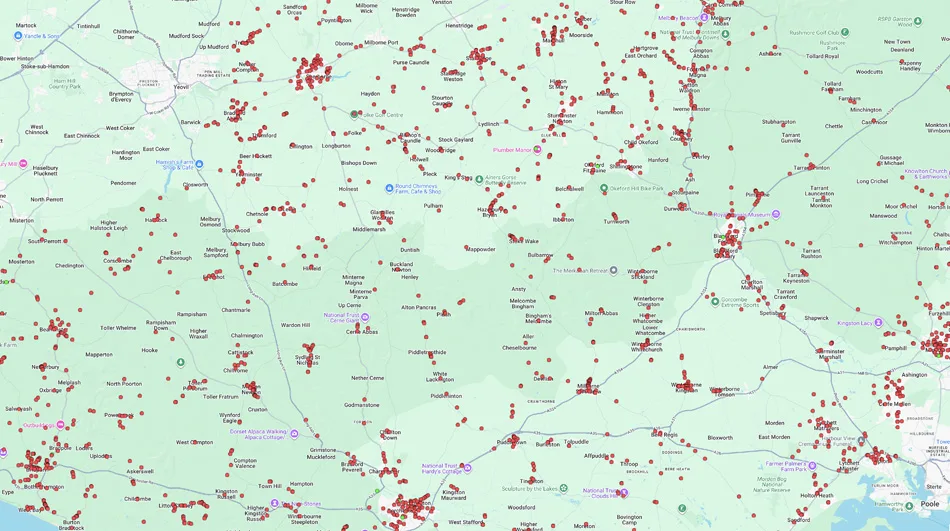
Dorset Council’s pothole map – every red dot is a publicly reported pothole currently under investigation
Patched up The government has introduced a traffic-light rating system linking future funding to performance. Dorset is currently rated amber, meaning preventative measures are in place but improvement is needed. Transport Secretary Heidi Alexander has acknowledged that there has historically been no consistent national definition of a pothole, or standardised data collection. For a unitary authority that covers more than 90% of Dorset’s land mass and maintains long stretches of unclassified rural lanes, extreme weather brings particular challenges. Flooding weakens road bases as well as surfaces. Drainage failures are harder to resolve on isolated routes. There are few alternative roads when damage occurs. This winter saw pothole reports almost double. Dorset Council says it is responding at pace and investing more. Ministers say record funding is on its way. But the question raised in Parliament – and increasingly heard in village pubs and online groups across Dorset – is whether the current funding model, even at record levels, is enough to keep a largely rural network resilient in the face of more frequent extreme weather? If this winter is a sign of what lies ahead, the debate will soon shift from how quickly potholes are filled to whether the network itself is built for a changing climate. Both Whitehall and County Hall may find that patching alone is not the long-term answer.
Buyers who trusted glossy masterplans now face unmet promises and unfinished landscaping as enforcement struggles to keep pace
Across the Blackmore Vale, residents who believed the promises of glossy brochures and landscaped masterplans are now living beside rubble mounds, unfinished play areas and absent infrastructure. Dorset Council currently has ten open enforcement cases relating to alleged breaches of planning conditions on developments of more than 25 homes. Housing estates are being constructed at an ever-increasing pace – but are they being completed to an acceptable standard, with all the planning conditions met?
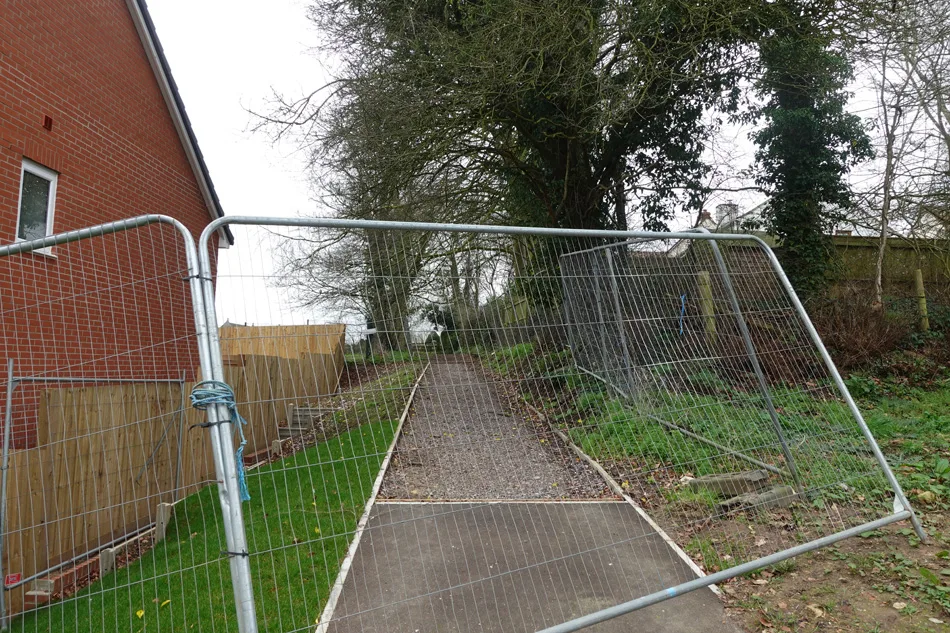
The unfinished pedestrian link at Knights Meadow, designed to allow residents to avoid traffic on the A357.
Templecombe Knights Meadow, a 73-home development in Templecombe, came with promises of a children’s playing field connecting to the school, a burial ground, landscaping and designated play equipment. Traffic calming and a 20mph limit were also anticipated. The site was attractive to prospective buyers, especially as it is within walking distance of a train station. Although all the houses have sold and social homes have been allocated, some aspects are still incomplete. Walking through the estate, it quickly becomes clear that areas of landscaping need improvement, and the 20mph speed limit has not been introduced. Tara Williams moved to Templecombe from West Sussex 18 months ago: ‘When I moved in there were bits that needed to be done in the house, and to be fair, Tilia Homes were excellent and got all that sorted. Then what I call “the mountain” appeared – soil was brought in to shape the open area.
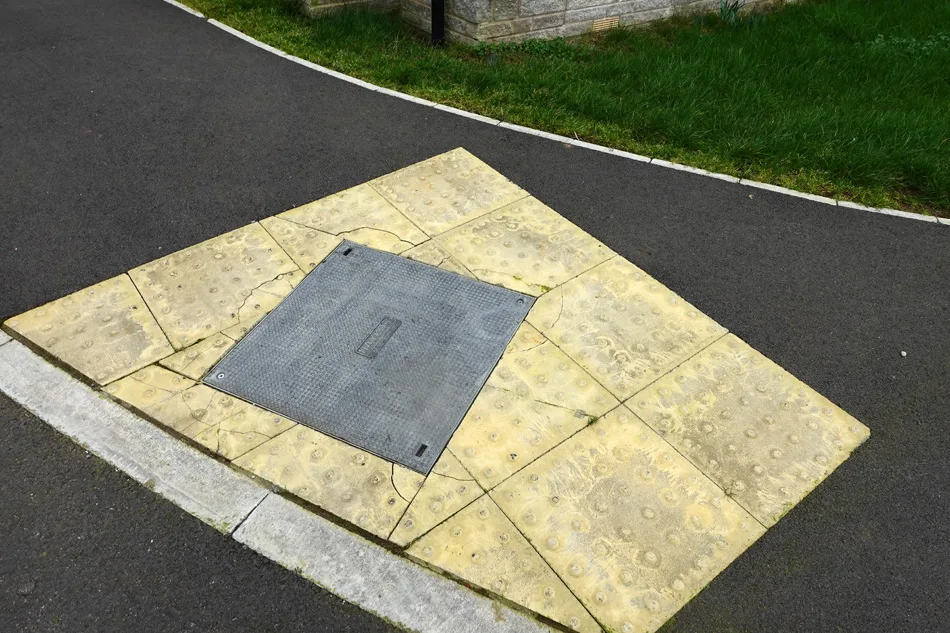
A manhole cover installed within tactile paving at Knights Meadow, with surrounding slabs visibly cracked
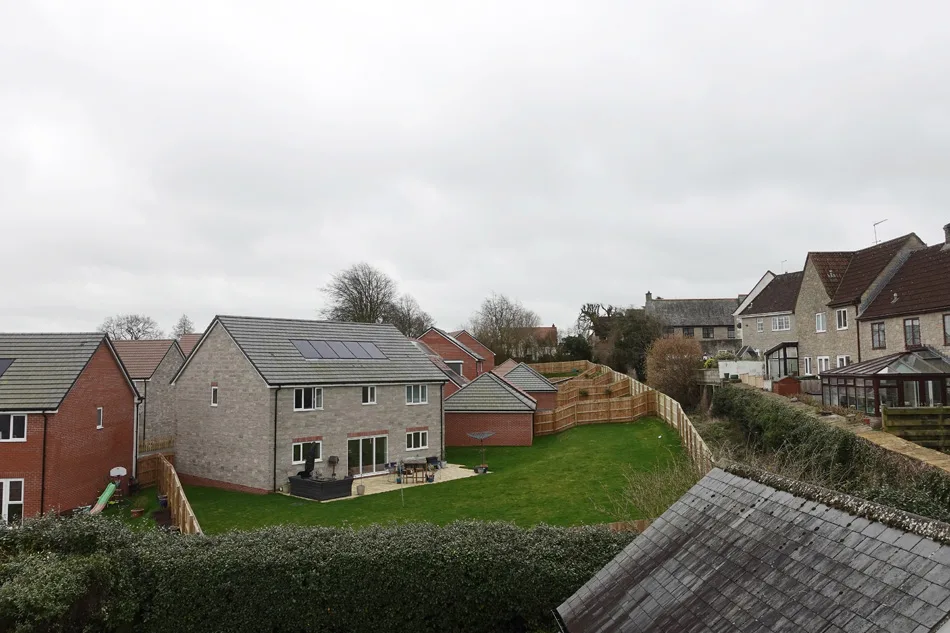
But we now have this play area for children that is on a level with our first floor bedrooms! And they put tactile paving in for people with low vision … and then stuck a manhole cover in the middle of the tactile bit.’ Councillor Sarah Webb from Templecombe Parish Council is frustrated at the lack of progress on a school playing field, and that the estate play area is on the lip of a steep attenuation pond (which, despite all the recent rain, remains empty). ‘One of the first problems here was the amount of additional soil they were generating,’ Sarah says. ‘This mound is entirely the wrong shape, and as a result of that, the play area is in the wrong place. We were also supposed to have brick-based driveways which help with drainage – important with climate change. We only got two. They have simply tarmacked over the majority of the drives. ‘Everything should have been finished within three months of the last house being occupied, which was September last year – if I’m being generous. There is still a significant amount of work outstanding. ‘One of the other major issues is that what they have dumped has now grassed over – but it’s a rocky surface underneath. It’s going to be impossible to maintain. As soon as you put anything mechanical on that it will break. You can’t mow it. And that’s what it’s like everywhere.
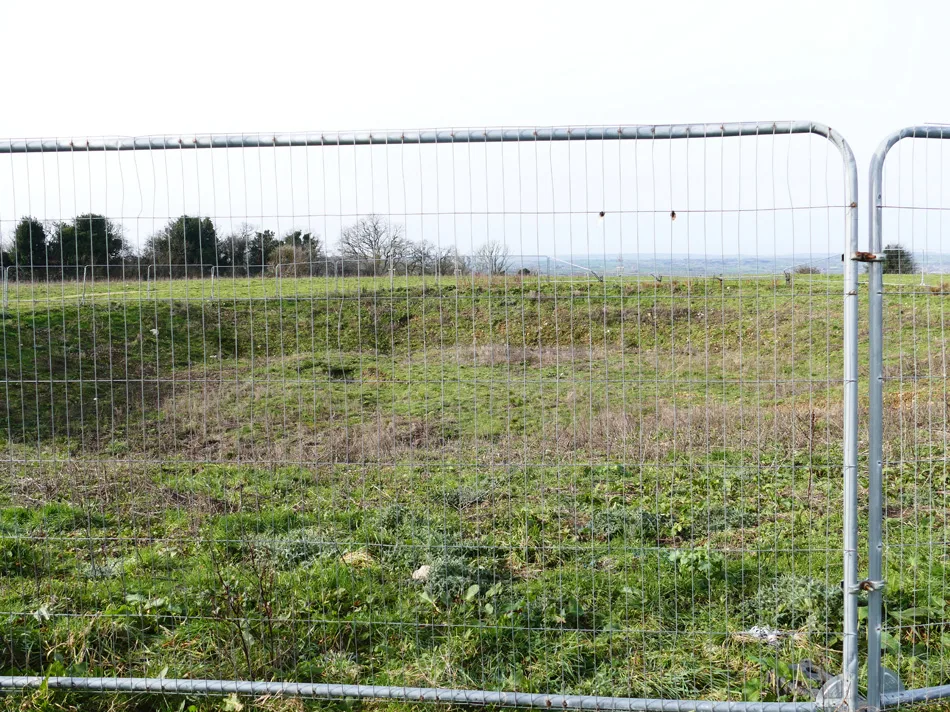
The fenced-off attenuation pond at Blackmore Down during one of the wettest winters on record
The school field was meant to be a level area for the kids to play football. But it sloped, so all that has had to be re-levelled.’ We walk through the housing estate, looking at a fenced-off unfinished footpath – meant to be a link to the village hall, avoiding traffic on the A357. An ‘orchard’ remains treeless. ‘I didn’t really favour this application, but it got approval and these people now live in our village. They bought houses here and they deserve better. ‘From the planning point of view, if you are going to have construction in a village it needs to be of high quality. If you are going to enforce more development, it also needs to be of a quality fit for the residents. And there needs to be comeback if it is not. It’s just not good enough. ‘We hear about people “not wanting development” but actually we now need to say, “we don’t want the development but if you do develop it, keep your promises”.’ A spokesperson for Tilia Homes said: ‘Work on the public open space, school playing field, burial ground and children’s play area is progressing well and is expected to be completed in early summer, subject to weather conditions. The play area will be independently inspected before opening, and landscaping is being finalised during the current planting season.’ The spokesperson added that the attenuation pond is a planned feature of the development and will include appropriate safety measures before the surrounding open space is opened to the public.
There are significant level changes between new homes on the Knights Meadow development and existing properties behind
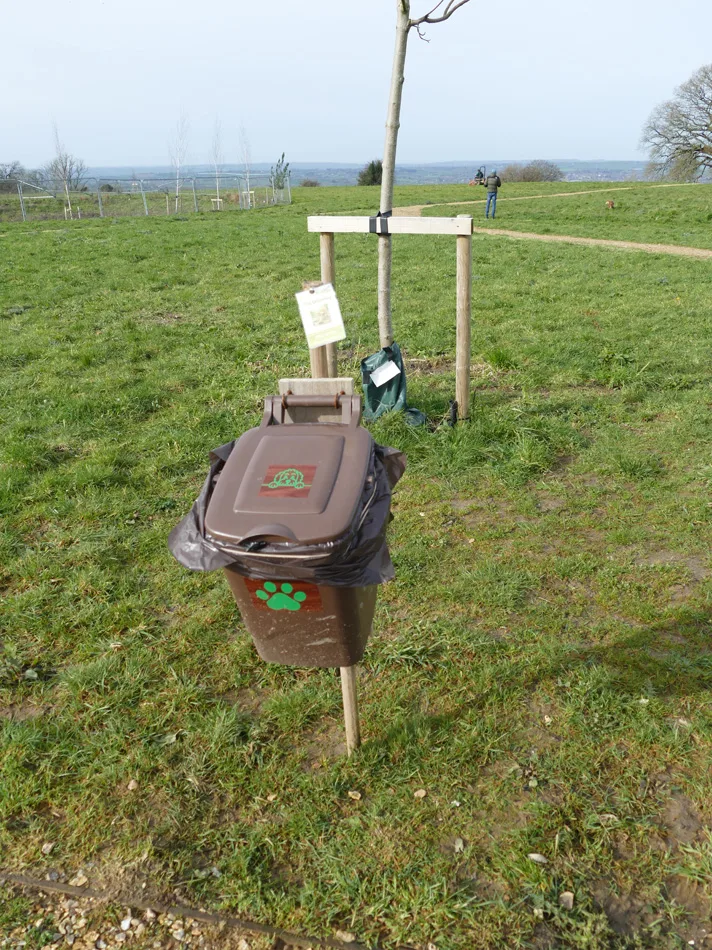
Shaftesbury It’s a similar picture in Shaftesbury on the Blackmore Down development. For many residents, the promised landscaping was a major factor in their purchase, and the town council was attracted by the prospect of new public views of the Blackmore Vale that could be enjoyed by all. Shaftesbury Town Council chairman Virginia Edwin Jones is annoyed: ‘Half of Blackmore Down is within a National Landscape – Cranborne Chase wraps itself around Shaftesbury. It was designed specifically to create a beautiful open space with a new view over the Blackmore Vale – a view that was never available to the public before because it was previously private farmland. ‘So the plans show this beautiful landscaping scheme, and that’s what everybody bought into. The people whose houses sit next to the open space paid tens of thousands more to be able to live right next door to it. Yet the landscaping scheme has not been fulfilled at all. ‘The planting wasn’t done. They’ve been chased up and then they got builders, not landscape architects or landscape contractors, to basically shove in loads of saplings. They took away all the virgin soil – which would have been perfect topsoil – and instead dumped a waste-filled mix of earth, rubble and construction debris. What they put back is much higher than it should be – the ground level is mounded. The residents filmed them doing it. ‘You could just weep for the residents who have been looking at … well, it’s a load of crap, let’s be honest … when they have paid tens of thousands of pounds more than their estate neighbours in order to have something beautiful to look at.’ Walking around Blackmore Down I soon see there are food waste bins which have been commandeered as dog bins as none have been installed. There is evidence of dying saplings and weeds throughout the site, with deep banks of old dock plants rather than the promised landscaping.The attenuation pond looms high on the mounded open space – and once again, during one of the wettest winters on record, is mysteriously devoid of water. A spokesperson from Barratt Redrow Southern Counties said: ‘Landscaping works are scheduled to begin this summer, with all outstanding tree planting to follow in the autumn. We are currently reviewing the ground levels, and if any adjustments are required to address level differences, these works will be carried out at a time that minimises disruption for residents.’ Residents say they will be watching closely to see whether the promised works are delivered.
Proactive residents have commandeered food waste bins for dog poo
What can be done? Dorset Council was asked about the scope of the problem with large developments not meeting planning conditions in the county. A spokesperson said: ‘The council currently has ten open planning enforcement cases, relating to alleged breaches of condition, on developments of over 25 homes. As with all planning enforcement cases, alleged breaches of condition are investigated in line with the council’s Local Enforcement Plan. There is a current open enforcement case in relation to the Blackmore Down development, at Littledown, Shaftesbury. In this case, a planning application has been submitted with the aim of resolving matters, but further information is needed from the applicant before the application can be validated.’ The council has given the applicant until the end of March 2026 – just weeks away – to provide the additional information required. ‘The council does not comment on ongoing enforcement matters,’ the spokesperson continued. ‘But it remains committed to progressing all cases in line with our Local Enforcement Plan.’ As Dorset faces continued pressure for new housing, and development accelerates across the country, residents and town and parish councils are increasingly asking a simple question: if developments are approved with conditions, who ensures those conditions are met? The widening gap between approved plans and delivered reality is testing confidence in the planning system. Landscaping, play areas, drainage and public open space are not cosmetic extras but core parts of approved schemes. Planning conditions are designed to ensure infrastructure, landscaping and public amenities are delivered alongside new homes. Where those conditions are not met, enforcement can be slow and complex – leaving our communities living with the consequences.
A Dorset dairy farmer has been fined after failing to comply with a formal anti-pollution notice, following more than a decade of slurry-related incidents at his farm near Blandford. Mark Pearson, of Hanford Farm, Hanford, appeared before Yeovil Magistrates’ Court on 24th February, where he pleaded guilty to failing to comply with an Anti-Pollution Works Notice under the Water Resources Act 1991. He was fined £1,200 and ordered to pay a £480 victim surcharge and £4,075 in costs. The case marks the latest enforcement action linked to the farm, where there have been seven recorded pollution incidents since 2012. Magistrates previously heard that, despite regulations requiring five months’ slurry storage capacity, only two months’ storage was available on site. Hanford Farm lies within a designated Nitrate Vulnerable Zone, an area identified as being at risk from agricultural nitrate pollution. Excess nitrates can leach into groundwater and enter watercourses, damaging aquatic ecosystems and affecting drinking water quality. The farm sits in the Stour valley beneath the National Trust-owned hill forts of Hambledon Hill and Hod Hill, close to the River Stour and near Hanford School.
Image: Environment Agency
Pollution, fines and promises Concerns about slurry storage at the farm were first raised by the Environment Agency in 2015, when Pearson was advised that additional capacity was required. The outlined improvements were not delivered. In January 2019, an Environment Agency officer walking nearby noticed what appeared to be slurry in a stream and traced the runoff to a field at Hanford Farm. During a formal interview under caution, Pearson admitted that slurry spreading had caused the pollution. He initially agreed to an Enforcement Undertaking – an alternative to prosecution – paying £2,000 to the National Trust and committing to increase slurry storage. However, the slurry lagoon was not completed. In November 2024, Pearson was fined £2,500 for the original pollution offence after failing to fulfil the conditions of that undertaking. On 26th January 2024 he was served with an Anti- Pollution Works Notice requiring him to install and commission a new slurry storage system by 1st October 2024. The notice carried a right of appeal, which was not exercised. A site visit on 16th October 2024 confirmed that once again no new slurry store had been completed. Chris Westcott of the Environment Agency, said: ‘Pearson has consistently failed to deliver on his promises to the Environment Agency that slurry storage would be increased. We first highlighted this issue in 2015. We have been more than patient with the farmer, but the promised improvements never materialised and the offending continued, which left us with no alternative but to pursue enforcement actions!’ A local resident, who asked not to be named, said they were relieved action had finally been taken. ‘There have been pollution issues linked to the farm for years, and it has been a source of frustration locally. ‘People just want to see the rules applied fairly and the environment properly protected.’ Additional slurry storage has now been installed at the farm.
Youth and experience both won this week, sharpening expectations ahead of a Festival packed with opportunity, says Chris Wald
Tythingman won the Hereford Bumper, his racecourse debut
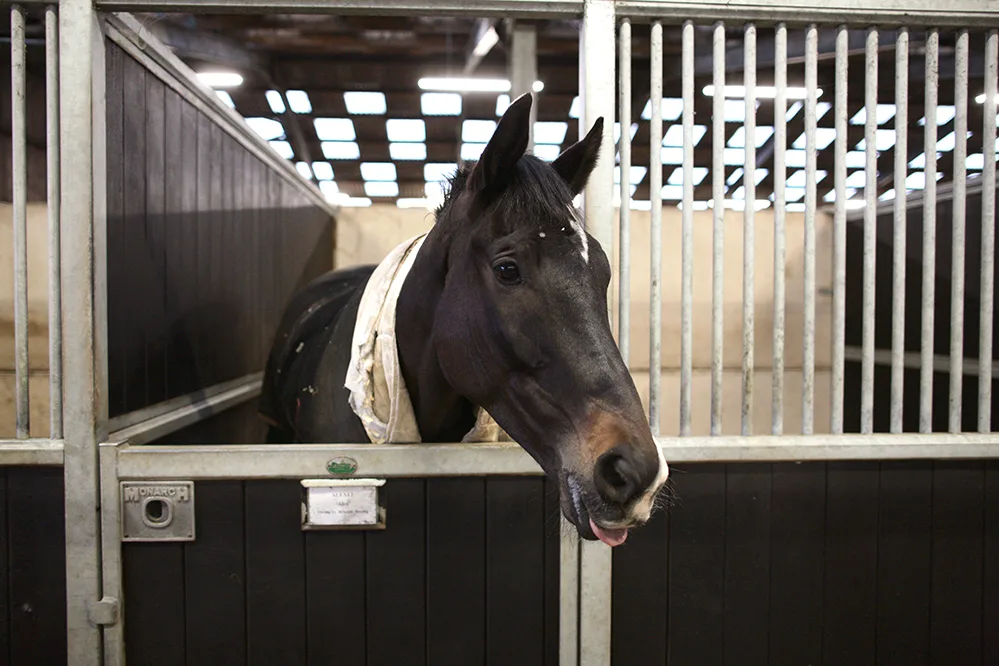
It was a week of extremes at Tizzard’s Yard. At one end of the spectrum, a four-year-old homebred making his racecourse debut. At the other, a 12-year-old veteran who has already earned over £200,000 in prize money. Both won. For Colin Tizzard, the Hereford Bumper victory of his first homebred runner felt particularly significant. The gelding – Tythingman – is part of the first crop bred by Colin and raised entirely at the yard. Colin had trained the dam, Queen of the Wind, before breeding the foal, sired by Pether’s Moon. ‘He’s been here his whole life,’ says assistant trainer Chris Wald. ‘His whole education has been here, so it was really rewarding for everyone that the first homebred runner was a winner.’ At the other end of the scale, Copperhead rolled back the years at Newbury, landing a veterans’ race on Saturday. ‘He’s 12 now,’ Chris says. ‘That was his 10th win, and he’s put more than £200,000 in prize money on the board.’ But the victory meant more than statistics. Last summer, Copperhead suffered a serious bout of colic and required surgery. For a time, his racing future – and more – was in doubt. ‘It was touch and go whether he was going to make it,’ Chris says. ‘It’s an achievement just to come back and race. The fact he’s come back and won a big race on a Saturday like that – he’s just a brilliant, brilliant horse. ‘If they don’t want to do it, they don’t tend to have long careers. He’s come through something like that and still has the enthusiasm to race at a good level. That says a lot.’ Now, though, all eyes turn to Cheltenham. Tizzard’s Yard expects to send eight or nine runners to next week’s Festival – a strong team combining established performers and progressive types stepping into the biggest week of the season…
Cheltenham Runners
Rock My Way Tuesday – Ultima Handicap Chase (3m1f) Second in last year’s National Hunt Chase at the Festival, Rock My Way returns to a track where he has already proved he belongs. ‘He’s got Festival form, which always helps,’ Chris says. ‘He won the Berkshire National at Ascot earlier in the season.’ He is now higher in the handicap and will carry more weight than for those victories. ‘He’s on his best form, he’s got a good each-way chance. If he can hold a position early and not get too far back, he’ll keep galloping. They’ll go a good gallop and he’ll be staying on at the end.’
Alexei Image: Courtenay Hitchcock
Alexei Tuesday – Unibet Champion Hurdle (2m½f ) The yard’s headline act of the week: Alexei lines up in one of the Festival’s championship races after a breakthrough season. ‘It’s really exciting just to have a runner in the Champion Hurdle,’ Chris says. ‘I’m pretty sure Colin never had one, and it’s definitely Joe’s first.’ He arrives in form, having won the Greatwood Hurdle at Cheltenham in November and followed up in the Kingwell Hurdle at Wincanton. ‘He’s coming into it in great form. It’s a tough race – there are some proper horses in it – but we think he’ll run a big race and hopefully give us something to shout about.’
First Confession Tuesday – National Hunt Chase (3m6f) A stamina test over nearly four miles for novice chasers. ‘He’s never run over three miles for us, so the trip is a question mark,’ Chris admits. ‘But we’ve always thought he’s a horse with loads of stamina.’ He heads to Cheltenham off the back of an impressive novice chase win at Carlisle. ‘A lot of these horses won’t have run over this distance either. If he gets into a good rhythm with his jumping, he’ll run a big race.’
First Confession
Tythingman Wednesday – Champion Bumper (2m½f) The Hereford winner could take his chance in the Festival bumper. ‘It might be a bit ambitious,’ Chris says. ‘But you only get one go at these things … I guess we’ll find out how good he is.’ It’s a huge step up from Hereford – but experience alone could prove invaluable for the yard’s first homebred.
Western Knight Thursday – Jack Richards Novices’ Chase (2m4f) A progressive novice who has won at Haydock and Doncaster and finished second in a Grade Two at Ascot: ‘He travels and jumps really well,’ Chris says. ‘This is a step up again, but he’s got a solid chance.’
Chris Wald with Rock My Way Image: Courtenay Hitchcock
Sunset Marquesa Thursday – Mares’ Hurdle (2m4½f) A consistent mare stepping into Grade One company: ‘She’s had a good season and won nicely at Sandown,’ Chris says. ‘This is her first time in a Grade One against the best mares in Britain and Ireland. It’s a big ask, but we really like her and hopefully she can be competitive.’
JPR One Thursday – Ryanair Chase (2m4½f) A high-class performer who showed improved form when he stepped up at Musselburgh to win the Scottish Champion Chase. ‘We think he’s better suited by two and a half miles now,’ Chris says. ‘If we get a bit of a dry week and the ground dries out, that will help him. If everything falls right, he can run very well.’
Western Knight winning at Haydock
Ambion View Thursday – Pertemps Handicap Hurdle (3m) A lightweight outsider – if he makes the cut. ‘He’s towards the bottom of the handicap and it depends how many get in,’ Chris says. ‘If he gets in, he’ll have a very light weight and could run well. But he might just miss out.’
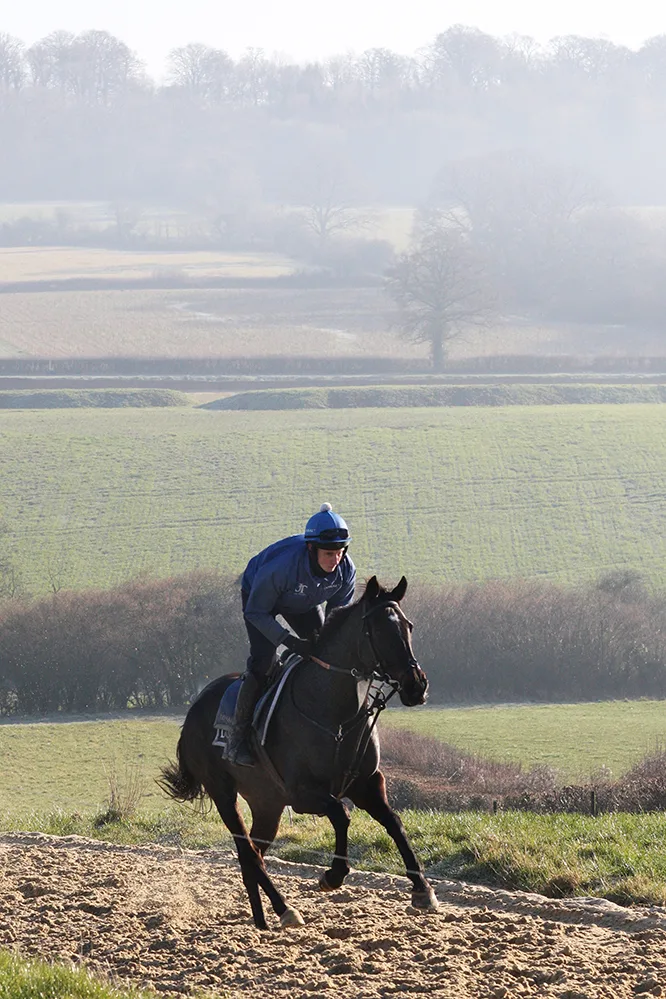
JPR One on the gallops Image: Courtenay Hitchcock
Kripticjim Friday – Albert Bartlett Novices’ Hurdle (3m) Perhaps the yard’s strongest novice hope. Winner of his last three races, including a Grade Two at Cheltenham in January, he steps up in trip. ‘He’s a big chasing type who should be suited by three miles,’ Chris says. ‘If the ground dries out a bit, he’d have a really solid each-way chance. He’s been great for us all season. He also holds an entry in the shorter Turners Novices’ Hurdle, and the ground will likely dictate the decision.’
The yard heads to Cheltenham with depth, realism and quiet confidence: ‘It’s exciting just to be going there with this many runners,’ Chris says. In a week where fine margins decide everything, that measured confidence may count for plenty.
A new fundraising appeal has been launched to catalogue the archive of Dorset writer and LGBTQ+ pioneer Sylvia Townsend Warner (1893–1978), opening the collection to researchers and the public for the first time. The project, led by Dorset Archives Trust (DAT), aims to raise £48,000 to create a full online catalogue of Warner’s archive, held at Dorset History Centre in Dorchester. Once catalogued, the material will be searchable online, allowing readers and historians to explore the life and work of one of Dorset’s most distinctive literary figures.
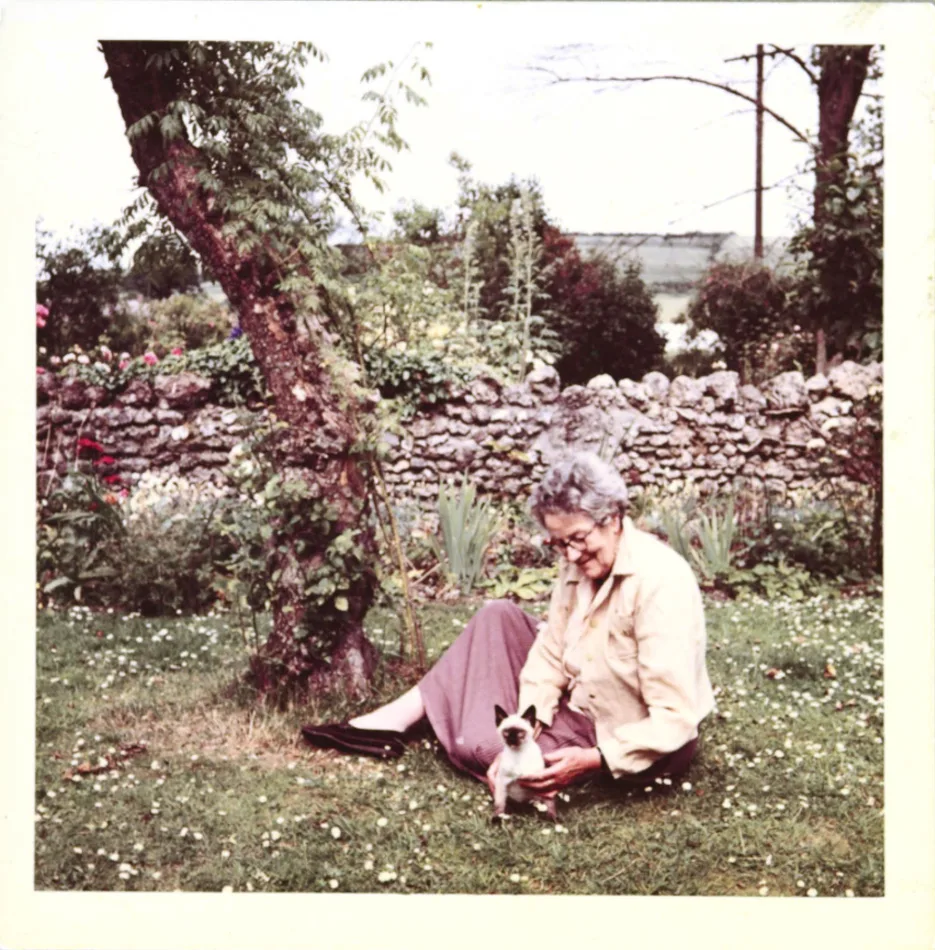
Sylvia Townsend Warner with one of her many cats 1970s
Warner wrote seven novels, as well as poetry and short stories, including 154 pieces published in The New Yorker. Much of her life was spent in Dorset, where she lived with her partner Valentine Ackland. The archive itself is substantial, containing 85 boxes of material, including diaries, letters, photographs, drawings and printed works that chart Warner’s creative life and relationships. Chris Fowler, chair of Dorset Archives Trust, said the project would bring a major Dorset literary archive into clearer public view. ‘This significant writers’ archive deserves to be fully in the limelight,’ he said. ‘Sylvia Townsend Warner was a great observer of Dorset life during the war years and beyond. DAT is delighted to spearhead this fundraising effort.’ Interest in Warner’s work has grown in recent years. A statue of the author in Dorchester, depicting her with her cat and manuscripts, was unveiled following a campaign by the charity Visible Women. Author Tracy Chevalier, patron of Dorset Archives Trust, said making the archive accessible would help readers connect more deeply with Warner’s life: ‘This is an extensive archive of one of the county’s most interesting writers,’ she said. ‘Documents like this open up the past to us, and really bring a person to life.’ Donations can be made through the Dorset Archives Trust website.
The BV community news section is sponsored by Wessex Internet
We’re very pleased to share that The BV has once again been shortlisted for Regional Publication of the Year at the 2026 Newspaper & Magazine Awards.
This marks our fourth time on this national shortlist, and follows our previous win in 2024.
The category includes The Chronicle, Manchester Evening News, The Irish News and The West Dorset Magazine.
Independent and digital from inception, The BV is rooted in rural Dorset, with magazine-led journalism and sustained public-interest reporting. We are grateful to our readers and partners whose support makes recognition like this possible.
This month’s cover photo wasn’t meant to be symbolic. After our usual heated tussle and group vote, we finally plumped for the bright, buttery yellow flowers with a rain-soaked ladybird perched on top, both of them looking slightly surprised by the amount of water involved. Only afterwards did I realise we had rather serendipitously chosen daffodils for the cover of the fourth anniversary of the war in Ukraine. They’ve become one of the symbols of the conflict – their bright, sturdy yellowness standing for hope and resilience. Quite unintentionally, our cover now carries a small reminder of a war that still hasn’t gone away, even as the world keeps finding new ones to worry about. It’s all a bit much, isn’t it? Ukraine is still at war, but the news is suddenly full of Iran. The cost of… everything… continues its determined climb upwards. And every economist on the radio sounds like someone who has just opened a very alarming electricity bill. So this week I did what any sensible person does in publication week: I scrolled TikTok every time the kettle boiled. Which, to be honest, is quite often. I have learned several important things. Firstly, pandas are absolute chaos merchants. There is a whole genre of videos devoted to pandas being jump-scared, falling out of trees or simply rolling downhill for reasons known only to themselves. Secondly, Ring doorbells have created an entirely new category of comedy in which unsuspecting humans step confidently out of their front doors and immediately vanish sideways down the steps. And thirdly, there are endless videos of people being surprised by a much-missed daughter, son, cousin, friend or parent appearing unexpectedly through an airport gate or front door. I am apparently powerless against these. Within seconds I’m sniffling over strangers hugging each other in a departures lounge somewhere in Ohio. TikTok also assures me, several times a day, that growing up in the 1980s was the greatest moment in human history, that owning a cat will improve – or ruin – your life by 300 per cent, and that a mid-life crisis is really just a perfectly sensible decision to stop wearing uncomfortable shoes. I find all of this oddly cheering. And sometimes a rain-drenched ladybird lands on a daffodil and reminds you that even in very soggy weather, life keeps going.
Laura x
On When Water Rises Your excellent article on groundwater flooding highlights something that many residents have been saying for years: the figures used to assess flood risk are hopelessly out of date. Planning decisions are still being made using models and assumptions that simply no longer reflect the reality we’re living in. Rainfall patterns have changed, winters are wetter and extreme events are more frequent. Yet developments continue to be approved based on calculations that appear to belong to another climate entirely. Until planners begin using realistic projections that properly account for current conditions – not historic averages – we will keep repeating the same mistake: building homes in places that are increasingly vulnerable to flooding. Communities then end up paying the price when those models inevitably prove wrong. If climate change is already altering how and where water moves through the landscape, surely our planning system needs to catch up with that fact as a matter of urgency. Catherine Small Gillingham
Your recent article on flooding was fascinating, but I suspect many of us living in rural Dorset are drawing a simpler conclusion. Over the years it feels as though a lot of the routine maintenance that once kept water moving has disappeared. Ditches, gullies and culverts that used to be cleared regularly are now often choked with leaves and debris. When heavy rain comes, the water has nowhere to go. The same with rivers and streams – they used to be cleared of debris and fallen trees far more frequently than they are today, and were dredged. It’s hard not to feel that the basic housekeeping that once helped manage water has been neglected. Flooding is a complex issue and climate change is real. But before we leap to complicated solutions, perhaps we should start by making sure the drains, ditches and waterways we already have are actually able to do the job they were designed for? Name and address supplied
I’ve noticed numerous comments on your Facebook page suggesting that dredging our rivers would solve Dorset’s flooding problems. It’s an understandable reaction – many of us remember a time when rivers and ditches seemed to be cleared more regularly. However, dredging is rarely the solution people imagine it to be. In most cases it simply moves the problem further downstream. By deepening and straightening channels, water flows faster and arrives in larger volumes elsewhere, increasing flood risk for those further along the river. Modern flood management tends to focus on slowing water down rather than speeding it up – allowing floodplains to hold water, restoring natural river meanders and managing land higher up the catchment so rainfall is absorbed rather than rushing straight into rivers. Dredging has a place in very specific situations, but it is not the simple fix many people believe it to be. Flooding is becoming more complex as rainfall patterns change, and unfortunately there are no easy answers. Harry P, Shaftesbury
THANK YOU! To the two kindest gentlemen who rescued my daughter when she hit a pothole near Three Legged Cross two weeks ago. The first stopped and changed her tyre for her, and when she discovered her spare was flat after he left, a second gentleman not only pumped it up, but gave her the pump to ensure she got home safely. Fay-in-the-Micra’s mum, Bournemouth
On the sheep cruelty conviction Your report on the North Dorset farmer banned from keeping sheep was deeply upsetting to read, and rightly so. No animal should suffer neglect, and the court’s decision makes clear how serious the situation was. However, people do not often set out deliberately to mistreat their animals. Farming is not just an occupation but a way of life, and when things go badly wrong there can sometimes be underlying problems that the wider public never sees. Farming charities have repeatedly highlighted the mental health struggles within the industry. RABI’s 2021 Big Farming Survey found that 36% of farmers are probably or possibly depressed, many reporting isolation, financial pressure and an inability to ask for help. None of that excuses cruelty, of course. But it does suggest that when animal welfare collapses on a farm, it may sometimes reflect a farmer who has also reached a point of collapse. If that is the case, the question becomes not only how we enforce welfare standards – which must be done – but also whether the right support systems are in place before situations reach this stage. Compassion for animals and compassion for people are not mutually exclusive. Hannah G, Sherborne
As a farmer, the cruelty case you reported was sickening. Anyone who keeps livestock knows that their welfare is the first responsibility of the job. Most farmers care deeply about their animals and are rightly horrified by this case. At the same time, I think it’s important the public understands that this is not normal farming. Cases like this are rare and the vast majority of us livestock keepers work long hours, in all weathers, to ensure our animals are well cared for. When something does go this badly wrong there is usually more going on behind the scenes. That doesn’t excuse the suffering of animals, but it may explain how standards can collapse. Animal welfare comes first. But supporting struggling farmers before things reach this point is just as important. Name and address supplied
On the Blacksmith’s wife who died in her chair My husband is William James Hunt’s great grandson. We still own The Old Forge where his grandfather Charles and Great Grandfather William had a wheelwright and blacksmiths. The carving of the screen in the back of Piddletrenthide Church was done by William James Hunt, and we have the diagrammes he used to carve it. Hils Hunt, via Facebook
This lady was my husband’s great great aunt – I believe her name was Emily. Lyn Hunt, via Facebook
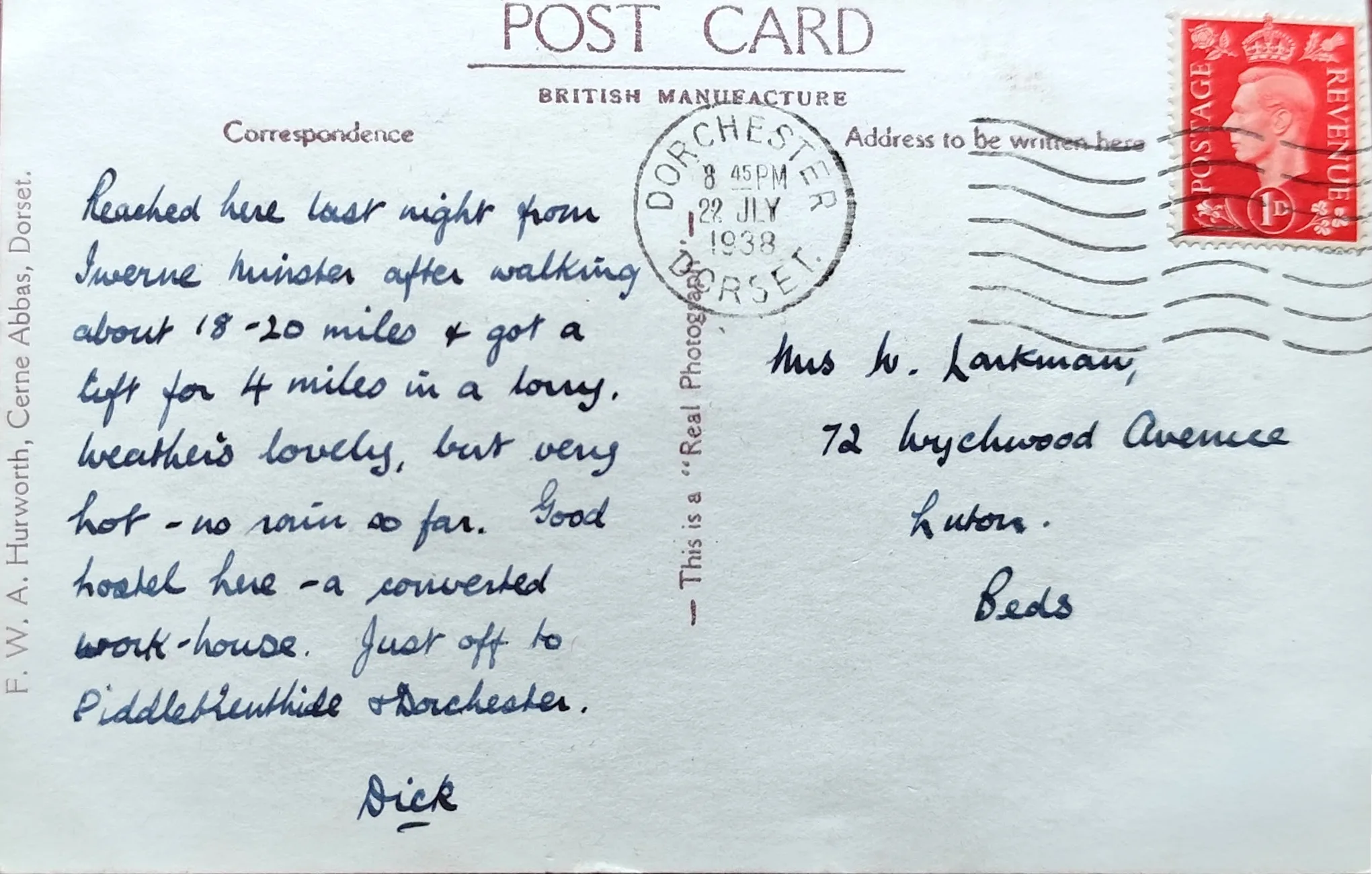
On a 1938 postcard from Cerne Abbas Dick [the sender of the card] is Richard W Larkman (b. 1917), writing to his mother Mabel E Larkman, who of course would be addressed as ‘Mrs W Larkman’ since her husband’s name was William. It was easy to find the household in the 1939 register online. From press announcements, Dick (Richard W. Larkman) was a Captain in the Royal Army Ordnance Corps – he married in Kings Lynn in 1945. Quite a relief, since the RAOC would’ve been part of the British Expeditionary Force in France and Belgium in May 1940, and their retreat to Dunkirk. Well done Dick. Pam Booth, via Facebook
Want to reply? Read something you feel needs commenting on? Our postbag is open! Please send emails to [email protected]. When writing, please include your full name and address; we will not print this, but do require it.