Dynamic person sought to work on event logistics for a local food festival. You will have excellent administration, communication, MS Office and social media skills, an enthusiastic can-do attitude and an eye for detail.
Immediate start. Hours are 9.00am-5.30pm. Office-based; no remote working. Office nr. Tisbury.
You would need to be available to work onsite at the event on 31st July & 1st August.
The Wincanton Town Festival mARkeT aims to be more than just a market. It aims to be a full body experience!
The Wincanton Town Festival Market will be running from 12pm – 9pm on Saturday 26th June, at 7 High Street, Wincanton, BA9 9JN, at the Greening The Earth Gallery, formerly Clementinas.
Wincanton Town Festival
This one-off event is set in and around the grounds of a truly captivating 17th century manor house located in the centre of Wincanton. This historic venue will play host to a wide variety of ‘experiences’ that are sure to stimulate all the senses! Artists from all disciplines will play, display, demonstrate and sell their special talents in and around this unique and picturesque setting. In the walled garden and lower orchard, families will be invited to take part in woodland crafts, forager walks, learn about no dig gardening, or simply to pet the goats.
The BearCat Collective will be hosting a wide variety of musical performances by talented local musicians.
There will also be a selection of food and drink stalls selling their tasty wares. These include stone baked pizza, crepes, candy floss and delicious cream teas and cakes. Aromatic espresso coffee powered by the sun is another unique taste not to be missed! Alternatively, people are welcome to bring their own picnic to eat on the beautiful walled garden lawns.
This innovative event runs later in the evening than traditional markets from 12pm – 9pm.
Posted in the Past Second Delivery is the next in a series of books written by Dorset author Helen Baggott.
Beginning with postcards sent more than a hundred years ago, the book reveals the true stories the author found using genealogy. With just the name and address of the recipient, each card is researched – with surprising results. The family who brought home the Unknown Warrior, an actor who performed in the first televised play on the BBC, and families linked with the American War of Independence are just some of the stories. The book also explains how the research was completed and provides tips for the beginner genealogist. The methods will be familiar to viewers of Who Do You Think You Are? and A House Through Time there’s even a family who lived in that show’s Guinea Street in Bristol. The book begins with an update on a postcard featured in the first Posted in the Past book and its surprising link with Dorset. Posted in the Past Second Delivery is available from bookshops and online
It is only possible to provide a taster of my recent forays into the wealth of artistic talent in our county – but I urge you to spend a lovely weekend absorbing as much as possible.
Judy re-creates and re-imagines fragments of ceramics, natural stone, and Lyme Regis sea glass into mosaics. She has always loved drawing and as she said: “You need real vision, for mosaics are only as good as the initial drawing.” Starting with pottery classes, a love of jigsaws and a passion for taking things apart, it was a visit to the mosaics of the Basilicas in the Italian city of Ravenna which inspired her. “Everything has a story, a narrative!” so each of her charming, quirky mosaics has a tale to tell.
Judy with her mosaics in the Stables at Travellers Rest image by Edwina Baines
David, a musician, took up painting in his retirement and now paints daily in his farmyard studio at Traveller’s Rest. However, some of his time is spent in France and a new phrase has entered his vocabulary “une lumière éblouissante” – a dazzling light. Hedgerows sparkle with May blossom – a nod towards Hockney and French garden landscapes in oil re-create this luminosity. Also included are local scenes of Hambledon Hill and still lifes of vegetables (including some freshly dug Maris Piper potatoes!), fruit and flowers. His first painting in lockdown incorporated a more modern feel but is contrasted with an ornate gold frame – donated by Sheelagh.
David in the Stable with his lockdon painting image by Edwina Baines
Sheelagh studied Fine Art at Bournemouth College of Art and exhibited in the very first Dorset Art Week in 1992. Her flamboyant still lifes, vivid patterns and life drawings come entirely from her imagination. “Anything with colour,” she says. Currently she has moved from oils into collage and watercolours, posted each week on Instagram.
Sarah constructs striking images of harbour scenes and landscapes of jumbled cottages. Look closely and you can find fragments of hidden stories, trawled from ancient newspaper articles of nineteenth century West Country shipwrecks and smugglers. “I really love all things ancient and all things textured, so I weave the two passions into my paintings. As a child, I used to cut up pieces of cardboard and make board games. I prefer to use my hands rather than a paintbrush. Initially my work was more figurative but I am attracted to derelict, dilapidated buildings with nooks and crannies and buildings poking out of each other.” I was also drawn to two different works portraying Hardy’s Cottage and Lyme Regis with words, book titles and history notes scratched into the modelling paste.
Ex Graphic Designer Diane likes to pare an image back to simplify it and combines the creaminess of gouache with an attractive muted minimalist pastel palette. “I like to try and create quirky poster-like artworks based on imaginary and real West Country villages, where you can lose yourself in the architecture and wonder who used to live in the houses. I’m attached to the sea and, choosing a different area each time, I’m trying to walk the South West Coast path in different sections.”
231 JOSEPH NUTTGENS, LUCY YARWOOD AND SHEILA MARTIN
Joe studied at the Central School of Art and later at the Royal College of Art, where he studied stained glass following his father’s art. He worked in his father’s studio until 2015, when he moved to Blandford. In his watercolours and prints, there is a certain precision in the interlocking shapes: he looks for rhythm, structure and energy in both nature and music to express personal themes.
Sheila’s intricate artworks are influenced by her training in stained-glass (with Joe’s Father!). Light and colour, and the process of gardening are her inspirations. “Not knowing what is going to happen. Being open to possibilities. A state of searching.”
Lucy’s work is easily identifiable and her boldly decorated pots and sculptural pieces reflect her love of pottery as a timeless art form. On show were her bowls, mugs and dishes in terracotta with swirls of ultramarine but also beautiful platters, sensitively decorated and some of her newer ventures into oil painting.
240 WABI SABEY FESTIVAL OF RURAL CRAFTS AND TEXTILES
An old milking parlour has been converted into an event barn, the home of Hawkers Re-Creatives. With workshops, displays of up-cycled fashion, textiles and rural crafts, this is a Community enterprise to encourage sustainability. Handmade gifts and embroidered panels are showcased and sold in aid of Sambhali Trust, a non-profit making organisation based in Jodhpur, India, which aims to empower Dalit women and children in Rajasthan by teaching them to sew and run their own businesses. In addition to hosting sustainable film nights, during DAW, demonstrations and activities for adults and children have been held.
Annie Field in her studio in Church Lane Hartgrove nr Shaftesbury image by Edwina Baines
Annie was an interior designer for thirty years and her stunning house and studio are testament to this fact. She presented ‘Finishing Touches’, the first TV interior design program, filmed in the UK and America. Annie’s Nemesis sculpture was chosen by the Chelsea Arts Club to go on their fifth column in the garden from January to April 2020. She now works mainly in abstract oils with a love of colour. Many of her paintings record images from her sketchbook, taken on travels from the extremes of Yorkshire to Ethiopia.
Inside Phyllis Wolf’s Studio at Compton Abbas image by Edwina Baines
Originally a student of fashion at St Martin’s, her varied artistic routes and love of the natural world have led to this current exhibition’s title: “I don’t want you to be hopeful. I want you to panic…I want you to act as if our house is on fire. Because it is.” (Greta Thunberg). In the beautiful gardens of her cottage nestled into the hillside, with wonderful views across to Melbury Hill, exuberant and distinctive canvases are a feast for the eye in Phyllis’s studios. She has been described as a vibrant colourist and there is a generous spontaneity and freedom of expression in her work: “My painting has always been about my connectedness and relationship to the landscape. Devastation to the Natural world is increasingly evident even in ‘this small corner of Dorset’.”
Regular monthly Blackmore Vale property commentary column in the Blackmore Vale from Susie and Brad the North Dorset Team at Meyers
How to present your home
Ensuring that your property is well presented is the key to achieving the maximum amount of interest and therefore the best possible price. We have summarised what we believe are the quickest and most cost-effective ways of adding value to your home:
Detached family home Sixpenny Handley
Declutter
Decluttering will help buyers envisage what the property could look like if they were living there. Consider getting rid of or putting into storage unnecessary bulky furniture that makes the room look smaller. Also remember that serious buyers may well want to take a peek inside your cupboards and storage spaces so give them a tidy and consider only having them 75% full rather than bursting at the seams, if it doesn’t look like there is enough storage for you, they will worry there isn’t enough for them!
Go neutral
Bold colours are very personal. Consider giving the walls a fresh lick of paint in a neutral colour. This creates a blank canvas and will enable viewers to more easily envisage it as their home. This will also make your home feel much lighter and bigger. “Timeless” from Dulux is a great one.
Clean, tidy and fix
Remember that each time a buyer sees something that needs fixing they could mentally reduce the maximum offer they would make on your house. Don’t let a small fix be the reason you don’t achieve your full asking price. Consider fixing holes in walls, broken doorknobs, replacing old grout and removing any stains on the carpets.
We also advise cleaning thoroughly throughout to ensure your property looks well cared for.
Light and airy
Wall mirrors can help a room look bigger and lighter. Clean your windows inside and out, replace any broken light bulbs and consider putting a lamp in any dark corners. Add a few green house plants to help create an airy fresh look. A light and airy room feels bigger and therefore makes your property more attractive to buyers.
Odours
Bad smells are the single biggest turn off for prospective buyers. Fix the source of the smell, clear drains, wash bins, open windows, watch out for that “wet dog” smell and air the kitchen from cooking smells.
You may also want to consider spritzing the house prior to a viewing with a fresh smelling room spray.
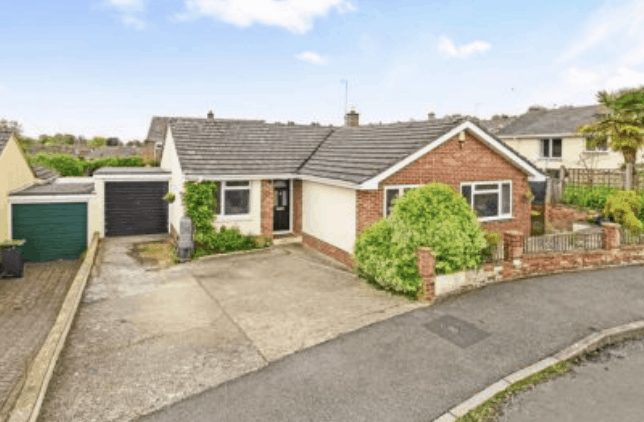
Detached Bungalow Milborne At Andrew
First impression count
Buyers will be judging your home before they even walk through the door. If you look at your property from the road, does it look well maintained and tidy? Consider giving the front door a deep clean or a fresh lick of paint and buying a bright outdoor plant or hanging basket.
If you would like a copy of our “Seller’s Guide” which gives these tips in full detail, please don’t hesitate to get in touch with a member of our team!
Brad Hansford – Shaftesbury branch on 07814 962 161
Susie Palin – Blandford Forum branch on 07570 357 553
I’d contacted a local man for a story for the June issue of your digital Blackmore Vale Magazine.
David Morgan, who lives near Shaftesbury, was the top scoring fighter pilot in the Falklands Conflict – and that’s far from his only claim to fame (see the full article on David here).
David, 74, is often seen in his conspicuous yellow Tiger Moth bi-plane performing aerobatic stunts above the Blackmore Vale.
He wrote a widely acclaimed book ‘Hostile Skies’ about his experiences when flying off a carrier plunging in heavy seas in the south Atlantic during that war.
After interviewing him I ordered his book. Couldn’t put it down.
I was halfway through it on the day it arrived when I heard a buzzing sound outside.
I ignored the noise as I’d got to a particularly exciting chapter.
But the buzzing outside continued.
I continued to ignore it.
The buzzing went on. And it got closer. And louder.
Finally, I went outside to see who was disturbing my reading.
Well, it was the author of the actual book I was reading that was disturbing me.
David’s yellow Tiger Moth was circling above my cottage in Mappowder.
He never does aerobatics this far south in the Vale. He was doing it simply to amuse me. What a treat!
I went outside and waved. He performed a few stunts, circled the village, waggled his wings then headed back to the airfield 15 miles away.
At the end of our interview, a few days previously, I had told him where I lived and challenged him to give me a personal aerobatics show.
And he did!
And what’s more, I had a feeling that he would take me up on my challenge (fighter pilots are famous for their mischievous sense of humour – they can’t resist a dare).
I couldn’t stop laughing at his sense of fun and skill.
When my wife returned I told her we’d had a visitor.
‘Was it that fighter pilot,’ she asked, with uncanny perception.
‘It certainly was,’ I replied.
‘Did he come in for a coffee,’ she asked.
‘No,’ I said, ‘must have been in a hurry. He had to fly.’
(see Andy’s full story on David Morgan in the magazine below:)