Home Blog Page 295

Mud, foals, coats and dreams

0

It’s been a slog through the worst of the winter at The Glanvilles Stud, but Lucy Procter is excited to see the results of all the hard work starting to shine

Honeysuckle’s yearling niece sired by Nathaniel, foaled 8th April 2022, off to the foal sales end of January. It’s a tough life!
Image: Hollie Rhodes

August disappeared in a swelter of dust, heat and flies. The following months disappeared in a steadily spirit-sapping mixture of storm and freeze, punctuated by the occasional dry hours or days which afforded some blessed relief from the drudgery of constantly being very wet or very cold. Or both.
Back in the summer the horses were having to cope with the extreme heat but come the autumn and it has been the endless rain and consequent mud that has been the challenge.
The majority of the broodmares have been stabled at night since November, going out into the all-weather sand turnout during the day. A few are going out singly or in pairs into the dryer fields for a couple of hours and some of the youngsters are now in a barn; they won’t go out again until the ground dries up in the spring.


Having grown thick, woolly, grease-filled coats, all the horses have their own natural protection from the elements. However, some of the broodmares are more susceptible to rainscald (constantly wet coats can lead to a skin infection which causes scabs to form in places along the horse’s neck and back), so we do rug any mares we’re concerned about when it’s wet during the day. Others cope just fine and are left unrugged.
However, youngstock are left without rugs all the time. Young horses are just like children: they play, they investigate, they chew. Put rugs on them and they might get tangled in each other’s rugs whilst playing. Or they might pull them off each other and, again, get tangled. Or they might just chew them and rip them to shreds!
When there’s a storm, it’s actually the wind that makes them feel really cold, so it’s best to let their natural coats protect them from the rain and instead to ensure they are in fields with hedges that can protect them from the worst of the wind.

There have to be some rewards for a winter of slogging through mud
Image: Lucy Procter

TGS homebred racehorses
We are currently prepping three of last year’s foals for the Doncaster National Hunt Foal sale at the end of January. Technically they all turned one and became yearlings on the 1st of January, but for the purposes of the January sales ring, they are still referred to as foals. These three have been stabled at night and walked in-hand for half an hour every day on their way to their day turnout field throughout December. We walk them to make sure they are fit enough to cope with the sales, when they will be brought out of their stables and walked in front of prospective purchasers a number of times during the day. It is important that they are fit enough to walk as well for the last viewing of the day as they did for the first.
We are also training four homebred young racehorses here at the stud. Two of these are due to go to trainers very soon to do their last few weeks in a licenced yard before they run. Our son Freddie has been busy schooling our Monmartre four-year-old and he is loving his jumping – see video – so we are excited for his hurdling debut in a month or so.
The third is a three year old out of Honeysuckle’s sister, sired by Motivator, that we re-backed in early January and is now happily hacking out. She will shortly go to a trainer for a couple of months work before returning here for a break with a view to running next autumn. The fourth we plan to keep training and run her in point-to-points, but she is just coming back into work after an injury and is unlikely to be fit enough to race before April.

On a rare sunny day – the happy mares with glistening coats and fat with foal are out in the all-weather sand turnout for a few hours

Happy mares
Foaling is just around the corner, with the first three mares due in early February. Two of these are ‘bagging up’ already (udders beginning to fill with milk), and we will once again be sitting up watching them on the cameras overnight very soon.
The rest of the mares are happy with glistening coats and fat with foal.
We are looking forward to seeing the foals that last year’s mating plans have produced – it’s the time of year when we can all dream. And it’s the dreams that get us through having to be outside all day in this hideous weather. We all need a dream to get us out of bed in the morning!

A look back at a full growing season | The Voice of the Allotment

0

The frost took the cauliflower, says Barry Cuff – and now’s the right time to look back and see what grew, what didn’t, and what lessons can be learned

Barry is still harvesting through the winter, despite the heavy frosts in December. Image: Barry Cuff

At the beginning of December about 30 per cent of our allotment still carried vegetables for winter and spring harvest. The remainder was either growing green manure (15 per cent) or was mulched with manure and homemade compost.
With hard frosts forecast we covered the most vulnerable crops with fleece and dug ourselves a good supply of carrots and parsnips. Experience tells us that both are impossible to remove from rock-hard frozen ground!
Under the fleece, the oriental mustards, Chinese cabbage, radicchio, corn salad and winter cress all survived the very low temperatures.
However, the celery and some of our caulis did not make it through the 11 days of below zero temperatures. It was not surprising that the celery died as it is not frost hardy (in previous years with little or no frost we have still been harvesting in February). What was strange was the Medallion cauliflower, which was due to be ready in March. At the end of November the plants looked healthy but every one was lost. Something to be researched; we think at the moment that it is boron deficiency combined with the very low temperatures.

A year’s round up
At the end of the year it is always good to look through the allotment diary and see how each vegetable performed through the year:

  • Beetroot – we had good yields.
  • Brassicas – bad infestations of whitefly, but recovered when the rain started. Main pest was Pigeons. Very few Cabbage White Butterflies.
  • Butternut squash – cropped well. Variety was Butterfly.
  • Carrots – better establishment than in some years, with excellent yields.
  • Celeriac – good yields, survived frost
  • Celery – excellent plants but those remaining were lost to frost.
  • Courgette – cropped well.
  • French and Runner beans – both stopped producing during the worst of the dry weather. Both put on a spurt when the rain came, giving good yields and an extended picking time.
  • Leeks – these took well. No Leek Moth!
  • Lettuce – did exceptionally well from successional planting from plugs.
  • Mangetout peas – good yields from Carouby De Maussane and Purple Magnolia.
  • Onions – good establishment from plugs. Very little White Rot. Bulbs were smaller than usual.
  • Parsnip – started digging in late November. Excellent roots. The variety was Palace.
  • Peas – we suffered with less weevil than previous two years but cropping was shortened by the drought.
  • Peppers – both sweet and chilli gave good yields in the greenhouse.
  • Potatoes – gave average yields. Our best performing varieties were Picasso, Rooster, Elfe, Sagitta and Charlotte.
  • Sweetcorn – slightly below average yields due to the drought.
  • Tomatoes – all varieties did exceptionally well in the greenhouse; top varieties for us were Santonio, Limoncito, Akron, Rainbow Mix, Alicante and Crokini.
  • Winter salad leaves – loved the Autumn rain and survived the frosts under fleece.
  • Winter squash – cropped well, though slightly smaller fruits than previous years. Variety was Crown Prince.

On the whole we were very pleased with the quality and yields of our vegetables, despite a year of unusual weather.

Sponsored by Thorngrove Garden Centre

The White Horse at Hinton St Mary

0
A Welsh chef with a passion for brewing beer is building a reputation for his food at the White Horse in Hinton St Mary. Rachael Rowe reports

It’s a Saturday lunchtime, and there’s a cosy atmosphere in the bar at the White Horse in Hinton St Mary, just outside Sturminster Newton. In the adjacent Inglenook Restaurant area, a family is discussing a forthcoming wedding, and the seats are filling up fast in anticipation of good food. The walls are full of old equestrian prints and some eclectic local history about the Pitt Rivers family in the building that dates back to the 1700s. So what’s the story behind the White Horse?
I spoke to Barney Hibbert, the landlord, to find out a bit more about the pub.

How did you get started?
‘I wanted to be closer to family in Dorset (he was based in Wales), and I saw this as an opportunity to be closer to them. In 2021 I came to a couple of functions here at the Tithe Barn to see how the weddings work and then I moved in May. We opened the White Horse with a soft opening that month and then opened properly from 1st June. I realised the pub had special potential, so I was really attracted to the project.’

Tell me about the team.
‘We employ all local people. There are three in the kitchen and ten front-of-house staff from the village. I’m the chef.’
But not just any chef. Among his several awards, Barney won the Welsh Sustainable Restaurant of the Year Award three years running with his Barry restaurant, The Gallery. He also won Best Restaurant at the South Wales Echo Food and Drink Awards.
What about local suppliers?
‘We get our bread from Oxford’s Bakery. The meat comes from a local farm – either Shepherd’s Farm or Primrose Farm. Our Ruby Red beef comes from Somerset. We make our own ice cream.’

And what’s really popular at the moment?
‘Well, we change the menu quite a lot as we use seasonal ingredients. For example, Jerusalem artichokes are in season right now. We have wild mushroom gnocchi and a lot of game at the moment. The orange and almond cake on the menu smells very festive.’
(the Thai green chicken curry was delicious, by the way).

What’s been the biggest challenge?
‘We started from nothing, so we had to build up a trade here. But we are gaining momentum. There are not many people in the village itself, so we are aware we need to attract people from further away.’

The Inglenook restaurant at the White Horse

And what are you most proud of so far?
Barney laughs and says: ‘Sarah! She manages the whole front of house.’
I noticed that Sarah has an incredible way of making everyone welcome. There is even more to be proud of.
Barney says: ‘We have our own beers on tap. So our range is a bit different to the usual ones you find in a tied pub.
Our beer is from the Well Drawn Brewing Company in Wales, including a Bedwas Bitter. I also own the Vale of Glamorgan Brewery, and the beers are on tap. There are other beers as well but we always have something a little different here.’
It transpires that Barney’s list of accolades also include awards for brewing real ale at his two breweries.

The White Horse has a lovely private dining area

What’s next?
‘Firstly, consolidation of the work so far and taking time to review things. We will be having pop-up pizza nights and pub quizzes. We’re also trying to be consistent with the opening times, so people get used to our hours.
And of course, we want to engage more with the local community. We want people to know they can just drop in here for a drink.’
The White Horse at Hinton St Mary is open from Wednesday to Sunday, with opening times displayed on the website – thewhitehorsehinton.co.uk

Area Coordinator (South Somerset/West Dorset) | NMR (National Milk Records)

0

If you enjoy the outdoor life, NMR have a great opportunity to work within a Farming environment.


The Area Coordinator will be responsible for delivery of a full milk recording service to approximately 40 farms in the South Somerset/West Dorset area. You will need to live within close proximity to the areas mentioned, as this role involves visiting the farms and collecting event data about individual cows and
sometimes taking milk samples.
Averaging a 37 hour week Monday-Friday, the daily and weekly hours will be flexible to suit the business needs with daytime farm visits and working from home, some early mornings and late evenings. You will be provided with the relevant equipment to undertake the role, including a company van.


For more details & how to apply, please visit our careers page: www.nmr.co.uk

Closing date: 12/02/2023

General Practice Assistant | The Surgery, Silton

0

Full Time 37.5 hours over 5 days fixed term contract for 18 months
Salary Competitive. NHS Pension – This is a pay band 4

We have an exciting new role within our Gp practice for a general Practice Assistant.

About the Job

A GPA will support the GP’s smooth running of clinics by performing routine admin tasks and
taking on a clinical role. The aim is to Improve patient flow within surgery hours, increasing
the time efficiency of appointments, and reduction of waiting times. To help reduce time spent
by Clinicians on managing correspondence by freeing up consultation time.

  • TASKS
  • Hca role to include Bloods urines ecg bp nhs checks basic dressings
  • Admin role
  • Support reception
  • Sorting out clinical post and prioritizing for the GP
  • Extracting information from clinical letters for coding and adding to notes
  • Liasing with outside agencies on behalf of the gparranging for admission, on call gp
  • Completing basic (non-opinion) forms and core elements of some forms for the GP to approve
  • This is a new role and the job description and responsibilities will evolve so this list is not exhaustive.

About us
We are a small, supportive, forward thinking GP practice with a happy, experienced workforce
providing care to approx. 2100 patients. There is a strong emphasis on high quality person-centred
patient care, education and personal development.
We are a rural dispensing practice situated at the intersection of Dorset, Wiltshire and Somerset. We
are a Wiltshire CCG practice. The practice has a stable clinical team of one GP partner, a locum GP
and two practice nurses. We are supported by an experienced admin team who cover reception,
admin, dispensing and HCA duties. We use Systom1 as a practice system.

Mondays         8.30- 4.00        7.5 hrs

Tuesdays        08.30 – 5.00    8 hrs

Wednesday     08.30 – 3.30  7 hrs

Thursday         08.30 – 4.30    7.5 hrs

Friday              08.30 – 4.30     7.5 hrs

Desirable experience

  • Experience of working in a primary care environment
  • Experience of working as an HCA or receptionist
  • Knowledge of computers

Application Process

If you have any questions regarding the post, please contact Dr Harding at [email protected] or 01747 840226.

Please apply with a CV and covering letter to the surgery.

Please do not apply via NHS Jobs. We will not be conversing with recruitment agencies regarding this post.

CLOSING DATE 28th FEBRUARY 2023

Disclosure and Barring Service Check

This post is subject to the Rehabilitation of Offenders Act (Exceptions Order) 1975 and as such it will be necessary for a submission for Disclosure to be made to the Disclosure and Barring Service (formerly known as CRB) to check for any previous criminal convictions.

See the portraits and words of people on the COVID front line

0

Unmasked is a local project that began in the dark days of March 2020 when a new disease called COVID-19 literally stopped the world

Unmasked is a series of portraits by local photographer Andy Scaysbrook which reveal and celebrate the stories and faces on Dorset’s Covid-19 front line.
Working with journalist Emma Pittard and graphic designer John Nesbitt, Andy shines a light on many of the men and women behind the masks.
Emma says: ‘We clapped for them every Thursday but didn’t see their faces. At work, their identities were hidden behind masks and gowns and gloves.’


Three previous Unmasked exhibitions won critical acclaim in local and national press, and this fourth show coincides with the launch of a fundraising book which collects a permanent record of what were extraordinary times. Profits go to Dorset NHS charities.
In addition, the book is being held by The British Library to support its NHS Voices of Covid-19 archive, part of the NHS 70th Birthday celebrations.


The project was achieved by Andy and Emma during the lockdowns, while respecting all social-distancing guidelines and without travelling too far from their homes. It grew quickly – from Andy photographing friends who are key workers to being featured in The Times and The Sunday Times. It was soon necessary to bring in John to prepare the body of work for exhibitions.


Their first Unmasked show appeared on the walls of Dorset County Hospital (DCH) in November 2020, with the help of Suzy Rushbrook, Arts in Hospital Manager at DCH, who then organised displays at Durlston Castle in Swanage and the Lighthouse in Poole.
Suzy said: ‘Art has an enormous impact on health and wellbeing and this is something people are becoming increasingly aware of, making collaborative projects like this invaluable.’


The project has proved to be an exercise in wellbeing and a morale booster for staff working all over the Dorset health sector; showing them they are truly appreciated, their stories are being told and we are listening.

SCIENCE, DT & HOSPITALITY TECHNICIAN | Milton Abbey school

0

Term Time Only
£11 p/h

Milton Abbey School seeks to appoint a well-qualified, experienced, and enthusiastic technician who will take a lead role in technical support for the Science, DT and Hospitality departments. The successful candidate will demonstrate excellent communication skills, a keen desire to learn and can use their own initiative and common sense.
As part of a small, independent school set in magnificent Dorset countryside, you will be fully supported by your Heads of Departments will full training given where necessary.
You will contribute to the pupils’ learning by managing the preparation, setting up, clearing away and storage of materials and apparatus for practical work for years 9-13.
The successful candidate will:
• A minimum of 4 GCSEs at grade C or above (or equivalent) to include a subject relevant to the requirements of the post, together with practical experience in an appropriate work area.
• Demonstrate an awareness of standard procedures e.g. making up standard chemical solutions.
• Demonstrate a working knowledge of Health and Safety regulations in the classroom.
• Have excellent planning and organisational skills with a flexible approach to the management of work.
• Ability to work well in busy environments with students.
• Excellent communication skills both written and oral and ability to communicate effectively with staff and students.
• Be confident in the use of technology for educational delivery and be competent in undertaking the IT-related tasks.
Further details may be obtained from our website or from HR on 01258 882182 or email [email protected]. Applications must be submitted on the school’s application form.

The closing date for applications is Tuesday 31st January 2023.


Milton Abbey School is committed to safeguarding and promoting the welfare of children. The appointment will be the subject of an enhanced disclosure from the Disclosure and Barring Service. Additionally, please be aware that Milton Abbey School will conduct online searches of shortlisted candidates. This check will be part of a safeguarding check, and the search will purely be based on whether an individual is suitable to work with children. To avoid unconscious bias and any risk of discrimination a person who will not on the appointment panel will conduct the search and will only share information if and when findings are relevant and of concern.


Please note that our school is a no smoking site.
www.miltonabbey.co.uk Registered Charity No 306318

Bench Joiner required | J Bennett Joinery Yetminster

0

Julian Bennett Joinery are looking for an experienced/qualified bench joiner to join their small modern joinery workshop based in Yetminster.

This is a full time position, salary will be dependent on experience and the ability to work on your own initiative.

Please contact Julian Bennett on: [email protected] or call 01935 872806

The happy hippophile

0

Take a look at the life of Dorset farrier Sam Wilkes and you will believe horseshoes really are lucky. Tracie Beardsley reports

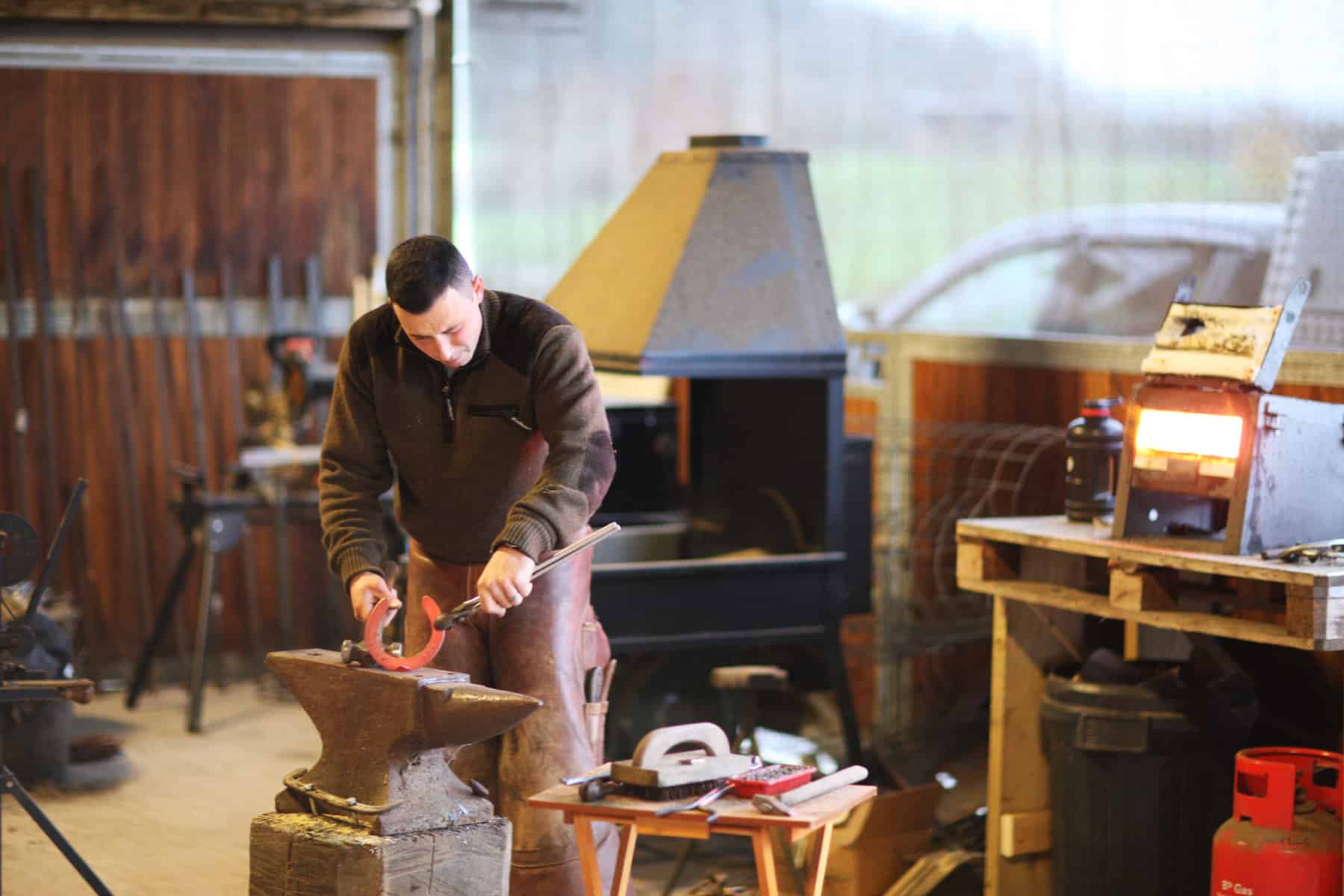
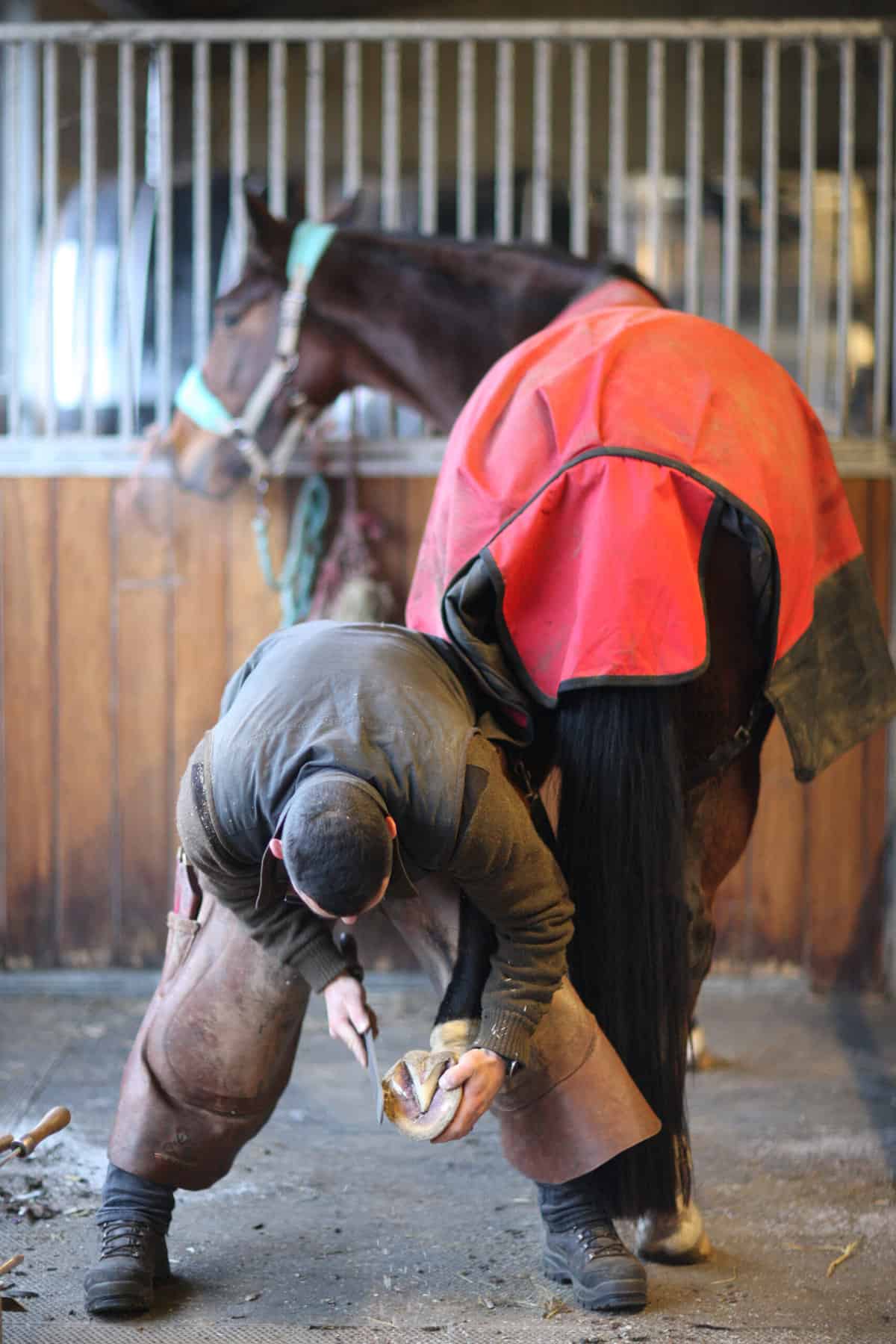
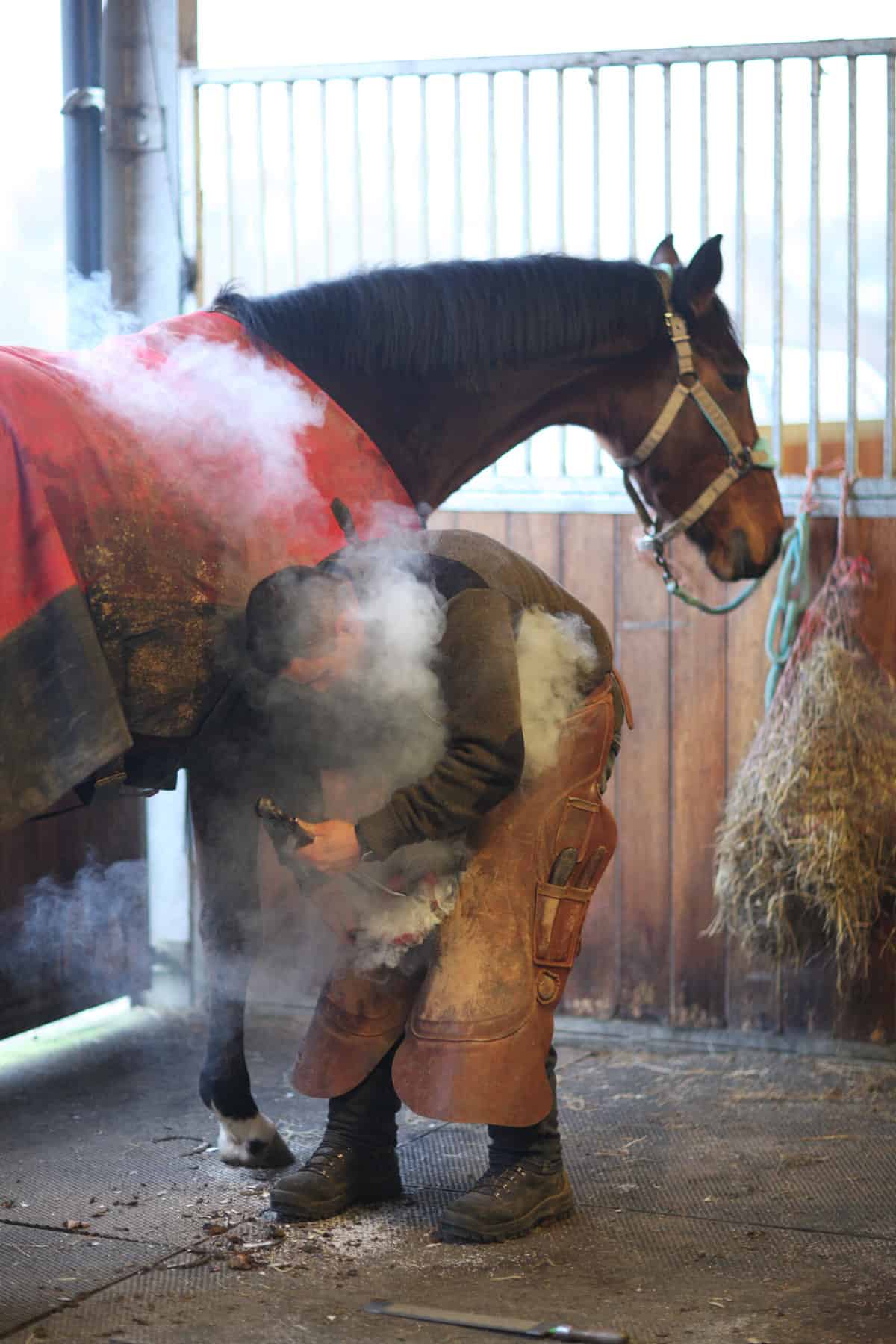
With his mobile forge, Sam travels to his clients; horses – from Shires to Shetlands – and occasionally sheep, donkeys, goats and alpacas too!
All images: Courtenay Hitchcock

I think I’m in Shillingstone, just outside Blandford, but either the satnav’s misled me or I’m at an American ranch. No matter – always a sucker for cowboy films, arriving at what could be the set of a Western has me swaggering like John Wayne.
There are ranch-style corrals with sandy floors and wooden railings. A beautiful stallion is whinnying in the distance. Up on the ‘mountainous’ hillsides (from where my imaginary Magnificent Seven would gallop) are smart log cabins and Pioneers luxury wooden lodges. Even these glamping rentals have names that nod to the wild west – names like Goldpanners, Ranchers and Trappers.

‘My first client was just two years old and had awful feet. She’s now eight and competing. It’s so satisfying watching a young horse grow and know you’ve helped it.’


It might be freezing outside, but in a cosy barn are sheepskin rugs to keep your knees warm, along with pommel saddles and cowboy hats – and brilliant black and white photographs of rodeo riders on the walls. Even on a dark and dismal winter’s day, this setting is special. No wonder Dorset farrier Sam Wilkes describes it as his ‘dream place’.
Sam, 27, and his wife Yasmin moved to aptly-named ‘Loose Reins’ in 2020. ‘We were looking for land for our ten horses. Coincidentally, I used to bring my sister riding here a long time ago. After seeing it was up for sale, we just knew we had to go for it. We’d wanted to build something just like this and here it was, ready for us to move in.’
Sam runs his farriers business, Purbeck Forge Ltd, while Yasmin, a successful equestrian dressage competitor, uses the former Western-style riding school to teach dressage. Post-COVID, they’re also busy building glamping opportunities – the idyllic lodges are let for most of the year now.

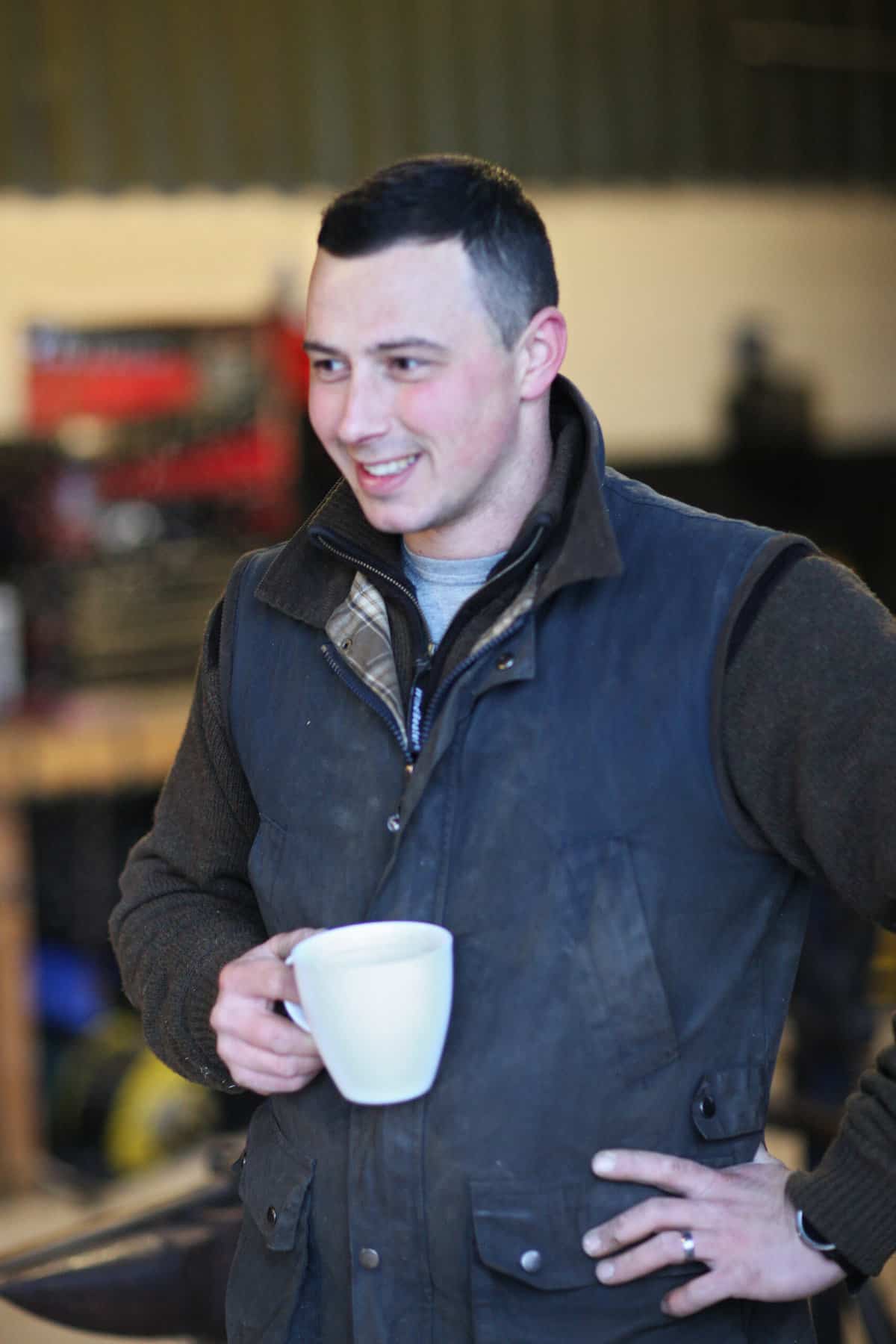
Sam Wilkes

And if that’s not a big enough workload, they’ve chickens, dogs, sheep, goats and 13.5 acres to tend, plus the joys of an 18-month old daughter (who already has two Shetland ponies). Multi-tasking is the answer and Sam’s adept at simultaneously walking the dogs and the Shetlands and pushing Millie in her pram!
Look back at Sam’s childhood and working with horses seems inevitable. His mum ran a riding school in Studland and as a youngster, Sam was hooked on horses. ‘I’d watch the farriers and was fascinated,’ he says.
At the age of 18, Sam was studying horse anatomy, blacksmithing and farrier skills at Moreton Morrell College in Warwickshire. ‘The two disciplines are very different,’ explains Sam. ‘Blacksmiths specialise in metalwork. Farriers specialise in horses, making horseshoes and shoeing horses. A farrier can be a blacksmith but a blacksmith can’t be a farrier.’
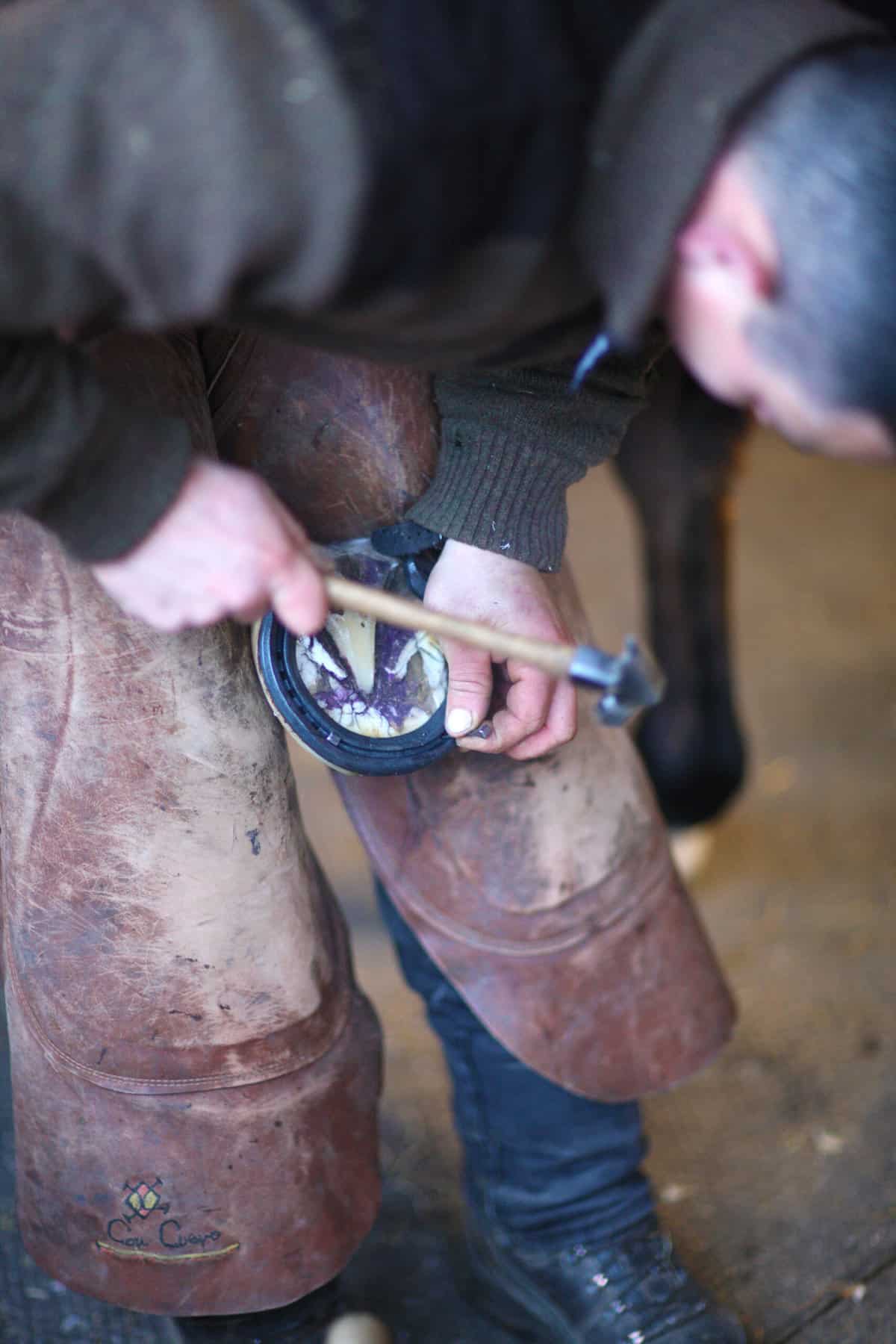
Sam was apprenticed to a Winchester farrier, returning to college every six months for his exams. Five years later, he achieved his DipWCF (Diploma of Worshipful Company of Farriers) and became a registered farrier. Now, with his mobile forge, Sam travels to shoe horses – from Shires to Shetlands –and occasionally trims the feet of sheep, donkeys, goats and alpacas too.

Sam studied horse anatomy, blacksmithing and farrier skills before securing a five year apprenticeship, achieving his diploma of the Worshipful Company of Farriers (DipWCF).

He says: ‘The animals are more relaxed if you can shoe them in their own environment.’
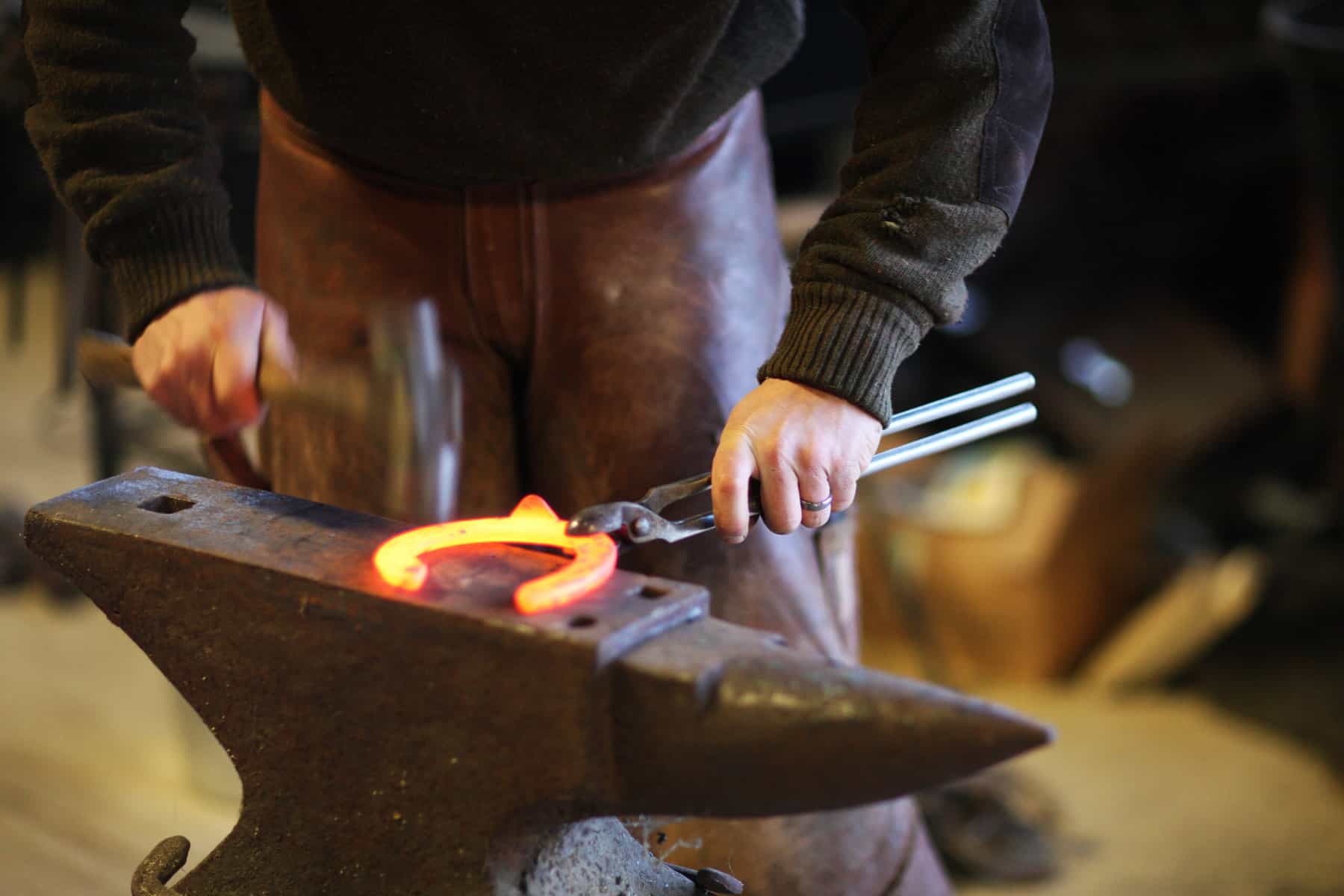
The equipment is high tech but the farrier’s skill has changed little since Roman times. ‘I still use nails mainly but you can glue the shoes on in certain cases. I will use factory-made horseshoes but still make some of my own.’

Sam will use factory-made shoes but also still makes some of his own

A boot rack and a stunning garden bench, both made out of spare horseshoes, show Sam’s creative flair. ‘As an apprentice, I used to make horseshoe ornaments and sell them for a bit of money.’
Sam works four days a week as a farrier – it was seven before he bought Loose Reins.
‘I’m looking to the long game, so I want to pace myself. It’s a very physical job and horses are powerful. I’ve had some scrapes but no serious injuries. Most farriers end up with bad backs because of the bending over.
‘This is more than a job, it’s a passion. My first client was just two years old and had awful feet. She’s now eight and competing. It’s so satisfying watching a young horse grow and know you’ve helped it.
‘Eventually I’d like to work abroad for a farrier charity such as The Flying Anvil. They send farriers to countries such as Ethiopia and India to share horse welfare skills and knowledge.’
It looks like Sam’s lucky horseshoe charm will spread further than Shillingstone.

The farrier’s skill has changed little since Roman times

Find Sam on Facebook: Sam Wilkes DipWCF
Sam’s in action at the Spring Countryside Show on 22nd and 23rd April at Turnpike Showground, Motcombe springcountrysideshow/
See Loose Reins here loosereins.co.uk/