Welcome to February’s BV Puzzles page – your free spot for a quick brain workout. Complete the crossword, test your logic with a classic sudoku, or relax with our massively popular seasonal Dorset-themed jigsaw: this month we have some sunlit pussy willow, just as it’s burst into bloom. See Jane Adam’s nature column this month – it’s a top tier winter feast for bees right here. No logins, no printouts – just free puzzles updated every month right here on The BV. Perfect for puzzle fans across Dorset and beyond, our digital puzzles work on mobile, tablet or desktop. Enjoy a quiet moment of challenge with new puzzles published every issue of The BV magazine.
It’s the first BV Podcast of the year, and Jenny Devitt’s pulled together a trio of conversation starters from the January issue – from Dorset Council handing over public loos like they’re Christmas cast-offs, to the unexpected emotional power of a well-meant thank you.
Editor’s Letter – No pom poms this year Laura Hitchcock skips the usual New Year rallying cry and offers something more honest instead: a nod from one tired grown-up to another. “We’re still here. Still showing up. Still muddling through. For January, that’ll do.”
Dorset Insider: Unwanted gifts and the council’s ‘fire sale’ Ever been given a Christmas present you really didn’t want? Try a toxic dump site, derelict loos, or some rewilded verge no one asked for. This month, our anonymous parish councillor takes aim at Dorset Council’s asset disposal scheme – and what happens when ‘devolution’ really means ‘dumping the problem on the parishes.’ “The offers for my own patch include an area of land that we, the parish, already own.”
Grumbler: Is Dorset the county Visit Dorset forgot? A new glossy tourism video has racked up hundreds of thousands of views – and barely shows rural Dorset at all. This month’s anonymous Grumbler isn’t just grumbling, they’re calling out the coastal bias baked into Dorset’s glossy marketing campaigns. Roughly three quarters of the county is rural, and the quiet erasure of inland communities from the county’s public image has real consequences. “You can’t keep selling Dorset as a playground for the already well off, and then wonder why its rural economy struggles to survive.”
The Power of Thank You – John Sloper on Gratitude John Sloper, CEO of Dorchester charity Help and Kindness, joins Jenny to talk about the unexpected importance of saying thank you – and how gratitude can be a radical act in a world that feels increasingly disconnected. “That thank you is a kind of gateway. It builds the fabric of community.”
These stories come from January’s BV – available now at bvmag.co.uk/Jan26. News, opinion, people, places, and the best of rural Dorset – all in one free digital magazine.
The BV – named 2024’s Best Regional Publication in the UK (ACE Awards) and Regional News Site of the Year (Press Gazette). Always worth your ears.
See all the previous episodes of The BV podcast here – or find it on your preferred podcast platform
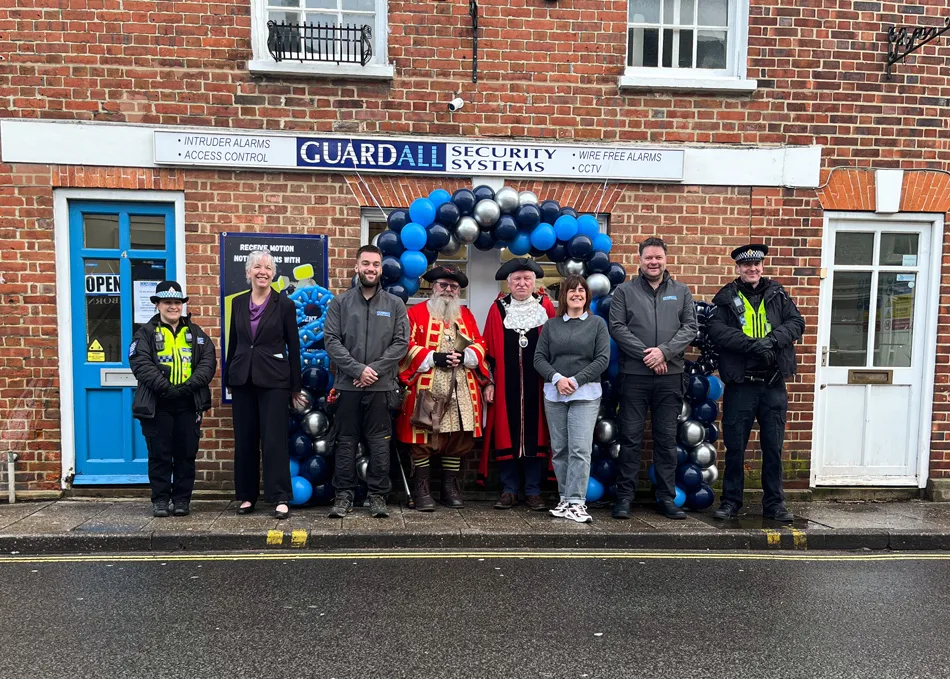
celebrating 25 years in business this January, marking a quarter of a century protecting homes and businesses across Dorset, Hampshire and Wiltshire. Founded in 2001 by David Vowles, the family-run firm has grown from a one-man venture into a trusted regional name. Clients now range from private homeowners and stately homes to national brands including Costa, Toni & Guy and Carpet Barn.
‘This is such a landmark for us,’ says David, who has over 30 years’ experience in the security industry. ‘We’re proud to deliver tailored security solutions – and at competitive prices – whether it’s for a first-time homeowner or a major retailer.’ The business is very much a family affair. David’s wife Sally runs the Wimborne office, son William is a fully qualified engineer, daughter Imogen supports online presence and daughter-in-law Tia helps with marketing. The team marked the anniversary with a visit from the Mayor of Wimborne, Cllr Jeff Hart, alongside local police and representatives from Wimborne BID. Guardall is accredited by the SSAIB, with services that are police- and insurance-approved. It offers 24/7 callouts and prides itself on personal service. ‘Our customers are part of the Guardall family,’ says Sally. ‘Many have been with us for years.’ Looking ahead, Guardall is expanding into network technology to improve home and business Wi-Fi, and plans to recruit more apprentice engineers to continue the company’s legacy.
To celebrate, Guardall is offering 10% off all new intruder alarm installations until 31st March 2026 – quote CODE25Guardall.
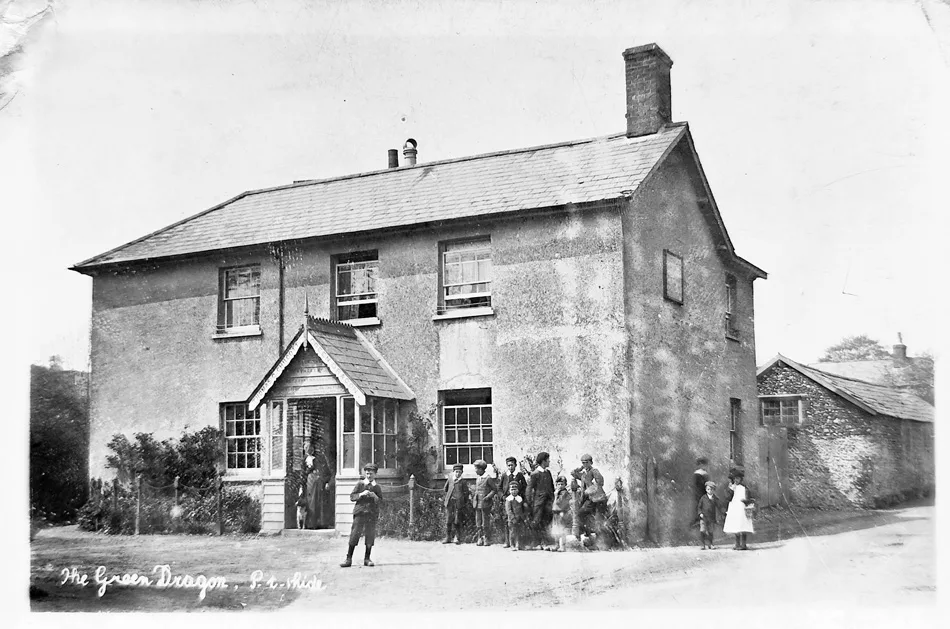
This month Barry Cuff has chosen a 1906 postcard of the Green Dragon in Piddletrenthide. To accompany it we found a news story from an inquest held there just six years later. The following story was reported in the Bridport News on Friday 8th November, 1912.
Quite a sensation was caused in this village on the news being circulated that Mrs. Hunt, wife of Mr. W. J. Hunt, blacksmith, had died suddenly while sitting in her chair after partaking of some bread and cheese on Friday night. The deceased was 69 years of age. On Monday an inquest was held into the circumstances of the death by Mr. F. B. La Maunsell, Bridport, coroner for West Dorset, at the Green Dragon Inn. The following composed the jury: Messrs. A. Baker (foreman), T. H. Payne, W. C. Groves, senr., W.C. Groves, Junr., G.W. Gillingham, F. Peek, J. Hicks, A. Baltitt, G. Gale, A. Davis, P. Churchill, and W. M. Elsworth. After viewing the body, the following evidence was taken: William James Hunt, of Piddletrenthide, blacksmith, said that he was the husband of the deceased, whose age was 69 years. About a fortnight ago his wife. who had before been in good health, fainted. She had suffered from rheumatism for the last year or two. After one fainting fit she seemed better than witness had known her for a long time. Her appetite was good and always hearty. On Friday last she took some bread and cheese and a glass of ale for her supper about 10.30, and was sitting in her chair. Witness thought deceased had dropped asleep. He touched her but she did not move or speak. She seemed gone in an instant. She was still in her chair at the table. Witness rubbed her hands and called to his son, saying “Mother’s gone Charlie, she is gone. She is dead,” The doctor came the following day. Witness was satisfied that deceased could not have taken anything to disagree with her. She had been very short of breath for a long time and had to walk very steadily. Charles Mathew Hunt, son of the deceased, stated that he lived at home with his father, and was a carpenter. He was home on Friday last, sitting in the next room to his mother, having supper by himself. His father called out and said that mother was dead. That was about 10.15 p.m. Witness went and lifted up his mother’s chin, felt her pulse and spoke to her but she was dead. He could not feel any pulse. The fainting fit, referred to by his father, lasted about a quarter of an hour and occurred just after dinner. He (witness) thought it was indigestion. His mother seemed quite well again after and went to his workshop the same afternoon, talking about his work. Dr. Dalton, of Cerne Abbas, stated that he had attended the deceased within the last three or four years, so that she was known to him, but for no serious illness, and be had within the last few months seen her in going past her house. He (witness) considered that deceased died from heart failure, as there seemed to be a distinct history of indigestion after meals occasionally and probably the heart failure was brought on by distention of the stomach. Death would be quite instantaneous. The appearance of the body after death would be consistent with this. Witness saw deceased on Saturday about 11 a.m. A verdict of death from cardiac syncope occasioned by Indigestion was returned.
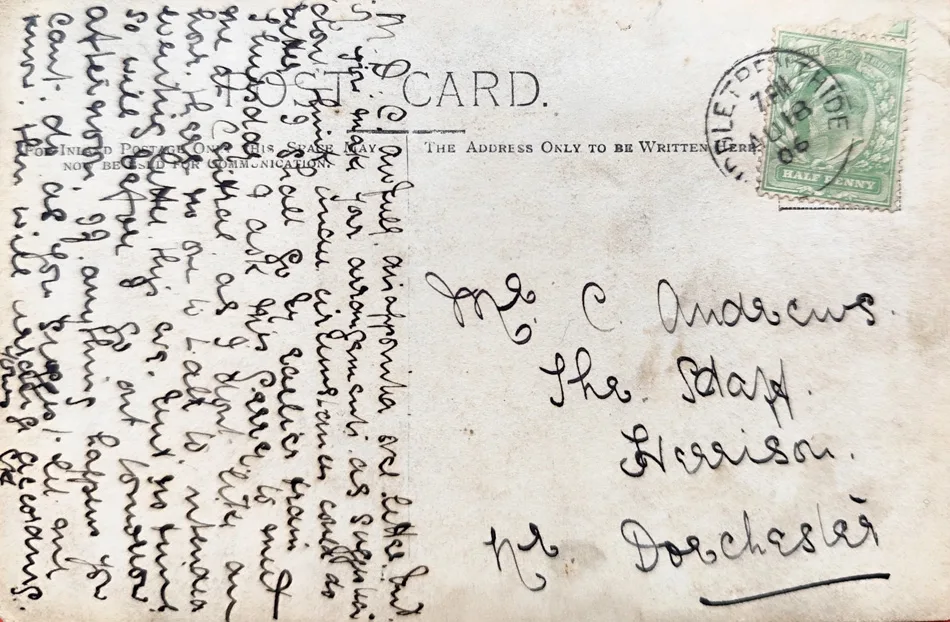
The Green Dragon is still recognisable today, though it is better known now as The Piddle Inn. The 1906 postcard was sent from the village to Mr C Andrews, simply addressed ‘The Staff, Herrison, Nr Dorchester’. Herrison House was the Dorset County Asylum. Opened in 1863, 1904 had seen the opening of Herrison House for private patients and by 1913 there were 957 patients at Herrison Hospital. The card reads: M.D.C Awfull disappointed over letter but if you make your arrangements as suggested don’t think under circumstances could do better. I shall go by earlier train Thursday & ask Mrs Farrer to meet me at Central as I don’t like an hour there, no one to talk to. Intended evening letter this eve but no time so will before I go out tomorrow afternoon. If anything happens you can’t do as you suggest let me know then will travel according yours AD
It’s that time of year when we’re packing up the last of the festive detritus and looking forward to the first spring flowers … possibly deciding what to do with an unwanted Christmas gift or two. You’ll know the type of thing – something that is clearly of no use to anyone, or which was bought with little real insight into the person it was intended for. If I sound like an ungrateful Grinch, I’m not really … I was simply reminded of another dodgy offer that came my way just before Christmas.
As I mentioned in my November missive, Dorset Council has recently drawn up a list of assets that it wishes to dispose of … by offering them to parish and town councils (well yes, lovely: let’s all write a list of stuff we no longer wish to do. Mine will fill this magazine). I opened the spreadsheet with not a little glee, thinking of opportunities and projects to develop our parish infrastructure, especially with nearly 300 new houses being dumped on our nearest fields. However, I soon came back down to earth with a thud. The list was definitely a ‘wish list’ … but no part of it registered on my wishes. Instead, this list is a grand dump from council HQ of anything that involves work on their part which doesn’t generate income. Or, as I continued to read down the list, things that could cause problems in the future. The offers for my own patch include an area of land that we, the parish, already own. There were patches of grass labelled as ‘picnic areas’ that would obviously need a regular mower – or some hungry goats. I saw that another parish has been offered the opportunity to grab an old dump site, complete with festering toxic waste cocktails that will clearly be an issue in years to come. There were lots of loos looking for new ownership. Obviously they will need to be maintained – and that raises another point: what if no one takes on the loos, and the council decides to close them? How will older people and the disabled manage?
I wish them a seagull As I examined the asset list, I couldn’t find a single thing that would be useful to the parish. What was potentially viable was in reality already owned, either by us or someone else. You do have to wonder about the list’s accuracy, if there are assets on it that don’t even belong to Dorset Council! The entire exercise raises even further concerns for smaller parishes around volunteering and maintenance. Most of our own volunteers who cut the parish grass are in the over-75 age group, and we are not getting anyone younger or fitter coming forward to help with maintenance, so we are increasingly looking at contractors. Plus, some of the work required is heavy labour, where machinery is needed. Then, like every parish, we have a few rewilding gurus hell-bent on turning all our verges into jungles – all well and good until the plants die off and the complaints start because it looks a mess, or you can’t see to pull out at a junction. All this gets me grumbling over my coffee. The fire sale of unwanted Christmas gifts from the council all comes with caveats. Very little that is income-generating will be given to parish and town councils. Naturally, though, the maintenance bills for all of it will need to come from the precept, which means we’ll get the blame for raising it. And where does it stop? Cornwall Council has just decided it will no longer be emptying dog bins and litter bins in some areas, including social housing sites. Not that I want to plant ideas in Dorset Council’s money-saving plans, but just imagine if that happened here? Who does the council think will take on that job, especially with all the issues on accessing waste and recycling centres – and just getting people to pick up dog mess in the first place. I hope the well-meaning Cornish councillor who dreamed up the notion steps in something smelly and nasty – or a seagull pinches their pasty.
Not on my patch And another thing (sorry, I’m on a roll this morning). Parish councils spend a lot of time trying to recruit new councillors. It’s no longer the domain of white middle class retired old men (and yes, I know, most are absolute gems with a plethora of knowledge). The people coming forward today are younger and have families and jobs. Parish councillors are unpaid – there’s a limit to the amount of work they can do when they have other commitments and mortgages to pay. We also have the incoming Millennials and Generation Z, who work entirely differently from the Baby Boomers and Gen X. Good parish councillors work hard. While we are batting off developer number five from trying to create yet more unaffordable luxury homes or working to save the village pub, taking on a bit of grass that needs mowing because the council doesn’t want to do it is not a priority. Frankly, when I desperately need help, advice and support to deal with macho developers determined to turn villages into ticky-tacky dormitory towns, I’m just not going to take on the local authority responsibilities. I want the best possible outcome for my patch – and that includes not making it a dumping ground for other people’s problems.
***The Dorset Insider is a no-holds-barred column pulling back the curtain on local affairs with sharp insight, unfiltered honesty and the occasional raised eyebrow. Written by a seasoned parish councillor who prefers to remain anonymous (for obvious reasons), it cuts through the noise to expose the frustrations of grassroots politics, and say what others won’t. Rest assured, their identity is known – and trusted – by the editorial team. Expect opinion, candour and a healthy dose of exasperation …***
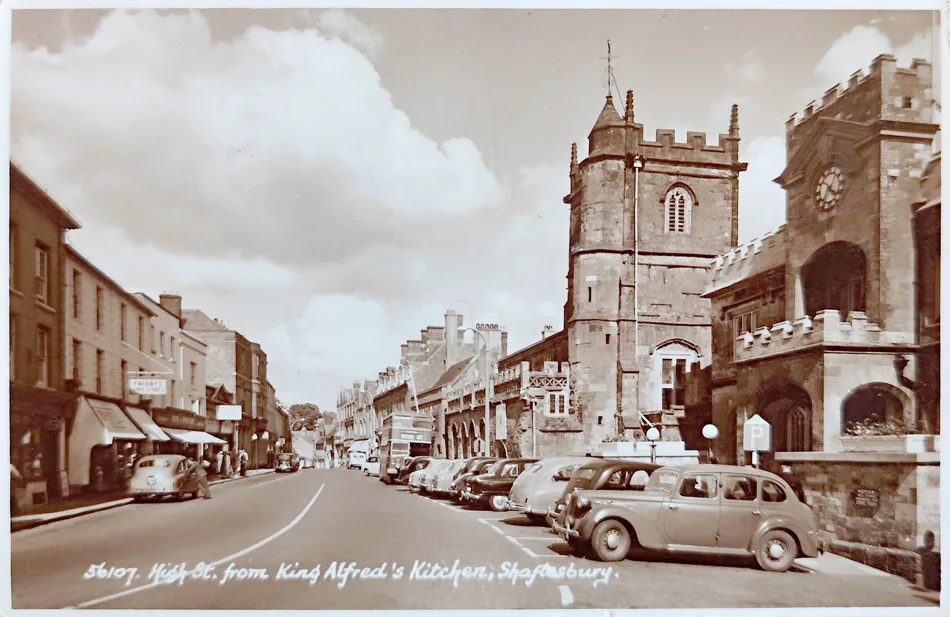
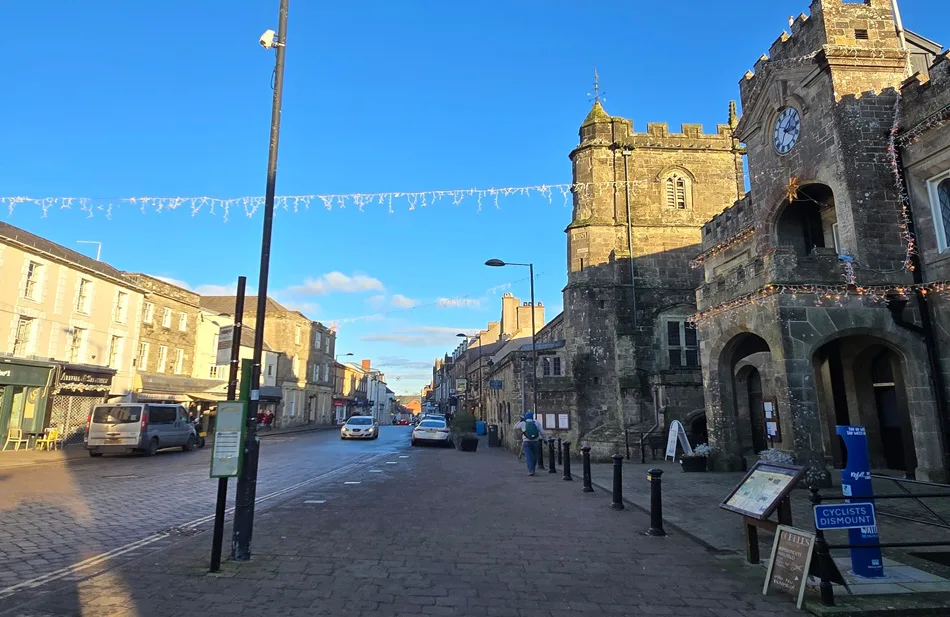
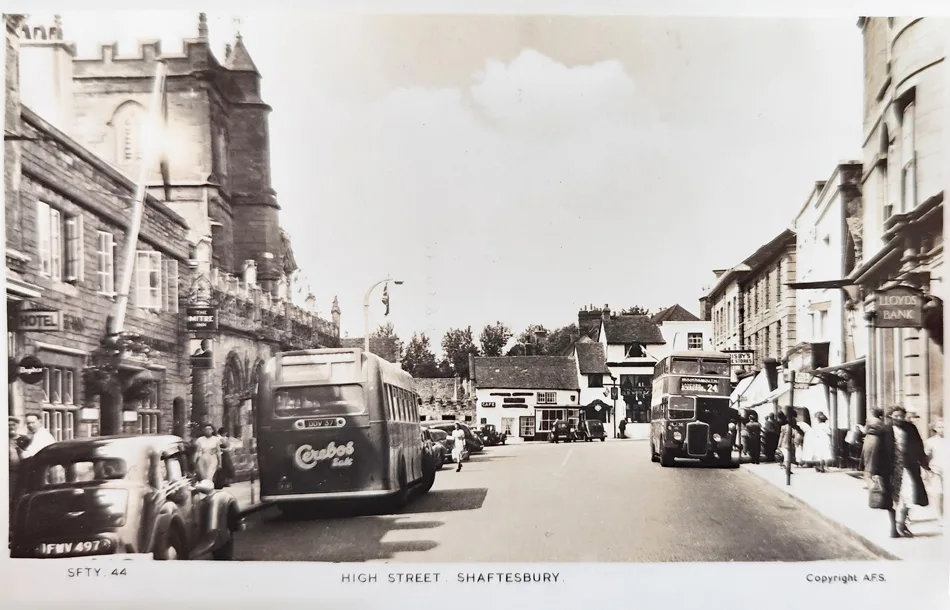
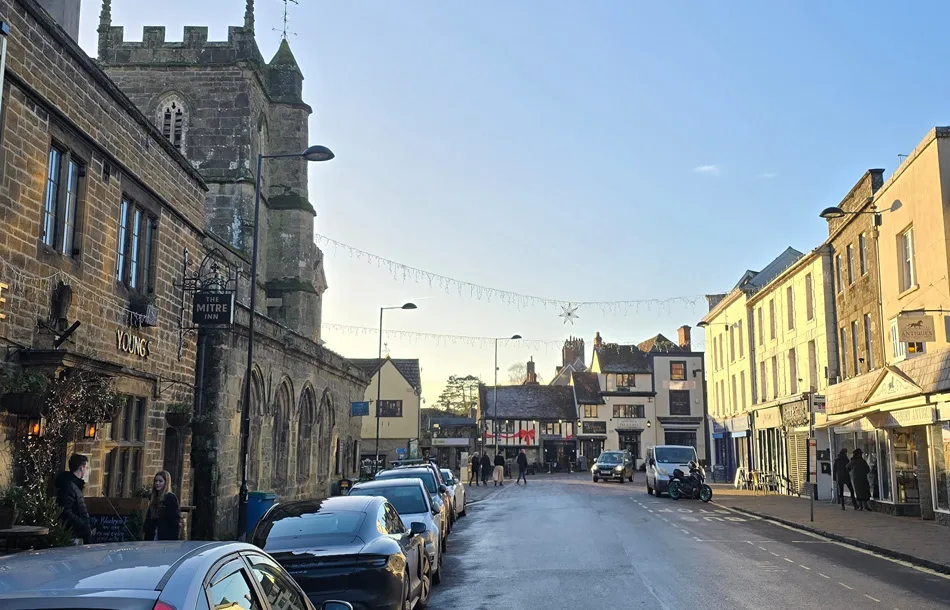
The trio of the Mitre Inn, the church of St Peter and the Town Hall, anchor the sweeping corner of Shaftesbury High Street. Left off the railway map (no doubt due to its hilltop location) and therefore spared large-scale Victorian expansion, Shaftesbury remained tightly clustered, its greensand buildings centred around the High Street, Bell Street and Bimport. After the First World War, Lord Stalbridge sold virtually the whole of Shaftesbury for £75,000. Just four days later the city buyers flipped a quick profit, selling on for £80,000 to a group of Shaftesbury men. In the second 1919 sale, the town’s residents agreed to bid only on the properties they lived in, and the town acquired the fire station, market hall, cattle market, cricket ground and allotments. The two historic postcards were never dated, though vehicles, shops and street life suggest the late 1950s or early 1960s.
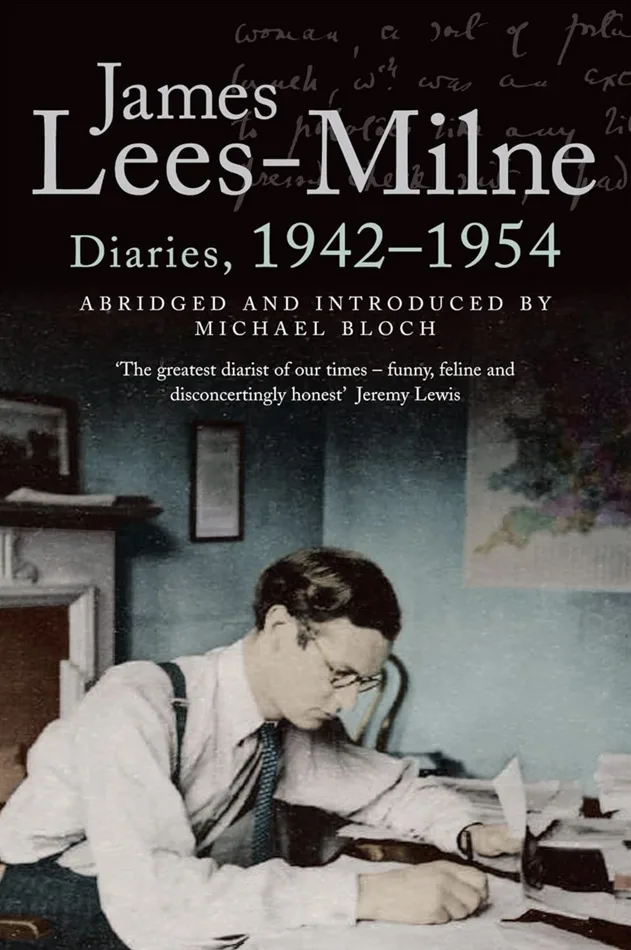
In her first Book Corner column for The BV, Victoria Sturgess from Black Pug Books in Wimborne takes us from war to wit in diaries
The New Year often arrives weighed down with resolutions – Dry January, shedding the festive excess, starting a diary… Luckily for us readers, some people really did stick with that last one. And their diaries remain among the most fascinating, upsetting and revealing of books, offering first-hand insights into human history. Samuel Pepys, one of the earliest diarists in modern publishing, gave us a candid, detailed glimpse of 17th century London – from the Great Fire to the plague.
James Lees-Milne diaries
A more modern diary which is known to all is the heart-breaking Anne Frank’s Diary of a Young Girl. Less well-known is her English contemporary: a 49-year-old British woman’s account of life in wartime Britain. It is an unrivalled piece of social history – please read Nella Last’s War for a poignant record of an extraordinary ‘ordinary’ woman. On an entirely different diary note, if you love waspish, name-dropping, witty tales of aristocratic doings, then you can wallow in 12 volumes of such riches. James Lee-Milne was deeply involved with the National Trust, allowing him to indulge in his love of art and architecture – and gossip. His style was personified in his declining a CBE in 1993: he felt a knighthood was his due.
Nella Last’s war diary
I think we can all agree to pass over most politicians’ efforts as mainly attempting to blame ‘circumstances‘ for their failures, but a glorious exception is Alan Clark – probably the most gossipy political diaries ever written, with a wickedly sharp account of Margaret Thatcher’s downfall. He liked to style himself a loveable rogue, though I doubt the Iron Lady – once a close personal friend – saw it that way after reading what he’d written about her.
samuel pepys diary
I suspect all political diaries are really written with an eye to notoriety rather than an honest telling of events. Talking of ‘loveable’ rogues, Jeffery Archer’s Prison Diaries are – unexpectedly – an engrossing insight into prison life. And let’s not forget probably the most read of all diaries: the gloriously hilarious fictional lives of Everyman and Everywoman. Grossmith’s Diary of a Nobody – with the bumbling, absurd yet ultimately endearing character of Mr. Pooter – reflected the snobbishness of middle-class suburbia. E.M. Delafield’s Diary of a Provincial Woman also ridicules the pretensions of an upper middle class woman, this time living in a 1930s Devon village. It’s a comic gem. It’s also worth noting that, although featuring a now-distant time and society, neither of these last two has ever been out of print. Some human foibles really do never change. And of course, the only possible way to end is with the GOATS: Adrian Mole and Bridget Jones.
The new big-budget Visit Dorset promotional video has recently been released (see it on the next page), and no doubt sent far and wide to media outlets and influencers in the hope of drawing more visitors to the county. So far, so normal – that is, after all, Visit Dorset’s one job. I happen to work in marketing, so of course I had a professional nosey. So far the video has had 375,000 views on YouTube. Good job, Visit Dorset! The film is 57 seconds long. It’s beautifully shot, glossy, professionally edited – and it tells you everything you need to know about how Dorset is still being sold to the world. Clifftops. Beaches. Sea kayaks. Sailing boats. Coastal paths. Big skies over water … Dorset, apparently, begins and ends at the shoreline.
More than a fossil coast If you blink, you might catch a fleeting glimpse of Sherborne Abbey’s ceiling – two seconds, perhaps – followed by a few seconds of a pretty independent shop and a bakery or café. You’d only know the shop was in Sherborne if you already knew. It could be anywhere. I still don’t know where the bakery is – but I’m fairly sure it’s not Oxford’s, Dorset’s 200-year-old family bakery that still uses 100-year-old ovens and a 75-year-old dough mixer, the last of its kind in the world. Because why would a PR firm think that was worth shouting about? After that, it’s back to the coast. Right up until the closing titles, which roll over the only genuinely rural moment in the entire film: a man running after his dog across a stubble field amid farmland. That’s it. Rural Dorset, reduced to a backdrop for the final credits. This all matters so much more than you think. Dorset is not a narrow coastal strip with a bit of countryside tacked on behind it. Roughly three quarters of the county is rural. Its market towns, villages, farms, hills, footpaths, forests and historic sites are not ‘niche extras’ – they are the place. And yet, once again, they are barely visible. I understand the tagline is ‘for a world less travelled’, which may explain the absence of Durdle Door and Gold Hill. But it doesn’t explain the absence of everything else. There are no hillforts. No deep woodland walks. No chalk downland. No ancient tracks and holloways, hidden valleys, ancient parish churches, Georgian market town high streets or even the thatched villages that people already travel hundreds of miles to see. And certainly nothing so dull as Dorset’s enormous creative and arts sector, including Dorset Art Weeks, one of the largest open studio events in the UK which attracts tens of thousands of visitors. So none of the things that make inland Dorset not just attractive, but accessible.
Shouting from the sidelines Why are we making Dorset look so privileged? How, exactly, is taking the family sailing more aspirational and accessible to most UK households than a walk across a hillfort? Sailing and kayaking require money, kit, confidence, good weather and – crucially – prior experience. Walking requires shoes and a sandwich. Yet the former are endlessly promoted as Dorset’s calling card, while the latter is treated as a footnote, if it’s acknowledged at all. This isn’t about knocking the coast – Dorset’s coastline is rightly celebrated. It is spectacular, and it underpins a vital part of the county’s tourism economy. But it is not the county’s whole story. And pretending that it is comes at a real cost. Every time Dorset is marketed as a coastal playground, the rural economy is sidelined. Independent pubs, B&Bs, walking guides, farm attractions, food producers, market towns and countless small inland businesses are left fighting for scraps of attention – despite offering experiences that are often cheaper, greener and more realistic for families and older visitors alike. The video just has the feel of being written by people who don’t actually live here. The PR agency behind it is based in Exeter, which may be defensible on paper, but it raises an awkward question: if you don’t live here, do you really understand what it is that you are missing? Local knowledge isn’t parochialism. It’s perspective. And a little more of it would have gone a long way here. Dorset’s persistent over-reliance on coastal imagery suggests a strategic blind spot that’s becoming increasingly difficult to ignore. Tourism marketing is not just about attracting visitors – it’s about directing them. And for Visit Dorset, that’s about spreading footfall, spend and opportunity across a whole county, not simply funnelling it repeatedly to the same already- pressured places. Dorset deserves better than being reduced to a postcard of itself. Rural Dorset, in particular, deserves to be seen. When this is how the county is promoted, it’s no wonder so much of it feels invisible. You can’t keep selling Dorset as a playground for the already well-off and then wonder why its rural economy struggles to survive.
***The Grumbler – the open opinion column in The BV. It’s a space for anyone to share their thoughts freely. While the editor will need to know the identity of contributors, all pieces will be published anonymously. With just a few basic guidelines to ensure legality, safety and respect, this is an open forum for honest and unfiltered views. Got something you need to get off your chest? Send it to [email protected]. The Grumbler column is here for you: go on, say it. We dare you.***
For Steve Oliver, it is more than a job – it’s almost two decades of hands-on protection of the rivers, wildlife and landscapes where he grew up
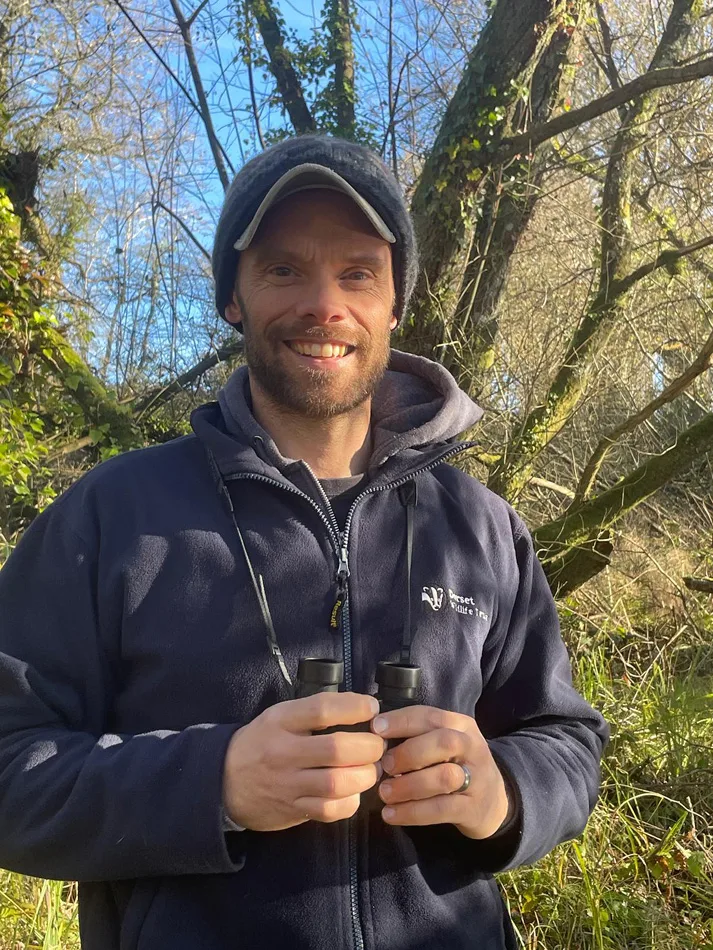
Steve Oliver is rivers conservation officer for Dorset Wildlife Trust Images by Tracie Beardsley
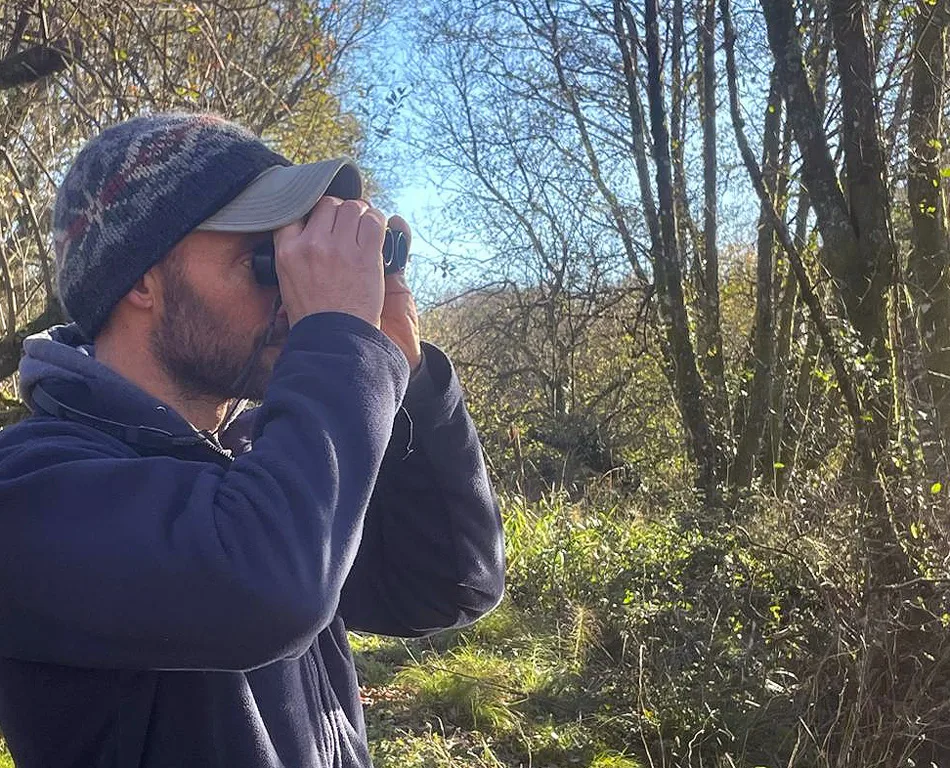
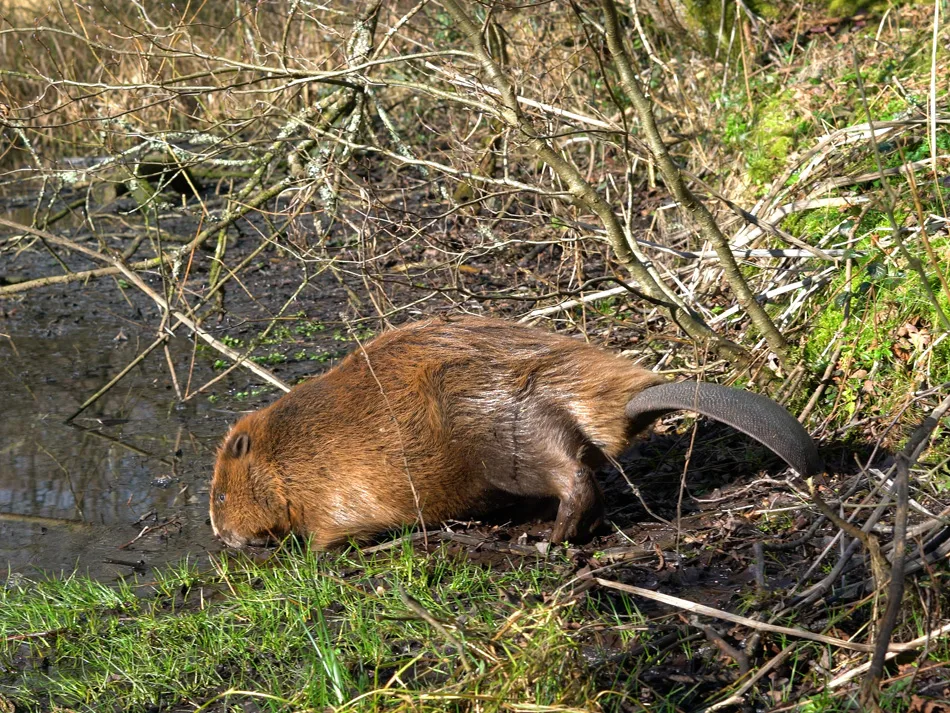
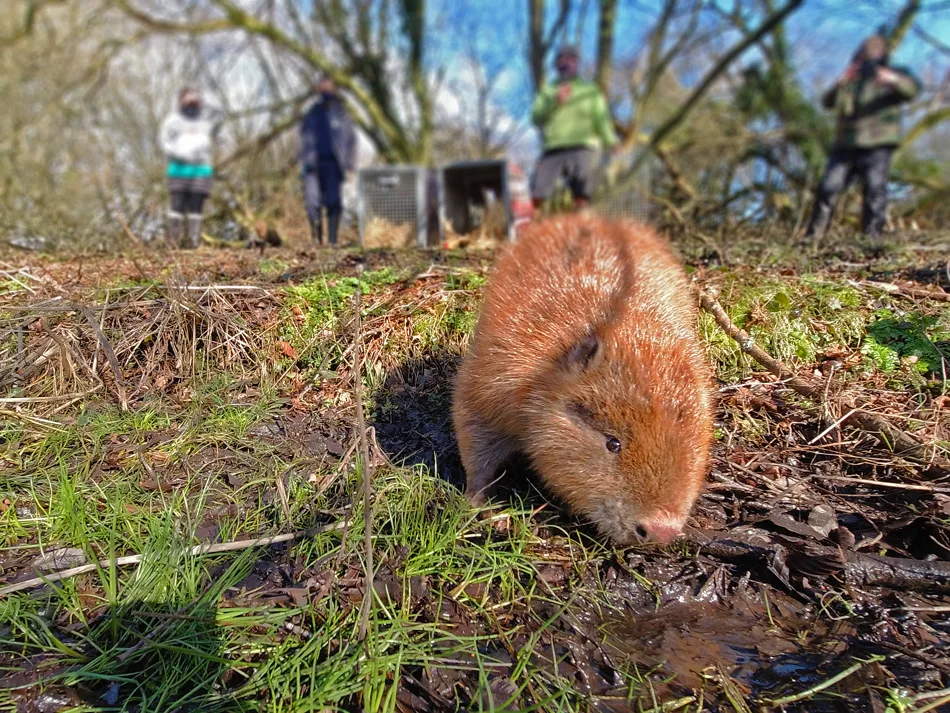
Steve Oliver welcomes me into what his wife and children call his ‘second home’. It’s one of those glorious winter days – frost crunches underfoot and the sky is a sharp electric blue. We’re standing in a secret space in West Dorset. A robin skates across frozen water, heading towards an island where twigs, branches and mud are piled high to create a shelter. Steve assures me that snuggled inside this ‘lodge’ is a family of Eurasian beavers (Castor fiber), the first to set paws back in Dorset for more than 400 years. Whispering so as not to disturb their slumber, Steve can’t hide his pride: ‘I’ve been lucky enough to work for Dorset Wildlife Trust for 18 years and this is the highlight of my conservation career so far,’ he says. As rivers conservation officer for Dorset Wildlife Trust, Steve is part of a small and dedicated team behind the groundbreaking reintroduction of the world’s second-largest rodent, (adults can weigh up to 30kg) into the Dorset landscape. Beaver Steve, as his colleagues have nicknamed him, recalls the historic release: ‘It was a day like today, in February 2021 – cold and fresh. We were in the grip of the Covid pandemic so there were only a couple of us here to witness the historic moment of an adult pair of beavers take their first steps onto Dorset soil after a void of four centuries. ‘After all the years of preparation, it was so exciting – a real privilege to be part of bringing such an important species back to the county.’
Part of Steve’s job is keeping an eye on the family of Eurasian beavers (Castor fiber) that lives in West Dorset
Ecosystem engineering Fossil records show Eurasian beavers in Britain more than two million years ago, but by the end of the 16th century they were hunted to extinction for their meat, thick fur and castoreum – a secretion from their castor sacs, once prized as a painkiller and a flavouring. In 2022, the species was officially recognised again as native to England. Nearly five years on from the original release, beavers at this Dorset site are thriving. The first pair have successfully raised kits – but this is not a breeding programme. These animals are ecosystem engineers and hugely influential in their habitats. ‘There was always water here,’ Steve says, ‘but since the beavers built their dams, the water surface area has tripled, creating a wonderful wetland. Even in the dry summer of 2025, water levels held steady. This space was an oasis. Beavers are genius at keeping fresh water in the landscape, and that’s crucial for wildlife – and for us.’ It’s easy to see why Steve loves to come here. On this freezing cold day, it’s beautiful in its winter nakedness. Skeletal frames of alder, oak, ash, hawthorn and willow (which is apparently like candy floss to beavers) frame the banks. Water rail cry out from the shelter of the frozen reed beds. Steve checks on the site at least once a week, often more, because he is transfixed by the beavers’ impact on the environment. The results are striking: kingfisher, dragonfly, common frog and many bat species are already benefitting: ‘Keep more water in the landscape and you generate life. It’s that simple,’ he says. ‘Beavers are a keystone species that bring benefits to all manner of wildlife.’
‘Beaver Steve’ grew up in Bradford Peverell, and worked for a range of natioponal wildlife charities before finally landing the job of his dreams in Dorset
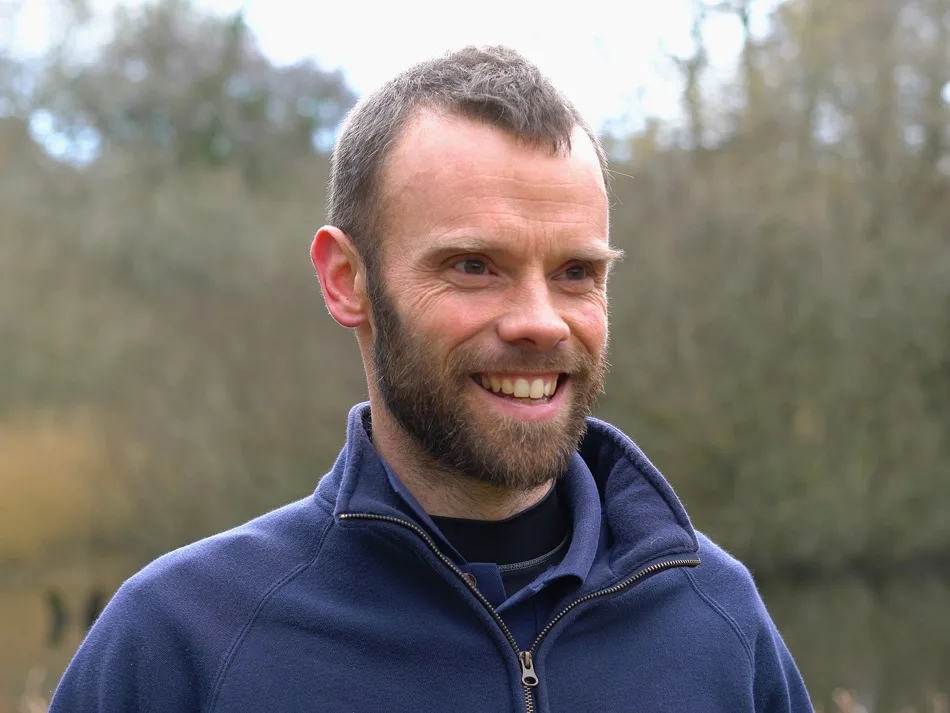
Connected to wildlife At 44, Steve radiates positivity and passion for his work. His love of nature began with a childhood in Bradford Peverell. ‘I was an outdoor kid – turning over logs to find the woodlice, netting butterflies, helping my parents dig their veg patch so I could see the worms. I always felt connected to wildlife.’ After studying Environmental Science at Plymouth University, he gained hands-on experience with the RSPB, National Trust and The Conservation Volunteers. His first paid role was as a warden on the Gower peninsula, maintaining coastal paths and surveying butterflies. ‘It took me back to being a child, chasing butterflies around the garden with my brother – I realised I was doing what I loved and getting paid for it!’ In 2007, he joined Dorset Wildlife Trust as an assistant warden. It was a job he’d unsuccessfully applied for three years earlier, but with more practical experience on his CV, this time he proved the perfect fit. He recalls going for a run after he got the job offer and literally skipping with joy. ‘To be able to help look after the place where I grew up – I’m really privileged,’ says Steve, ‘This was doing all the things I relish – habitat management, looking after nature reserves, surveying plants and animals. That was 18 years ago … time flies when you’re having fun.’
Dam good news In his present role as Rivers conservation officer, his remit is looking after rivers across the county, trying to improve both the habitat and the water quality. He actively encourages people to get involved at the beaver project site. ‘We want people to connect with beavers and learn how to co-exist with such an influential species,’ he says. People do see my love for it and then want to be part of it.’ Steve frequently leads guided site visits, gives talks to schools and environmental groups and even hosts summer evening stake-outs, where you may be able to catch glimpses of these elusive crepuscular animals. This year could mark another milestone – there is talk of a potential wild release project to strengthen the beaver genetic diversity. Dorset Wildlife Trust is planning a public consultation to explore the potential of local communities living alongside wild beavers in the River Frome catchment area.
River hero Despite the relentless news of the depressing state of the environment, talking to Steve Oliver gives you hope. ‘Fresh water is the most precious thing we have. Many rivers are under pressure, but projects like this show what’s possible,’ he says. ‘Beavers are a natural and important part of a healthy ecosystem. They evolved to be here, they should be here and our project proves the positive impact they can make for us all.’ dorsetwildlifetrust.org.uk