Home Blog Page 434

In the studio with Henrietta Young

0

In the age of the selfie and our image-propelled social media era, some portrait painters may fear for the future of their art. As technology increasingly shapes how we see and share the world, this instantaneous method of capturing the portrait has become the defining visual genre of our time. We are surrounded by portraits, for we see representations of people everywhere. However, in contemporary art, portraits are much more than pure representation. Historically, portraitists primarily recorded the rich and powerful and created their work by commission, or by admiration and affection for their subject. However, today the skill of the portrait painter lies in the ability to define the essence of the sitter as well as a recognisable likeness.

Henrietta’s Studio and her portrait of husband John. George’s self portrait pencil drawing on the wall. Image: Edwina Baines

Henrietta Young is an artist with a worldwide reputation as a portrait painter. Drawing and painting prolifically, she was able to capture a likeness from an early age. She has travelled for sittings across the United Kingdom, as well as in Europe and America. We chatted in her peaceful Dorset studio with stunning views across the newly harvested cornfields. On the subject of the portrait genre, she felt “It’s not just painting, there must be a degree of intuition about it. You can be a brilliant painter and not be able to get a likeness or you can have an accurate rendition of someone’s nose and eyes for example and it won’t look like them… People tell me their innermost feelings. Sitting is like being in the Psychiatrist’s Chair! The trick is to get to know the person.”

Henrietta in her studio with recent commission. Image: Edwina Baines

Henrietta came from an artistic background: not only were her 19th Century relations painters, but her father was an excellent draftsman and her mother a good water-colourist who painted all her life. Henrietta’s son George is also a painter and print maker, living and working in London. There were four girls in Henrietta’s family including the artist Amanda Vesey; and Amanda’s twin sister Georgina’s son is Tom Hammick, also a prestigious artist. He was the winner of the V&A Prize at the 2016 International Print Biennale, the work having since been acquired into the V&A collections.

Nicholas Hely Hutchinson – By the Bridge at Bockhampton. (Pictures for the Beehive – The Splash Appeal)

A modest persona, Henrietta told me that “Painters have traditionally been people who don’t talk about themselves. People find out about you by seeing. If you see a piece of contemporary art and you need a full explanation of what it’s about then what’s the point? I’d rather the work spoke for itself.” She has firm beliefs in the importance of the basics in the teaching of children to draw – “You can’t progress until you have the correct tools to work with.” She is disciplined in the way she works, going to her studio every day with just a break for lunch: “I get bored if I don’t work hard”.

 George Young – Morning Mother and Child.  (Pictures for the Beehive – The Splash Appeal)

One glance through her website gallery (http://www.henriettayoung.com) will confirm her talent. She says: “A conversation tells you more about somebody than a photo ever can. Each sitting (a picture might need five or six) reveals something different. A good portrait is much more than a likeness – it expresses something essential. It’s a collaboration between the artist and the sitter; you both feel when you have got it right.”

However, there has naturally been a break with commissions during the pandemic so, as with many other artists I have talked to, the focus turned to the beauty and vivid colours of the countryside. Henrietta has spent daily local walks admiring and absorbing the scenery, now the subject of her new exhibition to be held at The Art Stable in Child Okeford from 16 October-13 November.

Another passionate project also uppermost in Henrietta’s mind at the moment is the Diverse Abilities’ Splash Appeal (www.thesplashappeal.org.uk). Diverse Abilities is Dorset’s disability charity supporting children and adults with profound physical and learning disabilities across the county. As Henrietta said “we don’t have any idea what it’s like to be powerless. Not just being not able to walk, but being powerless… So the ability to move and have fun in the water is so important.”

Artists’ drawing from The Beehive  (Pictures for the Beehive – The Splash Appeal)

Raising funds for a hydrotherapy pool for people who attend The Beehive Centre in Poole and who have profound disabilities such as cerebral palsy, epilepsy and multiple learning disabilities, she will be helping to run and organise an Exhibition and Auction of Contemporary Art. Henrietta visited this Day Centre during her husband’s year as High Sheriff for Dorset in 2017/18 when, in comparison to those under the age of 18, she was struck by the lack of facilities for adults. At that time, she tells me, there were not even enough toilets: “It was like something out of Dickens”. The situation has greatly improved with funds from Diverse Abilities – but the Centre badly needs a hydrotherapy pool, essential to the treatment, wellbeing and enjoyment of the 50 or so adults who attend the Centre.

Henrietta Young – ‘Watching’ (recent image for the Art Stable exhibition. Copyright Henrietta Young)

Thus, Henrietta wrote to as many famous artists as she knew and asked if they could help. Most of them were willing and 28 artists have generously donated their work. Four of them – Catherine Goodman, Ursula Leach, Jemma Phipps and Sarah Pickstone have now attended The Beehive to talk and also draw those involved and get to know them. These drawings will also be on display at the Exhibition. Some of the other well-known Artists helping to raise the £1 million needed for the pool include Antony Gormley RA, Paula Rego RA, Maggi Hambling, Nicholas Hely Hutchinson and Ryan Gander. All of the work to be auctioned by Duke’s is displayed on the website (www.picturesforthebeehive.org.uk) with details and price guide; but bids can be placed before the event by contacting Tallulah Barnett at Duke’s (01305 265080). Online bidding will be available from 8th September.

The Pictures for the Beehive exhibition runs between 21st and 22nd September (with the Private View and Auction on 23rd) at St Giles House, Wimborne St Giles. This is the beautiful home of Nick Ashley-Cooper, the 12th Earl of Shaftesbury, who, following the deaths of his father and older brother, returned to England to renovate St. Giles House on the family’s 5,000-acre estate.

By: Edwina Baines

How to promote and protect your business

0

Hello and welcome to my September column. I hope you’ve had a great summer and life is at long last now returning to normality. I guess only a few may have taken summer holidays overseas but it’s certainly given us the opportunity to enjoy our beautiful country with the huge growth in staycations. And I have to say I was delighted to see Gold Hill in Shaftesbury featured on the front of a leading motorhome magazine this month!

By fizkes Shutterstock

As discussed in an earlier article, we are a not for profit businesses with the sole purpose of helping businesses in Dorset grow and success. We aren’t funded by councils or by the Government and operate as a membership organisation. On a very practical level I’d like to talk to you this month about some of the benefits we can offer businesses through membership of Dorset Chamber. Membership is extremely reasonably priced and offers businesses a huge return on investment in many areas. We offer range of membership packages starting at just £120 plus VAT. Whether you are seeking vital protection for your business, business services or looking to raise your profile and build your customer base, we can help. Essentially we talk about being able to protect, promote and connect businesses through membership

Just our basic membership at only £120 will offer any business within Dorset a range of benefits. Providing essential cover for any business, this includes up to £1 million of business legal expenses insurance with £100,000 per claim for a solicitor to represent a member business in defending a legal action. We also offer 24/7 access to a HR, tax and legal helpline with has proved invaluable to businesses that have used this. We also offer benefits that include free credit checks (essential to any business offering credit to a new customer) as well as the ability to publish press releases on our website, the leading Dorset business news platform.

One incredibly successful service we launched during the pandemic was our online networking events, Simply Networking, included in our membership. These virtual networking offer businesses across Dorset a fantastic opportunity to meet and connect with other businesses in a friendly, non-salesy environment – all from your office or home. These events attract a wide range of businesses (including our very own editor, Laura!) and are incredibly popular.

This is just an introduction to some of the benefits we offer – and there are many more. We are a friendly bunch and very keen to support businesses across Dorset. If you’d like to find out more about how you can join our active and friendly membership and get some great benefits for your business, please contact us on 01202 714800 or e-mail [email protected] or visit dorsetchamber.co.uk

Until next time and best wishes, Ian

A New and esier Brioche Recipe (and it works!)

0

Brioche Rolls Recipe_September 2021

There is nothing quite like the smell of freshly baked bread and this recipe is my adaptation of a brioche roll – still an enriched bread dough with added egg and a little butter, but they aren’t quite as buttery or as sweet as a traditional brioche might be, making them slightly easier to make and slightly more versatile. They work brilliantly with freshly cooked bacon or sausages as a breakfast roll, as well as with a burger or steak for dinner and can be made ahead of time, just refresh them with 10 minutes in a warm oven before serving.

Image by: Heather Brown

I can highly recommend trying to source local bacon or beef burgers for a really sensational roll and if you are looking for somewhere to find some locally farmed meat then do try your local butchers. There are butchers on almost every high street across the county and each one will have relationships with local farms and care deeply about the meat they source. As we head into game season this autumn, you should also start to find fresh wild fowl, pheasants and partridges too, if you are looking for something a little different!

Brioche Rolls – makes 12.

260ml warm milk
2 tsp dried yeast (1 packet) 2 tbsp caster sugar
1tsp salt
450g strong bread flour 60g butter (melted)
2 eggs

Lightly whisk the warm milk, dried yeast and sugar together and leave for 5 or so minutes to start the yeast working (it will start to get foamy on the top of the mixture).

In a large bowl, add the flour and salt and then add in the melted butter, 2 eggs and the milk mixture. Stir together until it forms a dough and the tip out onto a well floured side and knead until smooth (about 10 minutes). If the dough is too dry, then just add a little more milk or water but you should have a fairly sticky dough. If you are kneading by hand, you can coat your hands with a little oil which helps stop it sticking as much. You can also do this stage in a stand mixer with a dough hook if you have one and it will take about 5-7 minutes on medium to high speed.

Image by: Heather Brown

Lightly oil a bowl and pop the dough into it and cover with a clean tea towel or cling film. Leave to rise for 1 hour (or until doubled in size). On cooler days, I leave the bowl gently resting next to or on top of a radiator to help the prove.

Whilst the dough is proving, prepare 2 baking trays by greasing and lining with baking parchment.

Once the dough has doubled in size, take out the dough and knead again to knock out the air. Cut the dough into 12 pieces and shape them into rolls. Place them onto the trays. Lightly cover with cling and leave to double in size again (45 minutes to 1 hour).

Preheat the oven to 180 fan or gas 5.

Once the dough has risen, you can give the dough a little egg wash if you want a nice shine to the finished rolls and then bake for 20 minutes or until the rolls are a lovely golden brown.

By: Heather Brown

The Random 19 with world-famous sculptor Simon Gudgeon

0

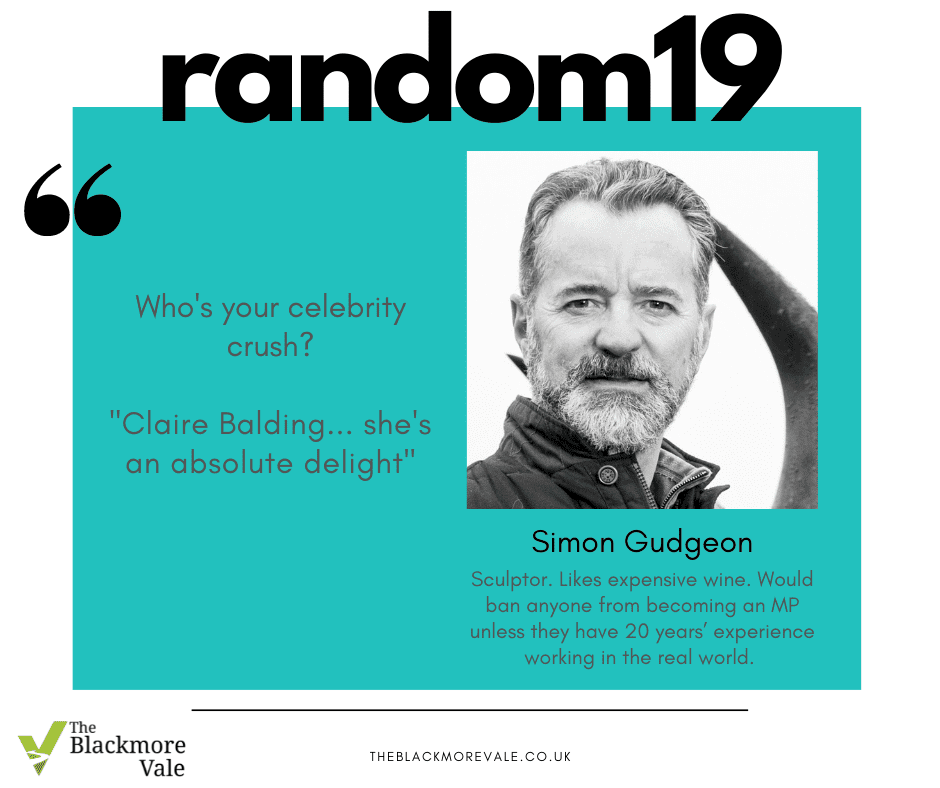
One of our most popular columns – the one where we ask a local celebrity nineteen random questions. This month’s brave guest is Simon Gudgeon; world-renowned sculptor and founder/co-owner of the popular Dorset attraction, Sculpture by the Lakes. His sculptures are owned by rock stars and royalty alike, with many exhibited at the serene settings of Sculpture by the Lakes

Simon Gudgeon interview

1. What’s your relationship with the Blackmore Vale (the area, not us!)? 

We came to live in the Blackmore Vale area by chance. We were searching for a venue to exhibit my sculptures and came across a fishing lake in Pallington. We absolutely love it here, especially all the wildlife – from the birds in the trees, to the animals on the ground, and to the fish in the water.  

2. What was the last song you sang out loud in your car? 

Another Brick in the Wall by Pink Floyd. Especially the chorus.

3. What was the last movie you watched? Would you recommend it?

Mule with Clint Eastwood. 

I’d recommend it, but only for adults! It’s a film about an old World War II veteran who became a drug courier for a cartel in his 80s.

4. It’s Friday night – you have the house to yourself, and no work is allowed. What are you going to do?

I love to cook, so I’d put some logs on one of my handmade firepits/firebells and get barbecuing. I’ve recently started making these firepits to sell now as well. 

5. What would you like to tell 15yr old you?

Live your life, don’t be scared to try new things.

6. Who’s your celebrity crush?

Clare Balding. She came to Sculpture by the Lakes to interview me for an episode of Ramblings on BBC Radio 4 recently and was an absolute delight.

7. Chip Shop Chips or Home-baked Cake?

Home baked cake, especially the caramel brownie I make!

8. If you were sent to an island for a year and could only bring three things, what would you bring?

(the island is already equipped with a magical power source and a laptop)

Barbecue, 

A herd of cattle, 

A crate of Paulliac wine – ideally 1982 Chateau Mouton Rothschild if money is no object. Thanks!

(that’s around £9,000 a case if anyone’s wondering – Ed)

9. What book did you read last year that stayed with you?

Fantastic Fungi by Paul Stamets.

10. What in life is frankly a mystery to you?

The fact that we rely on the natural world for our survival but continue to destroy it.

11. What shop can you not pass without going in?

A good butcher’s shop

12.  Favourite quote? Movie, book or inspirational – we won’t judge.

Use what talents you possess; The woods would be very silent if no birds sang there except those that sang best. – Henry van Dyke

13. What’s the best evening you’ve ever had?

Honestly – a picnic with a bottle of wine on The Island here at Sculpture by the Lakes.

14. A penguin just walked in the door wearing a panama hat. Why is he here?

Checking out the other birds that we see at Sculpture by the Lakes perhaps? It would certainly alert more people to global warming…

15. Your top three most-visited or favourite websites (excluding social media!)?

Simon Gudgeon sculpture

Dorset Wine

Thread.com

16. Favourite crisp flavour?

Cheese and onion

17. The best biscuit for dunking?

I don’t. I’d rather enjoy a nice biscuit and a good cup of tea or coffee without ruining either of them.

18. What’s your secret superpower?

Being able to make things.

19. You have the power to pass one law tomorrow, uncontested. What would you do?

Ban anyone from becoming an MP unless they have 20 years’ experience working in the real world and not the public sector. 

Voice of a Farmer | September 2021

0

The first three weeks of August were particularily challenging in getting this years harvest underway. With a considerable lack of sunshine and crops slow to ripen , the weather conditions didn’t help the machinery or the operators. The last week of August has improved conditions with some sunshine and some warmth , but nothing like the one week of heat we had in July. 

Harvesting at Rawston in the seventies – Image By: James Cossins

The yields have a bit variable but I think overall we are having a slightly above average yields especially our winter wheat  and with prices continuing to remain high this has hepled to offset the cost of drying the majority of crops.

The machinery has so far performed well with only a few minor breakdowns which our  machinery dealers were able to rectify promptly. Our next task will be to assemble all the information gained by the combines on the mapped yields showing the variation in performance within fields and  then we can look at how to improve the overall permance of each field.

On the dairy side of our farm we have started calving once again ,so far with not too many issues but it is early days . We are currently using sexed semen on our cows which means that we can virtually quarantee female calves to be born and then retained as replacements for our milking cows .Once we think we have enough female calves the remainder of the cows can produce beef breed calves for our beef enterprise for our farm butchery. We have yet another TB test coming up in September to fingers crossed that we can achieve a clear test after many months of being under movement restrictions.

By JC Photography

Landowners , Farmers and Growers are facing a challenging time trying understand the various schemes DEFRA have put out . They include the Agricultural Transition Plan ,Farming in Protected Landscapes , The Sustainable Farming Incentive Scheme and the Environmental Land Management Scheme, I can see a lot of time is going to be spent in the office going through all this information ,deciding what is right way forward for our farm.It will be a challenging decision for many of us trying to get the balance right on our farms between producing food  and looking after the environment.

By: James Cossins

Sponsored by: Trethowans

Agriculture Deemed the Most Dangerous Industry

1

It is an unfortunate fact that of all the major industrial industries, agriculture is the most dangerous with fatalities being around 20 times higher than others. The month of July was host to Farm Safety Week, whereby awareness is raised of the dangers of the industry. Unfortunately, in the following fortnight, another four deaths were recorded across Great Britain.

Image by: Andrew Livingston

A wise head once told me that the most lethal item on the farm isn’t the cattle or the machinery, it is the person tasked to control them – the farmer. A farmer must know the in and outs of their tractors, trailers and telehandlers and how to use them safely. Whilst understanding their cattle and how to handle them – beef and dairy cows weigh between 750kg to 1100kg. Poor control whilst running or sorting cattle can lead to death by either crushing or trampling.

Currently, kids aged just 13 can drive tractors on their farms and land before going on the roads at 16. Thirteen is a young age. I was probably still building Lego tractors at that age – let alone driving them. Kids this age may go a little wild at Young Farmer’s events, but when it comes to working on the farm, kids in agriculture are both mature and responsible with farm equipment.

Proportionally, the highest percentage of deaths come in the over 60s. Last year, 30% of deaths were aged over 60, whilst they as an age bracket only make up 11% of the workforce.

Image by: Andrew Livingston

A lot of this comes down to complacency. Whether it’s lambing season, harvest or turnaround for us, farmers frequently will work 12 hour days in succession. As tiredness increases, it only takes one mistake on a job or task that you’ve done a thousand times to be fatal.

The highest percentage of deaths on the farm come from falls, which could be either from the top of ladders, roofs or bales. But what is worrying is that a large proportion come from incidents on All-Terrain Vehicles (ATVs) like quadbikes because farmers refuse to wear helmets.

Figures show that only one in three farmers wear a helmet every time they go out – with excuses ranging from ‘they rush and forget’, to ‘they don’t need one’ to stating that ‘they look silly’.

Image by: Andrew Livingston

The pandemic has been a struggle for farmers. A lot of the demand for their produce disappeared in a night as the hospitality industry closed during the first lockdown. Whilst the lockdown also isolated many farmers to seeing no one – when your closest neighbour is two miles down the road you can’t have a catch-up outside your front door. All socialising in agriculture is predominantly saved for the skittle alley on a Thursday night or the general pub bar across the weekend.

With the machinery and animals used across farms in Great Britain, incidents will happen – it is unfortunately inevitable. But do we need so many deaths to feed the nation? Something needs to change.

By: Andrew Livingston

Sponsored by: Trethowans

Where to see dolphins in Dorset

0

A good time for spotting dolphins in Dorset

Few sights are more magical than a pod of dolphins off the beautiful Jurassic Coast and one of the best times to see dolphins in Dorset is the early autumn. Twenty-eight species of whales, dolphins and porpoises (collectively known as cetaceans) are recorded along the UK coastline, of which fourteen are recorded in the south west. The most common species of dolphins in Dorset is the playful and highly intelligent bottlenose dolphin. Studies have shown that these beautiful creatures can solve problems, show empathy and display emotional intelligence; traits commonly seen in humans and primates. Dolphins can be spotted swimming, hunting and playing from clifftops, beaches, harbours and boats along the coast. Excited seabirds are a clear giveaway of surface activity. Keep your distance, use binoculars, be patient and look out for an irregular wave, a splash or even a dark fin breaking the surface.

Where to see dolphins in Dorset
Dolphin jumping in the sea ©John MacPherson 2020VISION 

Where to see dolphins in Dorset

On the Isle of Purbeck, Durlston Head and Old Harry Rocks at Handfast Point are both renowned lookouts to see pods of dolphins in Dorset, swimming off the iconic chalk cliffs. Moving further west, one of the county’s most celebrated dolphin watching spots is the Kimmeridge Cliffs, providing a breath-taking vantage point with spectacular views across the bay. Dorset Wildlife Trust organises regular ‘Dolphin Watch’ events when you can join the Marine Wardens to learn more about the different species of dolphins in Dorset and get tips on how to spot them. Visit dorsetwildlifetrust.org.uk/events. Last but not least on our list is Portland Bill, Dorset’s most southerly point and a wonderful place to see dolphins swimming in the shallow reefs and rocky outcrops.

where to see dolphins in Dorset
Dolphins playing in the sea ©Chris Gomersall 2020VISION

Support Dorset’s marine wildlife

Despite having few natural predators along the Dorset coast, dolphins in Dorset are nevertheless at huge risk from an increase in pressure from human activity. Dolphins get injured by speed boats, caught in fishing nets, affected by plastic pollution or other interactions with people. Find out more about the ways that Dorset Wildlife Trust protects and supports dolphins by visiting our website dorsetwildlifetrust.org.uk.

Hazel Ormrod, Dorset Wildlife Trust 

A Vets View of North Dorset’s Biggest Show

0

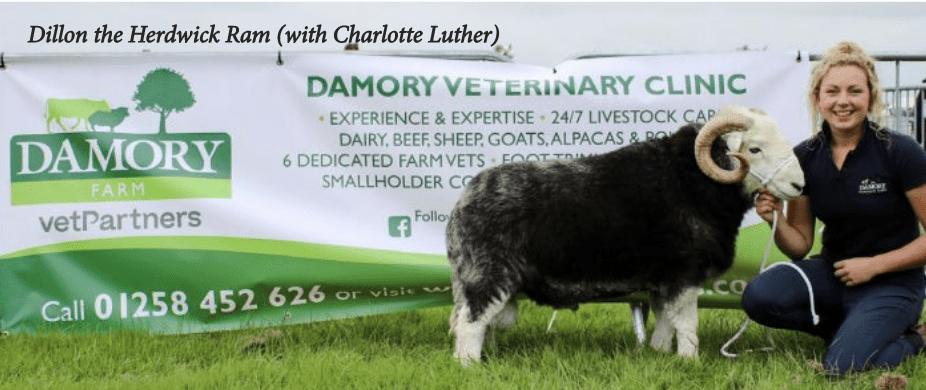
Gillingham and Shaftesbury Show with Damory Veterinary Clinic

Well what a change it was to be able to get out and about again. It was so lovely to be able to catch up with clients new and old at the Gillingham and Shaftesbury show. There was such a buzz of excitement in the air and looking out from the tent seeing families and friends reunited was truly heartwarming after such a tough year with all the lockdowns and isolations.

The show for us is an opportunity to take five minutes out and have a good old chin wag with our clients and prospective clients. Something we often don’t get chance to do in today’s busy society.

Our new face hole photo board featuring some of our well-known vets went down an absolute storm. It was great seeing everyone get involved.

We had a fabulous hog roast by Rich Tory of Golden Pig hog roasts and Ice cream made by Pamphill dairy using one of our very own farmers milk, Allen Valley who you will no doubt have seen their vending machines around including in our carpark.

We like to support local businesses at events like these, as it is often so easy in this day and age to order everything online. We had beer from Barefaced brewing in Blandford, Cider from Purbeck cider and all our awesome stickers and banners were speedily printed by the amazing team at Oldfields embroidery. Without these local businesses we wouldn’t be able to pull together such a great stand.

It takes an immense amount of work and time to set up a stand and we are so lucky to have a great team here at Damory vets that pull it together each year. The two days were hard work but so rewarding, especially when we got to sneak an ice cream or two!

The final pack up was interesting as it started to chuck it down! We were totally soaked through to our knickers and battled with heavy rain to get the marquee down, even with the help of a local knight in shining armor in the form of David from Redlynch tractors, but we still had smiles on our faces at the end and that’s what its all about.

We look forward to seeing you all again next year.

By: Lucy Closier

The Ash Tree Crisis: A Disaster in the making

1

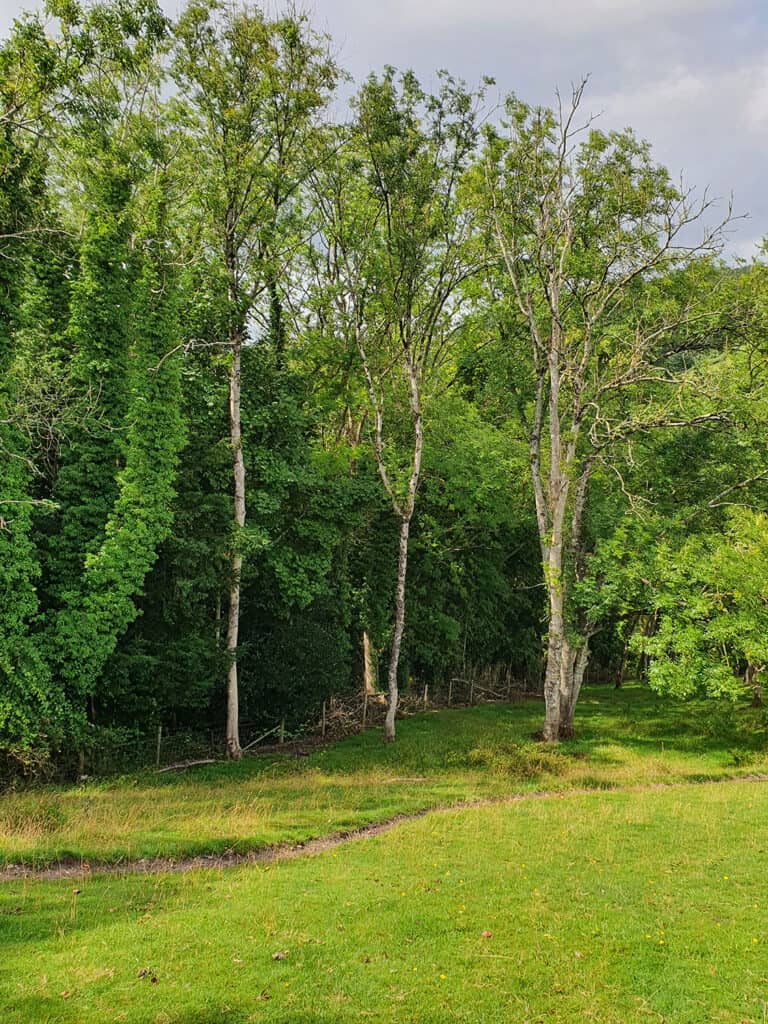
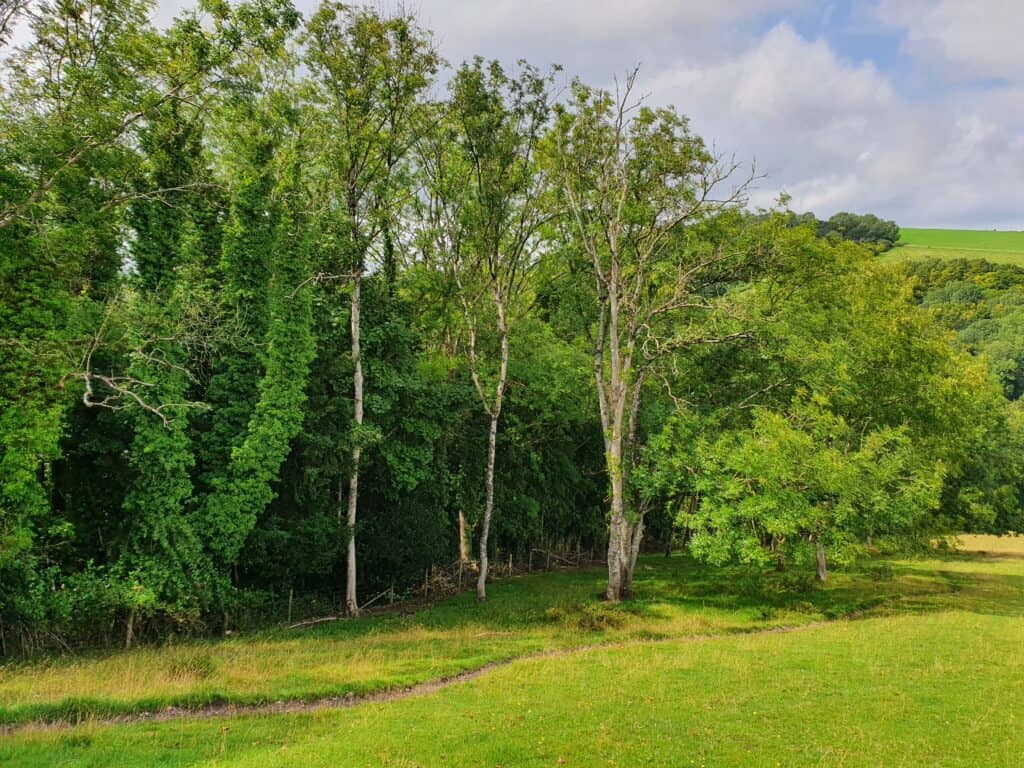
England fell into mourning in the 1970s as Dutch elm disease spread across the country, and yet we are reacting with insouciance to a far greater natural disaster, ash dieback. About 60m elm trees died, with a devastating impact on the landscape of East Anglia but we are witnessing the slow death of many more ash trees, albeit spread more widely. There were around 170m ash trees in the UK a few years ago, and the expectation is that up to 80% will die. The Dorset Area of Outstanding Natural Beauty estimates that ash accounts for 12% of the county’s woodland, close behind oak. The disease was first discovered in South East England in 2012, but already half of Dorset’s ash trees are infected, dying or have died. All over the county the raucous sound of chainsaws is being heard as loggers and tree surgeons remove the trees.

Image: Rupert Hardy

Ash dieback is caused by a fungus called Chalara fraxinea, resulting in leaf loss and crown dieback, but it is a slow death for the tree. It is carried on the wind and by transportation of infected trees. All ash trees are vulnerable, but particularly younger ones, while older and more isolated ones can survive. Look for leaves developing dark patches in summer, which then wilt prematurely, and long diamond-shaped lesions girdling small branches and twigs, which starve the leaves above of water. It affects new growth in particular.

The Woodland Trust estimate it will cost the UK £15bn to clear up dying trees and to offset the impact on the environment, such as the reduced level of water purification and carbon sequestration. This is higher than the reported cost of the foot-and-mouth disease outbreak in 2001. There will be a major impact on wildlife. Ash trees provide an important habitat for more than 1,000 species including birds, beetles and mammals, such as the Hazel Dormouse. The Dorset landscape that Thomas Hardy extolled is changing for the worse, and the Blackmore Vale is no exception, with ash being the one of the major hedgerow trees. One of our other concerns is that local authority planning teams are not considering the adverse impact on the screening of new development projects.

Image: Rupert Hardy

How can you help? If you have an ash tree in your garden, gather up and burn all the dead leaves, however healthy the tree appears. Out walking, please clean your shoes before and after visiting a wood.

Everyone is being encouraged to plant new trees to offset climate change, but few have taken onboard the extra need to replace the ash trees. Dorset CPRE are funding Trees for Dorset to plant new trees in Purbeck, and North Dorset CPRE are open to requests for funding to support planting in North Dorset on public land (please email [email protected]).

Get planting!

Rupert Hardy, Chairman, North Dorset CPRE