Come and join our staff body at our vibrant and happy prep school for girls (aged 7-13) set in the beautiful Dorset countryside:
We have a vacancy for a PA to the Head / School Secretary. This is a vital role, which puts the post-holder at the heart of our school. You must be an effective communicator, friendly and approachable and exceptionally well organised.
Note:Please apply using our own application form and send direct to [email protected] and not through third parties.
CHILD OKEFORD BLANDFORD FORUM DORSET DT11 8HN
Hanford Prep is committed to safeguarding and promoting the welfare of children and expects all staff to share this commitment. This post is subject to enhanced DBS checks. Hanford Prep is part of Sherborne Schools Group. Charity Number 1081228 & Company Number 04002575
Fearing for the future and no inspiration from politicians, how can farmers stay positive? Andrew Livingston attempts optimism. It doesn’t entirely go to plan
I’ve promised that I’m not going to be negative this month. I’ve promised that I’m going to write something happy, uplifting and hopefully a little bit humorous. So I’m absolutely not going to mention the results of a recent survey by the Country Land and Business Association (CLA) for The Times newspaper. I definitely won’t talk about the fact that 80 per cent of those surveyed said that they were worried that their businesses wouldn’t survive the next ten years. Or that 90 per cent said that they have halted investment in their businesses since the introduction of the dreaded ‘family farm tax’. Nor will I mention that 60 per cent would now consider selling up and leaving the industry in the next five years. The one positive that did come from the survey was that the CLA respondents made it clear they had no trust or faith left in the Labour government – actually, looking at the results, you would think that the CLA had forgotten to put Labour as an option: not a single one of the 500 respondents said they would vote Labour. Surprisingly, in my opinion, only 38 per cent said that if there was a General Election they would vote Conservative. An almost equal 36 per cent would vote Reform, four per cent Lib Dems, one per cent another party, and the remaining 21 per cent were currently undecided. What scares me the most is that I don’t know where I would vote on that poll – probably suggesting that I’m an undecided, too.
No, no, no and no … I’ve always been rather opinionated*, but as I look at the options available I just think … Meh. The whole thing is, frankly, uninspiring. There’s not a single party right now that makes me think “yes! Here is the answer to all our problems.” Part of the problem is the rise of what I’d call ‘further-leaning’ right-wing politics (I think it’s a stretch to label Reform as ‘far right’). Nigel Farage is an interesting character – I wouldn’t mind having a pint with him, and he doesn’t give me the fear that past far-right leaders did. This shift to the right is definitely gaining traction across Europe and the US, but here in the UK I think Reform and Farage are ultimately overhyped by the media. Yes, people bang on hotel doors and throw red paint, but I suspect it’ll all amount to not-a-lot (feel free to throw this back at me if I’m wrong). I do hope some smarter-than-me journalism student is writing a dissertation on the correlation between parliamentary seats and mainstream media airtime. My straw poll suggests Reform is punching well above its weight. It’s no secret I have always been a true blue. I’m not afraid to say that I even liked Boris Johnson. But now, the Tories look rudderless, and potentially more likely to lose even the position of the opposition than to win the next election. Green? No. Labour? No. Tory? No. Reform? No. Lib Dem … Could I? Ed Davey doesn’t scream future Prime Minister to me, but what else is there? My vote is too important not to use it. I don’t have the answers. And honestly, I feel slightly bored by it all. It shouldn’t be that way: I promised to be positive, but I think I’m lacking the vision of any future with a possibility of positive days. I’m crying out to be inspired by someone – anyone! Politics should inspire us all. I’m crying out for someone to give me some hope – we could all use a little bit of that. *regular readers may have noticed that
Wimborne Minster’s Business Improvement District (BID) will face a crucial renewal ballot in October, as local businesses are asked to decide whether to support the continuation of the scheme for a further five-year term from 2026 to 2031. Established in 2011, Wimborne BID is a not-for-profit organisation funded by a levy paid by eligible town centre businesses. It has delivered a wide range of initiatives aimed at strengthening the local economy, including marketing campaigns, business support, environmental enhancements and community-focused events.
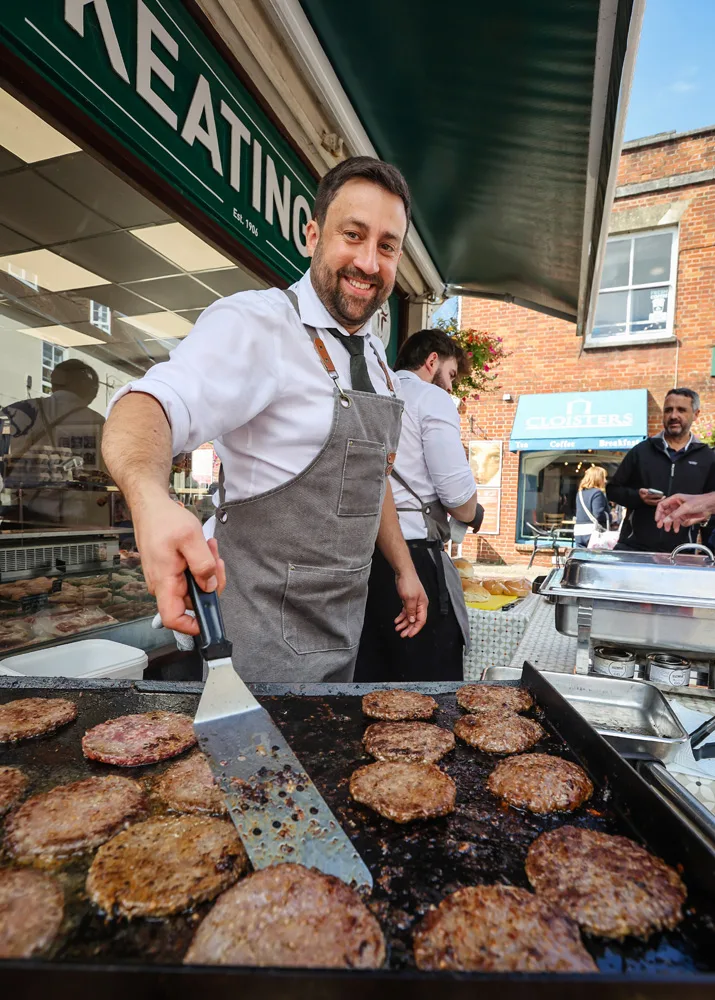
Pop up barbecue by Wimborne butcher Paul Keating
BID Chair Fiona Pawsey said the ballot offers an opportunity for reflection as well as decision-making: ‘This is more than just a vote – it’s a moment to consider what we’ve achieved as a community. From infrastructure improvements to seasonal events, we’ve focused on making Wimborne a place people want to visit, shop and spend time.’ Key projects to date include the Discover Wimborne campaign, a month-long festival each April designed to promote footfall and business engagement, and the newly-launched Wimborne Food Festival. The town’s Christmas celebrations, funded and co-ordinated by the BID, are now considered among the best in the county for their impact on seasonal trade. The BID also funds training, marketing and business support services for town centre businesses, with a particular focus on helping independent retailers compete more effectively. It has invested in improved signage, anti-crime initiatives and environmental enhancements. Deputy Chair Sam Devlin added: ‘There is no replacement body that will deliver what the BID currently provides. All BID income is spent in Wimborne, supporting the long-term success of the town and its businesses. We encourage every levy-paying business to vote and ensure their voice is heard.’ Only levy payers are eligible to vote in the upcoming ballot. Further information is available at wimborne.info
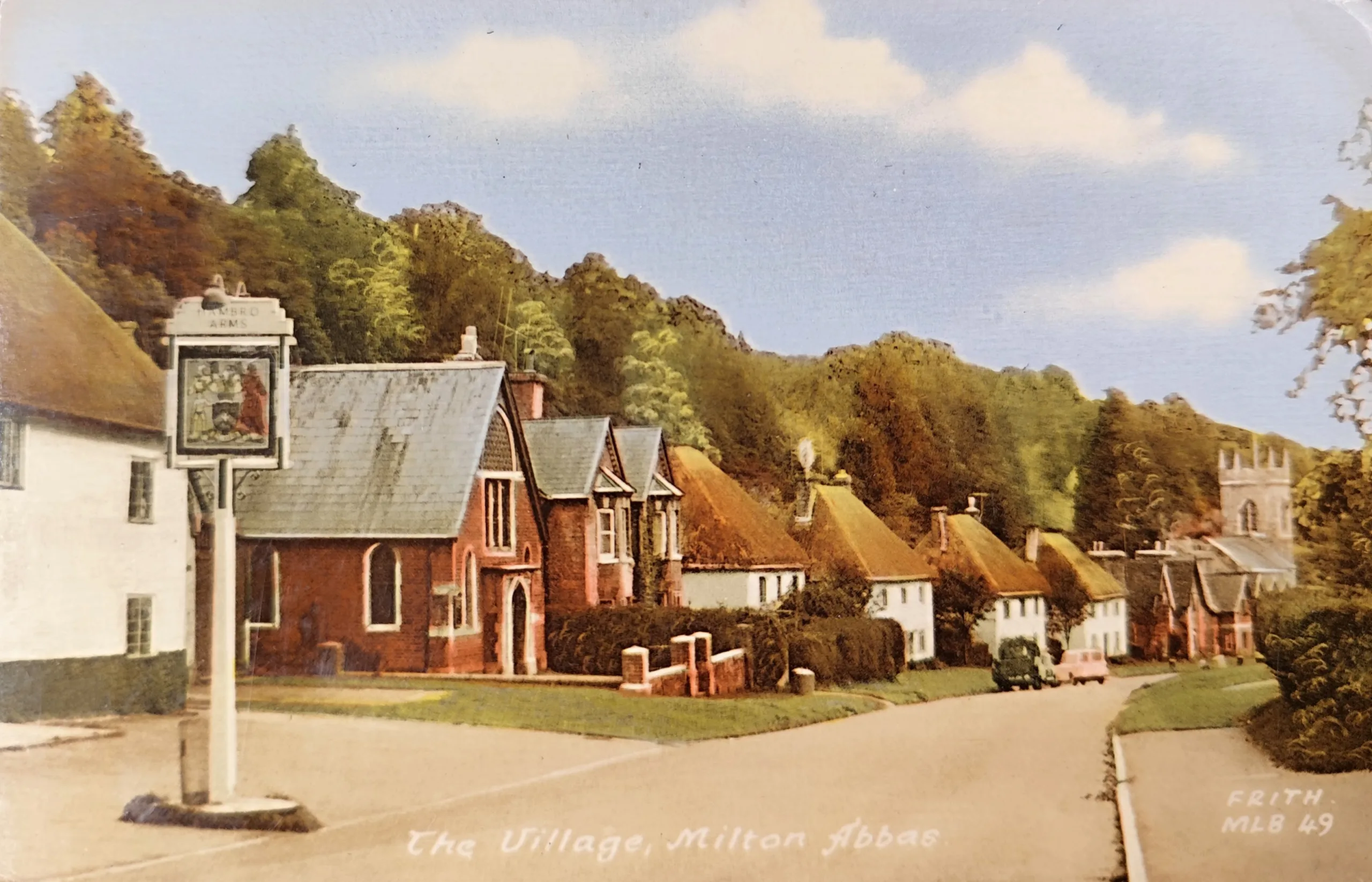
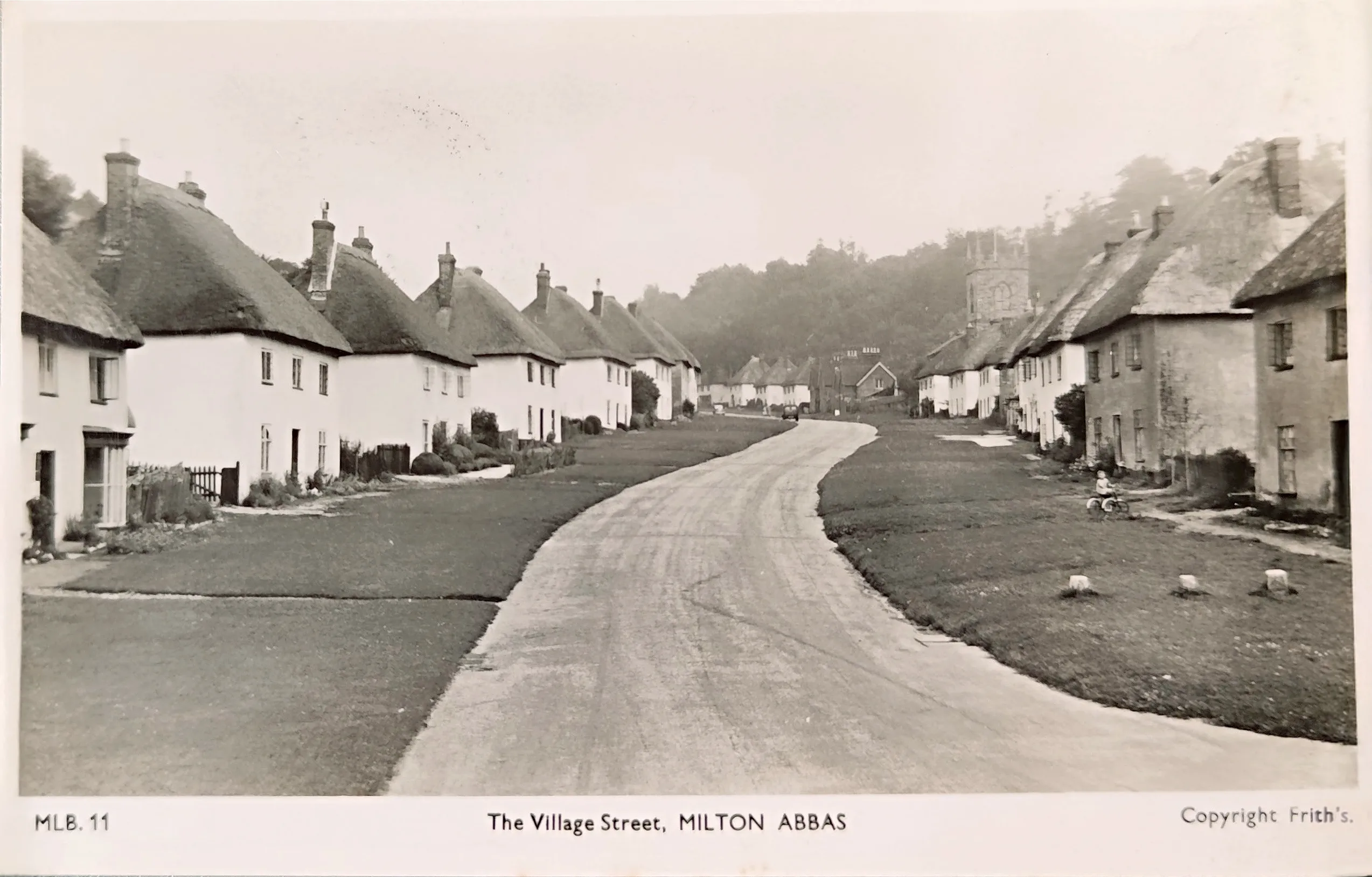
This month Barry Cuff has chosen two holiday postcards from the middle of the last century
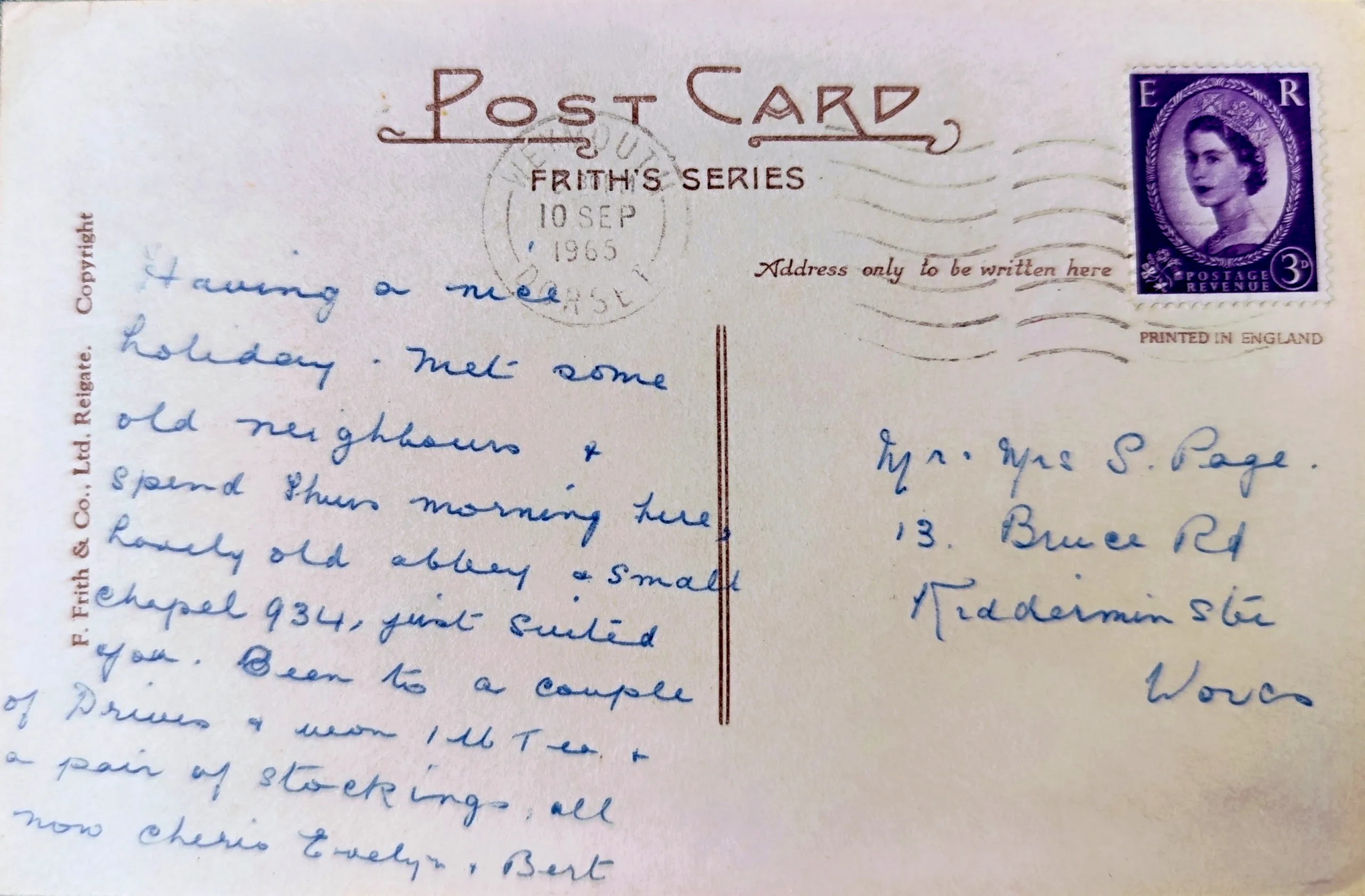
One of the Frith series of Milton Abbas, this card was sent from a holiday-maker to Kidderminster in September 1965. The message is more about raffle prizes than the village (“won a pound of tea and a pair of stockings”) but the image captures the Hambro Arms, the neat cottages and the parish church beyond – the postcard-perfect view of Milton Abbas that visitors were expected to take home:
Having a nice holiday. Met some old neighbours & spent Thurs morning here, lovely old abbey & small chapel 934, just suited you. Been to a couple of Drives & won 1lb tea & a pair of stockings. All now, cheerio, Evelyn & Bert
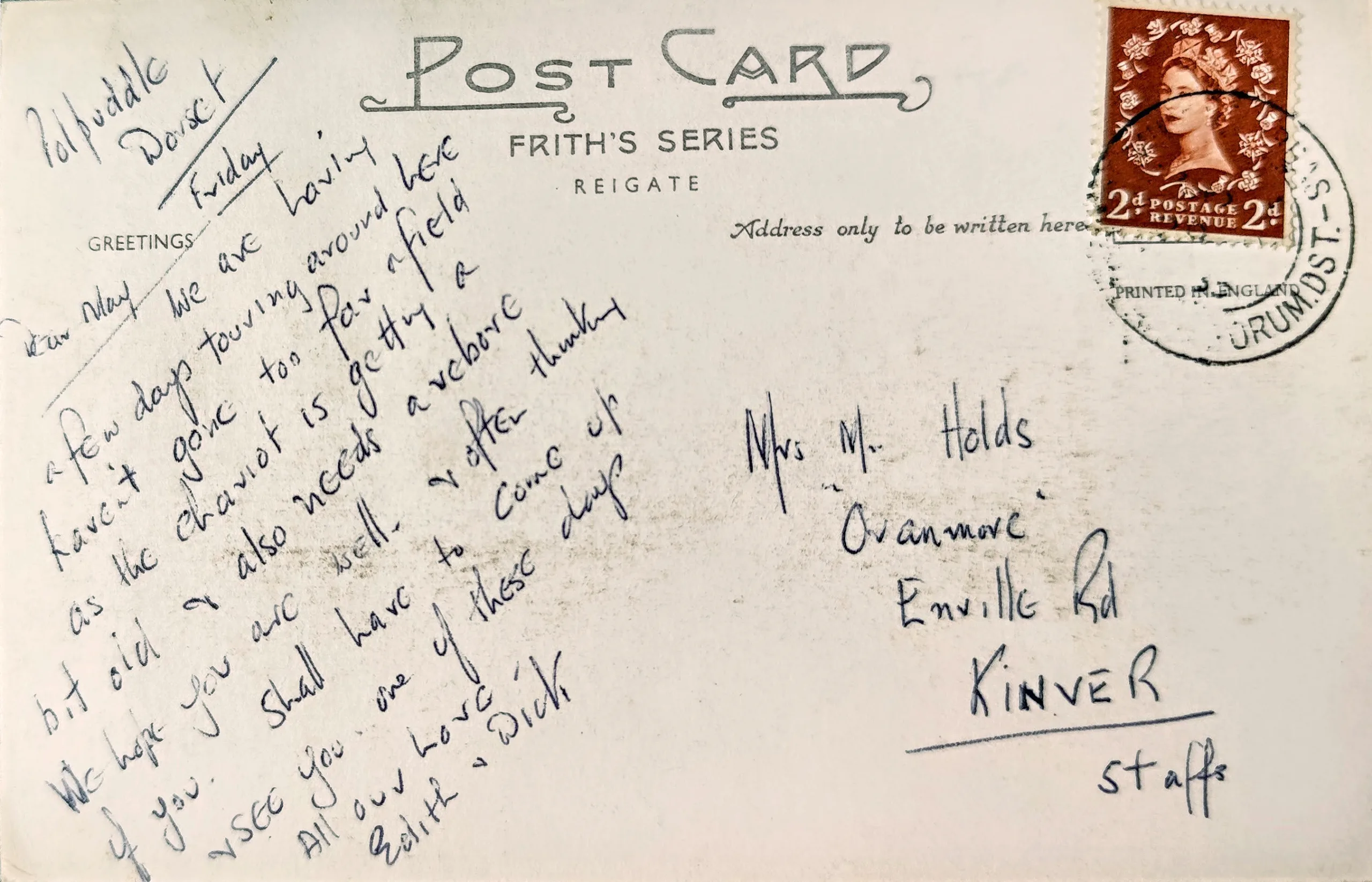
This simple 1950s postcard of The Street at Milton Abbas carries a brief note about motoring troubles and fond thoughts for “dear May” — nothing dramatic, just a snapshot of everyday life on the road in postwar Dorset. But Milton Abbas has stories to tell beyond its picture-perfect thatched cottages. Our much-missed Roger Guttridge wrote about one of its strangest mysteries – almost 250 years after the funeral of the young Milton Abbey heir, questions remain about whose “body” was actually buried in the coffin in the crypt . And for a lighter angle, you can also enjoy Roger’s Then and Now comparison of this very street. Tolpuddle Dorset – Friday. Dear May, we are having a few days touring around here. Haven’t gone too far afield as the chariot is getting a bit old & also needs a rebore. We hope you are well. V often thinking of you. Shall have to come up & see you one of these days. All our love, Edith & Dick
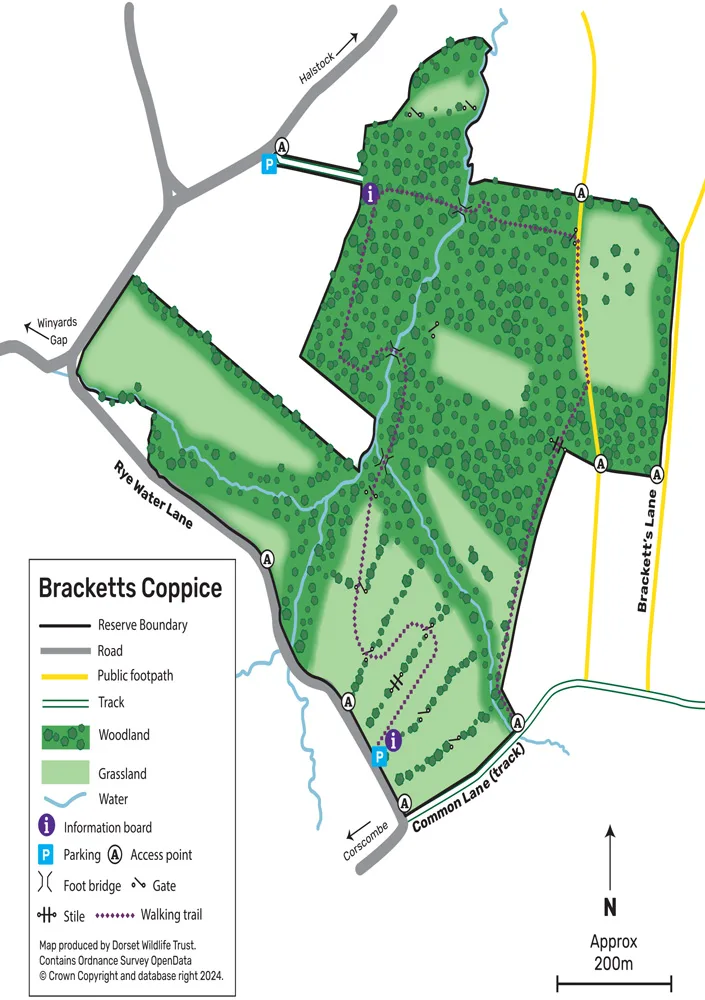
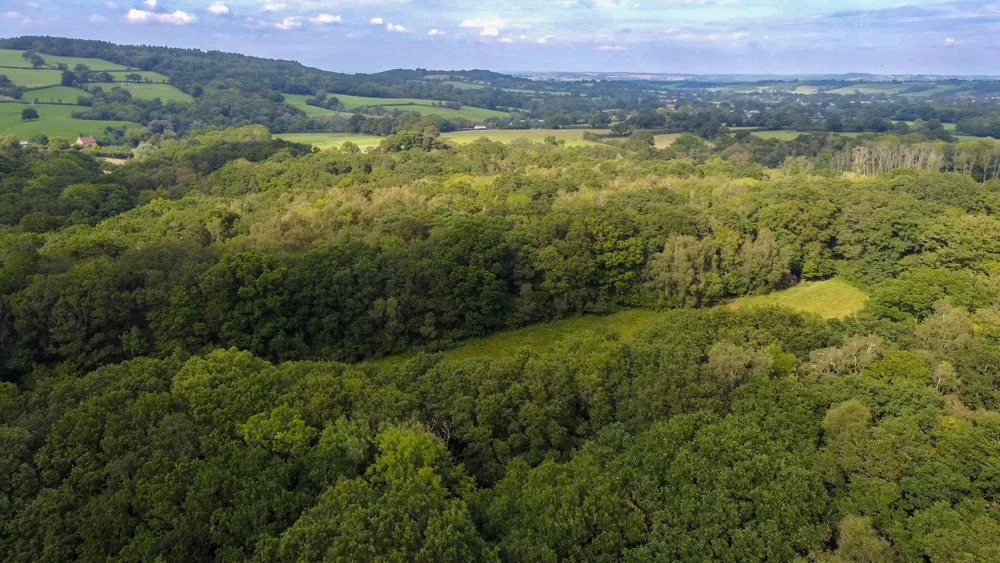
If you’re looking for ancient woodlands, peaceful wood pastures, hazel coppice and vibrant hay meadows, come and take a walk around the beautiful Bracketts Coppice. Located north of Corscombe, deep in the quiet heart of West Dorset, this nature reserve is home to some of Dorset’s best-loved and rarest species: dormice, kingfishers, otters and woodpeckers.
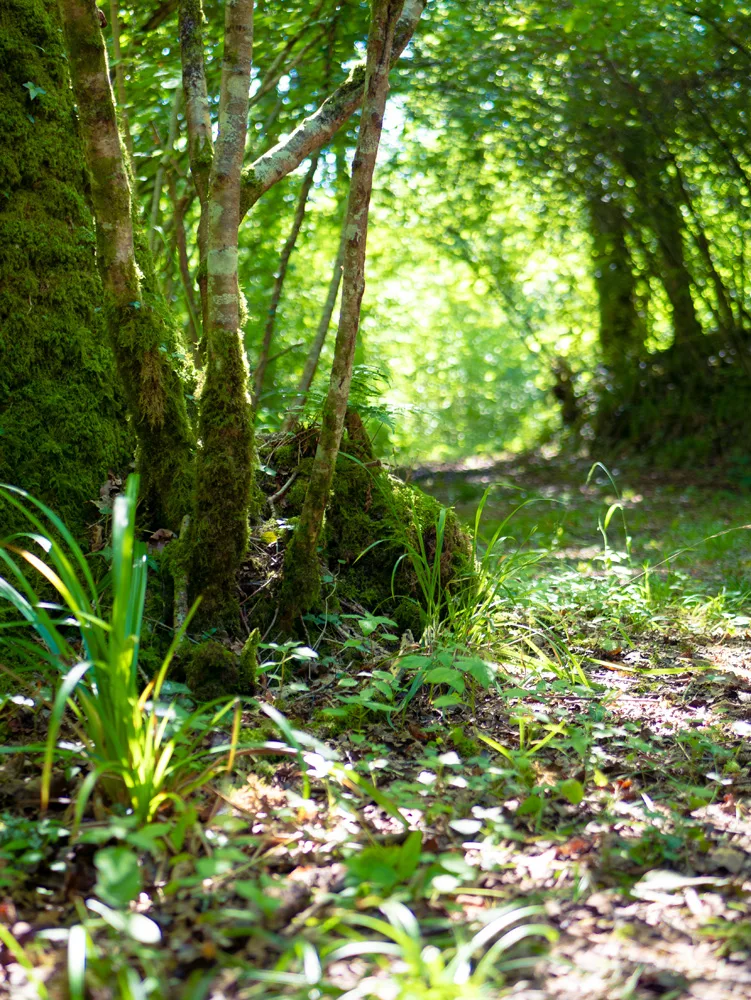
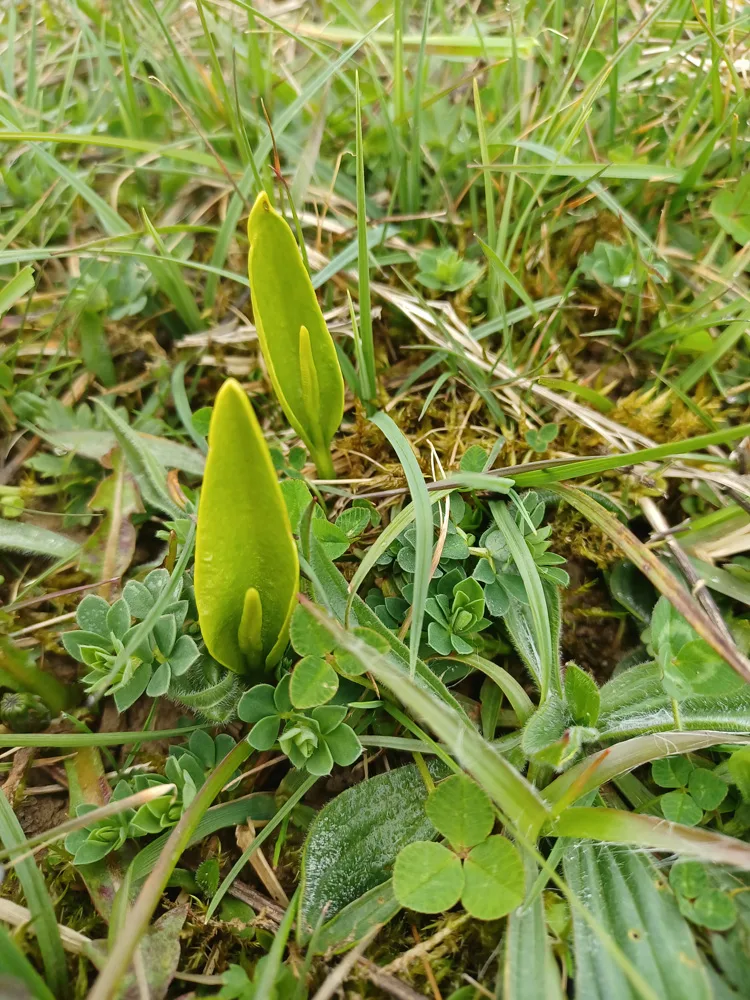
The walk Beginning at the hay fields entrance off Rye Water Lane, head diagonally left through the field to reach the gate. While the meadow wildflowers have retreated now, the winter grassland still supports life: look for small flocks of long-tailed tits and blue tits flitting low among the hedges, and listen for the calls of blackbirds, and redwings which arrive from Scandinavia for the winter. The fields may appear empty, but tracks and scrapes in the mud may reveal the presence of field mice and other small mammals. Once through the gate, head left, cutting across the field to the next gate. In winter, this area is quieter, but the ancient grassland remains a haven for hardy plants like adder’s-tongue fern, its brown, withered fronds marking the meadow’s long history. Through the gate, follow the path across the next meadow until you reach the woodland, which is full of mossy oaks and hazels, and home to dormice and Bechstein’s bats. Follow the path down through the woods and over a small sleeper bridge to reach the footbridge across the river. From this bridge, you can sot the distinctive Otter Rock, standing out from the rest with no moss on top. It’s a fine spot for finding otter spraint. Over the bridge, turn left and follow the path up, taking the higher track. This route takes you past areas of woodland managed by coppicing – a traditional technique producing useful hazel timber while benefiting a variety of wildlife, including dormice.
Spot the Wild Service tree Continue along the main ride to the north entrance of the reserve, where you’ll see an information board. Turn right here and follow the ride downhill, merging onto the narrower path to keep straight, towards the river and another footbridge. Cross the bridge – looking out for kingfishers which may still be active, even in the colder months – and turn left, following the path uphill to emerge from the woodland onto another wide ride. Turn right, following the ride and through the gate, before turning right into a grassland area. Keep to the path running parallel to the woodland edge. Scattered with standing deadwood, this area provides a great habitat for invertebrates and fungi as well as good look-out spots for birds. As autumn arrives look among the leaf litter for fungal fruiting bodies such as yellow brain fungi, a parasitic jelly fungus that feeds on other fungi living on dead wood. It can range in colour from bright pale yellow to a rusty orange when dry.
Go through the gap in the hedge and continue straight ahead through the area of wood pasture to a wire gate with a squeeze-type stile. Stick to the path, keeping the fence to your left, through another area rich in deadwood. Just before you reach the old hedge bank before the grassland, there is a Wild Service tree in the hedgerow – it’s a Dorset rarity, and an indicator of ancient woodland. For most of the year it is unremarkable, but its leaves, a little like maple, do give themselves away in autumn, when they turn crimson. Emerging into the grassland, with sprawling open-grown oaks, continue straight down the small slope and up again, joining the track that leads to the final field gate. Turn right here, along the medieval Common Lane, and turn right once you rejoin Rye Water Lane to return to the start of the walk.
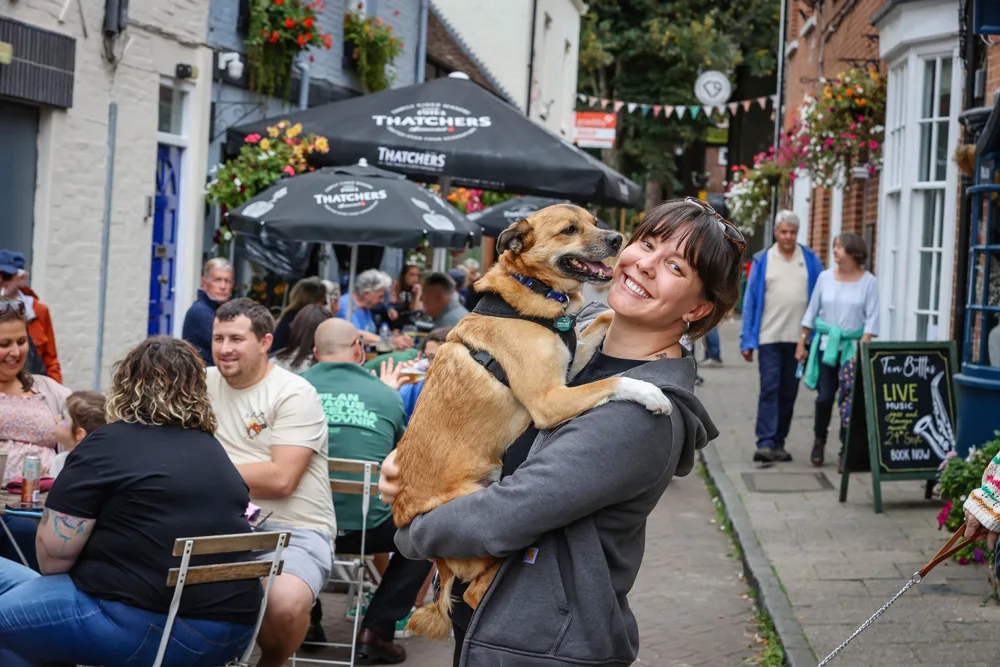
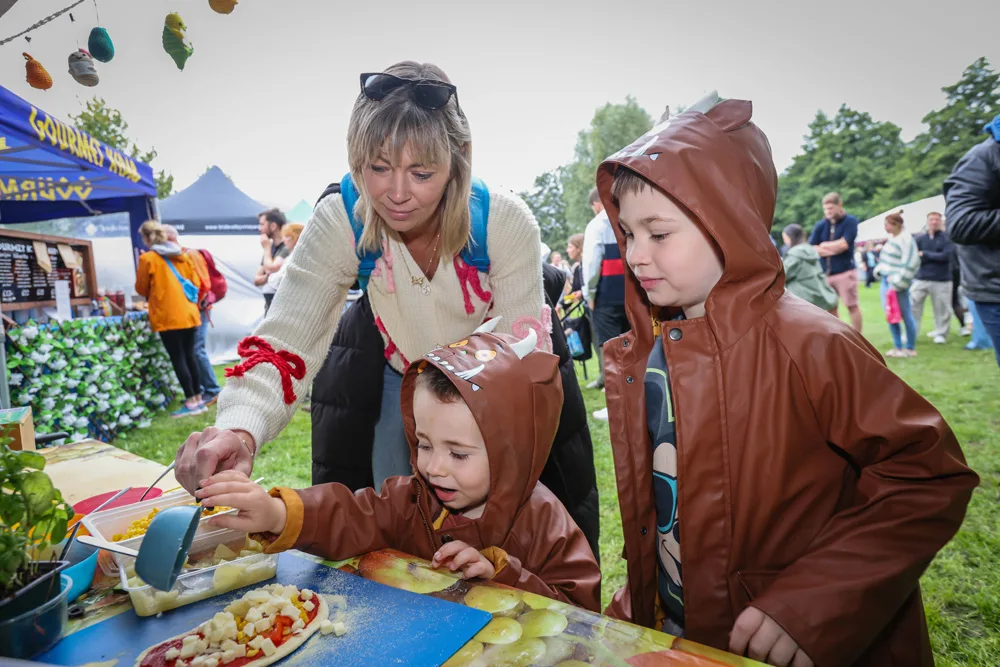
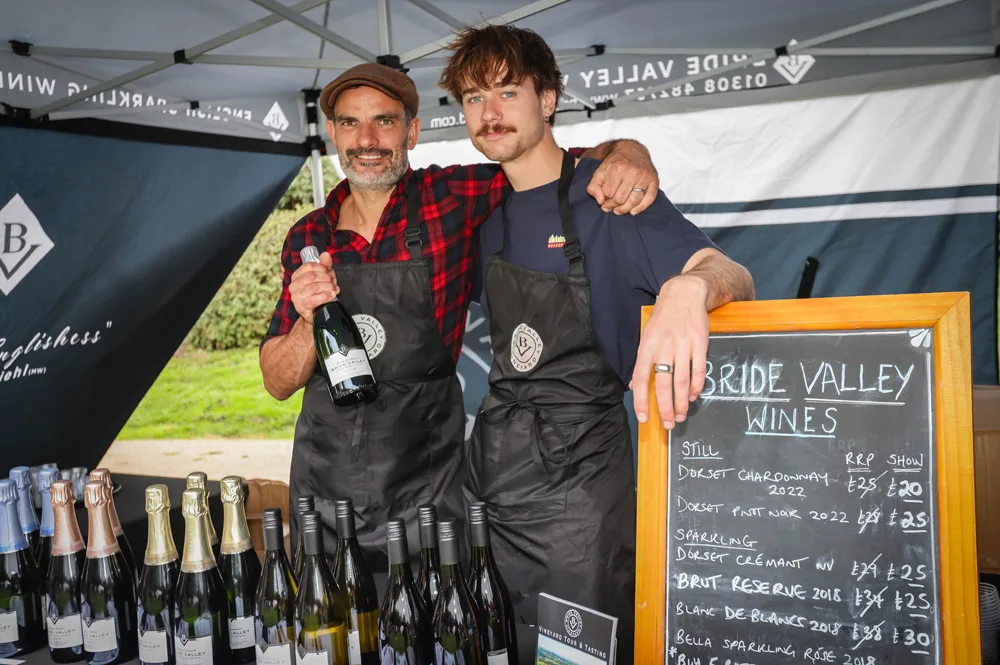
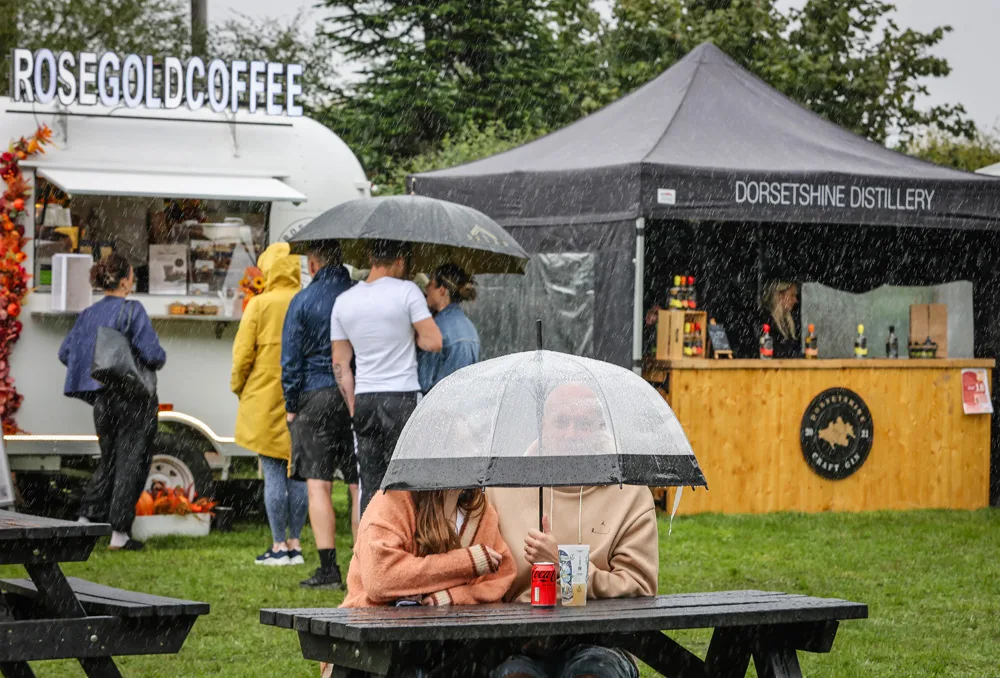
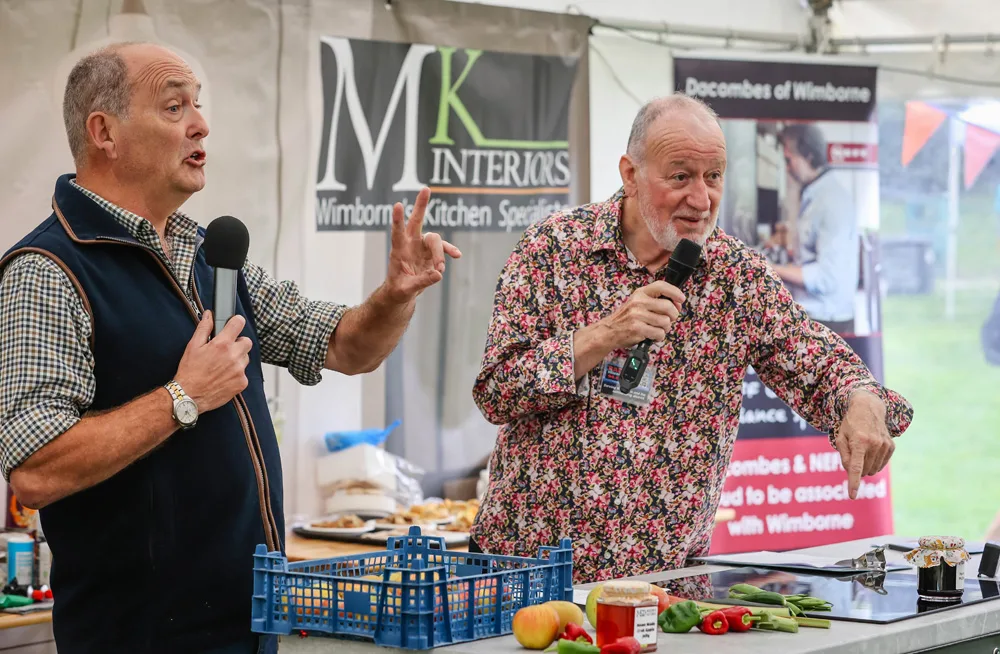
Wimborne’s growing reputation as a foodie destination took centre stage last weekend as the town hosted its second annual Food Festival – a lively day of tasting, cooking, and celebration, even in the face of intermittent rain.
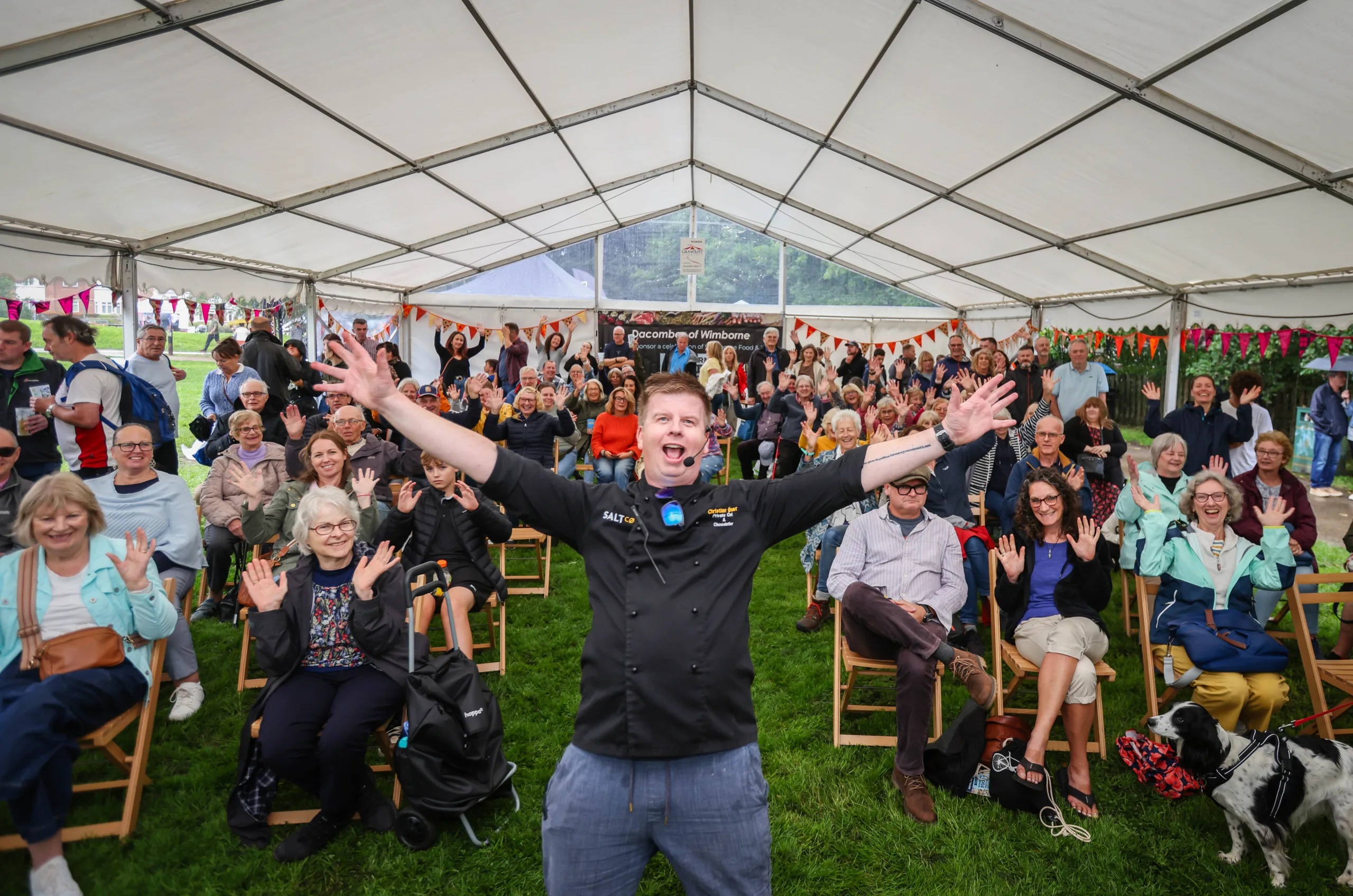
The Dacombes of Wimborne demonstration tent where crowds were treated to a chocolate cooking masterclass by Christian Ørner – image Wimborne BID
Organised by Wimborne BID, with support from Dacombes of Wimborne and a number of local businesses, the festival brought together independent traders, producers, chefs and shopkeepers in a town-wide showcase of flavour.
Visitors enjoyed live cooking demonstrations, product tastings and food-focused talks throughout the day. Former MasterChef contestant Dr George Williams drew crowds with his TV-worthy dishes made from local ingredients, while chocolate specialist Christian Ørner – often dubbed Dorset’s own “Willy Wonka” – shared the science behind chocolate’s health benefits.
Indian cuisine Angithi sold out – image wimborne BID
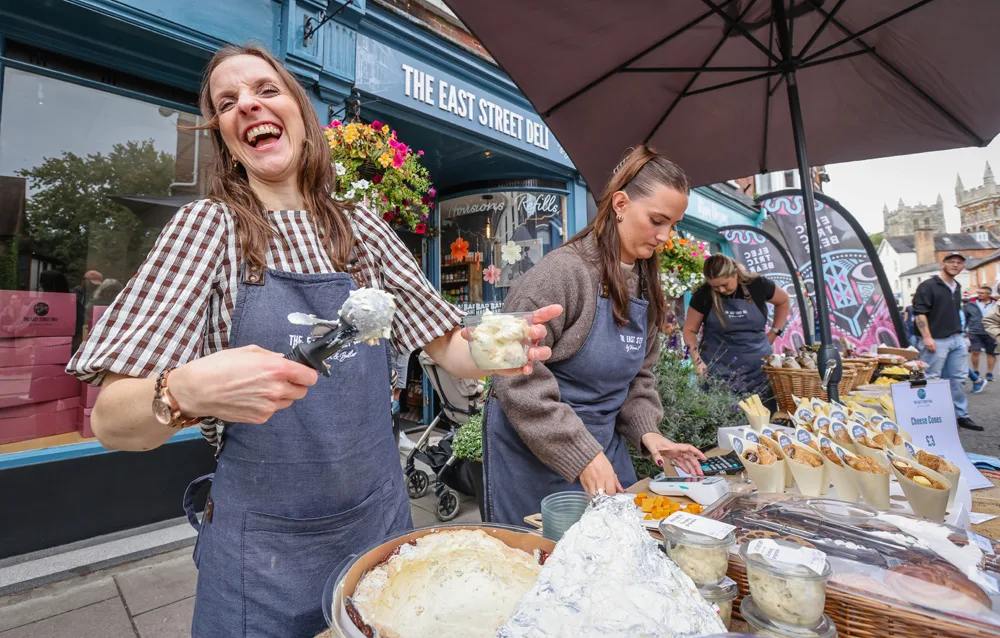
Simon Warren, co-owner of East Street Deli, said: ‘We served more customers than ever before. Well done to Wimborne BID and the Food Festival team for such a great event. However, the real value of days like this are seen in the coming weeks, months and years. We saw so many new faces which we’ll hopefully see again in the lead up to the busy Christmas period.’
Beyond the food stalls, businesses across town took part. Tickles & Co hosted a themed giveaway, and Gullivers Bookshop dressed its windows with cookbooks. ‘The more businesses that get involved, the bigger and better this event becomes,’ Simon added. ‘We’re already excited for 2026!’
The community spirit was perhaps best captured in the “Bake for Victory” competition. Fifteen Victoria sponges were entered, with James Tulk of Riverside Café crowned the adult winner. Councillor Ryan praised the winning entry: ‘Three superb layers, strawberry jam (which always wins over raspberry), and fresh strawberries on top — the perfect icing on the cake!’
Fiona Pawsey, Chair of Wimborne BID, said: ‘The Food Festival is a great way of celebrating Wimborne’s vibrant food scene and attracting more visitors to the town. We’re so grateful to all the businesses who got behind this event and supported it with ingenuity and time.’
Year round, sea swimming at Lulworth usually feels like a hug from the cliffs – but this year, Jane Adams says the water’s different
In Dorset there has been an increase in sightings of mauve stinger jellyfish (Pelagia noctiluca) which are traditionally uncommon close to UK shores
Every week, year-round, a couple of friends and I slip into the sea at Lulworth Cove. As the cliffs rise around us, it has always felt like we’re being given a protective hug: outside the cove, the swell pushes and heaves, but inside the protection of the cliffs, the water is calm. This year, though, we’ve noticed some changes. Since March, the south coast has been experiencing a marine heatwave. The Centre for Environment, Fisheries and Aquaculture Science (CEFAS), which monitors sea temperatures and coastal conditions, reports sea temperatures are up to 3°C above the long-term average.
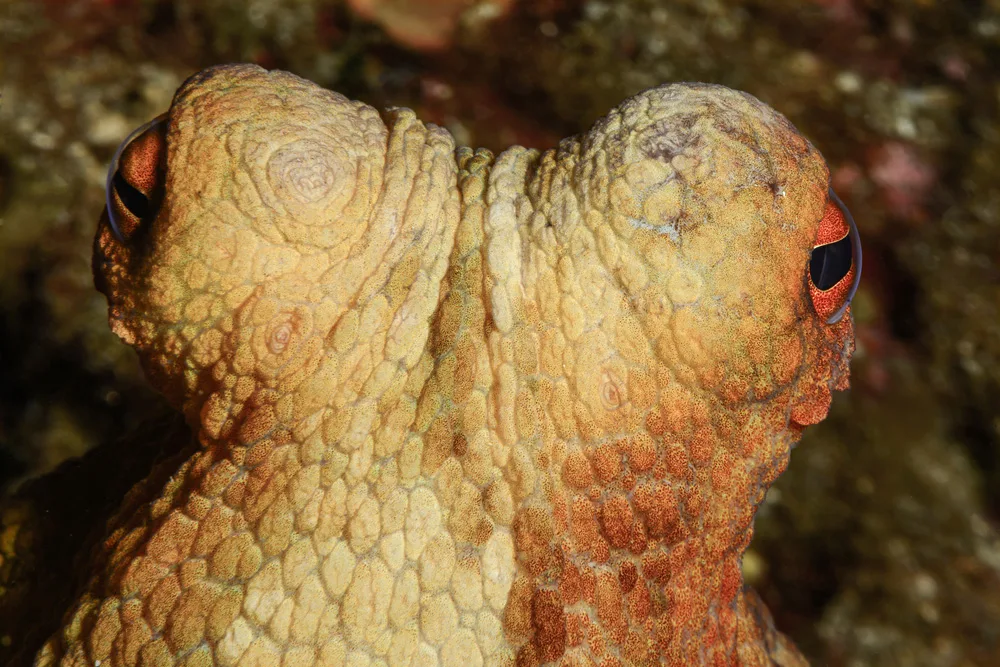
With these warmer waters has come an increase in jellyfish sightings, especially mauve stinger jellyfish (traditionally uncommon close to UK shores, usually found in warmer European waters such as the Mediterranean), and also a surge in octopus numbers: notably the common octopus, which is being caught in huge numbers off South Devon and Cornwall. Scientists believe the warmer sea temperatures are driving these sea creatures further north than usual. The seaweed beds look different, too. At Lulworth, we’re used to swimming through thick, colourful weed to reach deeper water. This year, there is very little. And although our observations are anecdotal, I can’t help thinking it’s also something to do with the raised sea temperature. While a surge in jellyfish and octopus may sound exciting, it might actually indicate stress in this unseen yet beautiful ecosystem. If sea temperatures continue to rise, the balance of species may shift even further, with long-term consequences – some winners, some losers – for both marine life and the people who swim, fish or simply enjoy the water. This year’s marine heatwave may prove exceptional, but as climate change gathers pace, events like this are only likely to become more frequent. Where the cove once felt protective to swimmers, there’s now an unsettled feeling setting in as well. We’re witnessing a change in our coastal waters: but what this change beneath the waves will mean in the future is still largely unknown.
Octopus (Octopus vulgaris Cuvier, 1797) or octopus is a cephalopod of the Octopodidae family at sea. Gallipoli, Canakkale Turkey.
The video above is a trailer for Ocean with David Attenborough, which is currently available on Disney+. It’s very hard-hitting, and I do urge everyone to watch it. DWT’s Wild Sea Centre at Kimmeridge is a great place to start if you’re interested in learning more about our Dorset marine wildlife and finding local events.
Take a close look at vintage postcards of Twofords Bridge and you’ll see a single, elegant 18th-century stone arch standing peacefully over the River Lydden. Today, the same view includes a surprisingly robust steel neighbour – a Second World War structure never meant to last. Thousands of vehicles cross the pair every day, and while the twin bridges are familiar to locals, the story behind their odd coupling remains little known beyond the immediate area.
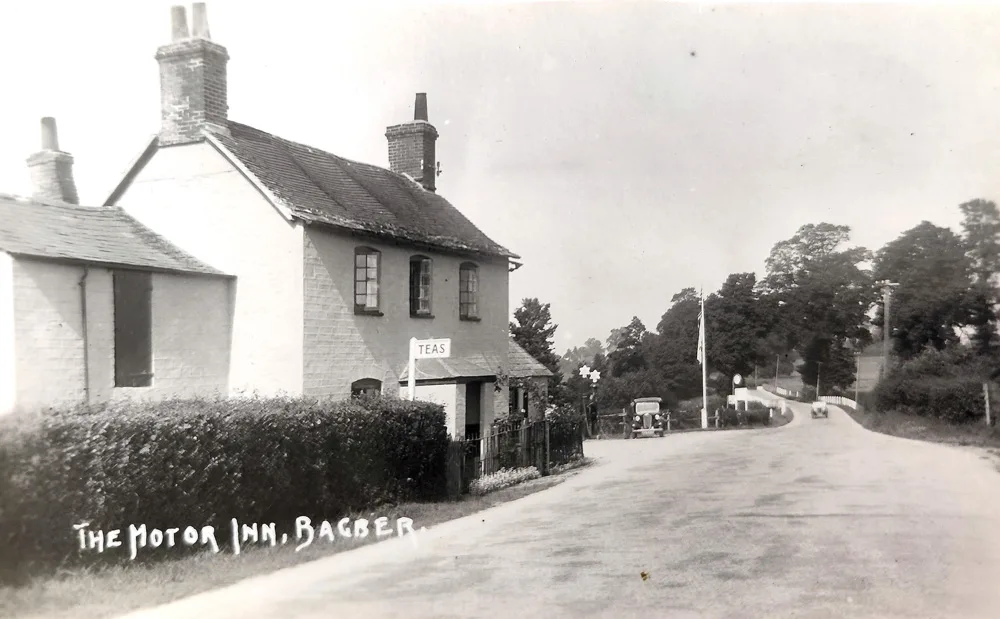
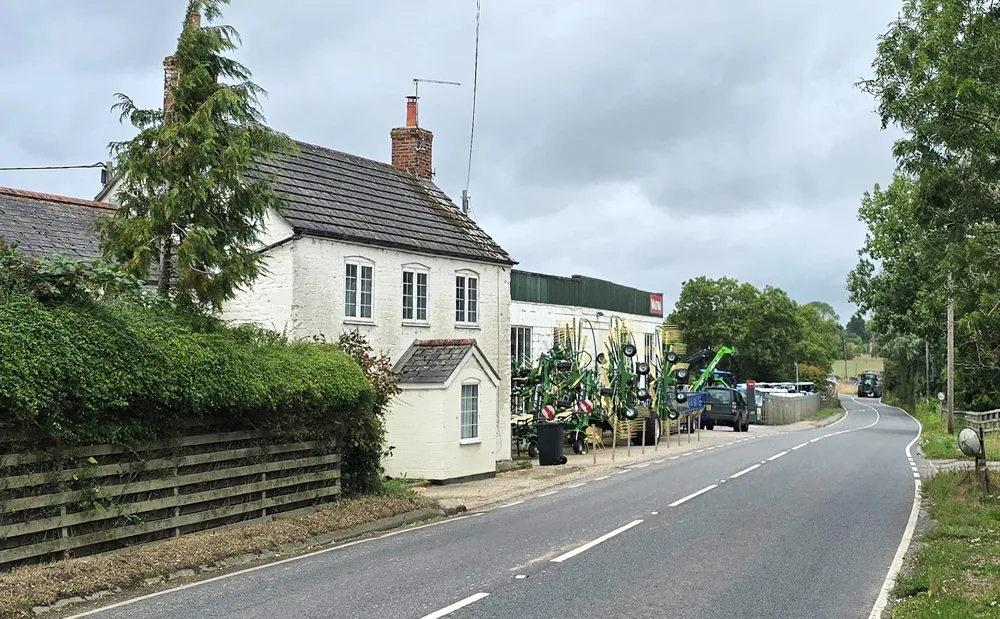
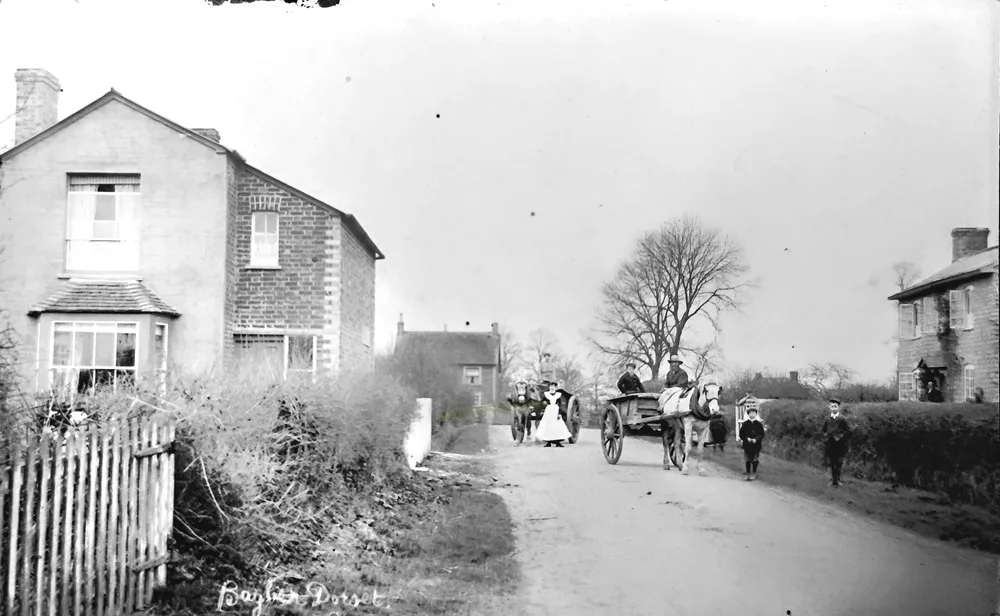
The Motor Inn, Bagber – despite the editor’s best efforts, extensive searching has revealed no information about The Motor Inn. The two visible cars are boxy saloons with large headlamps mounted on the wings, upright radiators, and narrow tyres, dating it late 1920s to early/mid-1930s
The term Motor Inn emerged at the same time, as car ownership spread, as did tarmacked roads (it’s not just compacted gravel). The road signs look like early Ministry of Transport types (the white-painted post with circular sign), which were standardised in the 1930sThe Inn is just a house today – dwarfed by the agricultural machinery of the C J Cox yard ‘Now’ images by Courtenay Hitchcock
In spring 1942, a small but significant upgrade quietly arrived in rural Dorset at the height of World War II. The original stone bridge – beautiful but narrow and fragile – simply couldn’t support the weight of heavy modern military vehicles. Tanks and freight bound for the south coast – utterly critical in the run-up to the Allied Dieppe Raid and, later, D-Day –demanded sturdier roads. So, Canadian Royal Engineers erected a Callender-Hamilton (Unit Construction) bridge alongside the stone original. Designed by New Zealand engineer Archibald Hamilton, this modular steel Warren-truss bridge was only ever meant to be temporary. Built from galvanised steel segments – like giant Meccano – it was strong, quick to assemble and has shown itself to be impressively resilient. Dorset was one of the key embarkation points for D-Day: Operation Overlord, the Allied invasion of Normandy on 6th June 1944. Troops, tanks and supplies moved through North Dorset en route to embarkation points like Weymouth, Portland and Poole, ready to be loaded onto landing craft and ships. The bridge never intended to be a permanent structure has stayed in service ever since, passing into Dorset County Council’s control after the war.
The postcard was never sent, so we have no postmark to date it, but the woman is wearing a long, full skirt with a fitted bodice and puffed sleeves, and a hat, consistent with the Edwardian era, (roughly 1901–1910). The boys are in short trousers with stockings and large collars/bows (up to 1910), and the men are wearing flat caps and bowlers – common rural working attire around 1900 to 1920
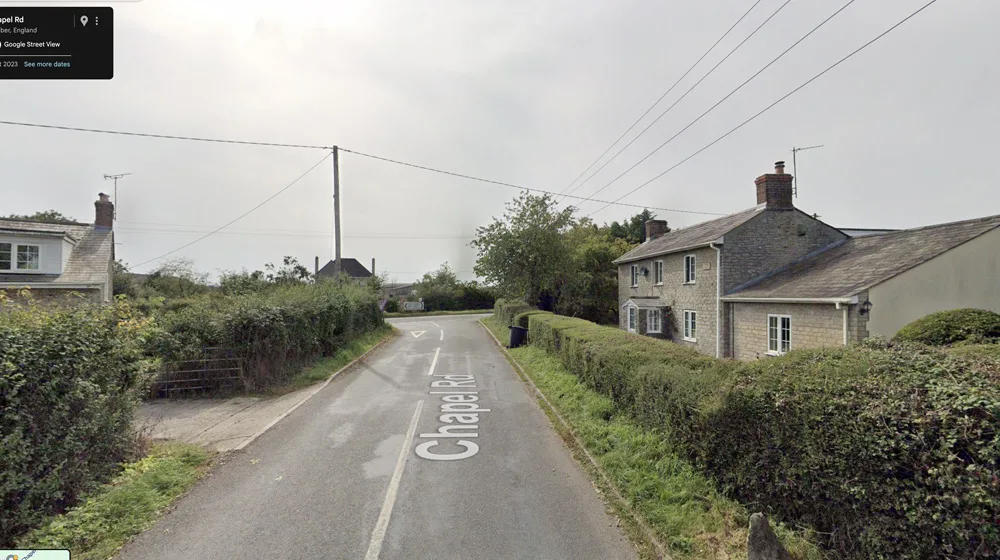
This photograph was taken in Chapel Road, Bagber, looking towards the junction with what is now the A357, which runs left to right at the far end behind the carts. The house on the left of the picture, along with the one opposite on the main road, have since disappearedThe view today!
Nearly 80 years later, this “temporary” bridge still carries all A357 eastbound traffic, while the stone bridge manages the westbound flow. The bridge has seen only minor changes to its original design since it was erected. Timber deck repairs were carried out in 1985 and 2009. The only work of any structural significance was to strengthen the bridge in 1996 to enable it to conform to new standards in order to carry 40-tonne lorries. Ted Taylor, Dorset’s chief bridge engineer, said: ‘We have had no real trouble ensuring that this ‘temporary’ bridge is brought up to the new standard. It was in remarkably good shape.’ The bridge was re-inspected in 2014, and found to still be in very good condition – the areas that had caused concern with a ‘slightly weary appearance’ were found to be mostly due to dirt deposits and growth of moss on the steel. Les Lock, the project engineer, said: ‘Despite all that’s thrown at it – floodwater, mud and grit salt – after 72 years the galvanized members are still in very good condition.’ Today, it is used as a case study by the Galvanizers Association across Europe, who praise its longevity and performance as an outstanding example of hot-dip galvanised steel in action. The structure has far outlived its original purpose, continuing its role as a vital transport route, handling modern HGV traffic – a surviving piece of Dorset’s wartime history.
Parliament’s six-week Summer Recess is ending, and I’m returning to the routine of being in London for half the week.
Edward Morello MP for West Dorset
Although the sunny weather hasn’t helped our farmers, it has meant I’ve managed to enjoy some evenings on the beach, swimming with my family. I’m always grateful for time back in the constituency – even if being at home doesn’t actually mean my family see much more of me. It’s a valuable opportunity for me to catch up on the work that Westminster time often doesn’t allow. Over the summer, I’ve had meetings with Dorchester BID, Dorset Healthcare, Royal Mail, Access Wellbeing, the Woodland Trust, Sherborne Fibromyalgia and Chronic Pain Group, Dorset & Wiltshire Fire Service, and the new Chief Executive of Dorset Council. I’ve visited Bridport Clothes Bank, the Poundbury Nature Project, Hilfield Priory, three care homes, the Pineapple Estate near Bridport, Beaminster Museum, Fire Pot Food, the Sherborne Steam and Waterwheel Centre, Dorset Downs Vineyard, and Bagwell Farm Touring Park, among others. I spent a day with South Western Ambulance Service to better understand the pressures they face, and visited Dorset & Somerset Air Ambulance. I spoke on the NFU panel at the Melplash Show – and I’ve been to more village fetes than I can count! I held dozens of residents’ surgeries, and continued hosting policy round tables – this month’s focused on support for West Dorset’s hospitality sector. I also toured villages I haven’t visited in a while, holding Q&As in village halls to discuss local and national concerns. Over the summer, I held meetings in Broadmayne, Martinstown, Whitchurch Canonicorum, Chetnole, Thorncombe, Netherbury, Litton Cheney, Cheselbourne, Toller Porcorum and Stratton. Each one was well attended – and I’m grateful to everyone who came along to ask questions, give me a grilling, and share what matters to them. This week I was told that since February I’ve submitted 760 questions to Ministers — only two MPs have written more. As I return to Parliament, the last six weeks have given me plenty more to a write to them about!