Home Blog Page 9

Dorset and Somerset Air Ambulance sets out plans for new base and provides update on second helicopter

0

Dorset and Somerset Air Ambulance (DSAA) has announced a series of developments aimed at strengthening its ability to meet rising demand and ensuring patients across the region can access critical pre-hospital care when it matters most.

Demand for DSAA’s life-saving service continues to increase year on year. By air and by road, missions have more than tripled over the past decade. Through sustained innovation, investment and the continued support of local communities, DSAA now provides one of the most advanced levels of care available outside a hospital setting. However, the charity remains aware that there are still patients it cannot yet reach and is focused on closing that gap.

To address this, DSAA is taking steps to expand capacity, modernise infrastructure and secure long-term resilience. These plans include developing a new operational base and progressing the introduction of a second helicopter, all with the aim of giving every patient the best possible chance of survival.

Proposed future operational base at Yeovil’s Leonardo UK site

DSAA has confirmed its long-term intention to develop a new operational base at the Leonardo UK site in Yeovil, known as the Home of British Helicopters. A 35-year lease agreement has been signed, with Leonardo providing the site rent-free.

The proposal follows detailed operational analysis and reflects DSAA’s vision to secure a sustainable, future-proof home for its service. Modern facilities are required to support clinical excellence, rapid deployment and staff wellbeing. A new base would provide purpose-built spaces for patient interaction, training, operational coordination and community engagement, enabling DSAA to continue delivering care across Dorset and Somerset for decades to come.

Operational analysis shows that Yeovil’s location offers excellent aircraft coverage across the region, alongside immediate access to major roads to support rapid response vehicle deployment.

While the intention to relocate to Yeovil is clear, the development remains subject to further steps. These include a public consultation planned for mid-2026, followed by the planning process and fundraising to deliver the project.

As part of finalising the agreements, Leonardo has supported DSAA’s need for long-term security at the site. The charity would operate independently from Leonardo and has the rights required to operate from the location for the full 35-year lease period.

In the meantime, DSAA will continue to operate from Henstridge Airfield, supported by Geoff Jarvis and the local Henstridge community, whose contribution over many years has been fundamental to the charity’s work.


Second helicopter moves closer to UK operations

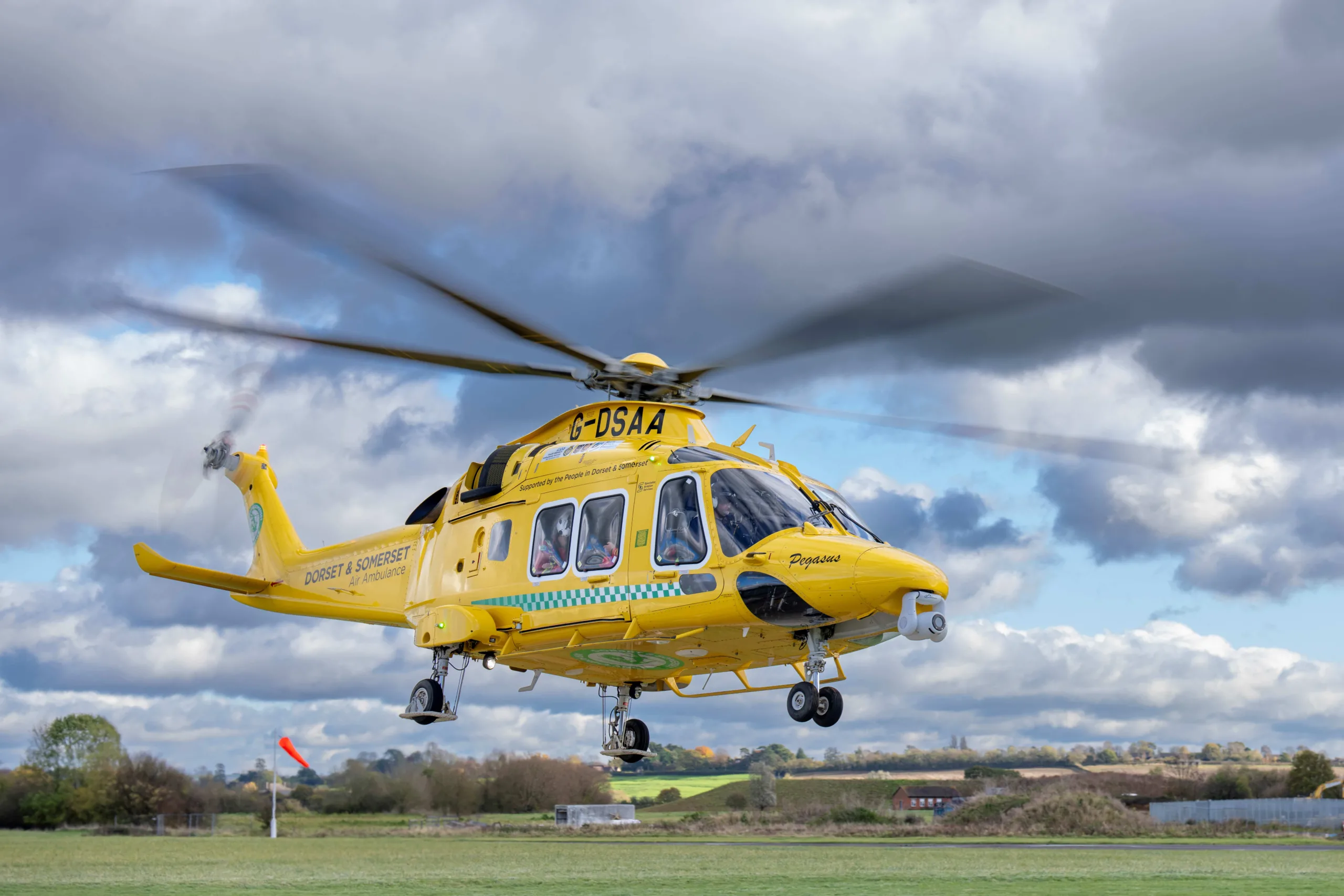
In September last year, DSAA launched its 2ndHeli Appeal to help fund the purchase and equipping of a second helicopter. The aircraft has since completed test flights and is preparing to fly to Gloucestershire Airport, where Gama Aviation will carry out customisation for Helicopter Emergency Medical Service (HEMS) missions. The second helicopter is expected to become operational in summer 2026.

Charles Hackett, Chief Executive Officer of Dorset and Somerset Air Ambulance, said:

“Firstly, and most importantly, we want to express our sincere thanks for the wonderful support we have received and continue to receive from Geoff Jarvis at Henstridge Airfield and the local community. Their support has taken us from our humble beginnings as a very small operation, flying only a few hours a day, to a transformation in care for our patients. Today, DSAA is one of the most advanced air ambulances services in the UK, touching thousands of lives every year.

We want to assure the people of Yeovil and our wider community that we are committed to working transparently and collaboratively with all stakeholders throughout the process.

To this end, DSAA will be launching a public consultation in mid-2026, giving residents and stakeholders the chance to view the emerging proposals, ask questions, and share their views. We hope the consultation will help shape our plans and build backing for the new facility, designed to support our life-saving service for years to come.

As we embark on this exciting journey, we remain dedicated to providing critical care and rapid response to those in need. In the meantime, we are deeply grateful to be able to continue operating from Henstridge thanks to the incredible support of Geoff Jarvis and all those who support our life-saving work.”


The path ahead

In October 2025, DSAA announced that, through careful stewardship of charity funds, it was able to allocate £30 million from its reserves. This funding will support the purchase and fit-out of a second helicopter, the redevelopment of its operational base, and wider modernisation projects.

The arrival of a second helicopter, the development of a new purpose-built base and the continued support of local communities reflect DSAA’s clear focus: reaching every patient who needs life-saving care and giving them the best possible chance of survival.

With continued community backing, DSAA is preparing to deliver an even greater level of care across Dorset and Somerset in the years ahead.
Shooting from the saddle

0

As winter drags on, mud and headtorches give way to arrows and adrenaline as Tamsin Doar discovers the addictive pull of horseback archery

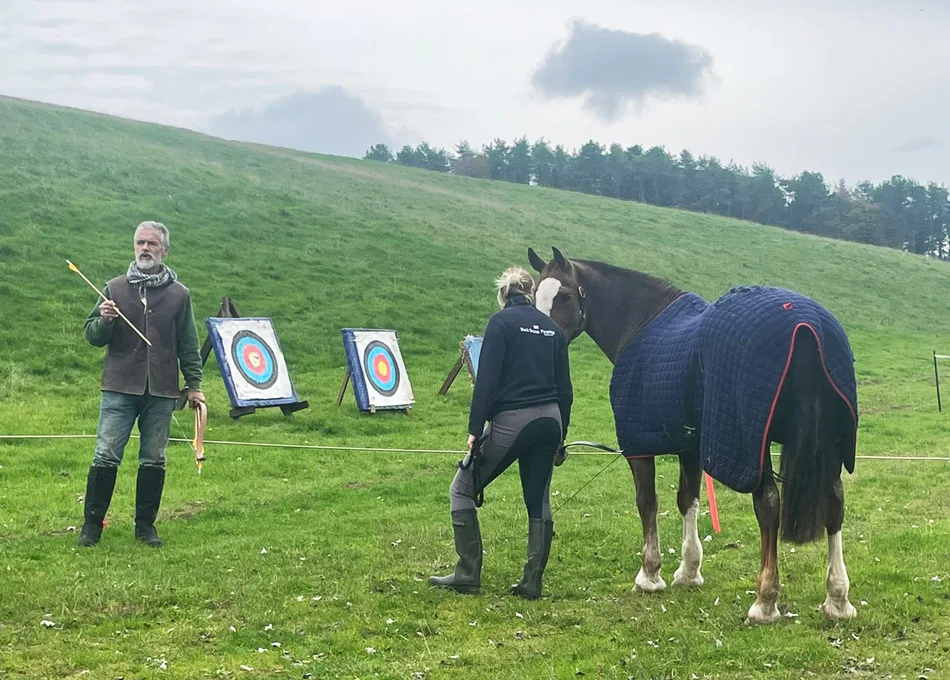
The Sass Queen checking if Tamsin is serious about this archery thing
All images: Tamsin Doar

Although spring still feels like a while away, and most equestrians will be found floundering in mud, wearing at least seven layers and a headtorch while muttering something about ‘taking up knitting’ as a hobby, we’re all acutely aware that we’ve made it past the Winter Solstice. The days really are slowly getting lighter and we might, maybe (possibly!) be looking ahead to nicer weather. Perhaps making plans to enjoy our wonderful steeds – even if they are currently caked in mud and resembling hairy hippos.
I certainly sit down at the start of every year and write out a vague plan, adding dates in my diary for events over the forthcoming year. This is not because I am organised (far from it!) but because it gives me the motivation to get through the rest of the winter. One thing that is currently helping me to put one foot in front of the other while wallowing my way through the winter mud is looking forward to building on a new-found skill and activity that The Sass Queen and I (along with the previously mentioned Grumpy Uncle) first tried in October: Horseback Archery.
It is something that has always been on my bucket list – given The Sass Queen’s propensity for emulating a full war horse charge at every opportunity (I’m sure she was a cavalry horse in a previous life), I felt it would be something we’d both enjoy. The newly formed Jurassic Coast Horseback Archers, run by qualified coach Tom Drury, means we were able to tick that off the list.
Tom has been riding and driving horses for more than 30 years. He got his first pony, Moses, as a child and you may remember his Horse It In Dorset, where he offered cart rides at local events. He initially qualified as a riding instructor at Burley Villa in the New Forest, and has since taken further qualifications under tuition from the British Horseback Archery Association (BHAA) to qualify as a horseback archery instructor.
His love of archery started from a young age: ‘We had bows and arrows as kids … although my brother shot me with one, which resulted in a few stitches! I discovered horseback archery 16 years ago, and that changed everything. Suddenly there was a fun reason to ride around an arena. Shooting arrows from the ground at targets is fun, but doing it from horseback takes it to a whole new level.’ I can attest to this – ground archery is challenging enough, but when you bring a horse into the mix (especially a bouncy, opinionated one) it’s much harder … but also so much more enjoyable.
‘I’ve always wanted to set up a club, especially as all other clubs are some distance away, but it wasn’t until 2025 that The Jurassic Horseback Archers was formed,’ says Tom. ‘We’re based along the coast, from Dorchester to Lyme Regis, and are very grateful for the use of the arena at Faunbank Stables in Maiden Newton. I hope to find other venues across the county to use, so we can set up another club under ‘Dorset Horseback Archers’, to allow those in different areas to participate. Then we can also have inter-club competitions!’

Tamsin on her first unaccompanied walk past the targets

Make it official
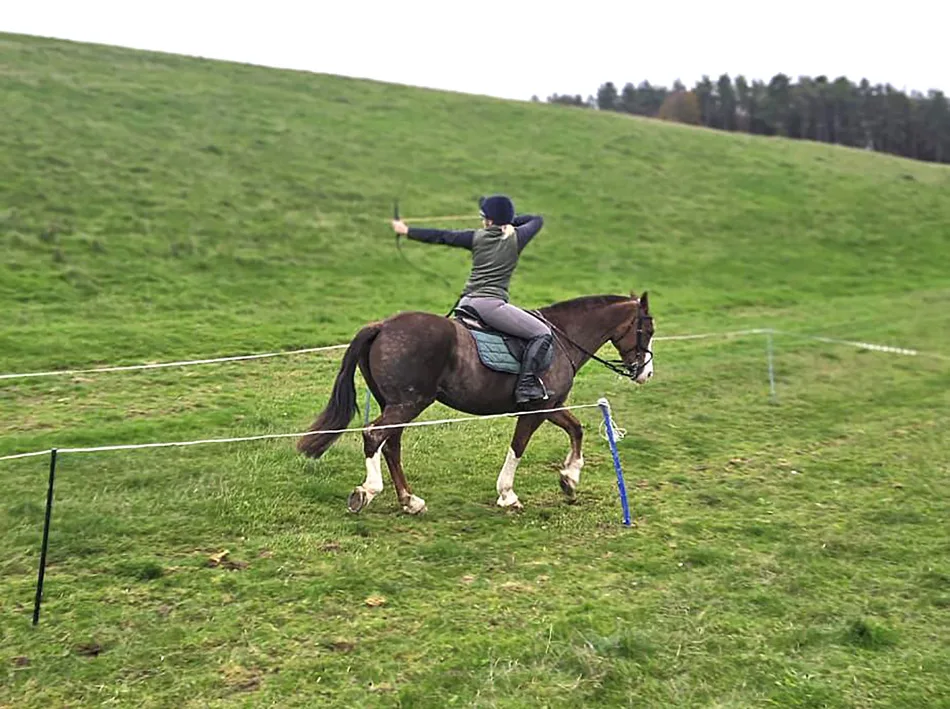
The BHAA promotes safe participation in horseback archery at local and international level. ‘Some people approach it as a sport: it can be as competitive and challenging as any other sport. But I just love it as a fun activity. It’s both challenging and calming. When you’re cantering a 90m run and shooting multiple arrows at three targets, you have to focus on the release – dropping the reins, releasing the arrow, keeping a smooth focused rhythm timed to the horse’s footfall and your breath … it requires quite a lot of focus!’
The competitions run under BHAA include shooting at different targets along a set track at either a walk, trot or canter. Points are usually awarded for accuracy and shooting arrows within the set time – competition-type can vary slightly, but there is always a focus on accuracy. This can also progress up to shooting at targets in a natural environment over jumps. There are competitions all across the country, including at National and International level. In 2025, Britain sent a team to the IHAA World Championships in the USA.
BHS centres across the country offer horseback archery on their horses, so you don’t need your own horse.

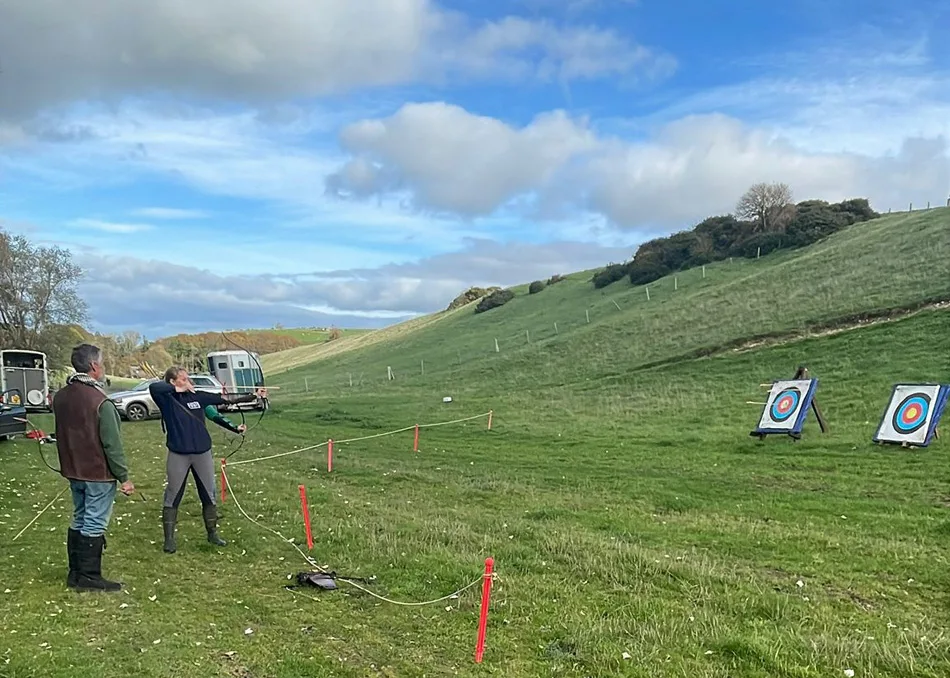
Learning the basics of archery on the ground is the first step

The BHAA also works with the RDA and Pony Clubs to promote inclusivity at all levels. They advise that no previous archery or riding experience is necessary, but it’s preferable to have a good ground in both. ‘Fitting the string while the horse is moving is the real trick, and it takes a lot of practice,’ says Tom.
In the sessions that he runs, non-riders can also join in with ground archery to learn and develop their technique while learning to ride separately, before putting the two together.
He’s in the process of liaising with approved BHS centres across Dorset to make his sessions inclusive to those without access to their own horse. ‘Riders who are interested can also approach their local BHS centre directly to ask if they’d consider offering lessons with a qualified HBAA instructor – the more interest shown, the more likely it is to happen!’

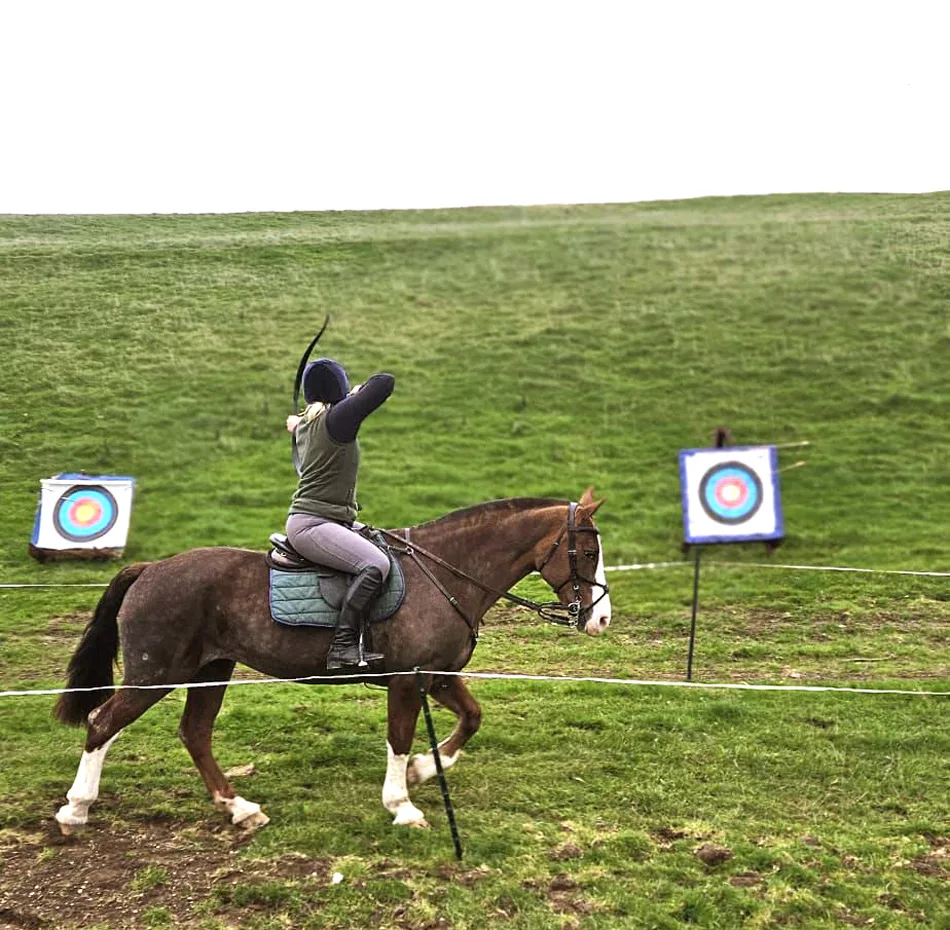
Tamsin Doar trying horseback archery

Starting slow
The first session you’ll have with Tom usually consists of an introduction to archery, learning the different techniques and the all-important safety aspects. All the archery equipment is provided and ‘have a go’ sessions are available. He offers 1-to-1 sessions or group lessons. ‘Our typical sessions will then focus on ground archery before moving on to desensitising the horses,’ he says. ‘We start out desensitising them to the bow: showing it to them, moving it around them, giving them a scratch with it to show them there’s nothing to be afraid of.’
(The Sass Queen particularly appreciated me getting her ‘itchy spot’ with the edge of the bow, and thinks we should invest in one as a scratching device) ‘Next we introduce the arrow – again, allowing the horse to just see it and sniff it, while avoiding the sharp tip!
‘Then we move on to an arrow being shot softly, progressing up to it hitting the target.’
I was very impressed with how Tom dealt with each horse as an individual and went at their pace – never rushing them and allowing them time to take it in.
Needless to say, The Sass Queen never dropped her ‘I can take on the world’ attitude and barely batted an eyelid at everything going on around her.
‘Not all horses are suitable by temperament or nature though,’ says Tom. ‘Once they’re comfortanle, we move on to shooting from the saddle – and hopefully hitting the target!’ Thankfully, we started at a walk down the side of a marked-out track, with Tom leading us to prevent The Sass Queen trying to take off in her normal ‘cavalry charge’ mode. This part is usually achieved within a morning or afternoon session. ‘After they’ve attended the introductory session covering health and safety, people are welcome to join our monthly club sessions.’ I think it will take a few sessions for us to progress up through the paces – I’m certainly comfortable staying at a walk for now!

For more information on this thoroughly enjoyable activity (word of warning, it’s quite addictive!) visit the British Horseback Archery Association on bhaa.org.uk.
Contact Tom to organise a session or ask about joining the club through his Instagram or Facebook page
@Dorset Horseback Archers.

Farewell to Adrienne Howell

0

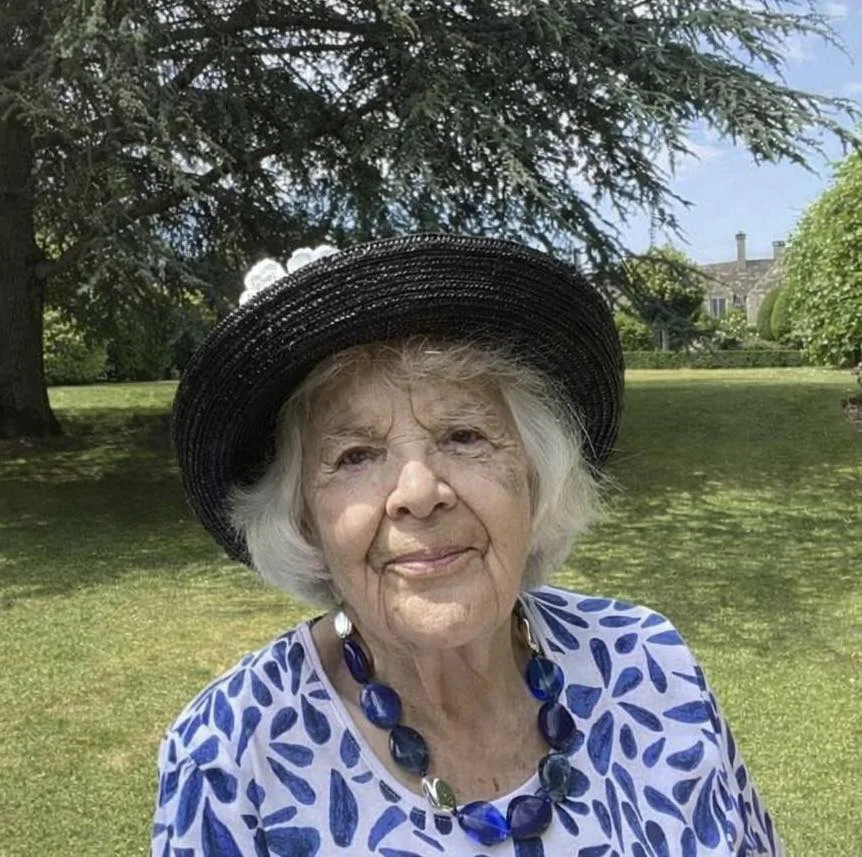
IF Mere had a ‘national treasure’ it would surely be Adrienne Howell, who died on 13th January, aged 87. She was an active part of life in Mere for so many years that it is hard to imagine the town without her.

Adrienne was the founder or driving force of many organisations that continue to be central to life in Mere. A retired teacher, remembered with real affection by many former pupils, she founded Mere Manor Brass with her husband Bernard, more than 50 years ago. 

Her dedication to music and the community was recognised in the 2019 New Year’s Honours with the award of the BEM, which she received, accompanied by her niece Julia Woods, at Buckingham Palace.

Adrienne and her late husband (Bernard died in 2014) were both Life Vice Presidents of the Wessex Brass Band Association. John Woods, the chairman of WBBA, said her commitment and dedication to banding had benefitted many thousands of players and bands in the region.

In 1997, Adrienne founded the Mere Literary Festival. It began as a fundraiser for the Mere & District Link Scheme, a volunteer-run service which helps people in Mere and surrounding communities to get to their medical appointments, shops and social events.

The literary festival established itself quickly and grew into an eagerly-anticipated annual celebration, with author talks, writing workshops, the Pennybank Writers, children’s events, and short story and poetry competitions which attracted entries not only from across the country but from as far as France and South Africa. 

The festival became known for its warm hospitality, welcoming atmosphere and generous helpings of cake! Adrienne ran it with dedication and vision for 22 years, stepping down after the 2018 festival. By then the festival had raised tens of thousands of pounds for Mere Link.

New festival director Ashley Gray says: ‘Adrienne was a remarkable woman who cared deeply for the town of Mere and the community around her. She set a high standard, and we will continue to uphold the spirit she so thoughtfully established.’

As well as the band, Mere Link and the literary festival, her other community involvements included the Pennybank Writers, Mere Rivers Group and Mere Amateur Dramatic Society (MADS)

A keen eye for detail

Adrienne was the longest standing member of MADS, having been part of it for most of its 80 years and she will be greatly missed, says Mary White, ‘not only for her knowledge of the society and its productions but for her energy, support and encouragement.’

As well as acting in plays, Adrienne also directed, ‘with a keen eye for detail!’ – most notably perhaps in the spring production in 2010 of Alan Poole’s Bottom’s Dream, a fantasy based on Shakespeare’s Dream, which she brought to life beautifully. Her final appearance on stage was in 2016 in Lord Arthur Savile’s Crime by Constance Cox, from a short story by Oscar Wilde. 

She had been prompting, Mary recalls, ‘but when a member of the cast was taken ill on the first night, Adrienne stepped in – stitched into her costume and with a covered script, she used her knowledge and experience to be the perfect understudy!’

She was supportive and encouraging to new members and young people in MADS productions, ‘thus helping to maintain the long tradition of live theatre in Mere.’

At times she also sometimes involved MADS in the literary festival and in other local events. She chaired MADS for some years, ‘always involved in its activities, but when her stage days were behind her, she was always happy to help with line rehearsal, front of house or refreshments.’

Perhaps less well-known than her countless community and cultural activities, Adrienne wrote short stories and a selection was published in The Fox’s Lament. She also wrote one-act plays which MADS successfully produced over the years, both at home and in One Act Play Festivals where they won many awards, including Best Play and Best Original Script, as well as awards for actors, costumes and sets.    

Mary says: ‘MADS owes Adrienne so much, and over the coming years we look forward to honouring her memory and celebrating her life with new productions of her plays.’

Loved by many and revered for her huge contribution to the life of Mere and its people, and her work as an educator, Adrienne passed away peacefully at home following a short illness on 13th January, aged 87. She is survived by her niece Julia and nephews Nick, Zed and Seth.

The funeral will take place on Thursday 19th February at 1pm St Michael’s Church in Mere. Local band representatives will provide the music in the service. 

Fanny Charles

Metamorphosis theme for Dorset Art Prize

0

The 12th annual Dorset Art Prize is now open for entries, with Poole Museum announced as this year’s host venue.


Founded in 2014 by Bournemouth and Poole College, in partnership with the Dorset Community Foundation, the free-to-enter competition is open to both amateur and professional artists across two age groups: 16–18 and 18+. Hundreds of entries are submitted each year, with cash prizes of up to £1,000 on offer. Shortlisted artists will see their work exhibited at Poole Museum in July 2026.
This year’s theme is ‘Metamorphosis’, with participants invited to respond in any visual medium – from photography and animation to painting, sculpture or installation.
Stuart Palmer, Director of Creative, Digital, Tech and Service Industries at Bournemouth and Poole College, said: ‘We’re excited to partner with Poole Museum, a place that shares our belief in the transformative power of the arts. The Dorset Art Prize is a fantastic opportunity for local talent to showcase their work and help shape the cultural identity of our county.’
Jaine Fitzpatrick, Interim Director at Poole Museum, added: ‘We’re passionate about celebrating creativity in all its forms – from internationally acclaimed artists to emerging local voices. We’re proud to host the Dorset Art Prize and help shine a light on the incredible talent thriving in our community.’
Entry deadline: Sunday 14th June 2026
For full details and to enter, visit: thecollege.co.uk/dorset-art-prize

sponsored by Wessex Internet

Thank you

0

Jon Sloper reflects on the deeper power of ‘thank you’ – and why saying thank you may be one of the most human acts we have

At this time of year, when thank yous are so frequently shared for seasonal presents and hospitality, I have been reflecting on other thank yous that I’ve noticed.
Just this past weekend we have been saying thank you to a group of Ukrainian children in Dorset who have been part of a cultural group called Grains of Hope. With the help of parents and other adults in the Ukrainian community, they have been sharing the culture and traditions of Ukraine while they are here in Dorset, waiting for the war in their homeland to end.
We’ve also been saying thank you to a group of home care providers who support hundreds of residents across Dorset with all kinds of needs, making it possible for those people to continue to enjoy living at home.
We’ve also been reflecting on the thanks and gratitude we received ourselves last year. Colleagues were variously described as ‘a light in a dark place’ and ‘angels’.
Thank you is such a beautiful expression.
To say thank you to someone shows you have seen them, that you appreciate them and their actions, that you understand the choices and costs of the actions they’ve taken for you. Thank you is so wonderfully complex and multidimensional.
‘Thank you for my Christmas present’ is not only thanks for the pleasure and enjoyment of the gift and what it will bring to the life of the recipient. It is also thanks for the thought behind it, and for the effort to make or buy it. Beyond the moment of giving, if the gift has cost money, there is the effort of work that went into earning the money. And so the ripples spread. If the gift was made, it was probably done so by people we will never meet, perhaps by people from other countries, maybe from other times. The ‘thank you’ allows us to talk about the impact and meaning of the gift we’ve received.

Balance and connection
Receiving a thank you from someone brings visibility – a ‘thankless task’ is one where the person doing it is overlooked, ignored or even shunned.
A thank you, whether offered as good manners or in spontaneous and heartfelt gratitude, creates a bond between the donor and recipient. Balance and connection are made.
Sometimes, meanings and intentions can be revealed through a simple thank you. Two simple words can prompt a conversation, which may then provide a chance to explore deeper meanings.
I was interviewed this week, and after thanking us for the work we do, the interviewer asked: ‘why do you it?’ The simple question caused a brainstorm of feelings and ideas for me. I was disarmed by the directness of it, and hurried a (probably confused) response, trying to express so many ideas, beliefs, stories and values that had been stirred in the few seconds available.
The interviewer’s ‘thank you’ led to a place of immediate connection, whch broke through into a place of values and meaning and identity.
At this time, when so many services are being ‘rationalised’, when for so many the anguish of life is growing daily, these moments of gratitude and connection are an even more vital and precious place for us to be together as people. They give us a chance to understand ourselves and others better. They challenge us and give us a chance to grow and find better ways to be. Together.
Turning narratives away from blame, and fighting back some of our fears, to allow space and find reasons to say ‘thank you’ brings people nearer, makes our world brighter.
Saying thank you in words or just with a smile brings us all closer.

sponsored by Wessex Internet

John Morton – the face in the roof that shaped Tudor England

0

CPRE’s Rupert Hardy introduces the Dorset man who was Archbishop of Canterbury, Henry VII’s Lord Chancellor, and the deviser of Morton’s Fork

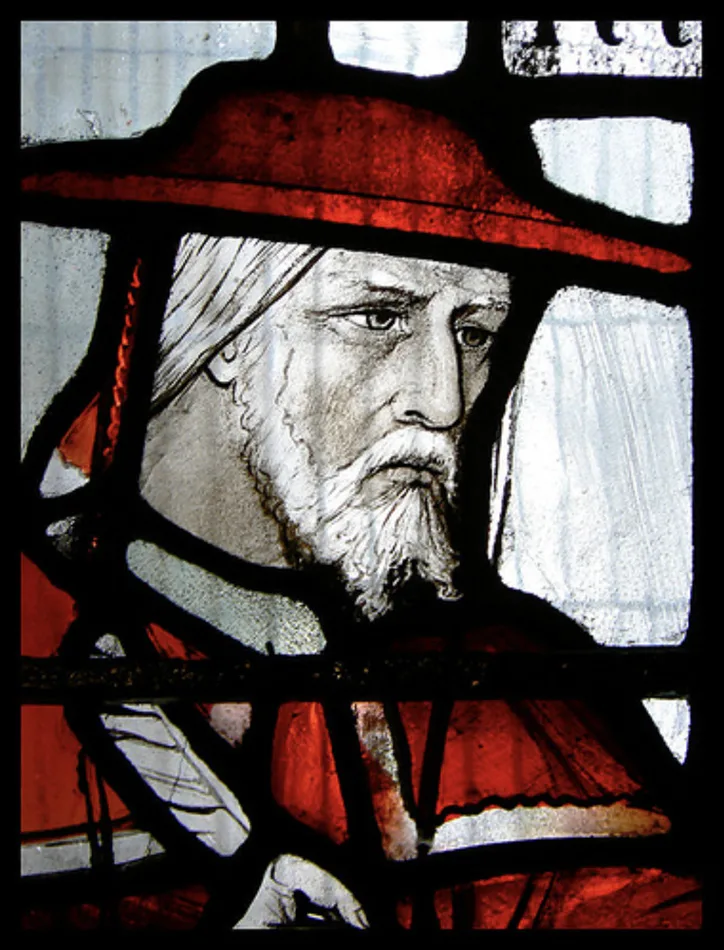
This image is widely shared online as being Cardinal John Morton, but there is no documented source that confirms the location of the stained glass window, or that it was ever part of a known work

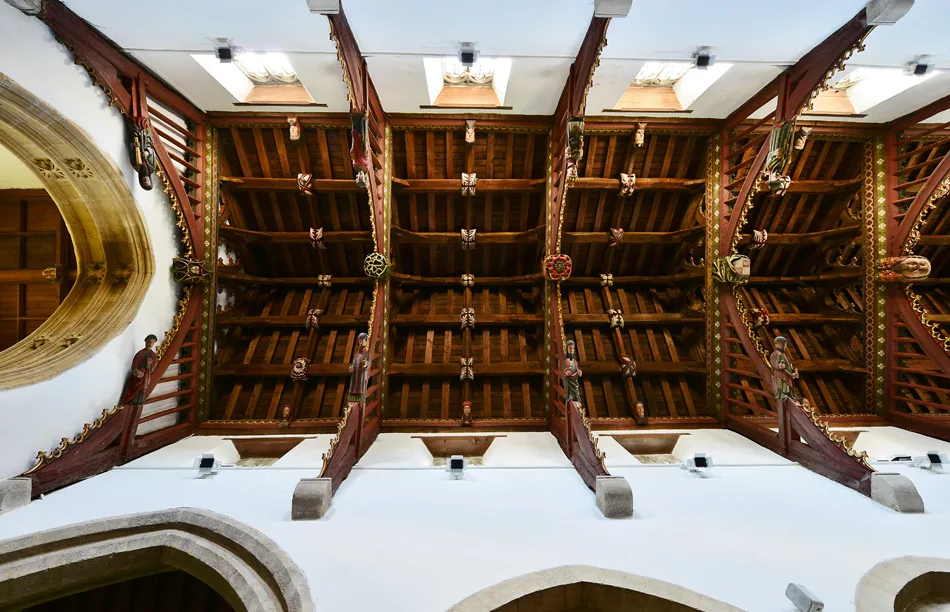
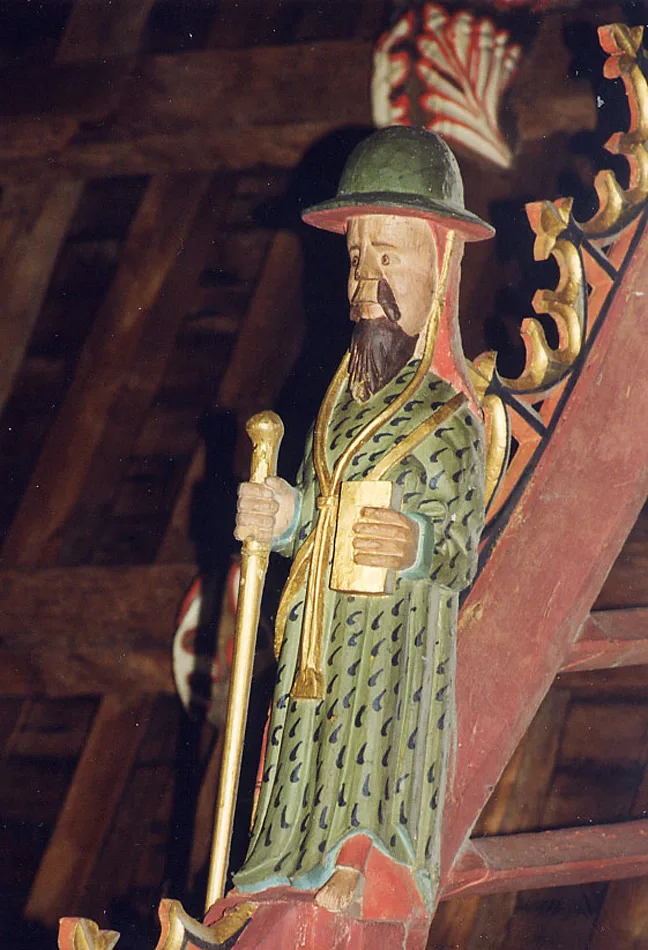
If you visit the splendid St John’s church at Bere Regis, you will be encouraged to look up at the beautifully carved 15th-century hammerbeam roof, its bosses brightly painted with the 12 apostles — and one enigmatic face looking back down. He was Cardinal John Morton, born in Bere – and arguably one of the most influential figures in late 15th century England.
He was born into the gentry around 1420, his mother a Turberville, a well-known Dorset family. An intelligent boy, he was educated at Cerne Abbey and won a place to read Law at Oxford. Morton quickly established a reputation as a formidable administrator, attracting the attention of senior churchmen and the royal court. This put him on the fast track: he entered royal service and by 1456 he was chosen to be Chancellor to the infant Edward, Prince of Wales. At the same time he followed an ecclesiastical career, being ordained only two years later. At one stage he held three benefices. He was rector of both Bloxworth and Maiden Newton.

Looking up into the unique roof of St John the Baptist church in Bere Regis. John Morton gave the carved and painted oak roof to the church in around 1485. As well as the 12 apostles along the sides, and various embossed carvings, Cardinal Morton’s face is represented (far right of this image)

A Lancastrian advisor to the Yorkist King
This was the time of the Wars of the Roses, and Morton was one of the lawyers involved in drawing up the Act of Attainder against the Yorkist nobles revolting against Henry VI. After the bloody Lancastrian defeat at Towton, Morton was captured. Imprisoned in the Tower, he was lucky not to lose his head at the hands of the new King, Edward IV. After a brief exile – during which he served the Lancastrian Queen Margaret of Anjou – Morton was pardoned and resumed his career in royal service. King Edward had recognised his extraordinary administrative skills, making him Master of the Rolls, and also appointing him as a diplomat to establish peace with France.
His ecclesiastical career too was on an upward path again, being appointed Bishop of Ely. The new bishop enthusiastically engaged in several notable building projects, including the rebuilding of the old Bishop’s Palace at Hatfield in 1480. Hatfield was acquired by the Crown and eventually became the much-loved residence of Anne Boleyn’s daughter, Elizabeth. On Edward IV’s premature death, Morton was involved in planning the coronation of his young son Edward V. Edward’s uncle, Richard Gloucester, decided to take the throne himself as Richard III, however, and Morton found himself back in the Tower. He avoided execution, and was committed into the custody of the Duke of Buckingham, under house arrest, was involved in a plot against Richard and eventually had to flee to Flanders where he co-ordinated opposition, under Henry Tudor, to King Richard III.

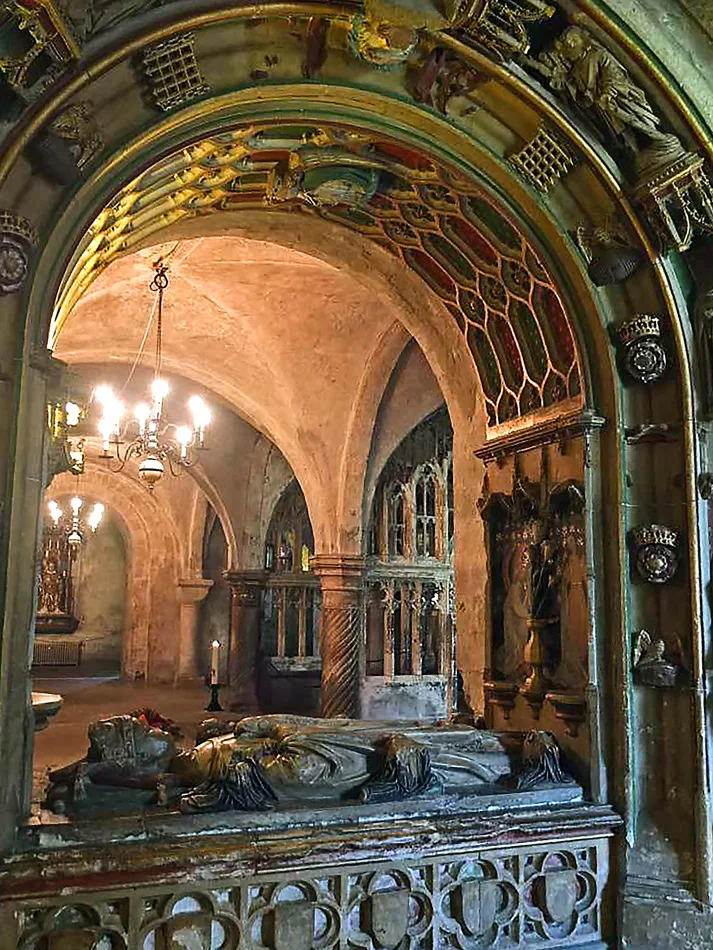
Cardinal John Morton’s tomb on the Chapel of Our Lady in the Undercroft at Canterbury Cathedral

Inventor Of Morton’s Fork
Henry VII’s success at the battle of Bosworth Field in 1485 meant a swift return to London – and a new role as Lord Chancellor, becoming one of the King’s most trusted and faithful advisors, sitting at virtually every recorded council meeting for the rest of his life. His role was to implement royal policy, including taxation, but first he was instrumental in arranging the marriage of Henry to Elizabeth of York, thus ending the Wars of the Roses: a significant achievement which is remembered in the central boss of the nave at Bere Regis.
There is no evidence that, as Chancellor, Morton advocated a harsh level of taxation, but clearly Henry needed to replenish his coffers after a civil war that had devastated England for decades, as well as the French war. The idea later known as ‘Morton’s Fork’ – named for him by Francis Bacon a century later – captured the brutal logic of his Tudor taxation. It is a type of false dilemma, in which contradictory observations lead to the same conclusion. Apparently Morton rationalised the payment of a benevolence tax to the King by arguing that someone living modestly must be saving money, and could therefore afford the benevolence, while someone living extravagantly was obviously rich and could afford it anyway. Although used in various contemporary Jacobean plays, the term did not come into more regular use before the 19th century.

St John the Baptist,Bere RegisRoof figure– geograph


The death of his mentor, Archbishop of Canterbury Cardinal Bourchier in 1485 led the King to persuade the monks at Canterbury to elect Morton as his replacement. He did not seek personal enrichment, but he was very active in defending the jurisdiction of the archbishop’s courts, reforming the church and restoring ecclesiastical buildings. His main achievement was to complete the memorable central crossing tower at Canterbury Cathedral. He was appointed a Cardinal by the Pope in 1493.
Morton died in 1500, and was buried at Canterbury Cathedral. His tomb was desecrated in the Civil War and his remains pillaged, with his skull ending up at Stonyhurst College in Lancashire. He was much mourned in his time, having enjoyed a high reputation … if you ignore the views of some apologists for Richard III, who were no doubt biased. The Spanish ambassador, De Puebla, wrote: ‘The Cardinal of England is dead, and has left no statesman who can be compared to him.’
He was a mentor of Thomas More, who described him as talented, witty, erudite and charming – and known to be a moderating influence on Henry VII. Morton is also believed to have contributed to a critical but unfinished biography of Richard III, which may have been the inspiration behind Shakespeare’s plays, which demonised the king.
He was recognised as an extremely capable and loyal administrator, who had been the right hand man of two kings and one queen. There are not many who combined key roles in both the church and politics so well.
For most visitors to St John’s, Morton is just a face in the roof among the bosses. But for a man born in Bere Regis, who survived civil war, shaped a dynasty and quietly steered England through one of its most unstable periods, that carved gaze feels entirely fitting.

Anyone who would like to know more can read Stuart Bradley’s excellent book
John Morton: Adversary of Richard III,
Power Behind The Tudors.

Pear and blue cheese puff pastry tart

0

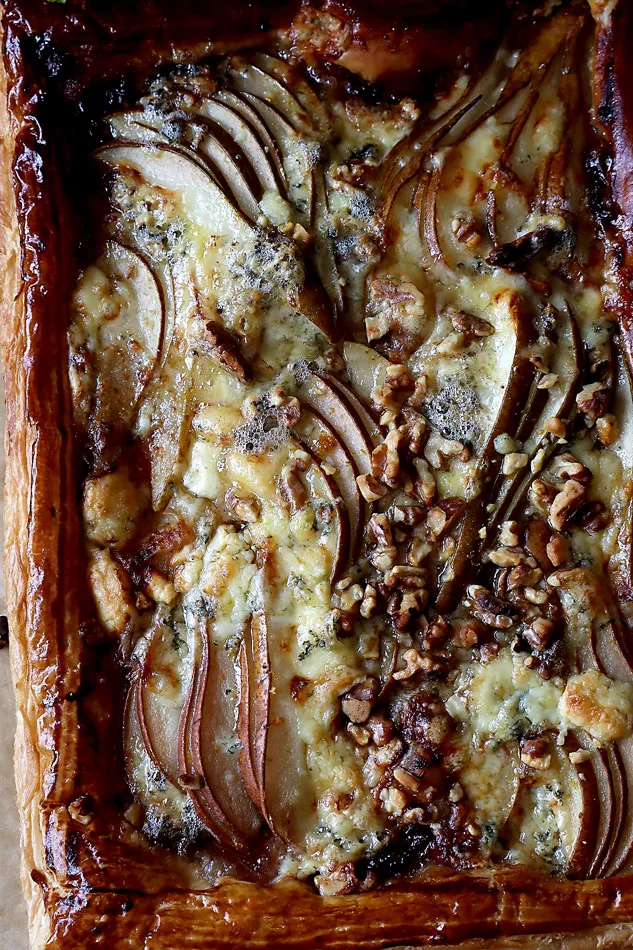
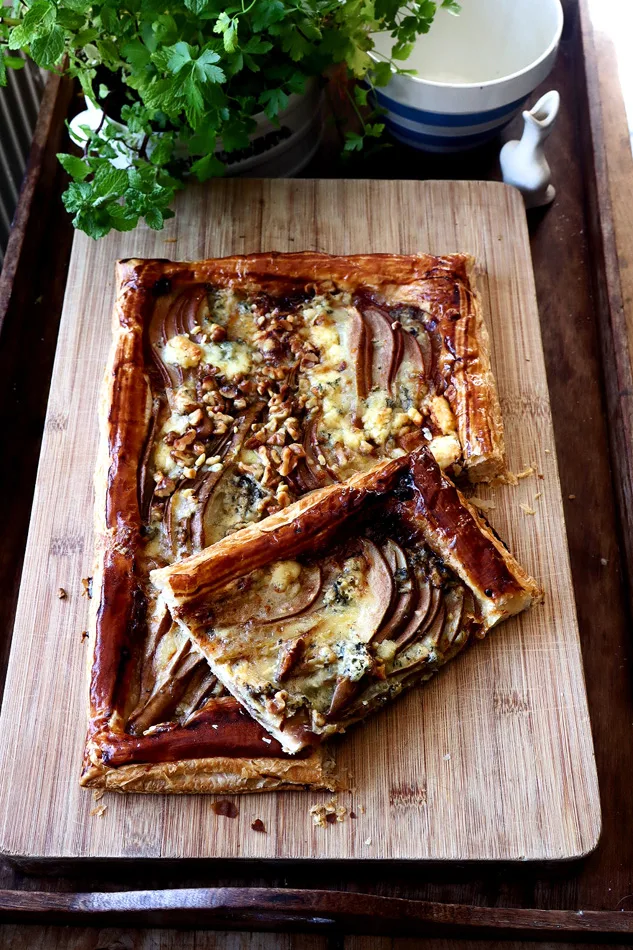
‘Simplicity is key for this quick mid-week supper! This tart makes the most of Dorset produce: grab a roll of Dorset puff pastry, some Dorset blue cheese (try Blue Vinny or Cranborne Blue from Book & Bucket) and I used Elwell Fruit Farm pears. This small farm in Waytown, just outside Bridport, was established in the late 1940s. Will and Caroline grow more than 30 varieties of apples and pears. I bought mine at a Dorset farmers market but they also sell via the farm gate. Add sweet onion marmalade (if you don’t make your own, try From Dorset with Love) with juicy pears and sharp, creamy blue cheese, add orange zest to bring it together … easy and delicious.’ – Lizzie

Image © Lizzie Baking Bird

Ingredients

  • 1 sheet ready rolled puff pastry
  • 2 pears
  • 4 tbsp onion marmalade
  • 125g blue cheese, crumbled
  • 1 orange, zest
  • 25g walnut pieces (optional)
  • 1 egg yolk
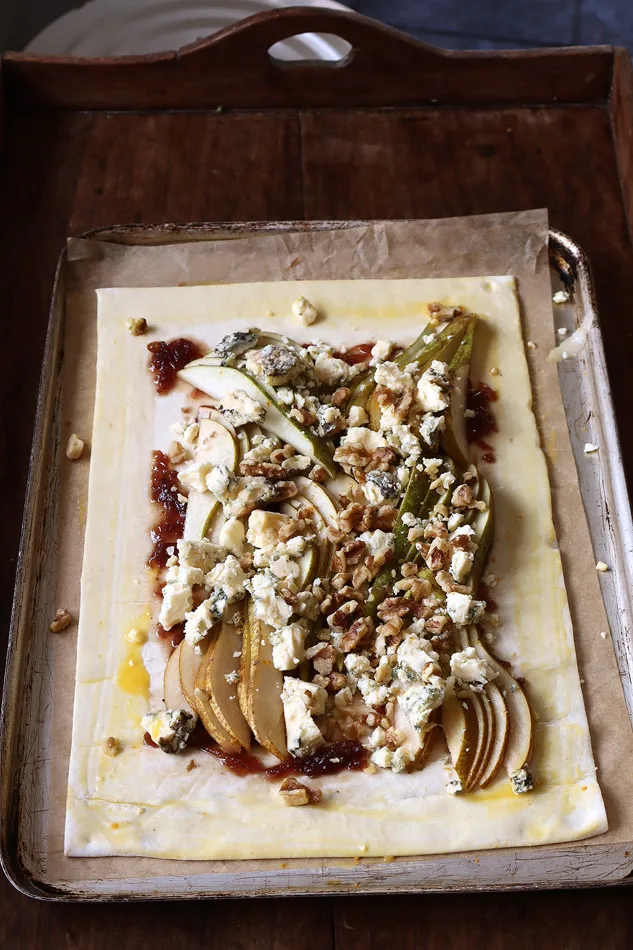
The uncooked tart will look like this

Method

  1. Unroll a sheet of ready-rolled puff pastry onto a lined baking tray.
  2. Spread onion marmalade evenly across the base, leaving a rough 2cm border
  3. Thinly slice two large ripe pears and lay them over the marmalade.
  4. Crumble over the blue cheese, then zest an orange directly over the tart.
  5. Brush the edge with beaten egg. Season with salt and pepper, and if you like a bit of crunch, sprinkle over a handful of chopped walnuts.
  6. Bake the tart at 210ºC/ gas mark 7 for 15 to 20 minutes, until the pastry is puffed up and crisp and the cheese is bubbling.
  7. Enjoy!
Image © Lizzie Baking Bird

Hall & Woodhouse events team donates £253,000

0

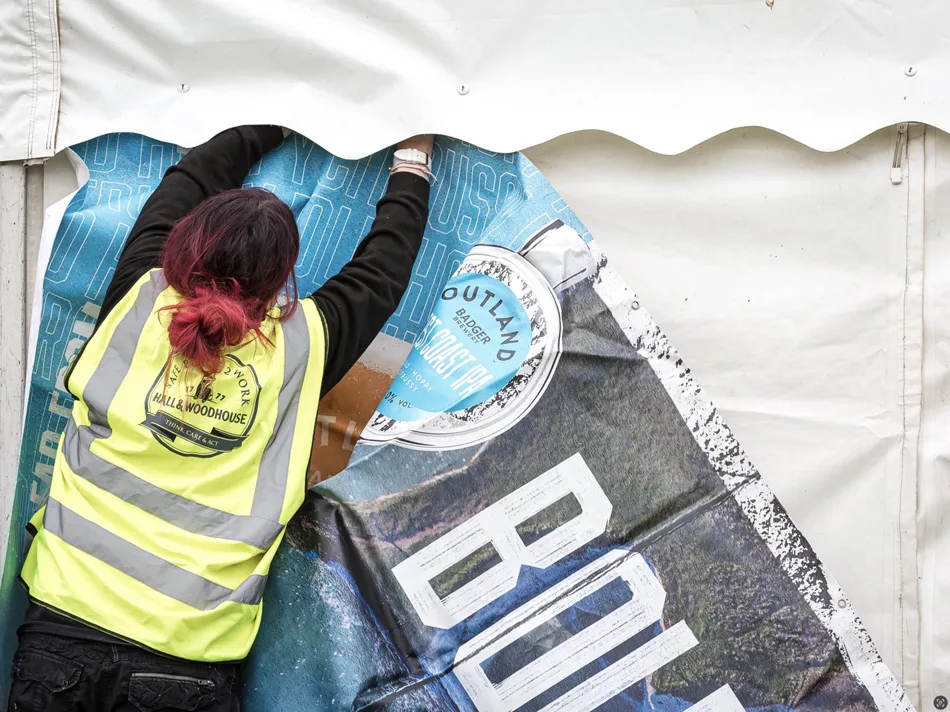
Independent Dorset brewer Hall & Woodhouse (H&W) has announced a bumper year for its H&W Events team, donating an impressive £253,000 to local charities and community causes following its busiest events season yet. Launched in 2022, H&W Events was created to bring the Badger Beer Experience to outdoor festivals and shows, while deepening the company’s community impact. In 2025, the team operated bars at 21 major events across the south – including new partnerships with Bournemouth Pride and The Tank Museum’s Tiger Day – helping boost donations by 15 per cent on 2024’s total of £220,000.

H&W Events was created to bring the Badger Beer Experience to outdoor festivals and shows.
Image © Dorset County Show

‘Our purpose has always been to enrich the communities we serve,’ said Anthony Woodhouse, H&W chairman. ‘Running bars at brilliant events like TANKFEST and Dorset County Show isn’t only great fun – it enables us to reach new audiences and make meaningful donations to incredible causes.’
A standout highlight was H&W’s ongoing headline sponsorship of Teddy Rocks Festival, which supports the fight against children’s cancer. H&W team members volunteered to run bars on site, including a replica pub and self-pour beer machines, and donated nearly £130,000 through profits and sponsorship.
At TANKFEST, held at The Tank Museum in Bovington, H&W raised a record £27,500, with 2025 also marking its debut at the museum’s new spring and autumn Tiger Day events.
The season closed at Dorset County Show, where H&W operated three bars – including one run entirely not-for-profit. Half of all profits from the other bars were donated to the Dorchester Agricultural Society’s own Education Fund, Julia’s House, and The Farming Community Network.
The H&W Events team has now firmly established itself as a key part of the brewer’s ambitious charity target: to raise £1 million annually by the company’s 250th anniversary in 2027. This sits alongside Hall & Woodhouse’s long-running Community Chest fund, Charity Day, and other fundraising efforts across its managed pub estate.
With more partnerships planned for 2026, the bar team looks set to top this year’s total and pour even more back into the communities it serves.

sponsored by Wessex Internet

Farming through the squeeze

0

James Cossins reflects on a typical winter of farming pressures – and why resilience, shared voices and the promise of spring still matter

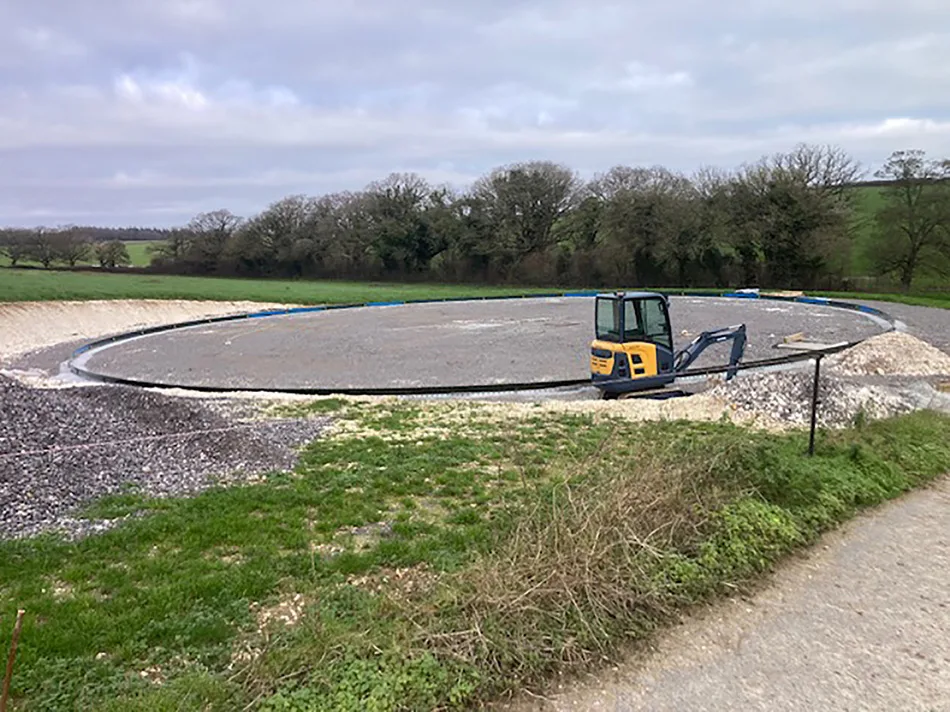
The new slurry pit, years in the planning, is finally under construction on Rawston Farm.
All images: James Cossins

The Christmas festivities now seem a long way off! The recent weather has been relatively kind to us in Dorset, and even the recent storm Goretti caused less damage than in the rest of the country. We did have our polytunnel sheet blown off due to a strong easterly wind on Christmas Eve, exposing the 30 calves inside – we soon moved them on Christmas Day! The daily routine of feeding cattle continues, with a careful eye checking feed stocks to see if there will be enough to see us through the winter. We hope for an early spring!
Politically it has been a busy period, with the Government finally doing a U turn on the Inheritance Tax threshold, raising it from £1 million to £2.5 million. This will help many family businesses – not just in farming, but in all businesses. The lobbying by the NFU, CLA and many other groups seems to have paid off.
What I cannot understand is why families up and down the country were put under such financial stress in the first place, with such a poorly thought-out policy. I suppose the next question is do we back off from any more lobbying, in the hope of the tax being dropped completely? Or do we continue with the protests?
Ups … and downs
Another announcement recently released by DEFRA included the details on how the Sustainable Farming Incentive for 2026 will work. Last year, new applications were suddenly stopped in March: It is only now that we can begin to plan what environmental options we can put in place. Small farms who have not applied before – quite what a ‘small farm’ is we are not sure yet – can apply in June, and the remainder of farms in September. Financial support for these schemes is especially welcome at the moment, as many farm gate prices are dropping, or are very low. Our milk price has dropped by 10 pence per litre since October – that is more than 20% of our income, just wiped off. The apparent reason is over supply. We will have to see what prices 2026 brings us: I fear many more milk producers will decide enough is enough, that they cannot continue producing milk at a loss. It will be interesting to see if supermarkets drop their retail price accordingly. Also it appears that there is a shortage of organic milk, and the price received for that has not dropped. The differential between organic and conventional is now quite considerable. Prices for grains such as wheat and barley are also depressed, and have not increased since harvest. Producers are having to sell at below what was budgeted in order to empty their stores for next harvest and to keep the cash flowing.
These concerns about the future direction of farming were discussed at a recent meeting with our North Dorset MP Simon Hoare. Simon took on board the issues we raised, and also the possibility of closer links with Europe which the Government is considering.
It was also acknowledged that it is not only farming suffering at the moment but many other businesses. The hospitality sector is also under great pressure. The Cossins’ family pub, the Langton Arms, like all other pubs, is experiencing higher costs, including an increase in business rates. With society’s habits changing and people not going to pubs so often, the pubs are facing the real prospect of closing. In many rural villages, pubs are the lifeline to the community, enabling people to meet up with each other.
Simon took all of this on board and promised to keep lobbying other MPs, especially the rural Labour ones, who are supposed to represent the voice of rural businesses.

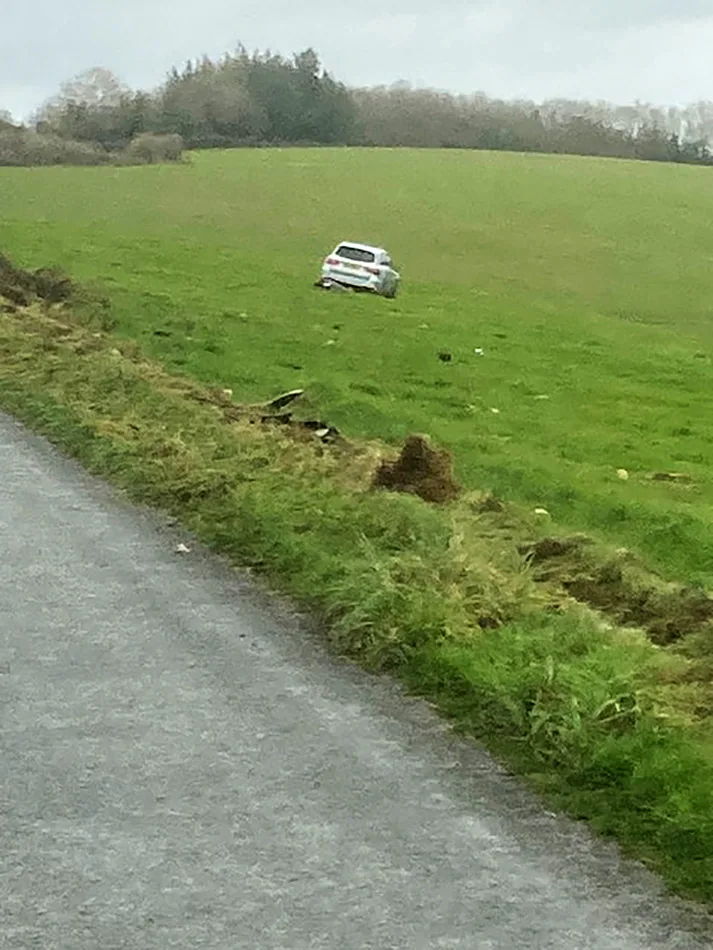
A stretch of black ice caused some unexpected off-roading on the farm recently

Here comes spring
The farming community is known for its resilience. Looking forward, it is encouraging to see the various farming groups that have formed across Dorset: cluster groups, discussion groups and many more, where we can get out, meet fellow farmers and realise we as individuals are not alone in the problems we face. Simply sharing them can be so good for our wellbeing.
On a positive note, I always feel that once January has passed, the days will get longer and spring will be just around the corner with the countryside waking up. We have a few projects taking place on the farm, such as building our new slurry store, and it will be great to see it completed after several years of planning. The crops in the ground so far look well and we can only hope that this year’s harvest will be a good one without any extreme weather conditions like last year’s drought.