Ninebarrow, photographed in Dorset, October 2020 by Greg Funnell.
After their explosion onto the national folk roots scene over the past few years, duo Ninebarrow will be performing on Wednesday 12 July at Marston Church as part of this year’s Frome Festival. Dorset-based Ninebarrow are set to mesmerise audiences with their enchanting harmonies and captivating melodies Comprised of Jon Whiteley and Jay LaBouchardiere, the duo has established themselves as prominent figures in the folk roots scene, gaining recognition for their outstanding vocals, delicate instrumentation, and engaging song writing.
Award-winning sounds Their talent has not gone unnoticed – Ninebarrow were nominated for a BBC2 folk award and won Best Duo in the 2019 Folking.com awards. With a strong online presence and a string of successful concerts across the UK, Ninebarrow has garnered widespread acclaim. Their most recent album, A Pocket Full of Acorns, skyrocketed to Number 1 on Amazon’s Folk Best Selling Chart within days of its release. The duo’s music is deeply intertwined with the Dorset landscape, which led to an invitation to record a segment for BBC1’s Countryfile in March 2021. The exposure resulted in all four of their albums immediately climbing into Amazon’s Top 40 chart, further solidifying their status in the folk music realm. Prepare to be swept away by spellbinding melodies and harmonies as Ninebarrow take to the stage at Marston Church. Immerse yourself in the beauty of their music, inspired by the landscapes and history of the British Isles, and experience an unforgettable evening of folk music at its finest. The event will commence at 7:30pm on Wednesday, July 12th, at Marston Church, conveniently located just south of the A361, a mile west of Frome. Attendees can indulge in a pre-concert drink in the serene and picturesque rural setting of the church, with a bar open from 6:30pm. Tickets are £16 and can be purchased online from fromefestival.co.uk .
Yetminster Fair will take place on Saturday 15th July at Yetminster Community Sports Club and promises to be great fun for all the family. This year’s stalls will be very varied with something for everyone –including a great range of food and drink. New this year, children are sure to love the Feathers, Fangs and Furries stall – an opportunity to get up close and personal with a range of interesting animals including an owl, a snake and some rabbits! There will live music from local favourite Joe Jones and a high energy show from ‘Power of Performance’. With a great display of classic cars, a bouncy castle, children’s games and much more the Yetminster Sports Club bar will also be open all day. All proceeds from the day will form part of the of the grants made by the fair organisers, the Yetminster Fair Association, to local clubs and charities later in the year. 15th July, 12.30 to 4.30pm. £1 per adult – 16s and under free!
On Sunday 23rd July the Stompin’ Dave Quartet are live at Shaftesbury Arts Centre, as part of Shaftesbury Fringe Festival. Inspired by the festival’s spirit of creative development, Dave has brought together four of the UK’s top musicians, forming a brand new jazz and blues band who will make their debut as a group at the festival.
Bridport-based Stompin’ Dave has only ever worked as a musician, making well over two hundred and fifty festival appearances – including Glastonbury, Camp Bestival, and Bestival. A former member of The Producers, a UK Blues Band of the Year, Stompin’ Dave was nominated for a British Blues Award in 2014. “Stompin’ Dave is a master of all kinds of American roots … a formidable musician and a true original” The Daily Telegraph. Ray Drury’s first band was soul act Rufus Stone. He played many gigs with the band including supporting Curtis Mayfield, and Gloria Gaynor. Ray moved over to blues and performs with many different artists including multi award winning blues band The Producers. Ray was named best UK keyboard player by Bronte Blues Club Awards, and voted third best UK keyboard player in the Blues Matters magazine poll. One of bassist Paul Francis’ first professional gigs was at Glastonbury in 1979 with Steve Hillage, of legendary psychedelic rock band Gong. Since then Paul has worked with an amazing array of music industry names, touring the UK & Europe with Paul Weller, performing with The James Taylor Quartet, and many, many others. London based Sam Kelly has been voted into the Blues In Britain magazine Gallery of the Greats as a five-times winner of the UK Drummer of the Year award. In recent years Sam has been awarded first place in the drummer category in the Blues Matters Writer’s Poll. Sam has performed with Dr. John, Ben. E King, Robert Plant, The Foundations, Chaka Khan, Billy Ocean, Paul Jones, Imelda May, Gary Moore, and Chris Barber. Sam was an original member of renowned 1970’s British funk band Cymande who attained US Billboard R&B chart success. Cymande reformed in 2014 and Sam has subsequently toured across the globe with them, including many headline shows at Ronnie Scott’s.
Sunday 23 July, 7.30pm. Tickets £14, from Shaftesbury Arts Box Office 01747 854321 or shaftesburyarts.org.uk
Shaftesbury farmer Sir John Eliot Gardiner, one of the world’s greatest conductors, has just turned 80 and has been touring Italy.
by Fanny Charles
Sir John Eliot Gardiner (centre) at the ceremony of citizenship in Cremona
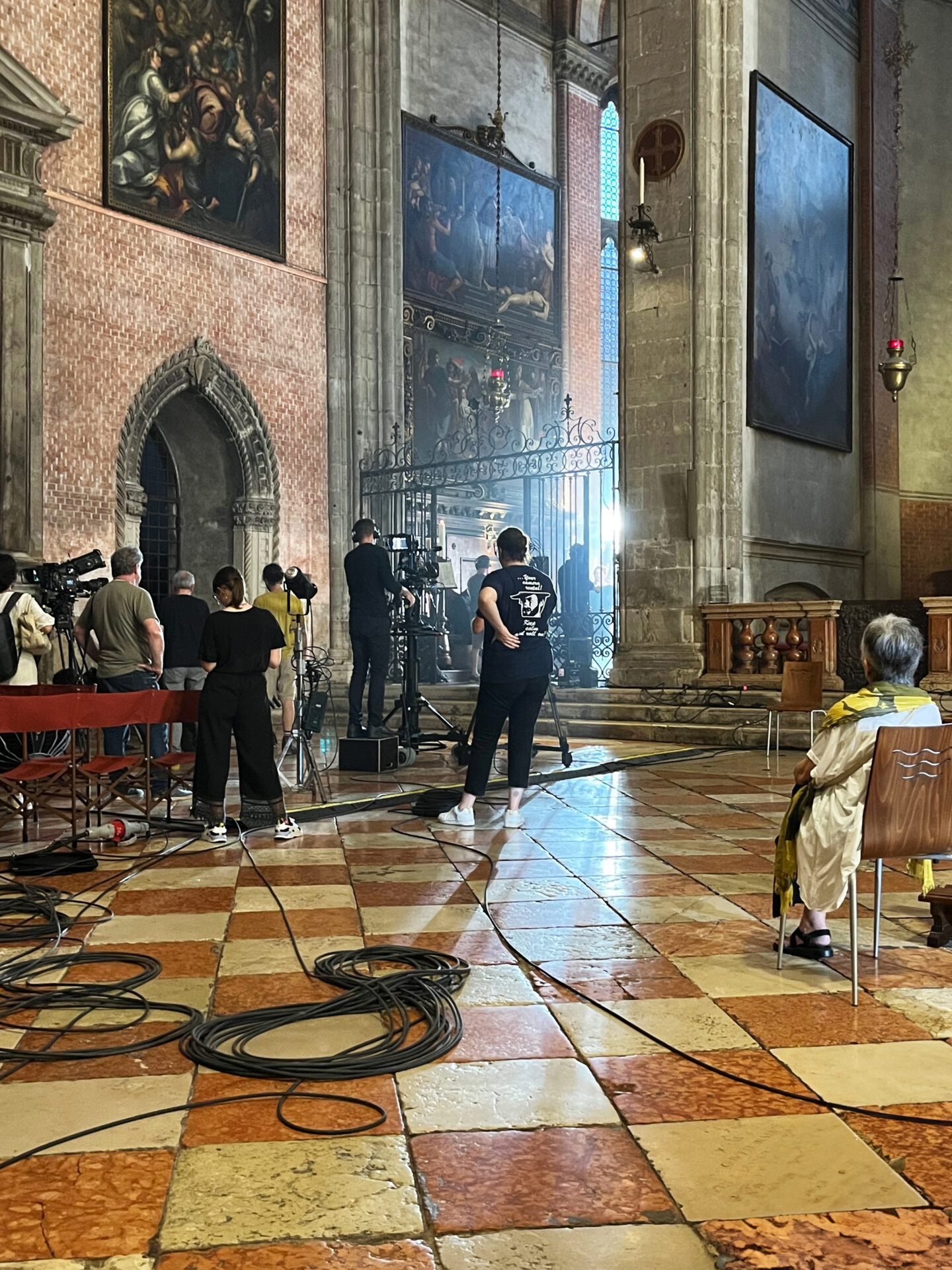
Sir John Eliot Gardiner, who has championed the music of Claudio Monteverdi for nearly 60 years, has been honoured with the citizenship of Cremona, the city where the great composer was born in 1567 – and the home town of the greatest makers of violins and other stringed instruments, Stradivari, Guarneri and Amati. The ceremony was a highlight of a short Italian tour by John Eliot and members of his Monteverdi Choir and English Baroque Soloists. The award recognises his contribution to music, particularly his recordings and performances of Monteverdi’s operas and secular and sacred works, bringing the ‘father of opera’ out of relative obscurity. Using historically informed performances and period instruments, the conductor has brought these 400-year-old works to international recognition and demonstrated that they are absolutely relevant to 21st century music lovers. The citizenship ceremony at the 800-year-old Town Hall was attended by the Mayor of Cremona, Italy’s culture minister, the director of the annual Cremona Monteverdi Festival and civic dignitaries and musicians. After receiving the honour, John Eliot spoke movingly of Monteverdi’s humanity and the importance of music in these difficult and dangerous times. The Monteverdi tour included filming and rehearsals in Venice and Mantua – both places where Monteverdi worked – and Rome. It culminated at Cremona, with a concert of his sacred music as the grand finale of the 40th Monteverdi Festival.
Light streams into the ancient Frari church in Venice, where a French film crew recorded rehearsals and performances of Monteverdi works, by members of the Monteverdi Choir and English Baroque Soloists. Monteverdi lived and worked in Venice for 30 years and is buried in the Frari.
The performance in the church of Sant’Agostino received a standing ovation. Sir John Eliot Gardiner, who was 80 earlier this year and took part in the coronation of King Charles, farms near Shaftesbury. He is one of the world’s leading conductors, renowned particularly for his recordings and concerts of music by Bach, Mozart, Beethoven, Berlioz, Brahms – and Monteverdi. Last year, he was awarded the honour of Cavaliere di Gran Croce of the Order of Stella d’Italia, presented by the Italian ambassador, Inigo Lambertini, at a ceremony at the Italian Embassy in London. At this year’s Proms, John Eliot will conduct the Monteverdi Choir and his Orchestra Revolutionnaire et Romantique in Berlioz’ The Trojans, the first time this massive opera has been performed at the world’s greatest music festival.
It was a momentous and thrilling occasion for Blandford’s Archbishop Wake CE Primary School in June as the Archbishop of Canterbury, Justin Welby, paid a visit to the school. Although it was a brief stop on his way through the diocese en route to Poole, it held immense significance for the children and the parish. The weather was kind, providing a lovely setting to celebrate and share the visit with guests from the Trust, governing body, and local parishes. Archbishop Justin was delighted to spend time answering the children’s questions and later engage with parents and carers at the end of the school day. During his visit, the school presented Archbishop Justin with a specially-crafted artwork by their own Miss Stewart, the whole piece being created by the children of the school. The Archbishop has expressed his intention to display this artwork at Lambeth Palace, alongside the portrait of Archbishop William Wake, the founder of the school. The visit was a tremendous honour for both the school and the local community.
Renowned local artist Katie Scorgie will be part of Stur Art Week – this recent painting is of Eastwell Lane between Marnhull and Hinton St Mary
Introducing the Artists… This month sees the return of Sturminster Newton Art week! Now in it’s third year, it runs from 15th to 23rd July. More than 25 artists will be exhibiting their work across 30 venues in Sturminster Newton (and down the road at Spirehill), and both William Barnes School and Yewstock School have joined the Art Trail as new hosts this year. To plan your visits along the art trail, download a brochure here or you can pick one up from one of the local businesses, in The Exchange or next time you call into 1855. The trail is made possible thanks to funding provided by SturAction (Sturminster Newton Community Benefit Society Ltd) – the charitable organisation which raises money for the benefit of Sturminster Newton. It does so through donations and sales at its shops – The Emporium, The Boutique and the Furniture Store – which also help the town by drawing added footfall to increase the local economy. Less than a year ago SturAction established a new, exciting and unique shopping destination in the former NatWest bank. Built in 1855 – hence the name – the building is now host to almost 70 individual producers, makers and creators from the Blackmore Vale area. Several of those traders will be joining Sturminster Newton Art Week, displaying inside and in the windows of more than 30 venues around town. Mention, too, should be made of the Workhouse Chapel in Bath Road which permanently hosts a carefully curated collection of work by Dorset Artists. Also, The Exchange regularly displays works of local artists in the Bibbern Gallery and hosts inspiring theatre (and much more), especially through the Dorset Artsreach foundation.
BIB the bike allows those with mobility issues to enjoy the freedom of a cycle ride in the country
Late night and Sunday shopping at 1855 1855 is now open on Sundays, 11am to 3pm. Perfect for a relaxed weekend – why not enjoy a browse followed by a delicious brunch in the town and then blow away the cobwebs with a stroll down the trailway? On the last Friday of every month 1855 is open until 8pm. Pop in on your way home from work – or your way out for the evening – to buy some Rivers Corner cider, some Forager liqueur from Cerne Abbas or a bottle or two from Wolfe Wines. Plus you’ll be needing some Ford Farm Cheese from The Cheeseman and Olives et Al nibbles … and seeing as you’re there, why not pause to browse and meet some of the traders?
Inside 1855 in Sturminster Newton
Free parking on the first Saturday There is always free parking – all day, both car parks – on the first Saturday of every month thanks to SturAction. By random chance cough it also happens to be the same day that the 200 or so car and bike enthusiasts have a friendly morning meet in the Rec.
BIB the bike The community’s BIB the Bike has now been serviced and insured, courtesy once again of SturAction, and a team of volunteers are already out peddling. BIB is used for those in the community with mobility issues, allowing them the benefits and enjoyment of a cycle along the Trailway. If you’re interested to learn more, either to use it or to volunteer your cycling services, please do contact the Social Prescribing Team at the Blackmore Vale medical centre.
The Swan Theatre Yeovil is renowned for its innovative approach to the arts, and this summer’s Music Festival is no exception. Breaking new ground, the Swan Theatre will be opening its unique and intimate space to host a series of classical music concerts for the very first time in its history. The Swan Music Festival is under the guidance of Mike Stanley, who enjoyed a successful career as a pianist and musical director in London’s West End for over four decades. Following his move to Somerset, he has continued to pursue his passion for music, and is a dedicated member of the Swan Theatre. He is the founder and creator of the festival, and the event will feature The Cirrus Quartet and guests who will perform four concerts of chamber music. Mike will be joined by other leading solo and chamber music performers, all of whom have worked with most of the top chamber and symphony orchestras in Great Britain. The festival’s program will feature a selection of popular chamber music, by the likes of Beethoven, Mozart, Debussy, and Schubert. Spanning four days in July, the Swan Music Festival will bring the beauty and richness of chamber music to Yeovil.
Remembering Morris This year’s festival holds a special significance due to the poignant circumstances surrounding its inception. During the early stages of planning the event, Mike Stanley tragically lost his grandson, Morris, to Strep A at just 14 months old. The Swan Music Festival provides an opportunity to raise funds for Great Ormond Street Hospital (GOSH), where Morris was treated, and to honour his memory. The Stanley family’s charitable efforts, including Mike’s son Ben running the Paris Marathon just seven weeks after the loss of his son, have already raised over £27,000 for GOSH. The Swan Music Festival will further contribute to this worthy cause, supporting the extraordinary efforts made thus far, and serving as a celebration of Mike’s two greatest joys in life: family and music. The festival takes place from 19th to 22nd July, with each day featuring performances by renowned musicians. Some of the highlights include:
19th July: W.H.Reed – Legende for String Quartet Percy Hilder Miles – Clarinet Quintet Brahms – Clarinet Quintet 20th July: Mozart – Piano Quartet K 493 W.H.Reed – String Quartet No 5 Elgar – Piano Quintet 21st July: Beethoven – Piano Trio ‘The Ghost’ Debussy – Cello Sonata Clara Schumann – Piece for violin and piano Brahms – C minor piano quartet 22nd July: Vaughan Williams – Piano Quintet Brahms – String Quartet opus 51 no 2 Schubert – “The Trout” Quintet
To attend the Swan Music Festival, tickets are £15 from swan-theatre.co.uk (or £50 for all four concerts if bought via the box office at [email protected])
Starting life as a simple holiday purchase in Blackpool, the little yellow hand puppet became a national treasure. By Rachael Rowe
In 1965 Harry and Sooty appeared on Desert Island Discs. Their luxury item was a trumpet, while songs included My Favourite Things by Julie Andrews
Sooty and Sweep entertained thousands of children (and more than a few adults) during the 1950s and 60s, and probably millions more through the 70s, 80s, 90s and the new century. The delightful puppets are still recognisable today. Unbelievably, it’s 75 years since Sooty first took a bow. But did you know he had a Blackmore Vale connection?
The beginning of Sooty When the 30-year-old Harry Corbett was on holiday in Blackpool with his family in 1948, he bought a yellow glove puppet for 7/6 (37.5p in ‘new money’) to entertain his children. As a part-time conjurer, he practised magic tricks with the bear, but little did anyone know how famous that puppet would become. Originally called Teddy, the bear appeared with Harry on the BBC’s Talent Night programme in 1952. To make the puppet more distinctive on black and white television, Harry blackened his ears with soot. The ear makeover also gave Teddy a new name – and forever after he was known as Sooty. When Sooty won the Talent Night programme, he was given a regular slot on the Saturday Special in the 1950s. In July 1955, Sooty got his own TV show, based on a series of sketches. Harry Corbett did the voiceover and created Sooty’s famous catchphrase: ‘Bye-bye, everybody. Bye-bye.’ Sooty rarely said anything, preferring to whisper mischievously in Harry’s ear.
The Corbetts’ house in Child Okeford today, with Sooty, Sweep and Soo in the top right window – image Laura Hitchcock
A family of voices But Sooty was lonely on his own, and soon he had a best friend, a grey-haired dog called Sweep, whose distinctive squeak was created by Harry Corbett’s brother, Leslie, blowing through a saxophone reed! Another chum, Soo the panda, joined the family in 1964. Her motherly tone was voiced by Harry’s wife, Marjorie. The Sooty Show – later becoming just ‘Sooty’ – ran from 1952 until 2004 and was then relaunched in 2011. It remains the longest-running non-consecutive children’s show, according to the Guinness Book of Records.
Sooty, Sweep and Soo still keep an eye on the village
The Child Okeford Connection Born in Bradford, Harry Corbett – and, of course, Sooty, Sweep and Soo – lived with his family in Child Okeford, for most of his life. Behind the house on Station Road was an outhouse where Harry created the sketches and filmed the puppets in action. In 1962, an article in The Stage described their home as ‘a lovely old farmhouse in Dorset with a large paddock that housed the cavalcade of three Sooty cars, all emblazoned with an emblem of the puppet’. There was a caravan as well. According to the Kent and Sussex Courier in 1972, Harry disliked hotels and preferred a caravan when touring. At the time, Marjorie remarked: ‘The only thing I miss is the garden. We popped in recently, and the bulbs were just coming through.’ Although the Corbett family no longer lives in the village, they are remembered with fondness by local people. Gary Ridout remembers the Corbett household: ‘He (Harry) had brick stables at the back, which he turned into a small studio where he made props and did some filming. My claim to fame is I own one of the aluminium lighting poles that ran across the ceiling! I bought it when they were moving house to use as a mount for a CB radio aerial. I once delivered a bed to them and was very surprised when the woman’s voice who opened the door was the voice of Soo.’ The Corbetts were very much part of the village. Sara Crane recalls: ‘He used to come into the pub opposite [the Union Arms, now a private home] with his missus. She was lovely.’ The pub was the Union Arms, now a private home. On New Year’s Day 1976, Harry was awarded the OBE – but the award was actually intended for the Steptoe and Son star Harry H Corbett, who was an avid Labour supporter. Someone had left the middle H out of the recommendation by Harold Wilson! In the end, both Corbetts were awarded OBEs – on the same day – and there was a miniature medal for Sooty at the investiture. In 1976, Harry retired following a hearth attack, and Sooty and Sweep were taken over by his younger son, Matthew. However, Harry found it difficult to let go, and even after Matthew Corbett bought his father out for £35,000, Harry continued touring with his one-man stage show. In 1989, Harry Corbett and Sooty played to a packed-out audience in Weymouth before returning home to Child Okeford. He died in his sleep that night.
Sooty remembered There is still one small reminder of the Corbetts’ time in Child Okeford today. The house where they lived and created Sooty sketches is a private home. But, as you walk by, take a look at the upstairs window. You will see three distinctive figures – Sooty, Sweep and Soo are gazing out at the street below as the owners’ lovely nod to their connections with both the house and this Dorset village.
Climate change is causing even the most experienced gardeners to consider things like drought resistance, says gardener Pete Harcom
Start collecting seed from any plants you want to grow next year – like these nigella (love-in-a-mist)
Climate change is fast presenting gardeners with the challenge of making the right choice of plants in a changing environment – and trying to garden with less water. Choosing plants with a degree of drought resistance is becoming increasingly important. When looking at water conservation, the garden soil is as important as the plant choice, as this will help to avoid the excessive use of hosepipes. After rainfall or after having watered your plants, putting down a thick mulch layer of garden compost or bark clippings will help a great deal to retain moisture and will also handily suppress weeds. There is a wide range of plants that can tolerate dry soils and low levels of rainfall, especially once they have become established. Look for some of the following at the garden centre: Abelia grandiflora, achillea, agapanthus, box plants, bergenia, ceanothus, eryngium, euphorbia, sedums, verbena bonariensis, perennial geraniums, red valerian (centranthus) and heuchera.
And your jobs for July’s garden:
Deadhead flower borders regularly to prolong flowering – it can have a significant effect on how long you can enjoy your flowers. Leave the last of any rose flowers that produce attractive hips.
Divide clumps of bearded iris and take cuttings of patio and container plants ready for next year.
Autumn flowering bulbs can be planted now – try autumn flowering crocus, sternbergia, crocosmia, nerines, alstromerias, cyclamen hederifolium, and hesperantha (these South African bulbs can flower up to Christmas in sheltered spots)
Start collecting seed from plants you want to grow next year, especially aquilegia, calendula, foxgloves, poppies and nigella (love-in-a-mist).
Pest and diseases
(greenfly and black fly) and capsid bug damage on stems and leaves of young shoots. To avoid chemical spray, try staying on top by simply squishing them when you see them.
Vine weevils can be a problem at this time of year too, and can be especially damaging to plants in containers.
Look out for – and treat – blackspot on roses. It is very difficult to reverse the disease, but you can stop the spread by treating early in the season with a fungicide. There are a number of environmentally friendly organic products for suppressing blackspot including sulfur and neem oil. Do be sure to remove all infected leaves, especially those on the ground.
If you need to prune your hedges, check first for any birds that may be nesting. The main breeding time for garden birds is between March and August so maybe ignore the messy hedge and give them time to rear their young. Garden birds need all the help they can get!