CHILD OKEFORD BLANDFORD FORUM DORSET DT11 8HN www.hanfordschool.co.uk ‘Come and join our staff body at our vibrant and happy prep school for girls (aged 7-13) set in the beautiful Dorset countryside’
SENIOR RESIDENT MATRON
We are seeking a caring and empathetic Senior Resident Matron with strong inter-personal skills and a can-do attitude, who will be an excellent role model for our pupils. The successful candidate will make a significant contribution to the pastoral welfare of the pupils and will have the capacity to support and understand young people in all aspects of their development, especially their emotional, academic and pastoral needs. They will expect and embody high standards of behaviour, courtesy and care.
The successful applicant will be required to work weekends and evenings as required and have significant overnight responsibility. Accommodation will be provided.
To start as soon as possible.
To learn more about this opportunity please call the School Office on 01258 860219 or visit our website: www.hanfordschool.co.uk
Application deadline: Monday 2 December NOTE: Please apply using our own application form and send direct to [email protected] and not through third parties. Interviews from 5 December 2024
Hanford is committed to safeguarding and promoting the welfare of children and expects all staff to share this commitment. These posts are all subject to enhanced DBS checks. Hanford School is part of Sherborne Schools Group. Charity Number 1081228 & Company Number 04002575
Curating playlists that evoke emotions and wellbeing, Dorset Mind’s Usifo Cyril Omozokpea finds music to be a powerful mental health tool
With music as a constant presence at home and on family road trips, I grew up with a deep love for music of all types from different parts of the world. Little did I know then that music would become a cornerstone of both my life and my healing journey. As an adult, I am never without my headphones, because listening to music has always helped me create a mental safe space. After going through a period of grief, I worked at a radio station, and I started to discover that different kinds of songs had different emotional effects on me. Some were so calming and grounding that I began to feel they were written and performed just for me – even if I didn’t know who made that music.
My playlists With the invention of music streaming apps, humans have more access to music than we have ever done before, and the ability to sort this large spectrum of music into personalised playlists is just pure joy. I set aside time each week to listen to new songs, sorting the ones I like into different playlists depending on what kind of emotion they trigger. These playlists have become my emotional companions. Each song and each playlist creates a safe space for my mental and emotional wellbeing and has a big therapeutic effect on me.
Engaging with music Music has the power to capture memories like a time capsule. I always look out for memories I can treasure and associate them to music, so that on days when I feel down, I can recall a good memory just by listening to the right music. Actively and intentionally listening to music can transport you: it can transform uncomfortable feelings, and it can help make an environment feel like a safe space as it helps to block out the distractions and creates a calming space for you to be yourself within the words of the song or the sound of the instrumentation playing in your ears. A music background gives the feeling of being in a secure place, where positive change is possible.
Moving with the music Movement is great for our mental wellbeing and music is a great driver of movement! When you listen to music sitting down, you unconsciously begin to move your head or your feet or simply tap your fingers on the nearest surface – music inspires motion. Some people dance to music, others run, and some of us just walk. I love to walk with headphones on, listening to one of my playlists – the result is always clarity and well being, while unconsciously clocking up 5,000 steps or more! Every time I walk with music, the places I go feel new, like I am there for the first time. It’s a new day and new and exciting things are possible – I discard fear and worry. Music is special to human beings, whether you listen to it or make it, it has a big influence on our emotional and mental wellbeing. So go and create your own playlists, dance in your kitchen, play an instrument, join a choir, try music therapy – they are all things you can do that use music to benefit your wellbeing.
Support for you: First steps towards support should be to speak to someone – a trusted friend, family member, professional or your GP Visit Dorset Mind for local mental health support and helpful advice The Samaritans are there to listen 24/7, call them free on 116 123 Call Dorset’s mental health helpline Connection for support on 0800 652 0190
A challenging harvest done but new TB cases to consider, and James Cossins pushes Rawston Farm through to finish planting for next season
This month’s pictures from Rawston Farm both capture the same autumnal task of sowing wheat, which 60 years ago was a far simpler method: in 2024, it involves direct drilling into stubble, guided precisely by GPS technology. The cost of the 1960s machinery was probably less than £1,000 – approximately £21,000 today. The 2024 version opposite is worth nearly £200,000!
The final part of this year’s rather protracted harvest is finally complete, with the forage maize crop now clamped ready to be used for our cattle feed for the winter months. We have probably harvested a couple of weeks late, but the weather conditions have not been in our favour. Luckily our soils were not punished too much by the farm machinery taking the crop out of the fields, and we’re fortunate that it also involved very limited public road use. I know that in some parts of the county it has been very challenging to get the maize out of the fields without bringing a large amount of mud onto the roads. In such cases contractors always do their best in brushing the roads to keep them clean and safe for other traffic. We have progressed reasonably well in getting next year’s crop into the ground too: grass seeds, oilseeds and winter barley sowing have all been completed. Hopefully we’ll see some late autumn dry weather so that the winter wheat drilling can be completed. A lot of this year’s malting barley has left the farm, headed to either Burton on Trent for Molson Coors, or to Southampton for temporary storage before being loaded onto a boat heading for Europe. So far we’ve not seen too many financial claims for quality issues – the specifications to meet the quality requirements for barley intended for beer-making are very strict.
Back to TB again On the cattle side of the farm we had yet another TB test, resulting in two reactors, much to every one’s frustration. Once again the post mortems on the two animals didn’t show any visible lesions within the carcases. We now face a difficult decision – do we carry out a more sensitive test to determine whether there are any cattle in the herd carrying the disease and are not being picked up by the existing skin test? The more sensitive test involves collecting a blood sample from every animal, which will be quite an undertaking. We have been told that we may lose up to ten per cent of our cattle, and the Government‘s animal and plant health agency may insist that we carry out this test anyway. Personally, I feel the best solution would be to go down the vaccination route – but we have been told for years now that it is just “five to ten years away”, with no signs of it coming any closer. It is very frustrating to cattle keepers – we are close to eradicating this disease, having made such good progress in the last few years. New beginnings On a happier note for the Cossins family – we celebrated the birth of a granddaughter to Barbara and I in October. What an interesting world she has been born into!
In this episode of the BV Podcast, hosts Terry Bennett and Jenny Devitt dive into some of the hottest topics affecting Dorset’s communities. From the housing crisis to farmers grappling with recent policy shifts, there’s plenty to unpack.
Terry and Jenny kick off the podcast with letters from readers—an eclectic mix of perspectives on everything from barn owl chicks to concerns about Dorset Council’s “Litter Lotto.” These letters showcase the BV’s ability to connect with the pulse of Dorset life, whether it’s wildlife conservation or rural planning concerns.
Dorset’s Politicians Speak Out
As usual for the first episode of the month, the spotlight turns to Dorset’s political voices:
Simon Hoare, MP for North Dorset, critiques Chancellor Rachel Reeves’ budget and warns of its potential consequences for small businesses and rural economies.
Ken Huggins of the Green Party tackles the global implications of Trump’s presidency alongside local concerns about Labour’s economic policies.
Edward Morello, MP for West Dorset, offers a thoughtful perspective on the Assisted Dying Bill, emphasizing the importance of safeguarding vulnerable individuals.
Gary Jackson of the Lib Dems advocates for stronger trust between central and local governments, calling for meaningful devolution.
Housing Crisis: A Rural Perspective
The new Grumbler column shines a light on Dorset’s housing dilemma, challenging the push for new builds on greenbelt land while thousands of homes sit empty. The anonymous writer passionately argues for sustainable solutions that preserve the countryside and prioritize affordable housing in urban areas.
A Farmer’s Take: Inheritance Tax and Food Security
In an insightful interview, Terry sits down with tenant farmer George Hosford, who unpacks the recent budget’s implications for agriculture. From inheritance tax changes to the abrupt end of farming subsidies, George offers a candid look at the challenges facing small farms. He questions whether current policies truly support food security or merely increase dependence on imported goods.
As George puts it, “We’re almost certain to reduce the amount of food being grown in this country, while making it harder for small farmers to stay in business.” His nuanced views – touching on tenant farming, environmental commitments, and the inequities of land ownership – make for essential listening. “…that’s pretty controversial, and a lot of landowners won’t like to hear me say that, but that’s my belief. Like it or lump it.”
These interviews were based on articles found in November’s BV, which can be read here … grab a coffee and jump in to the Dorset-ness. News, opinion, people, wildlife, art, farming, what’s on, horses … and frankly stunning photography. Did we mention it’s FREE?
(We’re proudly 100% digital, so the only way to read us is right here online.)
The BV is Dorset’s go-to magazine – this year named ‘Best Regional Publication in the UK’ (ACE Awards) and ‘Regional News Site of the Year’ (Press Gazette). Brimming with Dorset’s people and places, it’s too good to miss!
Seeking sanctuary under the stars: CPRE’s Dr Richard Miles looks at the push for a dark sky reserve to safeguard our natural nightscapes
Light pollution impeding the view of Orion and Taurus rising over Piddletrenthide (courtesy Kevin Quinn)
One of the attractive features of Dorset is the way it has avoided many of the pressures of modern development that affect so many English counties. And, along with just Norfolk and Cornwall, Dorset does not have a motorway running through any part of the county. Driving back to Dorset from London at night, I sometimes follow the A303. The route winds westwards through Wiltshire, passing the brightly illuminated services above West Knoyle before crossing Charnage Down where it reaches a height of more than 700 feet before bending leftwards and dropping down towards Mere. Here, the Blackmore Vale comes into view for the very first time as an expanse of darkness, telling me I am nearly home. Darkness is our heritage – and it is in danger of being lost. Being frightened by the dark as a child may be a relic of our ancient past, when there was no artificial light. We survived because of our innate instinct to seek sanctuary at night, not knowing what creature may have lain in wait for us, hidden from view. Here in the UK we no longer need fear the night. Indeed, the opposite is true: darkness can be an escape from the interminable lights in our towns and cities, an opportunity to seek rest, recreation and sleep. Dark skies have become something under which we and fellow creatures can seek sanctuary – an escape from the spotlight of the modern world, a chance to return to nature and to see the world as our ancestors saw it, wild and wonderful.
Benefits of dark skies Having light in the right place, at the right time and in the right amount, saves money and energy, helping to mitigate the effects of climate change. It also supports biodiversity, allowing for thriving habitats for mammals like bats, owls, and hedgehogs, along with insects such as moths and glow-worms. Loss of biodiversity is a serious problem the world over. Depriving people of the emotional connection with a night sky full of stars is one concern, but light pollution also has direct effects on human health. Darkness is essential for the natural release of melatonin, a hormone that promotes sleep, regulates our sleep cycles and acts as a powerful antioxidant, protecting against neurodegenerative diseases like Alzheimer’s and Parkinson’s.
Visitor attractions and star parties Our Blackmore Vale inheritance has historically been a dark one – and it’s one we are well-advised to preserve. Dark skies attract visitors, as demonstrated by the many dark sky parks in Scotland and elsewhere. Nearer home there is the example of Stourton Caundle, where visitors can go Starlight Glamping, free from light pollution and staying in luxury bell tents with immediate access at night to starry skies. The website Go Stargazing helps people find the best places to stargaze in the UK – some of our local viewpoints, including Fontmell Down near Compton Abbas and the Cerne Giant viewing area on the edge of Cerne Abbas, are featured. Stargazing events, including popular Star Parties, bring together enthusiasts who arrive, equipped with telescopes and binoculars, in their camper-vans, set up tents or stay in local accommodations. The inaugural Cerne Abbas Star Party took place this September at the local brewery and, despite challenging weather, was deemed a success – it will return next year. The event featured speakers like Steve Tonkin, Dark Sky Adviser for Cranborne Chase National Landscape, an officially recognised International Dark Sky Reserve since 2019. Steve assisted in the bid to win this status by serving as a volunteer, taking sky quality readings and supporting stargazing evenings through giving talks and showing people the night sky.
A Dorset Dark Sky Reserve Naturally, the idea that Dorset might also benefit by having an area set aside as a dark sky reserve was discussed. Would ‘reserve status’ help to conserve our county’s dark skies? The Dorset Area of Outstanding Natural Beauty, renamed Dorset National Landscape in 2023, comprises some 436 square miles. Some of the skies in this protected area suffer from excessive illumination, as shown by the accompanying light pollution map, but there still remain areas that are properly dark, shown edged in red. Part of this area extends north into the Blackmore Vale. Unlike other forms of lasting pollution in the natural environment, the effect of lighting can be removed at the flick of a switch. Tom Munro, manager of Dorset National Landscape, recently stressed that ‘Dark night skies are one of the Dorset National Landscape’s special qualities, one of the important elements that add up to this area’s nationally-important stock of natural beauty which is protected for future generations. We fully support the CPRE’s campaign to preserve the few dark skies we have left, particularly in southern England, and work guided by our partnership to that end.’ In the meantime, in the words of Hodges: ‘Put that light out!’
A local expert from Citizen’s Advice provides timely tips on consumer issues.
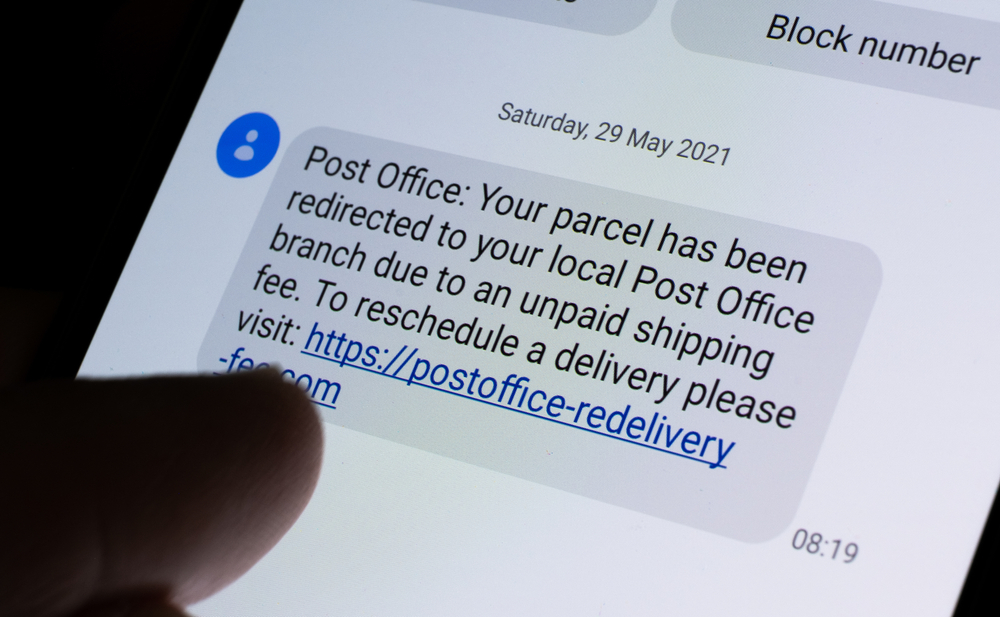
Q: ‘I keep reading about people losing money in scams and I am worried that it might happen to me. What can I do to minimise the risk?’
A: It’s not easy to spot financial scams so it’s important you know what to look out for. Here is a quick guide to six financial scams:
Investment scams: scammers often use fake celebrity endorsements to promote false investments on social media. Scammers can also make fake investment firms seem legitimate by setting up clone websites of real companies. Check for a padlock icon next to the URL in the address bar, and instead of relying on a clickable link in an email or text, search on Google for the company – official websites are positioned higher in the search results since they have existed longer and have more links from other websites.
Friend-in-need scam: be wary if a friend or relative messages you urgently asking for money as it could be a scammer pretending to be your loved one to exploit your willingness to help. Before responding to unexpected messages requesting financial help, call your family member or friend directly to confirm the request. Many families choose a simple, memorable password to protect more vulnerable members from scammers posing as loved ones, posting urgent messages.
Romance scams: be wary if someone you met on a dating platform avoids video calls and meeting you in person, but starts asking for urgent money due to emergencies.
Pension scams: the two main types of pension scam are pension review scams and early pension release scams. Remember that professional advice on pensions is not free – any unexpected calls for reviews or offers are more than likely a scam. Hang up and find a reputable professional locally.
Debt help on social media: some financial influencers use social media to promote debt solutions in a misleading way. The solutions may give inaccurate advice which can put your finances at risk.
Parking QR codes: QR phishing is where fake QR codes are placed in areas such as car parks where you might scan and pay for your parking at ticket machines. If you find a QR code for payments at car parks, watch out for any tampering signs, and pay attention to the website you’re led to – be sure the QR code takes you to a legitimate site. When in doubt use one of the parking apps, and only pay through those.
If you’ve been scammed: • Don’t feel embarrassed — scams can happen to anyone • Report the scam as soon as possible • Check if you can get your money back by contacting your bank immediately • For more information, check our website https://www.citizensadvice.org.uk/consumer/scams/
Step back in time with our ‘Then and Now’ feature, where vintage postcards from the Barry Cuff Collection meet modern-day reality. Explore the past and present on the same page, and see the evolution of familiar local places. ‘Now’ images by Courtenay Hitchcock
The Street is remarkably unchanged on the left, though the wall on the right has been replaced by garden hedges.Today’s large village green is not there in the old postcard. At that time, the river extended into a large pond
The Smith’s Arms in Godmanstone dates back to 1420 and originally served as a smithy. According to local legend, the pub’s licence was granted by Charles II, who requested some refreshment when his horse had thrown a shoe and he stopped at the smithy. When the smith explained he had no licence to serve ale or porter, the King instantly granted one by Royal Charter, starting a 350-year career for ’the smallest pub in England.’ The tiny public house measured just 11ft 9ins by 15ft, the ceiling barely clearing the head of patrons over six foot tall and it had just six tables. In the 1960s, the pub was sold to John and Linda Foster. John had been a top jockey who rode in three Grand Nationals, but had to retire from racing after a serious riding accident. The couple ran The Smiths Arms very successfully until the mid-2000s when John’s deteriorating health forced the couple to retire.
The Stickler – officially The Dorset Three Peaks – involves 1,500 ft of gruelling climb as runners ascend Okeford Beacon, Hod Hill and Hambledon Hill.
Could the weather have been any more perfect for this year’s Stickler race? Now in it’s 29th year, regular runners have come to expect flood-like conditions and some were apparently disappointed by the lack of wading required! But nobody was disappointed by the beautiful sunshine and the opportunity to run in a vest at the end of October. The Dorset Three Peaks involves more than 1,500ft of gruelling climb, beginning with the infamous Stickle Path. Runners ascend three locally-renowned peaks along the beautiful Stour Valley – Okeford Beacon, Hod Hill and Hambledon Hill. This year more than 570 runners registered, and there were 510 finishers. Local runner Dave Hewes from North Dorset Triathlon Club was under very strict instructions to get around safely as it was his stag do – he was getting married the next day! Luckily he achieved both, and we wish huge congratulations to him and his new wife. The Doddlers’ own Jane Feather ran it as a birthday present to herself (it takes all sorts – Ed), and what better way to spend the day? The 2024 winner was Charles Ford, who completed it in a time of 1:06:02. First female over the line was Anna Philps from Purbeck Runners in 1:19:20. Second and third males were Christopher Peck from Egdon Heath Harriers (1:06:44) and Matthew Harris from Oxford University AC (1:08:32). The second and third females were Emma Hines from Swindon Harriers (1:20:02) and Ali Young (1:21:16). The winning female team was from Chippenham Harriers, consisting of Liliano Soto, Juliette Hatt and Julia Maddocks. Winning men’s team was the Dorset Doddlers team of Christopher Wright, Rich White and Tom Mitchell. Well done all! The race organisers would like to say an enormous thank you to everyone who made the 29th Stickler such a success. The race is only ever as good as its volunteers (the Stickler has more than 80), and the consensus is that these are the best. The organisers send special thanks to the Dorset Doddlers running club, local community volunteers, Ann Powell and all at the Shillingstone Church Centre, Shillingstone Station, the residents of the local villages who are always so patient and supportive, and the amazing sponsors Hall and Woodhouse, Honeybuns and Up and Running Bournemouth. Keep Sunday 26th October 2025 free for next year’s event when Adam Frampton will be stepping up for his first Stickler as Race Director.
Kingston Maurward Equestrian Centre will be hosting a lecture demo evening with one of Britain’s leading event riders, Harry Meade, on Wednesday 20th November. Harry will be bringing some of his own horses, as well as coaching a group of local riders on their own horses. The Kingston Maurward team say ‘This is a one-off event, and not to be missed!’ Harry is widely respected for his quiet and sympathetic riding style and ability to produce young horses to he very top level. He has completed 24 5*events, with multiple top placings. Born into an equestrian family (his father Richard was a triple-Olympic gold medallist), Harry spent most of his childhood in the saddle, developing a natural feel and instinct that would become key in his later successes. He has built enduring partnerships with a number of sensitive but talented horses that have gone on to thrive at top level. Harry is driven by the challenges and the excitement of competing at top level and representing his country. ‘Early bird’ tickets (£25) are available until 13 Nov. After this, tickets will cost £29. Booking via Equoevents or call 01305 215016