The Blackmore Vale logo
Home Blog Page 12

Poverty in Dorset’s hidden corners

0

From heating bills to hospital trips, costs across Dorset are leaving many isolated and quiet poverty is growing, warns Jon Sloper

Many people are finding it hard to access what they need when they need it

While most of us are awaiting the forthcoming budget with some trepidation, many in Dorset will be actively dreading it: fearing anything that means more money disappearing.
It certainly feels as though we’re all paying more and more for less, whether it’s the horrendously high water bill or creeping shrinkflation in shops. Older people tend to be disproportionately affected by the rising cost of living.
In 2023, more than 200,000 pensioners in Dorset received a winter fuel payment and the cost of living allowance. With the Government’s new ruling on winter fuel entitlements, that number has fallen to just 20,000 people this winter.
The NHS in Dorset has been using its data to identify those people at most risk of illnesses – they estimate 44,000 people could become ‘financially vulnerable’ over the coming winter months.

Challenges in the community
Last year, Jon Sloper, chief executive of Help and Kindness, was part of a team reviewing data with colleagues from across health and social care. He says the work exposed major gaps in how services connect and communicate: ‘For many people, it’s hard to find what you need when you need it. There are also gaps within the public sector – individual organisations often don’t know what others are doing. When someone leaves a role, much of the local knowledge goes with them.’
Jon says there are still big gaps in communication between services. ‘The data revealed thousands at risk from the cold, especially those with health conditions and shrinking incomes. With the reduction in winter fuel allowance, we looked at who fell into that group and whether they were already receiving support.’
People with a chronic condition are vulnerable to drops in temperature: the mercury only needs to drop 4º to significantly affect their health and potentially require an emergency admission to hospital.
Jon continued: ‘Having found our at-risk group, we involved local authority and health colleagues and asked whether these people were already receiving support – perhaps living in residential care. Or were they living independently, and potentially struggling with additional costs?’
As the GPs had access to the confidential patient data, they reviewed their lists to see whether potentially vulnerable people had received a check-up recently, and if their medications were up to date. Some were contacted individually and in other cases, open health and wellbeing events were held. In addition to a health check, financial advice around preparing for winter was available. Jon says: ‘We wanted them to think about how they would stay warm, and to get in touch with their GP earlier. We knew where there were small pockets of people across Dorset so we worked to reach those people via parish magazines to ask them about winter readiness. We saw a reduction in people attending GP surgeries and an increase in people applying for pension credit, which we encourage: it is the gateway for other benefits.’
Help and Kindness liaised with Age UK and the county’s library services, which helped people with applications, and also with families and carers, advising them on support. Increasingly, Jon is receiving requests for help from family members who want someone to check on a relative – the calls come in from all over the world. Last winter’s work revealed just how fragile life has become for many Dorset residents.

Group of four cheerful senior friends, two men and two women, sitting at table and enjoying talk after playing cards in assisted living home

Jon says the team’s work also exposed wider critical issues. ‘The loneliness is huge. Every week we hear from people who haven’t seen anyone for a week and just want someone to call in. We try to join those up, suggesting places people can go to, like a lunch club. We have access to more than 13,000 events and organisations across Dorset.
‘But the other issue is transport. For many, unless it is literally on their doorstep, they can’t get to it. We try to find local volunteers or community schemes, but transport is one of Dorset’s biggest challenges.’
Poverty, Jon says, is not just a vast issue, it’s a slow burn. ‘There has been a phenomenal rise in the cost of living, and many in Dorset are on fixed incomes. Their overheads are going through the roof, and their money isn’t keeping pace. On top of which, there are the challenges of a boiler that needs fixing or a fridge that breaks … For those reliant on medication, losing a fridge becomes a crisis. And there are no savings left … People don’t have savings any more. They use them for buying food and paying the electric.
‘The poverty issue is everywhere. And it’s not just older people. It’s households with double incomes, people working in care – it’s everywhere.’

Issues in rural Dorset
Living in rural areas of Dorset brings extra pressures. In the middle and north of the county, Jon says, gaps in mental health support and transport leave many isolated. ‘There isn’t a single set of resources available everywhere. Wherever you go in Dorset there’s a different set of challenges and a different set of solutions. And different gaps.
‘There have been huge gaps in mental health support in North Dorset, though it’s starting to improve. Transport in North Dorset is a huge issue and it really affects access to health services – people just can’t get to them. We have many conversations about community transport: there won’t be a major change in public transport infrastructure, so we’re looking at alternatives.
‘Much of rural Dorset is a food desert. From north of Dorchester out to Yetminster and up the Piddle Valley there are a limited number of village stores with no supermarkets. And you can’t easily get to a supermarket from any of those places: if you can’t drive to a supermarket the cost of food can be more expensive.’
He believes Dorset could make better use of existing resources.
‘For example, school transport could be used to support carers in the middle of the day. We often don’t make the most of the resources we have. People struggle to get to hospital appointments in Bournemouth and Poole: it’s £50 for a taxi, one way, from Bridport to Dorchester! How are people supposed to afford that, especially when they are sick?’
Each call for help, Jon says, reveals how complex people’s lives have become. ‘One problem often turns into nine once you start listening.’
His message is simple: community awareness matters. ‘There’s so much quiet need,’ he says. Most of the time, help is out there – the challenge is making sure people know it exists.’
As winter approaches, that awareness – a neighbourly check-in, a shared lift, a simple hello – might be the smallest act that makes the biggest difference.

Help and Kindness maintain a vast directory of services and grants – if you belong to an organisation that can lend a hand or fund something, please let the team know so they can continue to join the dots on services in Dorset.
helpandkindness.co.uk

Two treats at The Exchange in November

0

Bournemouth Symphony Orchestra ensemble in Sturminster Newton.
Don’t miss this rare chance to experience and enjoy some of the South West’s premier classical musicians performing in North Dorset.
The Bournemouth Symphony Orchestra visit to The Exchange on Thursday 20th November will now feature a larger group of 19 musicians, in an ensemble presentation for strings.


BSO’s Serenades and Starbursts is a fascinating programme of musical exploration for an audience of all ages. Tchaikovsky’s masterpiece Serenade for Strings lies at the heart of this musical tapestry.
A musical tour will start on the Mediterranean coastline with Jenkins’ Palladio, inspired by the 16th century Italian architect from whom the piece gets its name. Travelling east, Bartok’s Romanian Folk Dances will be followed by Skyork’s beguiling Ukrainian Melody, and then Holst pays homage to British folk song with his charming St. Paul’s Suite.
Travel further still, across the continent and through time, into a galaxy of rapidly changing musical colours, exploding gestures and fleeting melodies, in the wondrous soundscape of jessie Montgomery’s Starburst. Then Gershwin’s ethereal Lullaby continues the journey further and further away – a musical treat for all.

Don’t miss a gripping, razor sharp, dark comedy at The Exchange.
Inspired by the notorious diary of Frantz Schmit,
Making a Killing is set in 1590, in a world disturbingly like our own. The ropes are ready, the crowd is waiting, and the hangman has a new apprentice. In the shadow of the gallows, seasoned executioner Schmit wrestles with a family curse that haunts his every step.


When his brash new assistant arrives, the two men are thrown together in a world where duty, morality and power collide – and every decision leaves a mark. As the gallows fill and suspicion takes root, their fates become dangerously entwined, until both must decide who they are, and which side of the rope they stand on.
Making a Killing by Ha Hum Ah Theatre is at The Exchange on Tuesday 11th November.

Both these shows are presented by The Exchange in partnership with Artsreach. Tickets are only £14, with generous concessions for children and for families.
stur-exchange.co.uk/whats-on

sponsored by Wessex Internet

The Longest Yarn comes to Sherborne Abbey

0

A unique and moving exhibition has arrived at Sherborne Abbey just in time for Remembrance. The Longest Yarn is a touring exhibition which tells the story of Britain during the Second World War – told through 80 meticulously crafted knitted and crocheted scenes.

Rector Martin Lee and Major General John Stokoe with the knitted figure of Piper Bill Millin
he Longest Yarn’s Britain At War installation stretches 80 metres. Images courtesy of Sherborne Abbey


The installation, titled Britain at War, stretches an astonishing 80 metres in length across two 3D displays. It chronicles daily life from 3rd September 1939 to VE Day, 8th May 1945, with panels depicting rationing, evacuees, soldiers, the Blitz, wartime headlines and the eventual jubilation of peace.
Alongside the intricately-made panels stands a cast of life-sized, knitted characters – each representing key historical figures and veterans from Normandy on D-Day.
All the scenes have been designed with historical accuracy, under the guidance of expert historians, and each tells its own carefully chosen story.

Case 41 is the Balham Bus Crash
Buckingham Palace on VE day

The Sherborne Abbey exhibition was officially opened on 4th November by Rector Martin Lee and Major General John Stokoe, who was photographed with the popular figure of Piper Bill Millin – Lord Lovat’s Mad Piper of Sword Beach – who played his bagpipes as Lord Lovat’s commandos fought their way ashore on D-Day.

Land girl Daphne Hedges moved to Devon to catch rats


This powerful, imaginative exhibition offers a heartfelt tribute to those who lived through the war – a visual storytelling project as creative as it is commemorative.
The Longest Yarn runs at Sherborne Abbey until 27th November. Entry is free, but donations are warmly welcomed to support both the Abbey and veterans’ charities. Visitors who make a donation are invited to take an exhibition leaflet, available at the main door.

With exceptional attention to detail, every tiny figure has been crafted with a personality

Sherborne Abbey is open to visitors Monday to Saturday, 8am–5pm, and Sundays, 11am–5pm, unless services are taking place.
More details can be found at: thelongestyarn.com

Dorset’s Henry Maidment: the story behind a 150-year-old plea for help for a Dorset veteran

0

As Armistice Day approaches, we pause to remember the sacrifices of those who fought for their country. Yet we know that some veterans, like Dorset’s Henry Maidment, slipped quietly through the cracks of history. Henry’s bravery was recognised only when poverty forced his name back into the public eye.

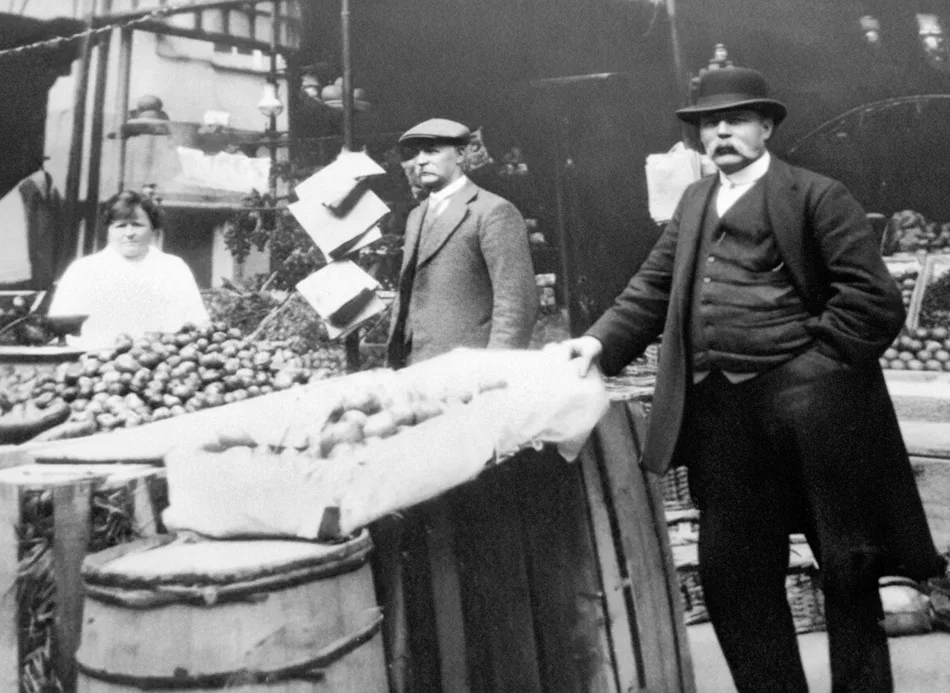
This image is widely circulated online labelled as ‘Henry Maidment, a Napoleonic War veteran, with his wife Rosanna Belben’ – but there is no definitive proof of the couple’s identity.

The photograph above, sometimes seen in colour-tinted form, is widely circulated online labelled as ‘Henry Maidment, a Napoleonic War veteran, with his wife Rosanna Belben’. It appears on genealogy sites such as Find a Grave, though there is no definitive proof of the couple’s identity. When the military charity SSAFA shared the same image, they described it simply as an ‘unknown soldier’. Some have noted that Henry’s medals appear to be worn on the wrong side – perhaps simply a sign the image was flipped, but it could be that the decorations were not his at all. Whatever its origins, it remains a powerful, haunting symbol of an old soldier’s twilight years.

Born in 1783 in the village of Pimperne, near Blandford, Henry Maidment fought in the Peninsular War against Napoleon’s forces, taking part in the brutal battles of Talavera, Salamanca, Vittoria and Toulouse. His medal – the Military General Service Medal with multiple clasps – testified to years of service in Europe’s bloodiest campaigns. Yet by 1866, aged 83, we know the decorated veteran was destitute, surviving on a parish handout of two shillings and sixpence a week and a single loaf of bread.

Public appeal

His situation prompted a very public appeal. In March 1866, George Mansel, a local lieutenant, wrote to The Times describing Maidment as “a fine old soldier now suffering hard times” and inviting donations from readers:

May I endeavour to enlist the sympathy of your numerous readers on behalf of one of the few surviving veterans of that army which gained immortal renown under our great Duke in Spain from 1809 to 1814? The subject of this appeal, Henry Maidment, is now living at Pimperne, near Blandford.

He is in his 84th year, and his sole support is 2s. 6d. a week and one loaf of bread, allowed him by the parish. He served in the 53rd Regiment, and fought in the following battles, for which he received a medal and seven clasps:- Talavera, Salamanca, Vittoria, Pyrenees, Nivelle, and Toulouse.

Having enlisted for ten years, he was discharged without a pension. He is a fine specimen of an old soldier, and has always borne an excellent character. If any one who reads this appeal would like to soothe the remaining years of this veteran with a few necessary comforts, the Rey. William Bury, rector of Pimperne, near Blandford, and myself will be glad to be their almoners.—I remain, yours truly, GEORGE P. MANSEL, Langton-lodge, Blandford.

‘More shame’ for Mansel

But the response to the appeal was mixed. The Times’ letter was also shared in the local Western Gazette, and the editor, in recapping the whole of the correspondence, noted that ‘the following snarling epistle’ appeared a few days later: 

Sir,- read in the Times of the 28th a letter signed by a gentleman of property and position, as I am told, in Pimperne – Colonel Mansel – inviting the sympathy and assistance of the public towards maintaining a very old Peninsular veteran, whom he describes as bearing an excellent character, and having no other maintenance than 2s. 6d. a week from the parish of Pimperne.

If this be so, more shame, I think, for the Colonel, Lord Portman, and other rich proprietors in the parish and neighbourhood, who surely might afford, among them, to keep this poor old soldier in comfort without invoking the powerful aid of your columns to assist them.

We have heard much of late of the condition of Dorsetshire labourers, who are starved on wages of 8s. and 9s. a week, so perhaps one ought not to be so greatly surprised at this appeal. I am neither a landed proprietor nor a military man; but, thank God, I live in a part of the kingdom where we pay our labourers from 15s. to 18s, a week, and do not require the sympathy of the benevolent public to help us to keep such deserving objects of charity living among us as this worthy old veteran.–Yours, &c., a MAGISTRATE.-’

Henry Maidment died two years later, his death registered by a neighbour who had cared for him in his final days. He was buried in St Peter’s churchyard, Pimperne. His story – uncertain in image but clear in meaning – serves as a reminder that remembrance is not just for the fallen, but also for those who lived through the hardships of war. 

As we mark Armistice Day, Henry’s story continues to resonate: a soldier whose battle extended beyond the battlefield.

Letters to the Editor November 2025

0
Laura
Laura Editor of the BV

This month, I bought a pair of trousers. They are both comfy and flappy.
This may not sound like headline news, but trust me – it’s a revelation. Soft, swishy, deeply satisfying. They make a pleasing noise when I walk. I’ve worn them three days in a row. Life, I’ve decided, is too short for uncomfortable clothes – one of the few perks of reaching an age where you no longer care if your family hates your wardrobe.
My son is currently thousands of miles away – I haven’t hugged him in a year, and right now he is sad and unwell.
And as I write, the Chancellor is sharpening her pencils and her tax plans. Wars around the world make my heart heavy and my brain rage. And I now have enough grey hair for it to visibly appear in my hairbrush (which feels rude, frankly).
So let’s take our wins where we can. The flappy trousers. The good coffee in the right mug. The dog you pass on your walk who simply must be greeted while he wags in circles. The doughnuts my daughter always buys me on publication night – even when I’ve said (pretended) very firmly I don’t want one.
It’s not about being in denial.
It’s about finding balance.
We’re not ignoring the big things this month – inside you’ll find out why you can’t get a GP appointment, how council tax debt is landing more Dorset families a bailiff visit, and how quiet, hidden poverty is growing across the county. Rural communities are struggling to support their most vulnerable.
But for balance, there’s also the Wimborne teenager recently named the UK’s top army cadet. The hockey club storming to success. And the fact that I appear to be going into business with MP Simon Hoare. Probably.
Plus, of course, the usual dose of glorious Dorset photography, from talented locals who, quite honestly, are just showing off.
So for now, I’m raising a coffee (in The Mug) to the little things. The ones that still spark joy, even when the news is dreadful, the mother-worry won’t subside and my hairbrush is rude.
Long live the flappy trousers.

Laura x


On Sturminster Town Council
I was surprised to read about Pauline Batstone step down as Mayor of Sturminster Newton, then hearing that she had just as quickly returned to the council (though not as mayor).
An experienced local politician like Pauline would have surely known this: either the position had become untenable – in which case walking away was the right call – or it wasn’t, and the resignation was a misjudged political flounce.
Going back so swiftly weakens your position. It reads as indecision and undermines public trust. If you’re going to quit, quit properly. If not, don’t storm out in the first place.
Name and address supplied


Local councils are a magnet for big personalities, and Stur certainly isn’t the only town where heads clash and tempers flare.
But some of these dramas could be avoided with a little more turnover. The Dorset Insider is absolutely right (as usual) – there are far too many long-term lingerers on local councils who seem more invested in holding office than doing the job.
Perhaps it’s time for fresh blood. An upper age limit might be controversial, but some form of activity review or term refresh wouldn’t go amiss. Public service isn’t a lifetime appointment, and complacency kills councils.
J.S., Shaftesbury


I went to the Town Hall event about the proposed Local Plan, and I have to say, I came away feeling rather deflated – and oddly sympathetic.
The council officers present did their best, but it was painfully clear they’re stuck in an impossible position: caught between a central government demanding tens of thousands of new houses, and communities asking perfectly reasonable questions about how on earth Dorset is expected to cope.
It’s hard not to feel that the officers on the ground are being used as human shields for a top-down, target-driven system that’s entirely disconnected from rural reality. They looked exhausted, underprepared, and in some cases genuinely embarrassed that they couldn’t provide proper answers.
But my sympathy for them doesn’t make up for bad planning. And this isn’t just bad planning – it’s barely planning at all.
If roads, bridges, water, sewage, GPs, schools and public transport are all “someone else’s responsibility”, then who exactly is coordinating this vision for growth?
How can you propose building thousands of homes without knowing how people will get to work, see a doctor, or even flush their loo?
It’s not enough to say “that’ll be discussed with the developers later”. That’s not forward planning – it’s kicking the can down the road and hoping someone else will sort it out. Infrastructure should be in place before building begins. End of.
Dorset deserves better than glossy posters and vague assurances. If this is truly a consultation, then here’s my input: come back when you have a joined-up plan that actually respects the people who already live here.
Caroline B., Motcombe


I attended the recent local plan consultation at Gillingham Town Hall hoping for answers. What I got was glossy display boards (on all of Dorset, with very little at all on Gillingham specifically), vague hand-waving, and a lot of ‘you’ll need to ask the developers/someone else.’
No one could tell me who will buy the affordable homes – or how affordable they will actualy be. They don’t know what types will be built, or how local infrastructure – roads, schools, GPs – will cope. Is this supposed to be planning?
It felt more like shrugging.
Sally H, Gillingham


Animal Blessing in Wimborne Minster
An Animal Blessing Service was held in the Minster Church of St Cuthburga, Wimborne Minster, on the afternoon of Sunday 12th October. The service was conducted by The Rev’d Canon J.W. Roland, rector of Wimborne Minster.
The service was well attended by beautifully behaved animals, including cats and sheep as well as lots of dogs! The animals came into the Minster for prayers
and a blessing and Ruth Marshall, the parish secretary, gave a short talk entitled My Church and other Animals. She also brought along two of her North Ronaldsay sheep, a rare breed originating from the Orkney Islands.
The sheep are used to graze the graveyard of St Wolfrida’s Parish Church, Horton, and a collection was taken in aid of the sheepfold at this church.
Diann March


Call for emergency suicide training
I’m writing to you about the amount of times our local emergency services have been called out to suicide and self-harm incidents.
The Government currently doesn’t ensure our emergency services provide staff with any national standard of suicide prevention training. Yet, Samaritans found that last year, South Western Ambulance Service were called out to 87,290 mental health-related and 28,667 suicide and self harm-related incidents. These new figures show just how often our local emergency workers are in contact with those in suicidal crises – and why training all emergency response workers in suicide prevention is urgent. Right now, our emergency responders – and anyone who is in crisis from our community – are being failed. These workers are often first on the scene when someone is suicidal: providing them with the skills and confidence they need to identify and support anyone who is suicidal could save lives.
I urge readers to email your local MP and back Samaritans’ call for mandatory suicide prevention training for our emergency responders, to help reduce lives lost to suicide in Gillingham.
Richard Strookman, Gillingham.


Want to reply? Read something you feel needs commenting on? Our postbag is open! Please send emails to [email protected].
When writing, please include your full name and address; we will not print this, but do require it.

November issue of The BV is here :)

0

Council tax bailiffs, Dorset COP, falconry, farming, foxes and fierce debate – November’s BV is packed with stories of real Dorset life. Free to read, award-winning and 100% digital.

It’s a packed November issue – Dorset’s stories are flying thick and fast:

  • Editor’s top inside reads: Pauleen Trim’s stunning botanical art, the spectacular 80 metres of a knitted war in Sherborne Abbey, the flying pest control and meeting Squish, Tamsin Doar’s yearling.
  • Council tax bailiff referrals up 5,000% (sort of…) – Laura digs into the BBC data and finds a bigger story about debt, recovery, and families caught in the squeeze.
  • Dorset army cadet wins the Westminster Award – Charlotte Bedford, a 17-year-old from Wimborne, has been named the nation’s top army cadet – recognised for her kindness, grit and leadership
  • Inside Dorset’s GP crisis – one in six adults is on antidepressants. Local GPs and West Dorset MP Edward Morello speak frankly about prevention, pressure, and why quick fixes won’t cut it.
  • The Unknown Soldier of Pimperne – uncovering the mystery behind a viral image: is it really Napoleonic War veteran Henry Maidment from Pimperne?
  • In farming – Andrew Livingston has taken on those souring milk prices, James Cossins is having a good month, and Tim Gelfs asks why British agriculture still won’t sell itself
  • In wildlife – From hedgerows to high streets, young foxes are on the move this month, says Jane Adams. They’re restless, reckless and alone…
  • Country Living – meet Ryan Ashworth, the Dorset falconer fusing ancient skill with modern pest control.
  • … and editor Laura’s talking about flappy trousers and the mother-worry.

Never printed. Occasionally argued over. Always Dorset.
The BV November issue – digital-only and always free.

Rectangle walk from Tarrant Gunville

0

A simple (moderately rectangular!) loop walk criss-crossing Tarrant Gunville – a great walk at any time of year.

This is such a straightforward walk that the reward of such great views always feels a bit of a cheat. We walk it fairly often – there’s very few hills, the paths are well signed and easy to follow, and there are so many interlocking paths it’s easy to spontaneously lengthen or cut shorter as you wish.


We always do an unnecessary extra loop (top right) on Chettle Common, just because I’m very fond of walking down the common – there’s no need and you can can simply follow the track to the left (no judgement here if you prefer to choose a Very Dull Track for this part of the route …).


The route through Harbin’s Park is always fascinating: we have lots of walks around this rea, and over the last few years we’ve been watching the way the farm has been developed from vast swathes of monculture to a real wildlife haven.

We always park the car just down the lane from Home Farm up on the wide grass verge – if you time it right, it’s a perfect spot to finish your walk with a hot drink and a slice of their excellent cake! 


The BV puzzles November 25

0

Welcome to November’s BV Puzzles page – your free spot for a quick brain workout. Complete the crossword, test your logic with a classic sudoku, or relax with our massively popular seasonal Dorset-themed jigsaw: this month we have a picture from a recent trip to Tyneham (for this month’s Then & Now ‘now’ images, of course) – we were so lucky with the weather that we enjoyed a saunter along the track to Worbarrow Bay and spent a delicious hour or so with the sea: we thought you might enjoy it too.
No logins, no printouts – just free puzzles updated every month right here on The BV.
Perfect for puzzle fans across Dorset and beyond, our digital puzzles work on mobile, tablet or desktop. Enjoy a quiet moment of challenge with new puzzles published every issue of The BV magazine.


Made by The BV using the free cross word creator from Amuse Labs

Play Sudoku online!

Wessex Internet – how one man’s frustration reshaped rural Dorset

0

This year marks 15 years since Wessex Internet first began connecting rural communities to reliable full‑fibre broadband: first just across Dorset, before stretching into Somerset, Wiltshire and Hampshire.

What began in 2010 as one farmer’s determination to get a decent internet connection has grown into one of the region’s biggest rural success stories. Faced with a costly and impractical quote from a national provider, local farmer James Gibson Fleming MBE decided to take matters into his own hands. He built a small wireless network to reach his home – and quickly discovered that neighbours, friends and nearby villages were desperate for the same service.

‘I’m incredibly proud of Wessex Internet – that’s what I’d like to be remembered for’
James Gibson Fleming MBE, 1958-2025

From that modest start, the company has now connected tens of thousands of rural homes and businesses. Its first 2,000 customers paved the way for a move to full‑fibre connections, and today Wessex Internet has laid more than 7,700 kilometres of fibre cable – enough to stretch from Blandford Forum to Cairo and back again.

Saved from 1Mbps

The company’s approach remains resolutely community‑based and focused on rural areas. Working with local landowners and farmers, Wessex Internet installs cables discreetly beneath fields, avoiding disruptive roadworks and preserving the landscape. The result is a network that serves more than 40,000 rural premises while supporting over 370 local jobs.

Projects have ranged from connecting an English Heritage property at Old Wardour Castle to running fibre under rivers to reach isolated homes. 

One standout success was linking Cheselbourne Village School in just seven weeks – despite the nearest network point being 14 kilometres away. That project alone opened the door to Lulworth, Piddlehinton and beyond. Further schemes have transformed communities – such as Cripplestyle, where residents once endured internet speeds below 1 Mbps. 

Within months of Wessex Internet’s arrival, the village had superfast gigabit broadband, and more than 80 per cent of the village households had signed up.

Who’d have thought?

Over the 15 years,  the company has won 13 industry awards, including UK Fibre Provider of the Year 2023 and Best UK Rural Enterprise 2024. In 2022 Wessex Internet was the first winner of a Building Digital UK gigabit contract – since securing three more, together worth £72 million – plus £50 million from the National Wealth Fund to expand its reach to 140,000 rural premises.

The business also puts money back into the communities it serves, donating more than £350,000 to local charities and projects. Through its £1 Community Hub scheme, each new build area receives a free or heavily subsidised broadband connection for a local cause. Recent recipients include the Big Yellow Bus Garden Project in Shillingstone, which now provides schoolchildren with instant online learning resources and a thriving digital presence.

The late James Gibson Fleming MBE, founder of Wessex Internet, said: ‘Who would have believed, 15 years ago, that in an attempt to solve our own appalling rural broadband that we would end up creating a leading player in the region?

‘Our passion lies in the rural parts of the southwest that have no access to gigabit capable broadband: in connecting farmers and local communities left behind by major players. We’ve built our niche by not accepting the status quo and taking an engineering-led approach to full fibre rollout. It has stood us in good stead over the last 15 years and is one of the key factors that still defines us today.

‘I’m also proud of the team we’ve built at Wessex Internet. We’ve consistently employed people from outside the telecoms industry that think differently and have always worked extraordinarily hard for this business. They are the passion which drives us forwards and allows us to continue connecting some of the most challenging communities to ultrafast full fibre broadband.’

When editor Laura interviewed James just a few months ago on receiving his MBE, he poignantly told her, ‘I’m incredibly proud of Wessex Internet – that’s what I’d like to be remembered for. It’s changed people’s lives.

‘And it’s not just what we’ve built, it’s how we did it – community first, always.’

wessexinternet.com