Home Blog Page 3

Rethinking dairy in life after TB

0

TB relief at Rawston, but falling milk prices, ageing kit and new rules force a decisive reset for the family business, writes James Cossins

The biggest news at Rawston Farm has been that we went clear at our last TB test at the end of January – a complete surprise to us, having been testing every two months for the last four years. To finally go clear was a great sigh of relief: movement restrictions have now been lifted.
Having gone TB free, the next step is how to stay free. As my fellow BV contributor George Hosford wrote last month, we need a rethink on the testing regime. The current skin test simply isn’t accurate enough. We need to be able to try out the new tests that are being developed, which will mean lobbying the DEFRA policymakers to consider what is being proposed. Here in Dorset we have set up a TB group with farmers, vets and animal health officers, and we hope to meet DEFRA to discuss our proposals.

James Cossins

A business reset
As a family we have realised this was the right moment to take a long look at our business as a whole and consider restructuring the different farming enterprises we operate.
We have decided to close one of our two dairy herds, for a number of reasons. Firstly, our relief milker, who has been with us for 26 years, has turned 70 and decided to retire. Thank you, Philip, for all those years: we wish you well in your retirement.
Next we realised we would need considerable investment in the milking parlour, as it has been 36 years since the last upgrade. This would probably cost us about £60,000 to meet the current standards. The slurry storage needs upgrading too – the new standards now include dirty water as slurry and we need five months’ storage to be compliant. A new store would cost in the region of £200,000 in order to meet the Environment Agency requirements. This unit is on a tenanted farm, so it is difficult to justify a quarter of a million pound investment. If that wasn’t enough, we have lost about a quarter of our milk price since last October (we’re not alone in this, of course: it is putting all dairy farms under a considerable amount of financial pressure).
So our plan is to move some of the milking cows to the remaining unit to build our main herd back up to the numbers that we had before we lost cows through the TB testing regime. On our own farm, we are now investing in a new slurry store to increase capacity, and we will also extend the milking parlour so that milking the additional cows does not increase the overall milking time.
The soon-to-be empty buildings at the Tarrant Monkton unit should mean that we will not have to outwinter many beef cattle next year. We hope to sell the surplus cows to fellow dairy farmers as milkers.

The flooded road through Tarrant Monkton

A college visit
Along with a number of local farmers, I recently attended an open evening organised by the new Coastland College – the result of the merger between Kingston Maurward College and Weymouth College. This amalgamation has secured the future of both colleges. The variety of courses was explained to us, along with the expected outcomes for the students and the types of employment they are likely to move into.
The general feeling among us was that this was positive for Dorset’s rural employers, with the more advanced courses courses now specialising in livestock, crops and engineering.
We all hope there will be a good uptake of the courses: the colleges now have the task of spreading the word to schools, parents and students. For more information, contact can be made through their website or social media. As farmers, we all wish the college every success: we need young people coming into the industry.

Cleared thanks to the tractor tanker

DIY drains
Finally I have to mention the weather! We have already had more rain this year than in the first six months of last year. loods have been frequent and commonly reported across the county. A blocked drain caused increased flooding in Tarrant Monkton, meaning the Langton Arms had to be closed and houses nearby were being flooded by the bow waves when vehicles passed. Eventually we decided to take action ourselves, and use our tractor tanker to clear the flood.
The suction tanker wouldn’t just be removing surface water temporarily. It sucks up not only the water but also the accumulated debris from the drain, removing the silt, leaves, mud or compacted material causing the blockage – a great relief to the village and the pub, as normal life could restart!
And lastly, a reminder: entries for the Love Local Trust Local Awards are now open. Please have a look at the website for details, and help the organisers promote all the great producers of Dorset food and drink

Keep up with the Cossins at rawstonfarmbutchery.co.uk

Integration at breaking point

0

The Gorton and Denton by-election should act as a very serious wake-up call to the entire country: it is a harbinger of what is to come for our urban areas of Britain. When you have election material going out in an English constituency in Urdu and Punjabi [Ed.: as well as in English], campaigns being fought almost exclusively along ethnic and religious lines, something has gone very seriously wrong, and we need to have an honest conversation about the direction of travel in our country.

Thomas Gargrave Reform UK Dorset
Thomas Gargrave
Reform UK Dorset


One man who has been prepared to speak out openly is Sir Jim Ratcliffe. He said, in a recent interview that drew much attention, that Britain had been “colonised by migrants”. While his choice of language was perhaps overly emotive, he is, fundamentally, right about the scale of recent migration, which is undeniable.
There are now very significant areas of urban Britain where integration has completely failed. The sheer scale and pace of immigration that we have witnessed under the Conservatives and Labour has been without any historic precedent, and has made even basic levels of assimilation by new arrivals absolutely impossible.
Just during the period that is referred to as the Boris Wave, 2021 to 2024, Priti Patel, the then-Home Secretary, now shadow Foreign Secretary
(but it’s a new team apparently…), allowed more than 3.8 million people to come to the UK, overwhelmingly from outside of Europe, and 86% of those came, not on work visas, but as dependents, students, or via health/care and humanitarian routes. This short period alone changed the foreign-born population of the UK from 16% to 19.6% in a matter of years. In 2004, 5.3 million people in Britain were foreign-born: today, that figure is more than 13 million. By 2035, it is estimated that 1 in 4 people living in Britain will be foreign-born. There are now already over one million people living in Britain who either speak no English or virtually no English. That is the scale of the immigration failure our country is now dealing with. It is totally unsustainable. We need a radical change of direction on immigration, and also to our electoral system. On immigration, Reform UK will end Indefinite Leave to Remain (ILR) and reverse as much of the Conservatives’ Boris Wave as possible. We will aim for net negative legal immigration going forward, taking a far tougher approach to illegal migration: estimates suggest the number of people living in the UK unlawfully currently runs into the hundreds of thousands. On electoral reforms, we will end non-British Nationals voting in our elections, end postal votes for all but the genuinely disabled and very elderly, and take a zero-tolerance approach to coercive “family voting” which was reported by independent observers Democracy Volunteers in Gorton and Denton.
We need to get serious about the state of our country. Failing to address these trends risks allowing sectarian politics to take root in areas where integration has already faltered.
Thomas Gargrave
Reform UK Dorset

Name that village …

0

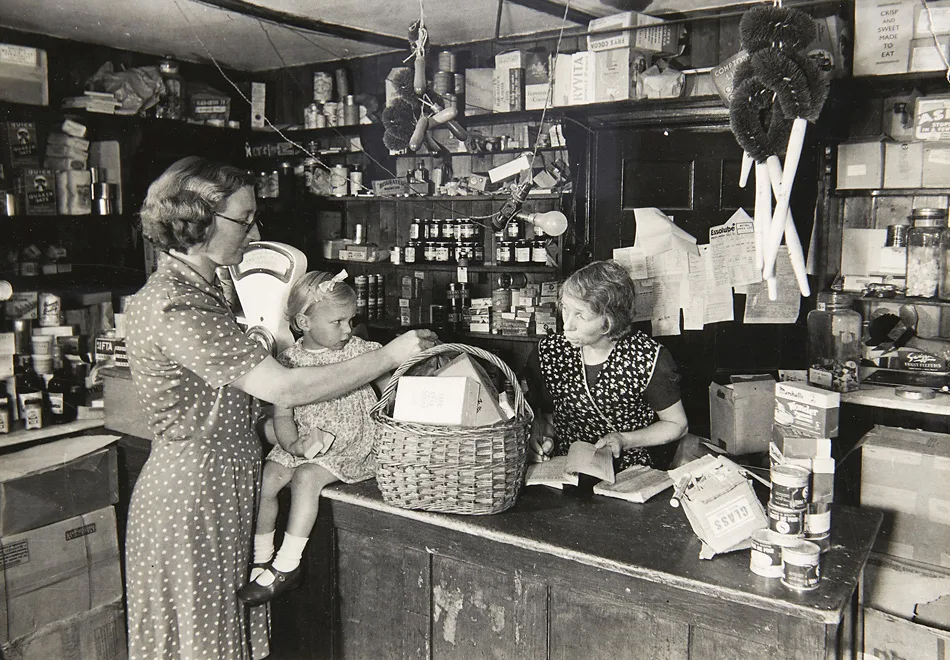
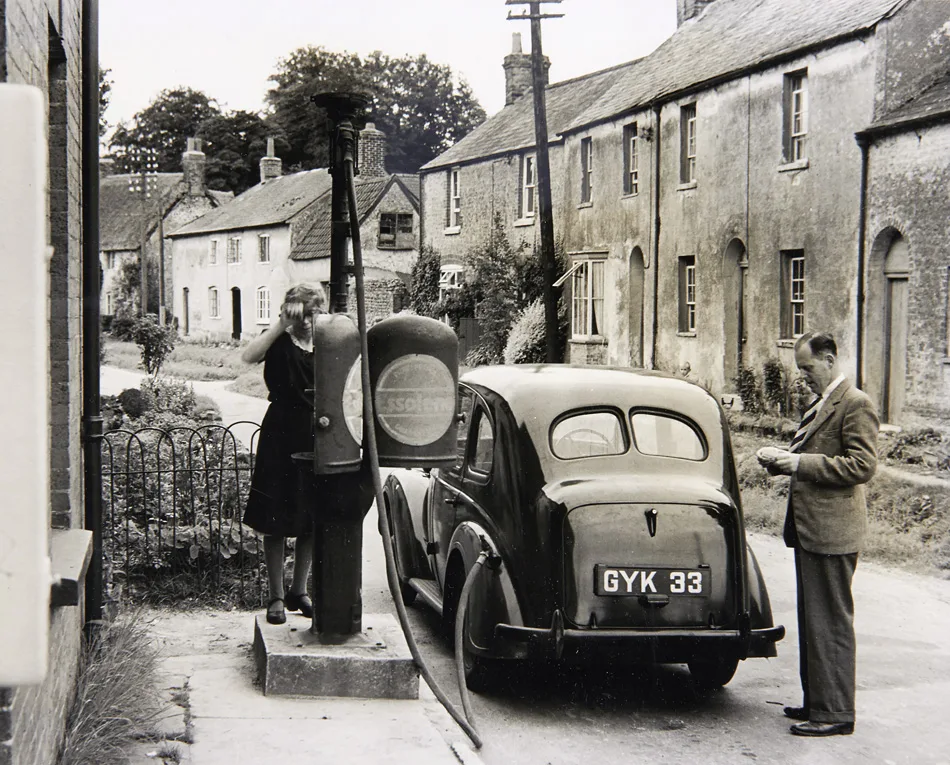
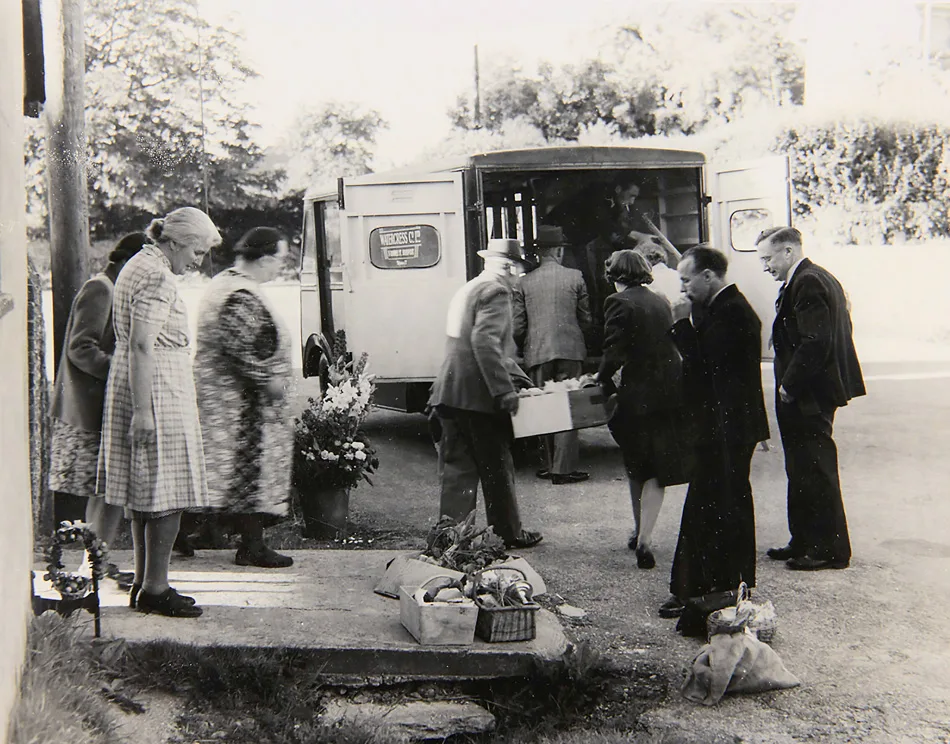
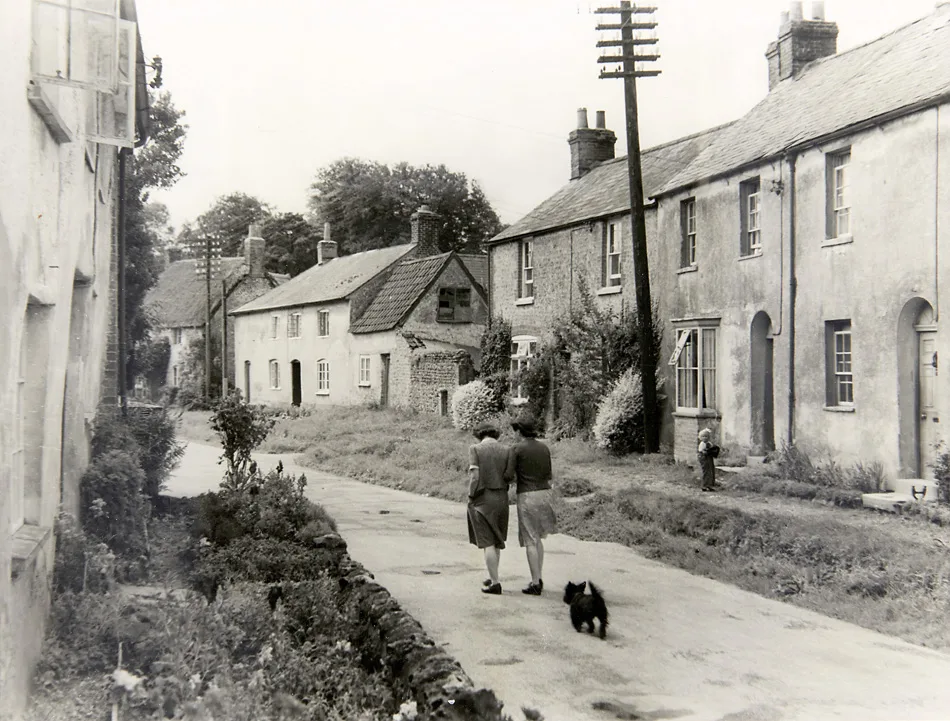
Last month’s mystery postcard caused quite the kerfuffle on Facebook: it was of course Chettle! We’re thinking Barry Cuff’s pick this month looks rather familiar? Maybe? Do you know this village? This collection of cottages? They may not still be thatched of course – and the pond may not even be there any more. We have no clues to help you – because no, we don’t know either. There’s no prizes. You just get the smug satisfaction of solving a postcard mystery.


If you recognise it, let us know – we’ll reveal the answer in the April issue.

A breath of Green air

1

Surely the primary duty of any democratically elected government is to protect the people it serves? And that must include all the people, not just those favoured by whichever political party is in power.

Ken Huggins North Dorset Green Party


So why, time and time again, have successive UK governments failed us in this duty? Could it be because money talks? Or is it just a coincidence that many of the politicians who strongly oppose action on the environment receive funding, one way or another, from sources with fossil fuel interests?
The most serious dereliction of duty by the present Labour government has been its resolute refusal to adequately acknowledge and deal with the severity of the environmental crisis that is clearly now upon us. The Government’s failure to engage with and promote the National Emergency Briefing (NEB) in November last year, and the subsequent lack of reporting of the event by most of the media, effectively withheld vital information from the general public.
To counter this, the NEB organisers are producing a film of the event called the Peoples’ Emergency Briefing (PEB), and environmentalists around the country are arranging public screenings. There will be a number of such showings here in North Dorset sometime in April and May, so watch this space and contact me if there is somewhere you would like to have the film shown, including village halls, church halls and other community spaces,
The present first past the post/winner-takes-all electoral system gives us governments that only represent a minority of the electorate. Proportional representation can’t come soon enough, but in the meantime, there are clear signs that voters are increasingly rejecting the lies and toxic divisiveness of right-wing rhetoric that has dominated the conversation for far too long. The recent election of a fifth Green MP in the Gorton and Denton constituency has been a much-needed breath of fresh air.
Green Party membership has surged again and is now three times what it was just five months ago.The days of two-party politics are over, and we can look forward with hope and determination to create a better future together.
Ken Huggins
North Dorset Green Party

Dorset tip booking goes live

0

From Monday, booking a slot to visit the tip will no longer be optional at four Dorset recycling centres – the long-discussed change that has stirred local concern is about to take effect.

Dorset Council is introducing mandatory advance booking at sites in Dorchester, Wimborne, Shaftesbury and Sherborne from 23rd March, with visitors required to reserve a 30-minute time slot before travelling.

The move was proposed last year and has been rumbling on for months, but its arrival now brings into force a system that will not affect all parts of the county equally.

The council says the change will help manage demand and reduce queuing at some of its busiest sites. It marks a significant shift in how residents access the centres – but its impact will not be felt evenly. Both Shaftesbury and Sherborne sit very close to county boundaries, and their recycling centres have long been used by residents living just over the border. In some cases, villages such as Semley are just a couple of miles away.

Under the new system, those residents can still use Dorset sites – but at a cost. Anyone living outside the Dorset Council area will now be charged a non-refundable £8.50 per visit, payable when booking.

For households used to making short, routine trips across the border, that introduces a clear change: pay to continue using the nearest site, or travel significantly further.

To book a visit, residents must provide contact details, their chosen site, vehicle registration and preferred time slot via the council’s website or phone service. Proof of address must also be carried, such as a utility bill or council tax statement, as it may be requested on arrival, with staff carrying out spot checks.

Those bringing DIY waste and wishing to use their free allowance must also book in advance.

Cllr Jon Andrews, Dorset Council’s Cabinet Member for Place Services, said the system would make visits ‘more predictable’ and help sites run more smoothly.

‘By asking residents to book ahead, we can manage these sites more smoothly,’ he said. ‘The camera and light system at the entrance will help keep traffic moving steadily, and our teams will be there to support anyone who needs help.’

Other recycling centres in Dorset will continue to operate without bookings.

How to book

To book a visit, go to the Dorset Council website dorsetcouncil.gov.uk and search for “recycling centre bookings” or the name of the HRC you wish to visit. Fill in the short online form with:

  • your name and contact details
  • which recycling centre you want to visit
  • your vehicle registration number (if you are using a vehicle)
  • the date and time slot you would like to come.

If you cannot book online, you can use the council’s phone booking service by calling 01305 221037 and following the instructions.
Also bring proof of the address you booked under, such as a recent utility bill or council tax bill. 

The cost of trying to build

0

Ours, I am sure, is just on of many similar stories of small builders going out of business and large builders mothballing sites. There is much talk in the media about the hospitality industry being brought to its knees – but little about the building industry. The economy cannot survive without itand the government says it is promoting it, promising to build more new homes … But in our experience this could not be further from the truth.
Historically, when budgeting for a new build, the land would cost one- third, the build would cost one-third and the profit would be approximately one-third. Now, with additional costs and a stagnant housing market, we would be lucky to make any profit at all.

The Grumbler

Example one: The build, Gillingham
We purchased a plot of land in Gillingham in April 2024 for around £130k including fees.
The build was a painful experience, with new regulations changing constantly. The cost grew steadily, with materials and labour continually increasing. Regulations now require all new homes to have low-carbon heating systems such as air source heating. This is a huge expense in itself, but the additional cost of fitting and setting up, with plumbers charging £350 to £400 per day, is a significant increase not factored into the original budget. The build eventually cost around £220k, making the total cost for this small four-bedroom house around £350k.
We initially put the house on the market for £395k – now, after a year, we have reduced it to £365k. By the time we eventually sell and pay agents’ fees there will be no profit left. In the meantime there are the ongoing costs of an empty house – utilities, insurance and Council Tax.
As we are a small builder, buying one plot, building on it and then selling the house to fund the next project, our development has been at a standstill – which also then means less work for sub-contractors.
The real kicker – and why I have finally ‘Grumbled’ today – is the new Council Tax ruling. Historically there were subsidies on Council Tax for empty homes and we did receive a small discount for one month. After that we have paid full Council Tax for the past year on a house we are desperately trying to sell to keep our business going, as well as Council Tax on our own home.
We have now received a bill stating that as the property has been empty and unfurnished for over a year, our Council Tax will be doubled to more than £500 a month. We are aware that this rule came in to protect second-home hotspots like Cornwall and the Dorset coast. But this is not our second home. It is our business – and a business from which we will now make no profit, probably a loss with this additional cost.

Stock image of a house under construction in the UK

Example two: The land at Bere Regis
We purchased this corner plot in 2019 with planning permission for a four-bedroom detached house. In 2022 we applied to change the permission to allow two semi-detached, two-bedroom homes, as we felt these were more urgently needed and more suitable for the area.
Planning was granted in principle but, as the land lies within 20 miles of Poole Harbour, development was put on hold until nutrient neutrality could be mitigated. This took around four years of hard work. We have now finally secured mitigation and full planning permission.
The initial cost of the land, plus additional costs over the years, totals around £145,000. Nutrient mitigation is £26,000, payable by 1st April, bringing our total outlay to over £170,000.
As the Gillingham house has not sold, we cannot start this build ourselves. To sell the land we would have to be transparent about further costs. The Community Infrastructure Levy when we first bought the land was around £3.5k. The new fee for 2026 is approximately £28,500 (£210 per square metre).
There is also now an Affordable Housing contribution because we are providing two smaller, more affordable homes rather than one executive four-bedroom property. That additional cost is around £38,000.
With these costs, any possible profit is gone, and no one wants to buy the land and build under these circumstances. Who can blame them?
The land development director at Goadsby recently valued the plot at £45k – a loss to us of over 70%. We are left with land that cannot viably be developed and a house build we cannot profit from. Yet the Government claims to be doing so much to help the building industry and provide millions of new homes …

***The Grumbler – the open opinion column in The BV. It’s a space for anyone to share their thoughts freely. While the editor will need to know the identity of contributors, all pieces will be published anonymously. With just a few basic guidelines to ensure legality, safety and respect, this is an open forum for honest and unfiltered views. Got something you need to get off your chest? Send it to [email protected]. The Grumbler column is here for you: go on, say it. We dare you.***

Interests not friends in Tehran

0

America’s restless view of its global role reveals a superpower long on strength yet short on patience, writes MP Simon Hoare

Simon Hoare MP

I have not long finished reading A Short History of America from Tea Party to Trump – an informative, slim volume by former editor of the The Times, Sir Simon Jenkins. It is full of interesting snippets of information, and worth a read. A theme he seeks to trace is how America views its role in the world. The early colonists maintained a close interest in Britain’s affairs, not least because they were ‘governed’ by the Crown. Following the War of Independence, the Founding Fathers maintained a determined and deliberate disengagement from the ‘old’ world, as they were the ‘new’. They studiously took no interest in world affairs, and this doctrine broadly held firm until America’s entry in the First World War – but it was short-lived, as their late entry into the Second World War all too clearly demonstrated.
A land, many argued, which was self-sufficient in resources need look nowhere else for its prosperity and security. Monroe and Wilson produced their ‘Doctrines’, but in the post-1945 world, as the British Empire retracted and naval supremacy vanished, America stepped up to be the policeman of the world, positioning itself as the ultimate defender of freedom, sovereignty and democracy.
The rest, as they say, is history – and so well known as not to require regurgitation here.
The really interesting point that Jenkins highlights is the shortness of American patience. He believes this is the reason that the US has never had an empire in the geo-political and administrative sense of that term. Spheres of influence? Yes. Dependent semi-autonomous countries? Yes. But an administrated empire? No.
He contrasts this with Britain’s approach – establish trading links and partnerships; secure a foothold; forge alliances; commit to the long term … and before you know it an empire upon which the sun never set is created. British long-termism and patience, or the tortoise approach, beating the American short-term, in-out, hare.

A moveable feast
I wrote the above the day following the latest US/Israeli attack on Iran, and the concomitant reprisals. Iran (the world’s 17th largest country by land mass and population) sits leaderless and under attack. Are the Middle East – and the world – better without the Supreme Leader? Of course. But to claim it is safer is a little premature.
As we saw recently in Venezuela, the US seemed content to replace a Super Villain President with a Villain President. Mr Putin is without doubt more dangerous and destabilising, yet Mr Trump prefers to play diplomatic footsy with him. While David Cameron was right when he said, in relation to Libya, ‘all because one cannot do good everywhere does not mean you should not seek to do good somewhere’, it should not be a vain hope that there is at least some moral consistency in the approach. With the US, it appears to be a more movable feast. Perhaps Trump takes his lead from another former British Prime Minister, Lord Palmerston, who declared that Britain had no friends, only interests.
The ordinary, put upon and oppressed Iranian will really not know what to do now. They will remember Iraq’s Marsh Arabs – urged to rise up and be supported by the West, only to do the former, find themselves abandoned by the latter and oppressed violently by those they rose against. Will the Shah-in-exile be dusting off the Peacock Throne? Will America, by the time you are reading this, have gone further? Will the Revolutionary Guards have turned their swords into ploughshares?
Will there be jubilation on the road to freedom in Tehran, or will there be silent anxiety behind closed doors? Hope beaten by experience.
We frankly do not know. The one thing we have to hope is that America, having started something, has the patience to see it through.
Another failed state is something the region cannot afford nor the rest of the world welcome.

Final call for Dorset Apprenticeship Awards entries

0

The deadline is approaching for this year’s Dorset Apprenticeship Awards, with nominations set to close on Friday 27th March.

Now in their fifth year, the awards are organised by Dorset Chamber in partnership with the Dorset and Somerset Training Provider Network, celebrating the impact of apprentices and supported interns across the county. Sponsored by manufacturing firm Superior, the awards recognise individuals and programmes helping to build a skilled workforce.

WINNERS 2025: Winners and dignitaries at the Dorset Apprenticeship Awards. From left are: Dorset Chamber chief executive Ian Girling, Sarah Matthias from University Hospitals Dorset, Aleasha Ellis from Bluebird Care, Alfie Blake from BCP Council, Morgan Simpson from Nusura Thai Fire Kitchen, Jack Lant from Poole Accident Repair Centre, Sonnaz Nooranvary from House of Sonnaz, Richard Jenkins from Dorset and Somerset Training Provider Network (DSTPN) and Superior managing director Tim Brown.

There are five categories, ranging from Intermediate (Level 2) through to Degree-level (Levels 6 and 7) apprenticeships, alongside a Supported Internship of the Year award.

Dorset Chamber chief executive Ian Girling said the awards offer a chance to recognise both individual achievement and wider investment in skills. ‘There is still time to nominate that fantastic apprentice who is a rising star in your workplace,’ he said.

The awards are free to enter and open to apprentices, supported interns, employers and training providers. Entrants must live or work in Dorset and have completed their programme by 29th May, when the awards ceremony will be held at Superior in Ferndown.

Last year’s winners included apprentices working across sectors from healthcare to hospitality and engineering, reflecting the breadth of training taking place across Dorset.

Further details and entry information can be found at  https://dorsetchamber.co.uk/dorset-apprenticeship-awards-2026/

The Inca trail with Parkinson’s

0

** Regular readers will remember 47-year-old Child Okeford resident Matt Riggs who had been diagnosed with young-onset Parkinson’s. We spoke to him last summer when he was preparing for the challenge of a lifetime trekking the 45km Inca Trail to Machu Picchu. The journey was about far more than reaching the summit – it was about raising awareness of the condition and proving what is still possible. Safely back in Dorset, Matt reflects on the experience.**

Matt Riggs, trekking the Inca Trail just 18 months after his young-onset Parkinson’s diagnosis.
All images: Matt Riggs

The Inca Trail to Machu Picchu had been on my bucket list for a very long time – and it most certainly didn’t disappoint. Following my diagnosis of young-onset Parkinson’s in March 2024 at the age of 47 – which reinforced the sentiment that we shouldn’t put off adventures until it’s too late – I decided to positively reframe the situation by signing up to trek the Inca Trail and committing to raise money for Parkinson’s UK.
My sister, Caroline, was keen to accompany me (I can’t think why!) so we embarked on our challenge in September 2025.
The excitement was really building as the plane began its steep, dramatic descent into the high-altitude valley surrounding Cusco in Peru, offering us our first glimpses of the majestic Andes mountain range.
As Cusco sits at an elevation of 3,400 metres, you notice the thin air immediately, and breathing can feel a little harder. Our first encounter with a stunning Inca site was during the first day’s acclimatising hike above Cusco, and we began the Inca Trail itself the next day.

The top of the long, steep climb up to Dead Woman’s Pass (Warmiwañusca), the highest point of the trek at 4,125 metres

Into the mountains
We were incredibly lucky with our weather, enjoying sunshine for most of the trek – except for some mystical mountain mist and half a day of drizzle. We were also blessed with a wonderful group of fellow trekkers who continually supported each other, offering encouragement to anyone struggling with fatigue or altitude sickness.

Almost at Machu Picchu


We were genuinely buoyed on by the generosity of our supporters – the donations really did inspire us to keep going, knowing that vital funds were being raised to aid research into curing this debilitating disease. We were determined to complete the trail no matter what!
My training had consisted of walking up and down the hills of Dorset before the trip, but it really paid dividends. We both met the challenge of the relentless inclines, sharp descents and seemingly endless steps. One particular day is especially tough as it involves a long, steep climb up to Dead Woman’s Pass (Warmiwañusca), the highest point of the trek at 4,125 metres, though the effort is rewarded with stunning views of snow-capped peaks and alpine valleys.
Thankfully, I wasn’t adversely affected by the altitude and due to the focused, rhythmic nature of such a physical challenge, I was often grounded in the moment and able to block out any thoughts of my symptoms.

The trail at Intipata

Touching distance
Spending four solid days trekking in the Andes really allows the magnificence and beauty to sink in, creating a humbling sense of reverence for the sheer scale of the landscape. We explored various Inca sites along the route, each one mesmerising for its seamless integration, high altitude engineering and breathtaking scenery. We walked on ancient stone pathways that hugged mountain slopes, passing through sections of cloud forest, grasslands and tropical jungle.
Reaching the Sun Gate (Inti Punku) on the morning of the final day and peering down to a sunlit Machu Picchu in the distance was a special moment. The sheer size of the site and its precarious position perched on a narrow mountain ridge is astonishing. Our goal was finally in touching distance, and there was a real spring in our steps as we descended the final stretch. Entering the citadel is a magical experience, with jaw-dropping views at every turn and some of the greatest vistas in the world. How the Incas managed to build a large complex of houses, temples, agricultural terraces and an advanced water system on top of a mountain, without any form of mortar, defies belief.

Approaching Machu Picchu


I have immense gratitude for the fantastic team at Discover Adventure who ran the trip.
The tireless, superhuman endeavours of the porters deserve a special mention: they’d set up camp and prepare delicious meals on a couple of gas burners prior to our arrival. We only carried small day packs, but the porters would often yomp past us carrying heavy bags of kit that were as big as themselves!
Thank you, too, to all our generous supporters who have donated an incredible £5,276, smashing our target. Absolutely 100% of donations go to help Parkinson’s UK fund research into finding a cure for this disease. Fundraising is still open if anyone would like to make a donation. Just click on the following link:
https://bit.ly/MattRiggsInca