Formerly of Shaftesbury Dorset. Passed away peacefully in Lincolnshire on 16th October surrounded by his loving family
Aged 94 years
Much loved Dad, Granddad and Great Granddad.
Home at last with his ever loving wife Mary

Formerly of Shaftesbury Dorset. Passed away peacefully in Lincolnshire on 16th October surrounded by his loving family
Aged 94 years
Much loved Dad, Granddad and Great Granddad.
Home at last with his ever loving wife Mary
Passed away peacefully on 10th October after a short illness
Aged 83 years
Loved and much missed by all those that knew her.
Donations if desired to be sent directly to the Dorset and Somerset Air ambulance
Employ My Ability offers vocational training for students with learning disabilities and special educational needs and disabilities. One of their students, Maddie Walters, spent her work experience with us, and now writes a regular column – Ed

This month I have been looking at different campsites to visit in Dorset. Many are still open in the autumn and some even open for short breaks over Christmas – it might make a lovely ‘staycation’ for half term!
Brewery Farm Campsite
Family-run Brewery Farm is near the village of Ansty. It is a small site, with a few lodges and a campsite (tents and caravans) which is open all year.
West Bay Campsite
This large campsite is near the stunning cliffs, beach and harbour of the Jurassic coast. It has an indoor pool and a playground that children will enjoy. You can bring your own caravan or camper or rent a tent or lodge, and there are glamping options if you fancy a bit of luxury. There is a special Halloween short break, and the park is closed between November and February.
Wood Farm Holiday Park
Wood Farm is in a rural setting with a fishing lake on site, and also has camping pods for a glamping alternative. There’s a wide range of activities for the whole family, including an indoor pool. Closed from the end of October.
South Lytchett Manor
As well as your own caravan or motorhome, at South Lytchett there’s the option to stay in a glamping pod, Shepherd’s Hut or traditional Romany caravan. They are open throughout December and into early January and have many special Christmas events like a market and carol services.
Sandford Holiday Park
Sandford is a wonderful place to camp out during the half term break – it’s in a quiet woodland setting and has beautiful beaches near by.The camping facilities are great for the whole family to enjoy for a long weekend.
The site is closed between November and February.
Sponsored by Wessex Internet

Excellent craftsmanship and a dedication to sustainable practices have once again propelled Cradle to Grave to the top. Cath and Tosh Abbott work from their Withysmythe workshop in North Dorset, and they have just been awarded ‘Coffin Supplier of the Year’ for the third time, as announced by the prestigious Good Funeral Awards, run by the Association of Green Funeral Directors – a national non-profit organisation working to help the public find green funeral directors, and to bring the principle of an eco-friendly funeral into the mainstream.
Cradle to Grave, known for its impeccable artistry in crafting beautiful, bespoke willow products, specialise in producing coffins and caskets with willow sourced from local, sustainable resources.
Cath and Tosh are skilled basket makers, and have been basket and coffin weaving for more than 20 years. They weave their willow caskets using traditional age-old methods passed down through generations of basket weavers, using traditional weaves and handcrafted tools, made by local blacksmiths, which haven’t changed in centuries.
All Cradle to Grave coffins are lovingly handwoven in Dorset. Their commitment to producing biodegradable and eco-friendly products resonates with a growing environmentally-conscious audience – even in their final rites.
Cat expressed profound gratitude, stating she is ‘very proud and honoured’ by the recognition.
This win reaffirms Cradle to Grave’s position as a beacon of excellence in the UK’s funeral industry.
Another season feeling the pinch at the check-out?Expert Karen Geary shares some smart strategies for eating well and wasting less

Maintaining a nutritious diet often conjures images of expensive organic produce and speciality health foods. Many believe that eating healthily on a tight budget is simply not possible.
However, with a little planning and creativity, it is entirely possible to eat well without breaking the bank!
Make use of tech
Check out apps such as Too Good to Go and Olio. Too Good to Go is where supermarkets sell off their unwanted items close to their sell by dates. I live near Blandford, and noted both Spar and Morrisons participate with their ‘surprise bags’, at around a third of the full shelf price. And yes, Greggs are there too, but that defeats the healthy-eating point! Olio is a community exchange app – you can donate overstocks or produce of your own as well as seeing what others locally may have to share.
Plan your meals
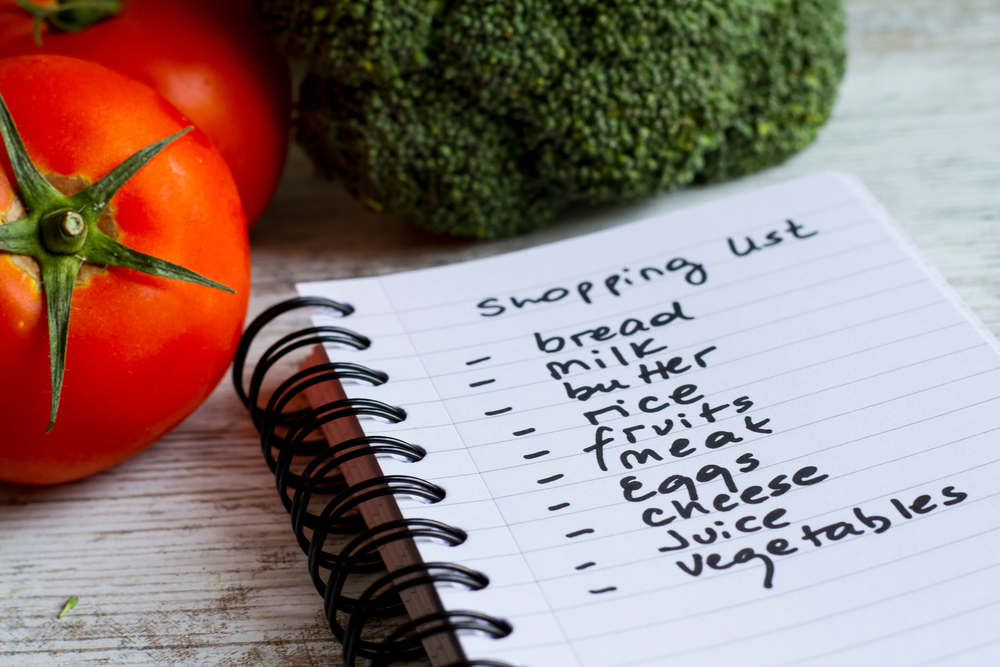
I have managed to cut my budget right back by spending half an hour a week planning meals in advance. Your plan should include breakfast, lunch, dinner, and snacks.
Always check what you already have in the cupboard to avoid buying duplicate items (guilty as charged) (and me – Ed). Planning meals not only helps you stay within budget, but it also eases the ‘what’s for dinner’ daily stress, while reducing the chances of impulsive and unhealthy food choices.
Buy in bulk
Buying staple items in bulk can significantly reduce the cost of your groceries, if you can manage the single up-front cost (which I appreciate not everyone can).Look for items like rice, pasta, beans, lentils, oats and canned vegetables in larger quantities.
Shop around
One item I find annoyingly expensive in supermarkets is nuts – yet go onto Amazon – or check local supplier Wilton Wholefoods – and they are much more affordable if you buy a large bag. The same applies to many dried goods such as beans, lentils and spices.
Embrace frozen and tins
Fresh fruits and vegetables are fantastic, but they can be expensive, especially when not in season. Frozen and canned fruits and vegetables are often far more affordable and have a longer shelf life. They are just as nutritious as their fresh counterparts and can be used in a variety of dishes, from smoothies to soups and stir-fries.
Use leftovers
Got some droopy stuff hanging about in the bottom of the veg drawer? Freeze it. Perfect for adding to soups, stews or smoothies.
If your menu plan uses half a packet, tin or fresh item, be sure your plan uses the other half, rather than leaving it to go sad and then throwing it away.
Cook at home
Takeaways, while convenient, will quickly deplete your budget. Instead, make cooking at home a priority. Home-cooked meals are not only more budget-friendly but also allow you to control the ingredients, making it easier to choose healthier options. Experiment with simple recipes and gradually expand your culinary skills. Don’t dismiss making your own bread. It’s easy, cheap and if you make sourdough, you don’t even need to knead it! I wish someone had told me that years ago.
‘Frozen and canned fruit and veg are just as nutritious – but are often far more affordable and have a longer shelf life’
Batch cooking
Cooking once and reheating in a microwave can save ££s on energy bills – as well as having things ready to go when you get home from work. My favourites are stews and soups in the winter, but it can also be done with salads and lunchbox items too. Invest in some good containers, ideally glass with plastic lids, to make them last longer and for ease of storage.
Buy generic and store brands
Don’t shy away from these. They are often as high in quality as name brands but come with a lower price tag.
Less but better
Meat can be one of the most expensive items and often the cheapest way to buy it is your local farm shop or butcher, not the supermarket. The quality is likely to be far superior too. Consider reducing your meat consumption and incorporating more plant-based proteins like beans, lentils, tofu, and eggs into your diet instead.

Use coupons and discounts
Keep an eye out for coupons, discounts and sales in your local grocery store’s flyers or online. There are also various apps and websites that offer digital coupons and cashback rewards.
Limit processed and junk foods
Ultra-processed foods are in the news at the moment. They taste great and they are cheap (let’s face it, that’s why we buy so much of them).
However. .. they often offer little nutritional value and can be detrimental to your health in the long run.
Instead, focus on buying unprocessed whole foods that provide essential nutrients without the unnecessary added sugars, unhealthy fats and artificial additives.
Grow your own produce
If you have access to outdoor space, or even a windowsill, have a go at this.
The cost of herbs is one of my pet peeves, they can be grown so easily in pots from seed.
Practice portion control
Wasting food is both costly and environmentally unfriendly. Be mindful of portion sizes to avoid overeating and to make your groceries last longer. Leftovers can also be repurposed into new meals, reducing food waste.
STARTING JANUARY/FEBRUARY 2024
ABOUT THE SCHOOL
Fairmead School transforms the lives of young people aged between 4 and 19 years with additional learning needs (MLD and ASD).
We are seeking to appoint enthusiastic and dynamic Classroom Teachers who have the flexibility to teach a range of curriculum subjects across the school. Successful candidates will be self-motivated, creative, fun and inspirational teachers who have a desire to build meaningful and positive relationships with all the young people they encounter. They will need to approach curriculum subjects in a purposeful, age appropriate and exciting way, engaging young people through first hand experiences. They will have high aspirations for our students and will be committed to, and passionate about, preparing them for successful, independent and happy futures in adulthood.
The successful candidates will join our committed, passionate and dedicated staff team and play an integral role in building an exhilarating future for our school community.
We welcome applications from teachers with all levels of experience and from a range of education backgrounds in both mainstream and special sectors. We would also welcome a teacher with a specialism in ICT.
Full details (Job Description, Person Specification and application form) can be obtained from https://dasjobs.co.uk/job/classroom-teacher-s/ or the school website www.fairmeadschool.com
or by email to [email protected]
Closing Date: Tuesday 7th November 2023
Interview Date: Thursday 9th November 2023
Fairmead School is committed to safeguarding the school community. All job applications must contain the disclosure of any spent convictions and cautions. The school will carry out pre-employment vetting procedures, which include an online search for shortlisted candidates and the successful outcome of an enhanced DBS

Ancient craftsmanship: Edwina Baines discovers that the modern world of stained glass art is much the same as it was

Coloured glass was used for art and decoration in the ancient world by both Egyptians and Romans – and the techniques and materials used in making stained glass windows have changed little since the Middle Ages. Dorset artist Gillian McCormick’s love of the craft was born out of an interest in medieval art. The atmosphere, mystery and otherworldliness of the stained glass she saw in the cathedrals of St Mary’s and St Giles while studying painting at Edinburgh’s College of Art encouraged her to learn more. The essential tools – a glass cutter, grozing pliers for breaking and shaping the glass and a soldering iron – weren’t hard to collect, and Gillian started her stained glass journey by following her initial art degree with decorative glass courses in Bath and Glasgow, learning the skills of painting, staining, acid etching and fusing.

An ancient process
From her home in Edmondsham, Gillian walks the mile through the woods every day to her farmyard studio. The first step in making a stained glass panel is the design or ‘cartoon’. After selecting the glass, this cartoon becomes the guide for cutting the individual pieces, which are eventually assembled using specially-made lead came (or calm) which, when soldered at the joints, holds the piece together. The gaps between the lead and the glass are then filled with a black lead cement.

It’s a messy process, but once it hardens, the cement strengthens the finished panel.
The glass paints themselves consist of ground metal oxides in shades of brown and black, which are mixed with water and a small amount of Gum Arabic before being painted onto the glass and fired in the kiln to approximately 600ºC, fusing the paint to the glass. The paint modulates the light coming through the glass to create the desired effect. Matt shading can be scratched into with sticks and needles, or gently lifted with brushes till the image emerges. The process could be described as painting with light.

Several layers can be built up and fired, finishing with the addition of the silver stain, fired at a lower temperature to produce a range of yellows. This stain, made up of silver compounds that migrate into the glass and colour the glass itself, is where the term ‘stained glass’ is derived.
Gillian places each segment of glass onto a lightbox to see how the image is progressing. It is necessary to paint in reverse – and therefore to constantly turn the piece over to keep track of progress. Each piece can be fired up to four times.

After acquiring a small pottery test kiln, Gillian continued to develop her knowledge and skill in glass painting, eventually buying a glass kiln which allowed her to experiment with glass fusing. This kiln can be controlled to go up to the higher temperatures needed to fuse glass – approximately 800ºC – and even more importantly to cool down in stages, allowing the glass to anneal (cool slowly), which prevents glass cracking in the finished piece.

Glass fusion
As well as individual pieces and commissions for stained glass panels, Gillian also produces pieces of colourful and expressive fused glass. The glass used in fusing must all be compatible, heating and cooling at the same rate.
‘Glass fusing can be a freer, more flexible way of working,’ she says. ‘With the traditional leaded glass, precision is more important.’
The process starts with a base layer, which can have glass paint applied before layers of coloured glass are carefully arranged on top. Gillian sometimes uses several layers of colour, which can produce subtle colour changes, reminiscent of watercolour painting. The panel can be refired if adjustments are necessary. Glass powders or frits (ultra-small particles of ground-up glass) can also be added to create variation.
The countryside around Edmondsham and the encounters Gillian has with the local wildlife provide a constant source of inspiration.
‘A deer leaping through the woods, a badger emerging from the ferns or foxes skulking along the hedgerows, these are moments of enchantment among the seasonal changes in the landscape.’
Gillian has also enjoyed the opportunity to experiment with acid etching – using hydrofluoric acid to remove a layer of coloured glass from a piece of flashed glass (clear glass with a thin layer of coloured glass). This produces lots of creative possibilities when combined with paint but isn’t a technique she has been able to follow up due to the hazards involved in using the acid. She also works as part of a team carrying out repairs on stained glass windows in churches, painting replacement pieces for the broken windows.
Gillian participates in Dorset Art Weeks, the Wylye Valley art trail and more recently the Child Okeford art trail. She will be taking part in the Springhead Garden of Delights exhibition at the start of December and will have work in Chalks Gallery in Lymington in their Forest and Folklore winter exhibition. She also welcomes commissions.
Gillian McCormick_ Glass


Stained glass is on the endangered list of heritage crafts. The British Society of Master Glass Painters aims to encourage the continuity of the discipline and is open to anyone interested in stained glass
Andrew Livingston shares his brilliant story of the unintended consequences of unconditional love

‘There’s no such thing as bad dogs, only bad owners’ has been the discourse running through the media over the last month as debate raged around the belief that certain breeds of dogs should be banned.
The phrase has stuck with me. And if I’m honest, it’s made me evaluate my relationships with my own two dogs. If there are no bad dogs, I have to ask myself, what kind of owner am I?
My partner Ellie and I got Winnie first. She’s a long-haired standard dachshund; if you have never seen one, imagine the cross between a Labrador and a miniature dachshund. I won’t lie, when it was just the three of us things were easy. I was probably a good owner.
But, like most families considering a second child, we were lulled into a false sense of security by the calm and tranquillity of our easy ‘first-born’. And then you bring your second-born into the world …
First thing I knew, Ellie simply came home from work with Wilf. In fact she had brought home the devil. We just didn’t know it yet.

The photo shoot
Before I dare to release some suppressed memories of Wilf from the last four years, I have to admit how great he was at first. He was, without doubt, the most gorgeous puppy you have ever seen. A golden cocker spaniel with gorgeous puppy eyes that could melt a stranger’s heart at a hundred paces. He was the type of puppy that turned heads as we walked down the street.
He was purchased with the full intention of being used as a working dog. The only issue was that he was never treated like a working dog. He was handled more like Paris Hilton’s handbag-accessory chihuahua and he was only ever referred to as ‘Little Prince’ around the house.
Shamefully (and it’s not easy to admit this), Ellie and I did a photo shoot with our two dogs – and ended up financing a collage picture frame of us and our dogs for our living room!
Since having two actual human children (not ‘fur-babies’) we realise just how ridiculous the £1,000 picture frame was. It is now slowly being moved from room to room – it’s currently on the downstairs bathroom floor, collecting splashes as it waits to be hung up.

Of course, in hindsight we know that the over-loving and devotion we gave Wilf gave him a heightened sense of his own importance, to the point he simply stopped listening to us. Safe to say, when we are out and about, Wilf knows best.
When we moved from the Midlands to Dorset and I began working back at the farm I had worked at since the age of 15, my boss foolishly said that I could bring my dogs to work.
The problems quickly escalated.
For a start, the vet bills went through the roof. Plus the reasons for visiting the vets became increasingly outlandish. I actually had to ring Ellie and say, ‘I’m going to have to get him to the vet again, he’s just tried to eat a barbed fish hook and now it’s stuck in his mouth.’
It was at the farm where he also found his biggest passion in life: doing a runner. Being at the top of Whitesheet Hill you can see for miles down the valley – and I could quite often see Wilf, miles away, happily chasing birds from field to field.
The bottom of the valley rather annoyingly had a commercial shoot on its land, so on a work day Wilf would frequently enjoy popping down there to practise his skills for the weekend. On the first occasion, the gamekeeper threatened to do me a favour and shoot Wilf, but after the third or fourth visit I think the gamekeeper became quite fond of him – he even offered him a job! That, or he realised he was probably too quick to shoot …
It became quite the ritual in the end. I would finish work and promptly check the Beaminster Facebook page to see who had picked him up off the street today. Often I would turn up at someone’s house and he would be sitting cushty on their sofa, pretending not to know me in the hope I may just leave him there.
I was tempted on a few occasions.
I’ll admit things have become a lot harder for Wilf since we’ve had children – he’s no longer Little Prince in the house and I suspect he feels left out.
I’ll never forget the birth of my first child, Martha – we were at Dorchester Hospital and I was holding my daughter for the first time. Meanwhile my parents, who were looking after the dogs, were in the midst of a three hour search for Wilf, who had done another runner at Langdon Woods.
But it’s not Wilf’s fault. He really isn’t a bad dog … he just has one really bad owner!
The Ridgeway Singers and Band celebrate their tenth anniversary with two concerts of music from Dorset villages and church archives

Ten years ago a project was launched to explore the heritage, archaeology and culture of the South Dorset Ridgeway – the ridge of land between Dorchester and Weymouth, from Eggardon Hill near Bridport in the west to Osmington in the east. Known by archaeologists as an internationally-important ‘prehistoric ceremonial landscape’ for its concentration of archaeology from the Neolithic and Bronze Age (6,000-2,300 years ago), the area is considered as important as Stonehenge and Avebury for the sheer number of monuments and what they tell us of life in the past.
One aspect of the project which has continued – and this year marks its tenth anniversary – is the Ridgeway Singers and Band, founded by Artsreach, Dorset’s rural touring arts charity in 2013. The birthday is being celebrated with two concerts, at the Old Brewery Hall in Ansty at 7.30pm on Saturday, 21st October, right in the heart of the Blackmore Vale and on Sunday 29th October at 4pm at St Mary’s Parish Church, Bridport.
The programmes will include seasonal songs, dance tunes from the collection of Benjamin Rose of Belchalwell near Ibberton, and readings from Dorset’s William Barnes and Thomas Hardy.

Dorset’s cultural fabric
From the start, the Ridgeway Singers and Band were led by musical director Tim Laycock, one of Dorset’s best-known musicians, actors and oral historians, and multi-instrumentalist Phil Humphries, famed for his prowess on the historic serpent. The new group was founded to explore the musical traditions of the South Dorset Ridgeway, part of the Dorset Area of Outstanding Natural Beauty, and Dorset’s heritage of West Gallery songs and music (featured particularly in Thomas Hardy’s Under The Greenwood Tree). The group’s concerts of traditional – and new – Dorset songs feel like an intrinsic part of the cultural fabric of the county.
Initially, the Ridgeways rehearsed at Abbotsbury village hall, drawing their repertoire from the carols and Christmas music, stories and poetry of the Ridgeway area. The first concerts were very local, at Winterborne Abbas and Abbotsbury. The following year they widened their approach to look at folk songs collected by the Hammond brothers in Dorset in the early 20th century, and the dance tunes of the Hardy and Benjamin Rose collections.
The repertoire has expanded to include new songs and music on local themes composed by members of the group and their many musical friends in the county. Two of the most popular new works are Anna Eveleigh’s In Praise of Dorset Apples, and Tim Laycock’s Ridgeway Carol, One Bright Star.