New research by Citizen’s Advice Dorset has found that 76% of people in the South West have been targeted by a scammer this year. As the cost-of-living crisis deepens, this number is expected to rise further, and the organisation is concerned.
Rovarn Wickremasinghe, Chief Officer, Citizens Advice Bridport, said: “A shocking number of people in the South West have been targeted by a scammer so far this year. We know scammers prey on our worries and fears, and sadly, the cost-of-living crisis is no exception.”
“Anyone can be targeted by a scam, and as the purse strings are tightened and financial pressures pile on, it’s important we work together to protect ourselves and each other.”
The top five most common types of scams reported were:
Deliveries, portal and courier services
Government or HMRC scams
Banking
Rebates and refunds
Investment or financial
How to spot a scam Citizens Advice Dorset is sharing five top tips to help you guard against a potential scam:
It seems too good to be true – for example, scammers pretending to be energy companies to lure people into ‘too good to be true’ deals
You suspect you’re not dealing with a real company or a genuine person – take a moment to step back and double-check. ALWAYS check the email address from the sender
You’ve been pressured to transfer money quickly
You’ve been asked to pay in an unusual way – like by an iTunes vouchers
You’ve been asked to give away personal information such as passwords or PINs.
What to do
If you’ve been scammed, Citizens Advice Dorset advises you to talk to your bank or card company immediately if you’ve handed over any financial and sensitive information or made a payment.
Secondly, report the scam:
Offline scams – those using the telephone, post and coming to your door, can be reported to the Citizens Advice website or by calling 0808 223 1133.
online scams – report to the dedicated Scams Action service either online or on 0808 250 5050
Text scams – report to your mobile phone provider by forwarding it to 7726
Village shops benefitted from the ‘stay local’ message during the pandemic, says Rupert Hardy, chair of North Dorset CPRE – but tougher times lay ahead
Dilip Odedra outside Robin Hill Stores
For many years, Dorset CPRE sponsored the Best Dorset Village Shop class in the county’s Best Kept Village competition. I was one of the two judges. Sadly the competition is in abeyance currently as it needs a new major sponsor, but we can – and should – still write about the sector and applaud some of the better shops. We awarded prizes to many throughout Dorset, but I would especially mention Iwerne Minster Village Stores and Motcombe Community Shop in North Dorset. Oddly, Covid was kind to village shops, which had been under pressure for decades from the relentless onslaught of supermarkets. Government advice to stay at home combined with fear of infection drove shoppers to avoid supermarkets, except for using their online delivery services if available. Village and farm shops, however, offered a friendly face to consumers who otherwise felt isolated, while they benefited from the trend to ‘shop local’ at a difficult time for all. Consumers increasingly wanted to buy higher quality sustainable food with lower food miles, and showed greater awareness of food provenance. Price was less of an issue.
Things have changed Roll forward to 2022 and life is dramatically changing, with shoppers facing a cruel cost-of-living crisis. Village shops may still benefit from a long-term trend towards sustainability, but they also face much tighter purses. Price wars will intensify and we all know which supermarkets are winning: the discounters, Aldi and Lidl. The latter have been helped too by greater availability of new sites, thanks in part to the misfortunes of the hospitality industry under COVID, particularly pubs. There may have been less online shopping as the virus diminished, but it is still a clear long-term trend that the supermarkets can take advantage of and village shops find very hard to exploit. Another factor has been the rapid decline in physical newspaper sales, previously these were major drivers of customer flow for the shops.
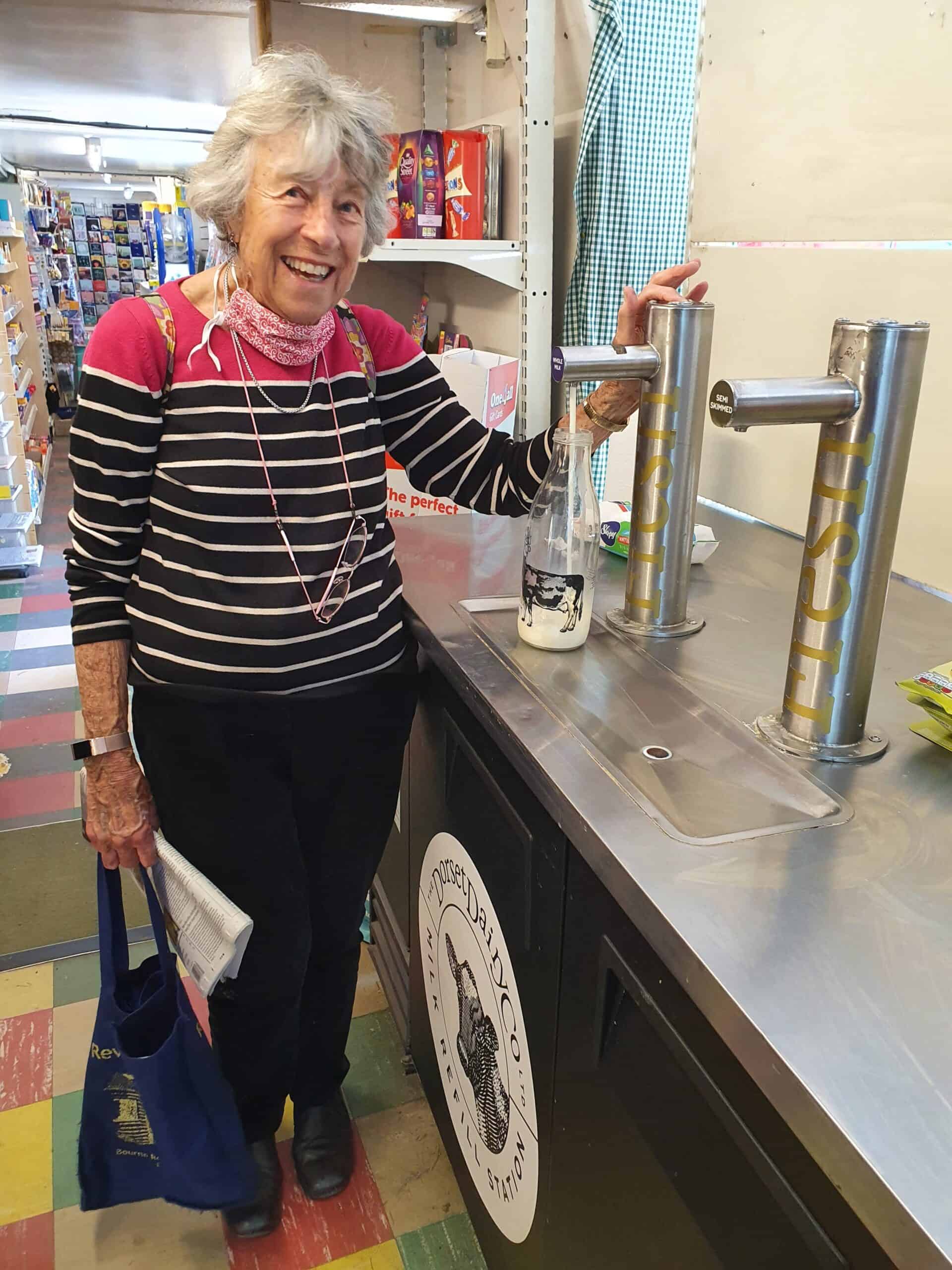
Audrey Hardy fills up her bottle at the Dorset Dairy Company milk station
What can they do? The bigger shops are in a much stronger position as they can offer a broader range of stock and also diversify if space allows by opening cafes, which bring extra footfall and generate higher margins. Village shops can sell more high quality, local, sustainable produce, which we applaud as we support local food and drink producers, of which Dorset has many. More shops are joining symbol groups, such as Spar, to help their buying power and provide marketing support. We ask readers to support village shops as much as they can, as they are vital community hubs. We hope to use our column to report back on some of the best local shops, supplementing the coverage already provided by the BV magazine in its ‘Meet your Local’ column. We start with Robin Hill Stores in historic Marnhull, the largest village in Dorset. Located in the heart of the Blackmore Vale, it features in Thomas Hardy’s Tess of the D’Urbervilles as “Marlot”. Atul Odedra has run the successful shop and Post Office since 2014. He sells cards and other non-food items as well. The premises and the neighbouring shops were once the large Michael Harding’s Stores. The building was originally four separate cottages, thought to date from the late 1600s, which have been combined and added to over the years.
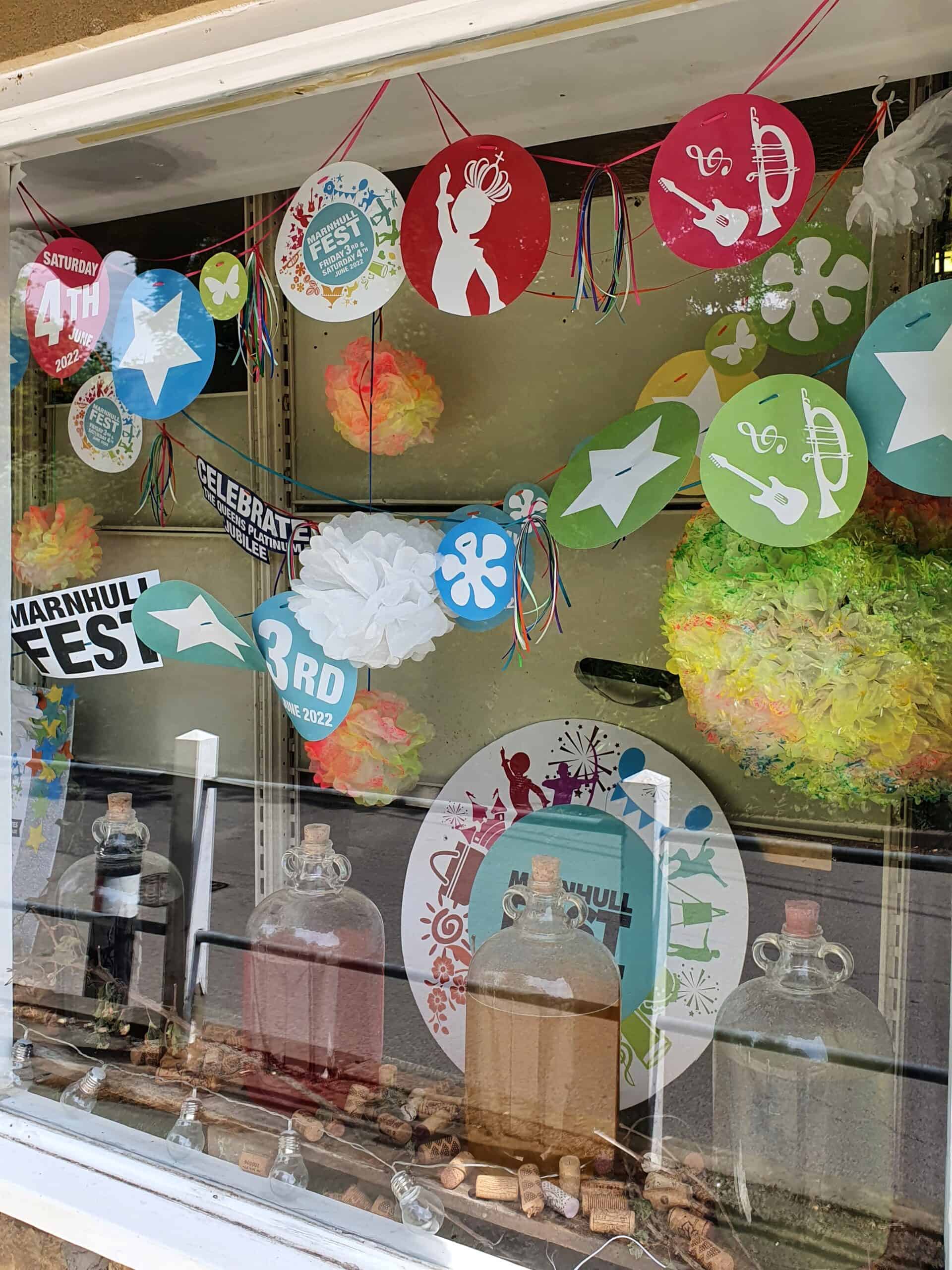
Window display for Marnhull Fest, a community Jubilee event
Atul has made various changes after taking over the shop. He has brought in more local food and drink, including Mounters Gin, which is made in the village. He bought a bigger chiller so he can sell more fresh food, and he has now installed a fresh milk station, supplying milk from the Dorset Dairy Company. Best sellers are cakes and biscuits. He employs local part-time staff, and his brother Dilip is temporarily helping out. Atul supports the Marnhull community in many ways, providing window displays for local businesses, advertising space for community events and ticket sales for community groups. Various village groups can take over the window displays and as I write there is a Marnhull Fest display. Locals report how Atul goes out of his way to order in special items for them. Legend has it that Atul walked from Bourton to Marnhull when the village was cut off by snow, bringing back fresh milk. That is dedication to the community! He admits that the shop benefited indirectly from Covid, but life this year has got much tougher with the cost-of-living crisis. He is finding more severe price competition from the supermarkets, but is trying to sell more local food which the supermarkets don’t stock. Looking to the future, Atul is thinking about converting an empty room into a café to improve footfall into the shop too. Reviews mention good stock, amazing service, friendly owners and a fine little Post Office.
Passed away, peacefully at home on 11th July 22 after a short illness
Loving Mother of Philip, Nick & Dawn. Mother- in- law to Elaine, Mike & Adam. Proud Grandmother & Great Grandmother.
Funeral to take place on 8th of August at 12.15pm at Weymouth Crematorium. Family flowers only but donations to Weldmar at home to Woods Funeral Care, Dorchester . Bright attire only please.
Summer at Thorngrove has arrived with its usual riot of colour – and the never-ending task of watering, says Kelsi-Dean Buck
Summer has officially arrived and oh boy have we felt it! Despite those odd spots of wind and rain, the heatwave really let us know that June was in full swing, and the summer season was upon us. What’s there to say? Stunning weather, BBQs, catching up with friends long into the evening …for many this is the best time of the year. At Thorngrove, it’s the little things that you often don’t think would be a big deal, that catch us. Just watering our plants during the hot periods is a gargantuan task. Some plants need a drink twice a day! When you think about the thousands of plants we have …yeah, that watering time really adds up! The glasshouse and nursery teams really do have their work cut out for them during a heatwave, but we’re pleased to say their care and hard work means the plants are looking more lush than ever. Remember to take care in your own gardens if you’re working in the heat – stay hydrated, invest in a good sun hat, take breaks, and don’t forget the sun cream. We often put the care for the things we love ahead of ourselves, and no garden is worth heatstroke, trust us!
Blowsy summer Wandering through the courtyard and glasshouses during the summer in particular really can take your breath away. It’s not that there’s a favourite time of year, but each season brings something different and summer is all about an abundance of colour with plants vying to be the centre of the attention. Last month we mentioned the roses, of course (click here for a little video!), but there’s all kinds of summer plants which are just begging to seen and stand out from the rest. While we spend plenty of time trying to sell our beautiful plants to you, we wanted to take another moment to remind you that we now have a huge range of garden furniture available from Thorngrove. There’s still plenty of time to take advantage of the summer evenings, and if you’re having friends or family over, or are just seeking a new hanging chair for yourself, we’ve got you covered. High quality dining sets, loungers, fire pits and more. Your dream summer garden is something we’d love to help create, so please do visit our online shop, or pick up a brochure the next time you visit.
Successful, long-lasting weight loss is never about the ‘perfect’ diet, being hungry or weird food rules, says nutritional therapist Karen Geary
Karen Geary sticks a daily post-it on her fridge with her day’s menu
If you are one of those ‘all or nothing’ types, especially when it comes to going on a diet, chances are that permanent weight loss has always eluded you. Add mid-life hormone challenges or other life stressors into the mix and it can become particularly disheartening. If you think you have to follow the ‘perfect’ diet (whatever that is), chances are that this very idea is holding you back from achieving your weight loss goal. Perfectionism generally backfires at some point as it is just not sustainable. The desire to be ‘perfect’ means that you didn’t do what you wanted to do simply because you couldn’t do it ‘perfectly’. Generally it goes like this; you decide you were not ‘perfect’ today so you resolve to start tomorrow/Monday/next week – and then you’ll do it ‘perfectly’. But it never happens – or if it does, it is unlikely to be for more than a week. Weight loss is a mind game – this means mental health is a priority when it comes to losing weight, and placing unreasonable expectations on ourselves just creates added stress. Good mental health also relies on hormone balance and a healthy gut function – nourishing yourself properly is therefore absolutely essential.
It’s a trap What is the ‘perfect’ diet anyway? Is it some fad diet from the Daily Mail? Eating superfoods? Intermittent fasting? No. It is none of these. The ‘perfect’ diet is the one you can sustain, day in, day out, for the rest of your life. It is about being consistent. Yet we can all fall into a diet trap, where we torture ourselves with weird food rules, subject ourselves to yo-yo-ing blood sugar, get so hungry we will eat anything, possibly accumulate nutritional deficiencies – and end up exactly back where we started. The way out of this is to recognise that there is no quick fix. Instead you must give yourself time to discover what is right for you long term. It means doing the best you can, using days to your advantage when you feel really motivated. And those days when things are not so great, to feel OK about having that chocolate biscuit, and that is ‘good enough’! Weight loss is not a ‘perfect’ road.
Here’s the practical guide on being ‘good enough’ that I work on with my clients:
Create a meal plan Decide what and when you are going to eat and try to stick to it 80% of the time. Meal planning stops you from torturing yourself with that conversation you have with yourself in your head about ‘what to eat’, and whilst you decide, you go and eat a few biscuits. Choose a time when you are not hungry to do this. I meal plan weekly because it keeps the shopping bills down. Daily, I write it on a post-it note and stick it on my fridge (see image opposite). It also tells my husband (and hungry teens! – Ed) what we are eating today as I’m the cook and it stops him from haunting the fridge. Plan your snacks too if you like to snack.
Check your portions Using your hands is less stressful than counting calories/points/syns. Include the following in every meal:
palm size – a portion of protein.
cupped hand – a portion of carbs (grains and fruit/veg). If it is just vegetables, double the size.
thumb – a portion of fat
Snacks should ideally be high in protein and fat – for example nut butter and apple, or Greek yogurt and fruit. Protein and fat is more satisfying and may help prevent your snack from becoming a full on fridge raid.
Sit down to eat Stay off your phone and don’t watch the TV. Food is to be enjoyed and is generally a sociable time with family and friends.
Get rid of the scales Whilst it has been proven that people who weigh daily are consistently more successful at achieving their weight loss goals, for some a ‘bad’ number can trigger going off-plan. If that is you, then a tape measure is your best friend. If your waist measurement is half your height or less, you are in a good place metabolically, with a lowered risk for cardiovascular disease, high blood pressure and diabetes. Measure yourself weekly.
shutterstock
Have a back up Know what you are going to do if you go off-track. Note what happened and why – but do so without judgement. Your whole day is not ruined. Just carry on with what you were planning to eat for the rest of the day, or go again tomorrow. All your progress is not undone – you are simply human. I have a plan If you are the type of person who likes the inspiration of a done-for-you meal plan, I have put together a no-fuss Summer Plan, so you can enjoy the best of the summer with minimal kitchen time. You can download it from my website here.
The 1950s green ‘wonder foam’ for flower arrangers is not actually green at all, says flower farmer Charlotte Tombs
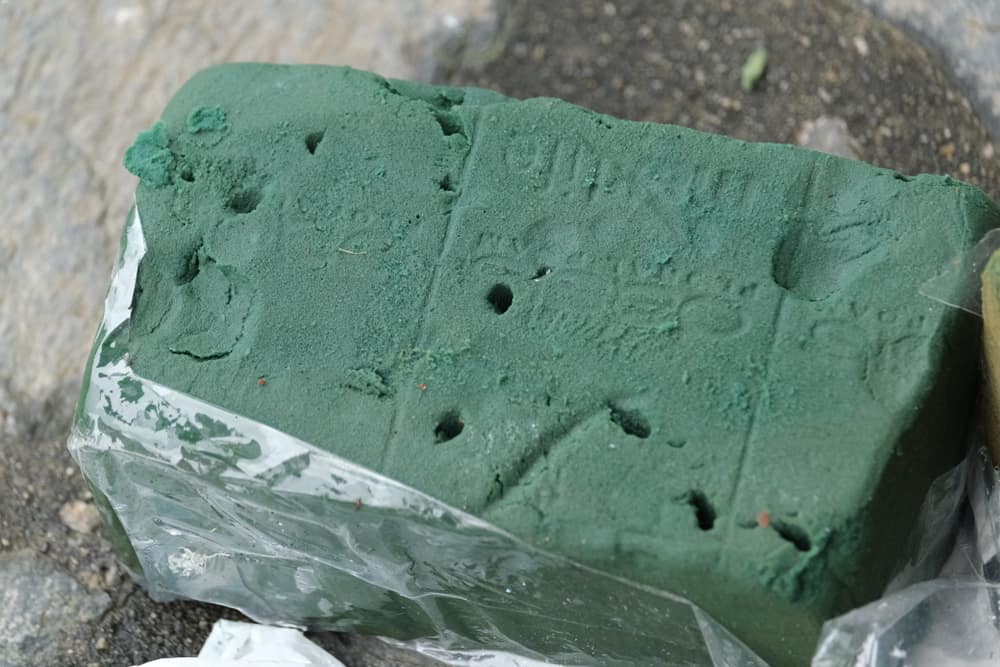
Chemical flower foam crumbles as it ages, causing micro-plastic pollution
Oasis. No, not the 1990s Brit band but the green blocks of crumbly square foam much-loved by flower arrangers. This squeaky plastic monster was a revolutionary wonder-product back in the 1950s, when it replaced those metal spikey frogs our grannies all had under their sinks. Oasis is made from the reaction of phenol and formaldehydes which are turned into foam when air is passed through. This is then treated with detergents to give it the ability to soak up water. It’s a chemical nasty which just keeps on giving. As it ages it either breaks into tiny pieces which run down your plughole, or it goes in to landfill. And although it crumbles, floral foam doesn’t fully dissolve in water or degrade in landfill or soil. Instead, it breaks down into smaller and smaller micro-plastics. These can take thousands of years to completely revert into natural elements and are a real menace for the environment by contaminating our marine life and food chains. Its horrors are now so widely accepted that The Royal Horticulture Society (RHS) banned the use of floral foam at all its shows from 2021. A ‘single use, non-biodegradable, micro plastic that can’t be recycled’ is frankly a sentence of expletives to any green gardener. The Church of England’s legislative body has also been asked to consider a ban on floral foam in their churches.
One of Charlotte’s eco-friendly arrangements of her own flowers Image: Charlotte Tombs
Please ditch the foam As a flower farmer, I grow my flowers in the most sustainable way I can. I grow a huge variety in all different shapes and forms to try and cater for as many pollinators as possible. It feels so wrong, then, that a plant I grow would be jabbed into such a toxic product. Luckily, a lot of florists have seen the light! There is an ever-growing array of great ideas for supporting cut flowers: in cucumbers, tightly packing moss into chicken wire (which can then be moulded into the shape that’s required), a grid made with compostable tape on top of the vase, filling the vase first with stiffer foliage … All of these methods take time to get used to but are equally as effective as using floral foam. And as a bonus you can have that warm fuzzy feeling that you are doing the right thing. Obviously, before the 1950s and the invention of floral foam, flowers were arranged and displayed using all of these methods. Search Google for ‘eco-friendly flower arranging’ for a host of inspirations, and try charity shops, antique stores or eBay to find your own vintage options. Failing that, they even now make those vicious metal frogs in plastic. At least they are not single-use.
How can I dispose of my own used floral foam properly? Oasis is hard to dispose of environmentally and can seriously contaminate compost, garden waste and water when its fragments end up in the wrong place. So here’s what you need to know about its disposal: Don’t put it in the compost or garden Water containing bits of foam should never be poured down sinks, toilets or drains: pour it through an old pillowcase, cloth or tea towel to capture as many of the fragments possible. Place the remnants in landfill-bound rubbish and pour the strained water into a hole in the garden.
Charlotte offers workshops throughout the year – please see northcombe.co.uk for further details.
When was the last time you saw a toad in the garden? Writer Jane Adams raises the alarm call for our endearingly ugly, slug-loving splodges
Common toad. Dorset, UK March – Shutterstock
As I drag out the recycling bin, a splodge the colour of pond water is looking up at me with copper-coloured eyes. A common toad. You rarely see them nowadays, but with their warty skin and bulging eyes, they’re an endearingly ugly and harmless creature. This one’s no bigger than a two-pence-piece and it’s winking at me.
Are they doomed? If you have an abundance of plants in your garden, with maybe a few areas of longer grass, the chances are you’re already sharing it with frogs, newts and toads. Many amphibians spend their lives away from water, only meeting at ponds to mate and spawn. The rest of the time, they’re surreptitiously chomping their way through considered pests, like slugs and snails. My toadlet lollops under a hydrangea and instantly disappears. If it keeps away from predators, it could survive ten to 12 years – longer than most people keep a car or live in one house. However, their numbers in the UK are declining (by 68 per cent just in the past 30 years) and in the last 100 years, thousands of the ponds they once used for spawning have been lost. Pesticides are killing slugs and other invertebrates they rely on for food and they’re being run over on the way to the few remaining spawning ponds. Toadlets emerge from ponds in June and July, so if you find one, think yourself lucky. This ugly Prince Charming could be a long-term, pest-eradicating tenant if you provide it with the habitat it needs to survive. If you don’t, it and the other amphibians we think of as ‘common’ could be gone in the wink of a coppery eye.
The common toad Image: Vanessa Wright
Encourage and protect garden toads
Don’t use pesticides. Let amphibians, birds and slow worms do the work for you. Provide them with a cool, dark, damp shelter. Let grass grow a little longer and pile up stones, logs and leaves in a shady area. Include water. A pond (of any size) is not only vital for amphibians but also for insects, birds and mammals. Be careful when you cut. Toads, slow worms and even hedgehogs are hard to spot – check before cutting longer grass. Drive carefully in areas near to spawning ponds – especially between January and March.
The second episode of July’s BV Magazine Podcast is out now – just click the play button to listen. If you’ve not had a chance to click through the July issue yet, then why not settle somewhere cool for 30 minutes of catch up?
In this episode:
Maggie Ollerenshaw, the acclaimed British actress, takes on the Random 19 questions Maggie Ollerenshaw, a proud Mancunian now resident in Stalbridge, is perhaps most famous for playing comedic Northerners, particularly in the sitcoms Last of the Summer Wine and Open All Hours
“The best guitarist that I have ever seen live” – Dorset Island Discs with Philip Coward Philip Coward is chairman of Hillbrush, sits on the Royal Warrant Holders Association executive committee and has been a Mere councillor for 46 years
The alchemy of the glassblower The Venetian art of glassblowing is little changed in 800 years. Edwina Baines visited Emsie Sharp’s studio in Child Okeford to interview the Murano-trained artisan
Local politics round up: North Dorset Labour’s Pat Osborne laments the undermining of rigts to peaceful protest. North Dorset Green Party’s Ken Huggins shares his thouhts on Boris Johnson, written before the PM resigned. And North Dorset Lib Dems’ Mike Chapman refelects on recent events in Westminster, with a bleak reference to America’s second Amendment.
Blandford Hospital and the Case of the Sozzled Servant Roger Guttridge finds the cottage origins still visible within Blandford’s hospital, and discovers the very first patients
The ‘fat old woman at the toll-bridge’ Roger Guttridge shares the second part of his dive into the Thomas Rackett Papers
Massage isn’t necessarily about scented candles, gentle pan pipe music and trying not to fall asleep, explains expert Mel Mitchell
Regular readers will remember May’s articles in which I spoke about the fundamental movements we use in everyday life. This month I thought I would explore in greater depth what is often described as the king of all exercises – others known as The Squat! The squat is one of the most effective exercises anyone can do. Not only does it train every muscle in the lower body but it also works the upper back and core. Most of us don’t really think about ‘good squat form’ as we come up and down from a chair (which essentially is squatting!). But what does make a good squat?
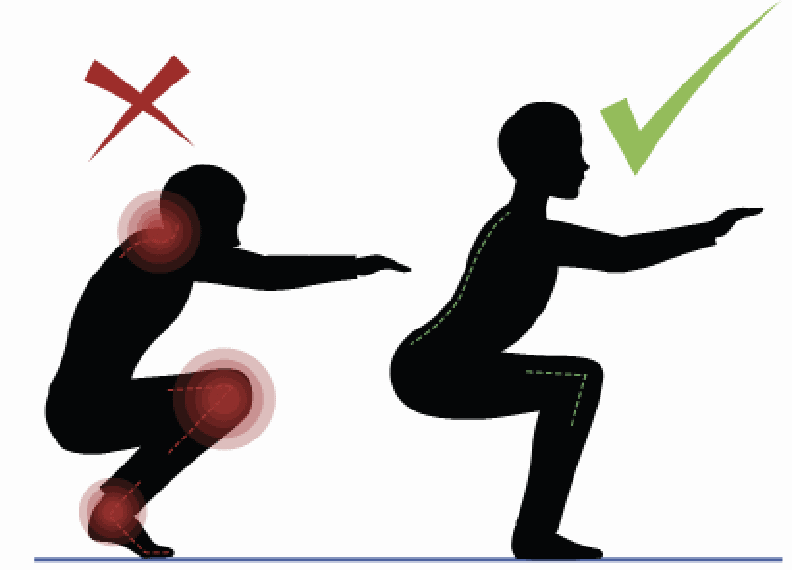
No rules Believe it or not there is no one best way to squat, and it should be tailored to the individual. If you watch a dozen people squat, you’ll see each of them will squat differently, particularly in terms of their stance. I often adopt the penguin stance with my toes pointing outwards. Does this mean my squat is any less efficient? Absolutely not! Essentially, as long as your squat meets the following criteria, chances are you have good squat form.
Lower the crease of your hips to below your knees
Neutral spine
Weight evenly distributed between the ball and heel of the foot.
When coaching squats, I often cue people to stand with feet shoulder-width apart, but even this may need to be adjusted depending on the individual’s natural stance. One of the most important things is that you keep your back straight with your chest up, keeping your spine in neutral. Squatting with rounded shoulders or having your chest down is not only less efficient but could lead to injury when squatting with added weight. Squatting with your chest down means your weight is going through your toes rather than your mid foot. There also might be a tendency to lift your heels as you go deeper into the squat. Try transferring your weight more towards your heels and you may find that not only does your chest lift, but you’ll feel more stable.