The Blackmore Vale logo
Home Blog Page 206

Crumbs! It’s 50 years since that Hovis advert | Then & Now

3

Exactly half a century after the iconic Hovis advert hit our TV screens, Roger Guttridge takes a stroll through the story of Dorset’s most famous street: Gold Hill

Gold Hill looking towards the Town Hall c1900

To paraphrase Sir Winston Churchill, never in the history of a Saxon hilltop town have so many owed so much to a humble loaf – and a load of old cobbles …
Put another way, not even a lead role in the star-studded 1967 version of Far From the Madding Crowd managed to thrust Shaftesbury’s Gold Hill into the national consciousness quite like that Hovis commercial.
It was 1973 when an aspiring producer and director called Ridley Scott cut one of his filmmaking teeth on Gold Hill’s steeply sloping cobbles.
To the sound of Dvorak’s New World symphony and an old feller reminiscing in a northern accent, he filmed a flat-capped bread delivery boy pushing his bike to ‘Old Ma Peggotty’s’ at the top of Gold Hill – before freewheeling back down the cobbles, legs akimbo.
The 45-second commercial (opposite) won a string of awards – and in 2006 was voted Britain’s favourite TV advertisement of all time.
The bread boy was played by 13-year-old stage school student Carl Barlow. He later recalled: ‘On that first day I must have gone up that hill with the bike 30 or 40 times. ‘And the same the second day going down – but that was more fun than pushing the bike up!’
Forty years later he returned to Shaftesbury to switch on the Christmas lights, and was again photographed on Gold Hill with his delivery bike.
In 2017, the retired London firefighter was back again to film a video promoting cycling – this time with an electric bike.
Will he be back again for the 50th anniversary?

gold hill advert  of the boy, Carl Barlow, with his Hovis bike in 1973
Carl Barlow with his Hovis bike in 1973
Carl Barlow re-enacting the Hovis advert on its 40th anniversary
BNPS.co.uk (01202 558833) Pic: LauraJones/BNPS Carl Barlow yesterday recreated his famous scene from Ridley Scotts 1973 Hovis advert – Voted Britain’s favourite. The child actor who starred in the famous Hovis TV advert today marked its 40th anniversary by returning to the iconic cobbled hill to push his bike up it again. Carl Barlow was aged 13 when he won the starring role as a bakery delivery boy for the TV commercial that has been voted as the nation’s favourite. In the ad, the teenager was filmed struggling to push a bike laden with freshly baked bread up the steep hill to ‘Old Ma Peggotty’s house’, the last customer on his round. The advert, directed by Ridley Scott, was meant to depict a northern industrial town but was actually shot on Gold Hill in Shafesbury, Dorset.

Not just a bread hill
In 1978 the Two Ronnies produced a take-off sketch of the Hovis advert, in which Ronnie Barker is seen trudging wearily up Gold Hill with a loaf of bread to the same Dvorak soundtrack. As he finally approaches the summit, he comments in a northern accent: ‘Grandad always used to say ’twer a bloody long way to go for a loaf of bread.’ You can see it on YouTube here – cycling tourists continue to recreate the scene to this day.

No stranger to the silver screen, six years before the Hovis advert put jam on the bread and butter of Shaftesbury tourism, Gold Hill featured in several scenes in the film based on Thomas Hardy’s novel.
Gabriel Oak, played by Alan Bates, is filmed walking up the hill while Sergeant Troy (Terence Stamp) precariously leads his red-coated cavalrymen down the cobbles. In a particularly moving scene, a rag-clad Fanny Robin arrives, weak and exhausted, at the workhouse door, where a few hours later she dies in childbirth along with her baby, fathered by the same Sergeant Troy.
References to Gold Hill (or Goldhulle) date back to 1350 and in ancient times, sheep and pigs were penned there on market days. Following the destruction of the Abbey in 1539, the hub of Shaftesbury life moved a few yards to the east to the area where Gold Hill meets the High Street and the Commons.

The same scene in 2018.
Image:
Roger Guttridge

At the top of the hill were the town stocks and the ancient Gold Hill Cross, probably a preaching cross and one of at least six old crosses that were dotted around the town centre.
The Gold Hill Cross was removed in 1826 to make way for the present Town Hall.
The house top right of the pictures looking up Gold Hill was rebuilt around 1900 on the site of the old Lamb Inn and a forerunner of the workhouse.
It also housed the Gold Hill Museum for a few years before the move to the present site a few yards away in 1957.

  • All pictures from Shaftesbury Through Time, by Roger Guttridge (available from Gold Hill Museum and other local outlets).

Here we go again – Gillingham & Shaftesbury Show is back!

0

The rural day out is a celebration of community, countryside and tradition – and it’s a feast for the eyes, ears, and taste buds!

While the livestock, pristine rows of tractors and huge farm machinery signal it is very much still an agricultural show, there’s something about the Gillingham & Shaftesbury Show that is a lot more – even for those who have never set a wellied foot in a farmyard.
It’s the sense of community and the passion for the countryside that make it an unmissable event in North Dorset’s August calendar.

An eclectic mix that works
The G&S Show spans the generations, from a weather-beaten man giving a terse nod to a neighbour to an excited child leading a calf into the Main Ring for the first time.
Small children in long white coats carefully lead sheep around a ring, seemingly not bothered by the crowds. Others trot ponies through their paces or help parents feed and brush livestock.
Over in the marquees, perfectly-shaped vegetables compete alongside glorious dahlias in a riot of colours as inspirational flower arrangements filled the horticultural tent.
Fresh eggs are presented on plates, once again sadly unaccompanied by their feathered producers, thanks to Avian Flu. Wander into the Wool Village to see sheep being shorn while you learn about the value of British wool.

Steam to ferrets
The adrenaline will be pumping this year with the headlining SquibbFreestyle Motocross Arena Stunt Show in the Gritchie Brewing Co Main Ring.
And over in the Turnpike Ring, laughter always signals when the ferret racing starts – the furry creatures race down drainpipes, and it’s tails out first, not the nose, that wins!
The speed of the Shetland Pony Performance Display team is something to see as they hurtle around the Main Ring – hugely entertaining, it’s worth finding a seat to stop and watch them.
And the Terrier Racing is unmissable – regulars aren’t there for the dogs so much as for Harold Galpin’s commentary.
Over in the steam section there always seems to be someone working on the engines, polishing and making sure the paintwork was gleaming. And what a joy it is to see them rumbling into the Main Ring for a circuit or two.

A Grand Parade
The relaxed atmosphere of the day is at times juxtaposed with the strictest formality. Bowler hats in the judging ring, elegantly dressed ladies driving carriages, and pristine white-coated families leading livestock. Some things at the G&S Show have never changed.
Last year the Grand Parade made an important and oh-so-welcome return after a 15 year absence, and it’s back to stay – we strongly suggest you don’t miss it, 3pm both days.
And eyes to the sky on Wednesday morning when the Lightning Bolts Army Parachute Display team will land in the middle of the show.

All the Food
It’s at places like the G&S Show that you realise just how much food and drink is produced in the towns and villages of Dorset. From local beers to the gin distillers’ botanicals there’s a drink for everyone. And you certainly won’t go home hungry – expect hog roasts and ice cream stalls, endless choices at the fudge stand, local sausages and world foods. Make a picnic from tasty salami, a mountain of regional cheeses and there’ll be plenty of local bread and cakes.
The great thing about the G&S Show is that you never know who you might meet as you make your way round. You may bump into old friends and colleagues, and for generations of local farming families it’s a regular annual get together.
And if you’ve never been before, be aware you’ll soon be marking the third Wednesday in August on your calendar every year!

Quick show tips:

Advance ticket prices end on 15th August:
Family (2 Adults & 2 Children): £38
(Gate price £43)
Adult: £17
(Gate price £19)
Child (aged 5 to 15): £3
Under 5’s go FREE!
BUY YOUR TICKETS HERE

Gates open at 8.30am on both show days. They close at 8pm on Wednesday 16th, and at 6pm on
Thursday 17th August.

Be sure to download your ticket in advance – data signal on show days is always very limited!

The free shuttle bus runs between both Gillingham and Shaftesbury and Turnpike Showground.
Stops will be Lodbourne Roundabout and High Street (by the old Co op) in Gillingham and on Bell Street, Shaftesbury.

Polite dogs are of course welcome – they must be on a short lead, and NO dogs are permitted within the livestock areas, or in any marquees.

Bring a picnic! There are three designated areas for picnicking – we just ask that you don’t sit too close to marquees, so as to not block any emergency exits.

Save on plastic – bring your water bottle to the Show! Drinking water points sponsored by Battens Solicitors will be available around the Showground, and will be marked on the map.

A career in the skies – life as a test pilot

0

Former Royal Navy officer Chris Taylor, an acclaimed civil certification test pilot, explains the unique skill set required for the job

Chris Taylor about to test fly a Ryan PT22 aeroplane

When you jet off for your holiday in the sun, how often do you think about the work that went into making your flight safe?
Chris Taylor, who lives near Salisbury, has had a successful career as a Royal Navy officer, a test pilot, helicopter pilot and finally as an internationally-acclaimed civil certification test pilot. He has flown more than 400 different types of aircraft, and is arguably one of the best qualified and widely experienced test pilots working today, anywhere in the world.
With that kind of background, it is little wonder he has written three books about his career. When he came to the recent Sturminster Newton Literary Festival, the room was packed, and there were lots of questions from the audience!
How did Chris choose the career path that led him to becoming a test pilot?
‘I always wanted to be a pilot, ever since I watched lightning jet fighters over Anglesey on family holidays! In the mid 70s, Thames TV did a documentary about the test pilot school at Boscombe Down, and that was that. I got my PPL (private pilots licence) at 17 and I did engineering at university. When I graduated I joined the Royal Navy as a navigation officer before flying Lynx helicopters. I had a 20-year career in the navy.’

A Westland Lynx AH.5 – ZD559 – and the rolling platform at Boscombe Down

The best of the best
As a test pilot, Chris has flown many different types of aircraft, from ex-military jets to home-built aeroplanes. Is there one that stands out as the best aircraft to fly?
‘There is no perfect aeroplane. It’s like cars – there’s no one perfect car. But, if I could choose one aeroplane it would be the Sea Fury. With the Fleet Air Arm, the Sea Fury was the iconic fighter aircraft of the 1950s and it was the last of the big fighters.’
And what about career highlights?
‘Being a grandfather actually! I’ve had some good experiences. The most awesome flight I did was in a Variable Stability Harrier or VAAC at Boscombe Down. It was a modified Harrier from the 1980s. It was one of the research vehicles that eventually found itself in the F35 programme*.’

A special kind of pilot
There are lots of people who simply want to fly, but what skills are needed to become a test pilot?
‘First of all, you need to be an above-average pilot. You have to be very competent with your mental agility. You need to be analytical about what is happening around you. You must also be a good verbal communicator and be able to communicate with clarity and brevity.
‘At Boscombe Down we had many tools at our disposal, and would specifically fly an aircraft to determine the specifics. It’s not casual flight – you academically test things. For example if something is meant to fly at 90 miles an hour you ask why it isn’t reaching that speed.
‘Regular pilots will take six months to learn how to fly a single aircraft. A test pilot has to fly things to test them – it’s a bit like a rental car. When you rent a car, you sit there and look for the clutch, the brake and the basics, so you know how to drive it. Then you check for the specifics, including the computer programme these days. You look for what is different.’
‘I think some test pilots struggle to dial down their ability. They have to consider an average pilot in their first plane – would they be able to manage that? I look at the work that Winkle Brown did as a test pilot. He flew lots of aircraft, but wasn’t always able to dial down. Your job as a test pilot is to think “could a less experienced colleague do that?”

Chris Taylor with a Basset – The Beagle B.206, a 1960s British seven-seat twin-piston engined liaison and communication aircraft

Testing protocol
When the news broke recently about the submersible that imploded while travelling to see the wreck of the Titanic, it was obviously horrifying. However, the initial investigation has brought the use of experimental vessels into discussion – and, of course, not listening to testing experts.
Chris says: ‘It wasn’t a wise thing to do. In aviation you have aircraft that are fully tested – that’s what we go on holiday in. They are all rigorously checked, the systems are tested and it’s safe. It’s probably more dangerous getting to the airport!
‘I get to test experimental aircraft, and I take no one with me who is not operational and on the job. Four flew with me recently and we got into some quite dangerous things. Afterwards, we reflected on whether we needed all those people on board.
It would go against my principles to take fare-paying passengers on something like that!
‘That submersible was not approved and was conducting research. Taking fare-paying passengers on board in a situation like that is disastrous. There will always be thrill-seekers out there, but I don’t do that. I like to think it’s a wake up call for people who go out doing these things.’
Chris has written three books – a trilogy of his career. ‘My third book is on the computer right now!’ he says. ‘It’s the final version from the publisher. My most recent book is about the 20 years I spent in the Royal Navy as an operational Lynx and Wessex pilot. It’s a prequel to the prequel! The first book was about me the test pilot, and the second about my time as an experimental test pilot. I’ve documented my career so my grandchildren can read about what granddad did.’

At the cutting edge

0

Mick Percival went from wood-chopping hobbyist to invincible, record-breaking champion – now he gives spellbinding showground performances

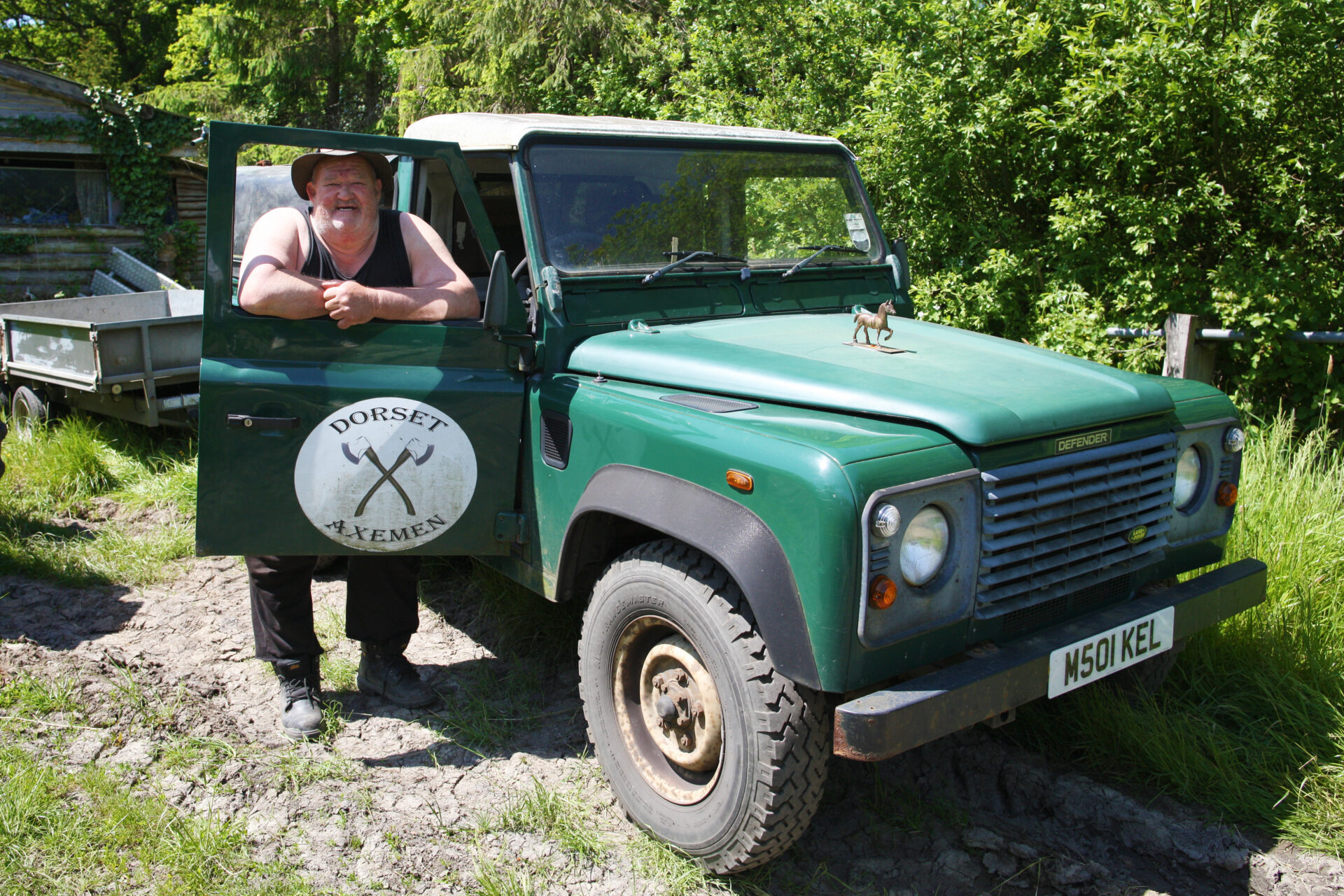
Mick Percival Dorset Axmen – image Courtenay Hitchcock BV Magazine 2023

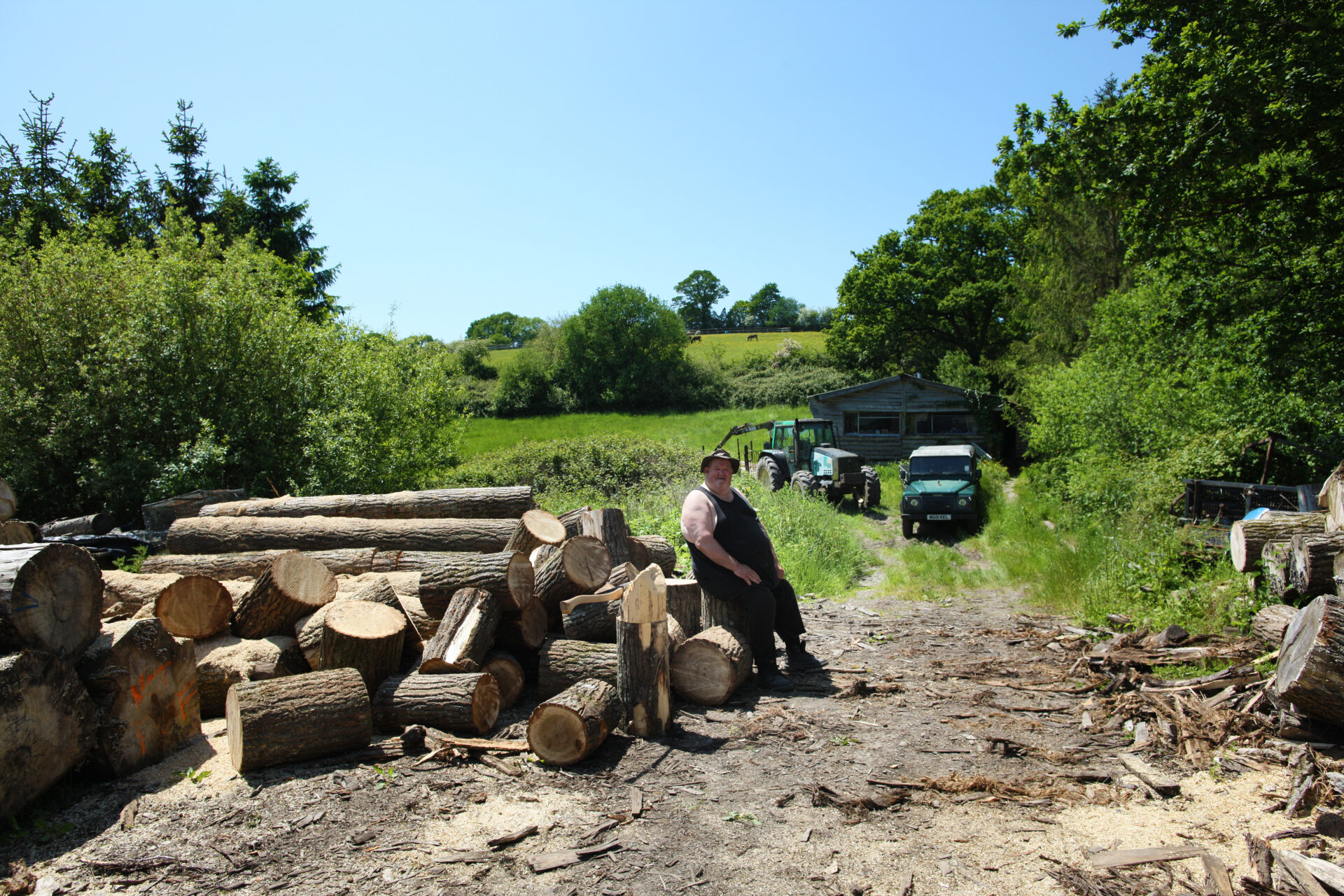
Mick Percival is surrounded by what he loves – wood.
In the aptly-named village of Broad Oak stands his wood yard, where Mick lives in a self-built, timber-clad house, surrounded by hundreds of logs of all shapes and sizes. These all look the same to me but under Mick’s expert eye I’m educated on the grain, the rings, the texture and density and above all the potential for cutting … and cutting fast?
As well as a wood yard selling timber and firewood, this is the training ground for the acclaimed Dorset Axemen. This band of axe-wielding showmen was founded by Mick in 2014 and now they compete and exhibit at rural events and showgrounds up and down the country, demonstrating wood-cutting skills that date back to the hard-working lumberjacks in America and to centuries before. Retired from competing, Mick – still a giant of a man at 67 – now comperes these crowd-pulling events where axemen split huge logs at break-neck speed using lethal axes.

Mick Percival took the title of British Log Axing Champion in 1986, 89, 93, 96, 97 and 98. In 1996, he chopped through a
16-inch diameter log in 33.35 seconds, setting a then new championship record – image Courtenay Hitchcock BV Magazine 2023

Champion in waiting
More than 40 years as a competitive axeman might have taken its toll on Mick’s back and knees, yet amazingly he has escaped any serious injuries. When you consider he has had a razor-sharp axe only a few inches from his feet, flying between his legs as he balances on a block of wood, that’s either incredible luck or brilliant skill and concentration.
Mick says: ‘Timber demonstrations like undercutting and crosscutting are big in Australia and North America. I saw an Australian tour of woodchoppers and log axemen that came to the UK when I was young and it sowed the seed. I got my chance when I picked up my first axe when I was 23 – that same year I won my first novice competition in the UK.’
His competitive spirit was unleashed and he went to North America to compete in the world championships.
At the Devon County Show in 1996 he was crowned British Log Axing Champion for the sixth time.
‘I was fanatical,’ recalls Mick. ‘I took to it like a duck to water. I’d work in the woods all day felling trees, using chainsaws, then come home and practise, practise, practise. It’s all about getting your eye in and mastering the technique.’

The axes Mick uses are made by Tuatahi in New Zealand. They have a high carbon tool steel on the cutting edge, tempered through to soft metal at the back – this absorbs the shock and gives more penetration into the wood. They cost £600-£700 each – image Courtenay Hitchcock BV Magazine 2023


Mick became invincible so the championship had to introduce a handicap system: ’The more you win, the higher your handicap. My opponent would start chopping on the count of three and I would start 33 seconds late. I still managed to win most of the time.’ Mick smiles.
His gleaming axes are shipped from New Zealand and Australia and his biggest regret is that he never went and lived down under. ‘I kick myself now. My uncle emigrated as a £10 Pom in the 1960s. I should have gone back with him when he visited.’

Mick Percival at home in his wood yard at Broad Oak. image Courtenay Hitchcock BV Magazine 2023


Mick’s first axe was bought by that very uncle – who simply popped into his local hardware shop. In Australia, among the nuts and bolts of everyday DIY, you can buy competition axes. ‘He sawed the handle off, wrapped it up and sent it over. I made my own handle, grinding it out on a sandstone wheel.’
He may regret not emigrating, but Mick doesn’t regret starting the Dorset Axemen. ‘I knew I needed to train younger men so I spent the winter of 2013 taking seven of them, all in their late twenties, through their paces. In 2014, we exhibited at a few local shows and have never looked back. We’ve been to Northern Ireland and Scotland. This year we’ve already done seven shows.’
And how does an axeman unwind? ‘The adrenalin really pumps when you’re competing. I still love that buzz at the shows. I like to relax with a cider in the wooden bar I built at the back of my house – I call it the Notty Oak!
I love to sit and watch all the wildlife. I’ve spent most of my life outdoors. I could never live in a town or city.’

Quick fire questions:

A-lister Notty Oak guests?
Jeremy Clarkson – I know he can have his moments, but can’t we all? – and the Duke of Edinburgh. I met him at The Royal Welsh Show. He seemed really interested in our display.

Book by your bedside?
None! But when I’ve been hiding in my bar and people ask where I’ve been, I say I’ve been out the back with Mr Crabtree’s Book of Fishing!

Best and worst wood to cut?
Poplar is my favourite. It’s the most even and it’s the cheapest to buy! It’s a crisp wood, which you need for a clean cut.
Elm and spruce are my least favourite – the pin knots bend axes for a pastime!

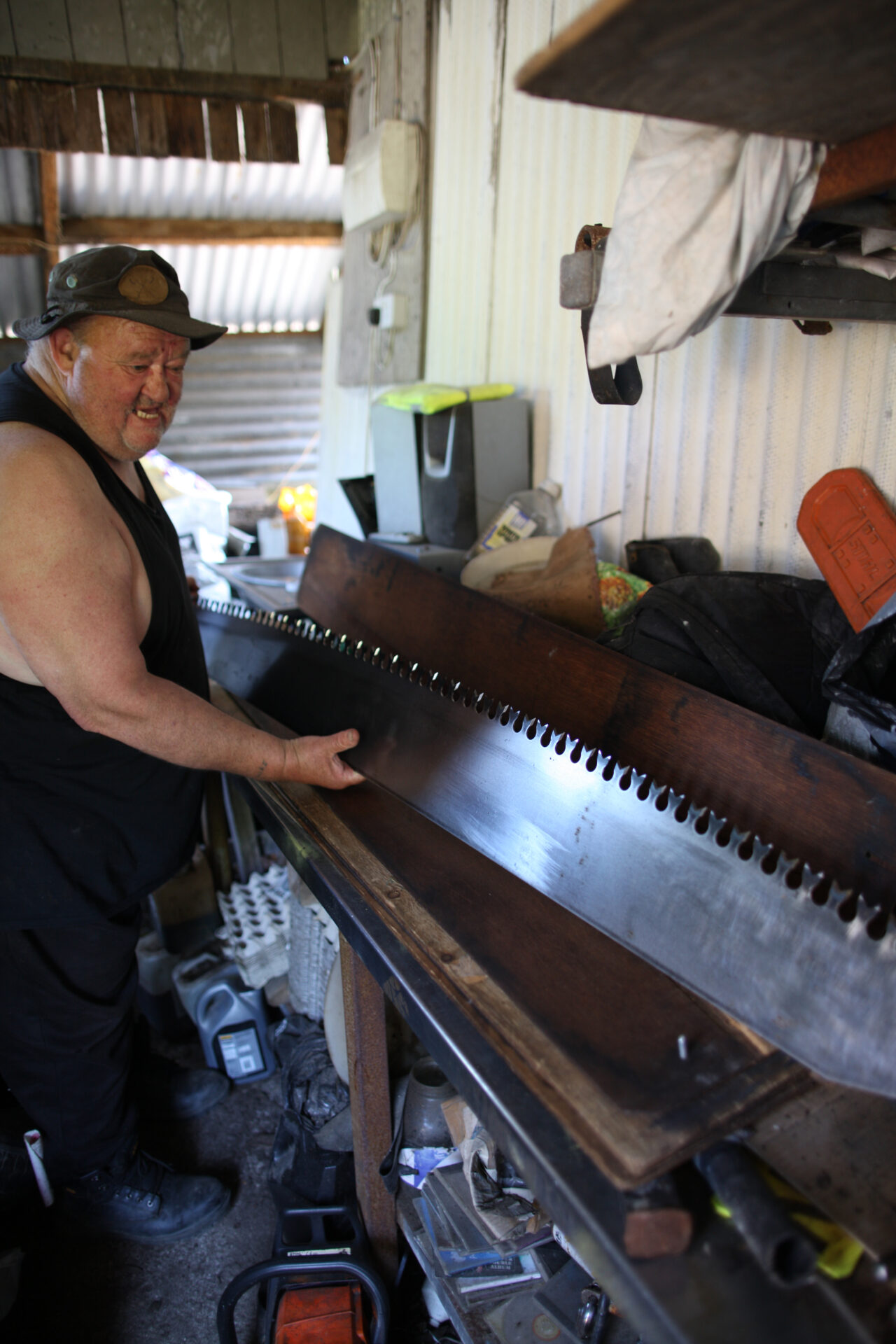
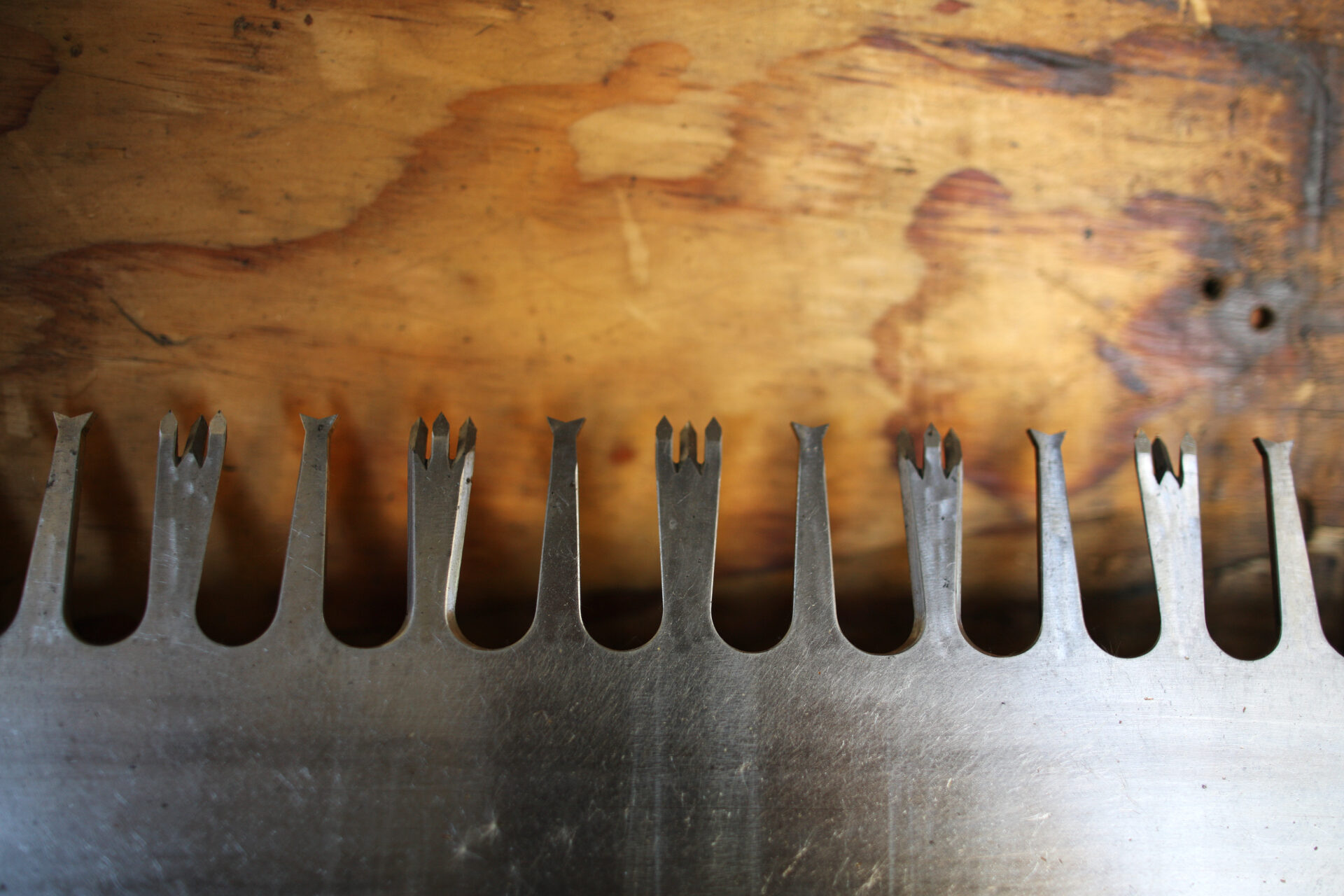
Two-man saws were known to the ancient Romans, but first became common in Europe in the mid-15th century. Known colloquially as a Misery Whip, they are up to 16 feet long and designed to cut in both directions – careful tooth design is necessary to clear the sawdust during the cut. image Courtenay Hitchcock BV Magazine 2023

dorsetaxemen.com

  • See the Dorset Axemen in action in their first ever appearance at the Dorset County Show on 2nd and 3rd September.

New houses threaten village character on narrow A357

1

Henstridge faces 182 new homes, despite strong concerns about road safety, infrastructure and the impact on the village character

The A357 as it runs through the village of Henstridge
Image: © Googlemaps

When the Victorian and Edwardian houses lining what is now the A357 were built, people walked to work and most did not own a car. Today, a busy road winds through the village, which has expanded over the years. With further development anticipated, how much is too much for the infrastructure?

Safer roads before more houses
A development of 130 houses in Henstridge has been proposed since 2017, and was initially rejected by South Somerset District Council in 2018. However, the development has now been approved, subject to road safety improvements. The parish council is adamant that road safety is a priority that must be addressed before any development takes place. To add to villagers’ concerns, an application for a further 52 houses has been lodged, which can only lead to more traffic using the A357.
Henstridge councillor Dr Adrian Gaymer drove me around the village to demonstrate the various pressure points in the village and the sites of the proposed developments.
The road is narrow and in some places traffic is governed by priority signs. There are significant stretches of the road where there is no pavement, with houses opening directly on to the street. Where will pedestrians go when more traffic arrives from new developments? More importantly, where is there room for critical improvements in such a restricted space?
Adrian points to battle-scarred houses frequently knocked by lorries trying to pass on this narrow road.
‘This is where there’s one narrow point which will get even narrower with the suggested yellow box junction, and cars and lorries waiting to pass. One wall is constantly being bashed in and one house had its roof damaged, although we are still unsure how.
‘Lorries come off the ferry in Poole and head up to the A357 to the A303 and on to the Mendips. And of course more lorries come from the Mendips and the A30, back the other way. We’re also concerned about traffic cutting through estates where children are playing or going to school.’

Inadequate infrastructure
In Somerset, there are currently 11,136 people on the housing register, of whom 2,368 are in South Somerset, and of these 301 are in the highest category of housing need.
There is clearly a demand for social and affordable housing.
The demand for social and affordable housing is clearly there. The A357 runs through Henstridge, south to Stalbridge in Dorset, where four major housing developments have been approved and are under way. A fifth proposal, north of Station Road, is raising questions with councillors and residents over the volume of homes and the pace of development. Any development in Stalbridge adds to the pressure on the A357 through Henstridge.
Henstridge and Stalbridge residents have to go to Milborne Port or Sturminster Newton for GP surgeries and further still for NHS dentistry.
Public transport is not the answer. Although the villages are served by a service to Blandford and Yeovil, it only runs on weekdays so is unsuitable for shift workers. A spokesperson from Somerset Council says: ‘As a planning authority, we work closely with and consult Dorset Council on issues such as local service infrastructure. We would expect education, highways and the NHS to pick up on any cross-boundary capacity issues, where communities in one administrative area are serviced by infrastructure from another.’

Large lorries fill the road as it winds through the village, the A357 too narrow here to warrant a central white line

Time to draw a line
North Dorset MP Simon Hoare says: “Where you have major developments, is there enough robust cross-border working? There are two different local authorities, two different planning departments, and two highways departments. It is critical that both highways and planning are talking to each other. I think that if the scale of development actually requires large scale highways change and developments then you have to review the capacity and what there is in the entirety of a situation and what can be sustained comfortably.
‘The developments are clearly felt by local people. Especially when the character of a settlement changes. The Gladman development (in Stalbridge) very obviously starts to distort the character of the village. Stalbridge has taken its fair share of developments.
‘Now is the time to draw a line and let what has been consented to be built on, and then look at other opportunities.’
Cllr Adrian Gaymer also expressed concerned about the increase in the village population: ‘if this continues we will no longer be a small rural settlement but a rural centre like Martock, Bruton or Templecombe – and we’re not Bruton.’

Plans for the A357
A previous plan for traffic lights has been dismissed and there are now discussions about yellow box junctions. Somerset Council is aware of the issue, and a representative says: ’Somerset Council is working with the developer to resolve the outstanding matter(s). Outline planning and reserved matters are approved for this development and we’re confident of an agreement shortly. ‘The developer and utilities are carrying out permitted preparation works in accordance with planning regulations.’
A spokesperson for Barratt David Wilson Homes Exeter says: ‘As agreed with Somerset Council, and in accordance with our planning obligations, infrastructure upgrades are under way to improve the A357. These improvements will deliver a range of safety upgrades, including dropped kerbs and tactile paving at several junctions and enhancing road and traffic signage. The safety of the community and the wider road users remains our priority.
‘We are committed to continue engaging with the community and Henstridge Parish Council throughout the construction process. We are looking forward to commencing on site and delivering 130 much-needed and energy-efficient new homes to the area in the spring of 2024.’

Embrace the rain

0

It might be a damp squib of a summer, but Thorngrove’s Secret Garden might be just the treat you need, says Kelsi-Dean Buck

If you fell asleep in April and woke up last week, you might think not much time had passed. Summer is underway, but the showers have been plentiful and it certainly was a, shall we say, unsettled July?!
Followers of our social media will know that we keep the summer atmosphere strong though, and the courtyard here at Thorngrove continues to burst with colour (and between you and me, we don’t mind a bit of summer rain – it’s good for the plants!). Come join us on Facebook and Instagram for regular hits of summer vibrance, along with gardening tips and inspiration. Then come and visit us in person – we love chatting plants ‘n stuff!
In July we also launched our SUMMER SALE – many plants are available at a bargain price, still looking lovely, and with some TLC they’d make the perfect addition to your planters or garden space. This includes many from the hairy pot plant company, who grow a fabulous range of eco-friendly, sustainable, and ethically produced cottage garden plants and herbs grown in hairy coir pots in a peat free compost. If you’re yet to discover them, we highly recommend. Stop by Thorngrove and have a look for yourself.

Summer menu
As it’s summer, we naturally now have our summer menu in the café – and we’ve had some incredible responses to it. We believe the Secret Garden Café is offering a unique range of dishes you don’t often find in similar settings, so to encourage more of you to try us out, we’ve launched our BUY ONE LUNCH, GET ONE LUNCH FREE offer!
Available every Tuesday and Thursday in the café, come along and catch up with friends. Indoor climate-controlled dining, or outdoor patio seating – for when the sun does show itself! – Ben and his team in the café are ready to welcome you. Don’t just take our word for it, read some of our reviews on Google, and the comments on social media. Our ‘secret’ café is not so secret anymore!

Plant of the month
Our plant of the month for August are the delightful hydrangeas. They’ve been showing off for a little while now, so we thought it’s only right to give them the spotlight for the month. These beautiful and versatile flowering shrubs can add charm and colour to your garden, and also work as impressive table centrepieces.
Don’t let the rain dampen your summer spirits. All you need to do is pay us a visit and breathe in the lush seasonal plants on display … and let’s be honest, nobody wanted another drought did they? Embrace the damp – we look forward to seeing you this month!

In the studio with Rozanne Bell

0

Fleeing political violence, Zimbabwean Rozanne Bell turned her rebellious energy into a successful painting career

Rozanne at home with some of her art – image Courtenay Hitchcock BV Magazine August 2023

The adopted daughter of English parents who had relocated to Zimbabwe, Rozanne Bell grew up in a strict, almost Victorian but happy, environment.
But the rebellious nature that emerged during her teenage years eventually led to expulsion from school.
Recognising her daughter’s need for an outlet, Rozanne’s mother, an accomplished artist herself, encouraged her daughter to explore painting as a means of expression. It turned out to be a bit of smart parental thinking, as a natural flair swiftly emerged.
Combining talent with hard work and dedication, 16-year-old Rozanne began to forge what became a successful career as an artist, resulting in exhibitions at home in South Africa and also sales in the USA.
Under Robert Mugabe’s premiership, the political situation in Zimbabwe grew increasingly violent and eventually, in 2002, it compelled Rozanne to flee the country, leaving behind all the family’s possessions – a daunting challenge for anyone, let alone a mother with five children.

image Courtenay Hitchcock BV Magazine August 2023
In her studio, Rozanne Bell explains her process
All images: Courtenay Hitchcock BV Magazine August 2023

Under such circumstances, a fresh start in a new country required immense strength and resilience, qualities Rozanne appears to possess in abundance. She recently described herself on social media as “storming into my studio like a supercharged Duracell battery.” – it’s an accurate depiction.
Her gregarious nature, her relentless energy and her enthusiasm for art all proved necessary when she set about forging a new reputation in the UK. The bright and quirky birds and animals she had been painting in South Africa were not well received here. She had to deveop a new style and find new sales outlets.
Each rejection just fired her up: ‘If you don’t fight, you don’t get anywhere.
‘You have to listen to what the people want. I just want to paint what people love.’
With limited resources, Rozanne sourced frames from local car boot sales. After a year in Dorset a local pub agreed to display her work.
Shortly afterward, a Bournemouth agent took her on and Rozanne began to paint the animal characters which found her an initial niche market.
She continued to work hard, reacting to customers’ wishes. ‘I had to keep pushing. I had children to feed and bills to pay.’

image Courtenay Hitchcock BV Magazine August 2023

Accessible art
Rozanne’s style and subject matter are constantly evolving. She has built a reputation, with her vivid colours and expressive brush-strokes, for her flamboyant, mixed media works. She still draws inspiration from her home country’s colours, flowers and animals, but adds her own contemporary, often humorous, touches, almost always working from her imagination but using a vast array of both fresh and silk flowers for reference.

Rozanne and the drying racks – image Courtenay Hitchcock BV magazine August 2023

Recent works reveal a love of the Dorset countryside and the coastal landscapes of Cornwall. Her trademark lush curtain of flowers is nearly always present.
Rozanne is not interested in producing limited editions or offering mass market prints, preferring established followers to own an original painting at an affordable price:
‘I dream of making happy paintings that people can afford,’ she says.
Thoughtfully, she produces some smaller, less expensive paintings for loyal followers – of which she has many, with more than 20,000 on Facebook alone.
She works on multiple paintings simultaneously, allowing her to develop complexity of layers and to incorporate a variety of media into her creations.

Rozanne incorporates her trademark lush curtain of flowers even on coastal landscapes – image Courtenay Hitchcock BV Magazine August 2023

A distinctive aspect of Rozanne’s work is her use of resin finishes. By applying resin coatings to her paintings, she adds depth and vibrancy to the final pieces. It creates a glossy and transparent layer that enhances the colours and textures, creating a gutsy visual impact. It is a messy process – she showed me the dedicated room stacked with wooden racks of paintings in the process of receiving different layers. Finishing touches might include metallic paint splashes, or highlights for a daisy petal.

Two harbour works-in-progress waiting for their resin coating – image Courtenay Hitchcock BV Maazine August 2023

A fresh perspective
Rozanne is a dedicated and compulsive painter: she is in her studio near Sturminster Newton from early morning until the evening. She’s quick to point out that essential support comes from her daughter who ‘runs my life and my brain!’
As for every artist, the lockdown period in 2020 provided a different perspective and slower sales. Rozanne is beginning to re-evaluate her work and looking at taking a different direction. She wants to spend more time with her young grandson.
The continuous evolution of an artist’s style and technique can lead to the refinement and enhancement of their unique artistic vision.
As Rozanne explores new techniques and subject matter, she brings a fresh perspective to her work while retaining the elements that make her art so recognisable and distinctive. As she says, ‘I was so lucky to have been born with an imagination.’

image Courtenay Hitchcock BV Magazine August 2023
A new work in Rozanne’s Moonlight series dries on a studio workbench – image BV Magazine August 2023

Her nearest gallery is Framemakers in Salisbury.

Sherborne secondhand book, postcard, map & ephemera fair

0

Saturday, 19th August

9.30am to 4pm

FREE entry
Digby Memorial Church Hall, Digby Road, Sherborne, Dorset, D9 3NL

For more information email [email protected]
or call Ed Bailey on 07967643579

Friday Lunchtime Recitals | Sherborne School

0

1.45pm
Cheap Street Church (unless otherwise stated)

as listed below

FREE ADMISSION
ALL WELCOME