A local expert from Citizen’s Advice provides timely tips on consumer issues. In the postbag this month:
Q: ‘My children are starting new schools in September, one in primary and the other secondary. Between uniforms, PE kit and catching the bus each day, the costs are adding up and I’m not sure how to cover it all. Is there any help I can get?’
A: The new school year puts pressure on budgets for many families – and yes, there is help available. A good place to start is the Citizens Advice website. There you’ll find lots of useful information on the support you might be entitled to for school-related costs. The help you can get to cover school lunches will vary, depending on how old your children are and whether you claim benefits. Children in Reception, Year 1 and 2 automatically get free school meals. You can also apply for free school meals for older children if you claim certain types of benefits, including Universal Credit, Child Tax Credit and Income Support.
Transport If your child can’t walk to school because of special educational needs or disabilities they should get free school transport. If your children can’t walk because it’s dangerous or too far, you may also be able to get help with transport costs from your Local Education Authority (LEA). Your LEA is the part of your local council that deals with education in your area. Contact it directly to find out exactly what support it offers.
Uniform options If you’re on a low income, your LEA may also be able to help with activity and school uniform costs. You’re likely to be considered to be on a low income if you get means-tested benefits like Universal Credit or Housing Benefit. There may also be a local charitable scheme that can help (for example, the community-run Boutique in Sturminster Newton collects and distributes free secondhand unforms for the local schools). A good place to find out about this is the school itself or the Parent Teacher Association (PTA) – both will know if these kinds of schemes exist locally.
This month Barry Cuff has chosen postcards in honour of his friend Roger Guttridge, choosing places that he lived, worked and went to school: ‘Both Roger and I had a great love of Dorset, and he was willing to explore and write on some of my ideas – the Dorset fingerposts, a fatal shooting at Winterborne Kingston, the Cuff surname and wrigglebacks. All of them appeared in various publications! Together we had just finished a book on Wimborne, due to be published next March – sadly Roger’s last. We were already talking about the next book, to be on the North Winterborne valley. His death is a great loss to the county.
This postcard of Sturminster Newton, where Roger’s grandmother lived and where he went to school, was sent to Derby in 1912.Roger’s home, with his family, was at Winterborne Kingston for many years – this card of the village was posted to Longfleet in Poole in May 1912.In August 1909, this lovely street scene of Blandford Forum was sent to Ironbridge. Roger attended Blandford Grammar School.Roger lived and worked for many years in Wimborne – in 1904 this card of East Street was sent just a few miles to Weymouth
There are still jobs to be done in September, but it’s also the month when we begin to prepare for next year, says gardener Pete Harcom
Believe it or not, preparing for spring is what’s on the cards in September! Spring bulbs – daffodils, crocus and hyacinths – wallflowers, pansies and forget -me-nots can all be planted from now through into the autumn. They all give an early boost for insects, birds and small animals in the spring, and play a vital role in helping a healthy garden thrive.
Jobs for September:
Collect ripe seeds from your favourite flowers and store in labelled envelopes, ready to sow in spring. No, you really won’t ‘just remember’ if you don’t write it down now!
Trim conifer hedges to control their height.
Leave sunflower heads in place and let them go to seed for birds to feed on.
The birds and the bees Attracting butterflies and insects into the garden can be very rewarding. As September is a great month for planning ahead, I’ve pulled together a list of plants which can help: Verbena bonariensis – I can personally testify that this plant is an exceptional attraction for butterflies! Lavender – always a great pollinator for honey bees. Honeysuckle – not just for the bees, this is a lovely plant for scent in your garden. Hawthorn – another great early flower which will help give our insects a boost (and the birds love the berries too). Sedums – never overlook the little guy; these can attract multiple butterflies and other insects at the same time! Vipers Bugloss – you’ll have seen it on your walks, it is a native wildflower and bees go wild for it, but do note that it is poisonous. Allium – with their large ball-shaped heads of flowers, they make a real statement as well as attracting insects. Snapdragon – it may be short-lived, but it’s an easy-to-grow perennial (though it’s often used as an annual). The snapdragon conjures up images of typical English country gardens, and, just like the foxglove, it’s fun to watch bees climbing in and out of the flower heads.
The buddleia problem Commonly known as the ‘butterfly bush’, it has become increasingly clear that buddleia davidii can be highly invasive. It produces lots of small, light seeds which spread extremely easily. It can grow in many places – even in cracks in buildings several floors up. Buddleia davidii does attract many butterflies, but if it is at the expense of rare invertebrates that would otherwise be living there, it is preferable to plant non-invasive flowers to provide nectar for the butterflies.. That being said, if you like your buddleia davidii, you don’t have to remove it! Do prune it severely as soon as the flowers have faded – that means it doesn’t have a chance to spread its seeds – and dispose of the pruning carefully. When your buddleia dies, consider replacing it with non-invasive shrubs. Also try buddleia x weyeriana, which has sterile yellow flowers that won’t set seed (a much better option in my humble opinion!). Also – some varieties of cotoneaster have become invasive. Check with your local garden centre for the most appropriate varieties.
Readers of The BV will be saddened to hear of the death of Roger Guttridge, the Dorset writer and local historian whose articles have been one of the great delights of the magazine since we started it during the pandemic. We send our deep and sincere condolences to his wife, Sylvie, his son, Andy, and his family. The greatest tribute we can pay to our friend and hugely respected colleague is to dedicate this month’s Looking Back to his life and work, with tributes from some of those who knew and worked with him. A journalist, a news-hound, a swimmer and swimming correspondent, a local historian with a special interest in smuggling, a lover of The Beatles, Queen and a great supporter of his son when Andy started his own band as a student … Roger Guttridge was a man who lived life to the utmost, right up to the end, still contributing his columns to The BV. After a four-year battle he died of leukaemia on 8th August.
Bournemouth Evening Echo Chief Reporter, 1984
A journalist first As a district and chief reporter for the Bournemouth Evening Echo, Roger was a true newshound. Andy recalls family days out when Roger would spot a blue flashing light – ambulance, fire engine or police vehicle – and rapidly turn the car around to follow it, keen to be first on the scene, first with the story. But he was no sensational headline seeker. He believed in the importance of the local newspaper in the community and he was involved in and concerned about many aspects of life in Bournemouth and Wimborne, where he worked for the Evening Echo, and throughout Dorset, which he mined for stories for some of his many books. His interests extended even across the Atlantic to Newfoundland, where he explored the centuries-old connection between the remote Canadian fishing community and the many families in Dorset and Poole, whose fathers, sons and brothers went west to find work fishing the Grand Banks. John Newth, long-time editor of the sadly now defunct Dorset Life magazine, recalls his relationship with Roger, over many years and hundreds of articles. Speaking at Roger’s funeral, he praised the reliability, consistency, quality and total professionalism of Roger’s work. If John had even the wildest idea, Roger would track it down – and he never missed a deadline! John remembers their years together as filled with many laughs.
Far right – with other journalists in flooded Leigh Road, Wimborne 1979
How we met When Laura and Courtenay started The BV, Roger Guttridge was one of the local journalists they hoped to persuade to join them. Laura recalls: ‘One of the first people I was determined to track down and woo into working with us was Roger. We had never spoken before, and we arranged to meet for a coffee – it was mid-pandemic, so we sat on a bench in Stur market square under an umbrella in the pouring rain. ‘I thought I was there to interview Roger. I was, of course, actually there for him to interview me. Two hours and a cheese toastie later he had decided to accept my offer – and we were friends. ‘He swiftly became an essential part of the BV – not just for his unmatchable local history columns, but also as a mentor, confidant and sounding board. It’s difficult to imagine an issue of the BV going out which will not be pre-empted by a long and winding chat with Roger as he gleefully regales me with a number of potential – and all equally bonkers – local history stories to choose from. ‘He was never just a columnist. I was proud to call him a friend, and I will miss him very much.’ From its very first edition, Roger’s Then and Now and Looking Back articles have been go-to sections of The BV – you can read the archive here. Roger remained a true professional right to the end – just a couple of weeks before he died, Laura decided not to publish the piece he submitted for his Looking Back column. Two days later he sent another article – a hilarious tale of a 16th century East Dorset squire, Henry Hastings, described as a “champion seducer,” whose quarry was as likely to wear skirts as fur or feather. It was much better than the first piece, but it was typical of Roger that he had (albeit perhaps unwittingly) kept the best for last.
Interviewing Olympic 100m breaststroke champion and world record holder Adam Peaty (left), National Arena Swimming League finals, Cardiff, 2019.
Roger Guttridge – a brief life Roger Guttridge was born at Redhill, Surrey. The family moved back to his mother Connie’s native Dorset in the early 1950s. He went to Blandford Grammar School before beginning a 50-year career in the media, including newspapers and magazines, book writing and publishing, PR and marketing, radio and television. He was a district reporter, chief reporter and deputy news editor of the Bournemouth Daily Echo, wrote some 20 books, including tales of smuggling and murder, and edited several others. Roger was particularly renowned for his books on Dorset and his local history columns, in the Echo (Bournemouth and Dorset), the original Blackmore Vale and Stour & Avon Magazines, Dorset Life, and latterly, here in The BV magazine. He was the Bournemouth Daily Echo’s swimming correspondent from 1988 to 2018, contributed to Swimming Times, the national swimming magazine, and wrote about swimming for other newspapers, including the Daily and Sunday Express. He covered three Olympic Games (Athens, Beijing and London), two Commonwealth Games (Manchester and Glasgow) and many World and European Championships. He was press officer for the Great Britain Swim Team in 1999 and 2000. He took part in or advised on many television and radio programmes, including a BBC Radio 4 programme about the real-life smuggling influences behind J Meade Falkner’s classic novel Moonfleet (set in Dorset). During 2018, he appeared on the BBC 1 series Murder, Mystery and My Family, in which he revealed newly discovered documents to the grandson of Charlotte Bryant, who was hanged in 1936 for poisoning her husband with arsenic; the BBC 4 series Beach Live: Jurassic Coast Revealed, in which he discussed Dorset’s smuggling history; and The One Show on BBC1. He appears on both parts of the two-part DVD Dorset: Along the River Stour, presented by Bonny Sartin of The Yetties. Roger continued to work right up until his last week when he was admitted to Poole hospital. He died at the age of 73, four years after his leukaemia diagnosis. He battled his illness with courage and determination right up until the very end.
The Three Rogers: photographers Roger Lane (R) and Roger Holman (L) with Roger at Knowlton Church, in 1991
Roger and the original BVM Roger and Fanny Charles, who edited the original Blackmore Vale Magazine for 23 years, both worked for the Bournemouth Echo (although not at the same time) – their careers criss-crossed for nearly 50 years and for many years he was the local history columnist for the BVM. Fanny says: ‘Readers love local history – if they are locals of many generations they are probably related to somebody in one of the stories; and if they are incomers, these snapshots of life in past times help them to feel part of their new community.’ She recalls that she envied the Echo having Roger, and admits that she was excited when she heard that the paper’s cost-cutting management had dispensed with his services. ‘I got on the phone to Roger as soon as I heard and persuaded him to meet me for lunch at a local pub. I asked him to bring his history column to us and he agreed. He also brought his swimming contacts and expertise. So our little magazine – which couldn’t compete with the Echo or the Western Gazette in covering football, cricket or athletics – had an authoritative and always readable stream of swimming news, local, regional, national and international. ‘Roger had a much wider audience with us – because we had an enormous circulation, and his articles were appreciated by thousands of readers for years.’ Fanny was delighted to see Roger’s articles in The BV, where of course they became go-to sections for so many.
Publicity shot for the launch of Dorset murders in 1986
The Three Rogers Roger was one of a trio who were affectionately known locally as The Three Rogers. The only survivor, photographer Roger Lane, remembers his great friend and colleague: ‘It is with great sadness that I mention the passing of my long-term friend Roger Guttridge with whom I shared the same birthday, albeit five years apart (me 1945 and Roger 1950). My late fellow photographer Roger Holman and I worked with Roger Guttridge on our first book Landscapes of Dorset, and again on Villages of Dorset. We frequently toured Dorset, signing copies of the books and promoting them with talks. Sadly, I am the only Roger remaining, but in the spirit of my friends, I intend to carry on with camera and words as long as I can. ‘Roger was a tremendously generous and quiet professional with a subtle sense of humour, generous with his advice and personal help to me with my writing. He was a constant supporter for fair and reasonable terms for authors in respect of publishing contracts with the Society of Authors. ‘His knowledge of Dorset and in particular the Blackmore Vale was unsurpassed, along with his personal history of smuggling and one of Dorset’s most famous smugglers, Roger Ridout, from whom he was a direct descendent. ‘Whenever we met, Roger – knowing my life-long interest in motor-racing – always held a detailed conversation about the last Grand Prix or the next. It amazed me how he knew so much about it when ‘his’ sport was swimming, but that was no doubt due to his enquiring mind as a journalist.’
Interviewing England cricketer lan Botham in Wimborne c.1984
And to Canada Roger had a lasting interest in Newfoundland – outside his beloved Dorset, but still closely connected to it through its Poole and Dorset links. He researched the fishing trade – many men went from Dorset to fish the then vast cod stocks on the Grand Banks – and deep connections such as the old folk and sea songs and the language. The dialect spoken in the eastern Canadian province still has traces of the Dorset dialect that Thomas Hardy and William Barnes would have known. Roger’s interviews and discoveries developed into a series of well-researched articles and proved fascinating and helpful to Fanny Charles, after she found a family connection – ‘My great great grandfather went from the Blackmore Vale to fish the Grand Banks – and he died out there.’ The exciting recent discovery of a pair of swanskin mittens – the last surving example of the fabric made uniquely in the Blackmore Vale – was directly due to Roger’s involvement with the Swanskin Seafarers of Sturminster Newton heritage project. Andy also benefitted from his father’s Newfoundland connections: ‘He arranged for me to go over to Memorial University in St Johns to do my sixth form work experience at the Geology Department there. That was an amazing experience for me at the age of 17.’ What is common to all the tributes and memories from Roger’s colleagues, past and present, is their affection, respect and admiration for a true professional, a man who loved Dorset and who was much-loved.
We would like to thank Sylvie and Andy Guttridge for permission to reproduce the photographs of Roger.
Early last month I stumbled across a peach of a story. It had intrigue, moderately salacious details, well-known names, lots of gossip and fun… and I knew immediately who else would love it. I called Roger Guttridge, who, as I had predicted, chuckled with glee and promptly said he was ‘on it’. He spent the next few days researching the facts, interviewing descendents and those who might have had a hand in the truth of the tale, tracked down old magazines and photographs … he checked in with regular updates, knowing I was agog to see what he discovered. He admitted he was having more fun than he’d had in a long time, that the old journo skills had been throughly dusted off and he was loving every second. Finally he submitted the story – two days early and written perfectly, as Roger’s copy always was. The next day I called him – to tell him I couldn’t use it. Upon reflection, the gossip was just a little too… gossipy. I expected him to throw a small mood after all his hard work. Instead, he laughed, and said ‘I thought you might say that. But now you have a gap!’ I said it was fine, I’d manage, and he hung up saying ‘it’s OK, leave it with me’ By 10am the following day, I had the tale of Henry Hastings Champion Seducer in my inbox. Even more ridiculous than the first tale, a far more villainous villain, and in the end a better story. When I called to thank him, I apologised again to Roger for pulling the first feature. He brushed me off with, ‘Oh, it’s fine, the chase was worth it!’. While we chatted, he proudly told me he was feeling incredibly well, better than he had for a long time. We planned the next couple of month’s columns together, and he told me he was cashing in my long overdue debt of a promised slice of cake (‘with late payment fees my slice had better be a slab!’). I promised him the best cake and hot chocolate we could find in a few weeks time, and that we’d invite his friend and co-columnist Barry Cuff too, and make an outing of it. Less then two weeks after we spoke, having held his leukaemia at bay for four years, Roger passed away. Since the launch of the BV, Roger Guttridge has been a part of every issue. I know many will miss his writing – almost as much as I’ll miss his advice, his laugh, his opinion … and his endlessly long, winding ‘did-I-tell-you-about-the-time…’ phone calls.
Laura x
Michael Cannon. It was with sadness that I heard that Michael Cannon had passed away, and my sympathy is extended to Sally and his family. I first made the acquaintance of Michael in early 2018 when I approached him about purchasing Sherborne House. At the time, he decided not to, but towards the end of that year he did indeed purchase the house through a Trust he set up. I was then fortunate, soon afterwards, to meet him and Sally at the house, to be shown around the (very run down!) building and to hear about his plans for its future. We then remained in intermittent contact via email and conversations when we met – often at the Garden Centre! I witnessed the change in ideas for the building and was able to support them, as a minor player, with the relevant authorities. It was a real joy this summer to have another visit and to see the impressive progress that has been made. Clearly no expense has been spared and the work ensures the conservation of what is probably the most important secular building in Sherborne after the two Castles. It is, therefore, a real tragedy that Michael has not seen the completion of the project – but one hopes he felt secure in the knowledge of what it will become. He has left a wonderful legacy for the town and indeed the county. The opening of The Sherborne should be a fitting memorial to him – and, of course, to his mother who was, I understood, the inspiration behind what he wished to achieve. Peter Neal, president, Sherborne and District Society CPRE
Save the ticket offices! I am writing to highlight the proposed closure of rail ticket offices across England, that will have a devastating impact on blind and partially sighted people’s ability to travel independently: stopping people getting to work, health appointments, and seeing friends. Ticket offices are not just about selling tickets. They provide a reliable first point of contact for many kinds of staff assistance, such as arranging sighted guidance through the station and safely on to the train, to advising on any changes to journeys. Modernisation of our railways doesn’t just mean apps and touchscreens; modernisation means inclusivity and not leaving anyone behind. These proposals must be scrapped. Paul Glennon, Shaftesbury.
On the solar farm The recent approval of the Hazelbury Bryan solar farm is a positive step. It may be unsightly for a few in the very short term, when you take the expected 30 years in context. Renewable energy is crucial for combating climate change, and this project offers the chance of innovative ways to integrate solar panels with agriculture. Recent studies show that such setups can even benefit livestock and crops. Before dismissing new energy solutions, let’s consider their potential to enhance both our energy security and our countryside. Education and open-mindedness could lead us to invest in promising, sustainable ventures. However, I’d like to see Dorset Council placing strictures and covenants on the planning to ensure the land IS used as much as possible, and isn’t simply left (with a cash cow the only livestock required for the investors). Alan Bearns, Sturminter Newton
I’m delighted that the Council is finally taking our green energy needs seriously. However, their approach as usual appears to be an ‘all-or-nothing’ solution. When it comes to housing, for example, they seem content to simply add hundreds of homes to the outskirts of small rural communities in instant, characterless estates, without adequately considering the existing infrastructure and turning a blind eye to the struggling community. The same ‘all-or-nothing’ mindset seems to apply to the recent solar farm planning application. While solar energy is a resource that should be wholeheartedly embraced, allocating 190 acres of valuable farmland for a solar farm seems irresponsible. Particularly when this so-called ‘environmentally-conscious’ council has no mandatory requirement for new builds; the developers of the new homes springing up across Dorset have absolutely no need to include the use of solar panels. We need a more balanced approach that both respects the environment and considers the long-term sustainability of our communities. Anna Cours, Wimborne Minster
Classic film noir, forgotten Yiddish voices and a star soprano – some of the delights at Purbeck International Chamber Music Festival
Festival artistic director, internationally-renowned Natalie Clein
Audiences at the 2023 Purbeck International Chamber Music Festival, from 7th to 10th September, will be taken on an amazing journey through centuries of cultural and social upheaval and creativity – from the traditional songs and stories of London’s Yiddish community to the refined recitals of 19th century Europe, from 1940s Hollywood to the dramatic folk music of the Hungarian plains. The festival, under its artistic director, the internationally renowned, Dorset-born cellist, Natalie Clein – a former Young Musician of the Year – has one of the country’s most eclectic and exciting programmes, with concerts and events in venues as different as Sandpit Field at Swanage, an Art Deco cinema and the ancient church of St Nicholas at Worth Matravers. This year, with a theme of Forgotten Voices, the festival breaks new ground with the launch of a book about London’s Yiddishtown and two of the star performers playing live accompaniment for a classic cinematic thriller.
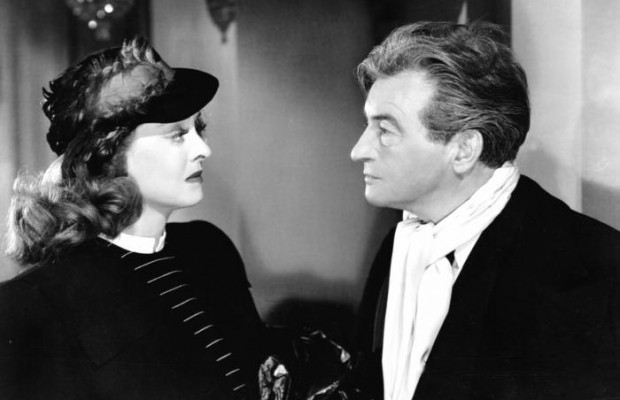
The festival includes live accompaniment to the classic Bette Davis thriller Deception at Wareham’s Art Deco Rex Cinema
On Saturday 9th from 3.30pm, Wareham’s Art Deco Rex Cinema hosts an afternoon of time travel for music and film noir fans with a screening of the 1946 black and white classic, Deception, starring Bette Davis, Paul Henreid and Claude Rains. The film, a tangled love triangle, has strong musical themes, including a new cello concerto. The screening will feature live excerpts of the score, including Korngold’s Cello Concerto, with Natalie Clein on cello, and Marianna Shirinyan on piano. Also on Saturday 9th, in the morning, chamber music meets Eastern European folk at Swanage’s Sandpit Field, for a free family concert by violinists Nurit Stark and Marc Danel, who will play Hungarian and English folk songs in a collection curated by the Hungarian composer Bela Bartok in 1931. The performance is a joint event between PICMF and Swanage Folk Festival. Historian, researcher and Yiddish performer Vivi Lachs will be at Dorset Museum in Dorchester on Friday 8th September. At 5pm, Vivi will launch her new book, London Yiddishtown, and in the evening, from 7pm, she will be one of the performers capturing the unique sounds and language of London’s Cockney Yiddish community. The other musicians taking part in this year’s festival are the Dorset-born star soprano Kate Royal, and the Danel Quartet. The venues include Lulworth Castle Chapel, St George’s Church at Langton Matravers, St Nicholas Church at Studland, the Priory Church of Lady St Mary at Wareham, St Nicholas Church at Worth Matravers and St James at Kingston near Swanage.
For a full progamme of events, please see picmf.org
We start with sadness this month – our writer, colleague and friend Roger Guttridge passed away during August. We know many readers will miss his local history columns – we’ll simply miss him.
Of course we have a full obituary of his remarkable life, written by Fanny Charles, his editor for many many years at the original BVM.
In this month’s issue:
From desperation to media sensation – how Dorset artist Anna Hamilton’s Twitter plea dramatically shifted her from financial despair to overwhelming success
The mysterious journey of Alan Turing’s documents, from Sherborne to America – and back. An astonishing tale of undercover archivists, FBI involvement and the triumphant return to Britain of the stolen Turing documents
Meet Dorset’s soap star Kirsty Hearne – creator of a thriving cottage industry selling goats’ milk and the soaps she makes from it
Stranded in the west after the Russian invasion, the Kyiv City Ballet’s never-ending ‘infinity’ tour will stop off in Shaftesbury in October
Composer and Artmusic director Helen Ottaway selects her Dorset Island Discs – from folk to installation art, Helen talks about about her multi-dimensional journey in music as she chooses the discs she can’t live without
Gillian Matthews, the pioneering Paralympian who redefined athleticism, leaving an indelible mark on Paralympic history and on grassroots disability sports, has died, aged 87
Andrew Livingston is taking a nostalgic stroll through the Dorset County Showground – back to when agri show stands were someone’s caravan with an awning, and the free gifts were a particular treasure.
Are you looking to get back into work, fed up with a daily commute or re-assessing your work life balance?
Acconomy, a cloud-based, forward-thinking Accountancy Practice is looking for an additional team member with a like-minded attitude.
You will manage a portfolio of small Ltd companies managing their accounts, tax and business advice. An opportunity to enhance your CV through use of eg Xero, QBO, Brightpay, fathomhq, in a relaxed but professional environment.
Flexible home-based working, hours to suit. No commuting required. If you’re returning to work after time out then you can build up your hours over time.
Please email your cv to [email protected] or call Nigel Simmons on 01202 678993.